
August 15, 2026
What Happens to Your Feet When You Walk Uphill?
By Gdefy

Summary
Most walking advice assumes the ground is flat. Very little of it is.
Between the ramp out of the parking garage, the slope of your own driveway, the footbridge over the highway, and the long pull back up the street toward home, a normal day is full of short climbs. None of them feel like exercise. They just feel like the part of the walk where you notice your breathing — and, often, the part where your feet start to talk to you.
Walking uphill changes the job your feet are doing. The heel matters less, the front of the foot matters more, and the shoe has to hold you differently than it does on the flat. While footwear isn't a medical solution, understanding what changes on an incline makes it much easier to tell whether your shoes are helping you up the hill or quietly working against you.
Here's what actually happens on the way up, and what to look for in shoes designed for comfort and support on sloped ground.
Why Walking Uphill Feels Different From Walking on the Flat
On level ground, walking is mostly a controlled fall forward. You land on your heel, roll through the middle of the foot, and push off the front. The shoe's main job is to absorb the landing.
On an incline, that sequence gets compressed and rearranged. Four things change at once.
Your foot lands flatter — or on the forefoot
The steeper the slope, the less of a heel strike there is. On a gentle rise you may still touch down heel-first, but the heel spends far less time on the ground. On something steeper — a garage ramp, a steep driveway — you may land nearly flat-footed or on the ball of the foot without ever deciding to.
That means the cushioning under the heel, which does most of the work on flat pavement, is doing much less. The cushioning under the forefoot is doing much more.
The front of your foot carries more of the load
Because your body leans into the hill, your weight sits further forward over your feet than it does on level ground. Pressure concentrates across the ball of the foot and the toes, and it stays there for a longer share of each step.
This is the single biggest reason a shoe that feels wonderful on a flat sidewalk can feel thin and unforgiving on a hill. It isn't a worse shoe. It's being asked to cushion a different part of the foot.
Your ankle bends further at every step
To keep your foot in contact with rising ground, your ankle has to flex more than it does on the flat — every step, for the whole climb. The calf and the tissue running down the back of the leg lengthen further and work harder to control it.
That's why calves are usually the first thing to complain on a long uphill, and why a climb of a few hundred feet can leave the back of your legs feeling worked in a way the same distance on the flat never would.
Your stride shortens and your push-off lengthens
Almost everyone shortens their stride going up. Steps get smaller and more frequent, and the push-off phase — the part where the front of the foot drives you forward — takes up a bigger share of the step. More steps, and more work in each one from the forefoot.
The Everyday Hills People Forget About
Uphill walking gets filed under hiking, which means most people assume it doesn't apply to them. It applies to almost everyone. These are the climbs that show up in ordinary weeks.
| Everyday climb | What makes it demanding | What helps most |
|---|---|---|
| Parking garage or parking lot ramp | Steady grade on hard, smooth concrete, often while carrying something | Forefoot cushioning; a secure midfoot hold |
| A sloped driveway or front path | Short but repeated many times a day, often in whatever shoes are by the door | An everyday pair with real cushioning, not just a soft one |
| Pedestrian overpass or footbridge | A long ramp up and a long ramp down, back to back | Cushioning that works at both ends of the foot |
| Neighborhood hills on a daily walk | Sustained grade, sometimes for several blocks | Support and stability that hold up over distance |
| Stadium, theater, or arena aisles | Steep, stepped, and usually done in a crowd | A stable base; a shoe that holds the heel |
| Treadmill incline | Grade without any change in surface, often for a long stretch | Forefoot cushioning; a smooth heel-to-toe transition |
| Park paths and boardwalks | Grade plus uneven, sometimes loose footing | Tread coverage; a stable platform |
| Ramps at entrances and transit stops | Short, unavoidable, and everywhere | A shoe that transitions smoothly rather than one that feels stiff |

Where Discomfort Usually Shows Up on the Way Up
Different parts of the foot get loaded on a climb than on the flat, so discomfort tends to appear in different places. None of this is a diagnosis — it's just a map of where the work is going.
The ball of the foot. The most common spot, and the most direct consequence of your weight sitting forward. If the forefoot of your shoe is thin or the cushioning has flattened, this is where you feel it first.
The calves and the back of the ankle. The extra ankle flex through every step of a climb means the calf works harder and longer. Warming up matters here more than shoes do, but a shoe with a smooth roll-through can reduce how abruptly the calf has to load.
The toes and the front of the shoe. On steeper grades your foot can slide forward inside a shoe that isn't holding your midfoot. Toes end up against the front of the toe box, which is uncomfortable going up and worse coming back down.
The heel — inside the shoe, not underneath it. Going up, the heel tends to lift away from the footbed as the forefoot pushes. If the shoe doesn't hold the back of your foot, you get rubbing and a vague sense of instability rather than a sharp complaint.
What to Look for in Shoes for Walking Uphill
None of this calls for a specialist shoe. It calls for a well-built everyday pair with a few specific qualities.
- Forefoot cushioning, not just heel cushioning. Press the front of the midsole, not only the heel. Many shoes stack their cushioning where a flat-ground heel strike lands and leave the front comparatively thin. On hills, the front is where you need it.
- Shock absorption that lasts. Cushioning that compresses and stays compressed does less with every mile. Look for a system built to keep absorbing impact rather than one that simply feels soft in the store.
- Energy return. Push-off does more of the work on a climb, so a sole designed to give something back helps the stride feel less heavy near the top.
- A secure midfoot hold. This is what stops your foot sliding forward on a grade. The shoe should feel like it's holding the middle of your foot without pressing on the top of it.
- A structured heel. A firm heel counter keeps the back of the foot seated when the front is pushing. It's the difference between a climb that feels planted and one that feels like your foot is working inside the shoe.
- A stable platform. A wider, steadier base under the foot helps on grades that are also uneven — park paths, gravel, worn pavement.
- A roomy toe area. Toes need somewhere to go when your weight moves forward. A cramped forefoot is uncomfortable on the flat and genuinely unpleasant on a hill.
- A smooth heel-to-toe transition. A sole that rolls rather than one that hinges abruptly makes the change of pace on a slope feel more natural.
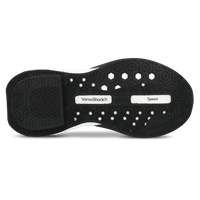
- Tread coverage that reaches the forefoot. On a climb you grip with the front of the shoe, so rubber and pattern at the front of the outsole matter more than they do on level ground.
If you want the underlying ideas in more depth, our explainers on what shock absorption actually is, what energy return means, and the difference between cushioning and support cover each one. Heel-to-toe drop is worth reading too, since the geometry under your foot changes how a slope feels, and why stability matters explains the platform side of it.
How G-Defy Shoes Are Built for Everyday Climbing
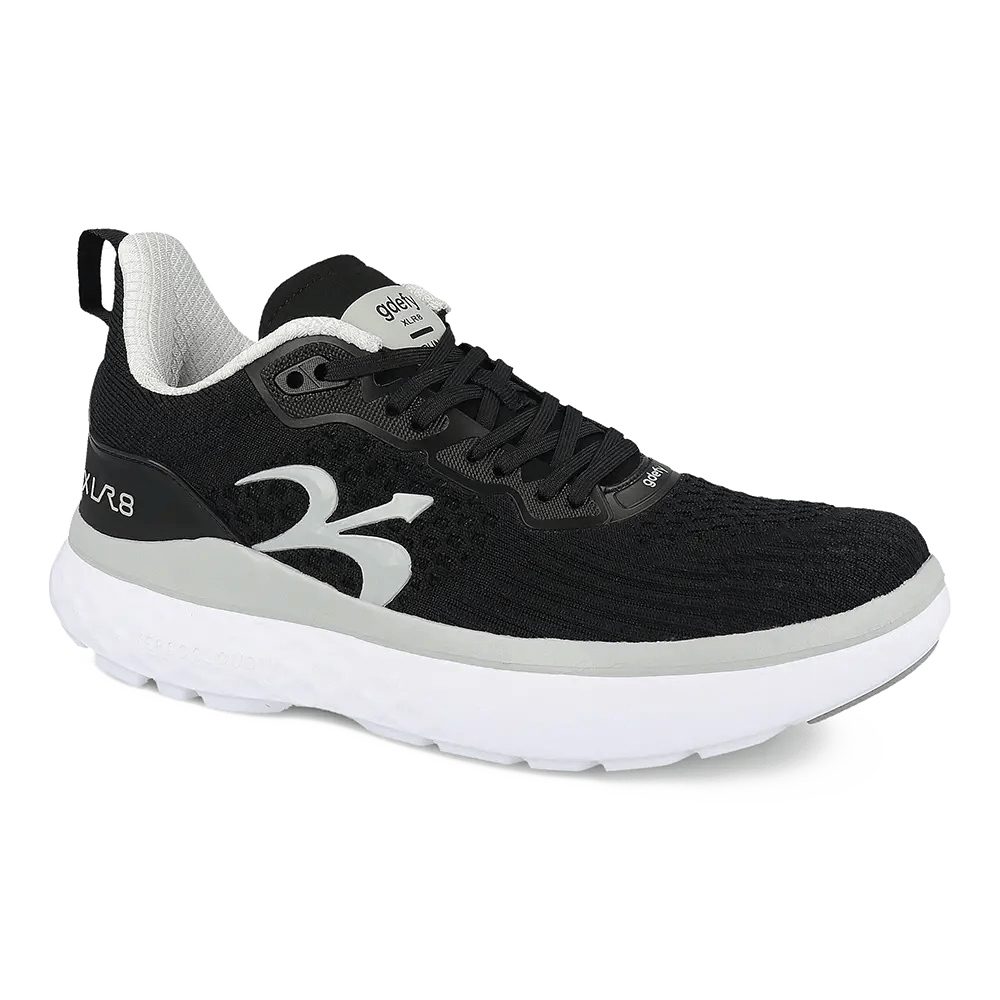
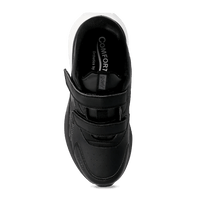
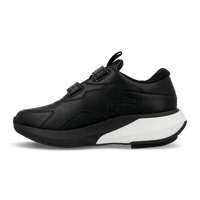
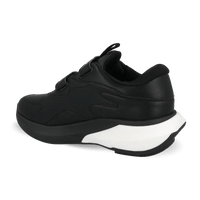
G-Defy shoes are engineered to provide comfort, support, and shock absorption during daily movement — including the sloped, uneven, hard-surfaced ground that fills an ordinary week.
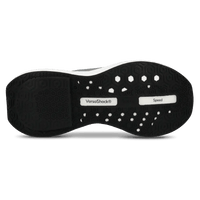
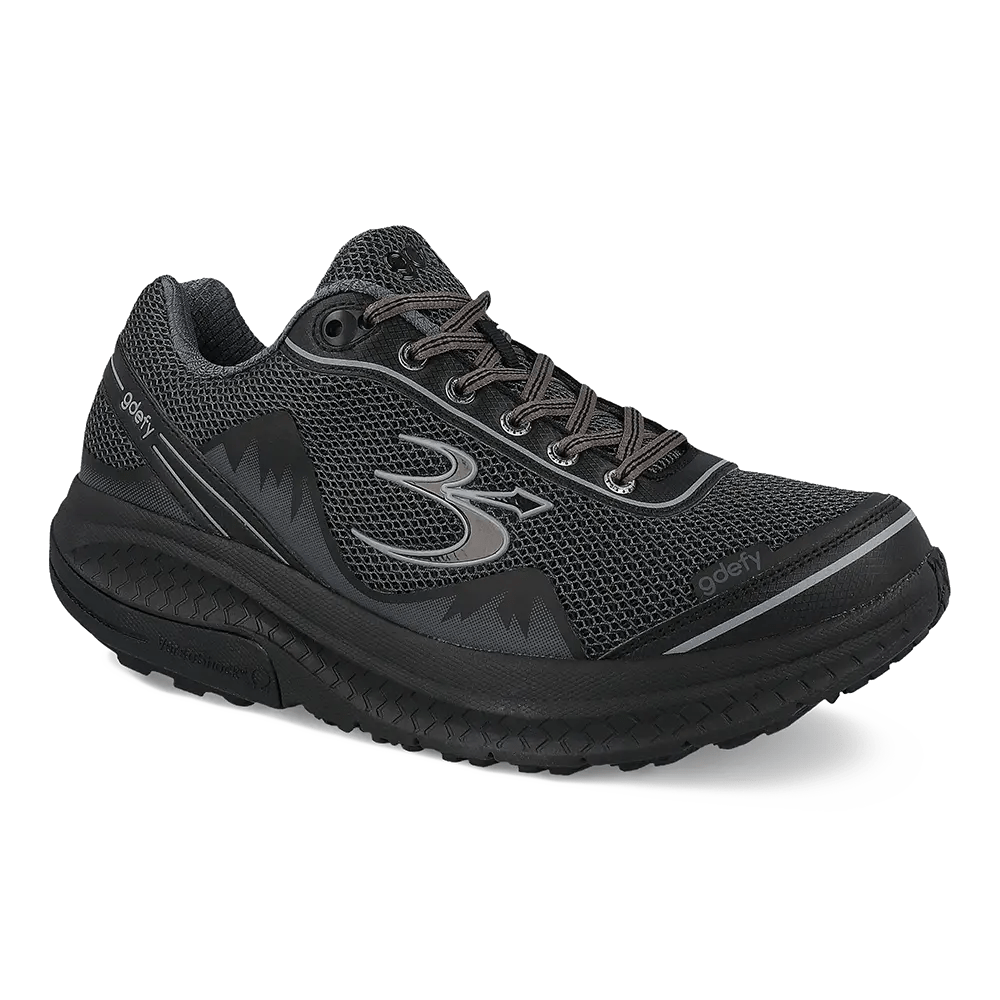
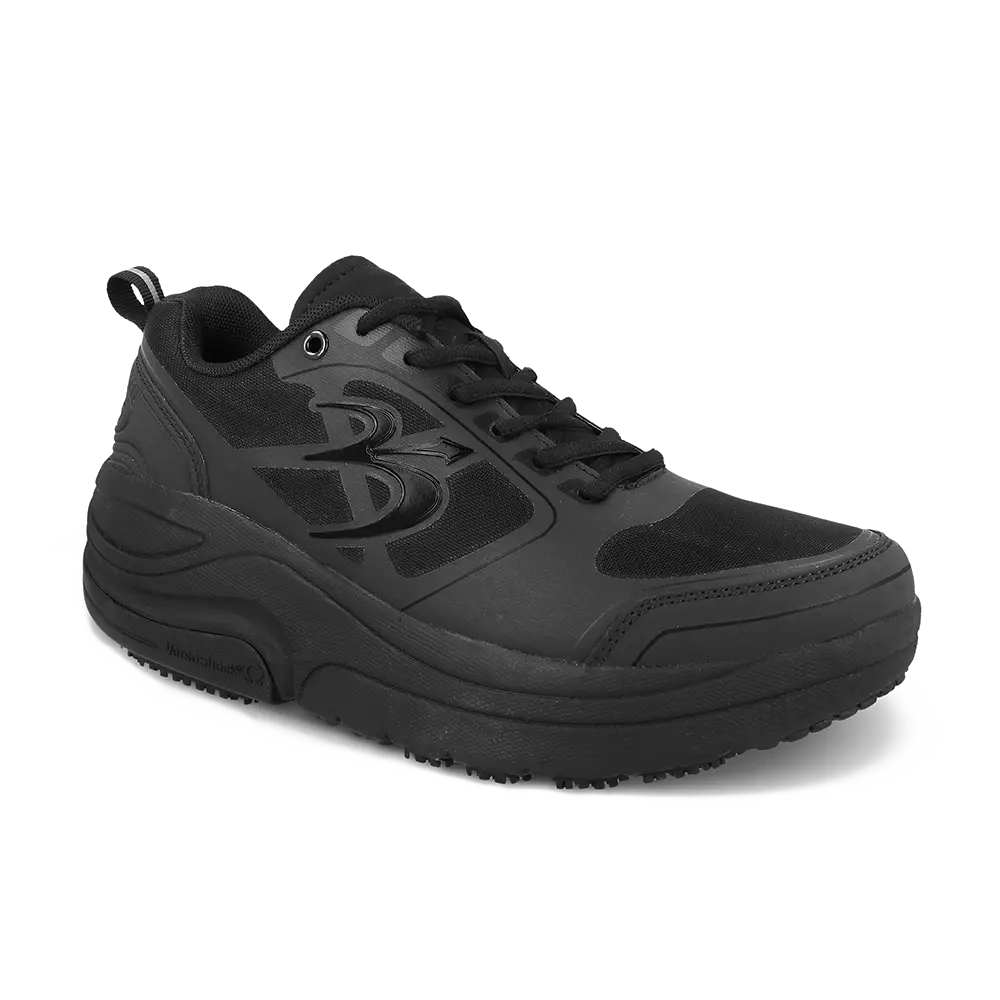
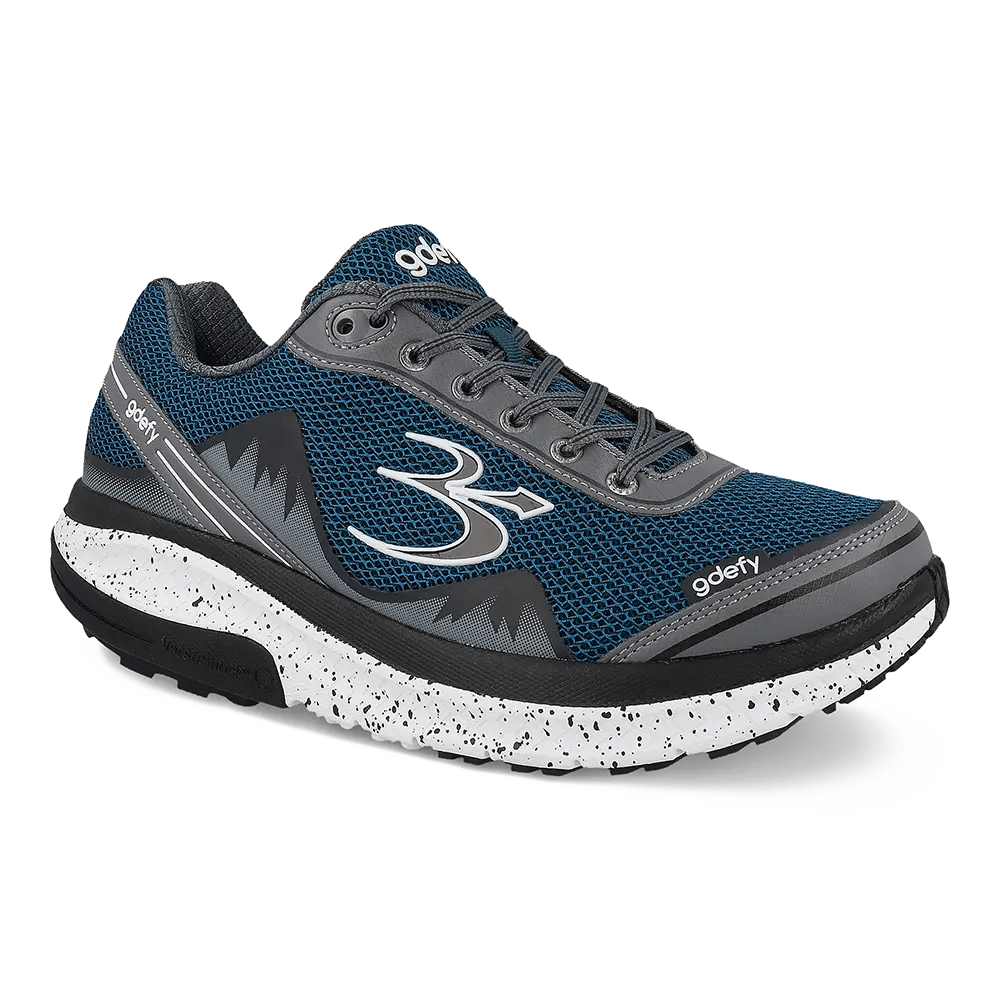
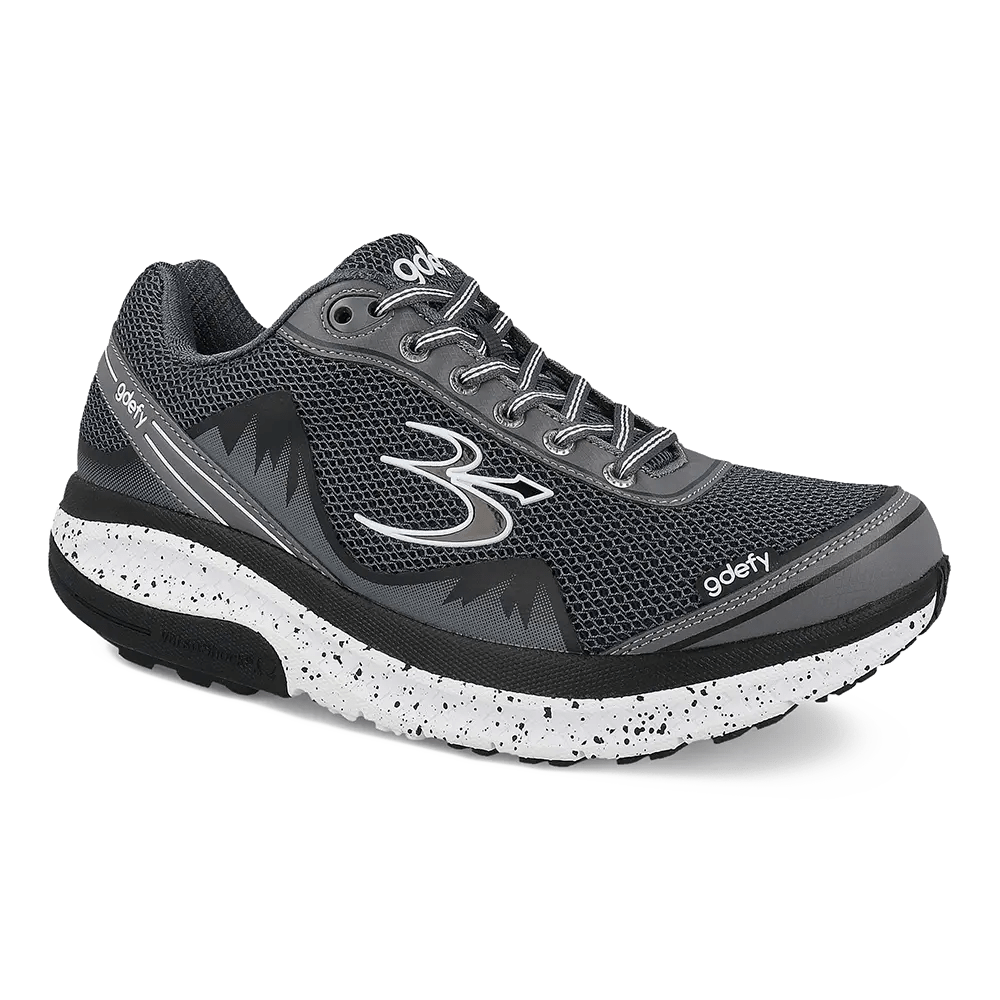
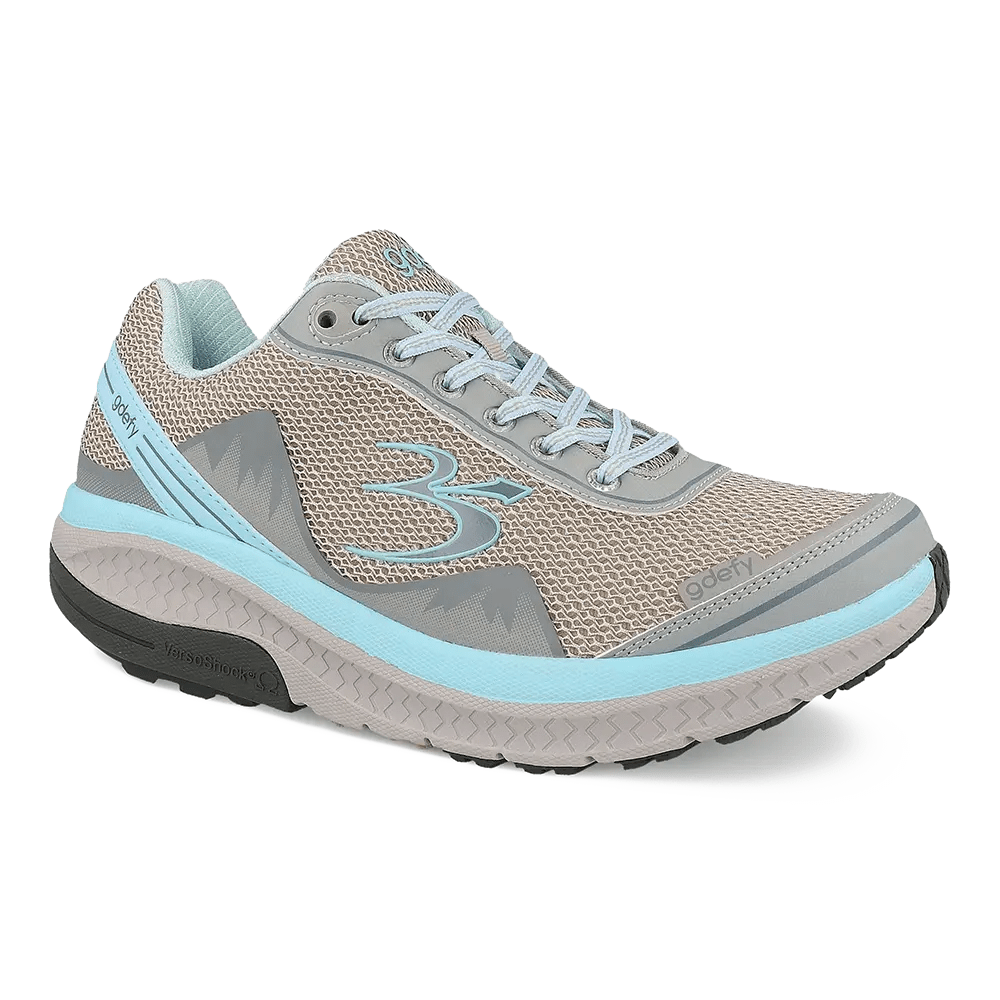
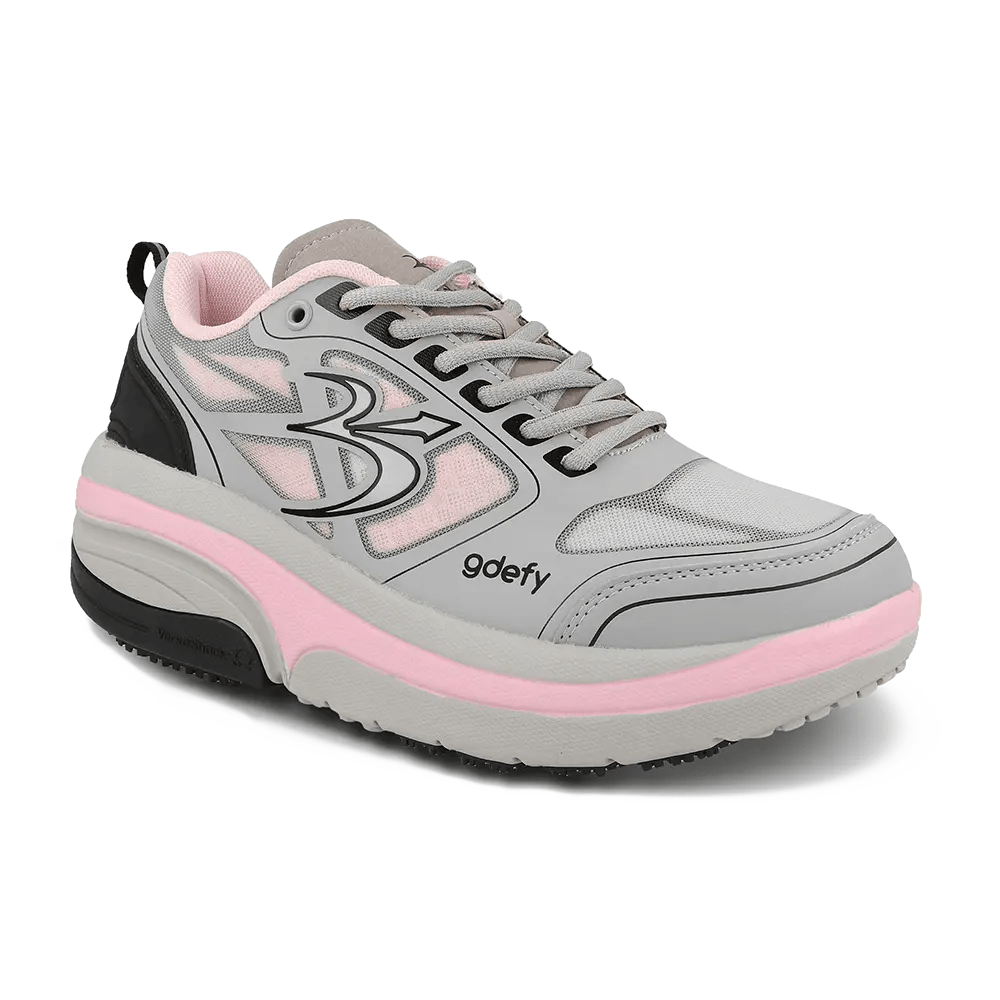
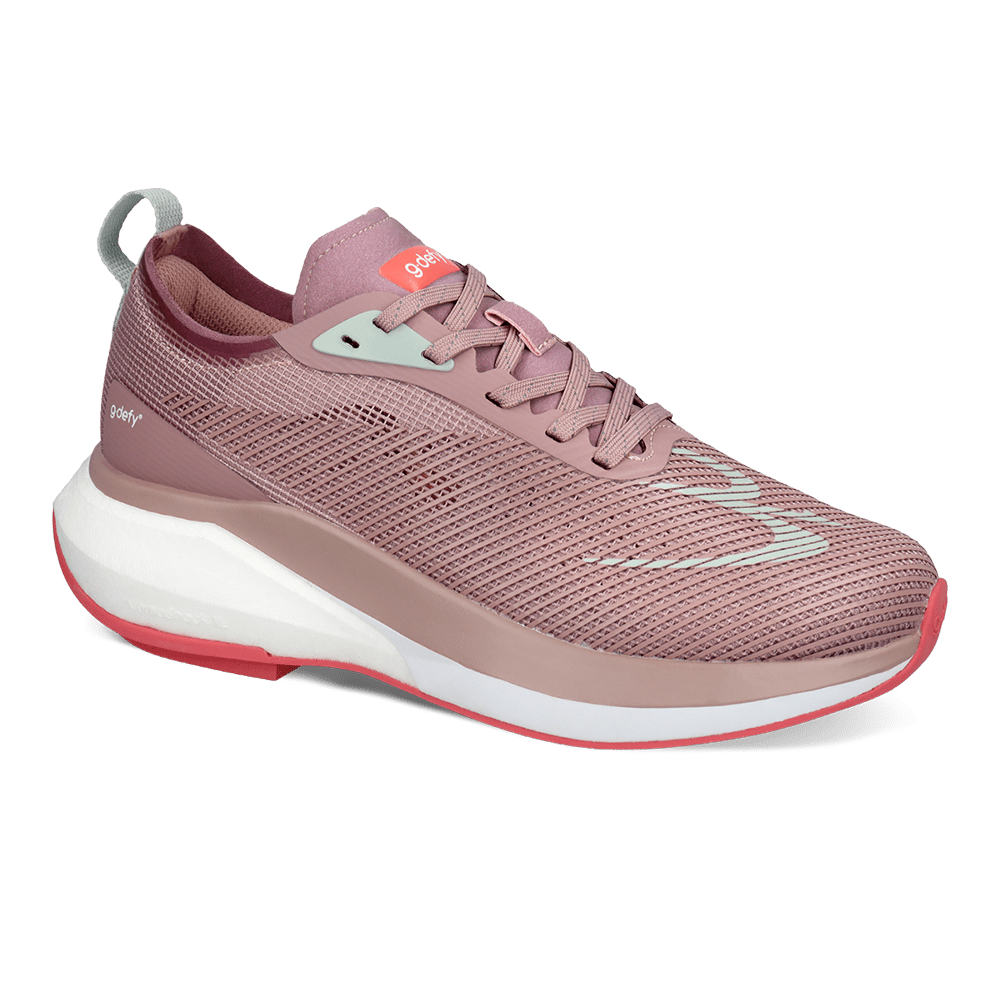
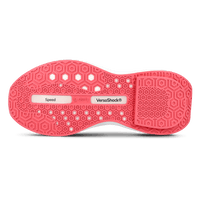
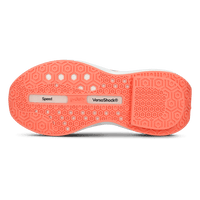
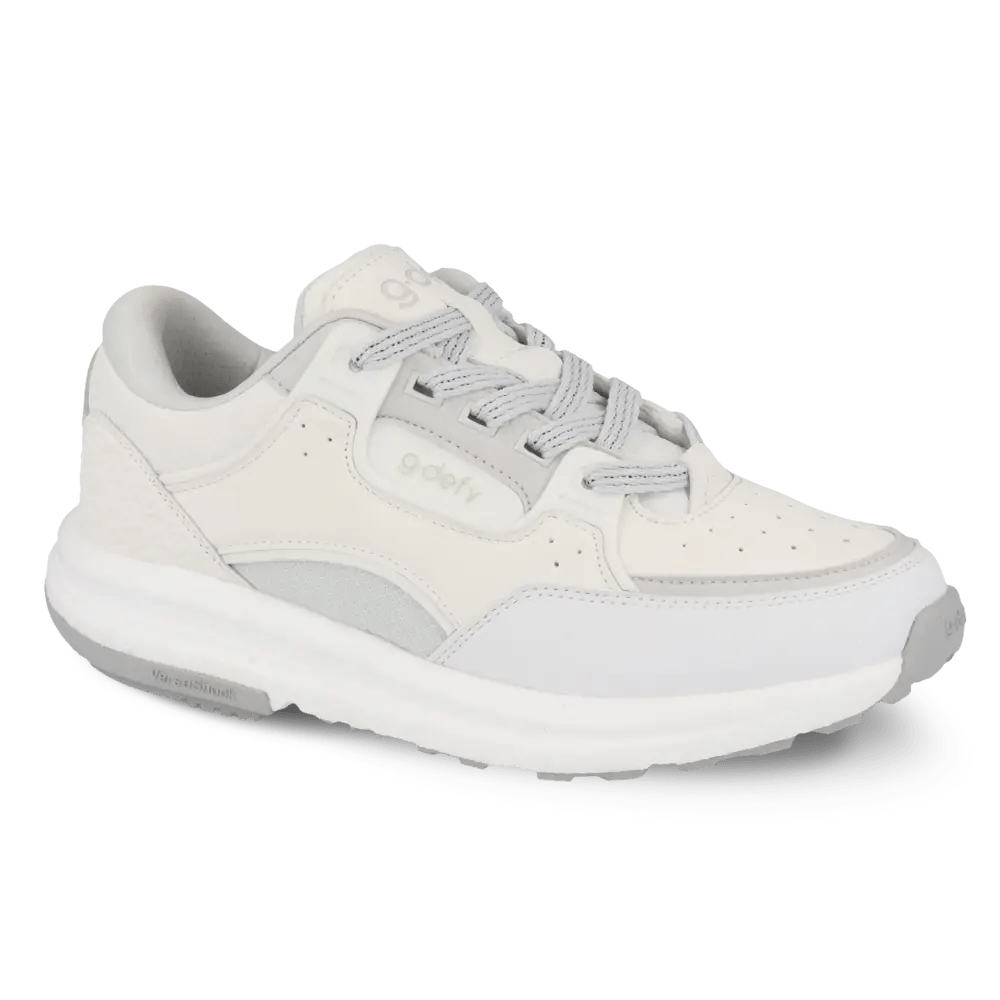
At the center is VersoShock® technology, a patented spring-based system designed to absorb impact and return energy with each step rather than compressing flat the way standard foam does. On a climb, where push-off takes a bigger share of every step, that returned energy is doing its most useful work.

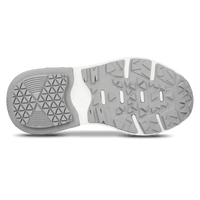
Inside every pair, a built-in stabilizer supports the foot during movement and limits excessive bending through the middle of the shoe — helpful when a grade is asking the front of your foot to drive and the back of your foot to stay put. A front rolling design promotes a smooth heel-to-toe transition, which is exactly the motion a slope exaggerates. Each pair also includes two removable orthotics — a ComfortFit® option for low to medium arches and a CorrectiveFit® option for medium to high arches — so you can set the shoe up for your own feet rather than accept a compromise. G-Defy shoes help reduce pain from walking, running, and prolonged standing.
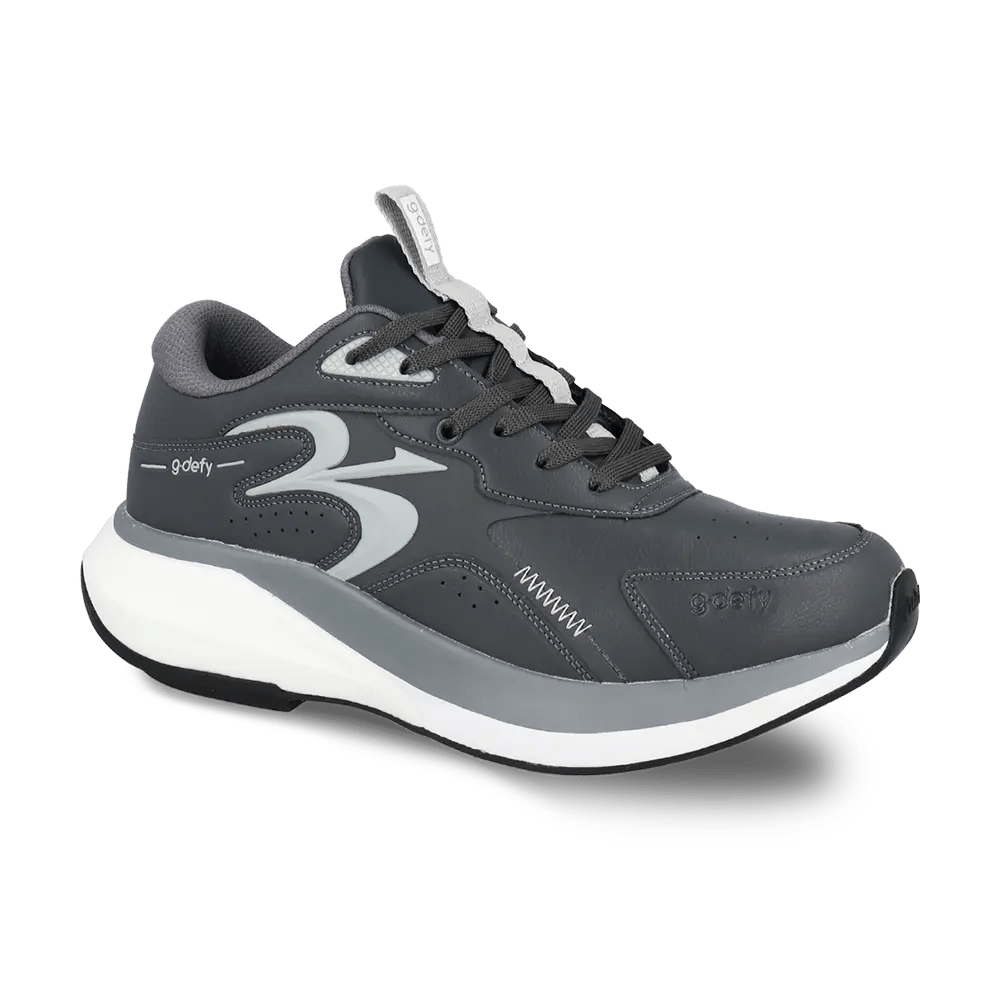
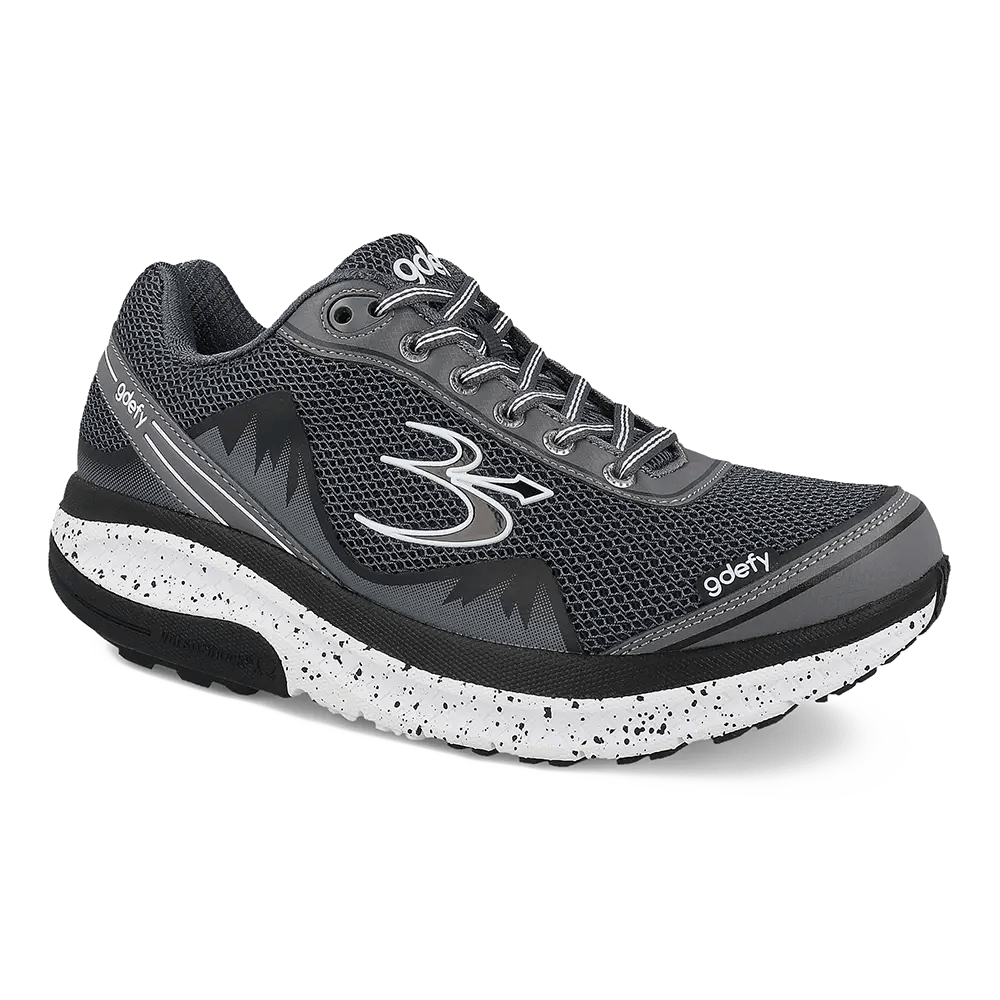
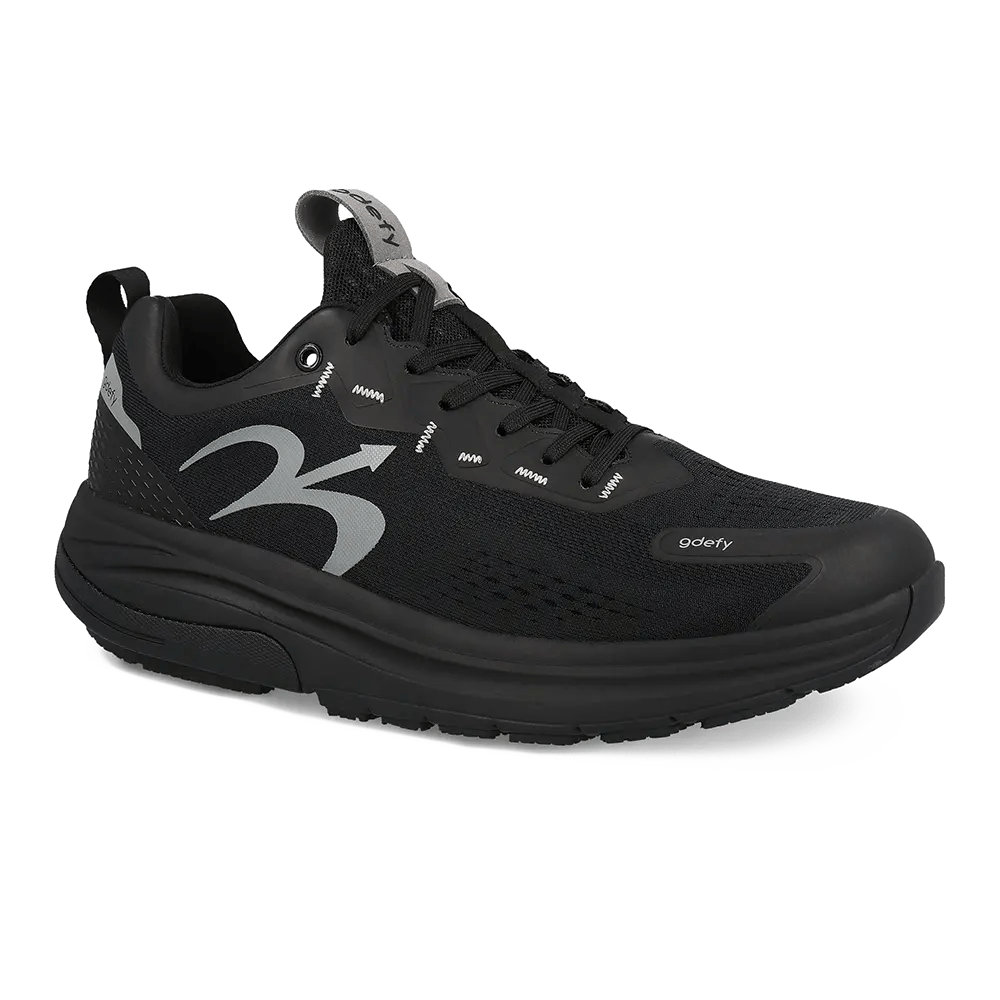
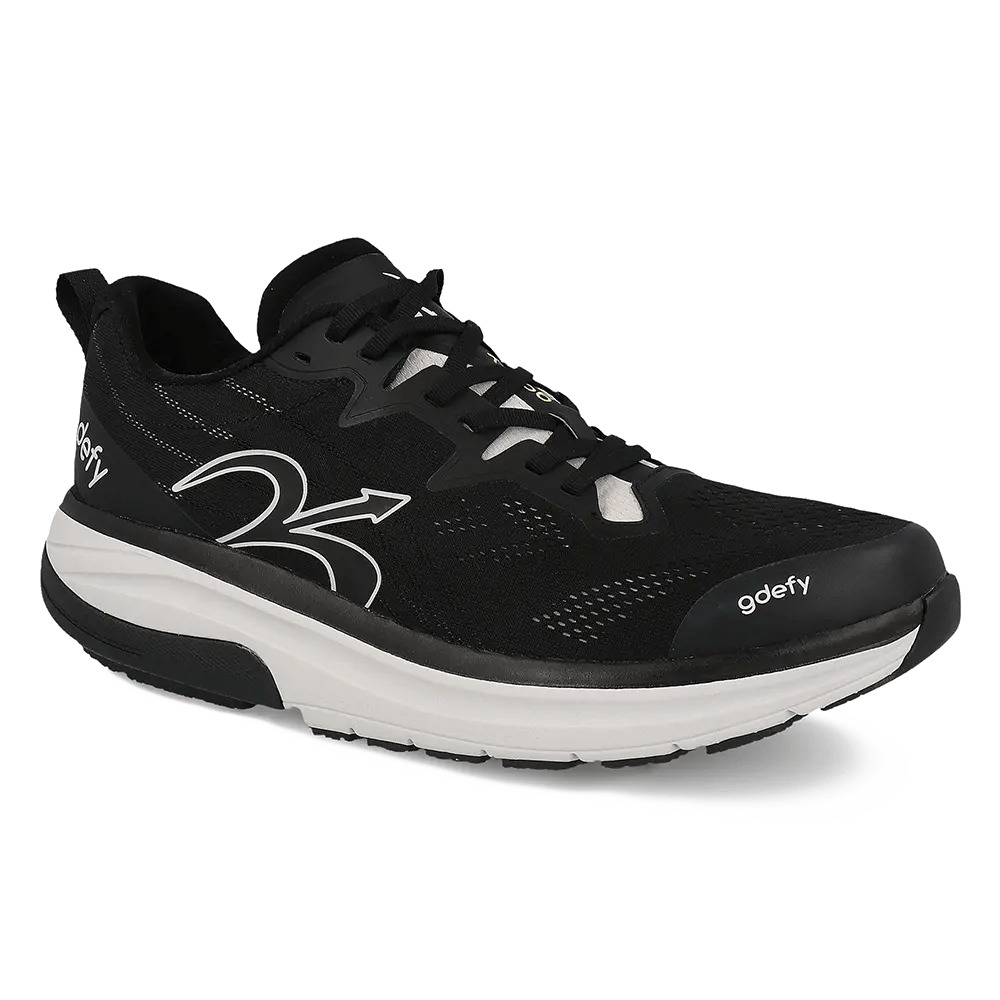
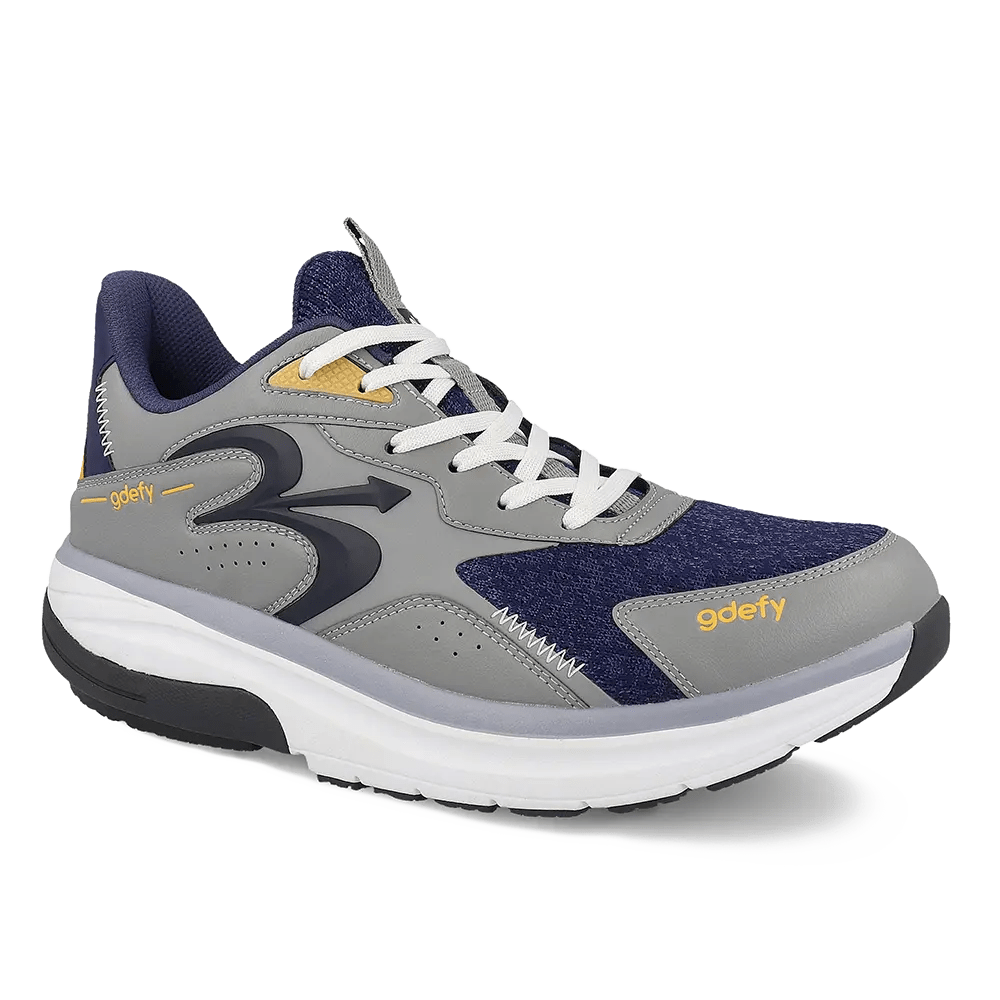
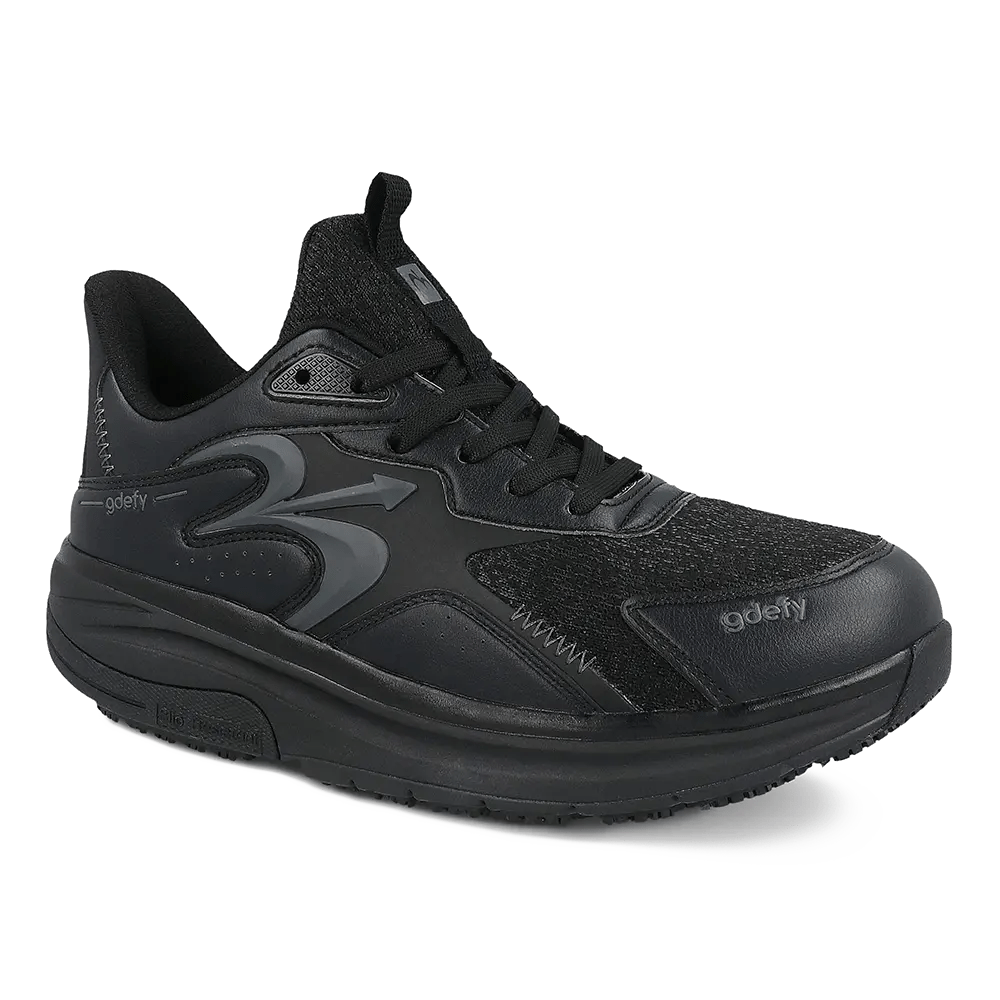
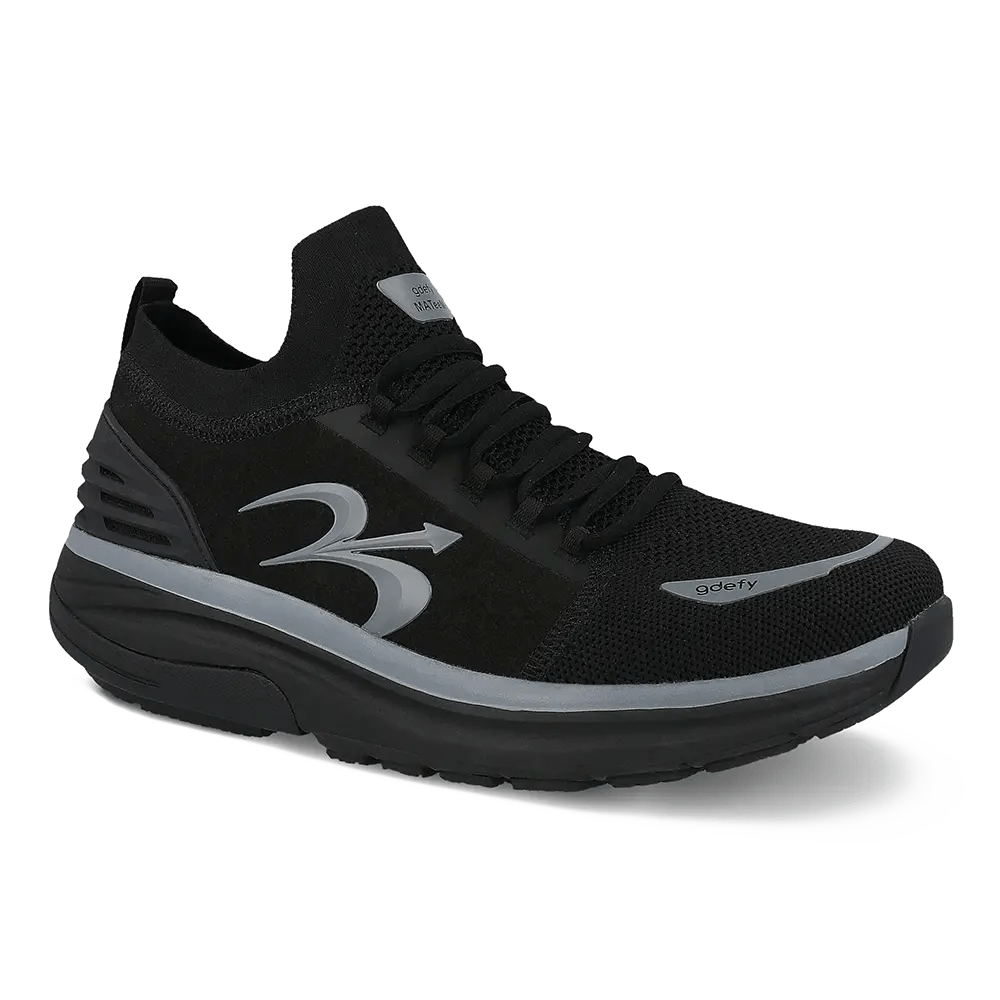
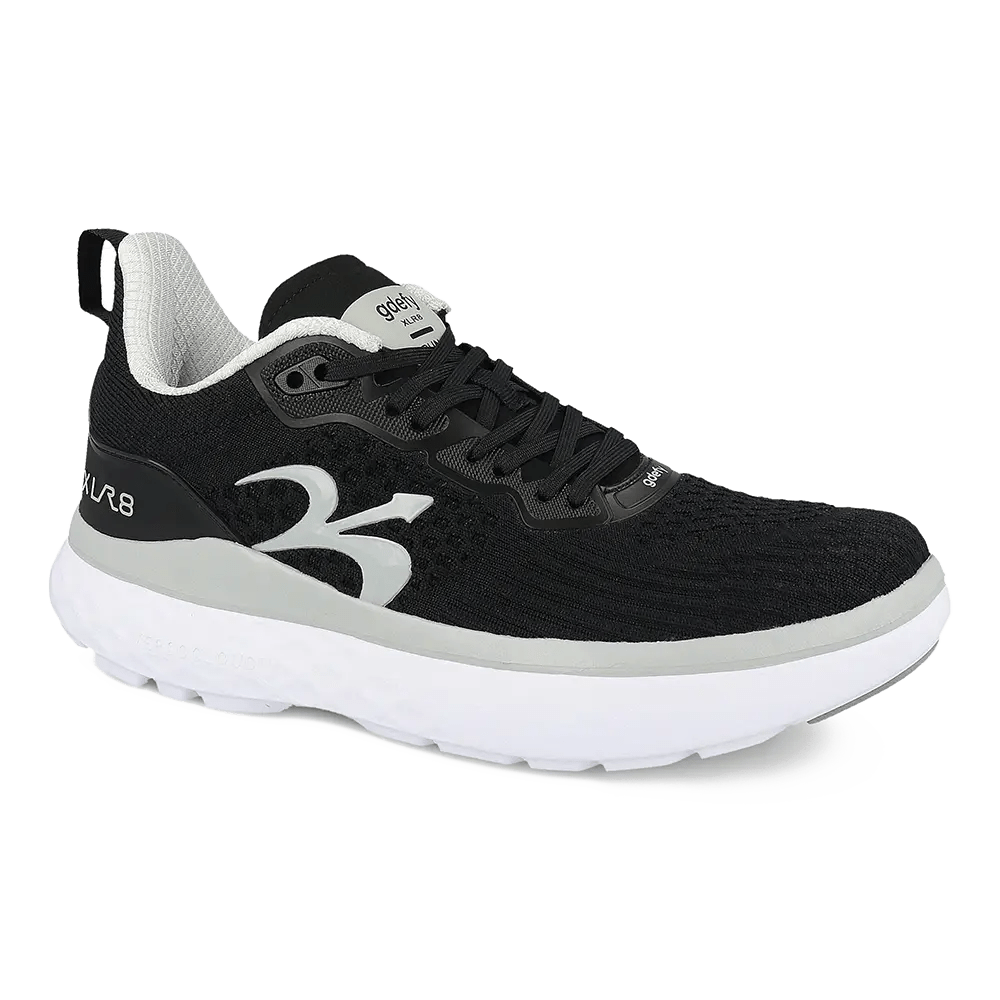
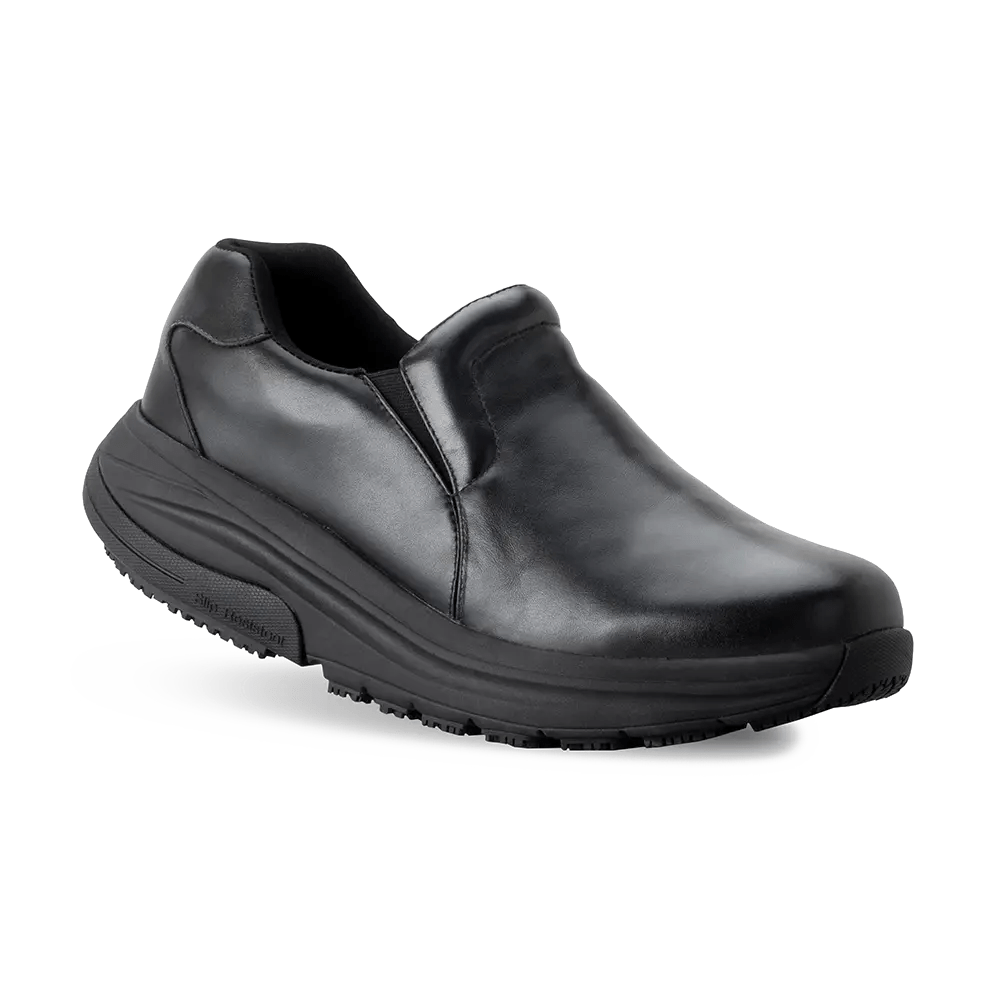
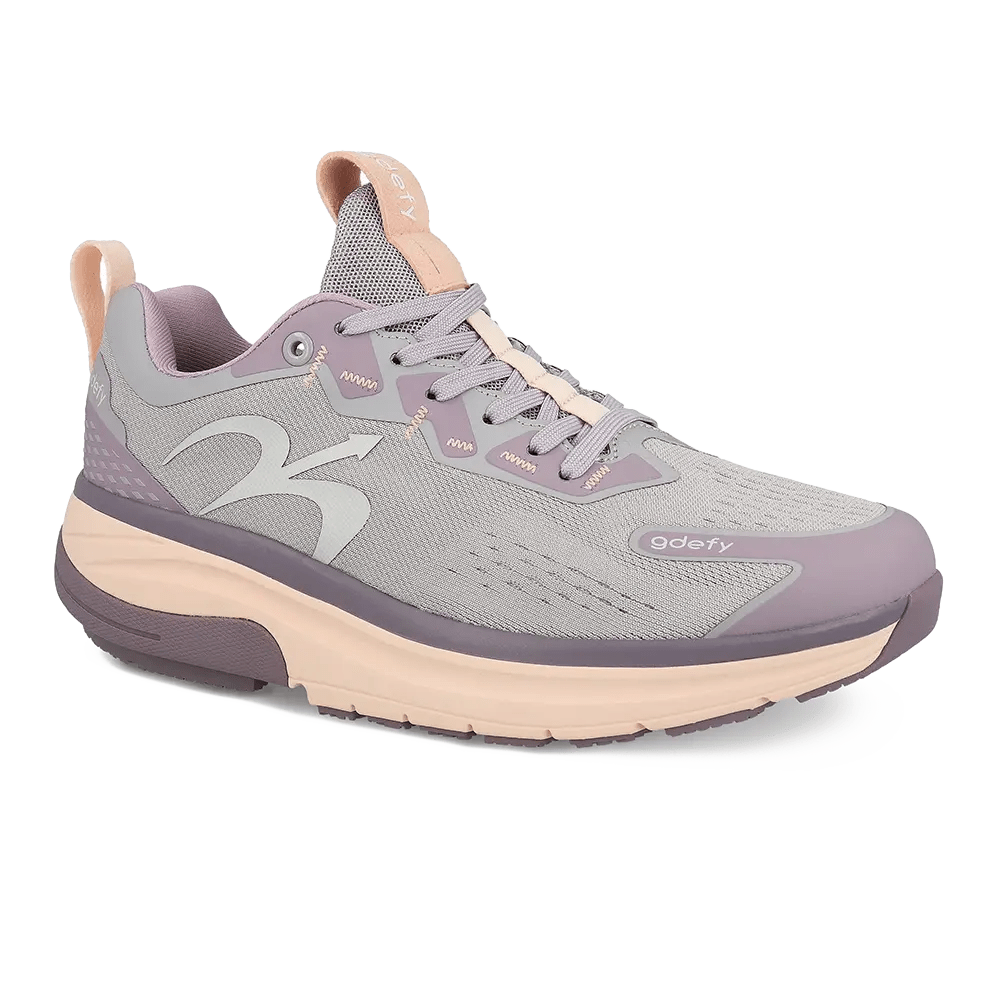
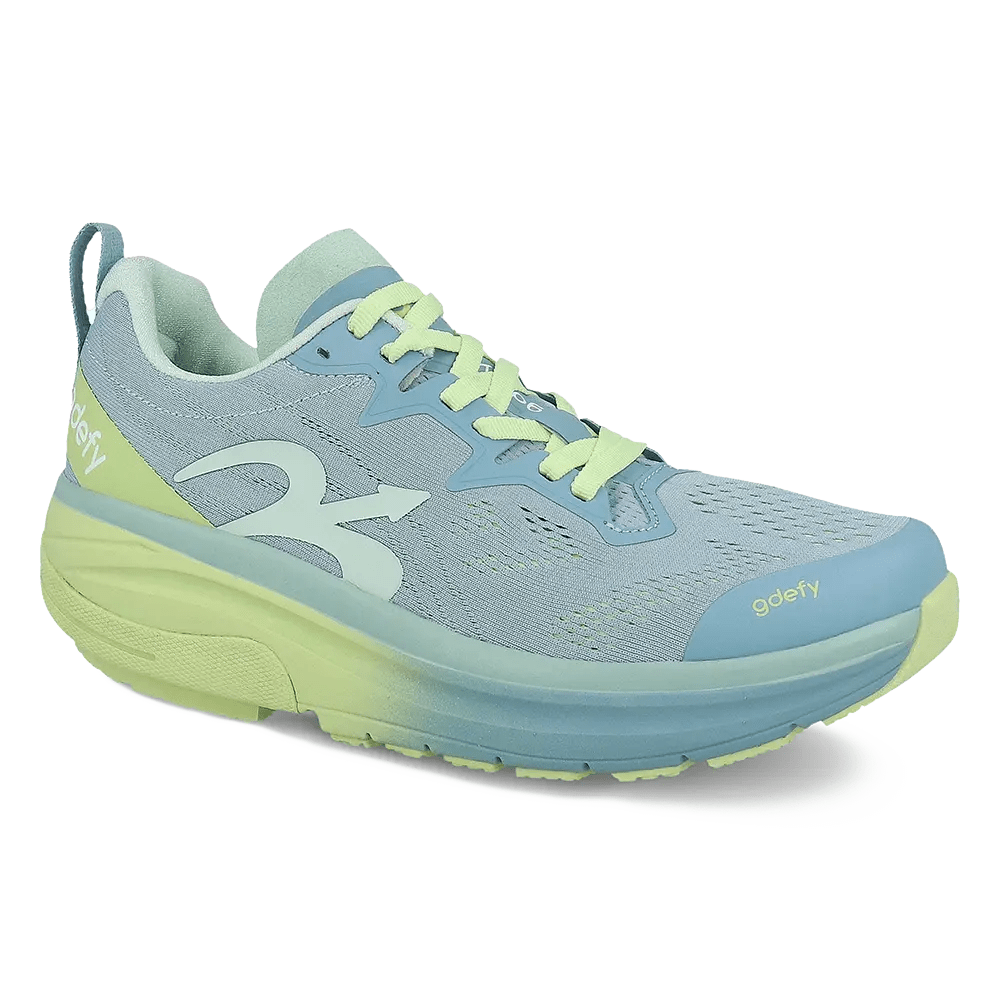
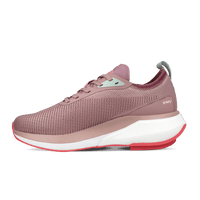
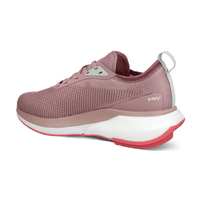
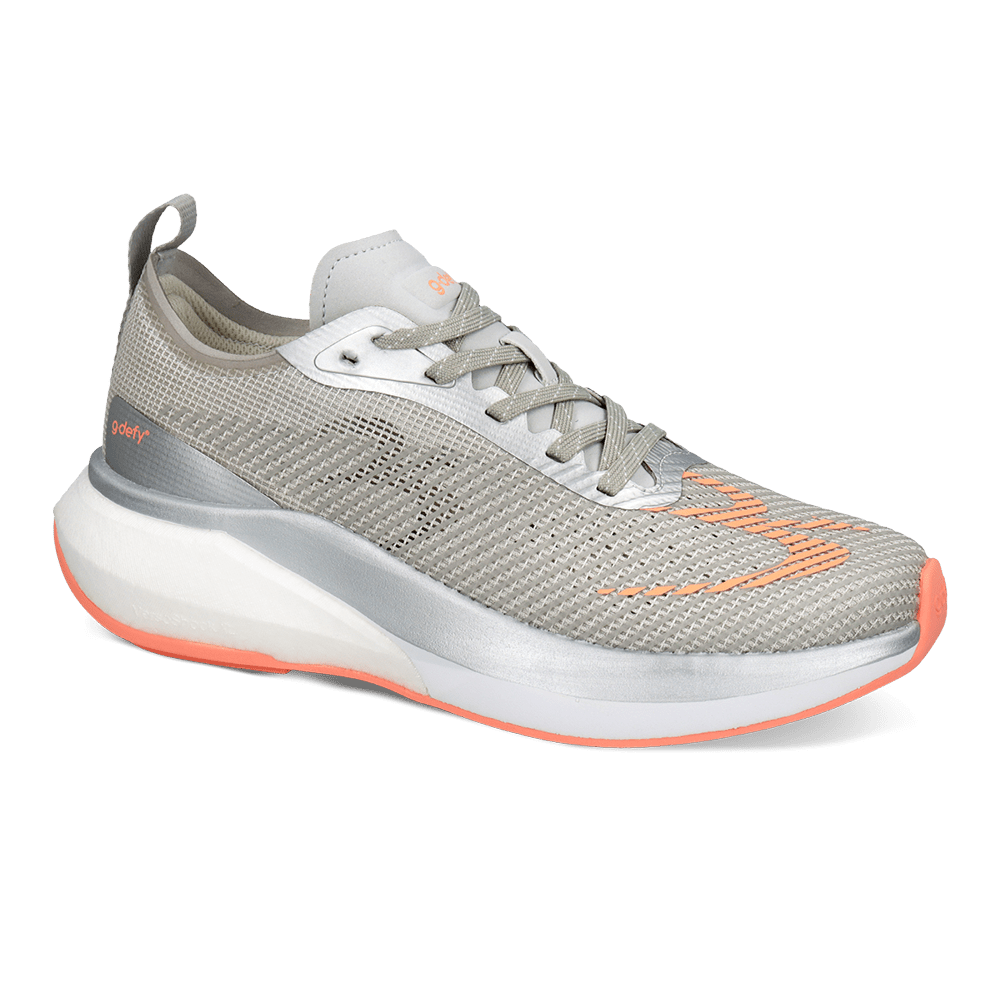
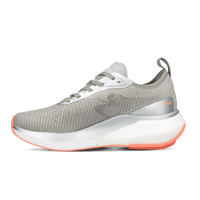
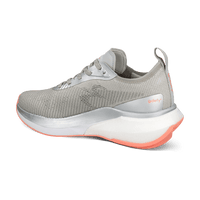
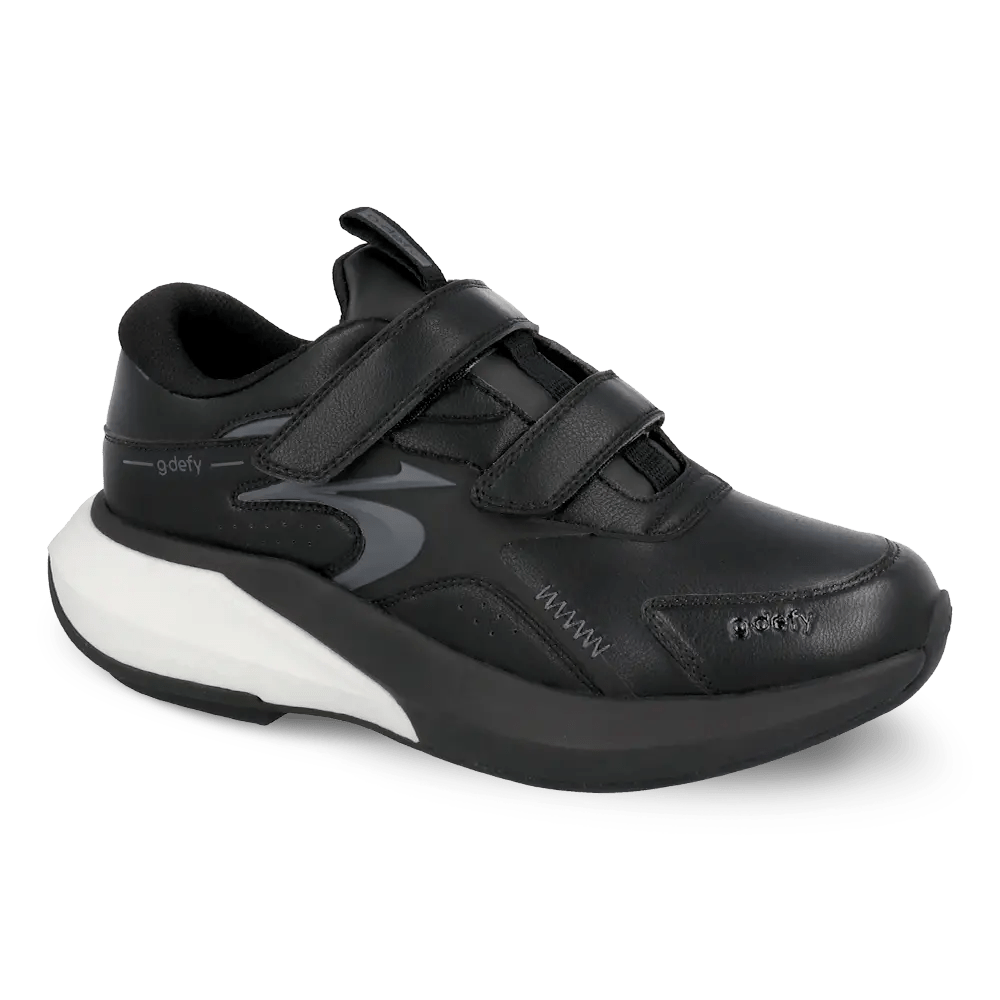
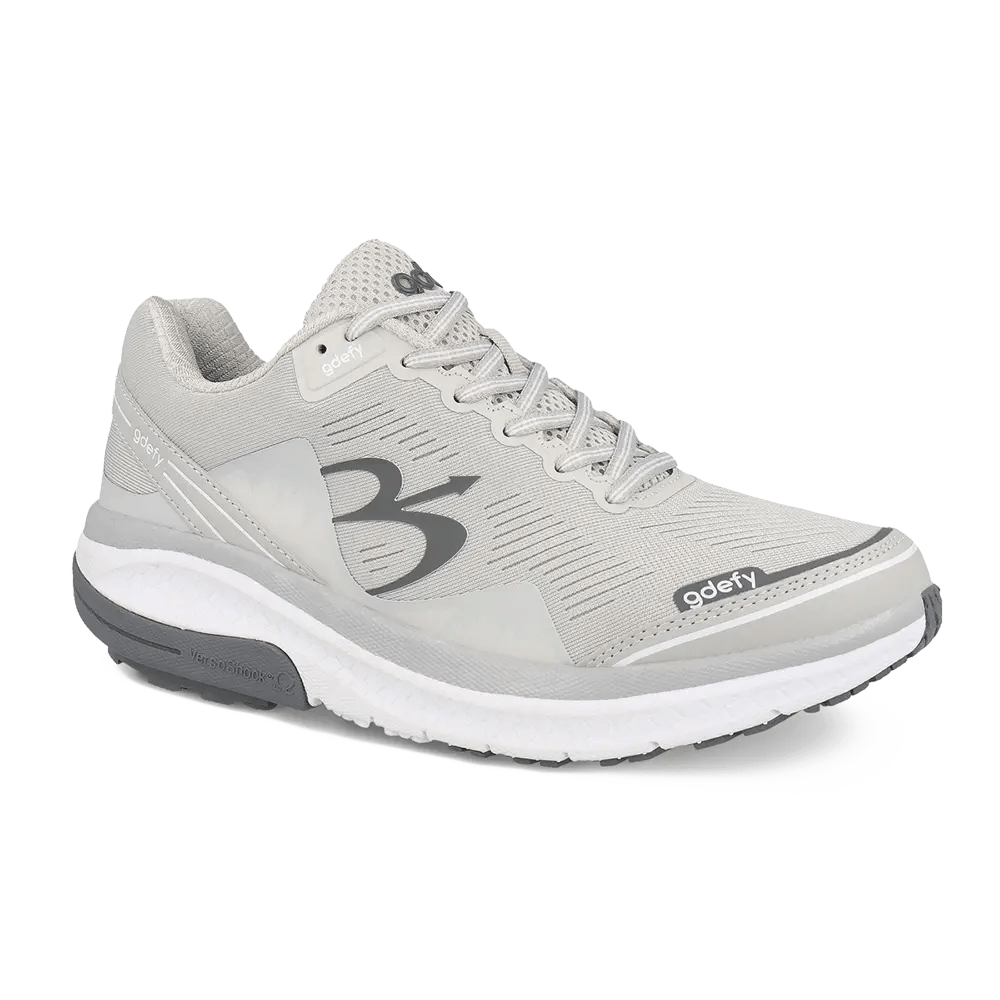
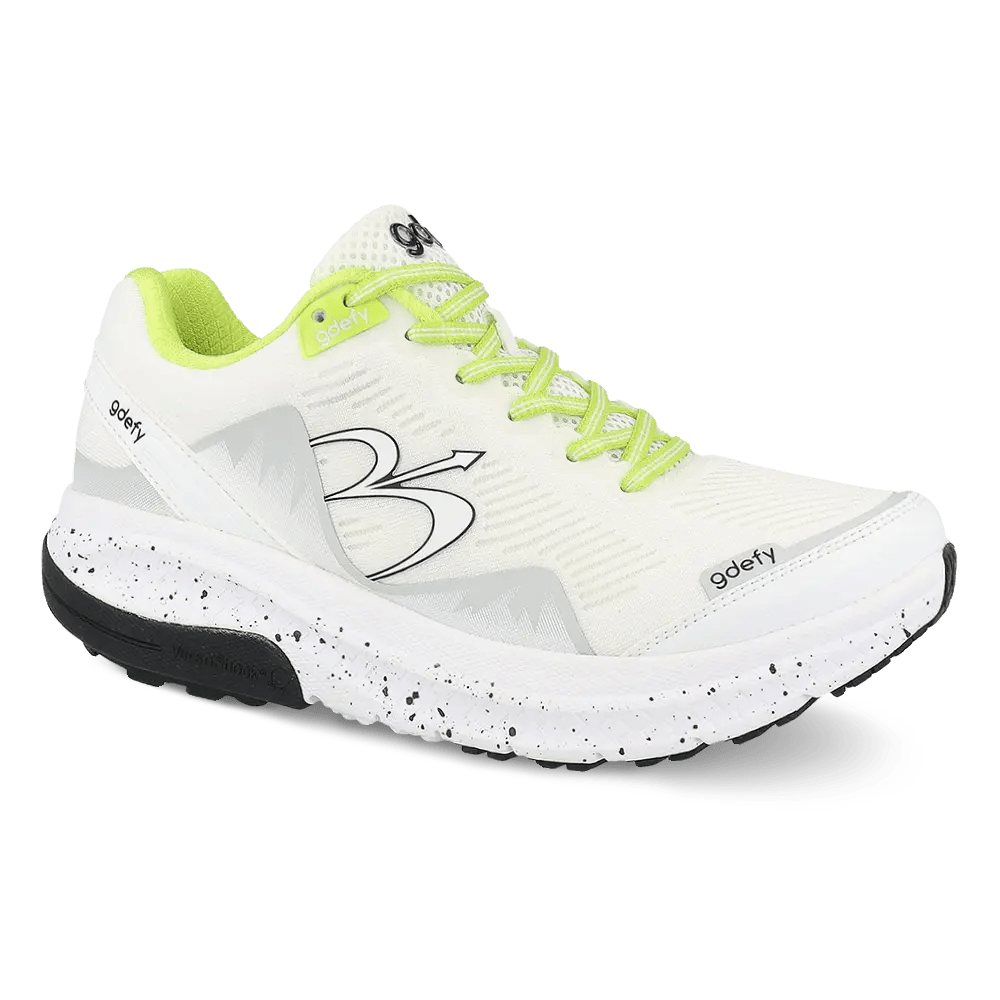
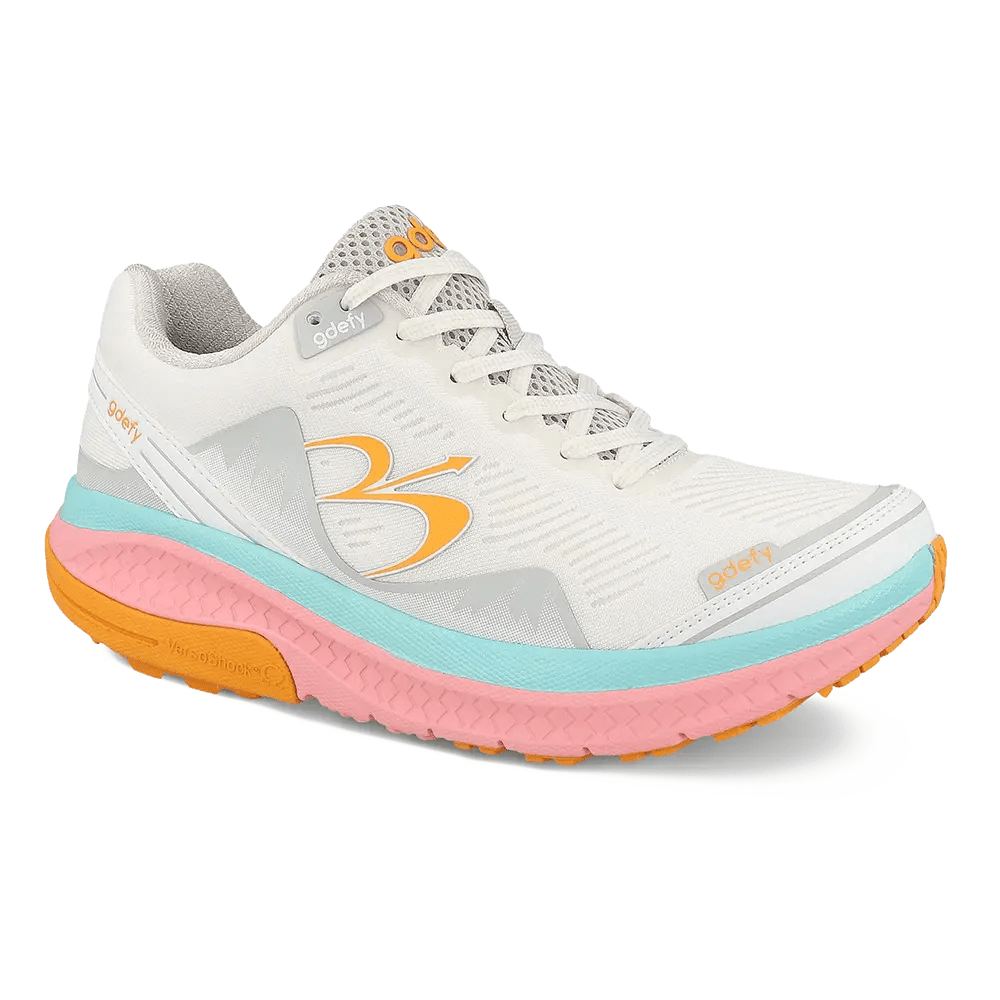
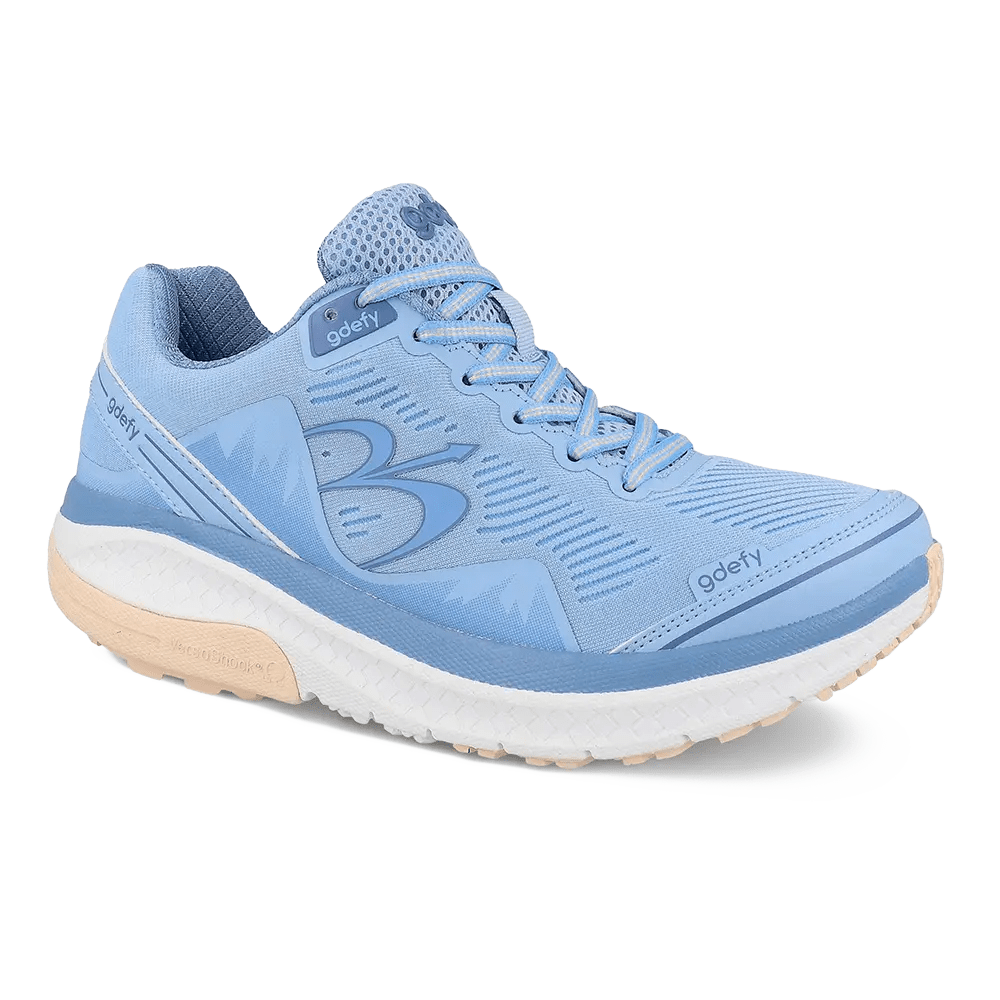
The Men's Mighty Walk and Women's Mighty Walk are the everyday lace-ups in the range, offered in Medium, Wide, and X-Wide widths — width matters on a grade, because a foot that has room to spread is a foot that stays put. If you prefer something lighter underfoot for shorter climbs and warm-weather walking, the Ion is built on the same platform in a lighter package. You can browse everything in the men's collection and the women's collection.
Feel Steadier on the Way Up
Try G-Defy with a 60-day risk-free trial and free shipping. Walk your own hills in them — if they're not right for you, return them for a full refund.
Shop the Mighty WalkHow to Walk a Hill More Comfortably
A few adjustments make a noticeable difference, and none of them require buying anything.
- Shorten your steps before the grade steepens, not after. Smaller, quicker steps keep your weight over your feet instead of out in front of them. Most people shorten up eventually; doing it early costs less.
- Let your whole foot land. Reaching up onto your toes on every step loads the calf and forefoot harder than necessary. Aim to set the foot down and roll through it, even if the heel barely touches.
- Check your midfoot hold at the bottom of the climb. If your foot slides forward on grades, snug the middle of the lacing before you start rather than stopping halfway up.
- Take the grade at a pace you can hold. A climb walked steadily is easier on your feet and legs than one attacked and then recovered from. Pace, not effort, is what makes a hill sustainable.
- Give the descent as much attention as the ascent. Coming down loads the front of the foot and the knees differently — our guide on what happens going down stairs and downhill covers that side of the trip.

Practical Tips for Hilly Routes
- Check the front of your midsole, not just the tread. Cushioning wears out from the inside. If the forefoot feels dead when you press it, hills will tell you before flat ground does — see how shoes wear out and when to replace them.
- Fit late in the day, and fit for the climb. Feet are at their largest in the afternoon, and they spread further when your weight moves forward. A shoe that fits at 4 p.m. is a shoe that fits on a hill. Why proper fit matters walks through the checks.
- Try both orthotics on a hilly route, not a flat one. Arch support behaves differently when your weight sits forward. Flat feet and high arches explains how the same shoe gets set up two ways.
- Build the grade in gradually. If your usual route is flat and you add a hill, add it in small doses at first — the same approach that works when breaking in a new pair.
- Notice what the surface is doing as well as the slope. A grade on concrete and the same grade on a park path ask different things of a shoe — see how walking surfaces change what reaches your knees and walking shoes for trails and parks.
- Watch the conditions too. A slope in the wet asks more of your footing than the same slope dry — walking on wet ground covers what changes.
- Remember it's the whole chain. What your feet do on a slope travels upward — how your feet affect the rest of your body puts it in context, and understanding your gait helps you read your own stride.
What People Tell Us
"I park in a garage and it's four levels of ramp to street level, twice a day, five days a week. I never counted it as walking. My feet did. These feel considerably more supportive on that ramp than the pair I wore before." — Composite customer testimonial. Results vary by individual.
"My street runs uphill from the bus stop, so every trip home ends with a climb. The front of my feet used to feel it by the top. It's noticeably more comfortable now, and I'm not thinking about it the whole way up." — Composite customer testimonial. Results vary by individual.
"I walk park paths with a lot of gentle rises. What changed for me was the fit — my foot stopped sliding forward, so my toes aren't jammed at the front by the end. Feels more secure the whole route." — Composite customer testimonial. Results vary by individual.
Frequently Asked Questions
Why do my feet hurt when I walk uphill but not on flat ground?
Walking up a grade shifts your weight forward, so pressure concentrates across the ball of the foot and toes instead of the heel. A shoe that cushions a flat-ground heel strike well may have much less material where an incline puts the load. Supportive, well-cushioned footwear may improve overall comfort during walking and prolonged standing.
Should I wear different shoes for hilly walks?
Usually not. A well-built everyday walking shoe with genuine forefoot cushioning, a secure midfoot hold, and a stable base handles slopes and flat ground alike. What matters is the build quality of the pair you already reach for, not owning a second specialist pair.
Why do my toes end up at the front of my shoe on a climb?
Your foot slides forward when the midfoot isn't held securely, and a grade makes that slide much more likely. Snugging the middle of the lacing before the climb usually helps; if it doesn't, the shoe may be too roomy through the middle for your foot.
Does walking uphill work your calves more than flat walking?
Yes. Your ankle flexes further at every step on a rise, which means the calf lengthens more and works harder to control each footfall. That's normal, and it's why calves usually notice a hill before anything else does.
Is walking downhill easier than walking uphill?
Not for your feet and legs. It's easier on your breathing, but harder on the braking side of the stride, and it loads the front of the foot and the knees differently. Both directions deserve a shoe that cushions well.
Does a treadmill incline count as uphill walking?
Mechanically, yes — your weight moves forward and your ankle flexes further, just as it does outdoors. What's missing is the uneven footing, so a treadmill grade asks less of a shoe's stability and just as much of its forefoot cushioning.
The Bottom Line
Hills aren't a separate activity you go out and do. They're the ramps, driveways, footbridges and streets that ordinary days are made of, and they quietly ask something different of your feet than flat ground does — more from the front of the foot, more from the calf, and more from the part of the shoe that holds you in place.
While footwear is not a medical solution, choosing shoes designed for comfort, support, and shock absorption can make a meaningful difference in how walking uphill feels by the top of the climb — and at the end of the day that contained it.
Ready to feel steadier on the way up? Explore G-Defy shoes with VersoShock® technology, backed by a 60-day risk-free trial and free shipping on every order.