August 10, 2026
Does Walking on Hard Surfaces Affect Your Knees?
By Gdefy

Summary
You take the same walk you always take. Same distance, same shoes, same pace. But some days your knees feel fine afterward, and some days they let you know about it for hours.
One thing that often gets overlooked is what you were walking on. A mile on a packed dirt trail and a mile on a downtown sidewalk are not the same mile. The ground you cover changes how each step lands, how much impact travels back up through your feet, and how tired your legs feel at the end.
Many people experience knee pain during everyday walking, and footwear is not a medical solution. But the surface under your feet — and the shoe between you and that surface — plays a real role in how comfortable a walk feels. Here is what changes from one surface to the next, and what to look for in shoes when most of your steps land on hard ground.
Why One Walking Surface Feels Different From Another
Every time your foot lands, the ground pushes back. How much of that push you feel depends on how much the surface gives way.
Hard, unforgiving surfaces
Concrete, asphalt, tile, and polished retail floors barely move at all. They absorb almost none of the force of a footstep, so nearly all of it comes straight back up through the shoe. Concrete is the least forgiving common walking surface, and it happens to be what most sidewalks, parking lots, warehouses, and shop floors are made of.
This is why a shift on a hard floor can feel more tiring than a much longer walk somewhere softer. We cover this in more detail in our guide to walking on concrete all day.
Softer, more giving surfaces
Packed dirt trails, grass, wood chips, and rubberized running tracks compress slightly under each step. That small amount of give spreads the landing over a fraction of a second longer, which takes the sharp edge off the impact. Most people describe walks on these surfaces as feeling easier on the legs, even at the same distance.

Uneven surfaces
Cobblestones, gravel, sand, and rutted paths are a different problem. They may not be as hard as concrete, but they are unpredictable. Your foot lands at a slightly different angle every time, and your legs work harder to keep you steady. That constant small correcting is its own kind of fatigue.
Treadmills and indoor surfaces
A treadmill deck has some flex built into it, so it usually feels softer underfoot than a sidewalk. It is also perfectly flat and perfectly predictable, which removes the balance work that outdoor walking requires. That predictability is comfortable, though many people find that walking only on a treadmill leaves them less prepared for the uneven ground outside.
Walking Surfaces at a Glance
A quick reference for how common surfaces compare:
| Surface | How much it gives | Balance demand | What the shoe needs to do |
|---|---|---|---|
| Concrete & tile | Almost none | Low | Nearly all the absorbing |
| Asphalt & pavement | Very little | Low | Most of the absorbing |
| Treadmill deck | Some built-in flex | Very low | Cushioning and fit |
| Packed dirt & grass | Noticeable give | Moderate | Shares the work |
| Gravel, sand & cobblestone | Varies step to step | High | Stability first, then cushioning |
Why the Same Walk Can Feel Different Day to Day
Surface is only part of the picture. A few other things stack on top of it:
- How long you were out. Impact adds up. The 40th minute on concrete rarely feels like the 4th.
- How fast you were moving. A brisker pace means each step lands with more force.
- How worn your shoes are. Midsole foam compresses over months of use and stops giving back what it once did. Our guide on how shoes wear out covers the signs.
- How you move. Your stride and foot type change how load spreads through the leg. Understanding your gait and your foot type can help you choose better.
- Whether you were going up or down. Descending is its own load case — we covered it in what causes knee pain going down stairs and downhill.
What to Look for in Shoes When You Walk on Hard Ground
If concrete and pavement make up most of your steps, the shoe is doing the work the ground refuses to do. These are the features that matter most:
- Cushioning — a midsole that compresses on landing helps absorb impact instead of passing it straight through. See how cushioning helps reduce impact during everyday walking.
- Shock absorption — the shoe’s ability to soften the force of each landing rather than simply padding it. Our explainer on what makes a shoe good at absorbing shock breaks down the difference.
- Stability — a shoe that resists twisting through the middle supports a steadier stride, which matters most on uneven ground. More in why stability matters in everyday footwear.
- Energy return — cushioning that gives energy back rather than swallowing it helps keep a long walk feeling efficient. See what energy return means.
- Heel cushioning — most walkers land heel-first, so that is where impact arrives. More in how cushioning helps with heel impact.
- Proper fit — a shoe that slides or pinches undoes the benefit of everything above.
For a broader look at footwear features and knee comfort, see what to look for in shoes if you experience knee pain and how your shoes affect your knees.
Most of your steps on concrete?
Try G-Defy for 60 days risk-free, with free shipping and free exchanges.
Shop the Mighty WalkHow G-Defy Approaches Hard-Surface Walking
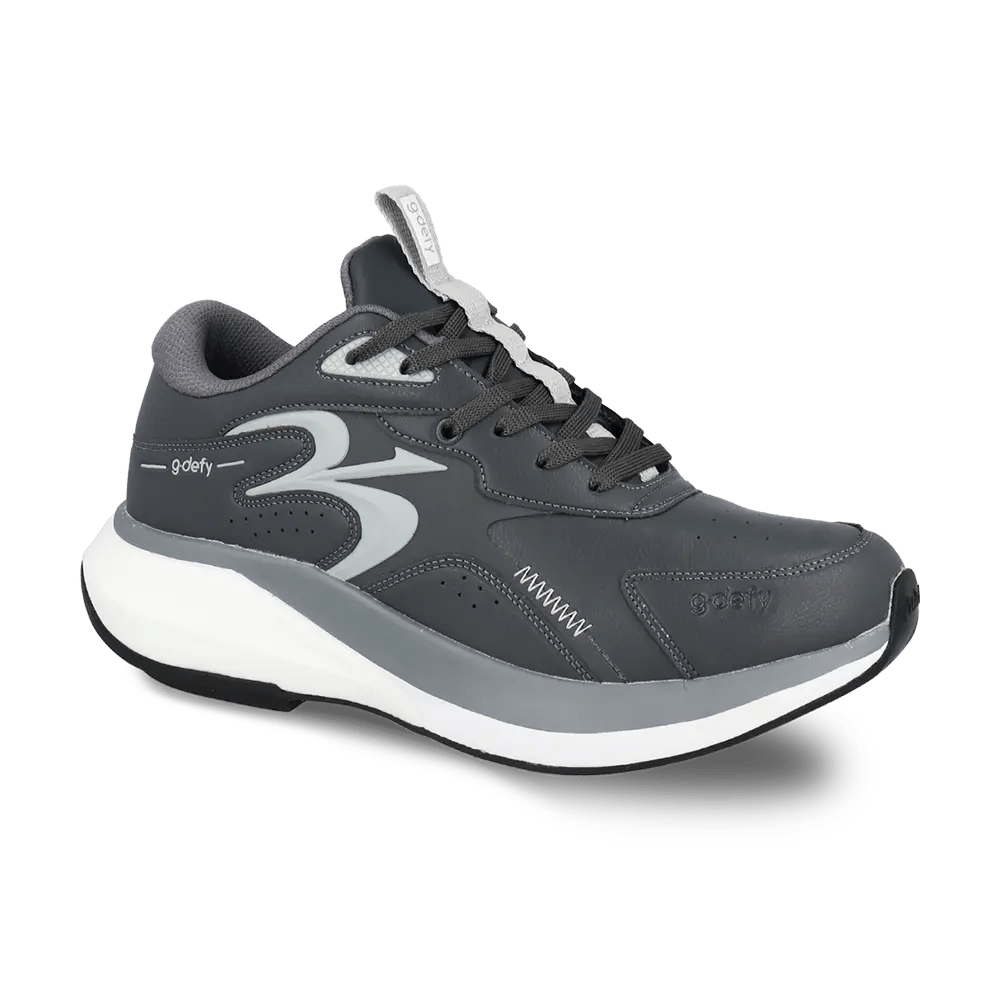
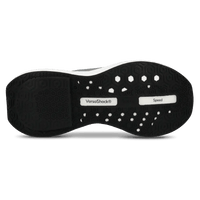
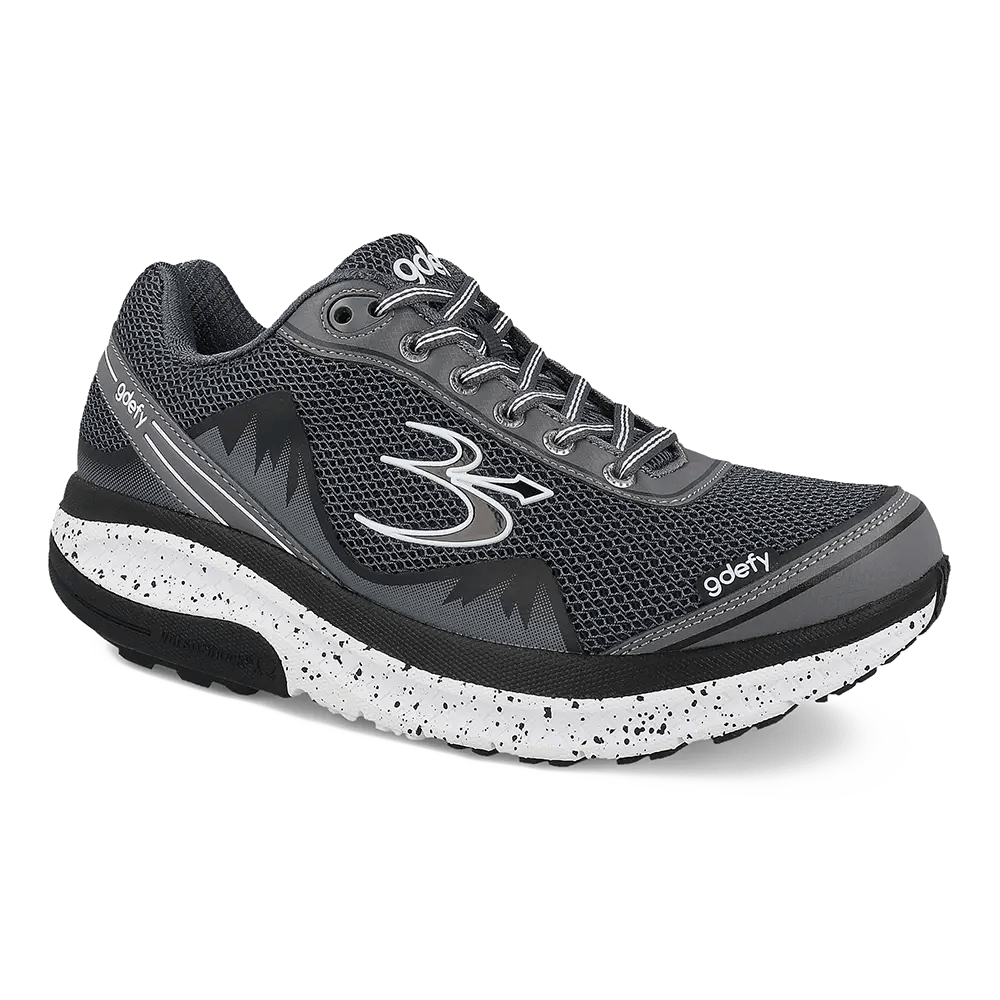
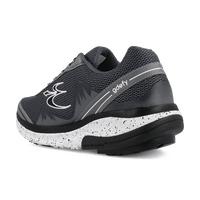
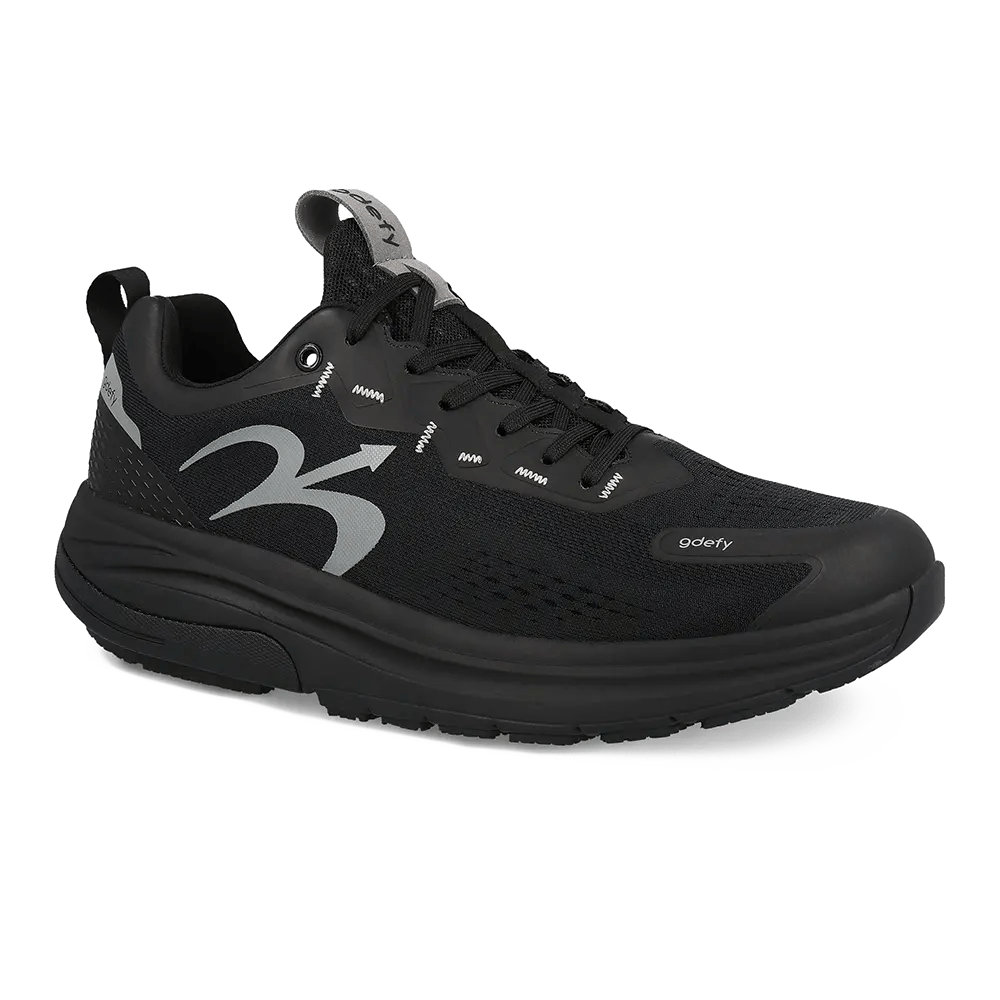
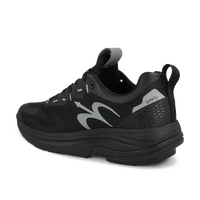
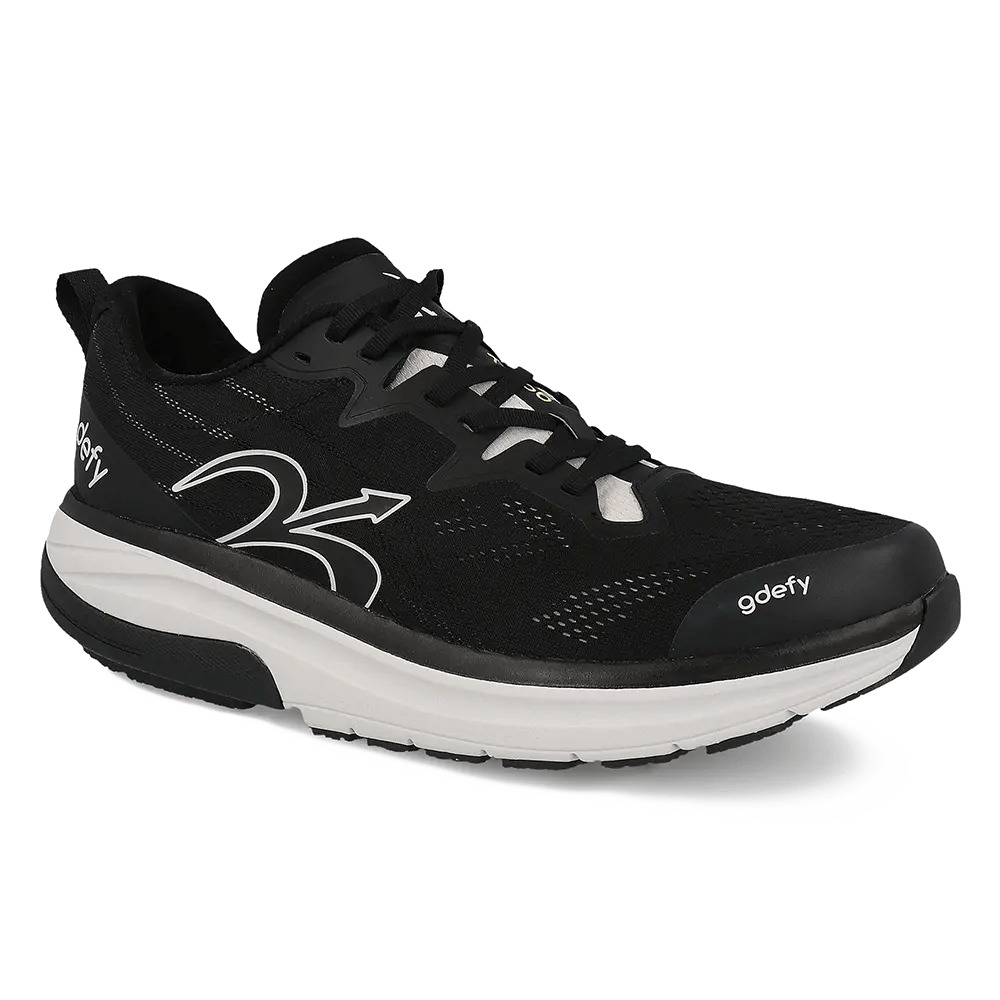
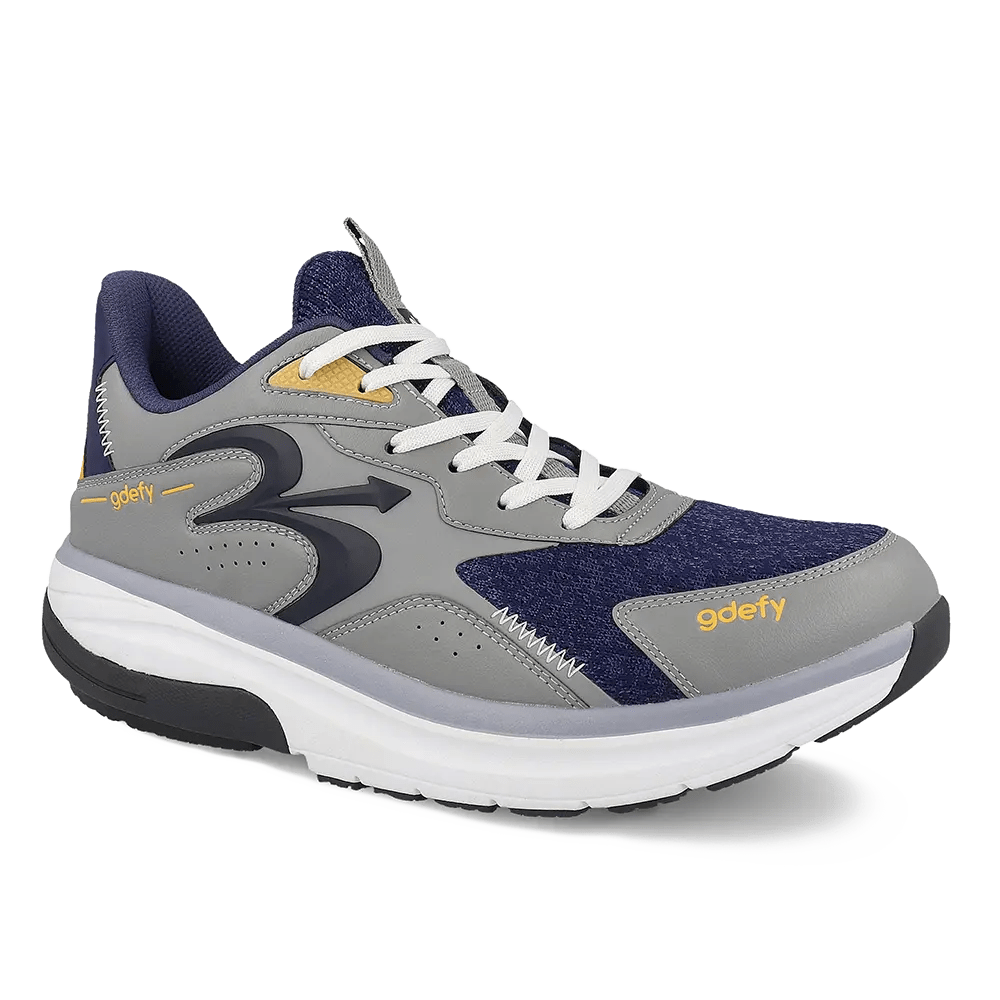
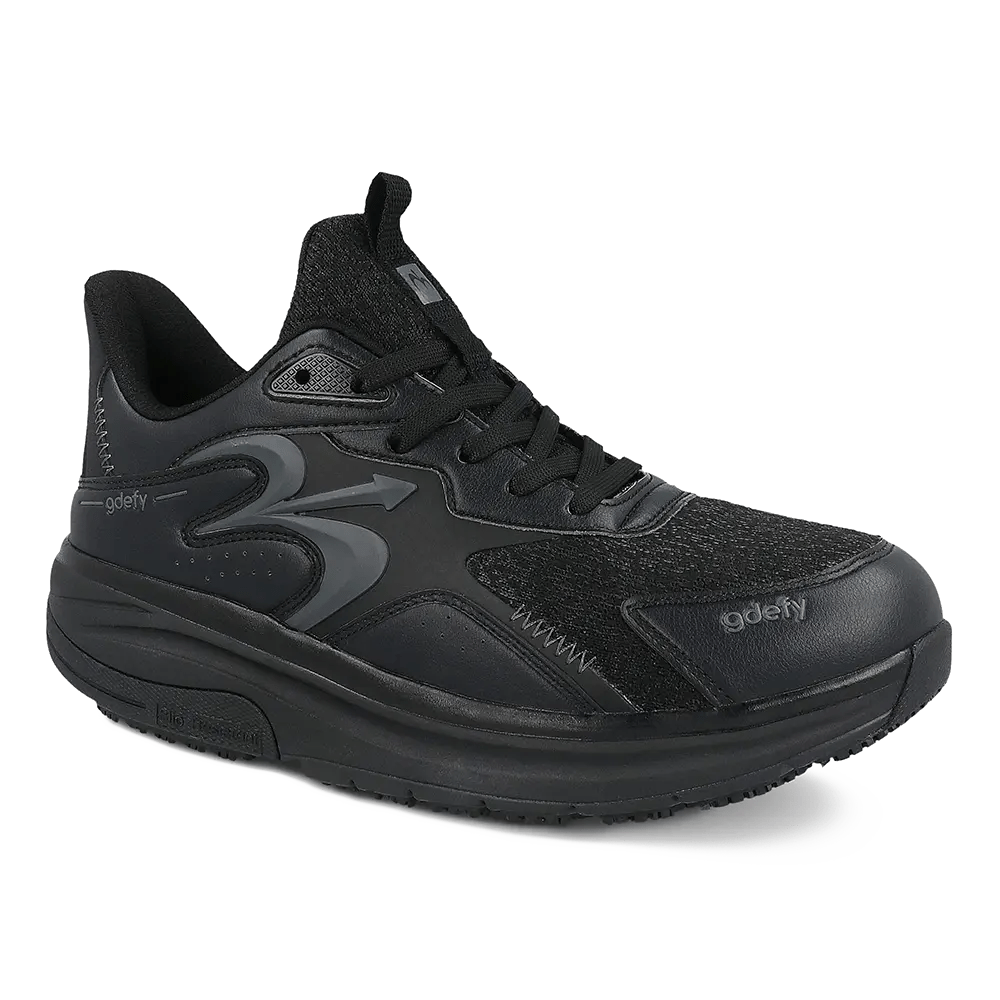
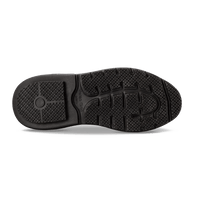
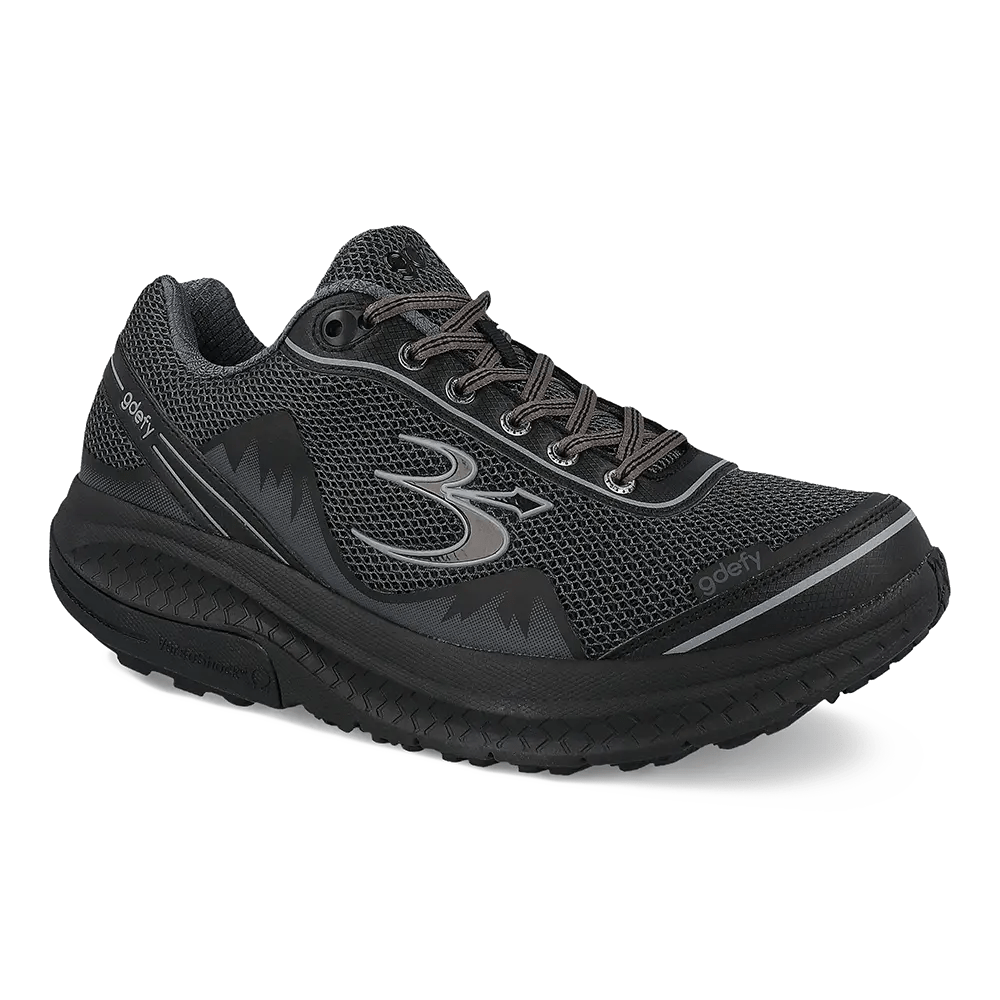
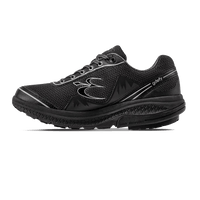
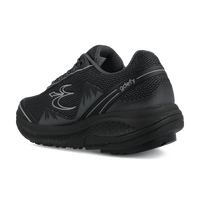
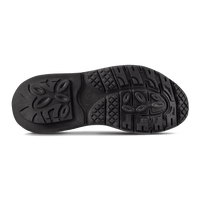
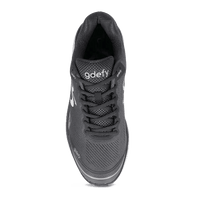
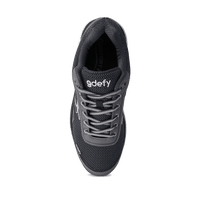
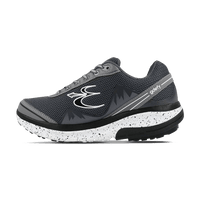
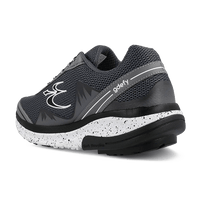
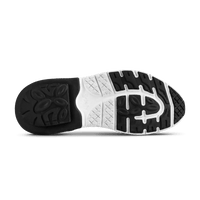
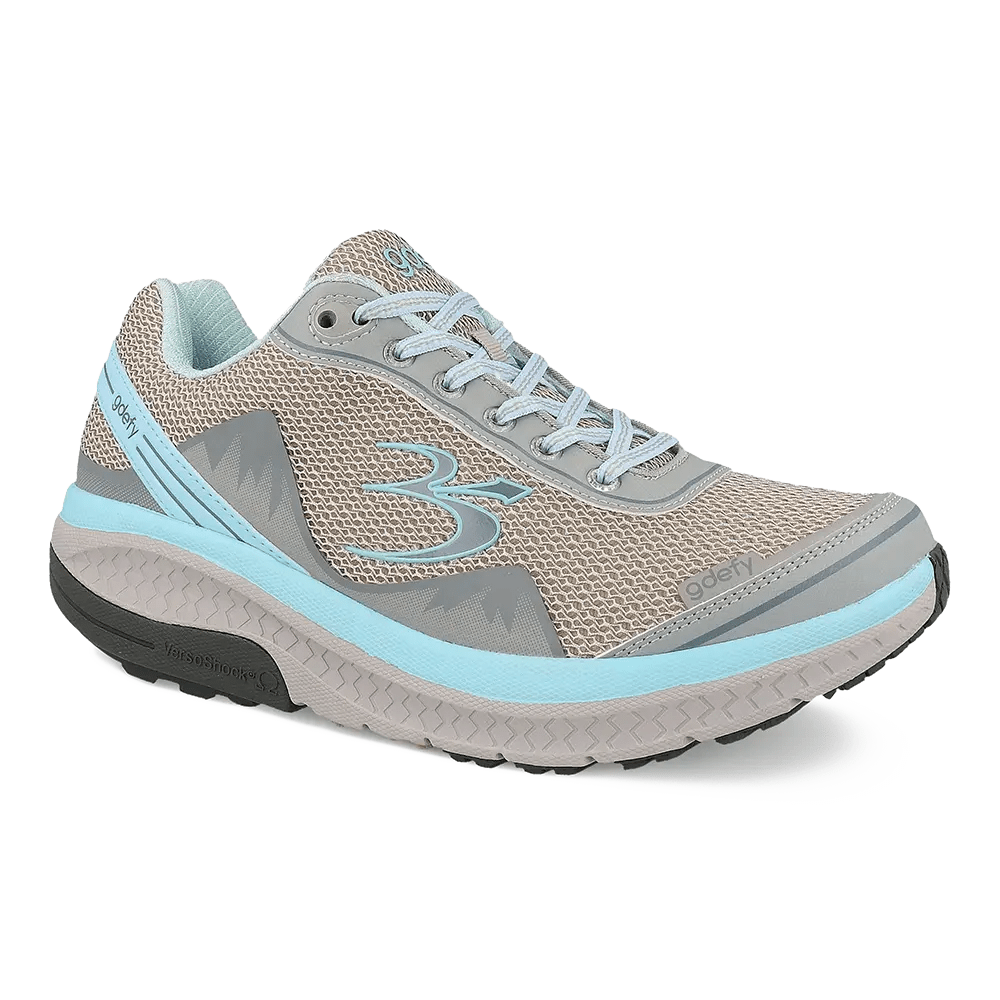
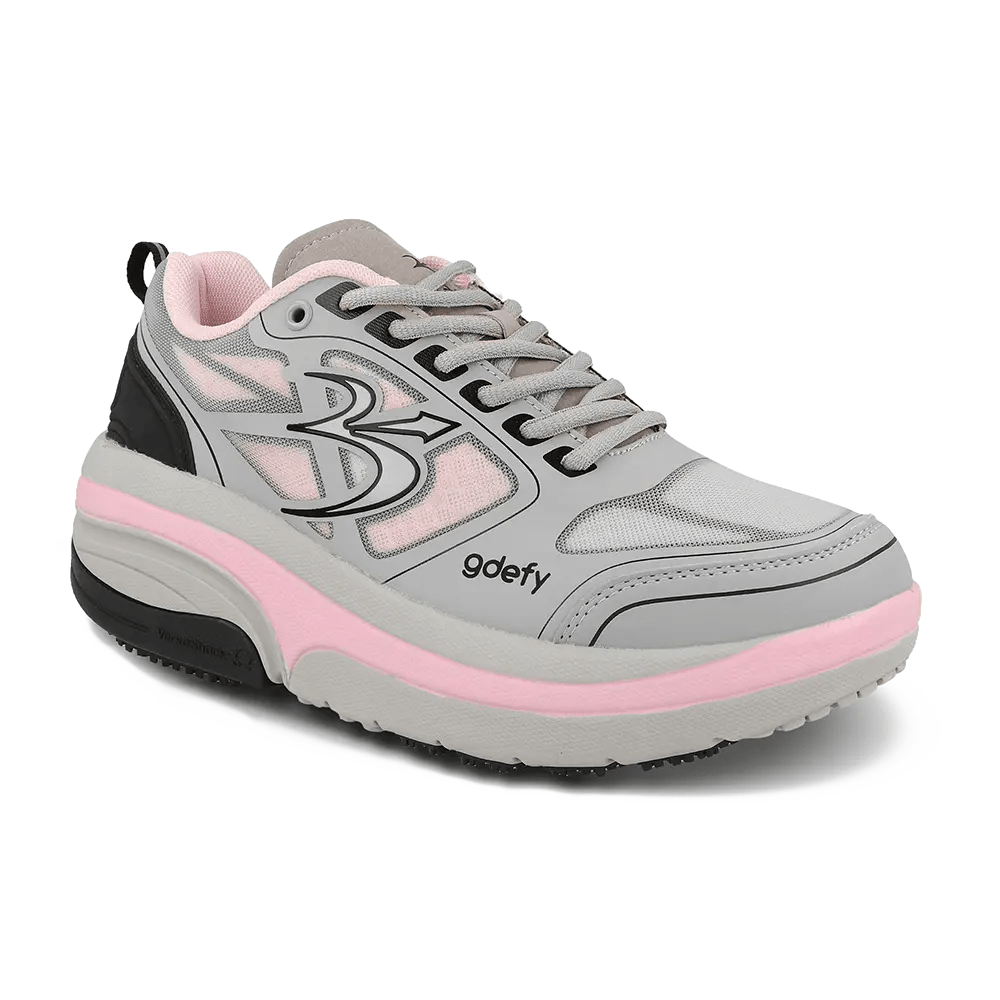
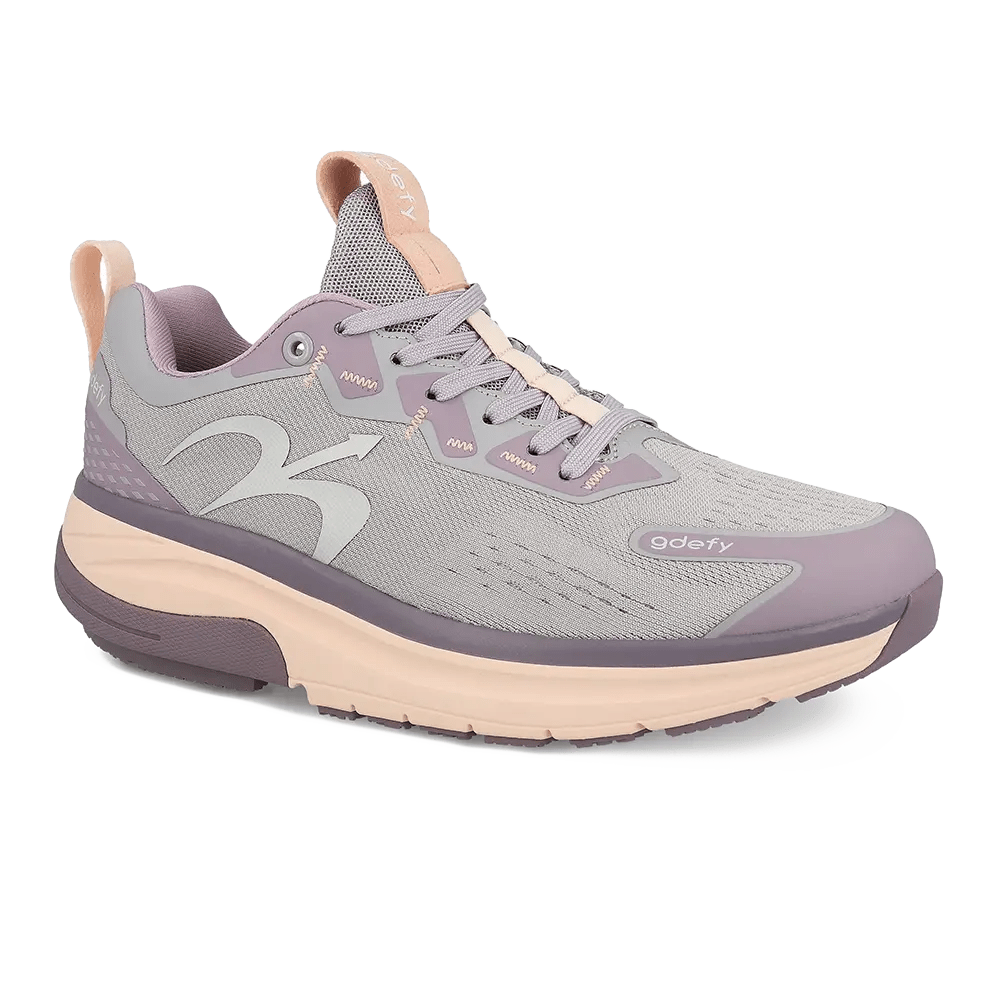
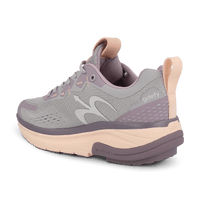
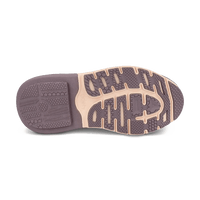
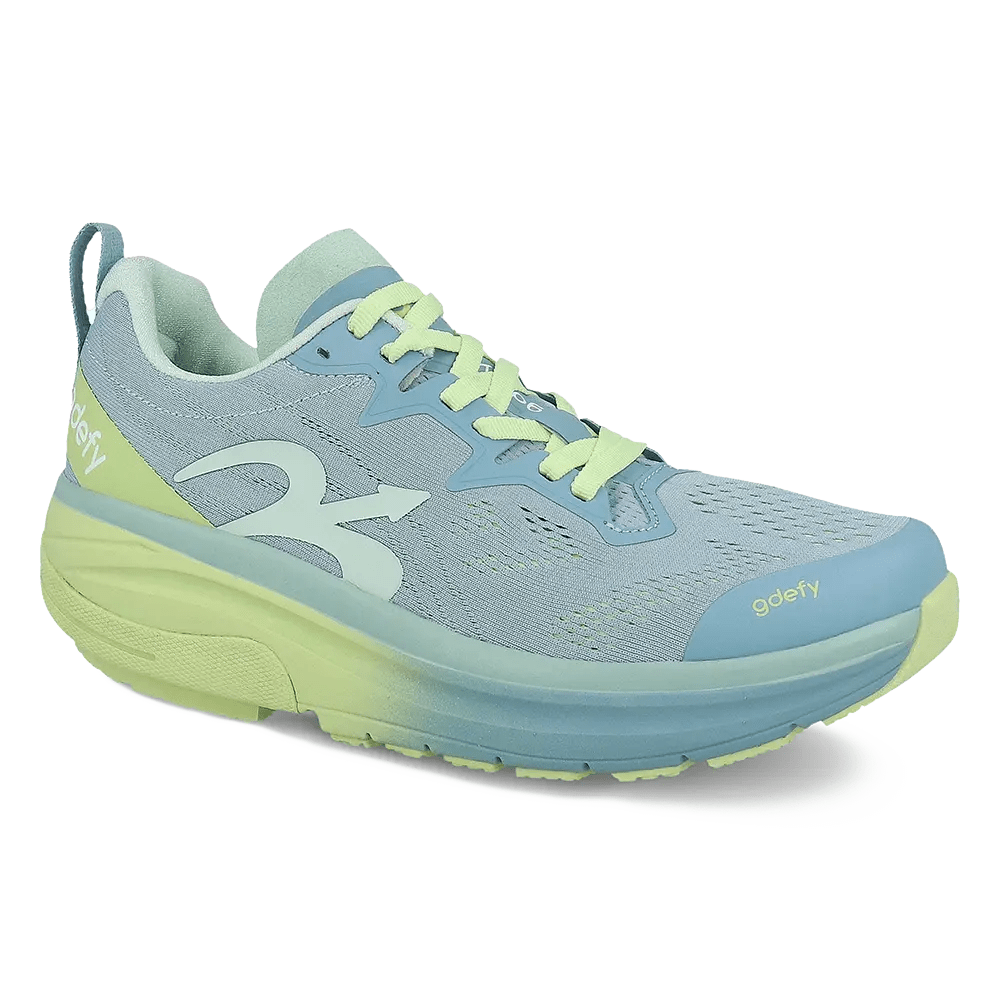
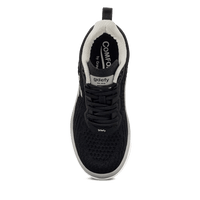
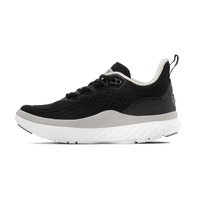
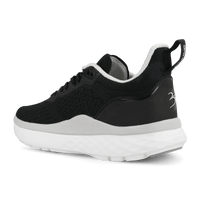
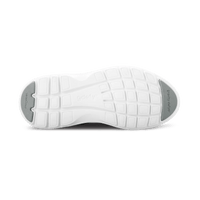
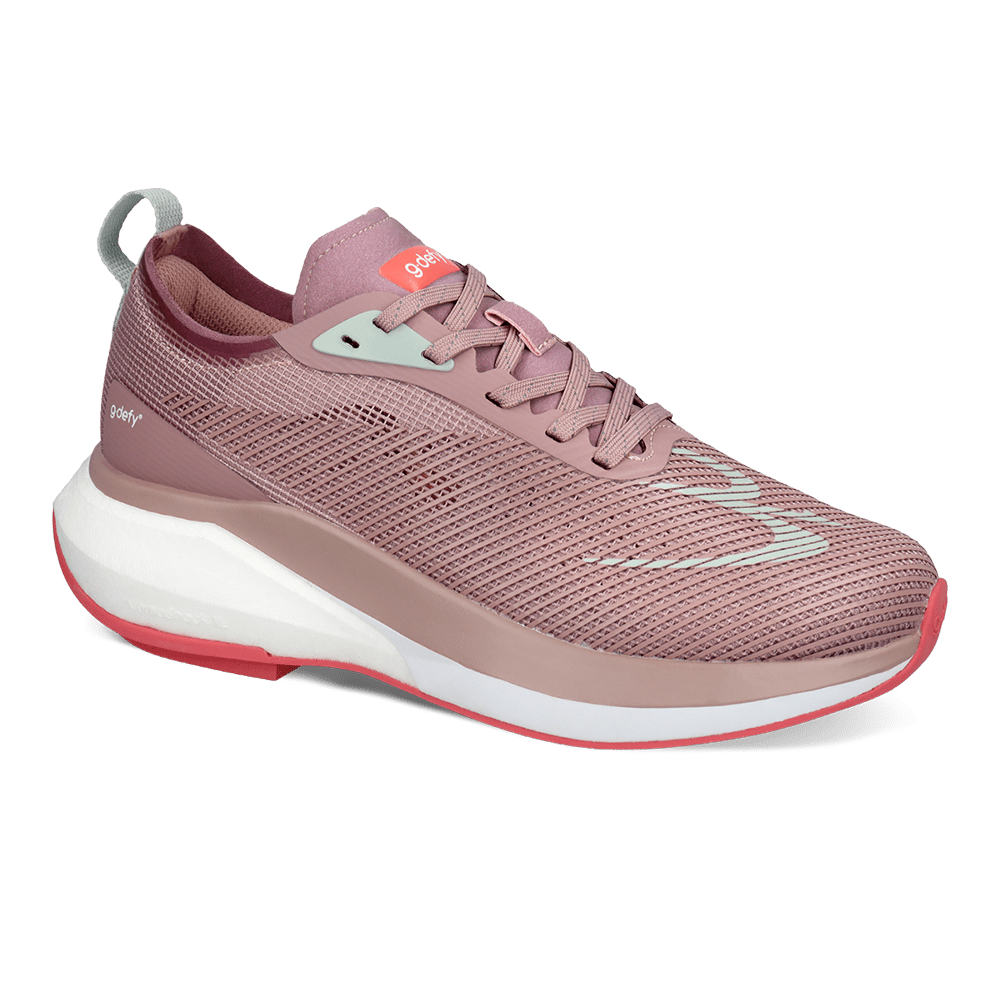
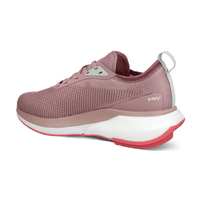
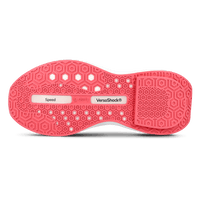
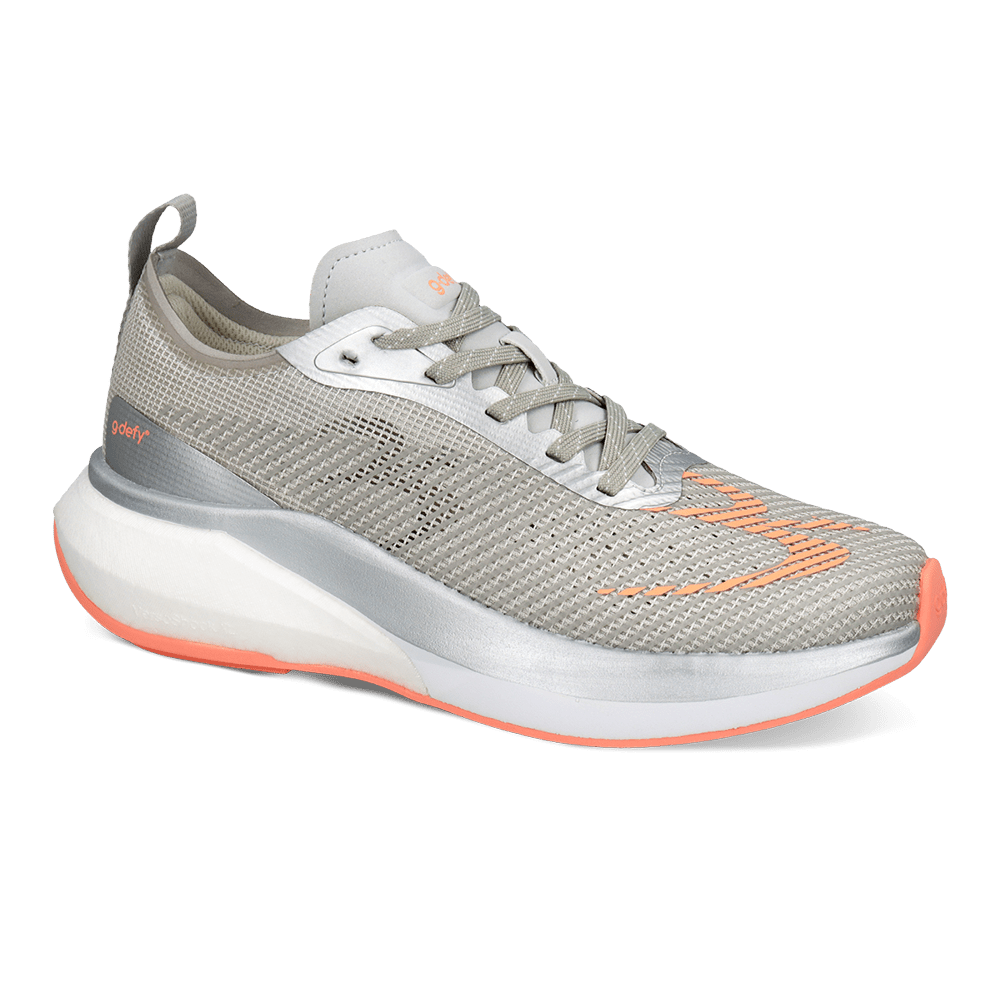
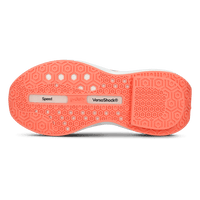
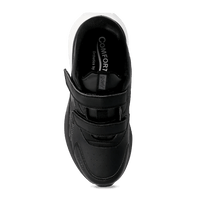
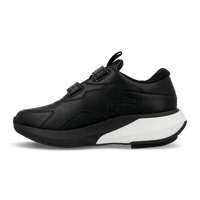
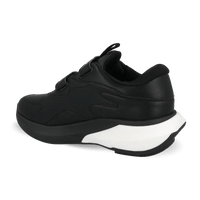
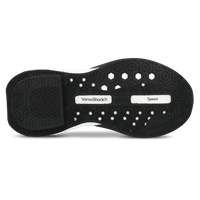
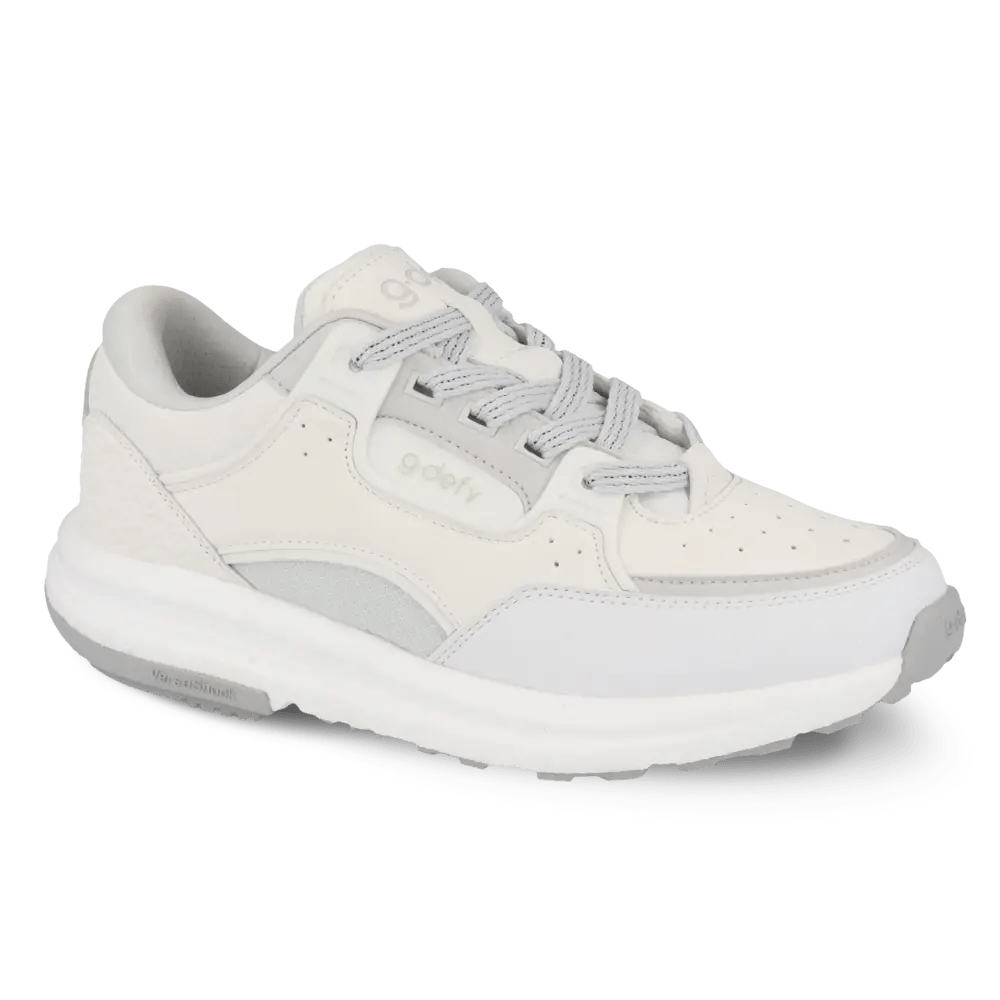
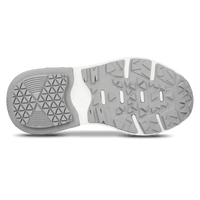
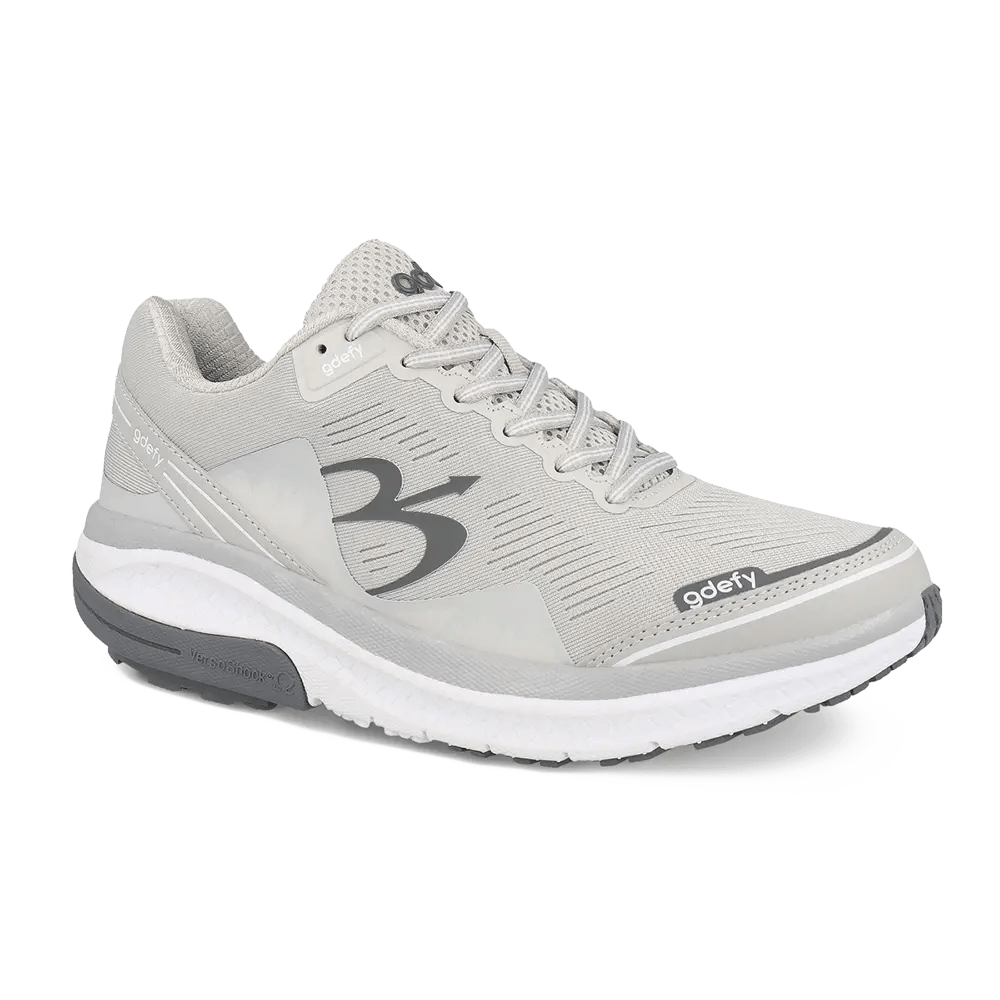
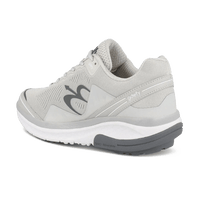
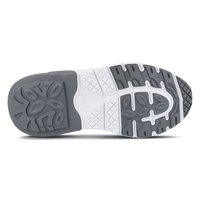
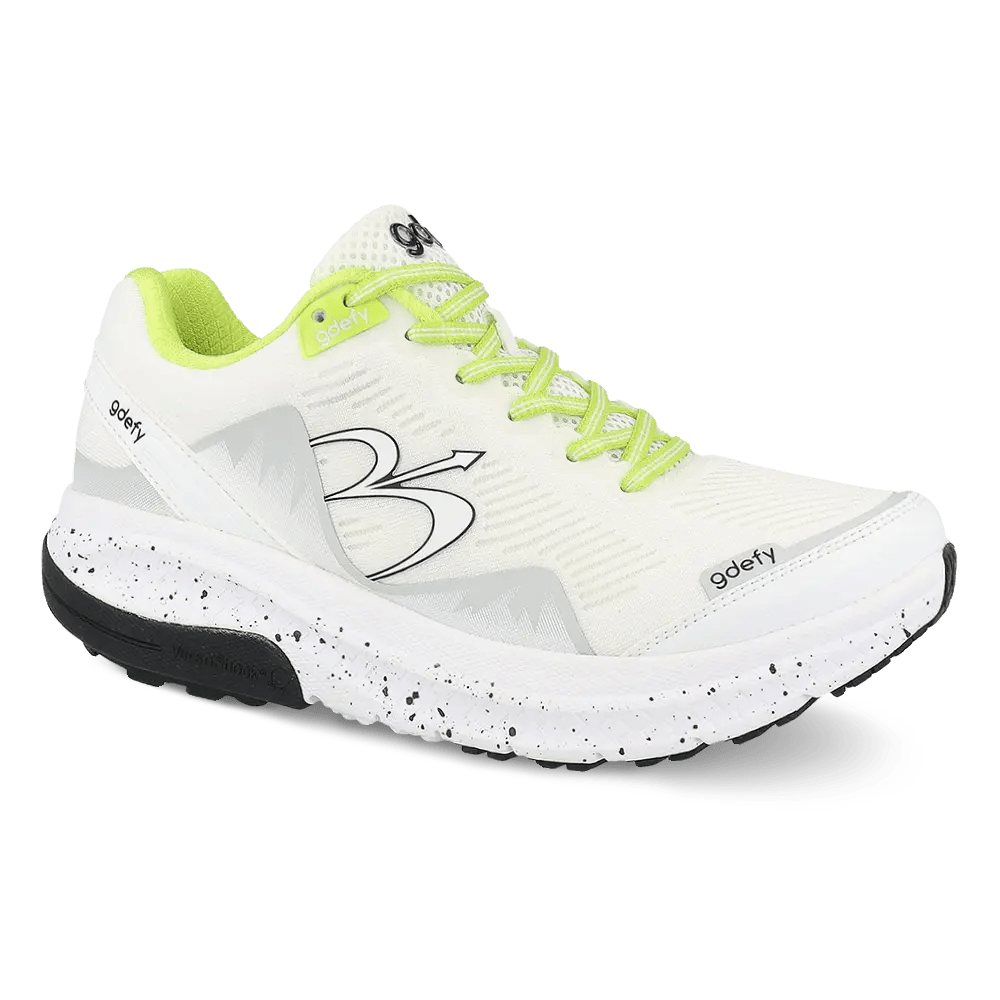
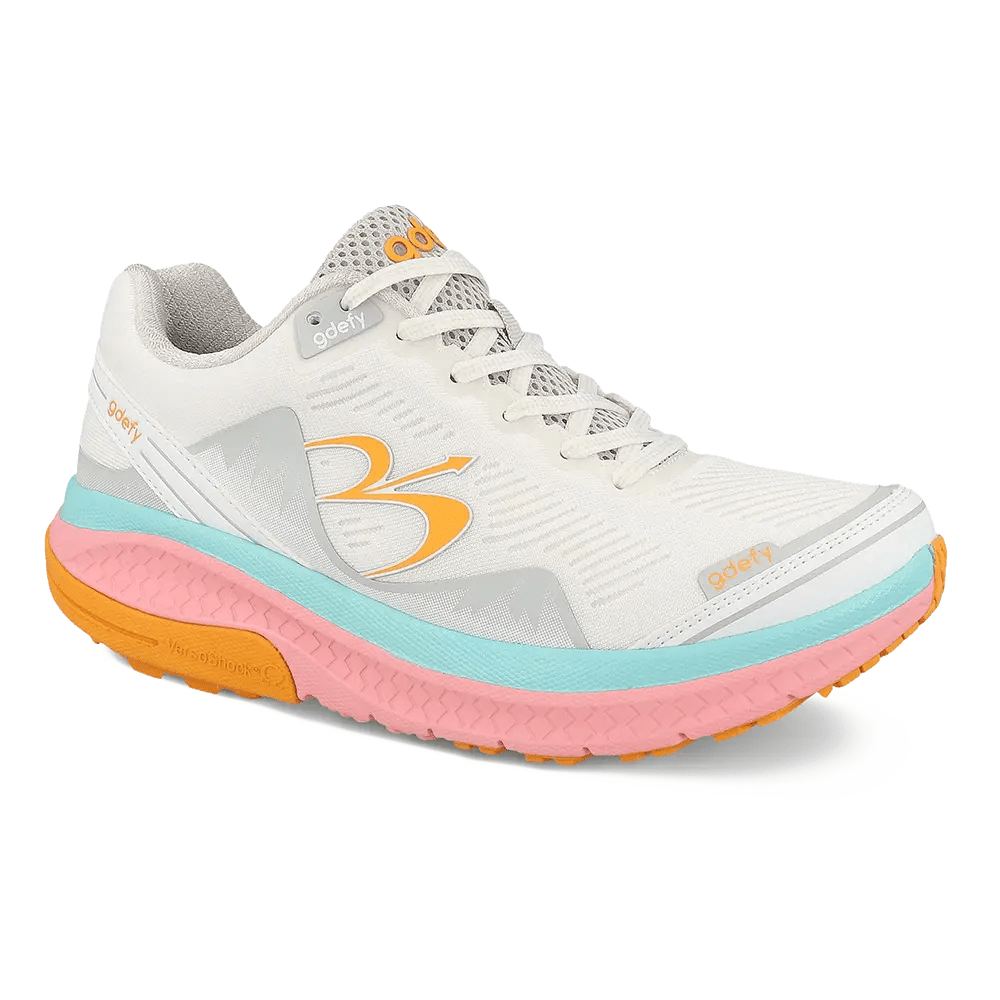
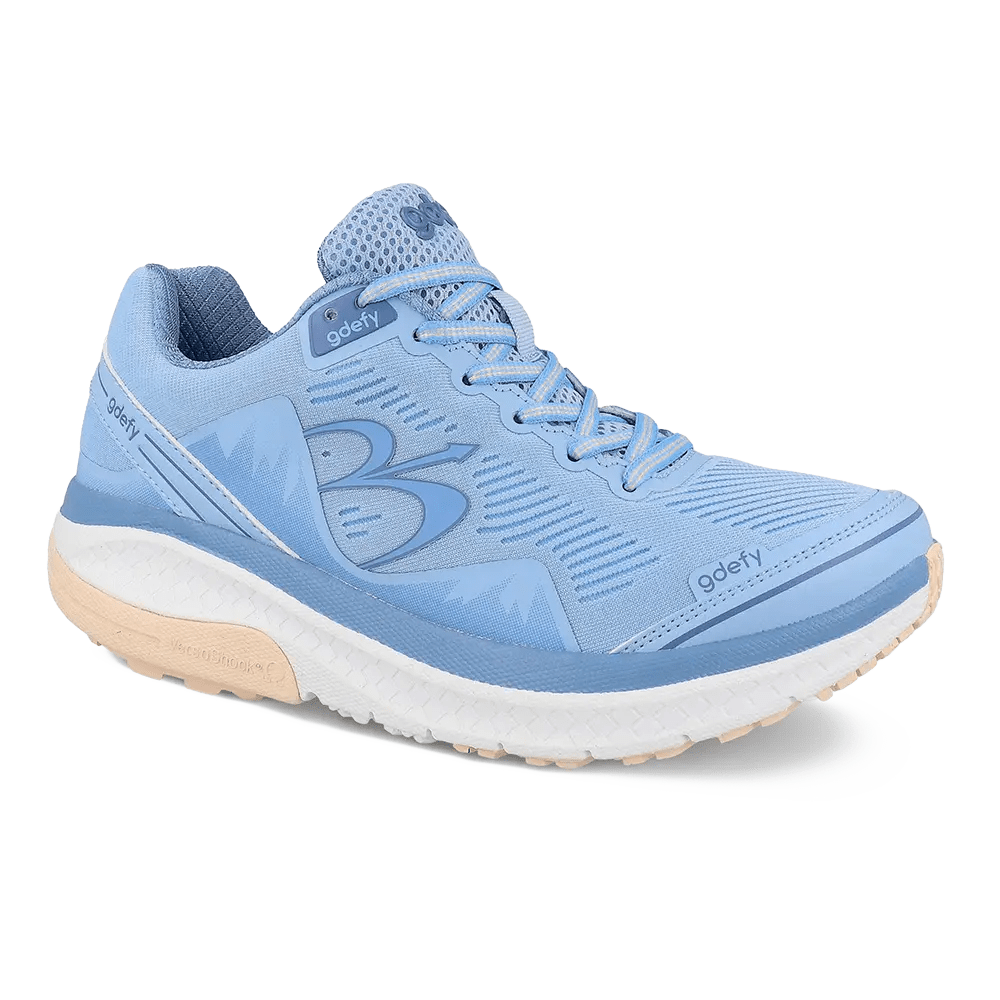
G-Defy shoes are engineered to provide comfort, support, and shock absorption. Featuring VersoShock® technology, they are designed to absorb impact and return energy with each step. A built-in stabilizer supports the foot during movement, while the front rolling design promotes a smooth walking experience. Each pair includes two removable orthotics to help customize comfort and support. G-Defy shoes help reduce pain from walking, running, and prolonged standing.

The four pillars work together on hard ground:
- Shock absorption — a spring-based system in the midsole designed to absorb impact softly and gradually rather than compressing flat.
- Energy return — the same system is built to return energy to support forward movement, instead of losing it the way standard foam does.
- Stabilizer — a built-in shank prevents excessive bending through the middle of the shoe, encouraging more controlled motion.
- Front rolling design — promotes a smooth heel-to-toe transition, which supports a more natural walking motion.
Two removable orthotics come with every pair: the ComfortFit® for low to medium arches and the CorrectiveFit® for higher arches, so one shoe can be set up two ways. You can read the full mechanical breakdown in how VersoShock® technology works.
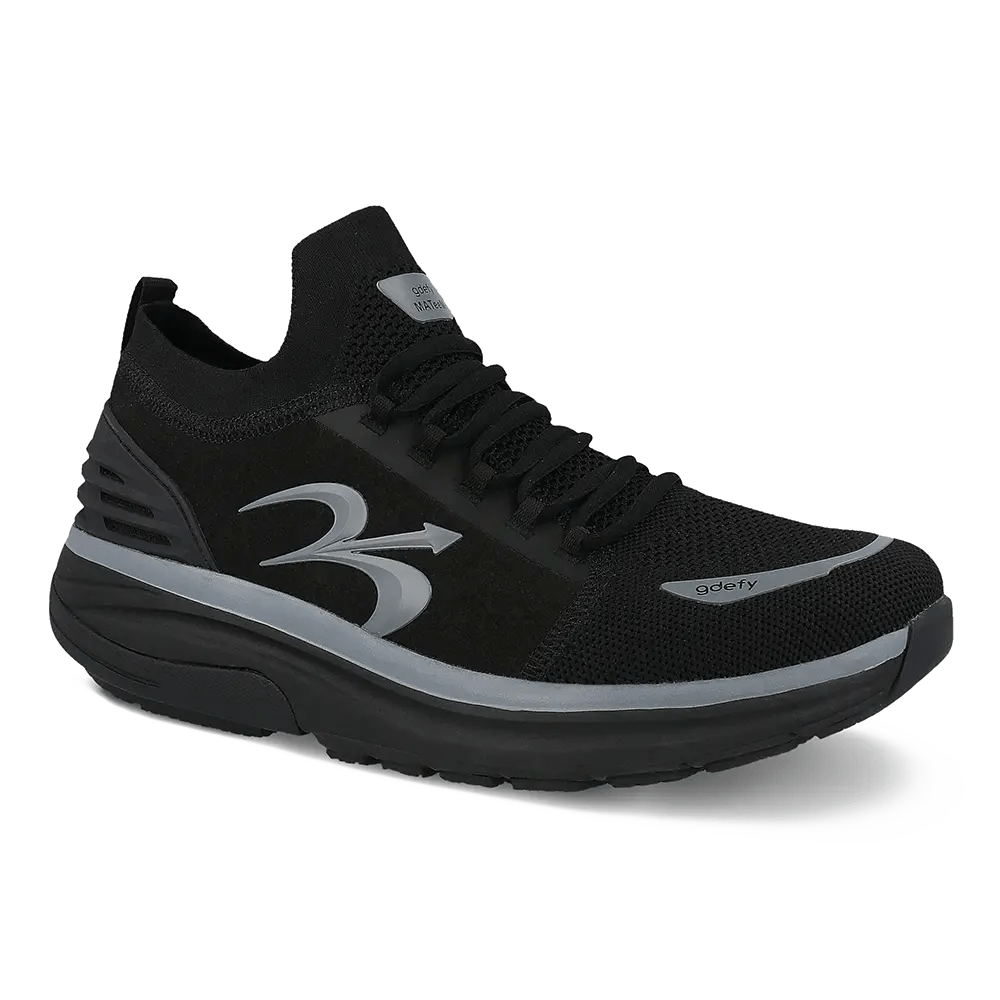
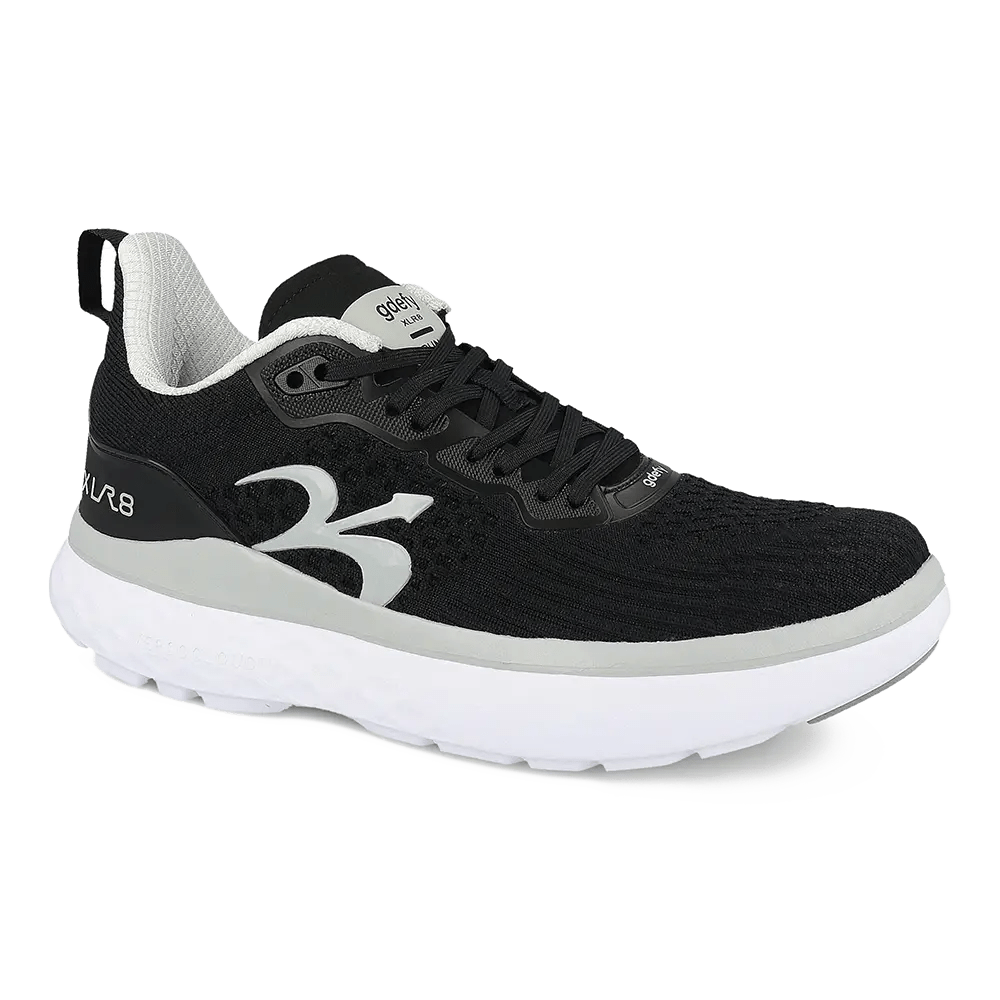
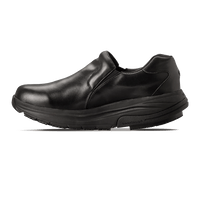
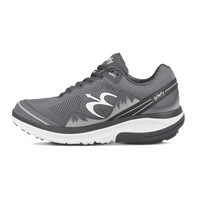
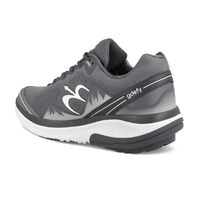
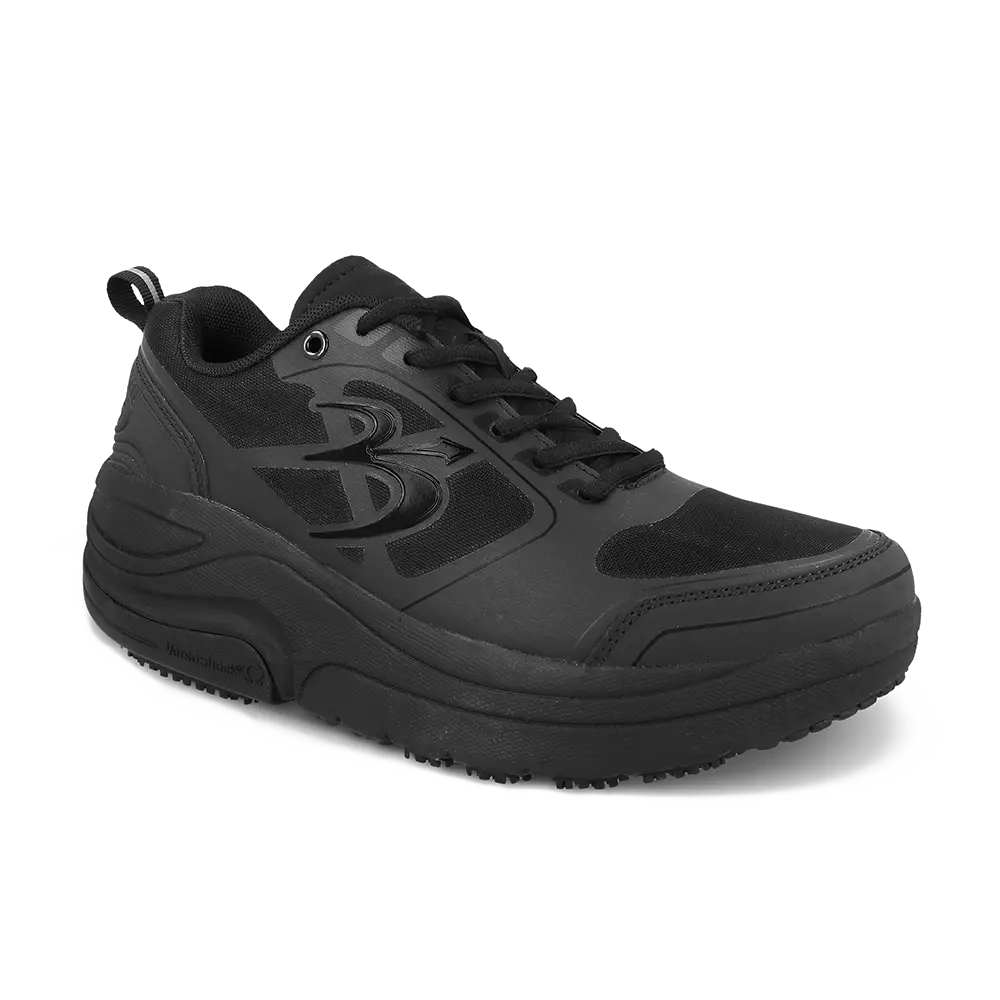
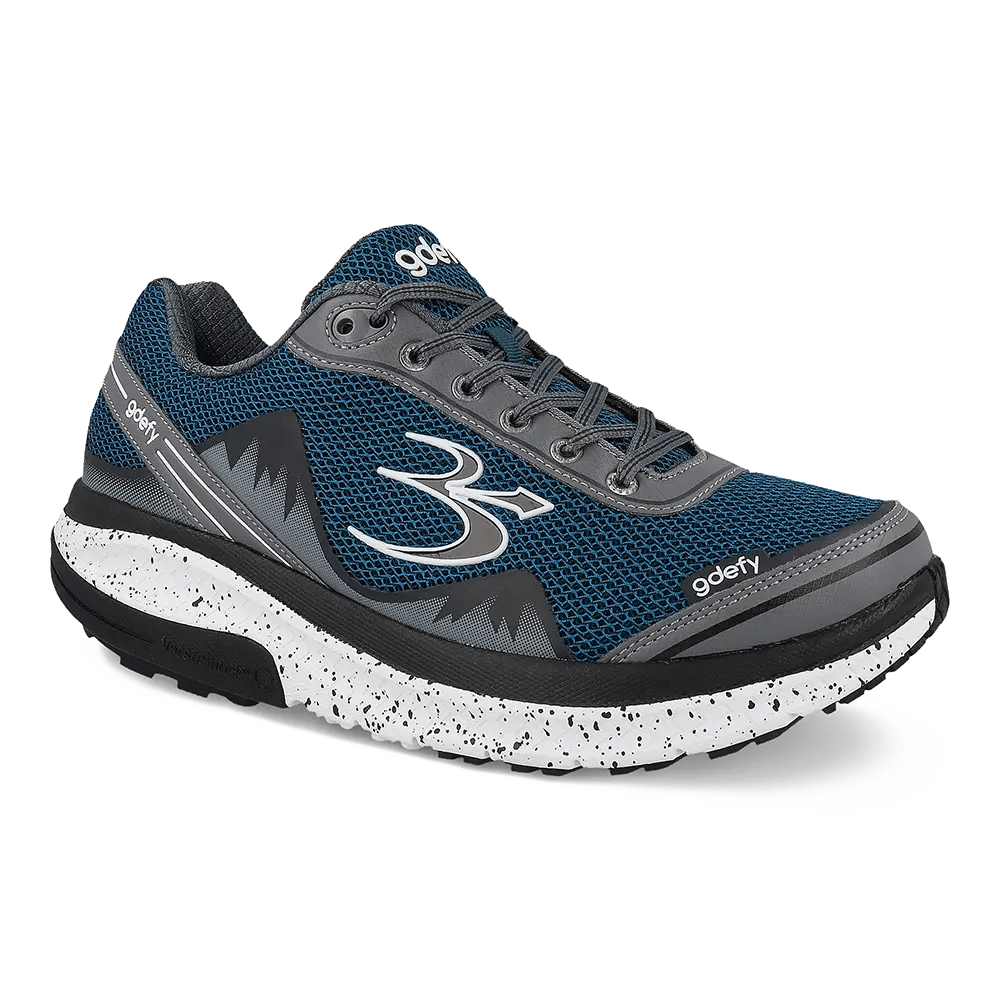
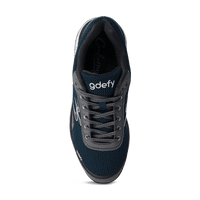
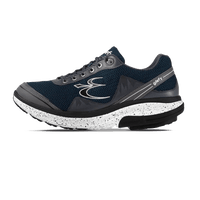
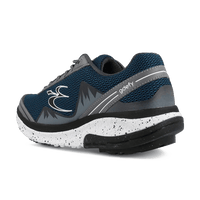
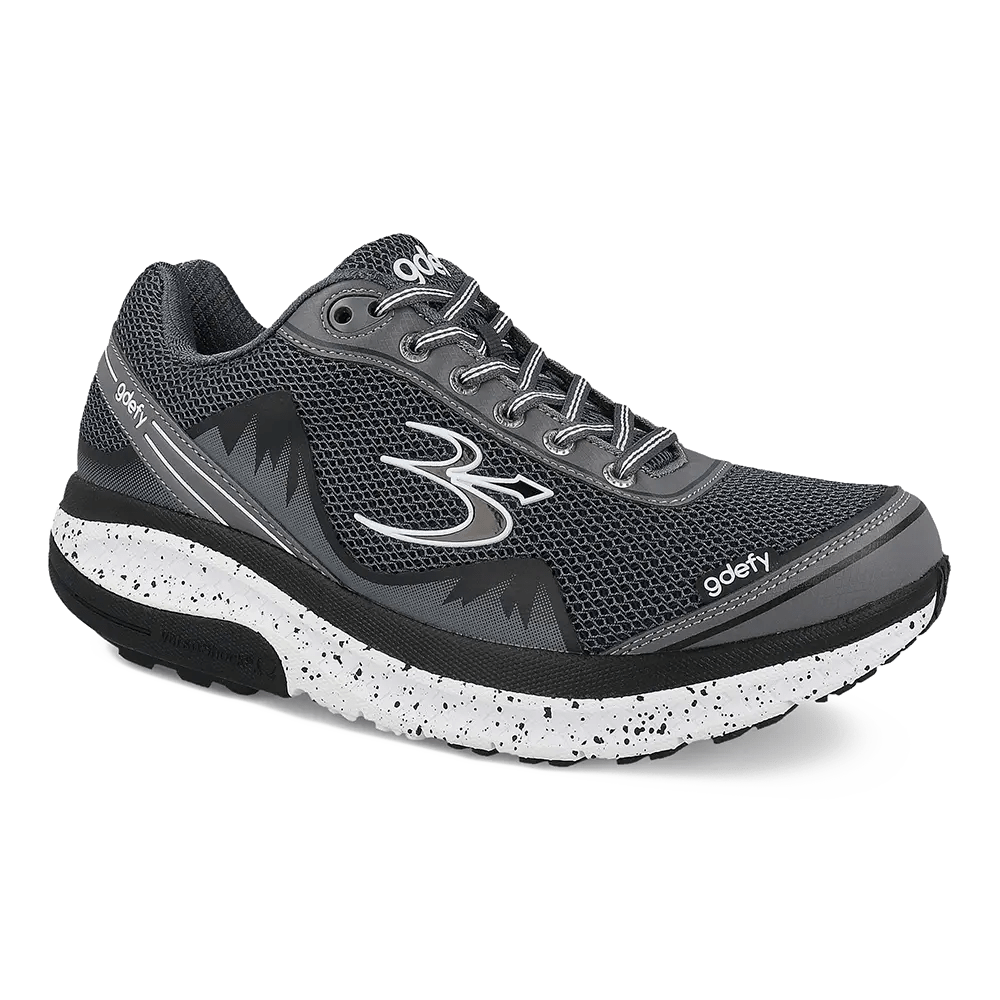
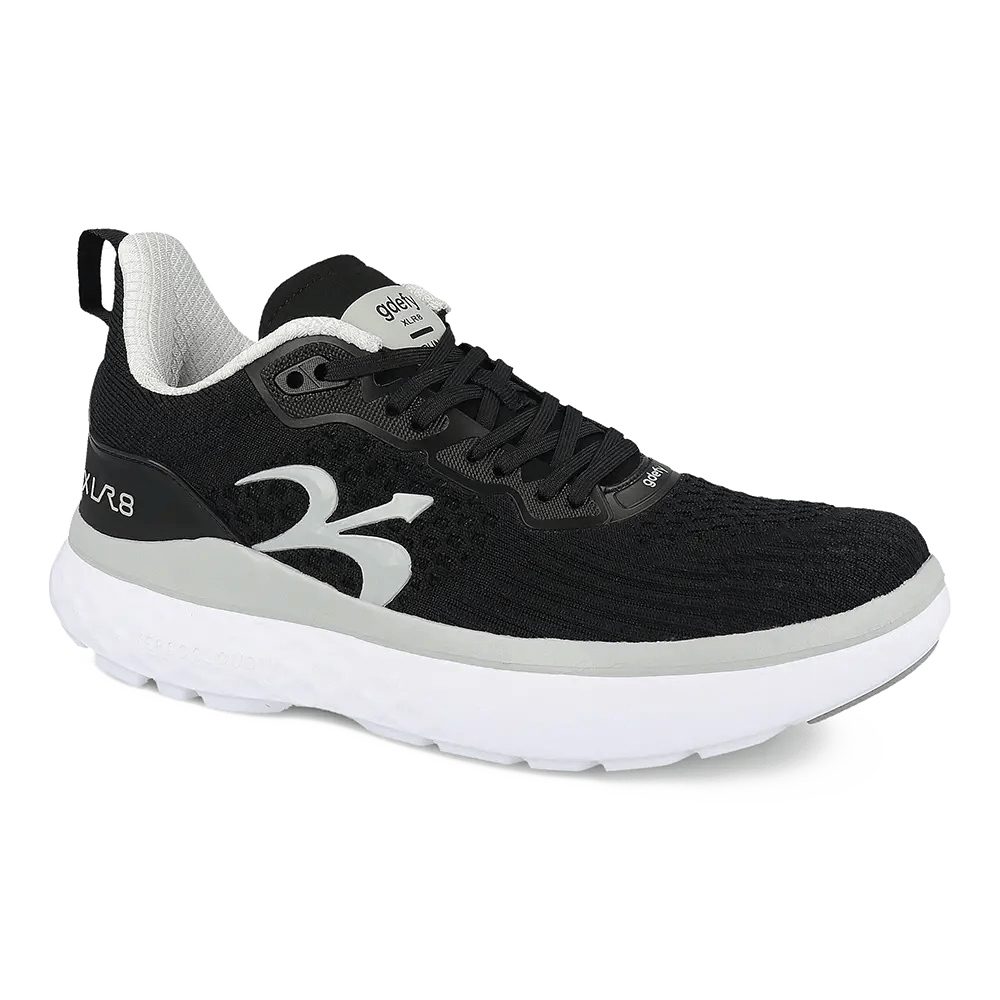
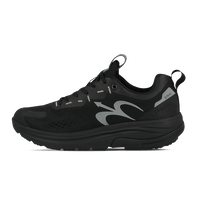
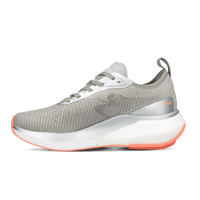
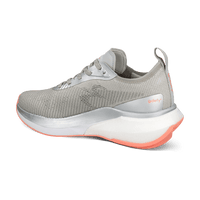
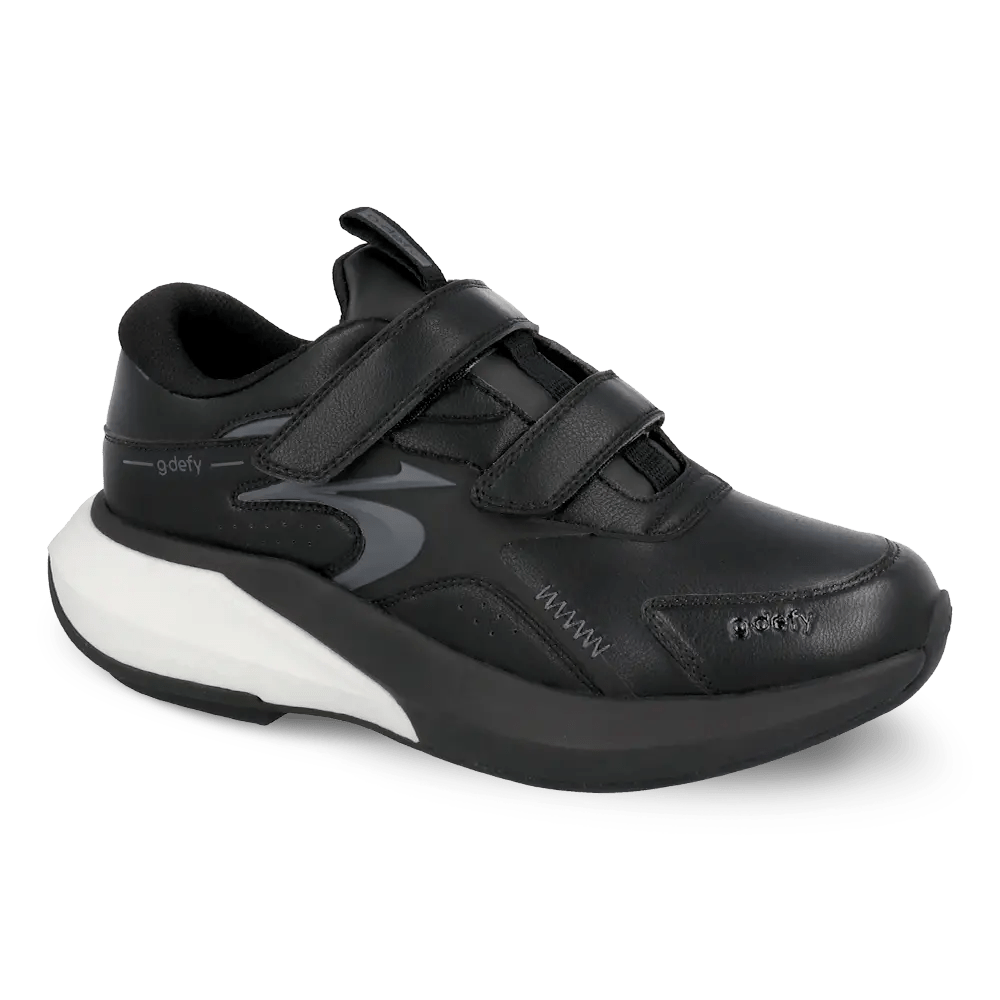
For sidewalk and shop-floor days, the Mighty Walk is built around all-day walking comfort. If your hard-surface miles are running miles, the XLR8 Run is the lighter, faster option. Browse the full range for men and women.
More background on footwear and knee comfort is in our knee pain and shoes guide.
Practical Tips for Hard-Surface Days
- Mix your surfaces when you can. If your route allows it, take the grass verge or the dirt path for part of the walk instead of all sidewalk.
- Rotate two pairs. Midsole foam recovers between wears. Alternating pairs gives each one a day off.
- Replace worn shoes. When the midsole stops feeling springy, it has stopped doing its job — regardless of how the upper looks.
- Build distance gradually. Adding a lot of hard-surface mileage at once is a common way to end a walk uncomfortable.
- Check your fit yearly. Foot size and width change over time. A shoe that fit three years ago may not fit now.
- Stand smart, too. If you are stationary on a hard floor, shift your weight and use a mat where one is available.
What Our Customers Say
Composite accounts based on common customer feedback. Results vary by individual.
A retail floor manager, Ohio. “Eight hours a day on polished concrete. I used to notice it in my legs by mid-afternoon. Since switching, the back half of the shift feels a lot more manageable.” Results vary by individual.
A daily walker, Arizona. “Most of my route is sidewalk because that is what my neighborhood has. These feel noticeably more cushioned than what I was wearing before, especially on the way back.” Results vary by individual.
A weekend hiker, Oregon. “I bought them for trails and ended up wearing them for errands too. The parking-lot-and-grocery-store days are where I actually notice the difference.” Results vary by individual.
Results vary by individual. For persistent knee pain, consult your healthcare provider.
Frequently Asked Questions
Does walking on concrete cause knee pain?
Concrete is a hard surface that gives very little when you step on it, so more of each landing travels back up through the shoe. Many people notice more fatigue after time on hard ground. Supportive and cushioned footwear may improve overall comfort during walking and prolonged standing. For persistent knee pain, consult your healthcare provider.
Is grass or dirt better for walking than pavement?
Softer surfaces compress slightly underfoot, which many people find more comfortable over the same distance. Uneven ground asks more of your balance, though, so it is a trade-off rather than a clear winner.
Are treadmills easier on the knees than sidewalks?
A treadmill deck typically has more flex than concrete, and the surface is flat and predictable. Many walkers find it comfortable, though it does not prepare you for uneven outdoor footing.
What shoe features matter most on hard surfaces?
Cushioning, shock absorption, stability, energy return, and proper fit. Together they support a more comfortable stride when the ground itself is doing none of the absorbing.
How often should I replace shoes I wear on concrete?
There is no single number, but hard surfaces compress midsole foam faster than soft ones. When the cushioning stops feeling responsive underfoot, it is time to look at a replacement.
Can changing my walking route make a difference?
Possibly. Swapping part of a route for a softer surface is a simple change some walkers find helpful. It costs nothing to try.
The Bottom Line
The ground under your feet is a variable most people never think about. Hard, unyielding surfaces like concrete and asphalt send more of each step back at you, and they happen to be where most of us do most of our walking.
While footwear is not a medical solution, choosing shoes designed for comfort, support, and shock absorption can make a meaningful difference in how you feel throughout the day — especially when the surface is doing none of the work for you.
Test them on your own routes
Every G-Defy pair comes with a 60-day risk-free trial, free shipping, and free exchanges.
Shop Men Shop Women