
August 09, 2026
What Causes Knee Pain Going Down Stairs and Downhill?
By Gdefy

Summary
Most people notice it the same way. Climbing a flight of stairs feels fine. Walking back down is the part that makes you reach for the handrail. The same thing happens on a hiking trail — the climb feels like work, but the descent is where your knees start talking to you.
If that sounds familiar, you are not imagining it. Going down puts a very different kind of demand on your legs than going up, and the shoes you are wearing change how much of that demand your body has to absorb.
This guide covers what actually changes when you go downhill, what to look for in shoes when descending is the hard part of your day, and a few practical habits that make stairs and slopes more comfortable. Footwear is not a medical solution — but the design underfoot plays a real role in overall comfort and support.
Why Going Down Feels Different Than Going Up
Climbing is a pushing motion. Your muscles shorten to lift you, and your body is moving up and away from the ground.
Descending is the opposite. Gravity is doing the moving, and your leg is doing the braking. Every step down is a controlled landing: your foot meets the step, your knee bends to slow the drop, and your thigh muscles lengthen under load to keep you from simply falling forward. That braking action repeats on every single step.
Two things follow from that. First, the landing is harder — you are arriving on the step with more downward momentum than you have on flat ground. Second, the muscles doing the work are working in a way that tires them faster. By the bottom of a long staircase or a long slope, those muscles have less left to give, and more of each landing gets passed along rather than absorbed.
That is the mechanical picture. It is also why descending tends to be the part of a walk people plan around.
What Makes Stairs and Downhill Walking Harder on Your Knees
The braking action repeats on every step
A flight of stairs is not one hard landing. It is a dozen of them in a row, at a steady rhythm, with very little chance to rest between steps. A long downhill stretch is the same pattern spread over more ground.
Landings are shorter and sharper
On flat ground your foot rolls through a long stride — heel, midfoot, toe. On a stair tread there is less room and less time. The foot lands, takes the load, and leaves. That compressed contact gives cushioning less opportunity to do its job, which is why thin or worn-out midsoles feel noticeably worse on stairs than they do on a sidewalk.
Footing is less predictable
Stair treads vary. Trail descents have loose gravel, roots, and uneven camber. When the surface under your foot is not quite where you expected it, your leg has to correct mid-landing — and correcting mid-landing is the least comfortable way to absorb impact.
Fatigue stacks up late in the day
Descending is often the end of something: the end of a hike, the walk down from a second-floor office at 5 p.m., the trip back down the bleachers. Tired legs brake less smoothly than fresh ones, so the last few steps are frequently the ones people feel most.
Everyday footwear is usually built for flat ground
Most casual shoes are designed around level walking. Flat, firm outsoles and shallow cushioning are perfectly adequate on a sidewalk and much less helpful on a descent, where the shoe is being asked to handle a sharper landing and a less stable platform.
What to Look for in Shoes for Stairs and Downhill Walking
If descending is the part of your day that bothers you, these are the features worth paying attention to.
- Shock absorption in the heel. Descending loads the heel first and hardest. A midsole that actually absorbs impact — rather than a thin foam layer that bottoms out — changes how sharp each landing feels.
- Cushioning that holds up over time. Foam compresses with mileage. A midsole that has flattened out will feel fine on flat ground and noticeably harsh on stairs, because stairs are where the cushioning gets tested.
- Stability underfoot. A stable platform keeps the foot from rolling sideways during those less-predictable landings, which supports a steadier, more controlled step down.
- A smooth forefoot transition. After the landing comes the roll onto the toe to reach the next step. A rolling front design keeps that transition from feeling abrupt.
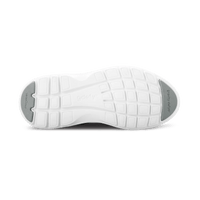
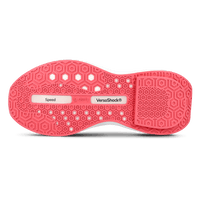
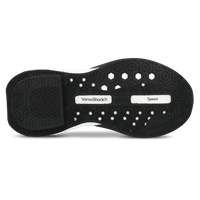
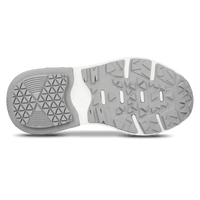
- Outsole tread with real grip. Descending is where traction matters most. Look for a tread pattern with genuine depth rather than a smooth, flat sole.
- A secure, properly-fitted heel. On a descent your foot slides forward inside the shoe. A snug heel and correct length stop your toes from jamming into the front on every step — a small fit issue that becomes a big comfort issue after two flights.
- Adjustable support. Removable orthotics let you fine-tune the level of support, which matters more on demanding surfaces than on flat ones.

How G-Defy Shoes Approach Impact on the Way Down
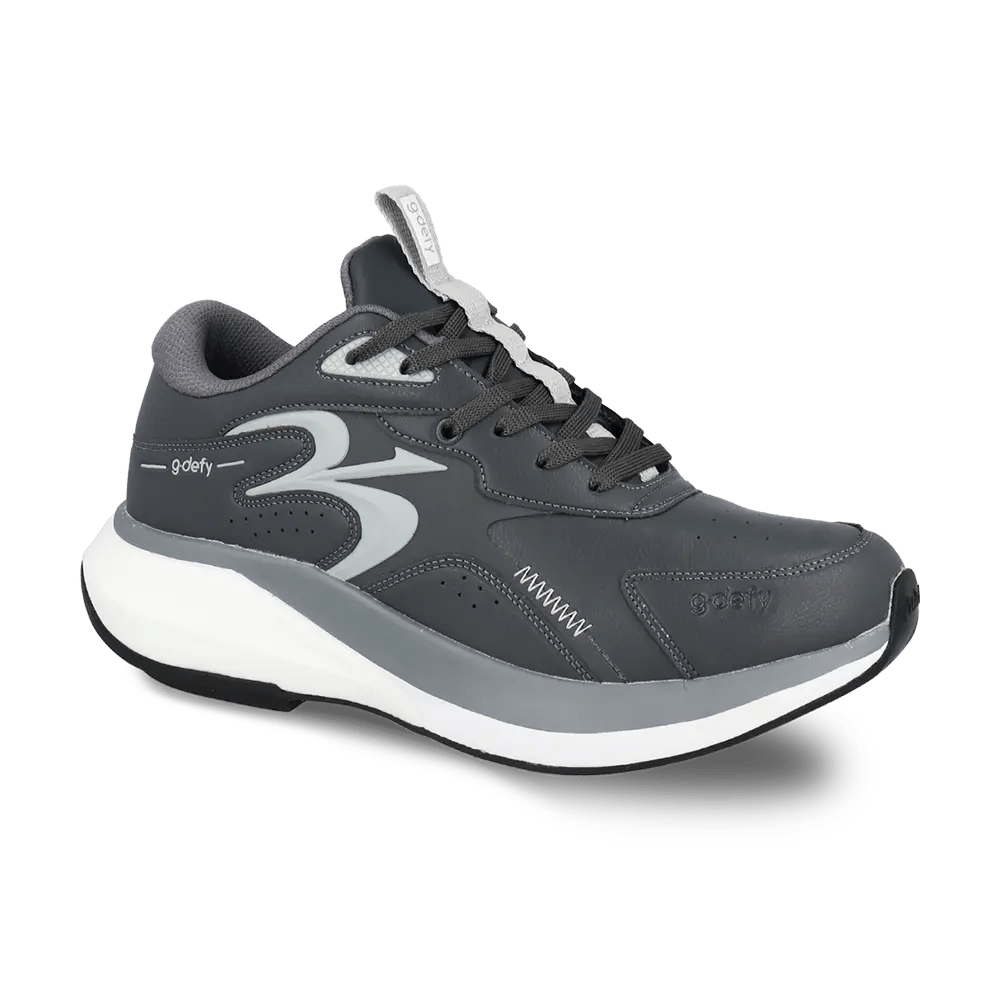
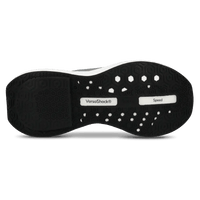
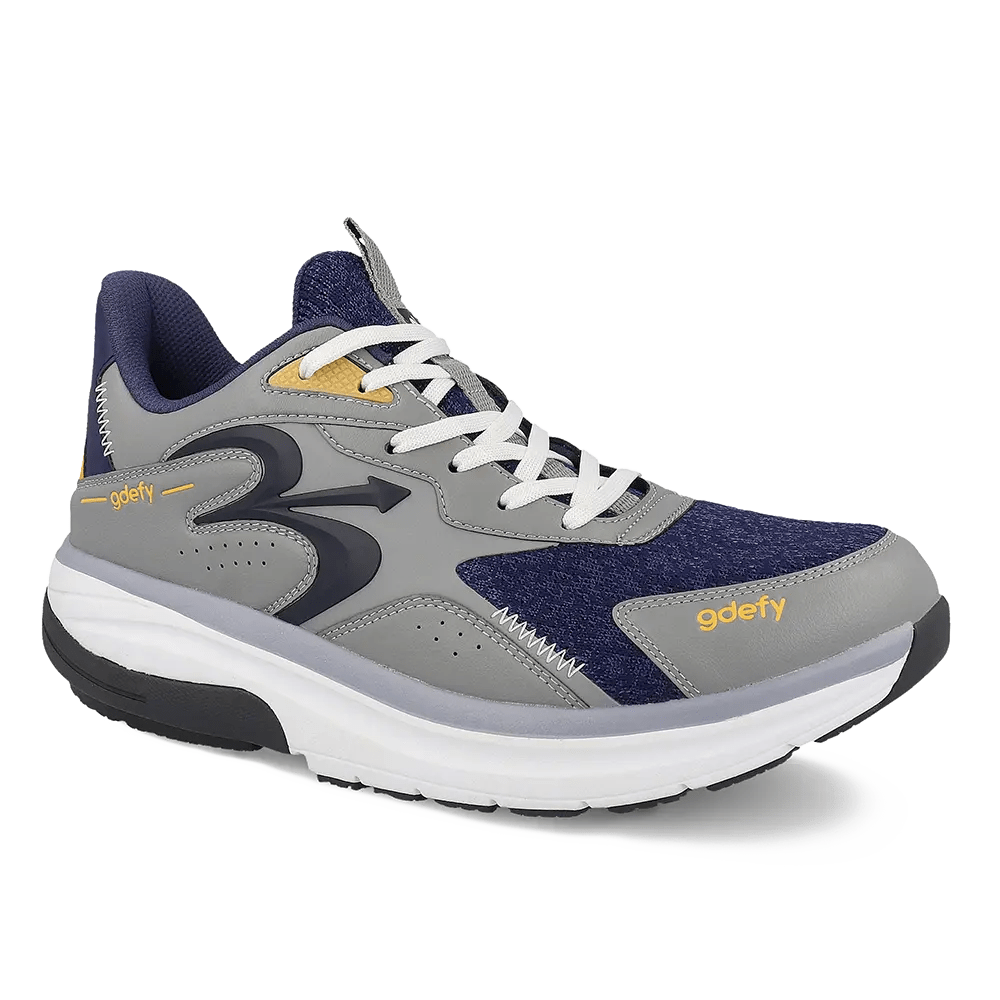
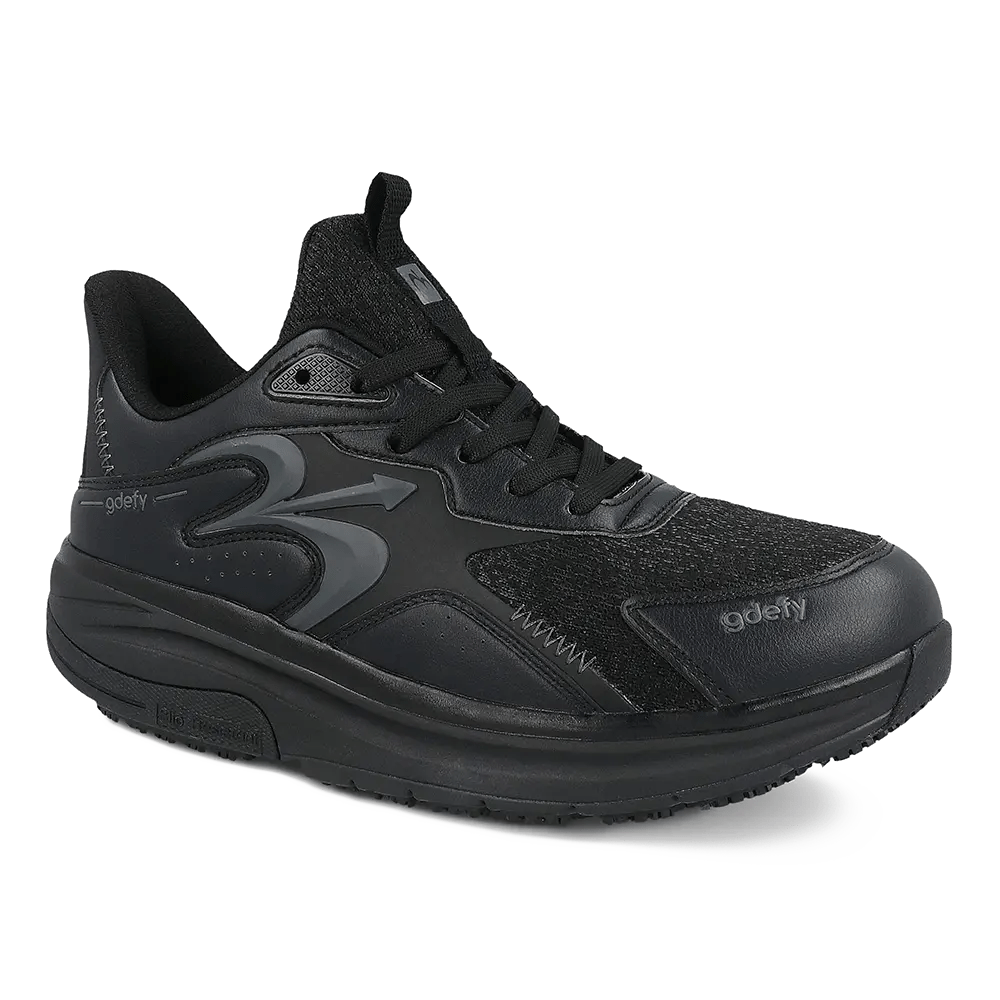
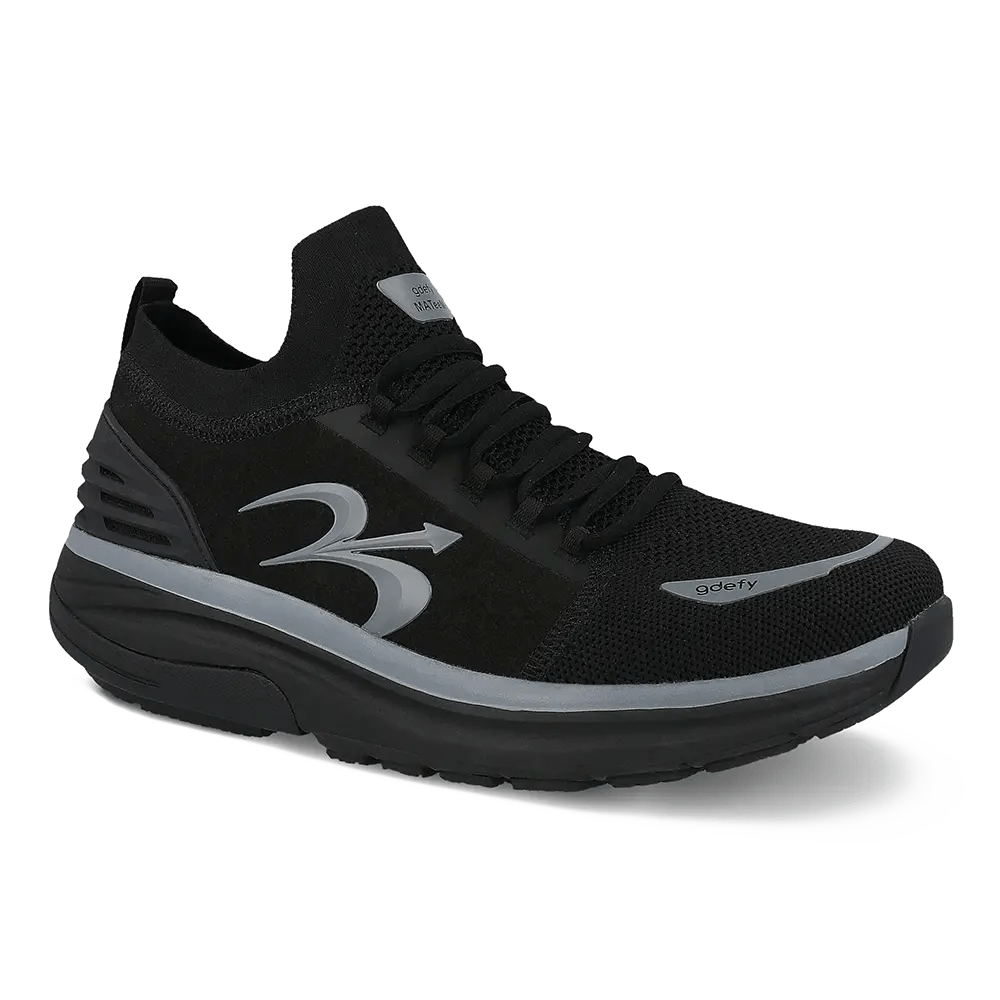
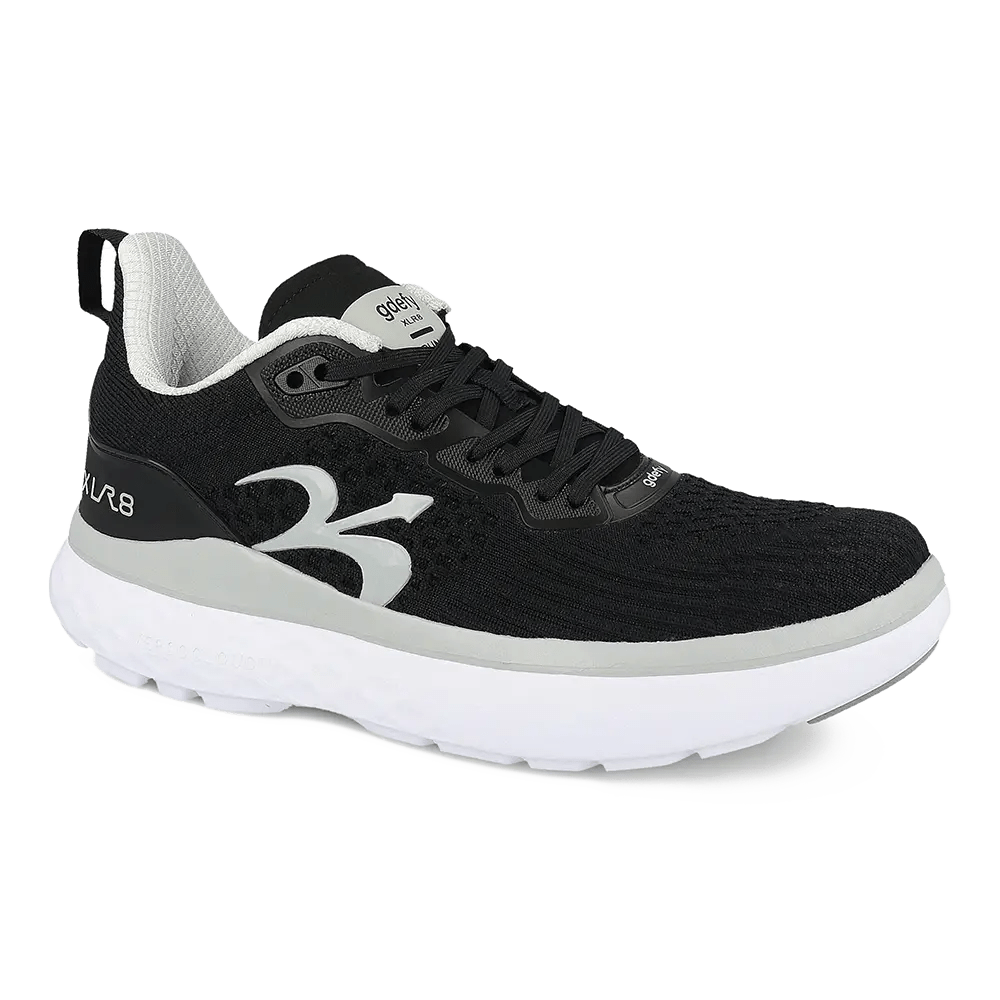
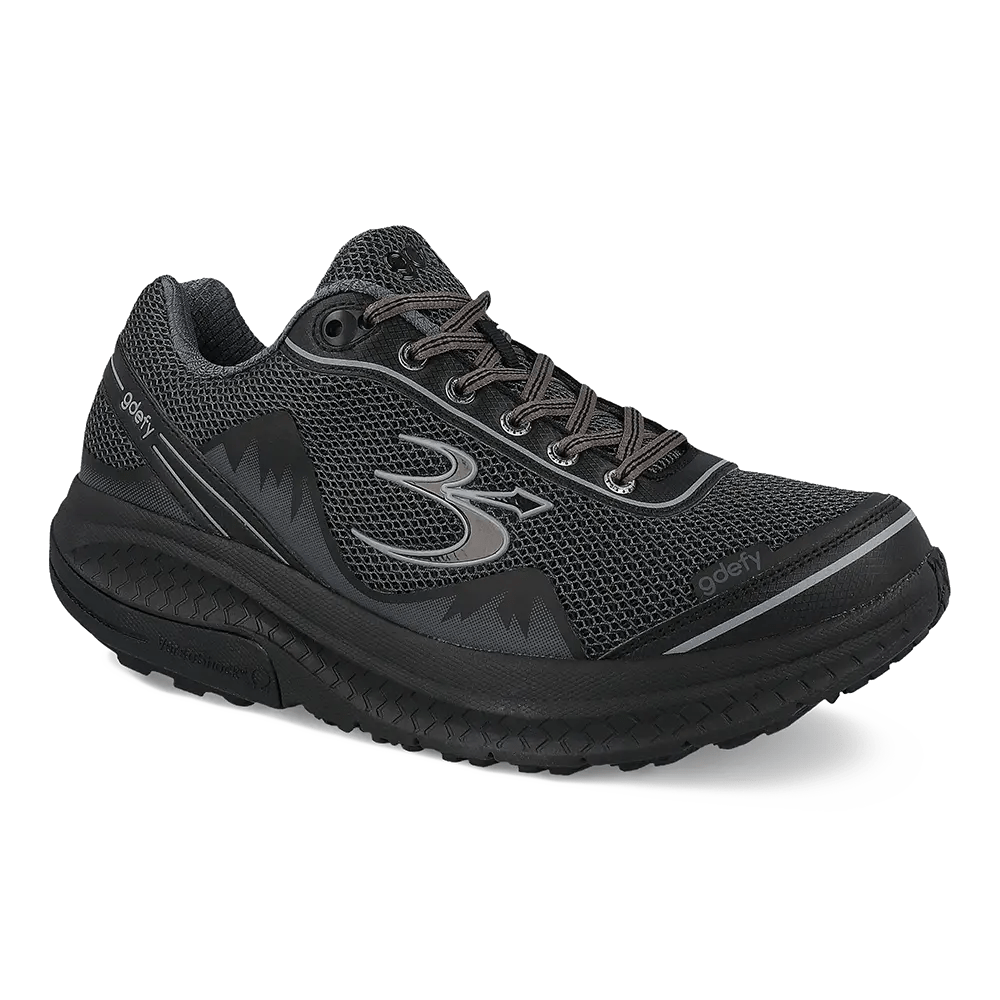
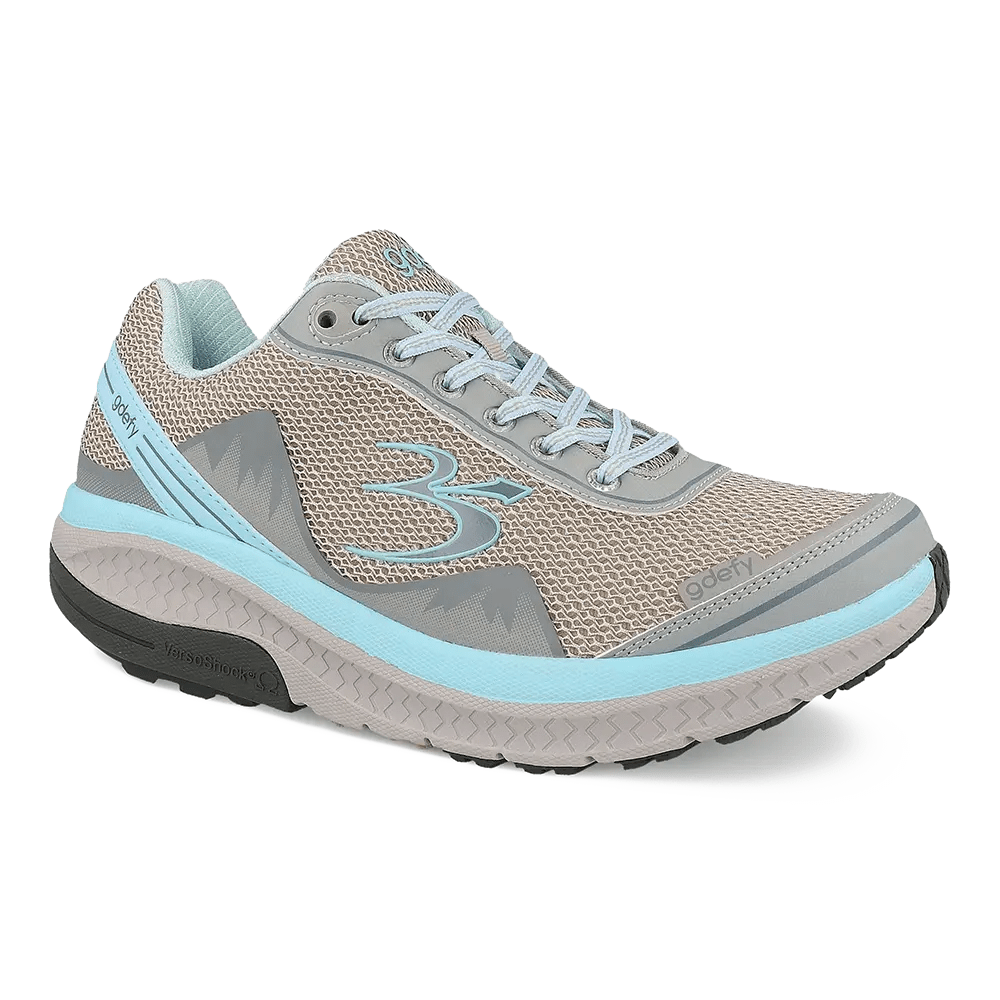
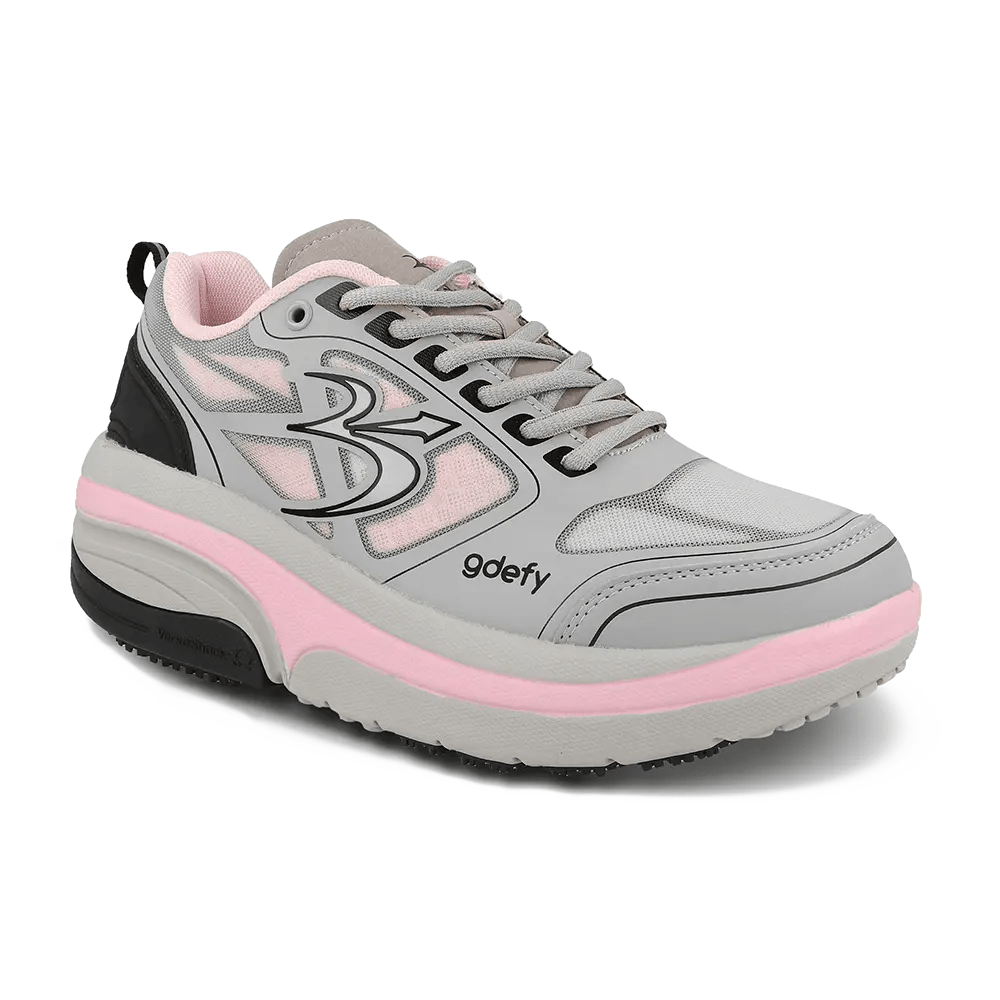
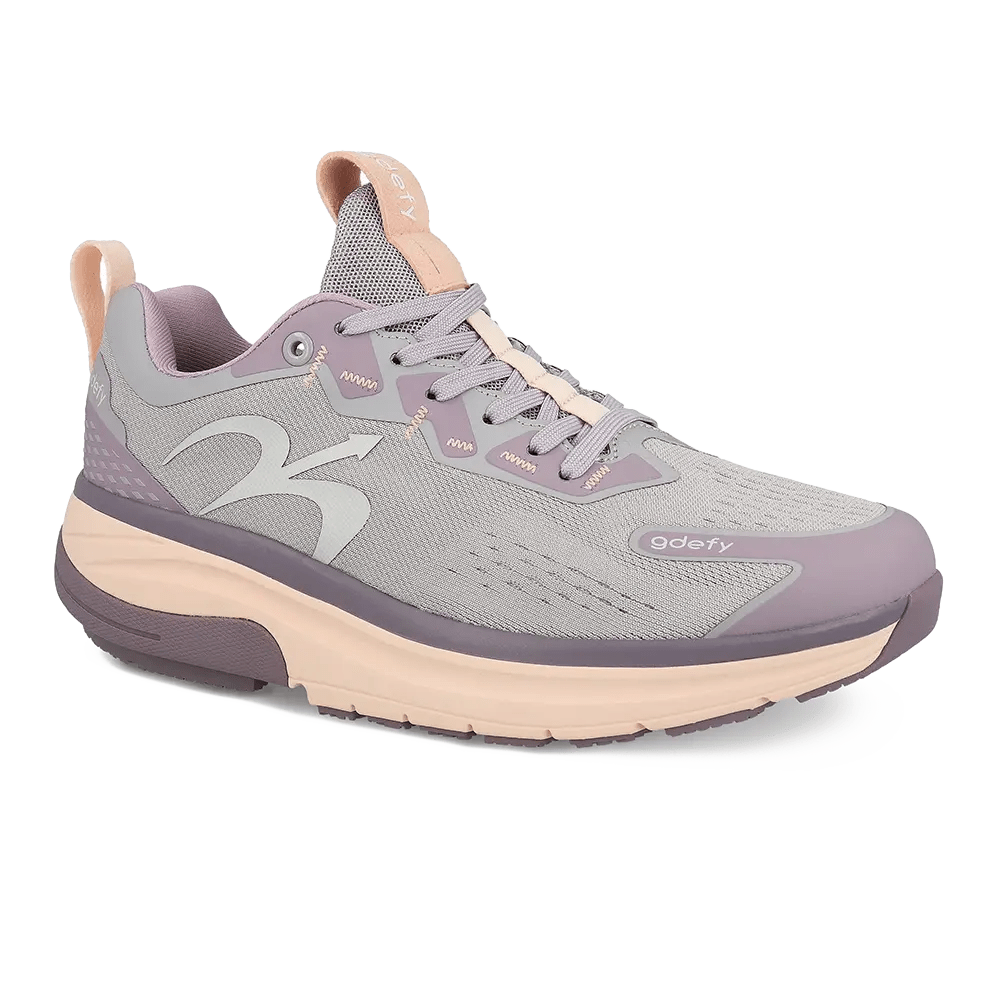
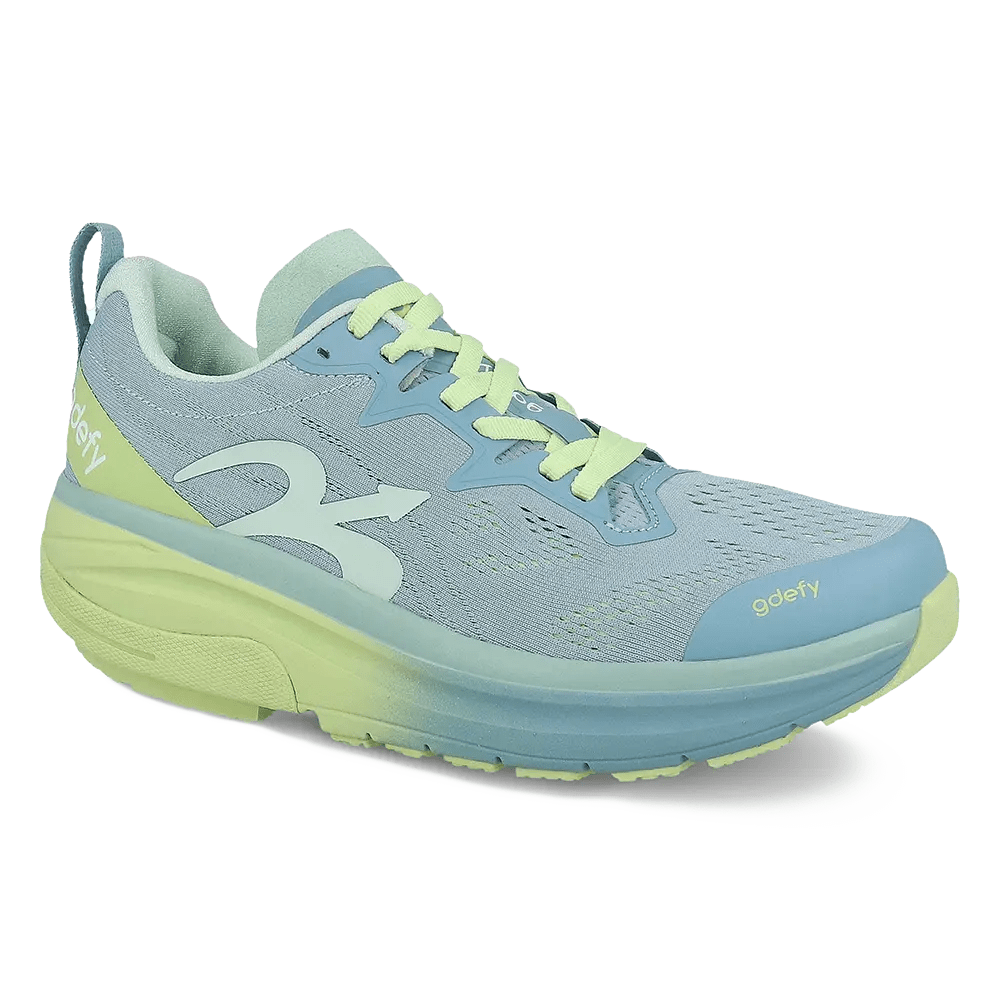
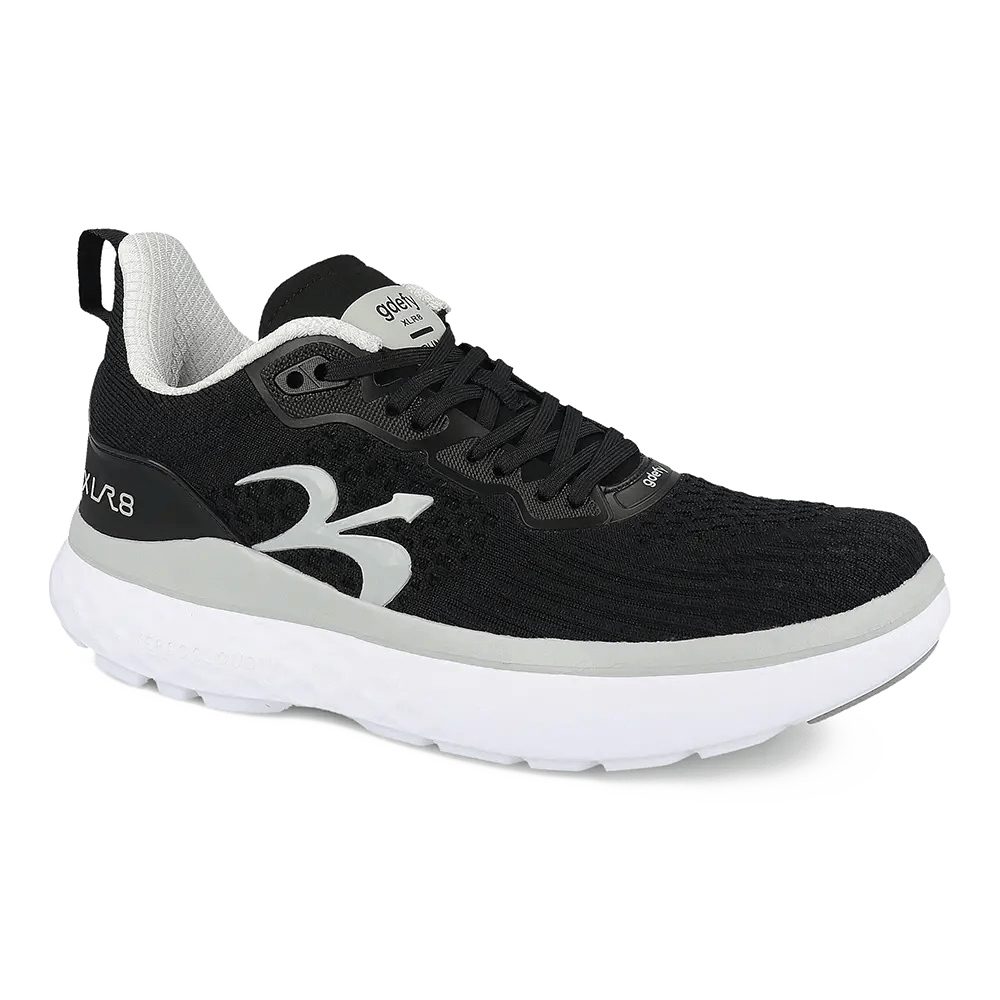
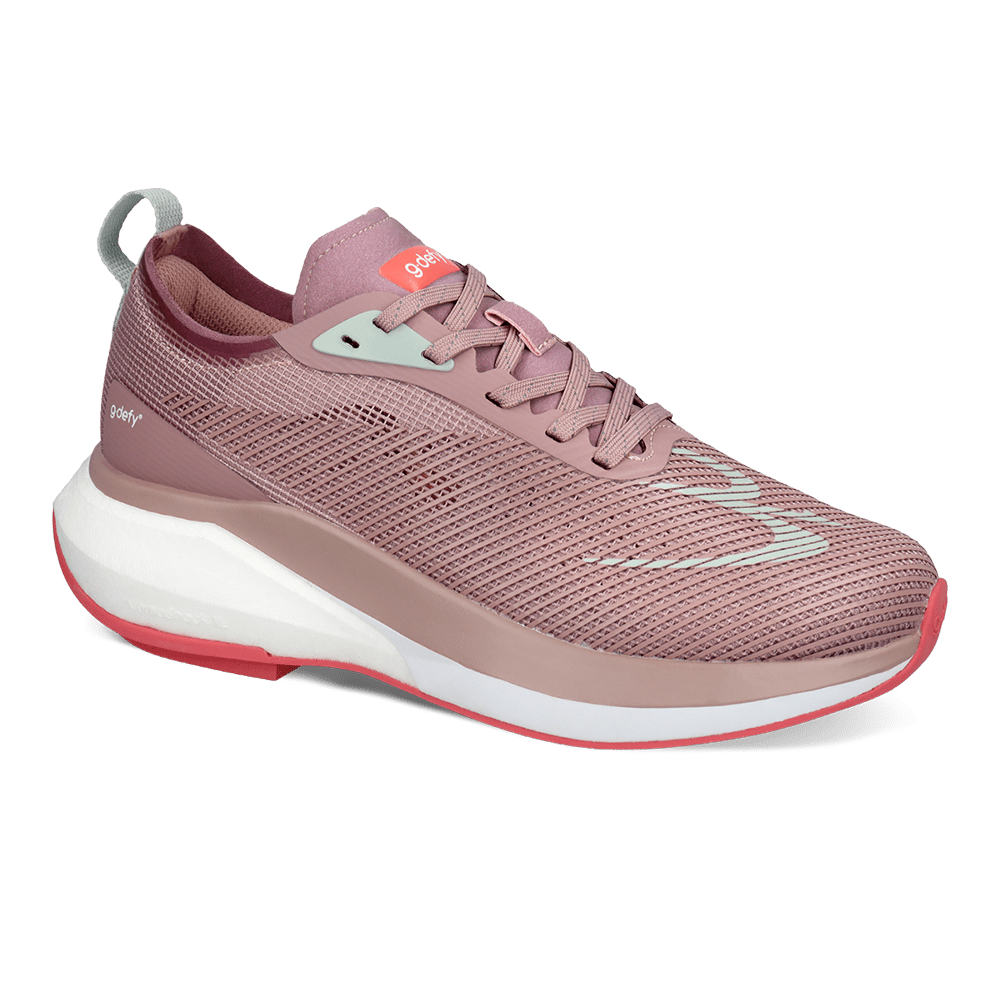
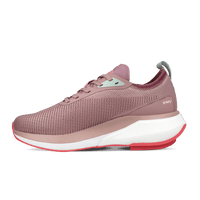
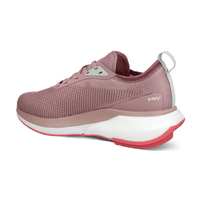
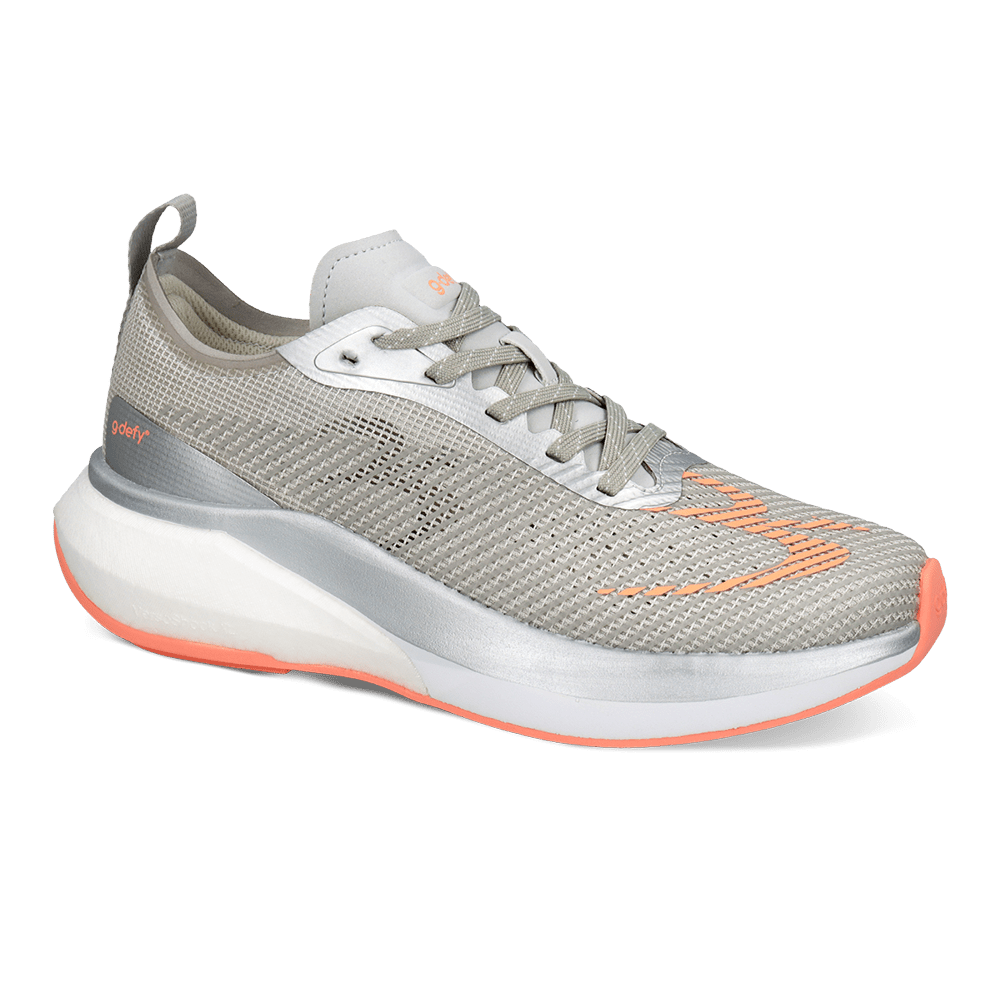
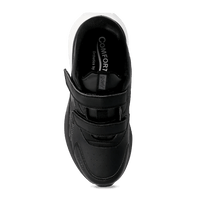
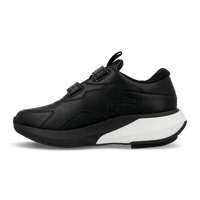
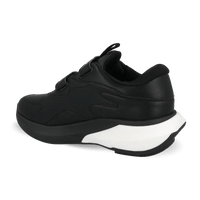
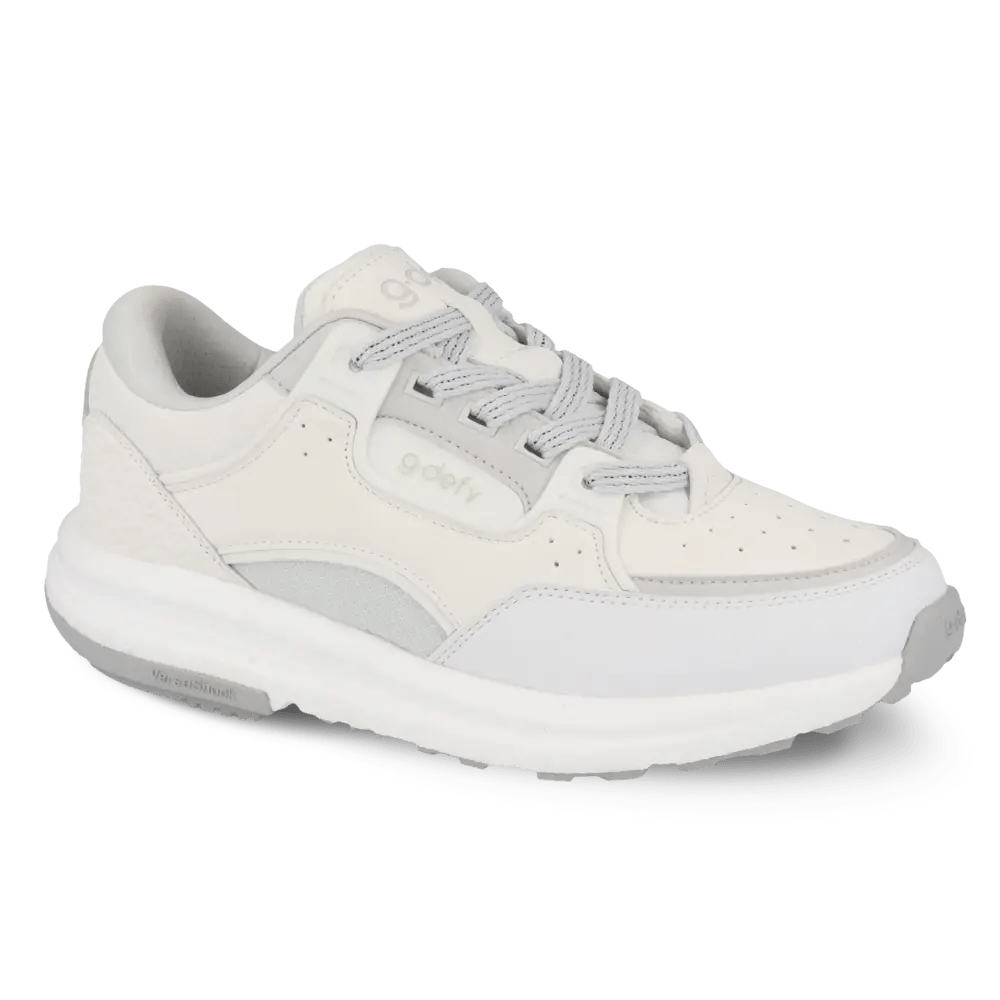
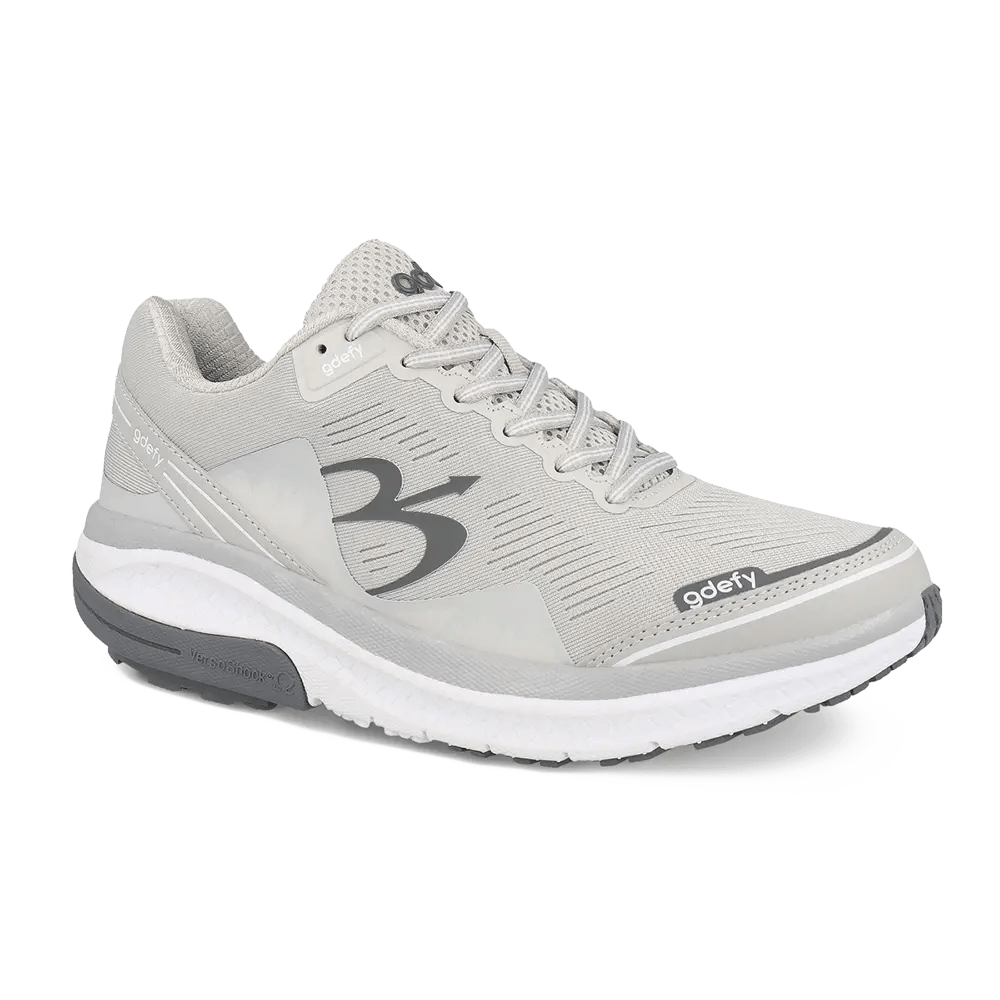
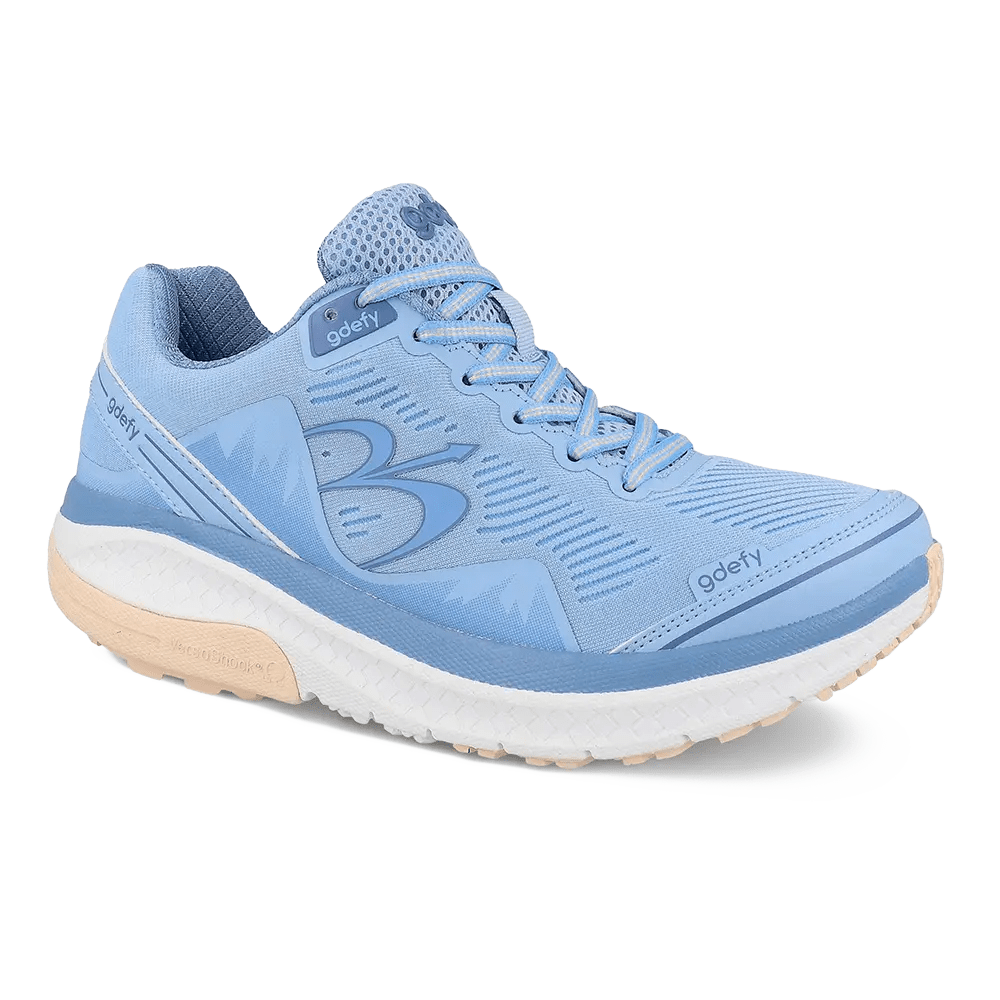
G-Defy shoes are engineered to provide comfort, support, and shock absorption. Featuring VersoShock® technology, they are designed to absorb impact and return energy with each step. A built-in stabilizer supports the foot during movement, while the front rolling design promotes a smooth walking experience. Each pair includes two removable orthotics to help customize comfort and support. G-Defy shoes help reduce pain from walking, running, and prolonged standing.
Descending is exactly the scenario those four elements were built around:
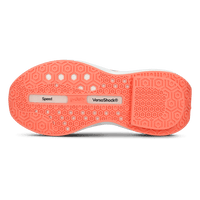
- The VersoShock® spring midsole is designed to absorb impact at the moment of landing and return energy as you move off the step — the sharp, repeated landing of a stair descent is the kind of impact it is engineered to handle.
- The built-in stabilizer supports the foot through the landing, which helps on uneven treads and loose trail surfaces where footing is not perfectly predictable.
- The front rolling design promotes a smooth transition from landing to push-off, so moving from one step to the next feels continuous rather than abrupt.
- The two removable orthotics — ComfortFit® and CorrectiveFit® — let you adjust support to your own foot rather than accepting whatever came in the box.
You can read more about the mechanics in how VersoShock® technology works and what energy return actually means.
Featured G-Defy Shoes for Stairs and Slopes
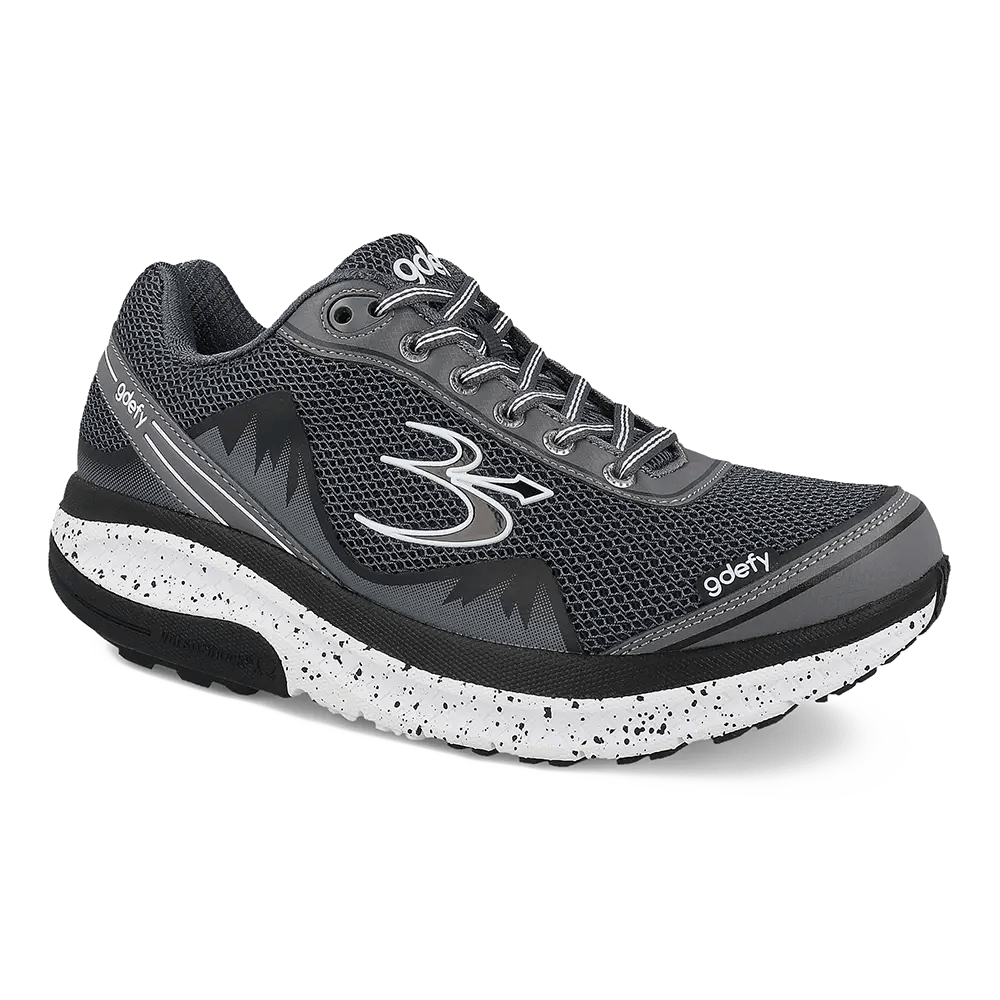
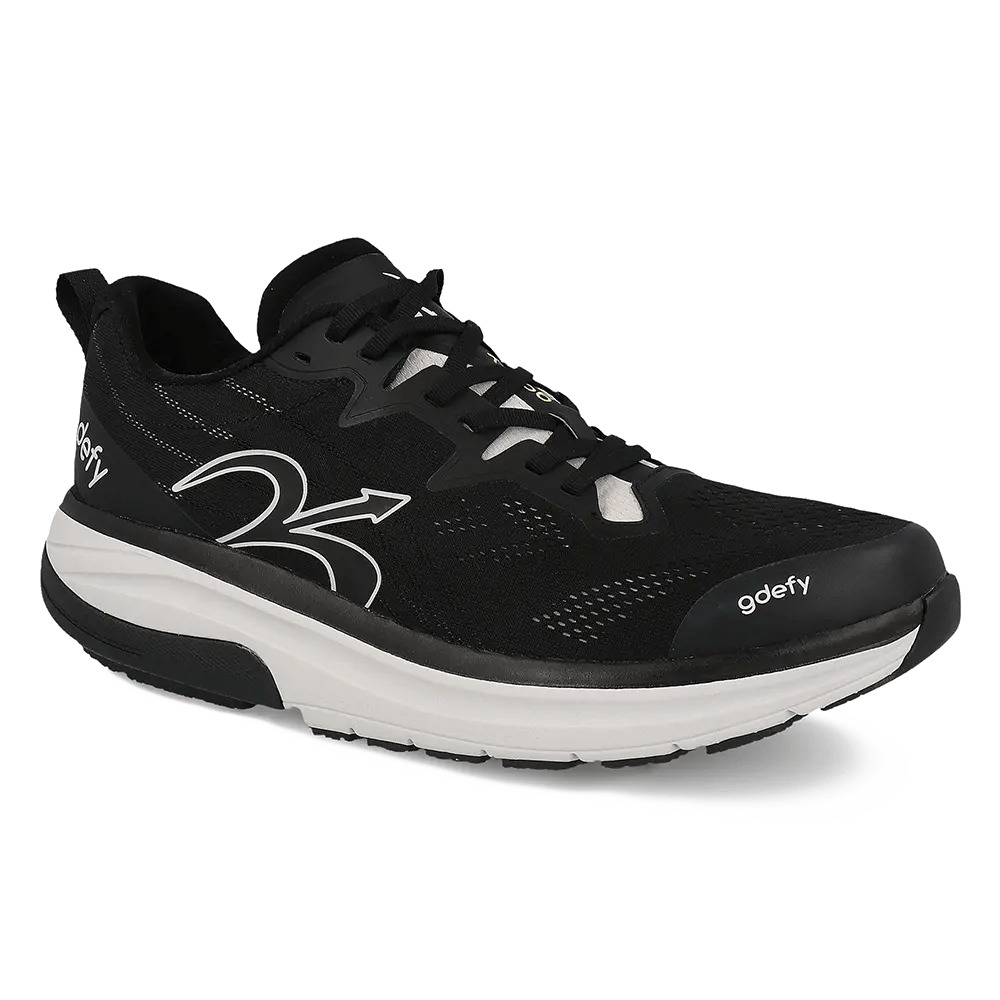
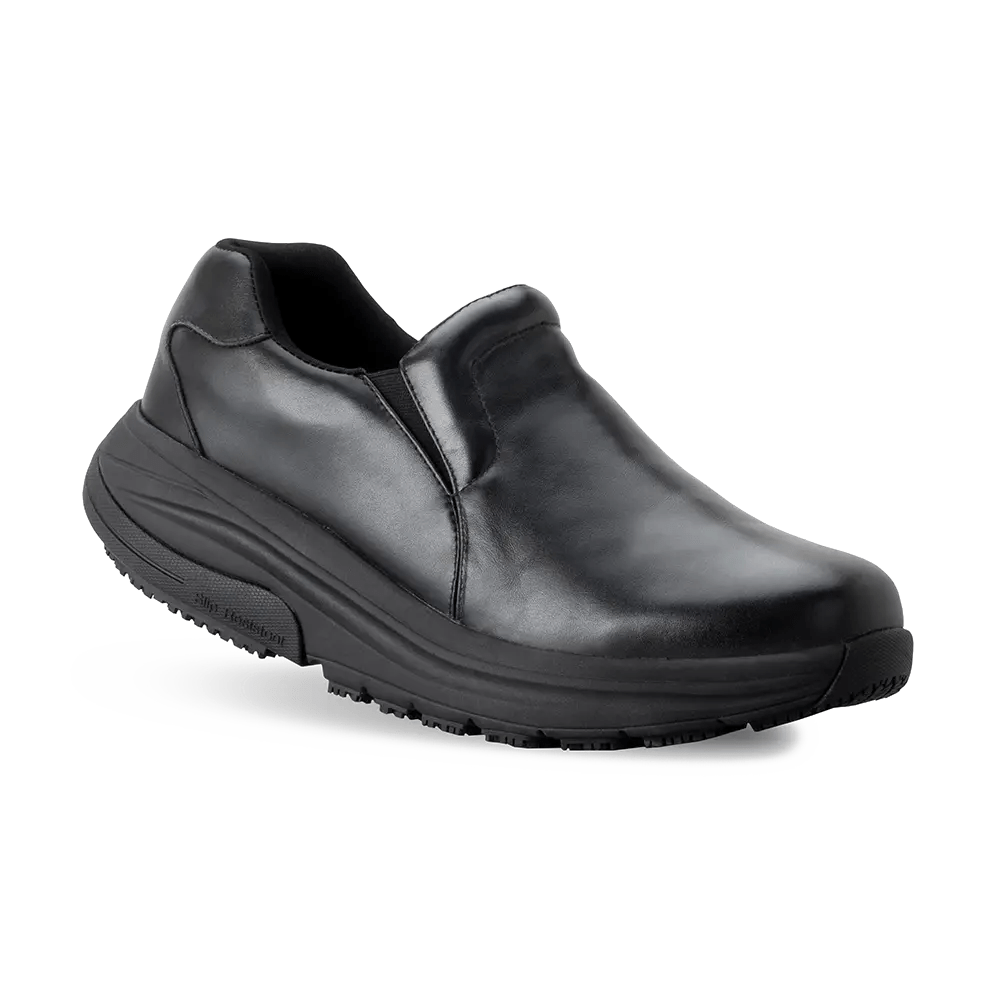
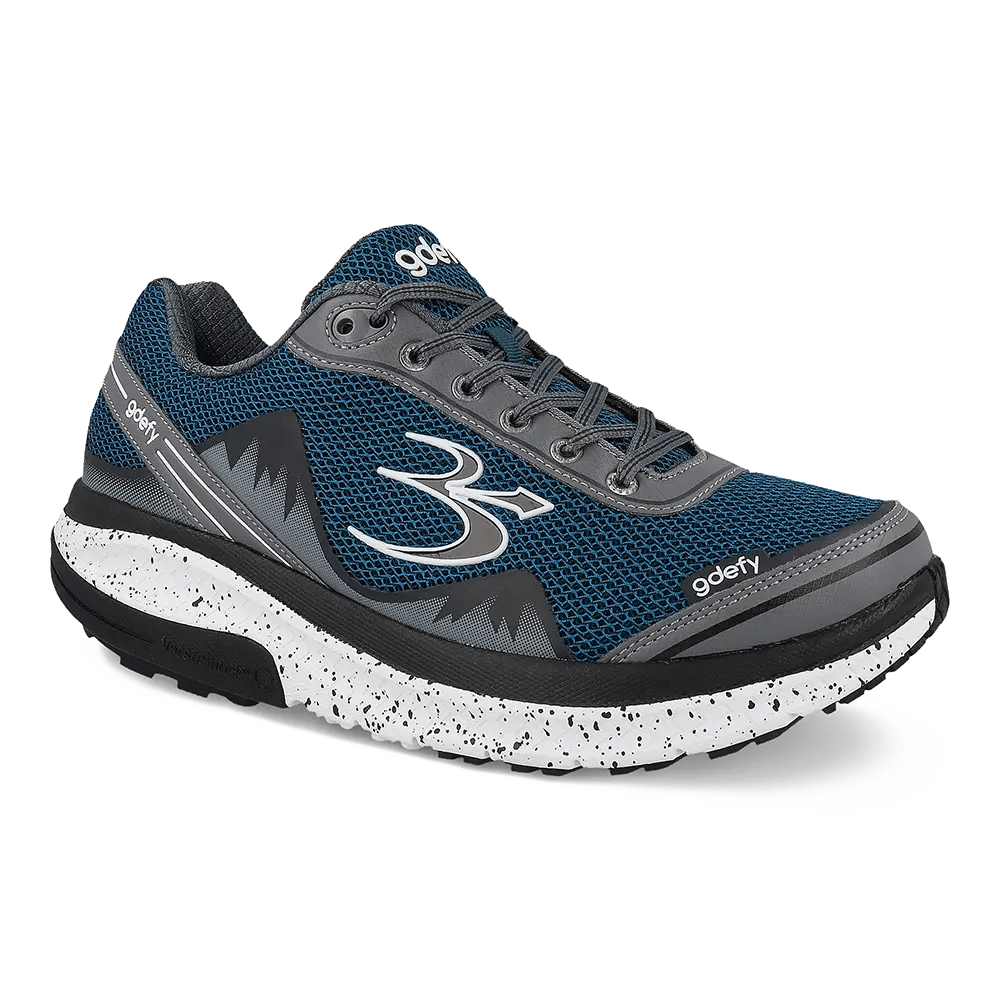
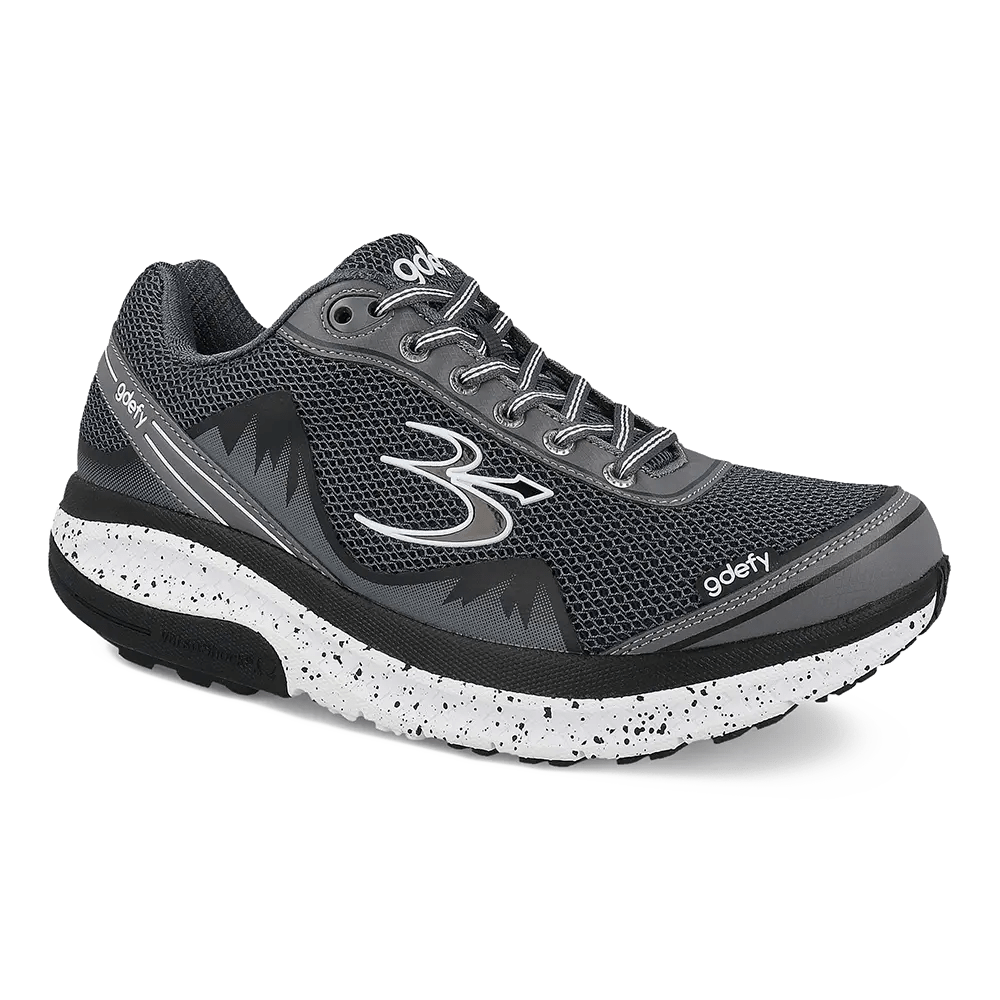
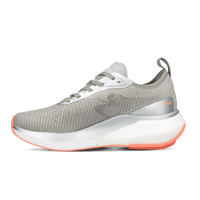
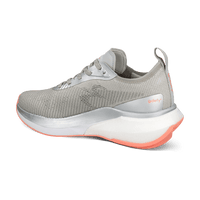
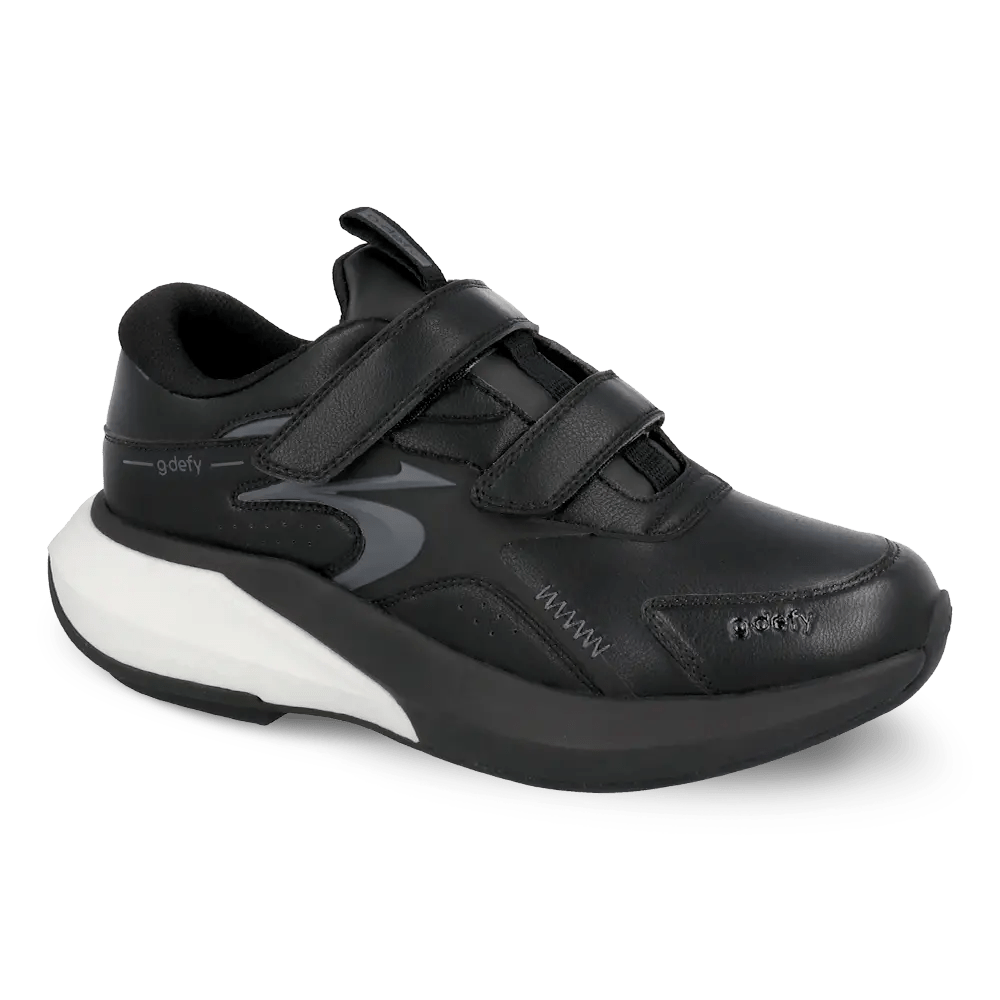
Men's Mighty Walk — the everyday walking platform, with the full VersoShock® midsole, stabilizer, rolling forefoot, and both orthotics. A solid default if stairs are part of your normal day.
Women's Mighty Walk — the same platform, built on a women's last, in medium through x-wide widths.
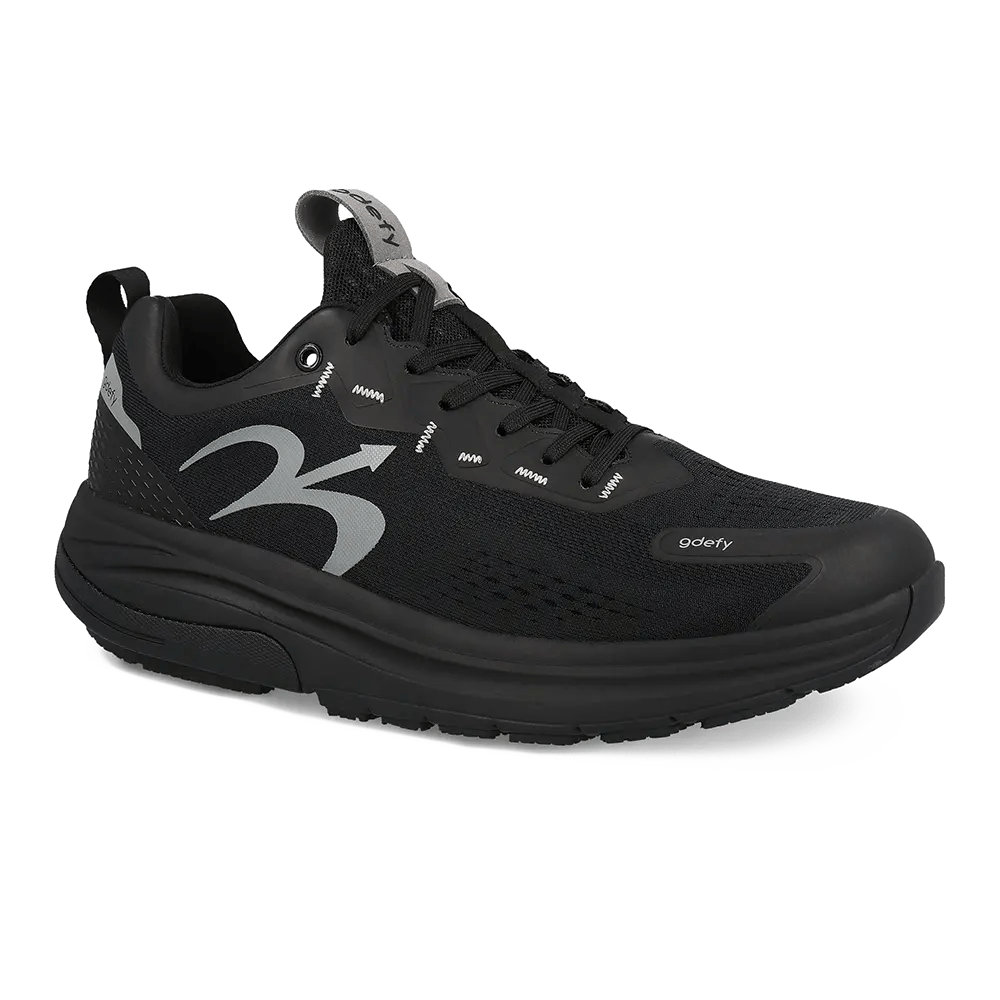
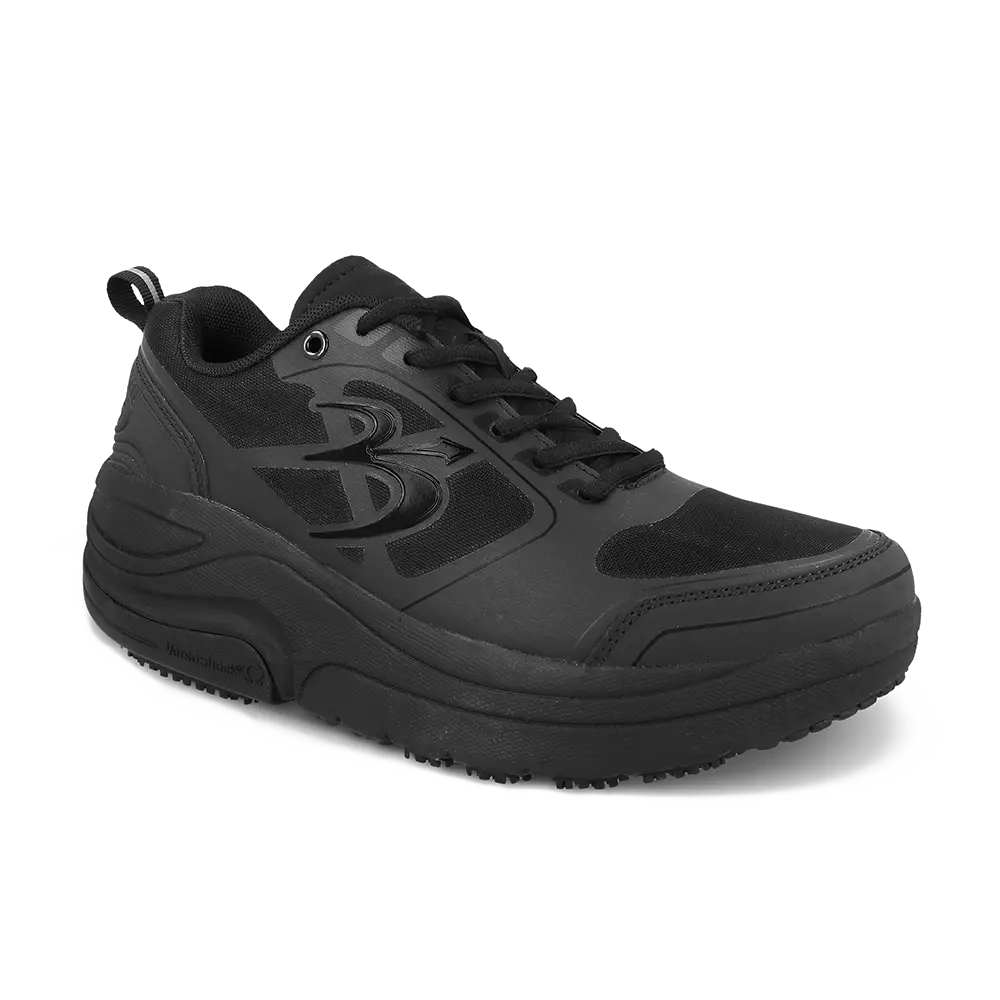
Men's ION — a lighter build on the same technology, for people who want less shoe underfoot without giving up the midsole.

Try them on your own stairs
Every pair comes with a 60-day risk-free trial, plus free shipping and free exchanges.
Shop Men's Shoes Shop Women's ShoesPractical Tips for Stairs and Downhill Walking
- Use the handrail when there is one. Letting your arm carry a little of the load takes some of the braking work off your legs. It is not a sign of anything — it is just efficient.
- Take shorter steps on a steep descent. Shorter steps mean smaller drops, and smaller drops mean gentler landings.
- Land more softly on purpose. Consciously easing onto each step rather than dropping onto it makes a real difference over a long flight.
- Zigzag on steep trails. Traversing across a slope instead of heading straight down reduces how steep each individual step has to be.
- Check your midsole, not just your tread. People replace shoes when the outsole looks worn. The cushioning usually gives out first — and fit and support are what you actually feel on a descent.
- Rotate pairs. Alternating shoes gives compressed foam time to rebound between wears.
- Break new shoes in gradually. Do not make a long descent the first outing in a new pair — ease into them first.
What Customers Tell Us
Individual experiences vary. The following reflect general comfort feedback, not medical outcomes.
Ray, 58 — third-floor walk-up. “The stairs at the end of the day were the part I dreaded. These feel a lot more cushioned coming down than what I was wearing before. Results vary, but for me the difference was noticeable in the first week.”
Denise, 52 — weekend hiker. “Uphill was never the problem for me; it was always the way back down. I feel steadier on the loose stuff now, and my legs aren’t as worn out at the car. Results vary by individual.”
Marcus, 61 — warehouse supervisor. “I’m up and down a metal staircase all shift. More comfortable than my previous pair, and I notice it most in the last hour. Everyone’s different, but that’s been my experience.”
Frequently Asked Questions
Why does my knee hurt going down stairs but not going up?
Going down and going up ask different things of your legs. Climbing is a pushing motion; descending is a braking one, where your leg absorbs a landing on every step. That braking load, repeated at a steady rhythm, is why the descent is often the part people notice. If discomfort is persistent or worsening, talk to your healthcare provider.
Can shoes help with knee pain when walking down stairs?
Footwear is not a medical solution, but supportive, well-cushioned shoes may improve overall comfort during walking and prolonged standing. Cushioning and shock absorption give each landing something to absorb into, and a stable platform supports a steadier step down.
Does walking downhill count as low-impact exercise?
Downhill walking is generally easier on your breathing than climbing, but more demanding on your legs because of the braking involved. Many people find that shorter steps, a gradual grade, and well-cushioned shoes make longer descents more comfortable.
How do I know if my shoes have lost their cushioning?
The outsole usually looks fine long after the midsole has flattened. If stairs and hard surfaces suddenly feel sharper than they used to in the same pair, the cushioning is a likely reason. Our guide on choosing shoes for your foot type covers what else to check.
Should shoes for stairs be different from my everyday walking shoes?
Not necessarily. The features that help on a descent — shock absorption, stability, grip, secure fit — are the same ones that make a shoe comfortable everywhere else. A good everyday walking shoe generally handles stairs well; a flat, thin-soled casual shoe generally does not. Stability is the feature that carries over most directly.
What else can I do besides changing shoes?
Shorter steps, using handrails, easing onto each step, zigzagging on steep trails, and general leg strengthening all help. For persistent discomfort, a healthcare provider is the right place to start.
The Bottom Line
Stairs and downhill walking are harder on your knees than flat ground because your legs are braking rather than pushing, on a sharper landing, over and over. That is normal mechanics — but it also means the descent is where footwear either helps or gets in the way.
While footwear is not a medical solution, choosing shoes designed for comfort, support, and shock absorption can make a meaningful difference in how you feel throughout the day — especially on the way down.
Related reading: Can shoes help with knee pain when walking? · How your shoes affect your knees · What to look for in shoes if you experience knee pain · Running with knee pain · Knee pain and shoes: a footwear support guide · Common footwear mistakes that may affect knee comfort · What makes a shoe good at absorbing shock?