April 28, 2026
Knee Pain and Shoes: How the Right Footwear Supports Your Knees
By Gdefy

Summary
If knee discomfort has been slowing you down — whether on your morning walk, climbing stairs, or simply standing for a few hours — your footwear may be playing a bigger role than you realize. Every step transfers forces from the ground up through your feet and into your knees. Over time, the cumulative effect of poor shock absorption, inadequate support, or misaligned mechanics can add up.
This guide explores how footwear design affects knee comfort, what features to look for in shoes when you experience knee discomfort, and how G-Defy approaches shoe construction with joint support in mind. Whether you're managing occasional stiffness or daily knee discomfort, understanding your footwear is a practical place to start.
For a closer look at specific shoe features, see our guide on what to look for in shoes if you experience knee pain.
What Causes Knee Discomfort When Walking?
Knee discomfort during or after walking often comes down to mechanics and load distribution. Your knees are load-bearing joints — they absorb impact every time your foot contacts the ground. When that impact isn't managed well, the stress accumulates.
Several factors can contribute to knee discomfort:
- Hard surfaces — concrete and pavement provide no natural cushioning, so all impact transfers directly through your foot to your knee
- Worn-out footwear — midsoles compress over time and lose their ability to absorb shock
- Flat or unsupportive soles — without arch support, your foot may roll inward, which creates a twisting force in the knee
- Heel structure and stiffness — shoes with an extreme heel-to-toe drop can alter your gait mechanics and put uneven pressure on the knee joint
- Poor fit — shoes that are too narrow, too loose, or too short can cause compensatory movement patterns that stress the knee
These factors collectively contribute to whether a given day of walking feels comfortable or aggravates existing sensitivity. See our article on can shoes help with knee pain when walking for a broader look at this relationship.
How Your Footwear Affects Your Knees
The connection between footwear and knee comfort is often underappreciated. Shoes aren't just protective coverings — they're the primary interface between your body and the ground. How that interface functions shapes how your body absorbs and redistributes force with every step.
A shoe with responsive cushioning in the midsole can absorb a meaningful portion of impact before it reaches your knee. A shoe with a built-in stabilizer can reduce the lateral roll that stresses the knee's inner or outer structures. And a shoe with proper arch support can promote a more neutral gait pattern that keeps your knee tracking in better alignment with the rest of your leg.

Conversely, a shoe that is too flat and too rigid forces your knee to compensate for the lack of cushioning. A shoe that is unstable at the heel can cause lateral motion that strains the knee. The wrong shoe doesn't have to cause an acute injury to gradually make your days more uncomfortable.
What to Look for in Shoes When You Experience Knee Pain
Not every shoe is built with knee comfort in mind. Here are the key features to prioritize when evaluating footwear for knee support.
Shock Absorption
This is the single most important feature for knee comfort. Look for shoes with multi-layer midsoles that compress and rebound with each step. Spring-based midsole technology — rather than foam alone — can absorb more impact energy and return it to your stride without bottoming out over time. Standard foam compresses and stays compressed, losing effectiveness after months of regular use.
Cushioning and Energy Return
Beyond raw shock absorption, energy return matters for long-distance walking and all-day wear. A midsole that absorbs impact but doesn't return energy leaves your legs doing all the work. Responsive cushioning that returns some energy to each step reduces fatigue — which can indirectly reduce the strain your muscles and joints experience over a full day.
Arch Support and Stability
Arch support keeps your foot in a more neutral alignment, which translates to better knee tracking. If your arch collapses with each step, it creates an inward rotation at the ankle that propagates upward to the knee. Dual orthotic systems — one for everyday comfort wear and a second for corrective alignment — offer more flexibility than a single-orthotic approach and can be swapped for prescription orthotics if needed.
Heel Drop
Heel drop is the height difference between the heel and the forefoot. An extreme heel drop changes how your stride pattern develops and can place more stress on the knee. A moderate, balanced heel drop — typically between 6mm and 10mm — supports more natural walking mechanics for most adults over 40.
Proper Fit
A shoe that fits well at the heel, has adequate room in the toe box, and holds the midfoot securely prevents unnecessary compensatory movement. Feet also expand slightly throughout the day — especially with prolonged standing — so sizing with some afternoon margin is worthwhile. For more detail, see our guide on what features matter most when shopping for knee-friendly shoes.
For runners managing knee sensitivity, these same principles apply with greater urgency — see our piece on running with knee pain and how shoe design can help.
How G-Defy Shoes Are Designed for Knee Comfort
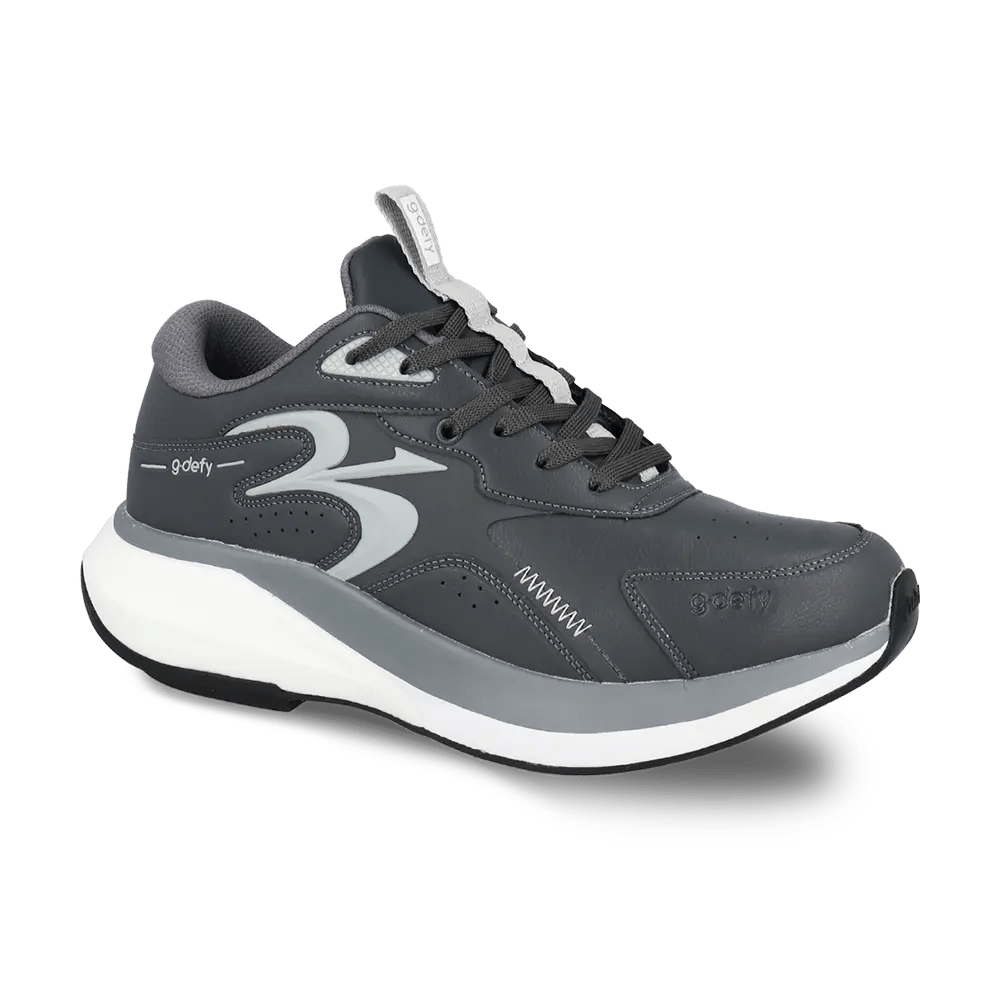
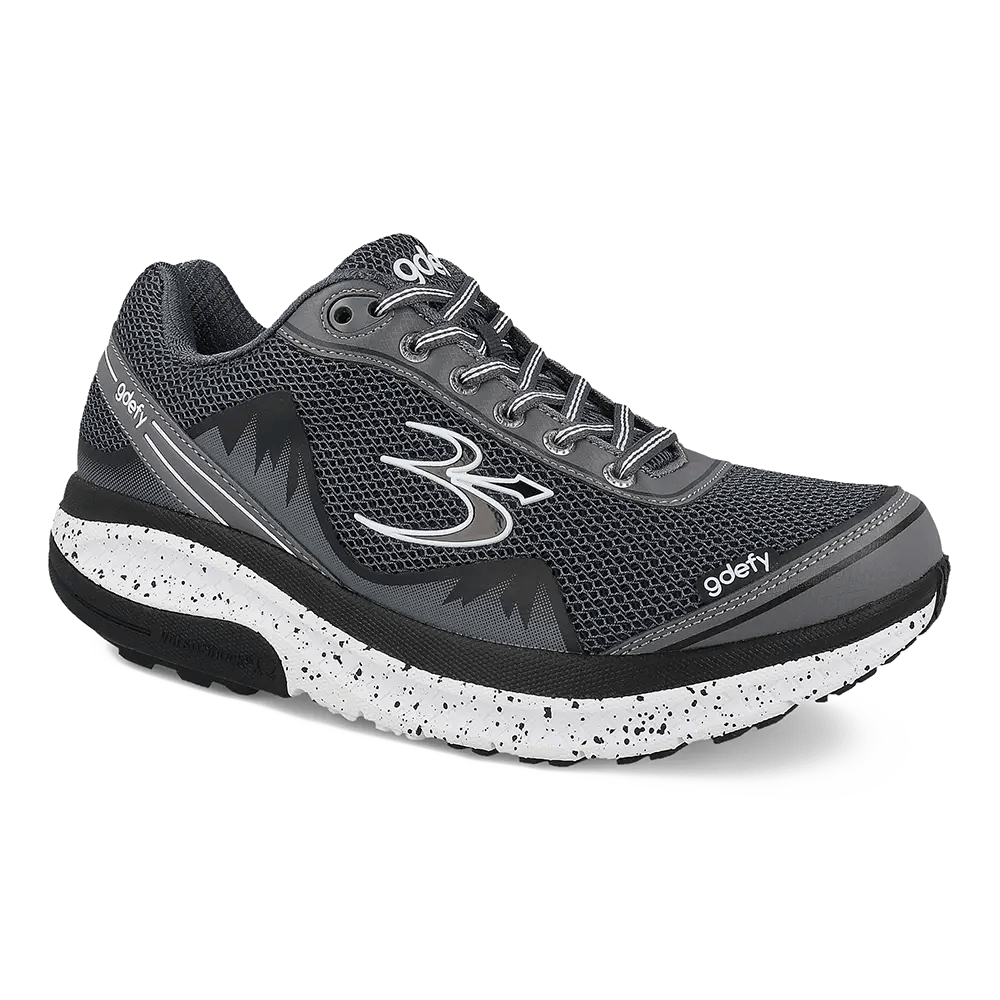
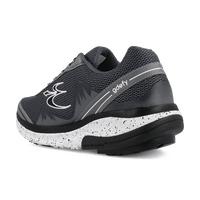
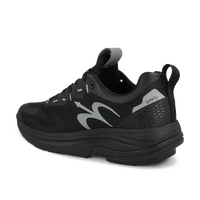
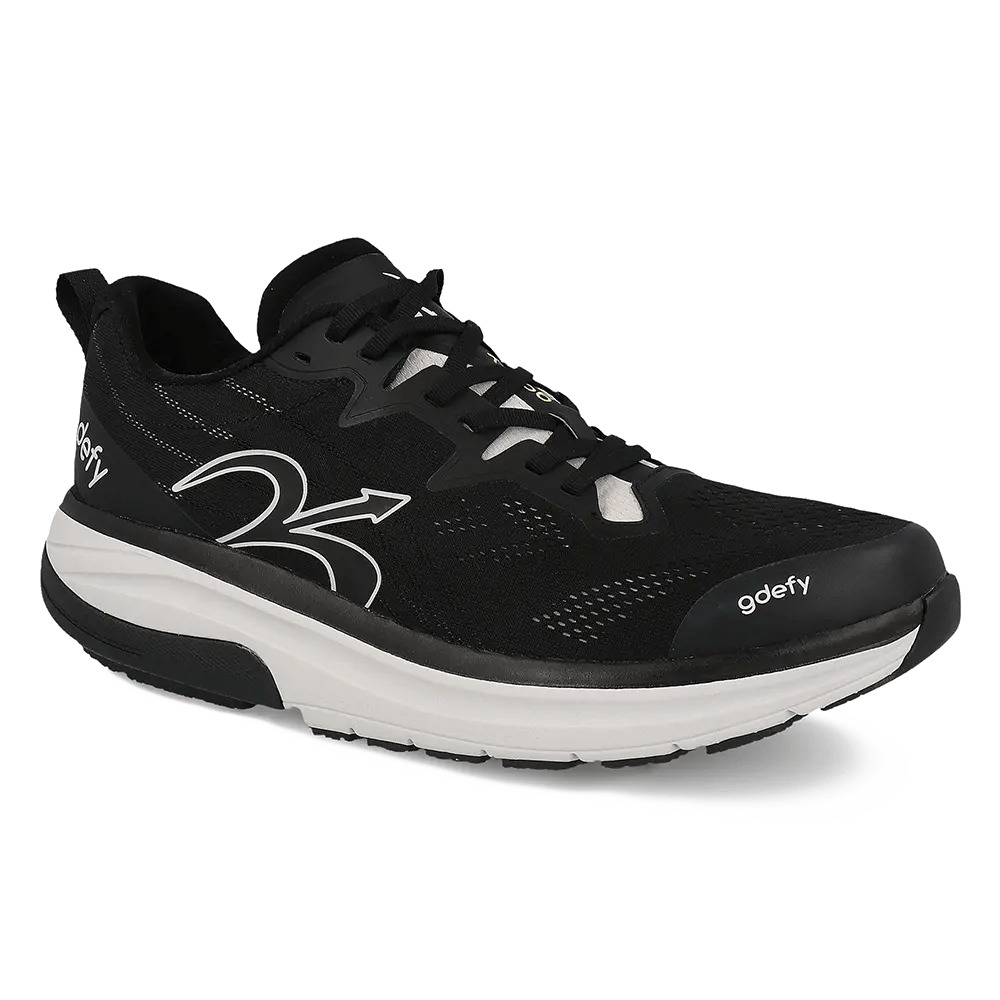
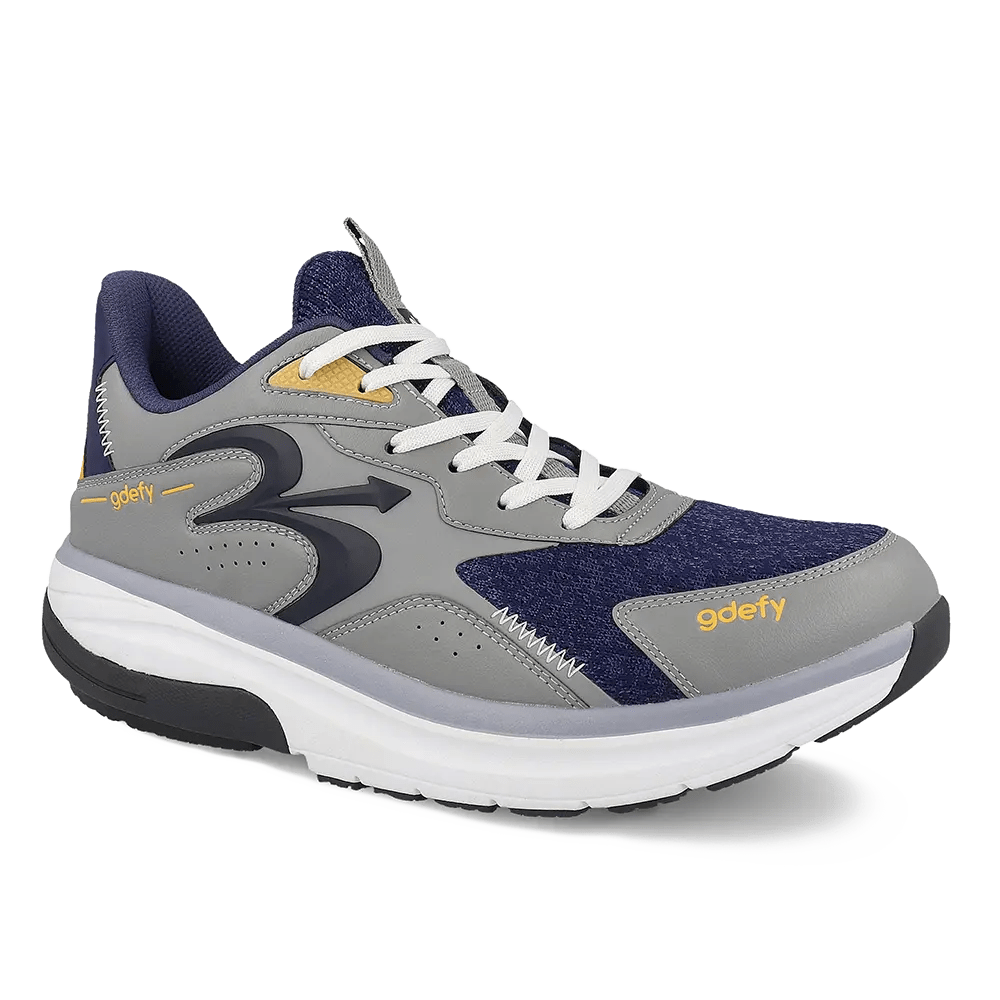
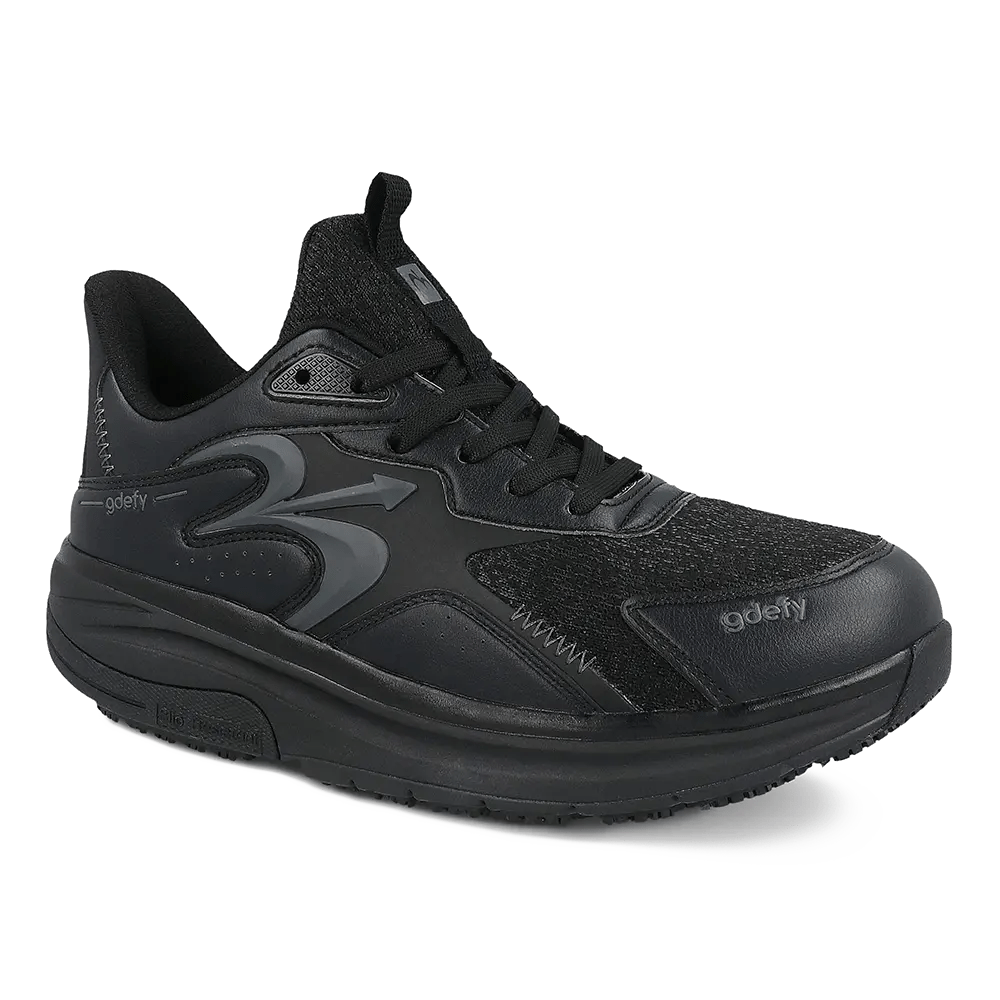
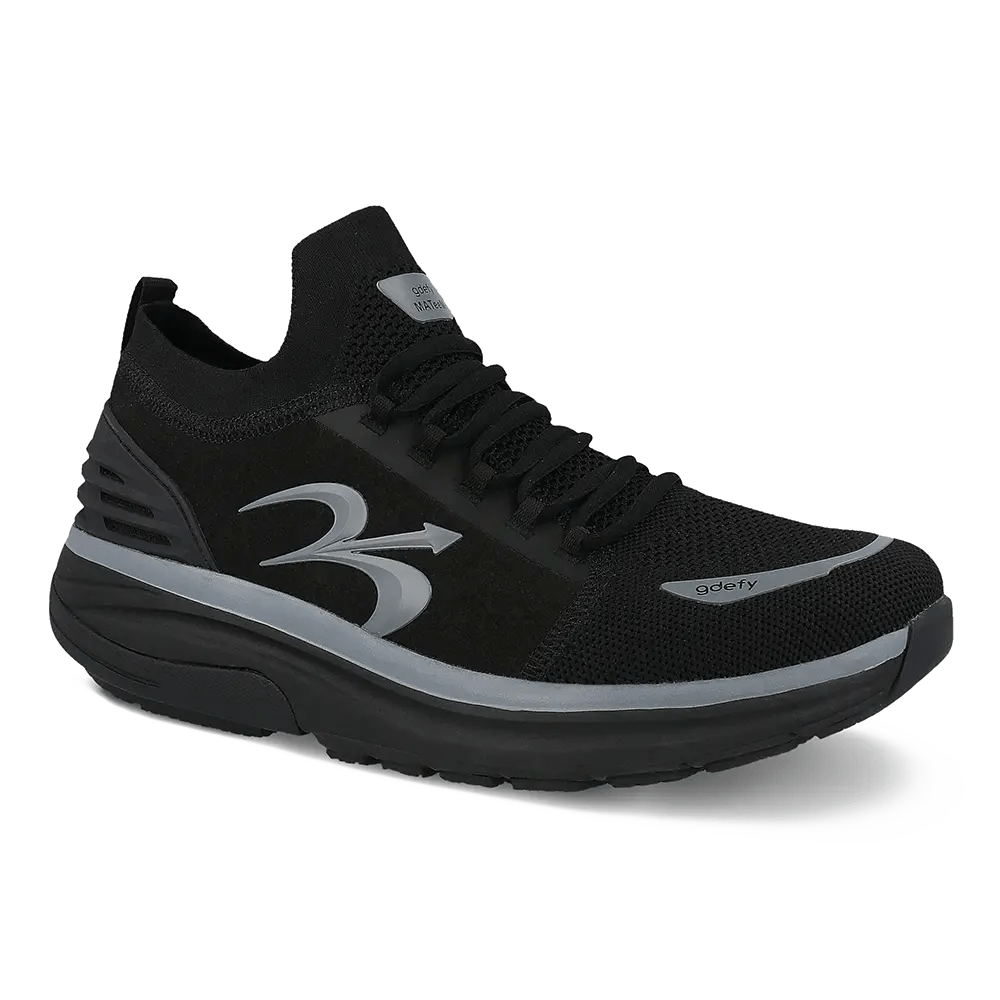
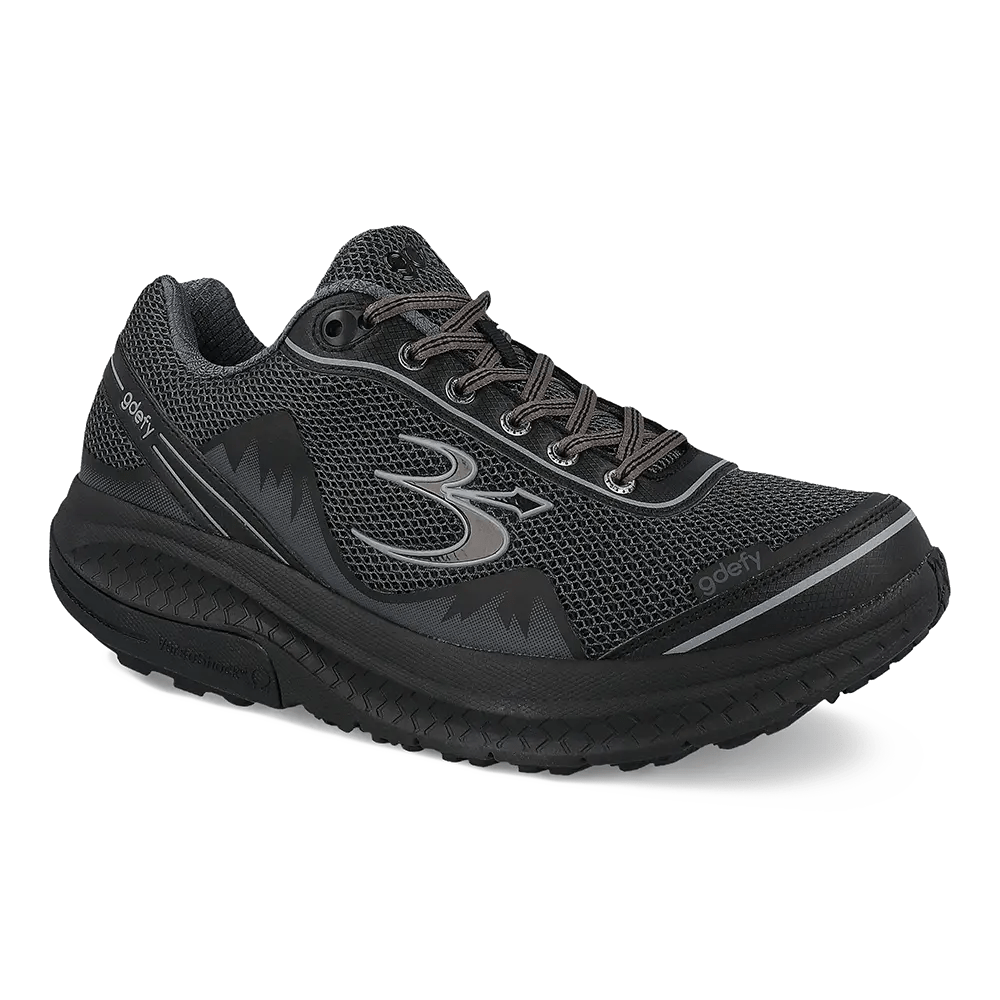
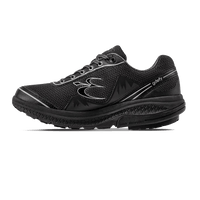
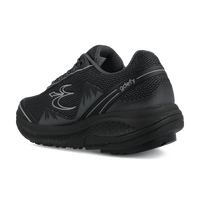
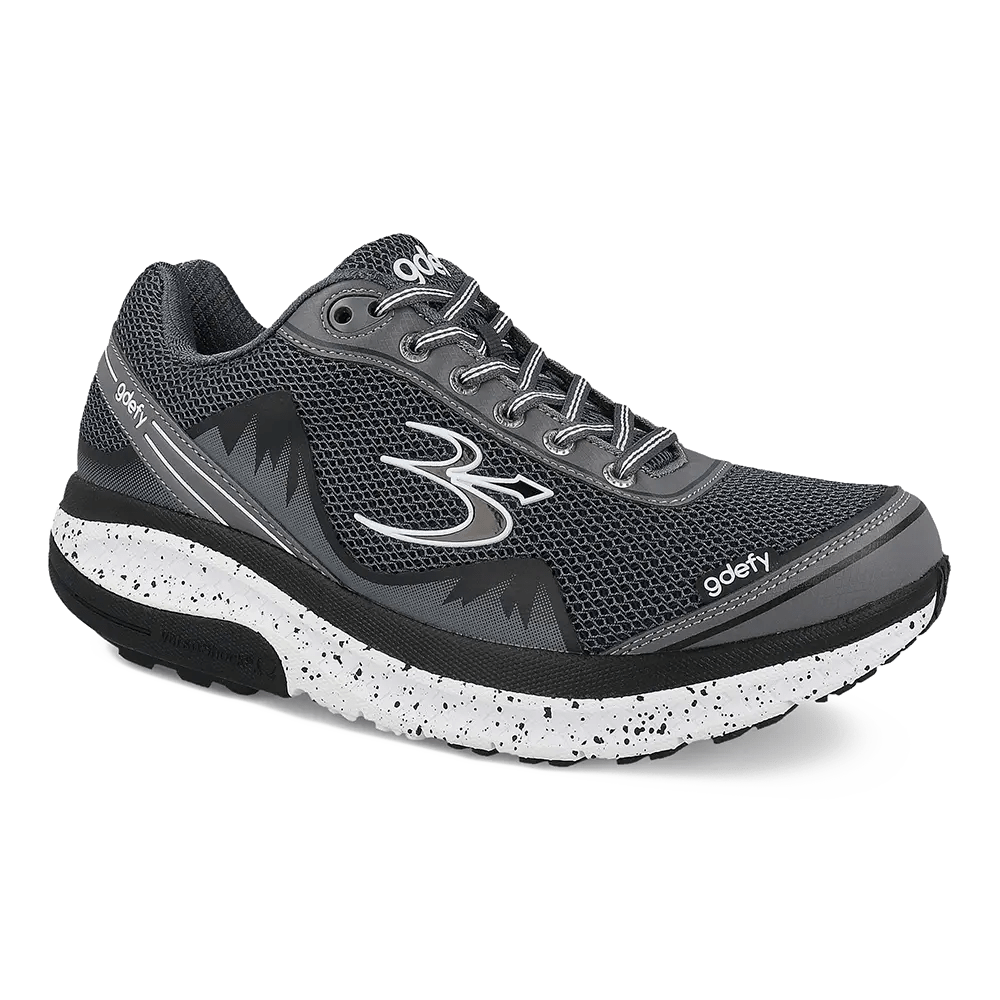
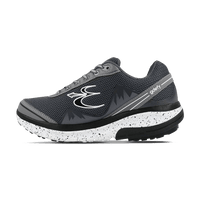
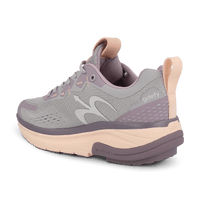
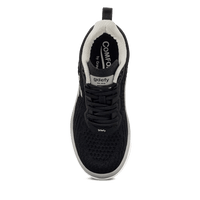
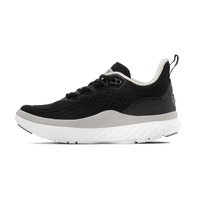
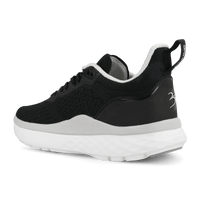
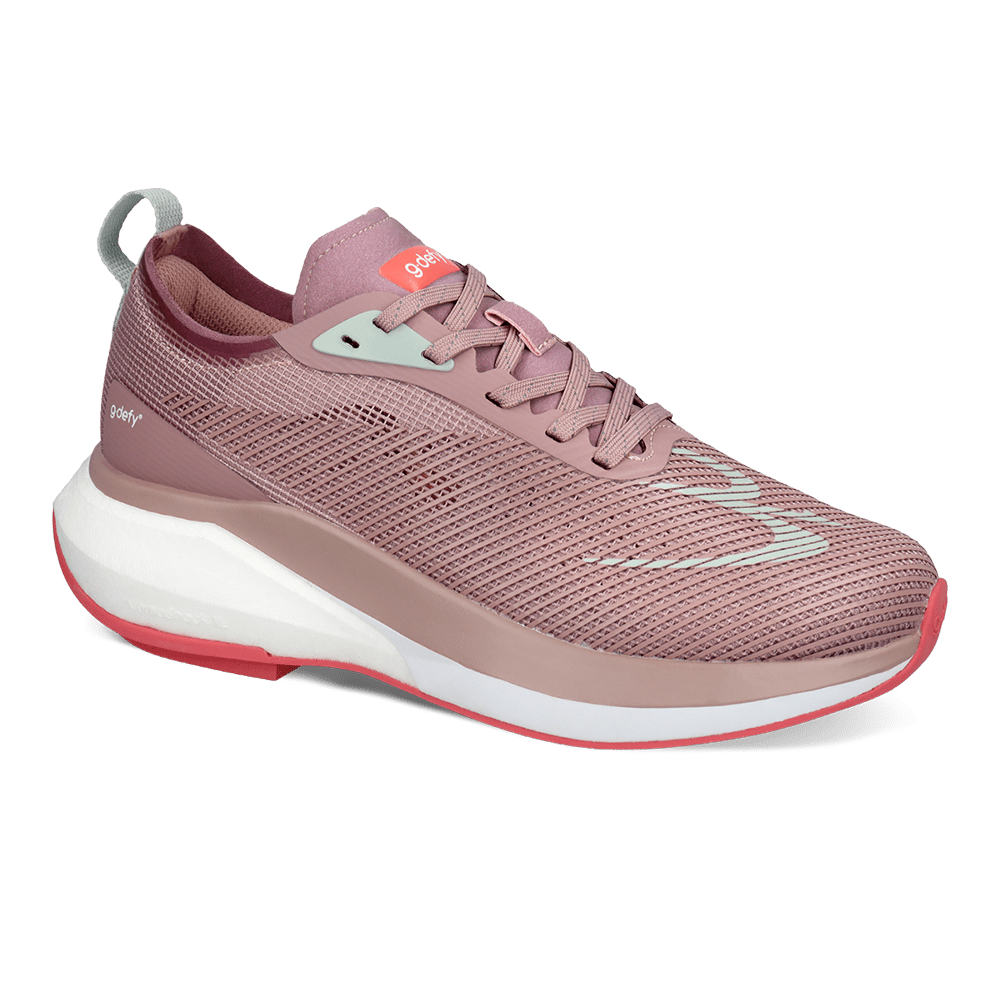
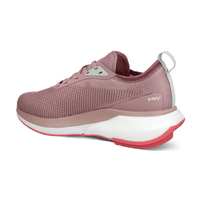
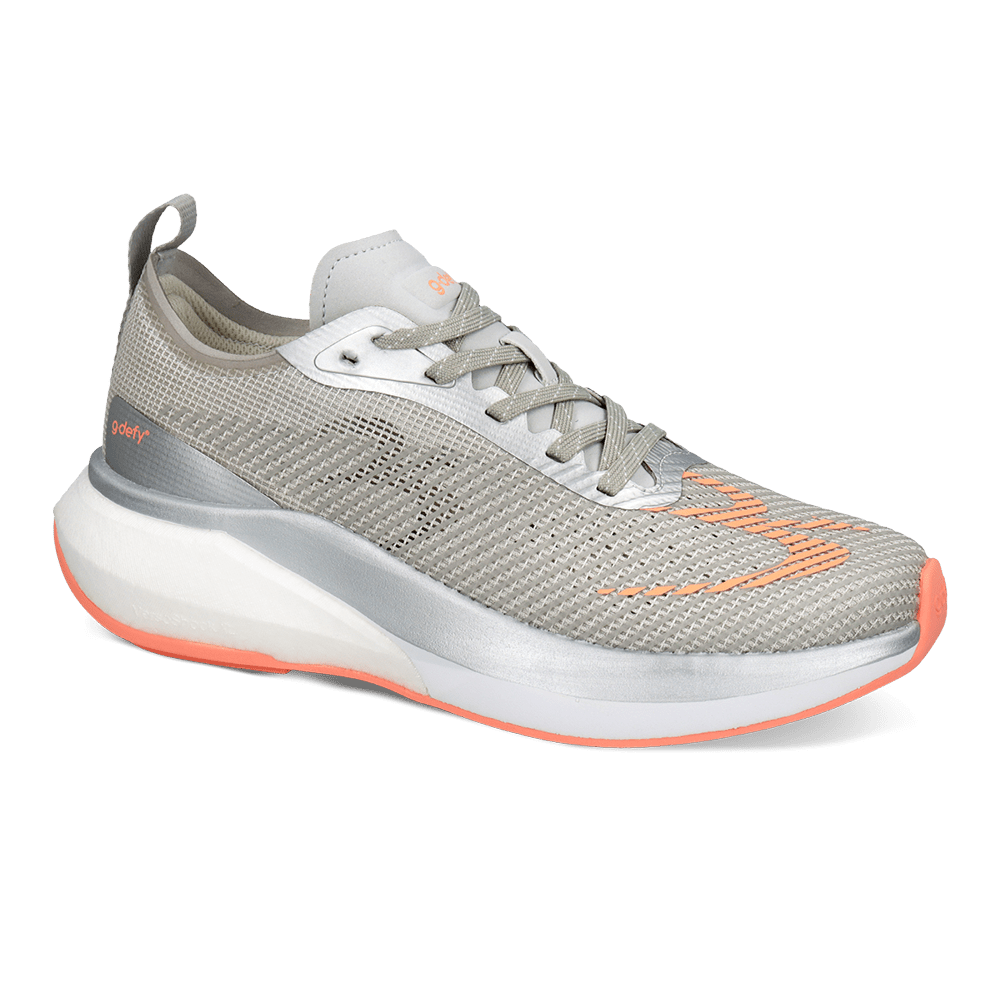
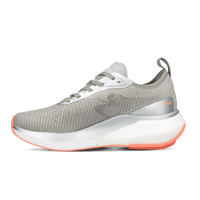
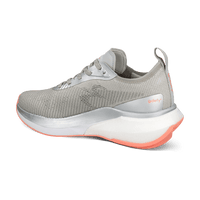
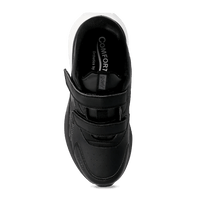
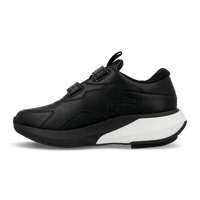
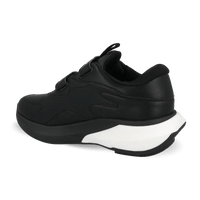
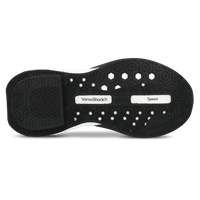
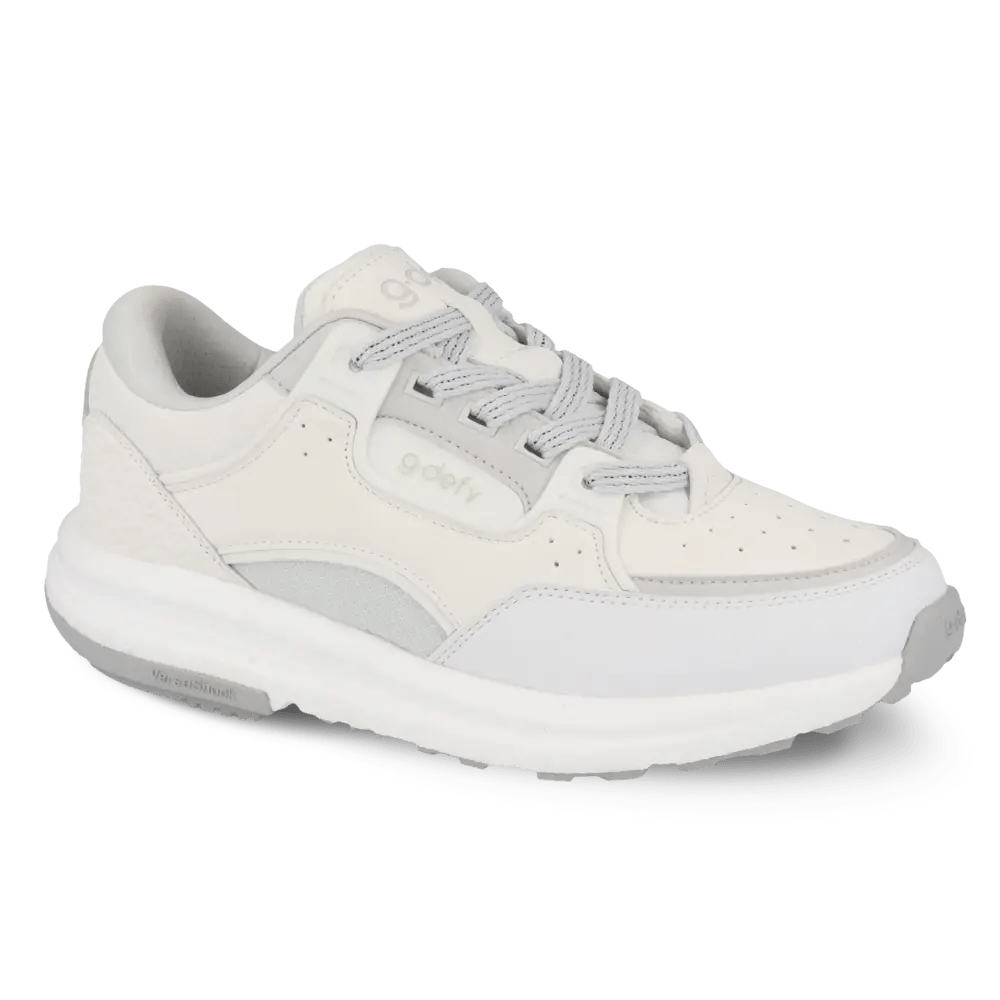
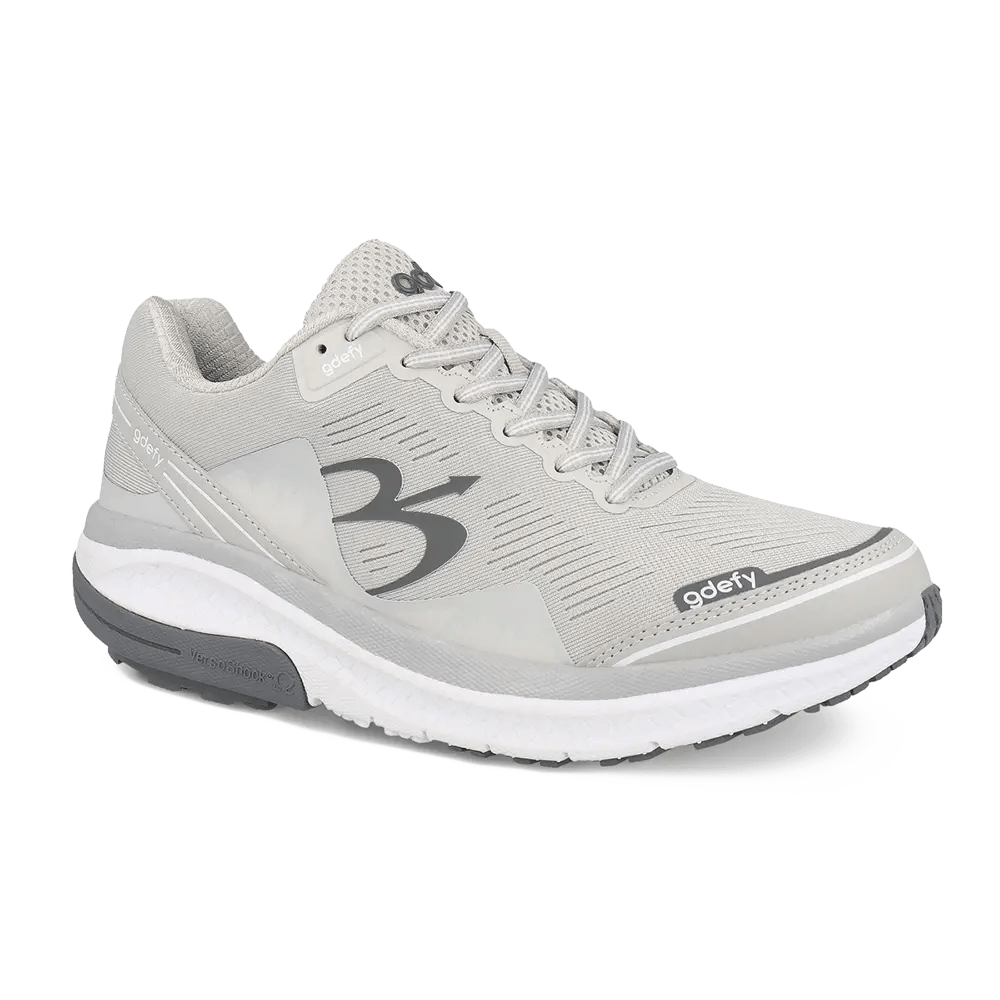
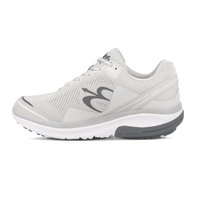
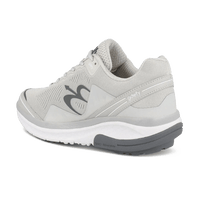
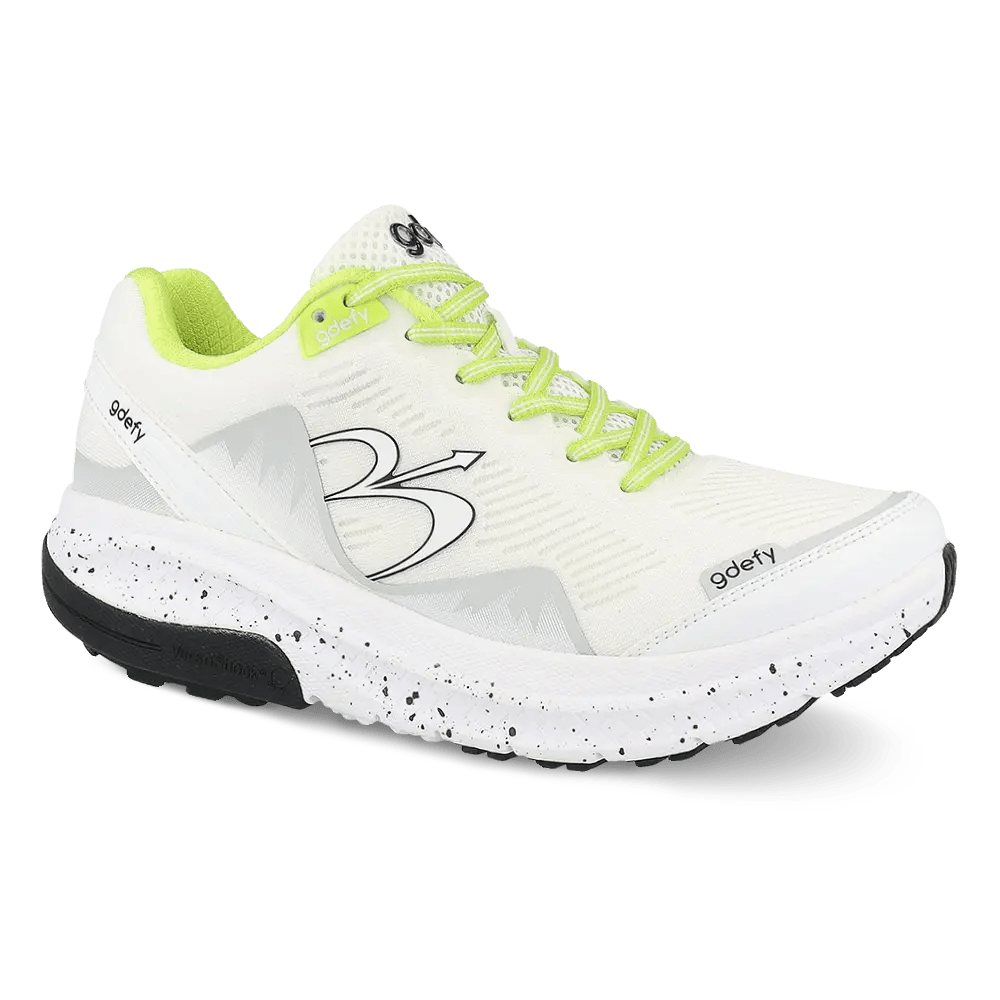
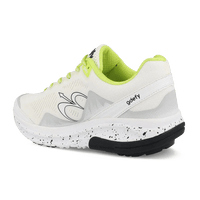
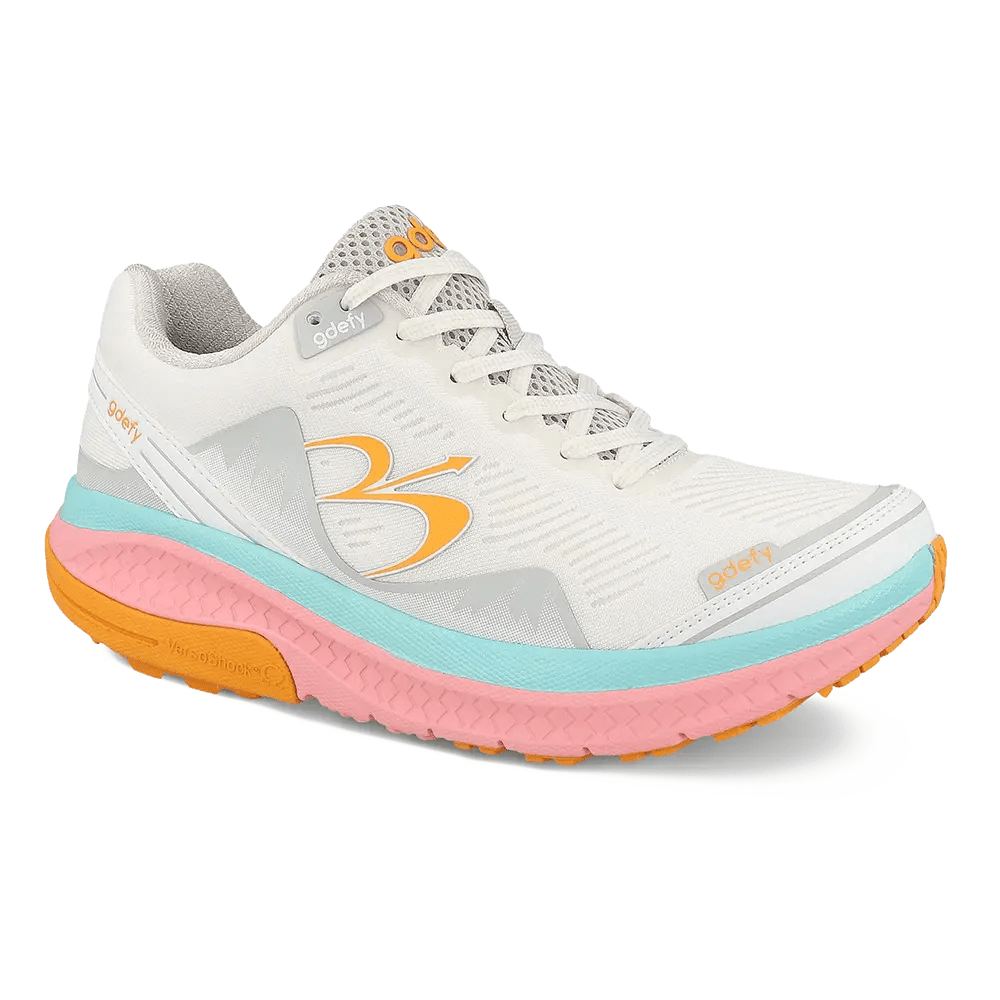
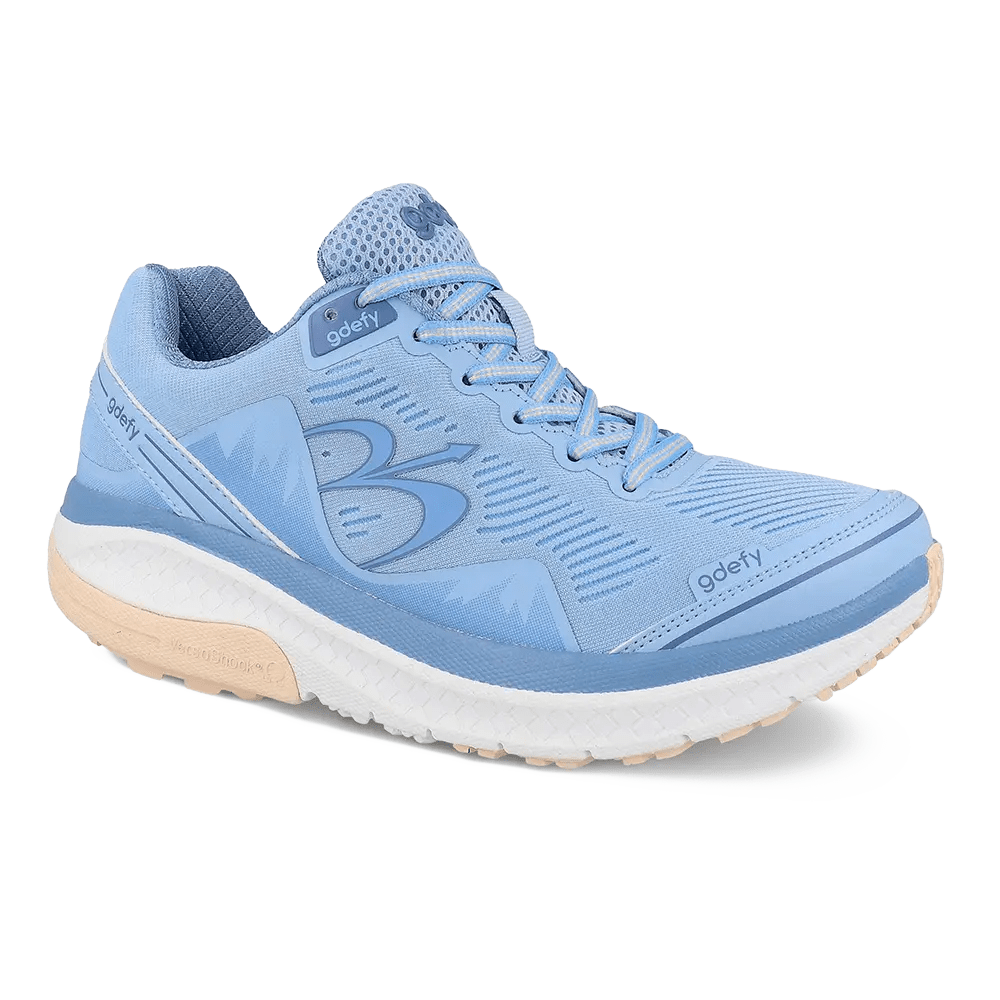
G-Defy's approach to shoe design is rooted in a patented technology system called VersoShock® — a four-pillar midsole architecture engineered to manage impact and return energy with every step.
The four elements of VersoShock® technology work together:
- Spring-based shock absorption — a coiled spring system embedded in the midsole that compresses under load and rebounds, distributing impact forces more broadly across the foot rather than concentrating them at the heel
- Energy return layer — a responsive foam layer that captures compression energy and returns it to the stride, reducing the fatigue that accumulates during long walks or extended standing
- Built-in stabilizer — a structural element at the midfoot that limits excessive lateral movement, helping to keep the foot — and by extension, the knee — in a more neutral alignment
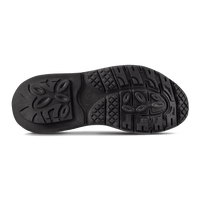
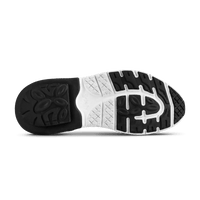
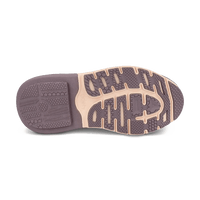
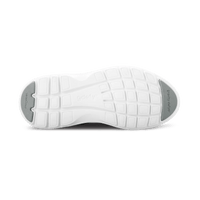
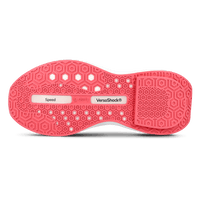
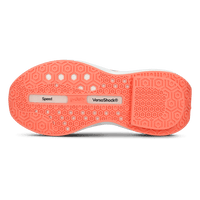
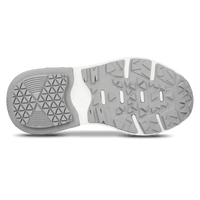
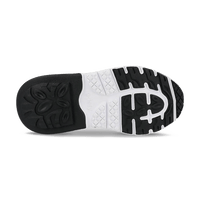
- Front rolling design — a rocker-inspired outsole geometry that promotes a smoother toe-off, reducing the abrupt heel-strike forces that place peak stress on the knee joint
All G-Defy shoes include dual orthotic systems: the standard ComfortFit® orthotic for everyday wear and the CorrectiveFit® orthotic for users who benefit from additional arch correction. Both are removable, so you can swap in a prescription orthotic if needed.
The combination of these features means that with every step, your knee receives less unmanaged impact than with traditional flat-soled footwear. G-Defy shoes are engineered for active adults who want to stay on their feet longer with less joint discomfort — and they help reduce pain from walking, running, and prolonged standing for many of our customers.
Ready to experience the difference?
G-Defy offers a 60-day trial with free shipping — try them on your daily walks and see how your knees feel. Shop men's shoes or shop women's shoes.
Which G-Defy Shoe Is Right for You?
G-Defy offers a range of styles across walking, athletic, and everyday categories. Here are the three most frequently chosen by customers managing knee discomfort:

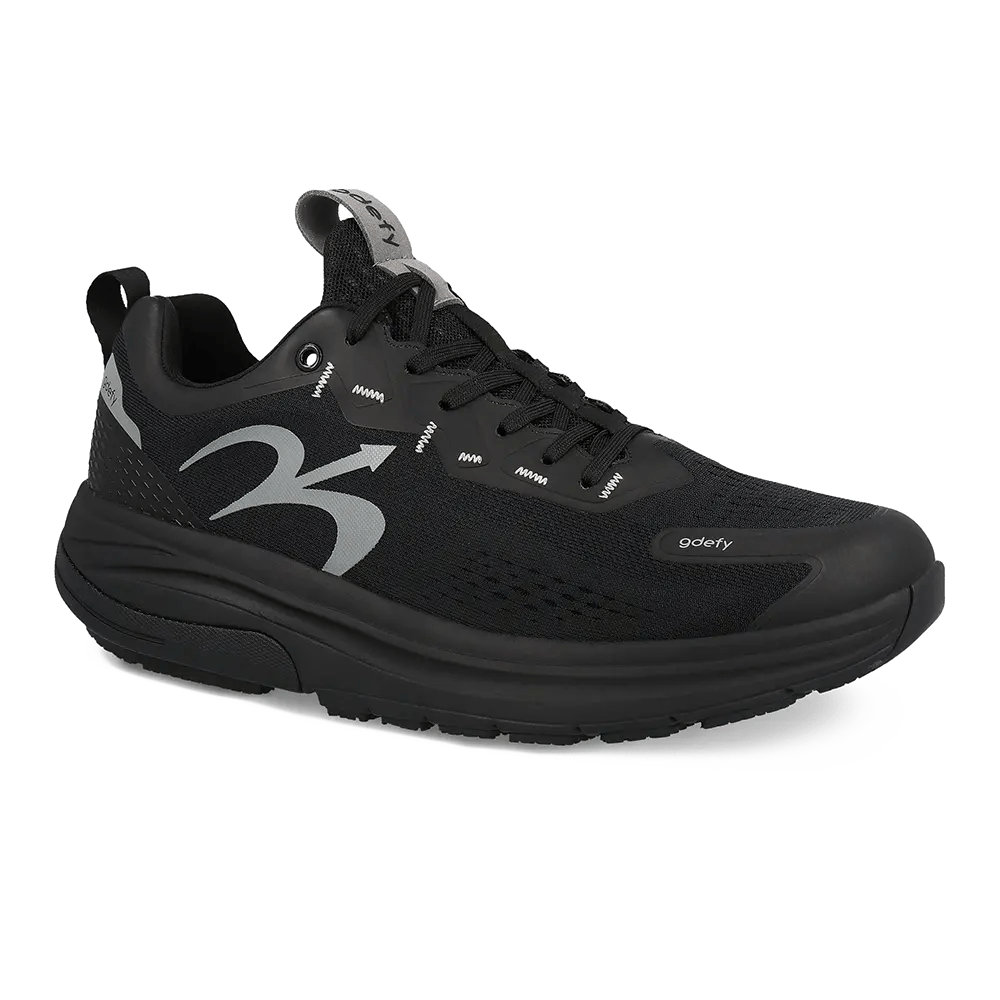
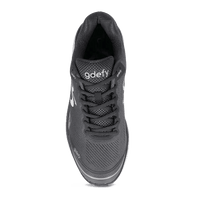
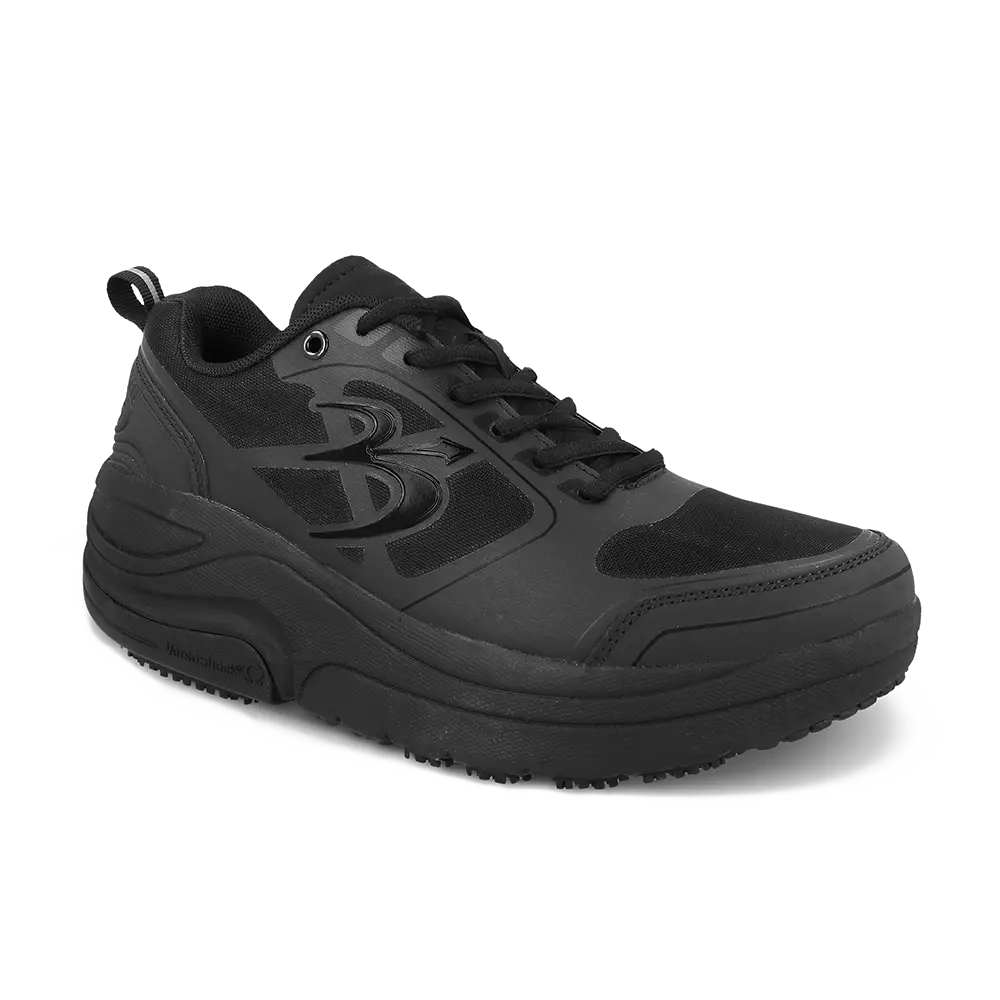
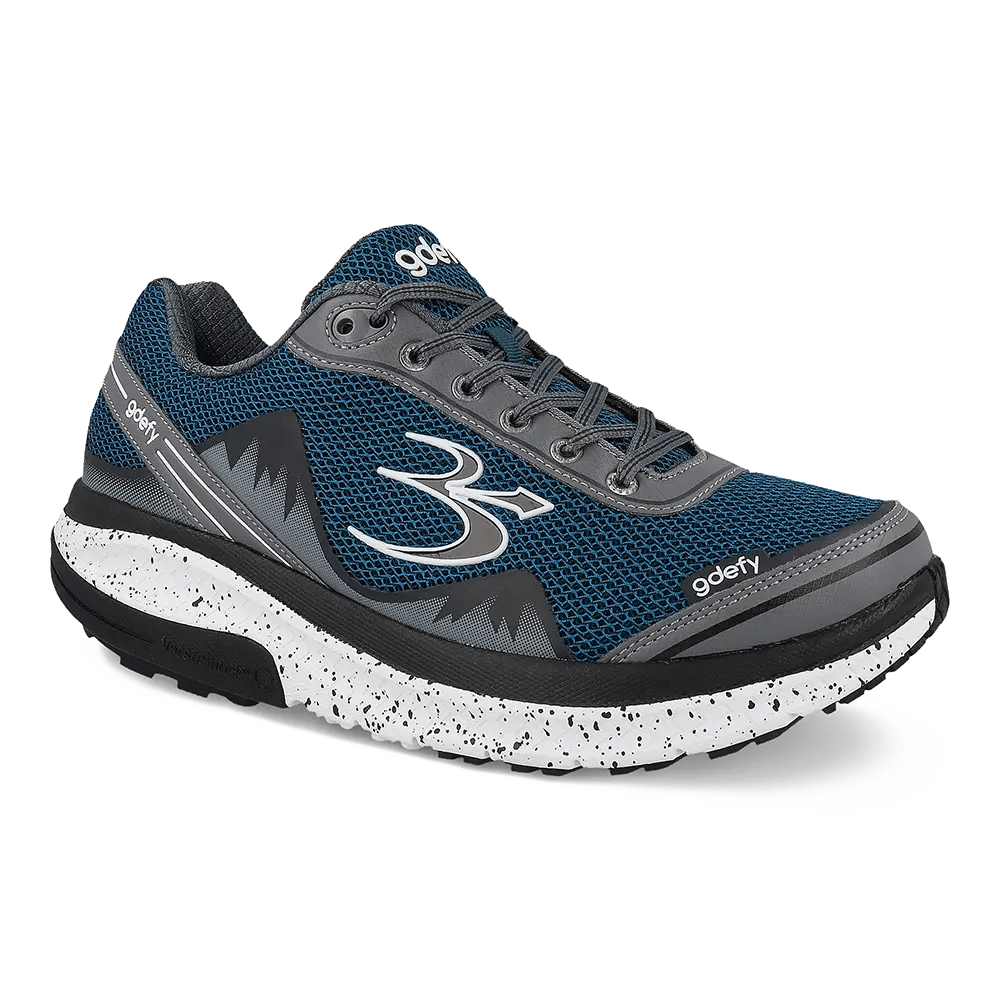
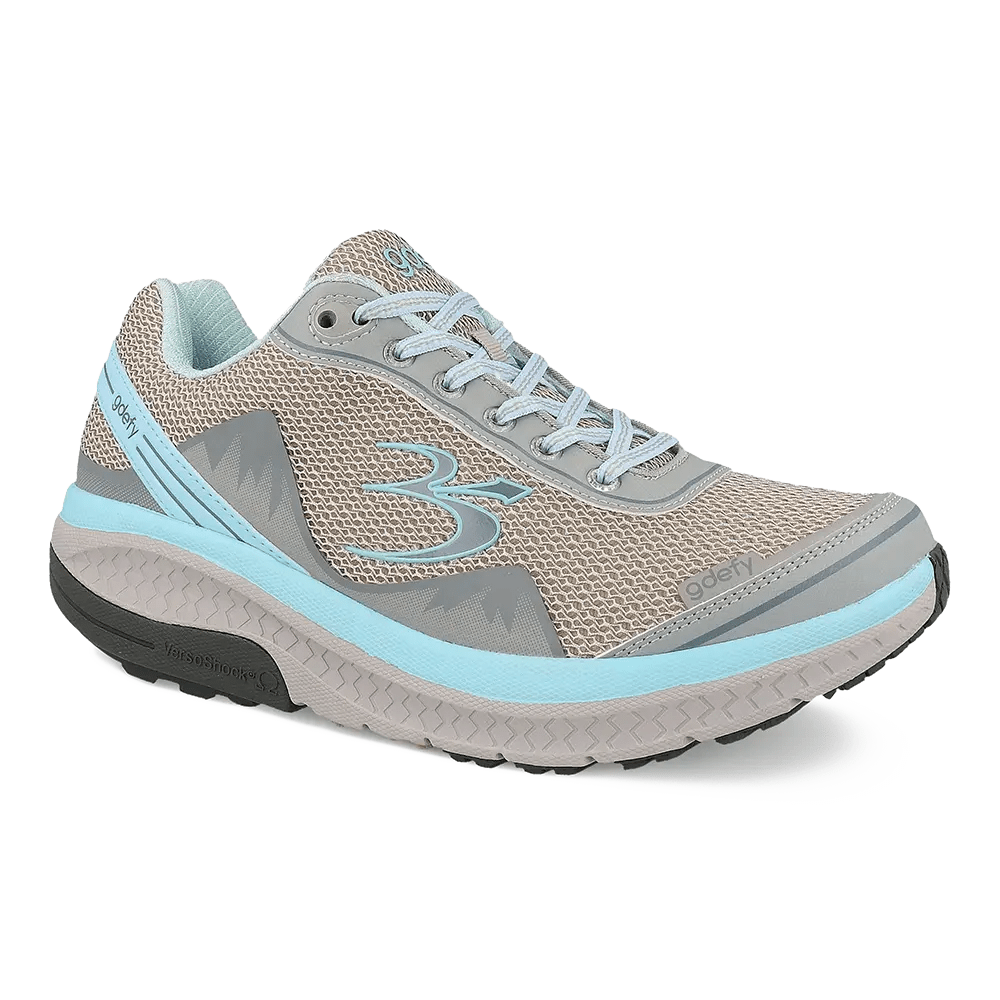
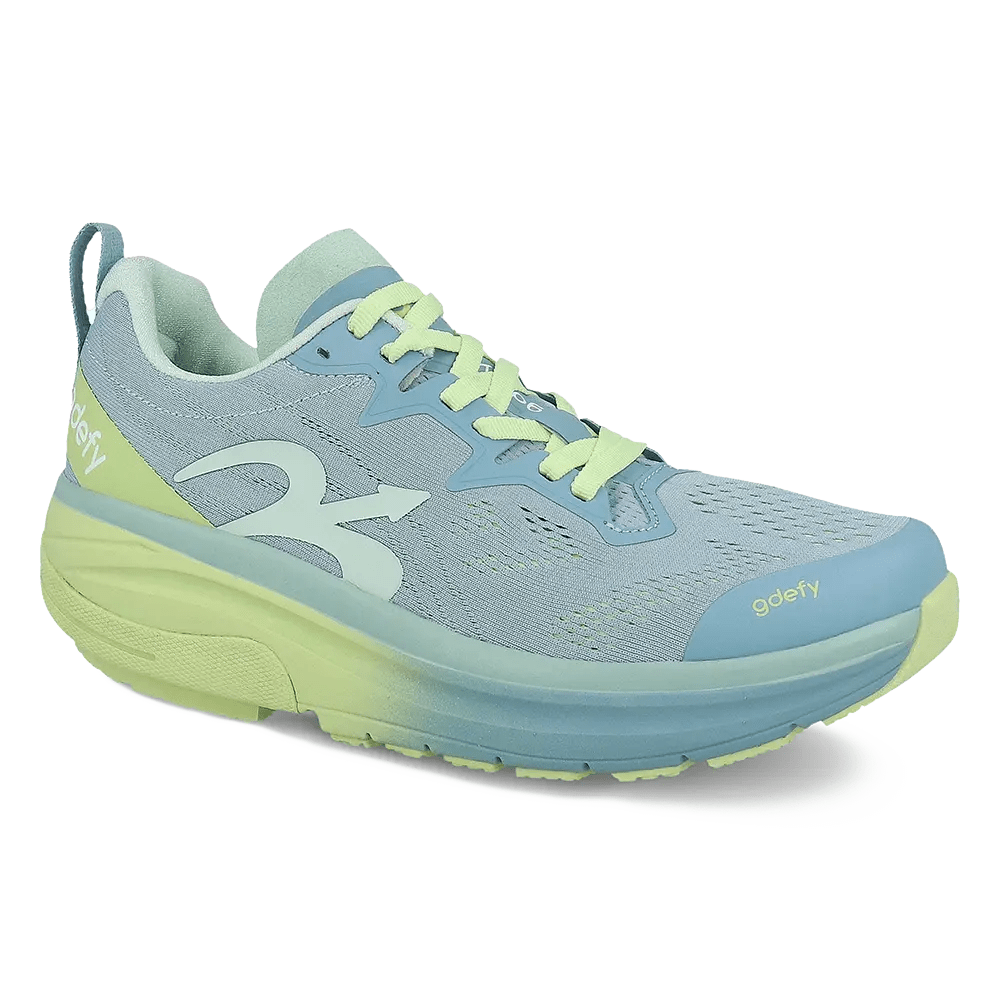
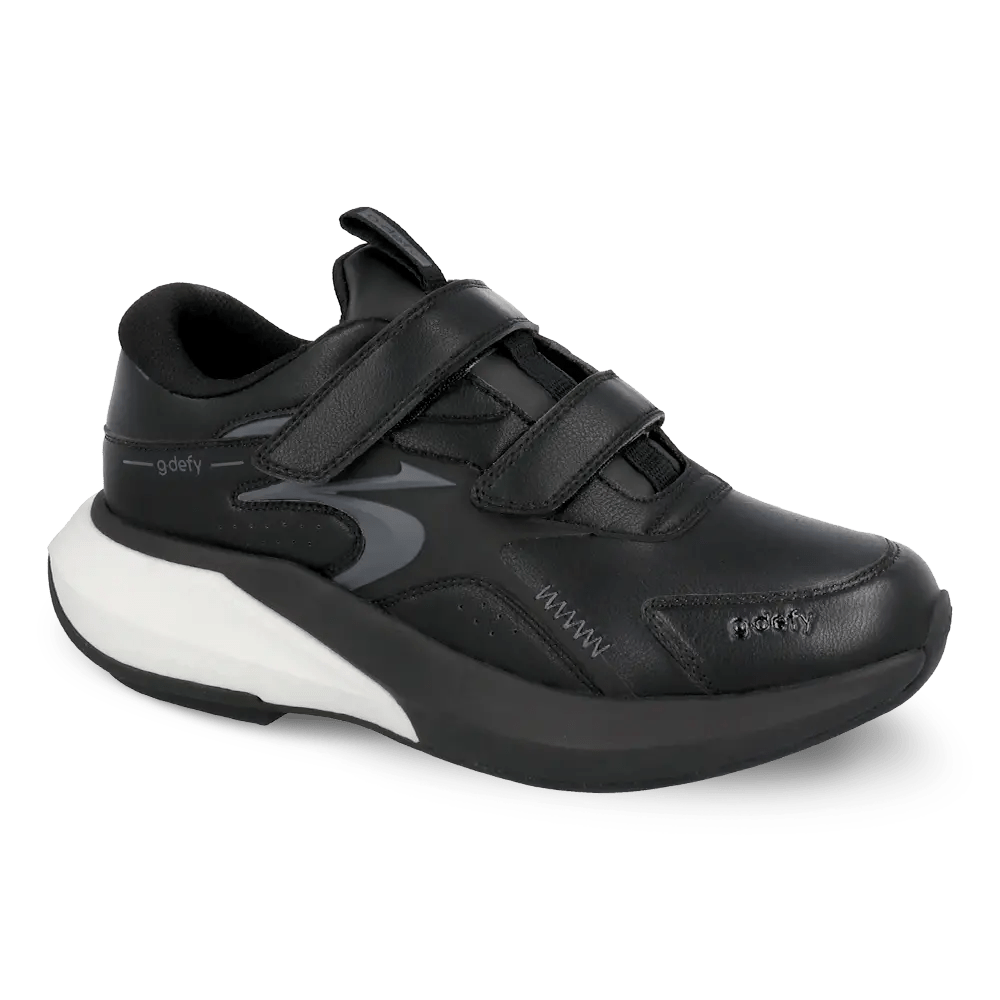
Mighty Walk — G-Defy's flagship walking shoe and one of the most consistently reviewed styles for joint comfort. The Mighty Walk features the full VersoShock® system in a traditional athletic silhouette, making it easy to wear for everything from grocery runs to multi-hour walks. Available in wide widths.
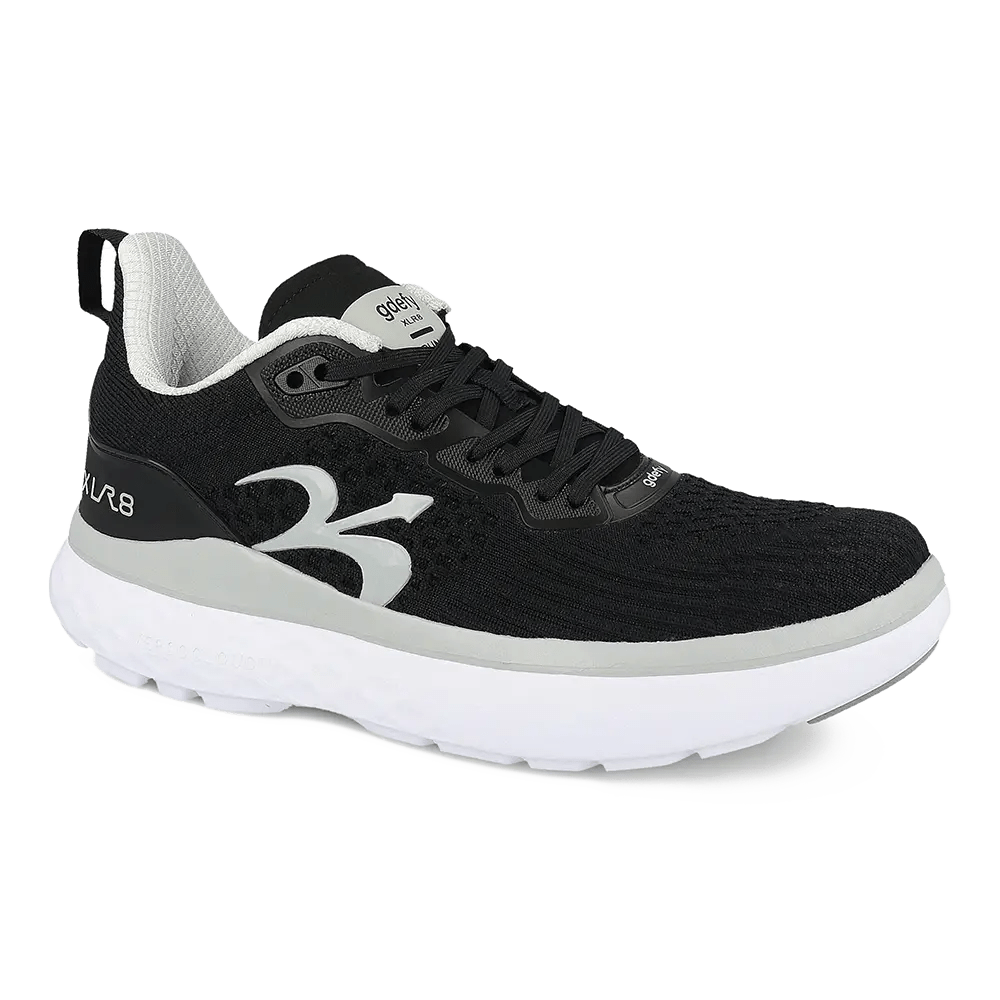
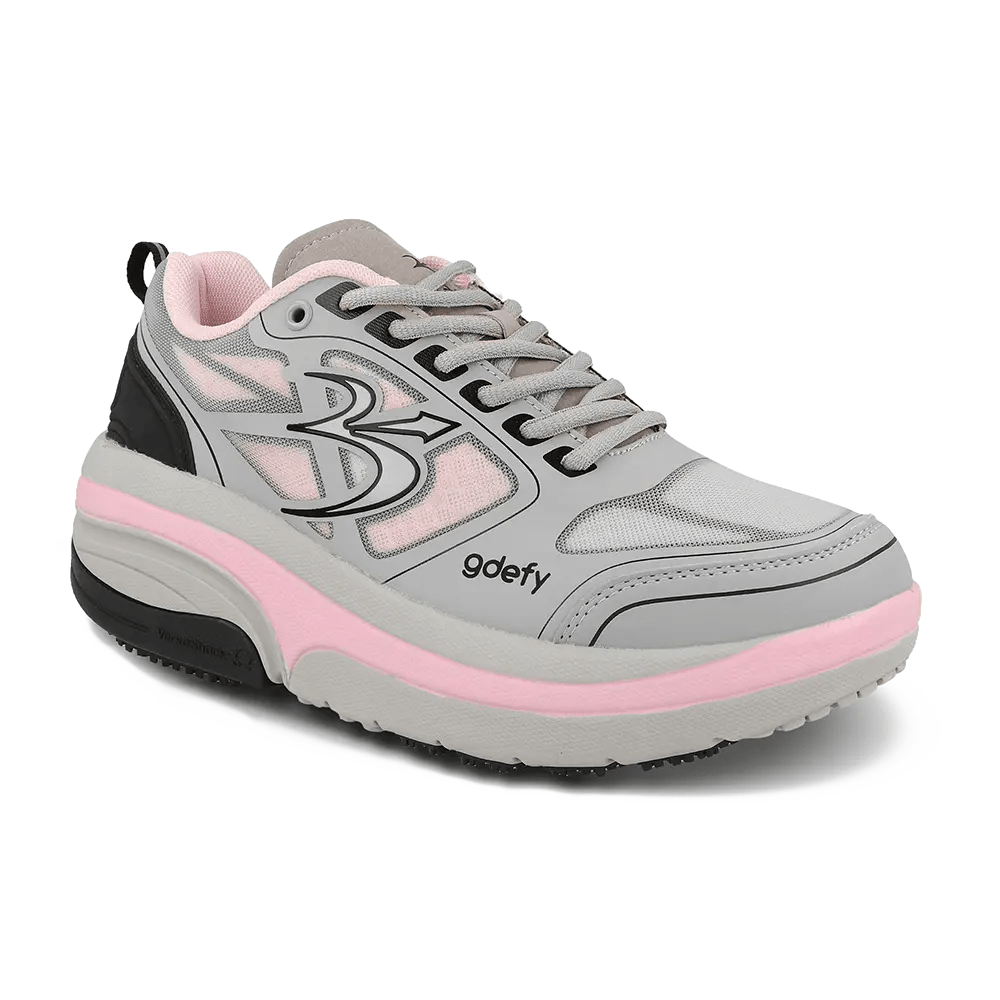
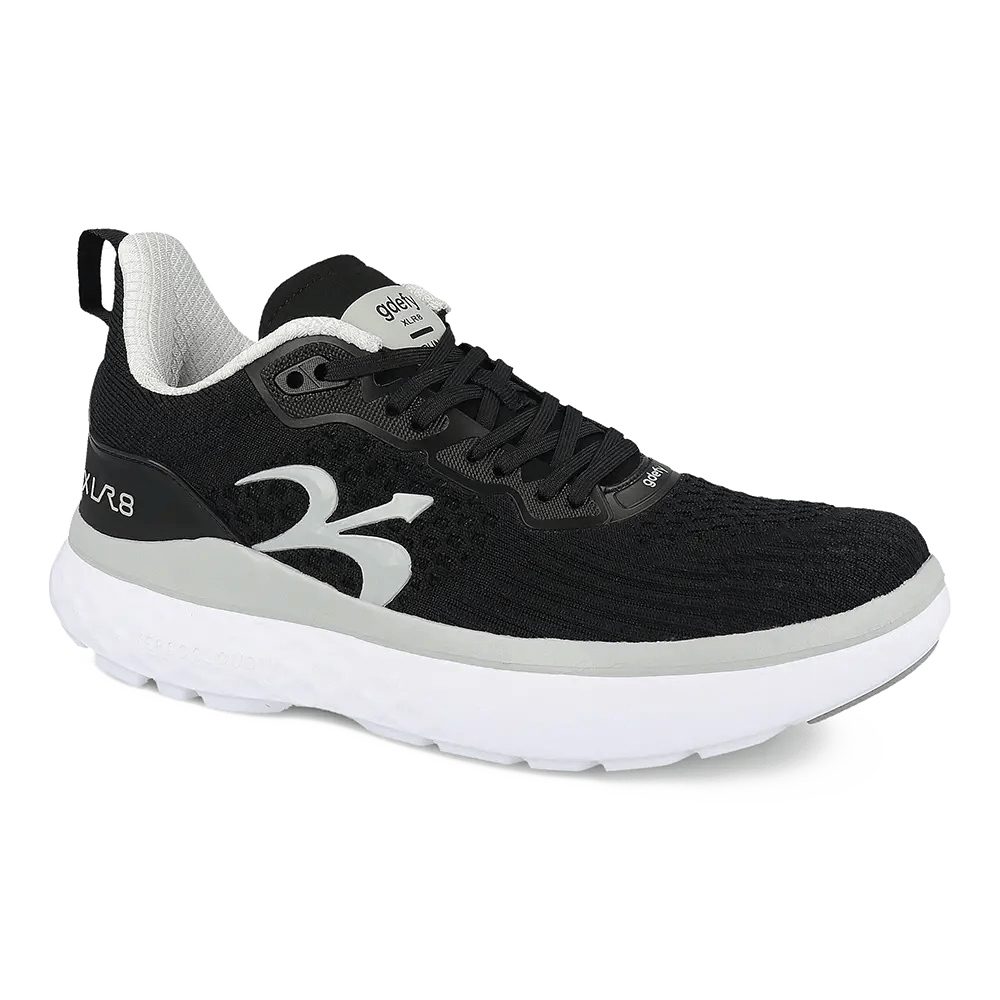
XLR8 Run — Designed for more active use, the XLR8 Run adds an additional responsive layer for walking and light running. The low-profile heel structure and flexible outsole make it a good fit for people who prefer a more athletic feel without sacrificing cushioning.
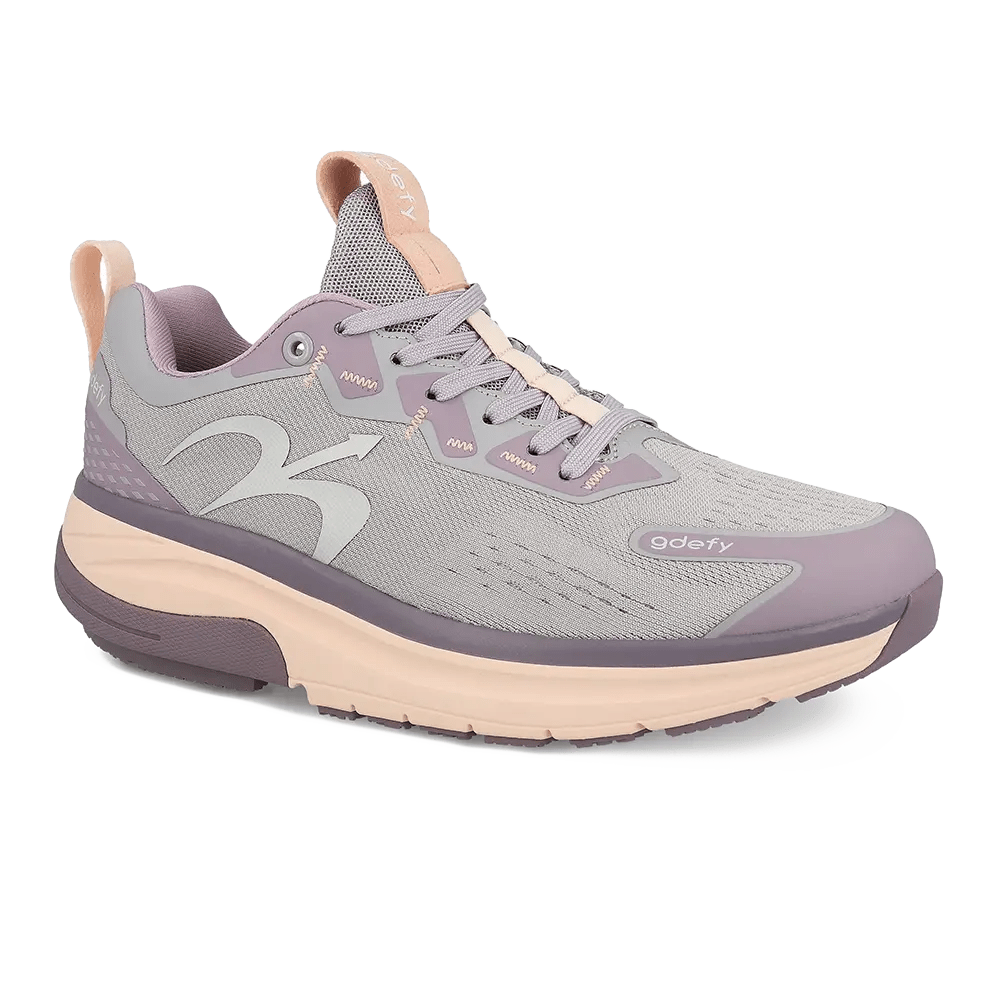
Energiya — A sporty, lightweight option that combines the VersoShock® midsole with breathable upper construction. The Energiya suits people who log daily steps but want a lighter shoe for warmer months or more aerobic activity.
All three styles include both ComfortFit® and CorrectiveFit® orthotics and are available in men's and women's sizing across standard and wide widths.
Everyday Tips to Support Knee Comfort
Beyond footwear, a few consistent habits can help reduce the daily burden on your knees:
- Warm up before longer walks — a 5-minute gentle walk before picking up pace helps your joints adapt to movement and reduces peak loading early in your stride
- Choose softer surfaces when possible — grass, dirt paths, and rubberized tracks absorb impact better than concrete or asphalt
- Replace shoes on schedule — midsoles begin losing effectiveness between 300–500 miles of walking; a compressed midsole no longer protects your joints the way a fresh one does
- Strengthen the muscles around the knee — quad and hamstring strength helps your knee absorb and distribute load more efficiently; even light resistance exercises a few times per week make a meaningful long-term difference
- Stay hydrated — cartilage is largely water; adequate hydration supports joint mobility and reduces friction during movement
How Knee Comfort Connects to the Rest of Your Body
Knees don't function in isolation. They are part of a continuous kinetic chain that runs from your feet through your hips and into your lower back. When your feet are adequately supported, your knees experience less compensatory stress. When your knee mechanics are aligned, your hips and lower back follow suit. This is why footwear designed with foot support in mind can meaningfully affect how your knees — and even your back — feel over the course of a day.
For a deeper look at how foot mechanics ripple upward through your body, see our educational piece on how your feet affect your entire body: the kinetic chain.
What G-Defy Customers Notice
Across thousands of customer reviews, a few consistent themes emerge from people who wear G-Defy shoes for knee discomfort:
- Customers frequently report being able to extend their daily walks after switching to G-Defy — often moving from 15–20 minute sessions to 45–60 minute walks over several weeks
- Many customers mention that stair climbing and prolonged standing feel more manageable, especially during the second half of the day
- Customers who had tried multiple shoe types before G-Defy often point to the spring-based midsole as the feature that felt distinctively different underfoot
- Some customers note a brief adjustment period of 1–2 weeks, during which the different feel of the VersoShock® system becomes more familiar and natural
Results vary by individual. G-Defy shoes are designed comfort footwear, not medical devices, and are not intended to diagnose, treat, or cure any medical condition.
Frequently Asked Questions
Can footwear really affect knee comfort?
Yes — footwear is the primary mediator between the ground and your joints. Shoes with better shock absorption reduce the peak impact forces that reach your knees with every step. The cumulative effect of better cushioning over thousands of daily steps can make a meaningful difference in how your knees feel by the end of the day.
What is VersoShock® technology?
VersoShock® is G-Defy's patented four-pillar midsole system: spring-based shock absorption, an energy return layer, a built-in stability element, and a front rolling outsole geometry. Together, these components are designed to absorb impact, return energy to each stride, and promote more neutral knee alignment during walking and standing.
How long does it take to feel a difference with G-Defy shoes?
Many customers notice a difference within the first few days of regular wear. Because the VersoShock® system feels distinctly different from traditional foam midsoles, some customers experience a brief adaptation period of 1–2 weeks. G-Defy's 60-day trial period gives you adequate time to evaluate fit and comfort before committing.
Are G-Defy shoes available in wide widths?
Yes — most G-Defy styles are available in standard and wide widths for both men and women. A proper fit is essential for joint comfort, and accommodating different foot widths is part of how G-Defy approaches footwear for active adults. Visit our men's collection or women's collection to filter by width.
The Right Footwear Can Make a Real Difference
Knee discomfort doesn't have to define your day. While footwear isn't a complete solution on its own, the right shoe can meaningfully reduce the mechanical stress your knees experience with every step. Choosing a shoe with responsive shock absorption, proper arch support, and a balanced construction gives your joints better tools to work with — step after step.
G-Defy's VersoShock® system was designed specifically to address the gap between what traditional footwear offers and what active adults with joint sensitivity actually need. The result is a shoe engineered around everyday motion — walking, standing, climbing stairs, staying active — for people who don't want to slow down.
Try G-Defy risk-free for 60 days.
Free shipping on every order. Shop women's styles or shop men's styles. Learn more about the technology behind every pair at the VersoShock® technology page.
For more reading on footwear and joint comfort, explore our full knee pain resource library: can shoes help with knee pain when walking, what to look for in shoes if you experience knee pain, and running with knee pain: shoes that reduce impact.