
August 12, 2026
What Is Heel-to-Toe Drop in Shoes and Why Does It Matter?
By Gdefy

Summary
Most people shop for shoes by feel. You press the midsole with a thumb, you check whether it looks cushioned, and you decide. That covers about half of what a shoe is actually doing under your foot.
The other half is geometry — how the shoe is shaped, and specifically how high your heel sits compared to your forefoot. That measurement has a name: heel-to-toe drop. It appears on spec sheets as a number in millimetres, it changes how a step feels from the first minute, and almost nobody explains it in plain language.
This guide does. We'll cover what drop is, how it differs from the other height number on the box, what a step feels like at different drops, and how to measure the shoes already in your closet. Footwear isn't a medical solution — but understanding the geometry makes it much easier to tell why one pair feels settled and another feels like work.
What Heel-to-Toe Drop Actually Means
There are two thicknesses under every shoe. One under your heel, one under the ball of your foot. Each is the total stack of material between your foot and the ground — midsole, outsole, insole, everything.
Heel-to-toe drop is the difference between those two numbers.
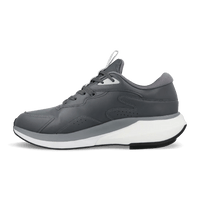
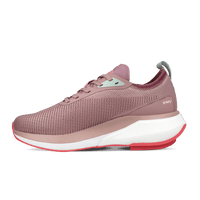
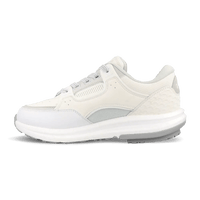
If a shoe measures 28 mm under the heel and 20 mm under the forefoot, the drop is 8 mm. Your heel sits 8 mm higher than your toes, and the platform tilts very gently forward.
A few reference points:
- Zero drop — heel and forefoot sit at the same height. The platform is flat.
- Low drop (roughly 1–4 mm) — a slight forward tilt.
- Moderate drop (roughly 5–9 mm) — the most common range in everyday walking shoes.
- Higher drop (10 mm and up) — a more pronounced ramp, common in traditional running and cushioned athletic designs.
None of these numbers is a grade. A 12 mm shoe is not better or worse than a 4 mm shoe. They are two different setups, built to feel different, and the one that suits you depends on your stride, your day, and what your feet are already used to.
Drop and Stack Height Are Two Different Numbers
This is where most shoe descriptions get confusing, because the two figures are printed side by side and sound like the same idea.
Stack height is how much material is under you — the total cushioning depth. Drop is how that material is distributed front to back — the tilt.
They move independently, and that's the whole point:
| Setup | Stack height | Drop | How the platform reads |
|---|---|---|---|
| Thin and flat | Low | 0 mm | Very little between you and the ground, no tilt |
| Thin and tilted | Low | 8 mm | Firm underfoot, but the heel still sits raised |
| Thick and flat | High | 0 mm | Plenty of cushioning, level platform |
| Thick and tilted | High | 8 mm | Plenty of cushioning, heel raised, gentle forward lean |
A shoe can be deeply cushioned and completely flat. A shoe can be minimal and steeply ramped. Reading one number and assuming the other is how people end up with a pair that cushions beautifully and still feels wrong. If you want the full picture of what sits between your foot and the pavement, our breakdown of what's inside a comfort walking shoe walks through each layer.
How Drop Changes the Way a Step Feels
Walking is a rolling motion. Your heel lands, your weight travels along the outside of the foot, crosses to the ball, and leaves through the toes. Drop changes the geometry of that roll in three noticeable ways.
Where the step begins. On a higher-drop platform the heel meets the ground slightly sooner, because it is already the lowest point of the shoe. On a flat platform the whole foot arrives closer to the same moment.
How much the ankle travels. A raised heel means the ankle starts each step from a slightly more closed position and moves through a shorter range as you roll forward. Lower the heel and the ankle covers more distance every step. Over a few thousand steps, that difference is what your calves notice at the end of a day in unfamiliar shoes.
Where pressure sits. Tilt the platform forward and a little more load shifts toward the forefoot. Level it out and the load stays spread more evenly between heel and ball.
None of this is about better or worse mechanics. It's about what your body is accustomed to. A large change in drop — switching from a 10 mm shoe to a zero-drop shoe overnight, for example — asks your legs to work in a pattern they haven't rehearsed. That's a break-in question more than a design question, and our guide to breaking in new shoes comfortably covers how to make that transition gradually.
Why the Same Drop Feels Different on Different Feet
Two people can wear the identical shoe and describe it in opposite terms. Foot shape is the reason.
A foot with a lower arch tends to flatten and roll inward through the step. A foot with a higher arch tends to stay rigid and travel along the outside. The same forward tilt meets those two feet at different angles, so it lands differently — which is why drop is best judged in combination with your own foot type rather than in isolation. Our guides to choosing shoes for your foot type and how flat feet and high arches use the same shoe differently go deeper on that pairing.
Your stride pattern matters too. If you tend to pronate or supinate, the platform's tilt interacts with the sideways motion already happening in your step. Understanding your own gait is a better starting point than copying a number off someone else's spec sheet.
What to Look For in Shoes
When drop is part of the picture, these are the features worth checking:
- A consistent platform — the drop should feel the same from the first step to the last mile, not collapse into a different shape once the midsole compresses.
- Adequate stack under the forefoot — a low drop achieved by stripping material out from under the ball of the foot is a very different shoe from one that adds height at both ends.
- A smooth transition — a rounded or rocker-style forefoot helps the roll from heel to toe continue naturally instead of stopping flat.
- Midfoot structure — a stabilizer through the middle of the shoe keeps the platform from twisting, so the geometry you bought is the geometry you keep. More on that in why stability matters in everyday footwear.
- Proper fit — geometry only works if your foot is sitting where the designer expected it to sit. Shoe fit comes first, always.
- Cushioning that returns something — depth alone isn't the goal. Energy return is what keeps a deep platform from feeling like walking in sand.

How G-Defy Approaches Shoe Geometry
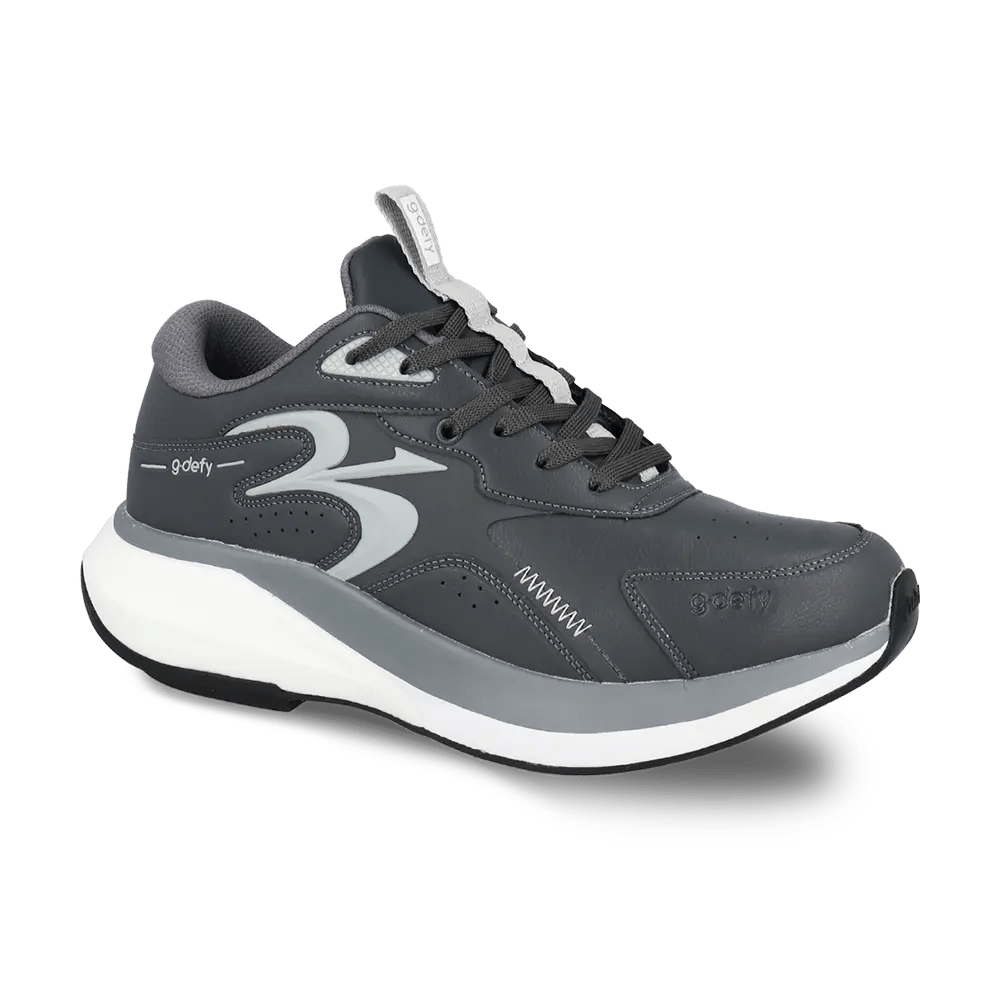
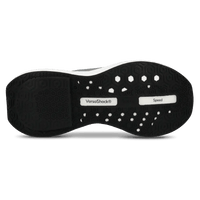
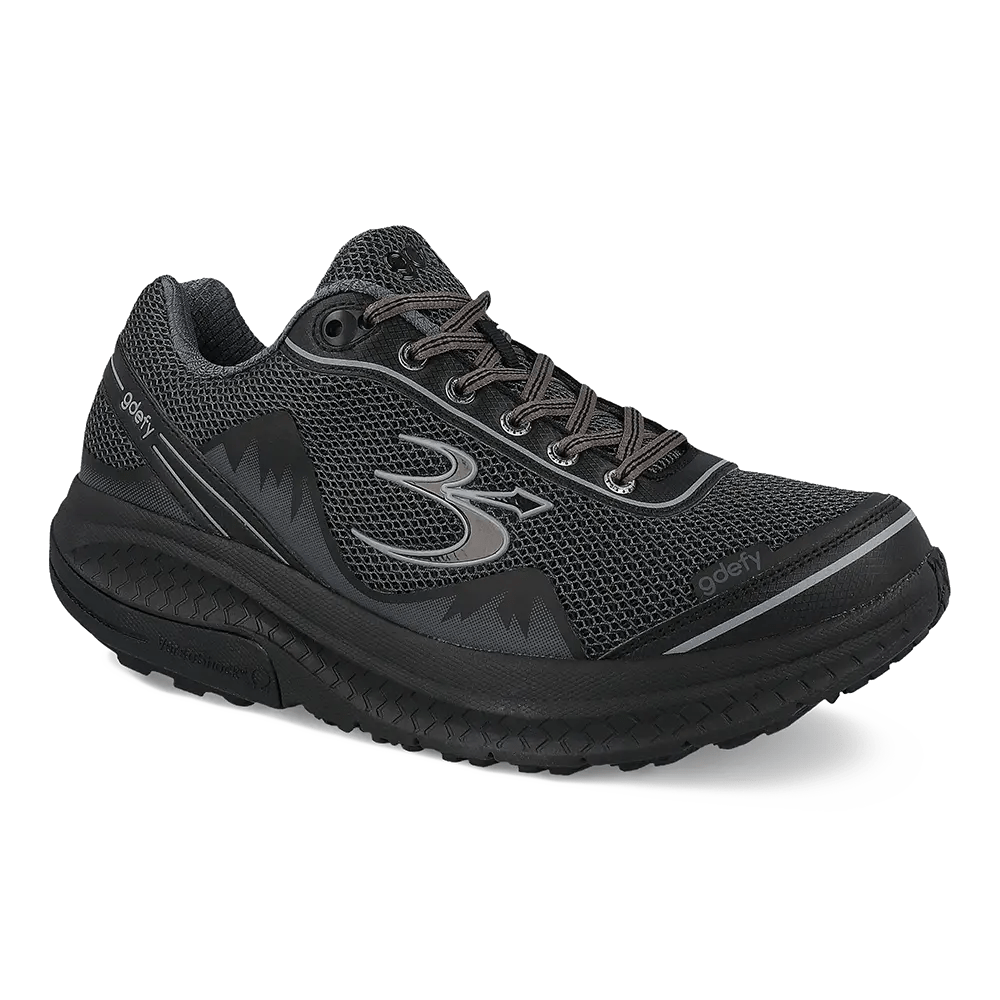
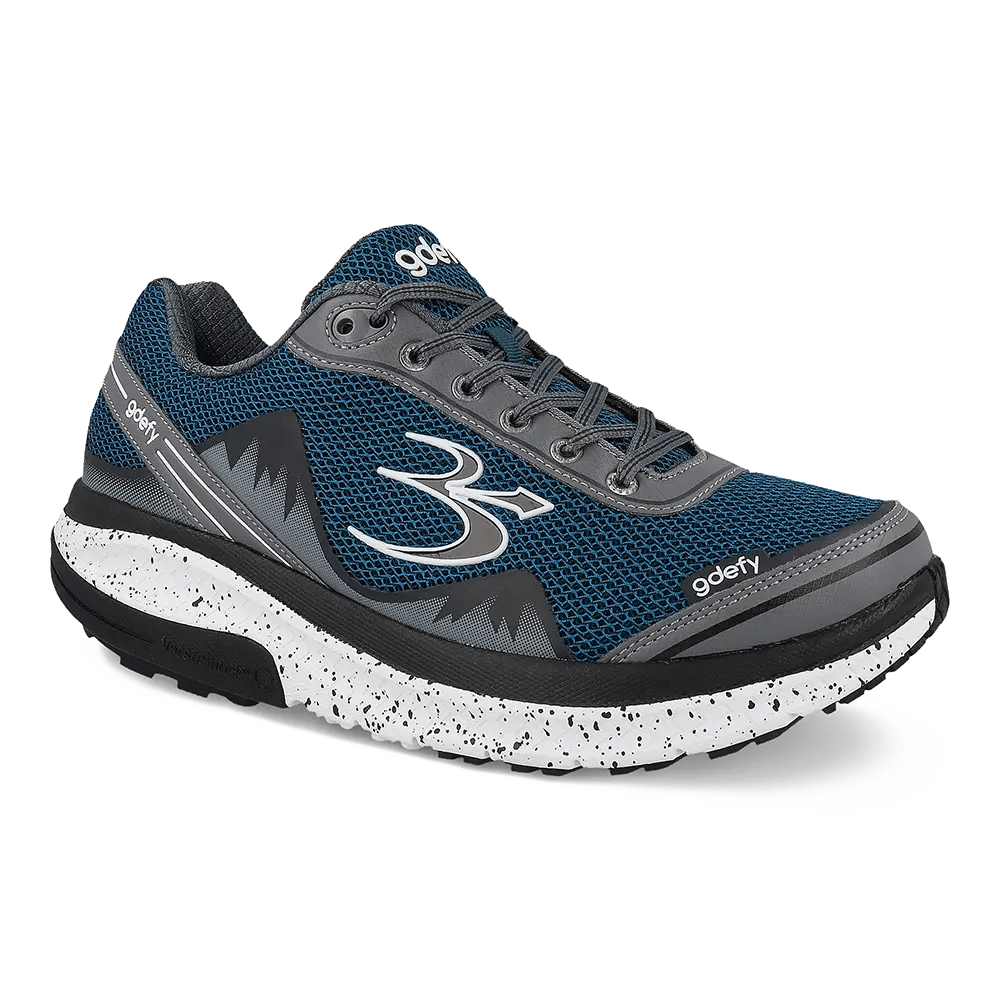
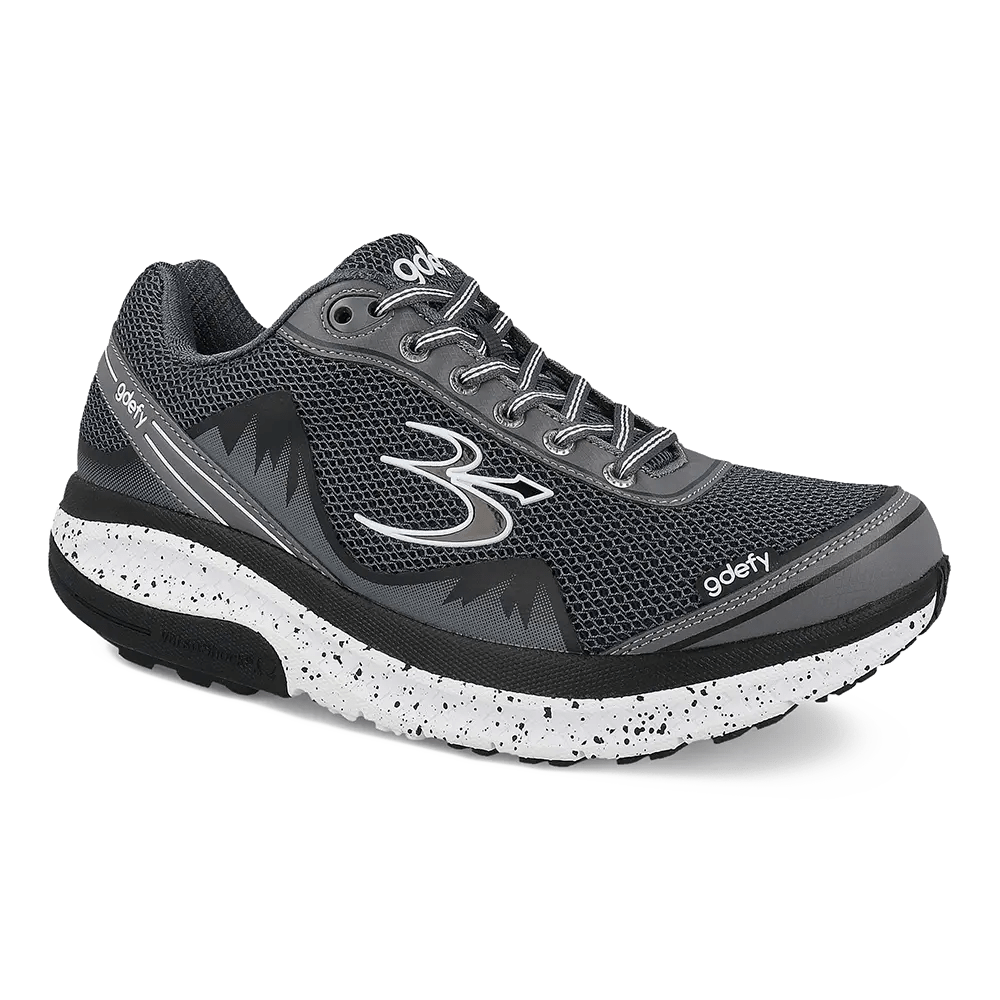
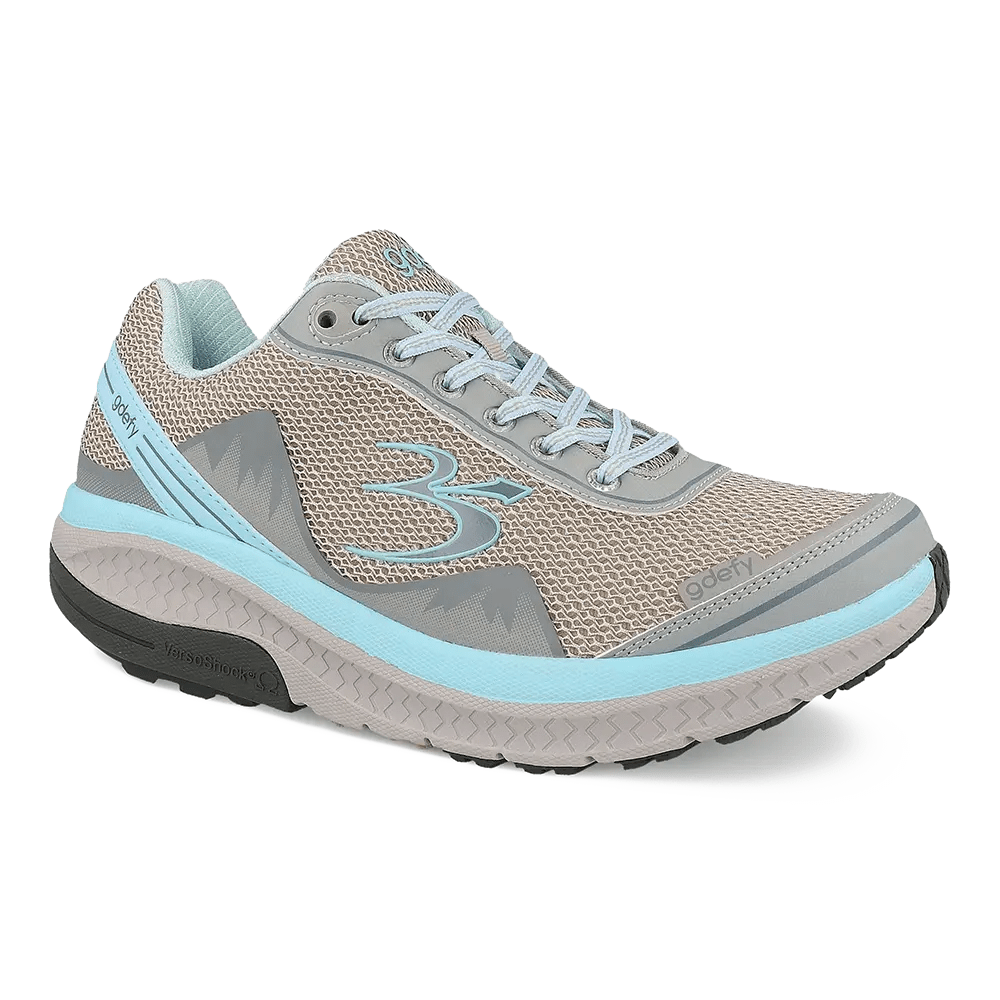
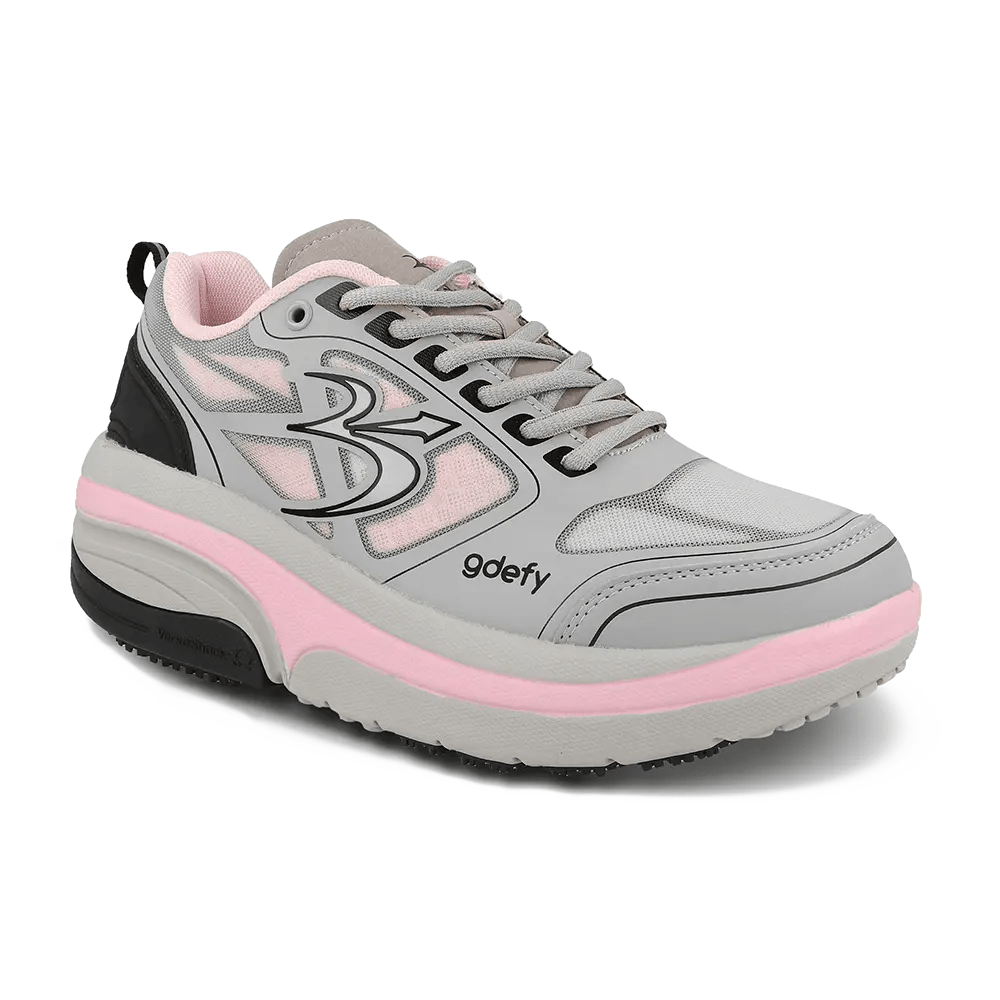
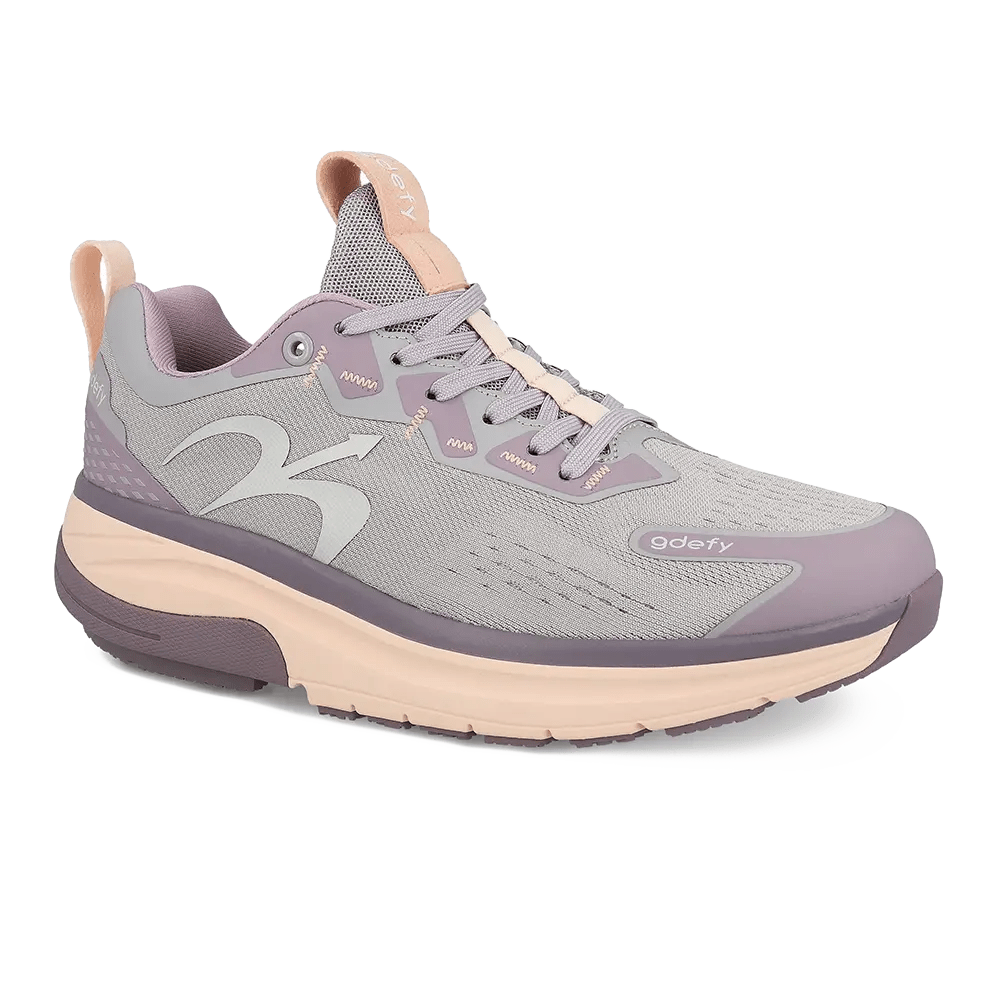
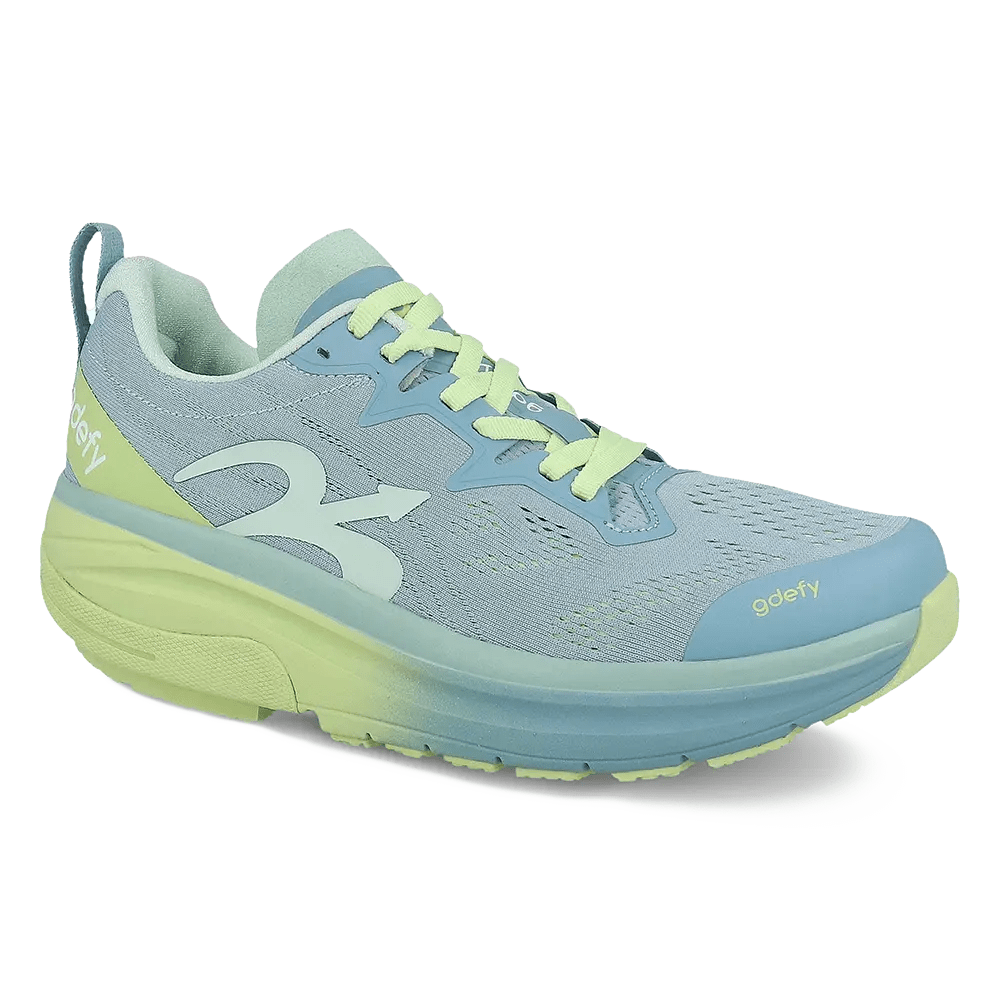
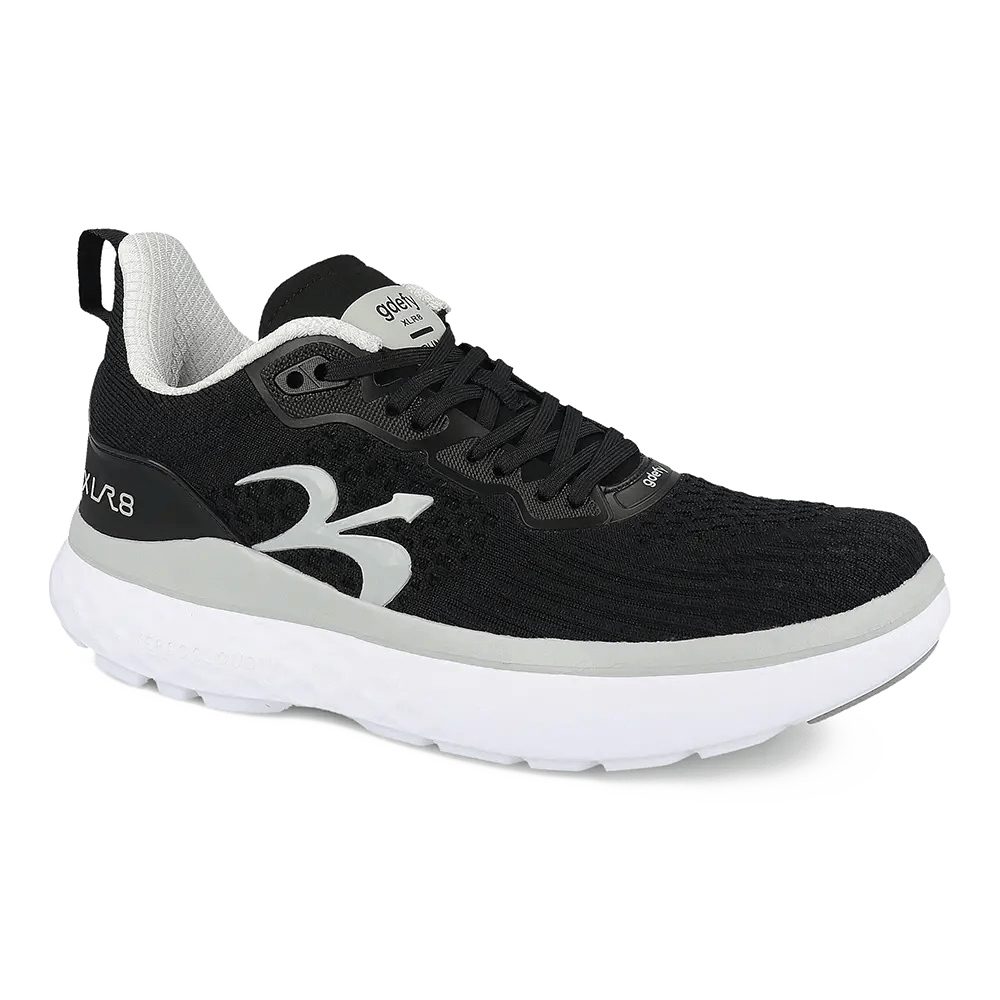
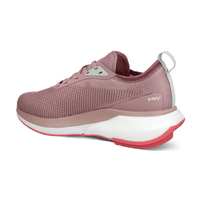
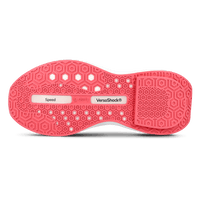
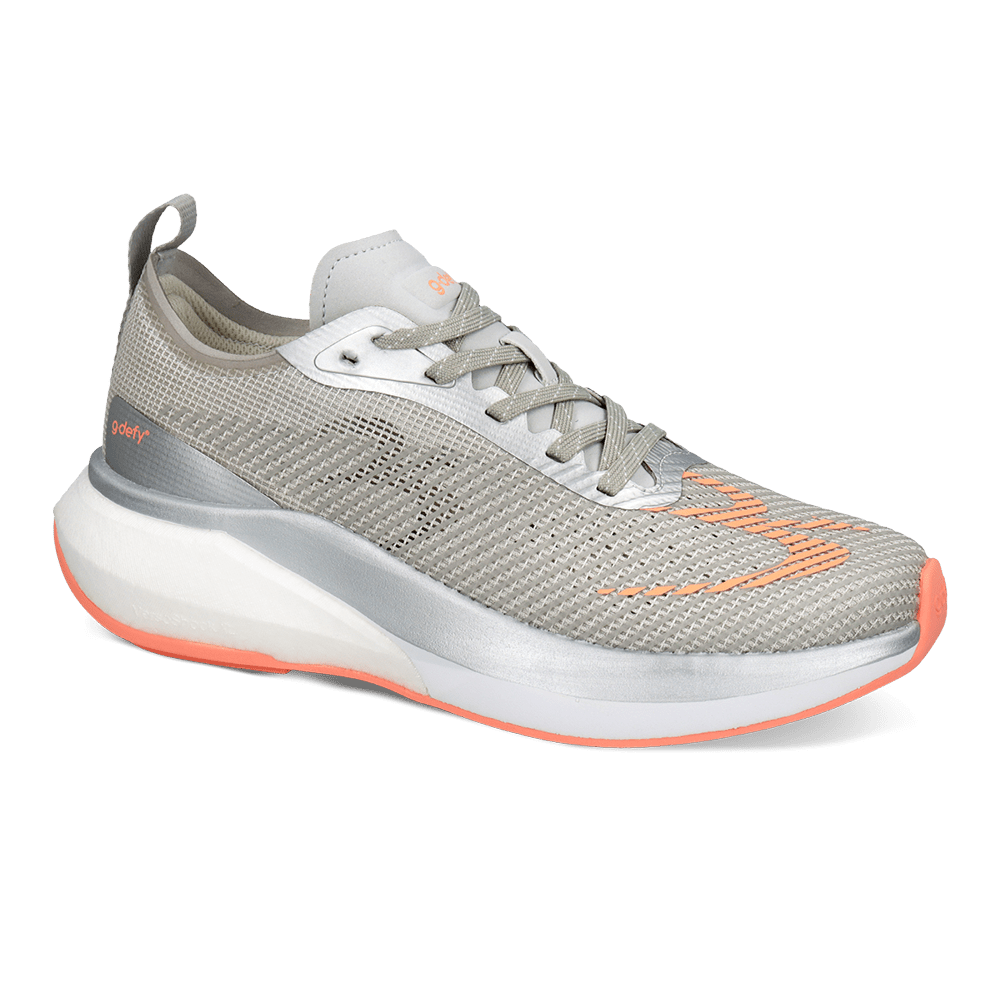
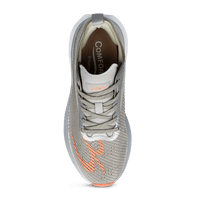
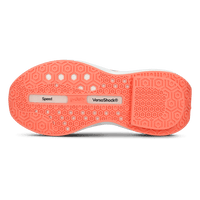
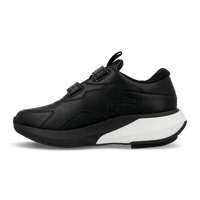
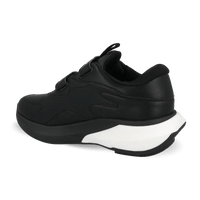
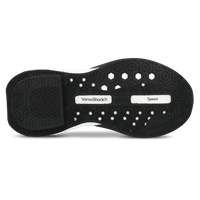
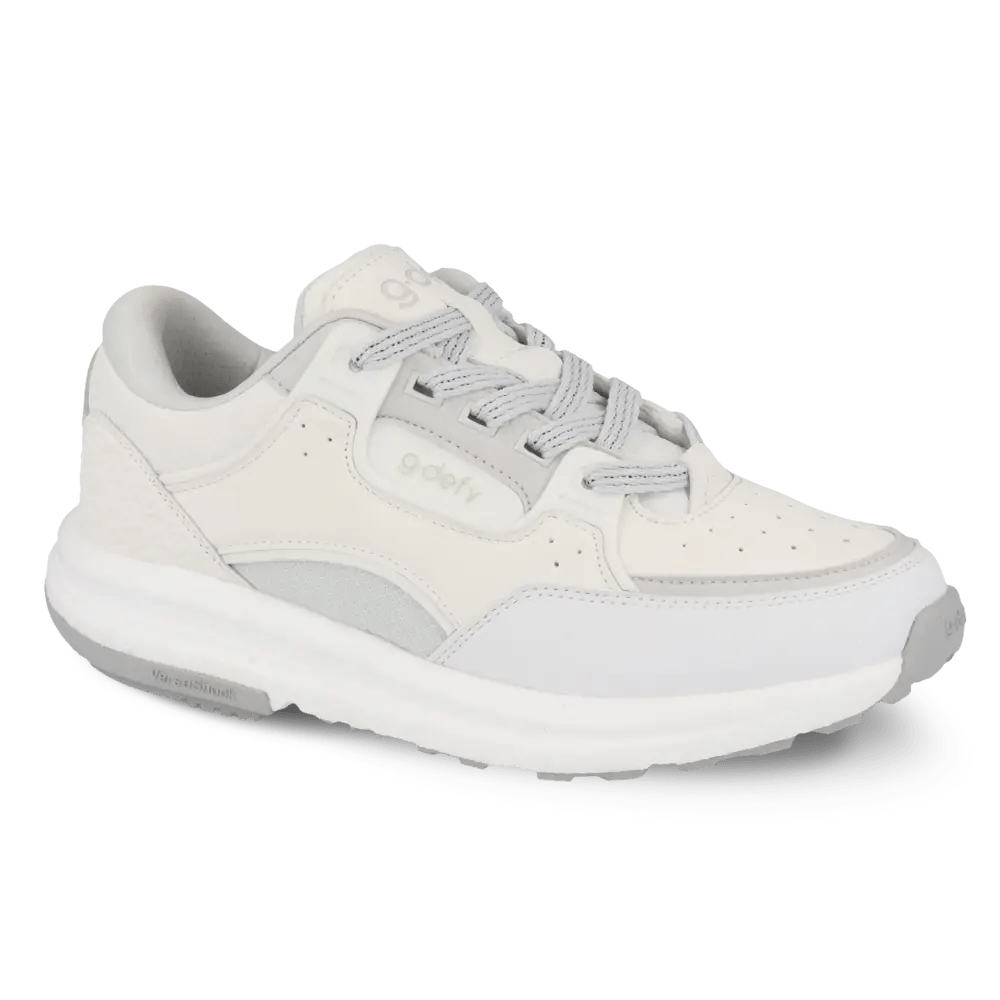
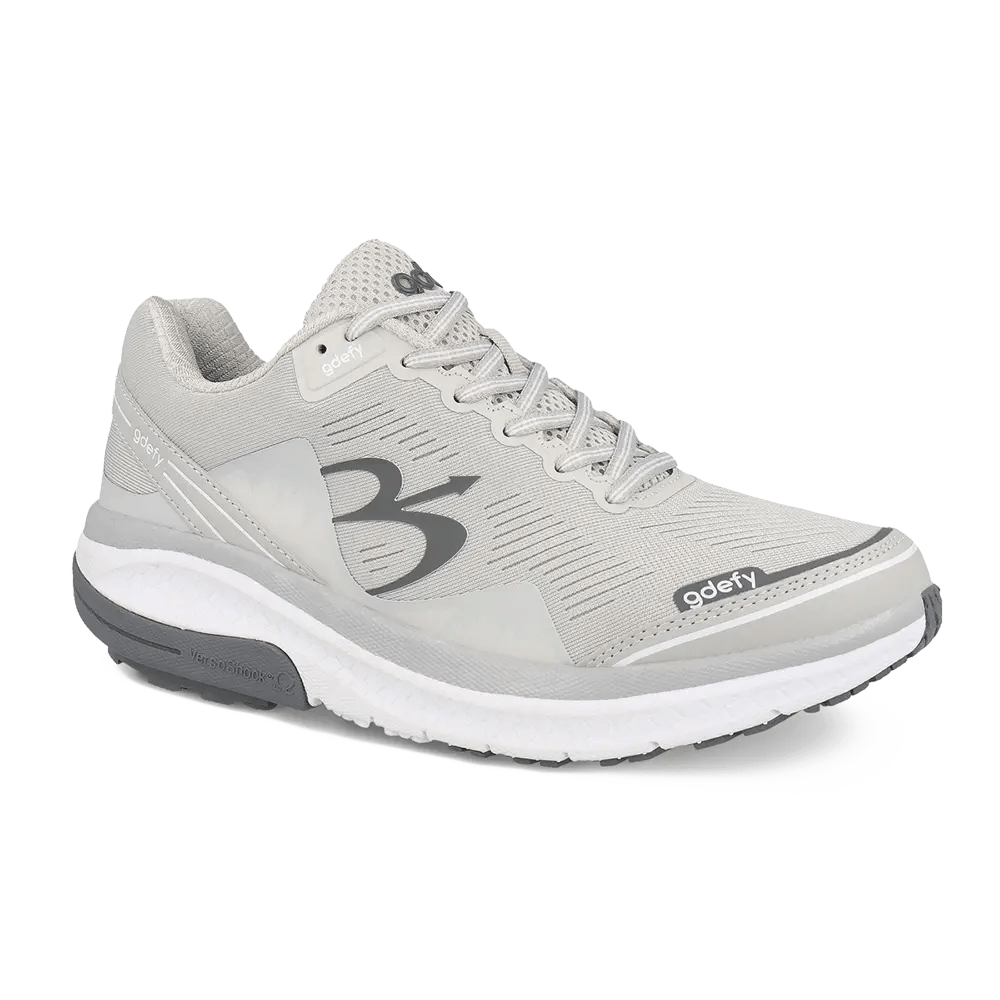
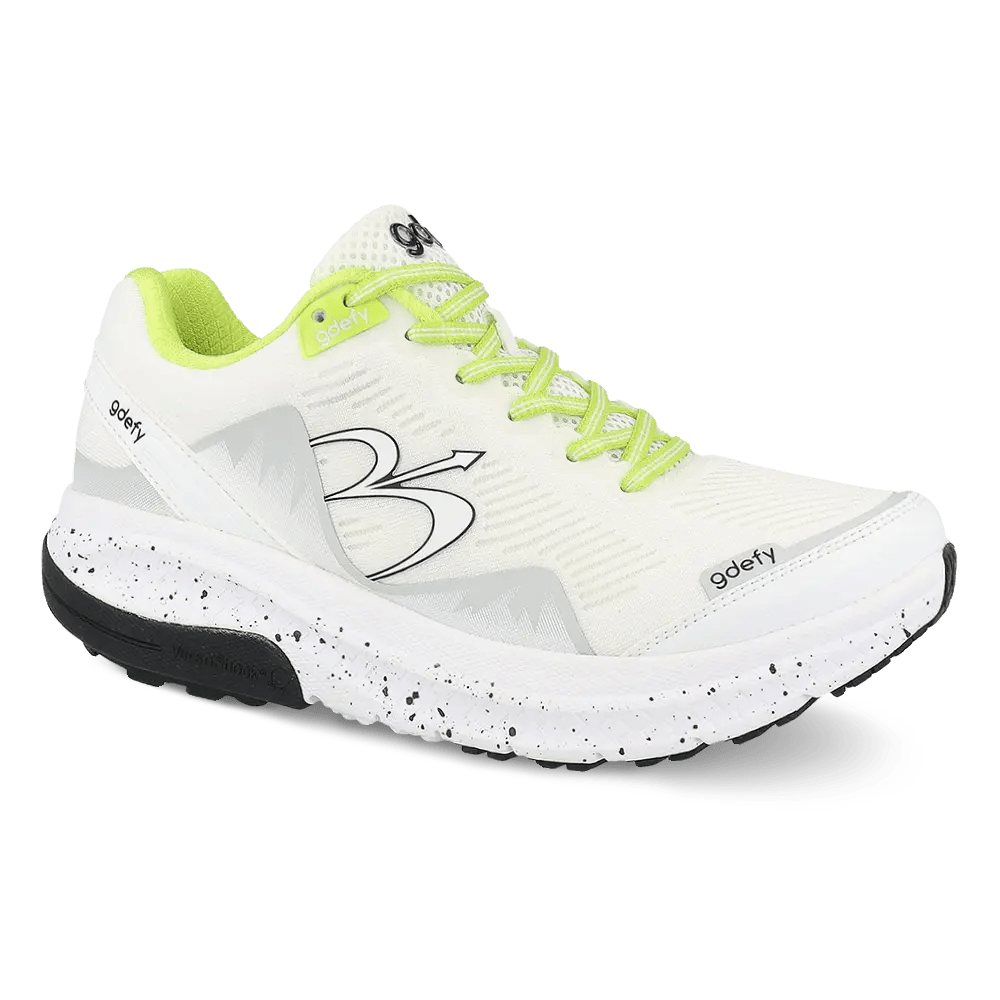
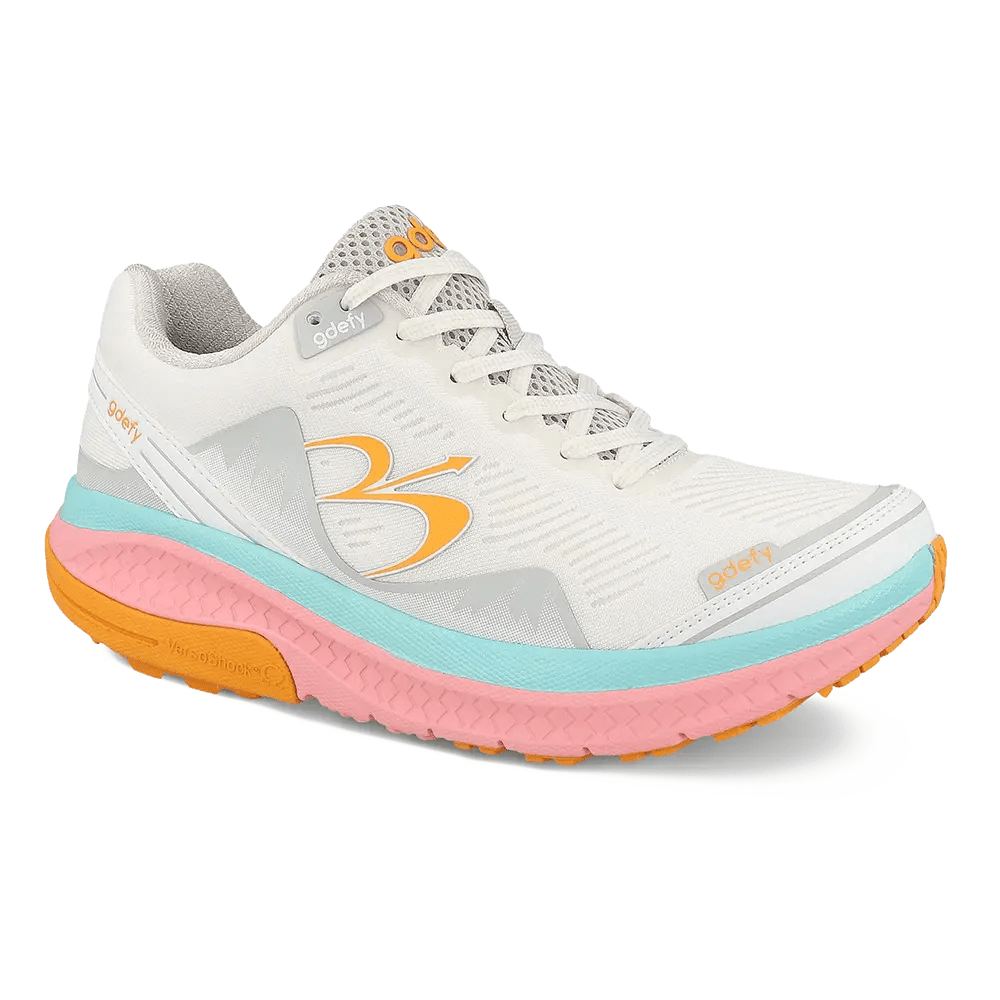
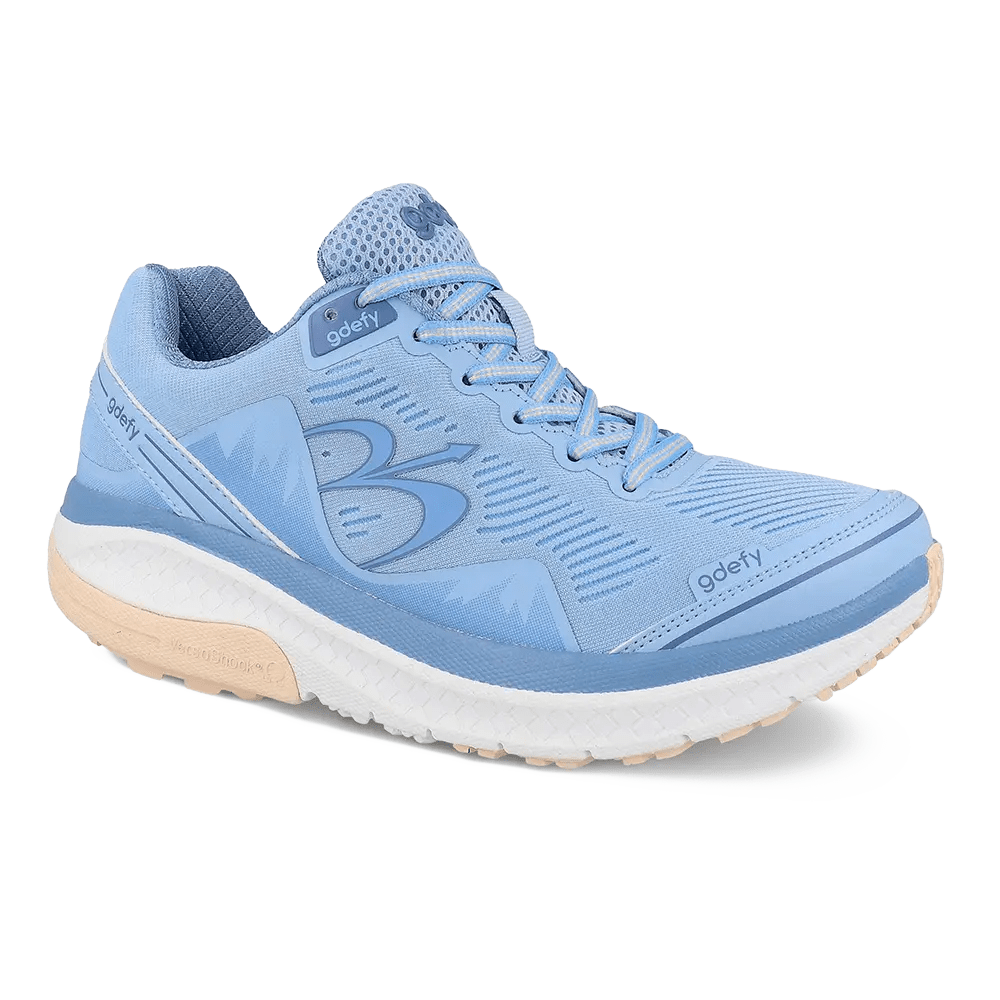
G-Defy shoes are engineered to provide comfort, support, and shock absorption. Featuring VersoShock® technology, they are designed to absorb impact and return energy with each step. A built-in stabilizer supports the foot during movement, while the front rolling design promotes a smooth walking experience. Each pair includes two removable orthotics to help customize comfort and support. G-Defy shoes help reduce pain from walking, running, and prolonged standing.
Three parts of that system are geometry decisions rather than cushioning decisions:
The front rolling design. Rather than leaving the forefoot flat, the sole is shaped to keep the step moving forward through toe-off. Drop sets where the roll starts; the rolling design shapes how it finishes.
The stabilizer. A shoe that flexes in the middle doesn't hold its shape, and a platform that doesn't hold its shape doesn't hold its drop. The stabilizer limits that mid-shoe bending so the geometry stays predictable through the day. How VersoShock® technology works explains the full four-part system.
The dual orthotics. This is the detail most people miss. Every pair ships with two removable orthotics — the ComfortFit® for low to medium arches and the CorrectiveFit® for medium to high arches. Because an orthotic adds material under your foot, swapping between them changes the effective height inside the shoe. You can adjust how the platform meets your foot without buying a different pair.
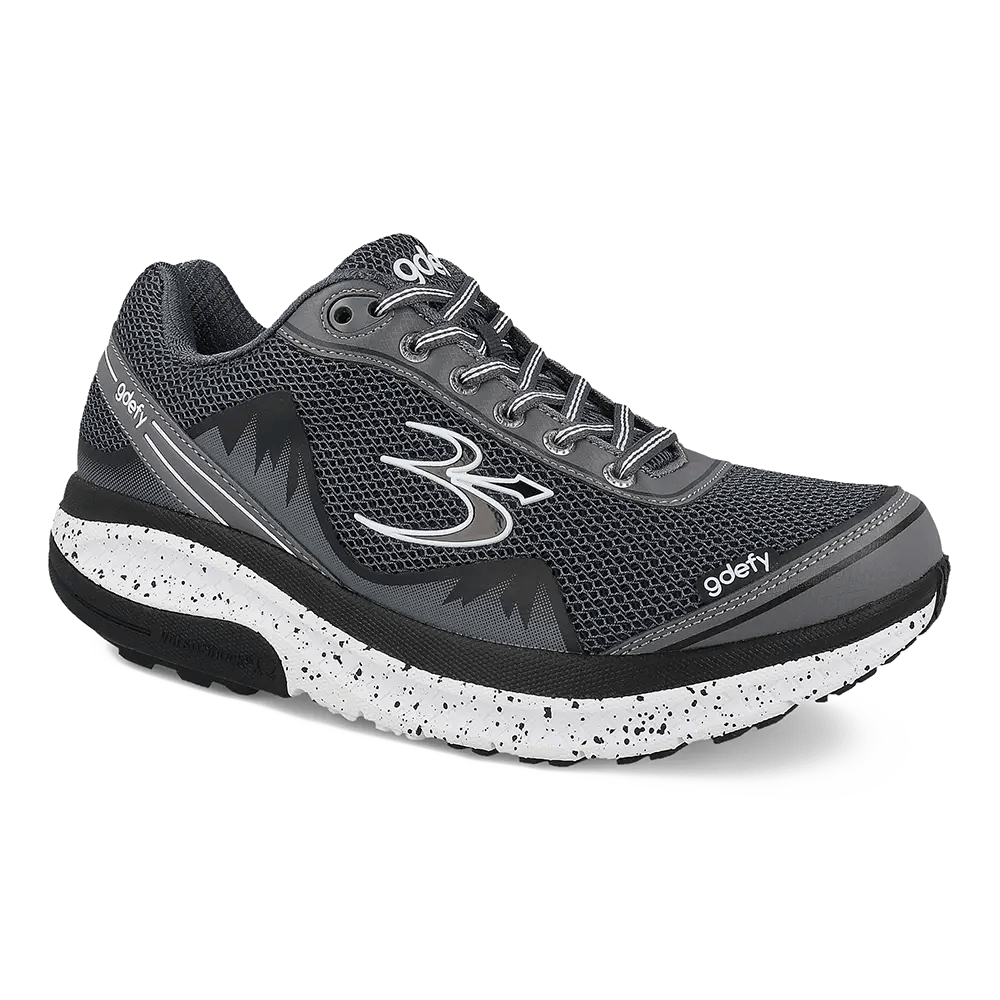
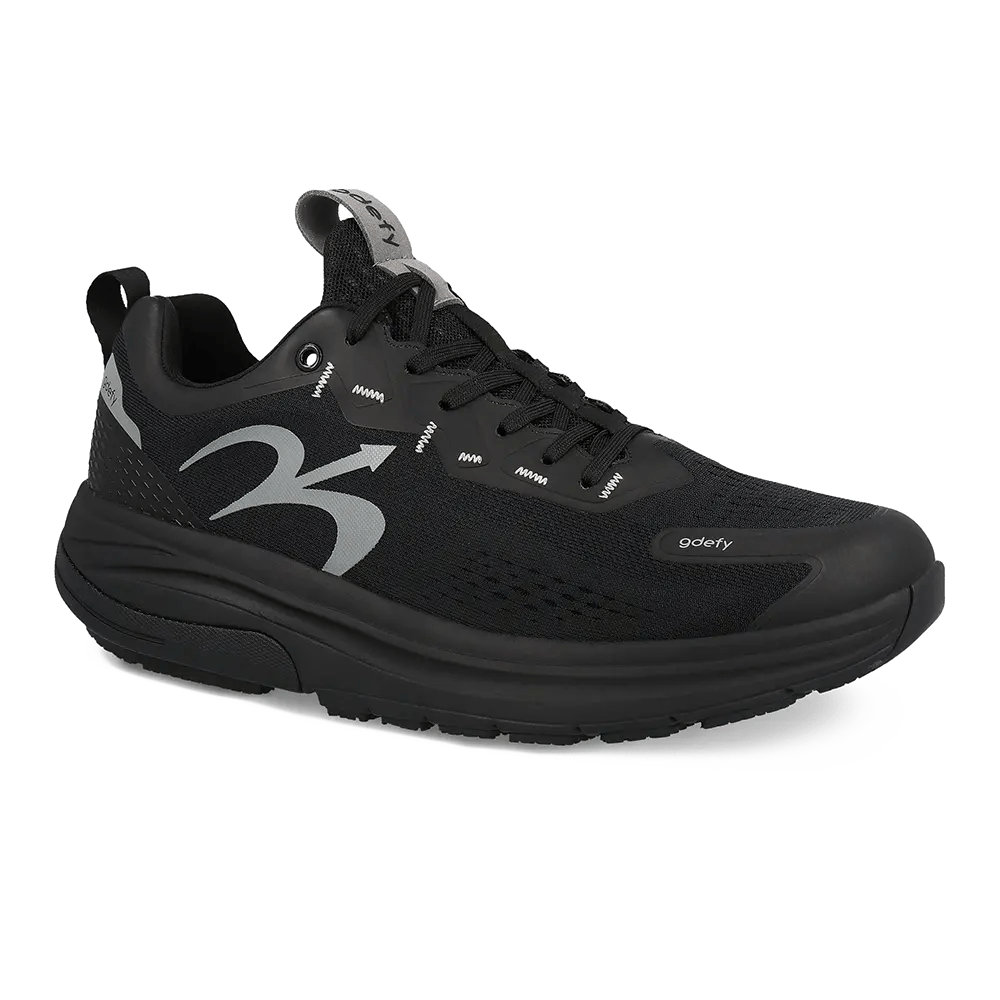
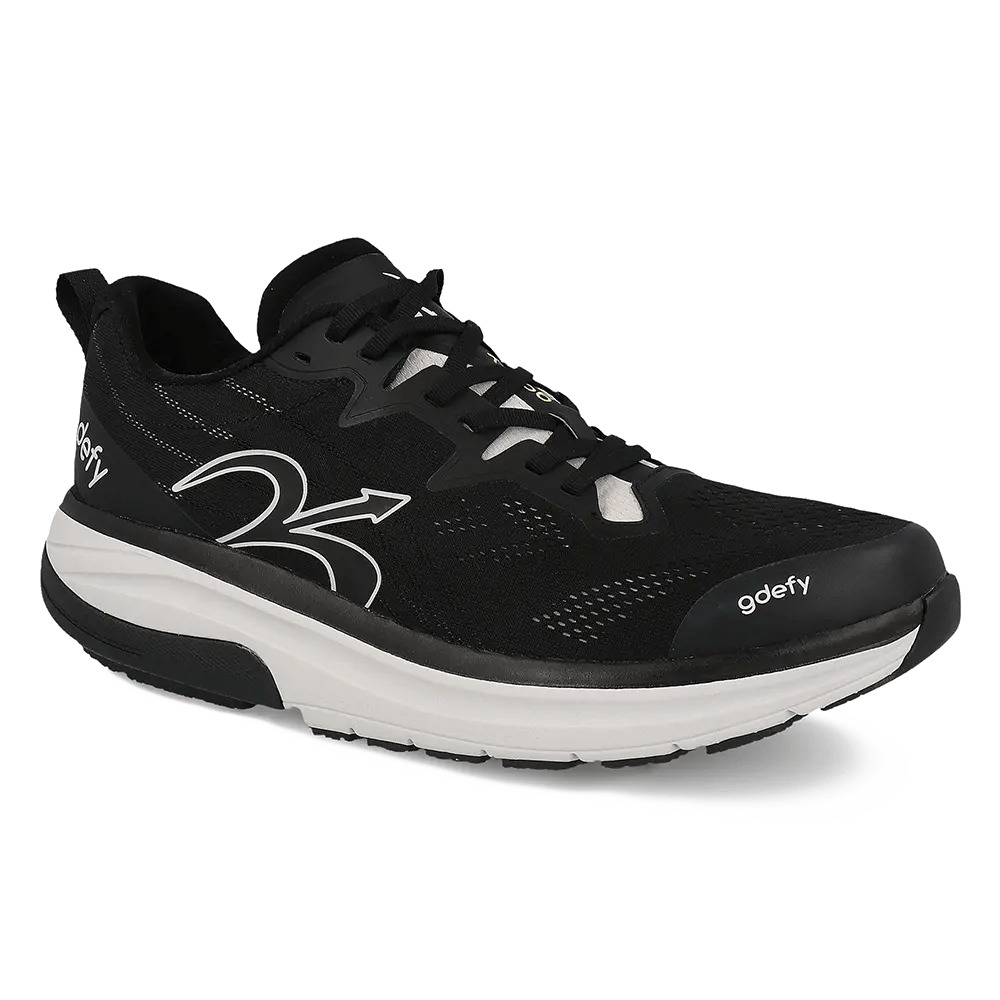
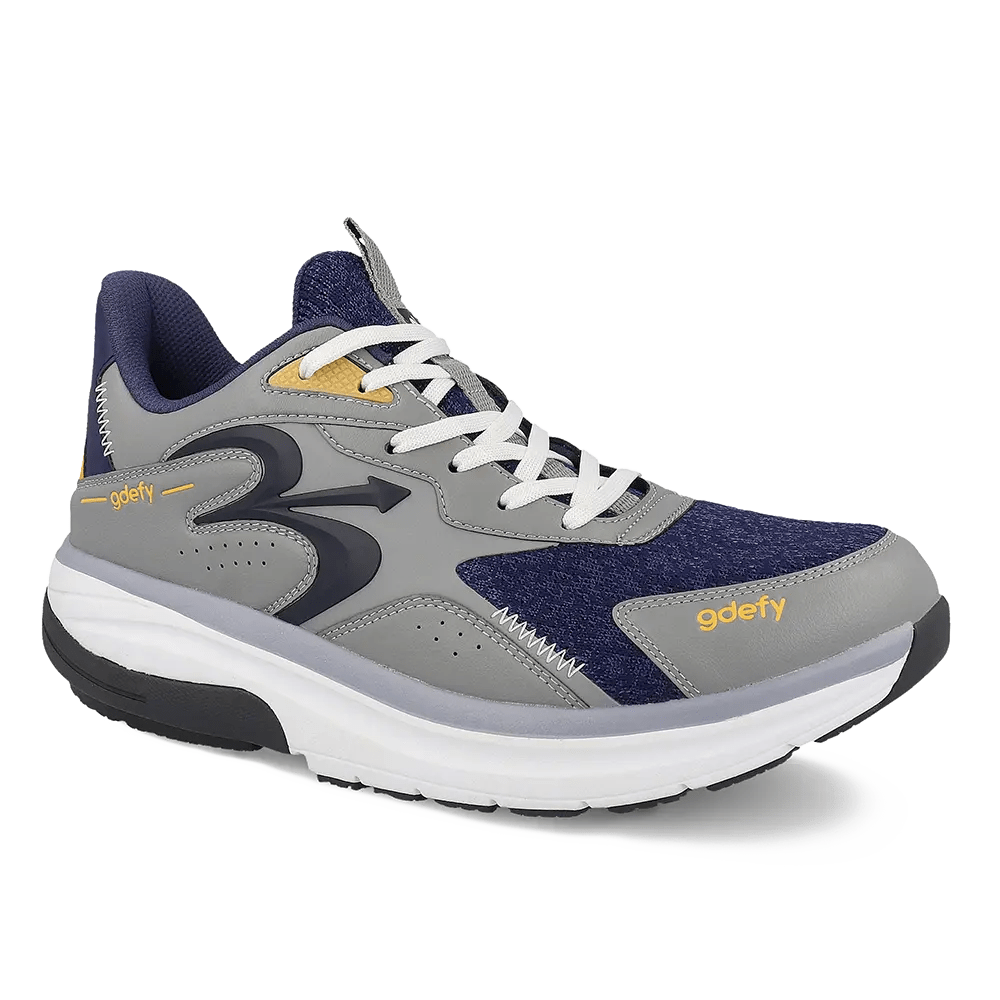
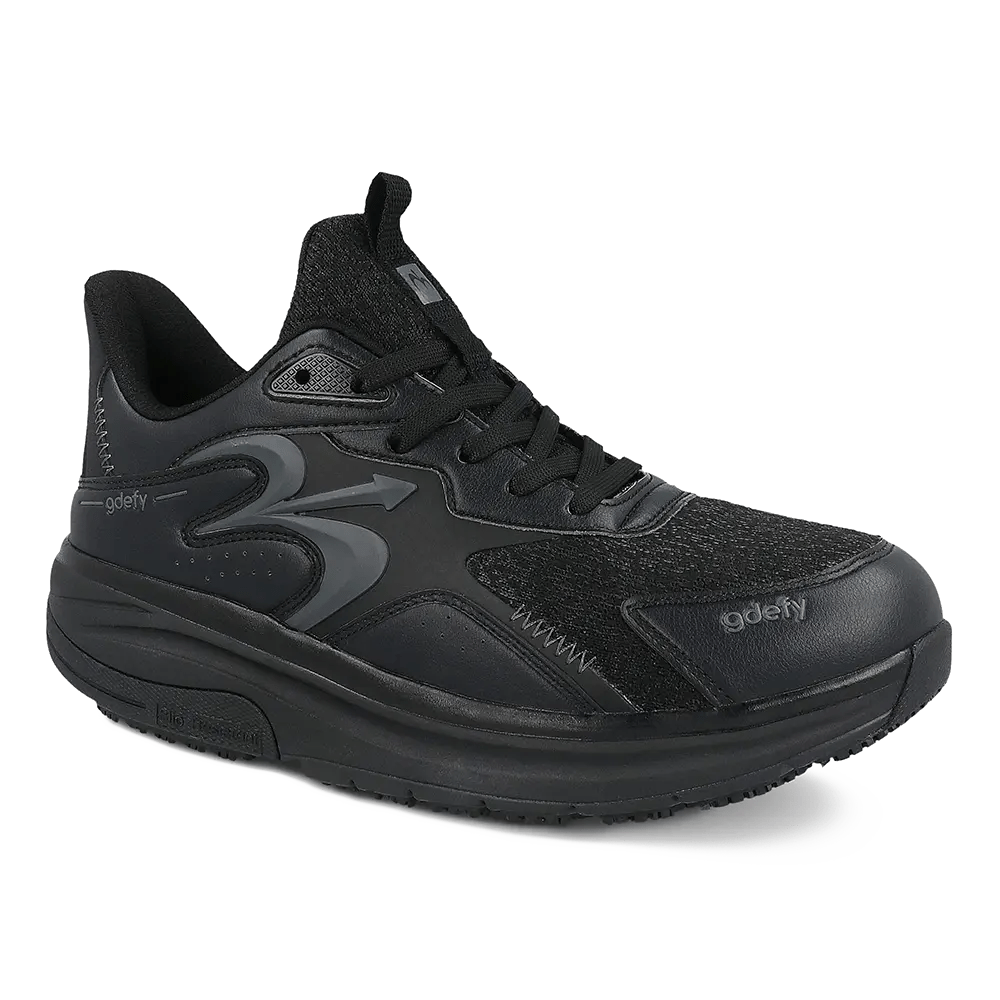
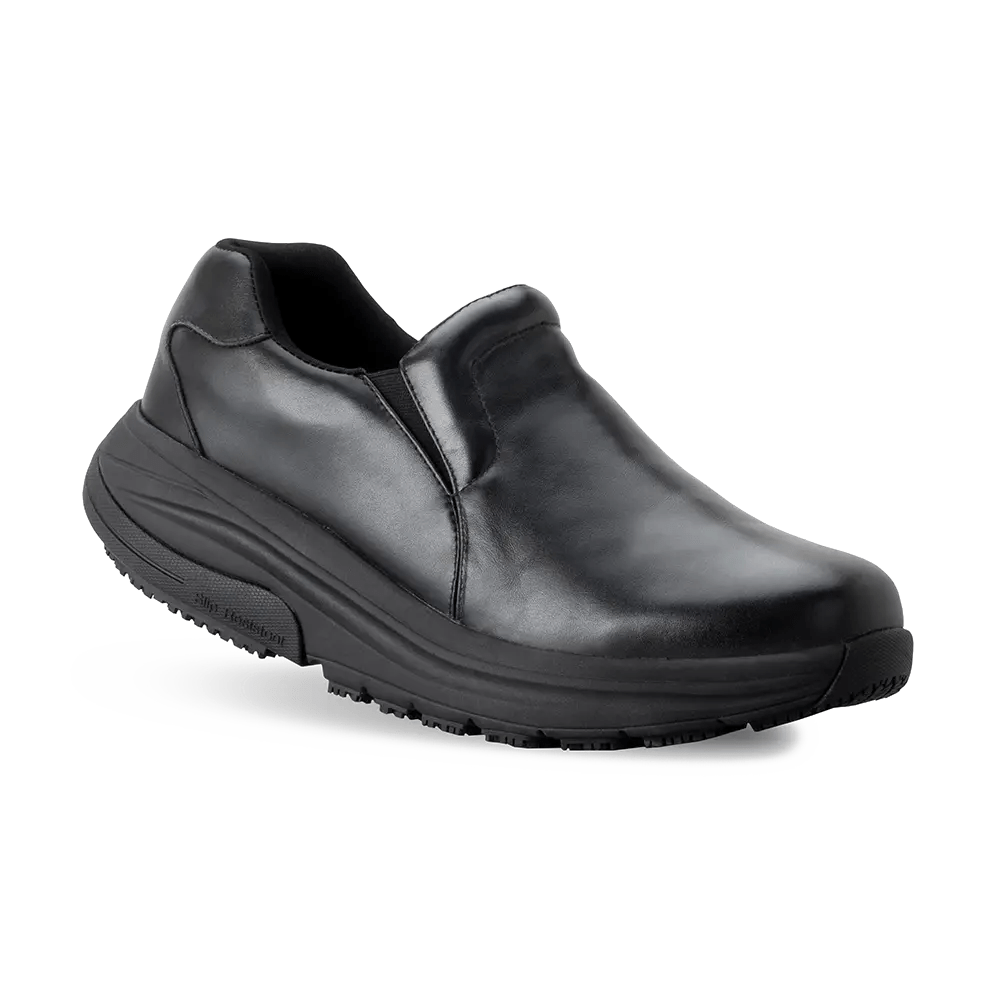
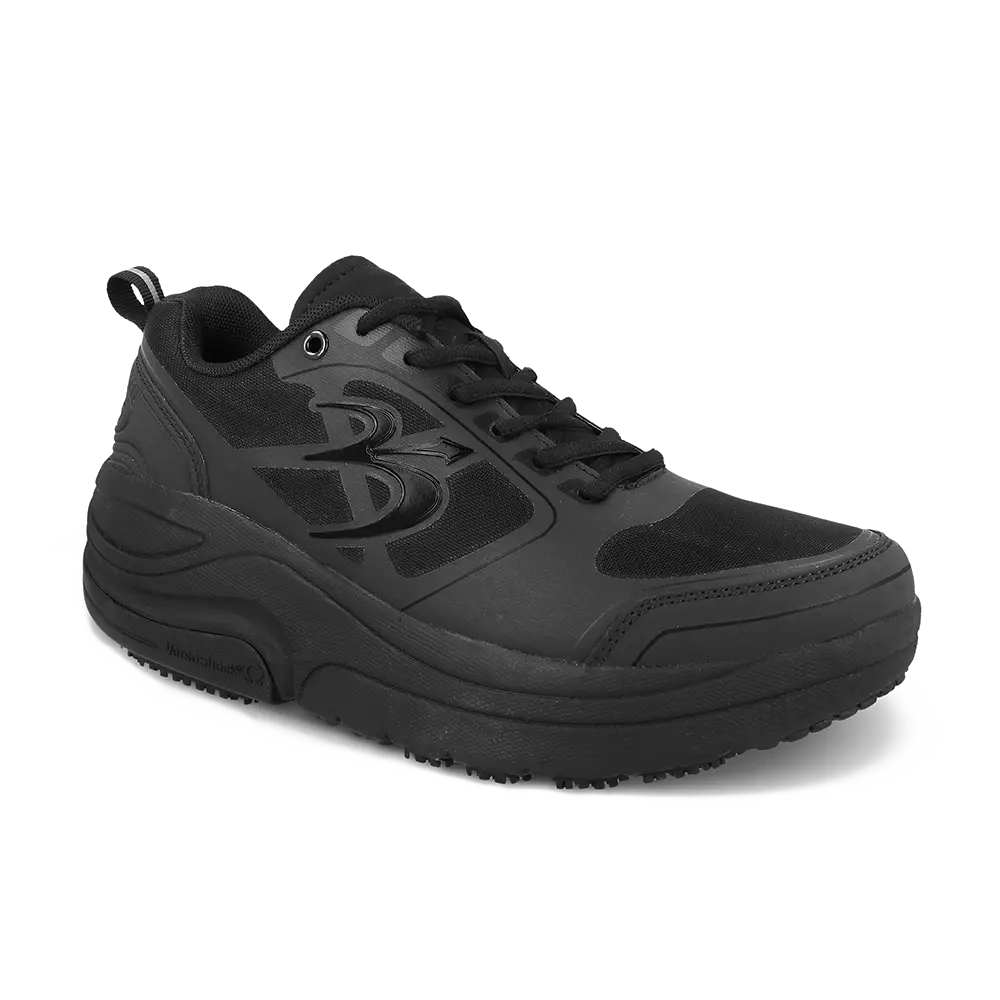
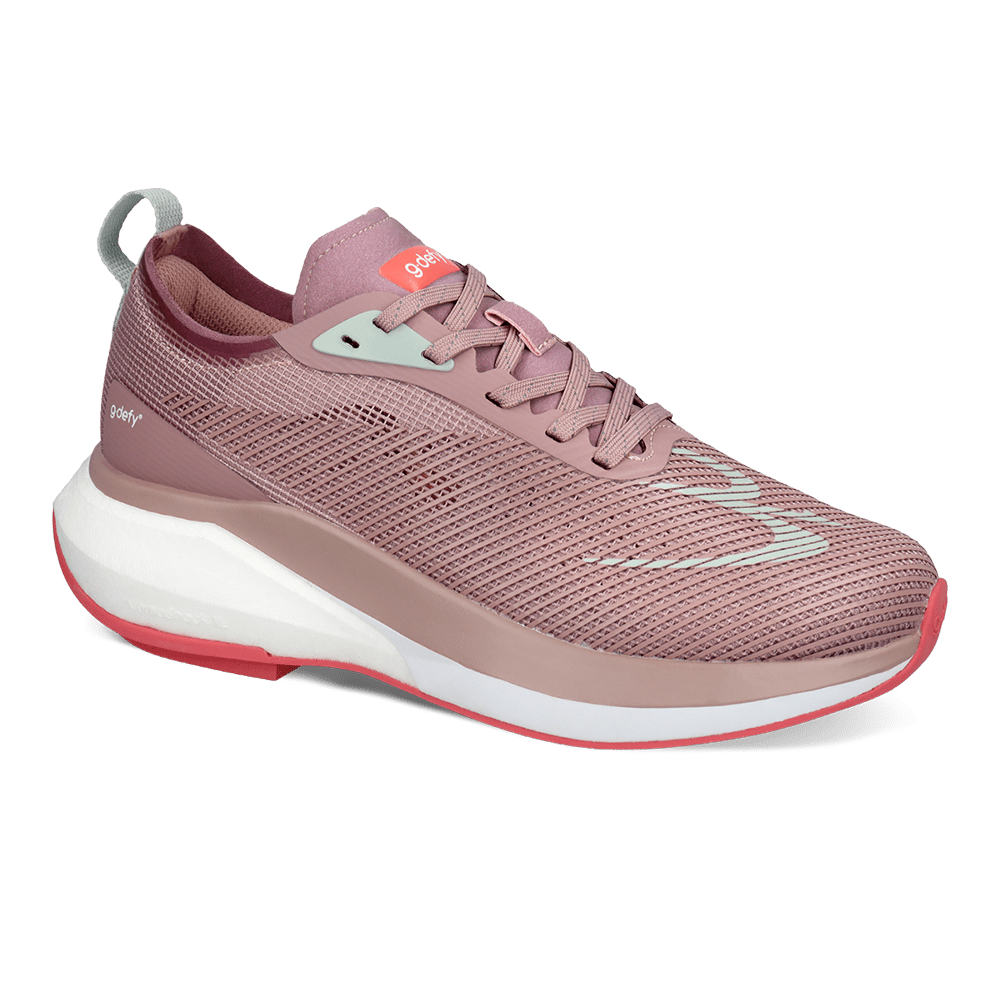
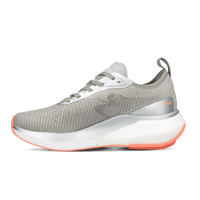
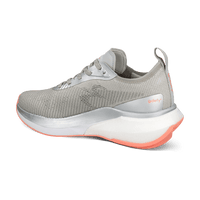
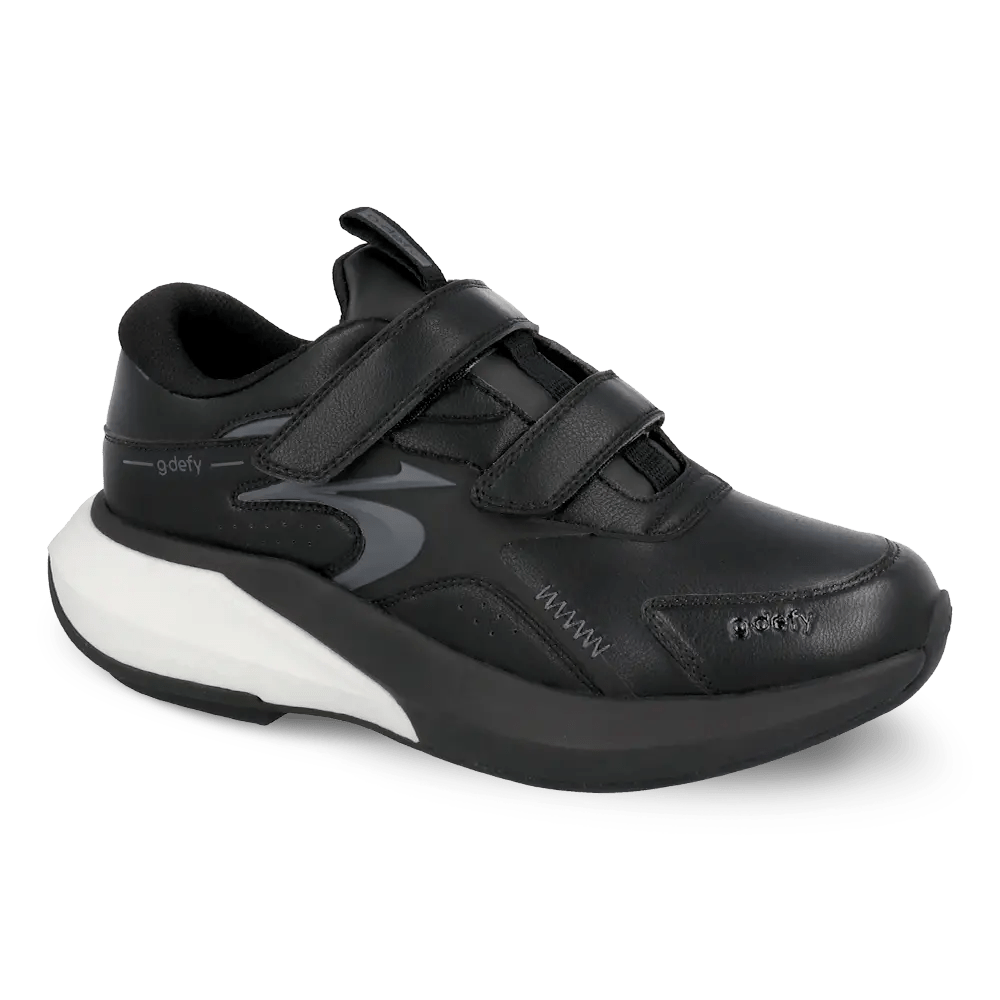
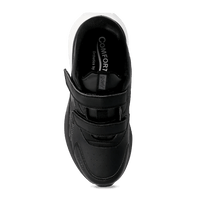
Two places to see it in practice: the Mighty Walk, built around all-day walking on hard ground, and the Ion, a lighter build for people who are on and off their feet all day. Both are available across the men's and women's ranges.

Try the geometry on your own floors
Every G-Defy pair ships with two removable orthotics, free shipping and exchanges, and a 60-day risk-free trial.
Shop the Mighty WalkHow to Measure the Drop on Shoes You Already Own
You don't need the spec sheet. You need a flat table and a ruler.
- Set the shoe on a level surface and look at it straight from the side, at eye level.
- Measure the sole thickness at the back of the heel — the ground up to the top of the sole unit, not including the insole cavity.
- Measure the same way under the ball of the foot, at the widest part.
- Subtract the second number from the first. That's your drop, close enough to compare pairs.
- Repeat for a shoe you love and a shoe you don't. The comparison tells you far more than either number alone.

Three habits worth adding:
- Rotate between two pairs. Different geometry on different days spreads the work around instead of repeating one pattern every step of every day.
- Watch the heel wear. A worn-down outer heel quietly lowers the drop of a shoe you thought you knew. Our guide to how shoes wear out covers what to look for.
- Don't assume across categories. Walking shoes and running shoes are typically built to different drops on purpose — the differences are worth knowing before you swap one for the other.
What Customers Notice
The following reflect general customer feedback. Results vary by individual.
A hospital scheduler, 12-hour shifts. "I never knew shoes had a slope to them. I'd been wearing something almost flat and my calves were tight every night. The pair I have now sits a little higher at the back and the end of the shift feels different — more comfortable, less like I'm bracing." Results vary by individual.
A retired postal worker who walks daily. "I measured three pairs on the kitchen table like the guide said. Two were basically the same and the third was way off — and that third pair was the one I never reached for. I finally understood why." Results vary by individual.
A warehouse team lead. "Swapping to the other insole was the whole fix for me. Same shoe, sat differently, felt more supportive right away. I didn't expect that to matter as much as it did." Results vary by individual.
Frequently Asked Questions
What is a good heel-to-toe drop for walking shoes?
There isn't a single correct number. Most everyday walking shoes land somewhere in the 4–10 mm range, and comfort depends more on how the drop pairs with your foot shape, your stride, and what you've been wearing than on the figure itself.
Is a lower drop better than a higher drop?
Neither is inherently better. A lower drop asks the ankle and calf to move through a longer range each step; a higher drop shortens that range and shifts a little more load forward. Choose based on what feels settled over a full day, not on the spec.
Can shoes with the right geometry help with foot pain?
Footwear is not a medical solution. Supportive and cushioned footwear may improve overall comfort during walking and prolonged standing. For persistent foot pain, consult your healthcare provider.
Does adding an insole change the drop?
Yes — anything you add under your foot changes the internal heights, and an insole that's thicker at the heel than the forefoot will effectively increase the drop. That's why G-Defy includes two orthotic options: you can adjust the setup without changing shoes.
How do I know if my drop is wrong for me?
There's no test, but there are signals. Persistent tightness in the calves after a change of shoes, unusual pressure under the ball of the foot, or a pair that never quite settles in are all worth investigating. Measure it, compare it against a pair that works for you, and change one variable at a time.
The Takeaway
Cushioning gets all the attention because it's the part you can feel with your hand. Drop is the part you feel with your legs, several thousand steps later.
It's a simple number — the height under your heel minus the height under your forefoot — but it shapes where each step begins, how far your ankle travels, and where the pressure lands. Pair it with stack height, foot type, and fit, and you have a genuinely useful way to compare shoes instead of guessing.
While footwear is not a medical solution, choosing shoes designed for comfort, support, and shock absorption can make a meaningful difference in how you feel throughout the day. Every G-Defy pair comes with a 60-day risk-free trial and free shipping and exchanges, so you can find out how the geometry works for you on your own floors, on your own schedule.
Two orthotics in every box
Swap between the ComfortFit® and CorrectiveFit® orthotics to change how the platform meets your foot — no second purchase required.
Shop Women's Shop Men's