
July 27, 2026
Flat Feet vs High Arches: How Each Foot Type Uses the Same Shoe Differently
By Gdefy

Summary
In a lot of households, two people walk the same route, buy the same shoe, and end the day feeling completely differently about it. One says the shoe is too soft. The other says it is not soft enough. Often the difference is not the shoe at all — it is the shape of the arch inside it.
Flat feet and high arches sit at opposite ends of the same scale, and they ask different things from footwear. While footwear is not a medical solution, understanding how each foot type meets the ground makes it much easier to set a shoe up so it feels right for you. This guide is not about identifying your arch — if you are still working that out, start with our walkthrough on how to choose shoes for your foot type. This is about what to do once you already know.

Flat Feet vs High Arches: What Actually Differs Underfoot
Arch height changes one basic thing: how much of your foot touches the ground, and how the pressure of each step gets spread across it.
How a low arch meets the ground
A low or flat arch makes broad contact with the ground. More surface area is in play, and the foot tends to flatten and roll slightly inward as weight moves through the step. That inward roll is a normal part of walking — it is one of the ways the foot absorbs impact. For a deeper look at that motion, see our explainer on how pronation and supination affect walking comfort.
The practical consequence: a flatter foot usually wants structure. A midsole that collapses under it offers very little to push against, and the inner edge of the foot can feel like it is doing the work by late afternoon. Our overview of low arches goes further on this.
How a high arch meets the ground
A high arch does the opposite. Contact with the ground is concentrated at the heel and the ball of the foot, with a pronounced gap between them. Less surface area is carrying the same body weight, so pressure is focused rather than spread.
The practical consequence: a higher arch usually wants cushioning and contact. A flat insole leaves the middle of the foot unsupported and hovering, so the two contact points take everything. Our overview of high arches covers the details, and there is a medium arches guide for everyone in between.
Why the same midsole feels different to each
This is the part that surprises people. A midsole does not change — but the foot pressing into it does. A flat foot spreads its weight over a wide footprint, so a soft midsole feels vague and unsupported. A high arch concentrates weight onto two smaller zones, so that same midsole feels firm and unforgiving. Same shoe, two opposite reviews.
Why One Shoe Can Still Work for Both Foot Types
Given all that, it is fair to ask whether flat feet and high arches simply need different shoes. Usually they do not. What they need is the same well-built shoe, set up differently.
What the shoe handles for everyone
Some things matter regardless of arch height, and they are built into the shoe itself rather than adjusted per person:
- Shock absorption — softens the impact of each step on hard surfaces
- A stabilizer through the midfoot — keeps the shoe from folding in the middle
- A smooth heel-to-toe transition — helps the step roll forward instead of stopping flat
- Heel hold — keeps the foot seated so it is not sliding around inside
- A roomy toe area — lets the toes spread naturally as you push off
None of those need to change based on your arch. If you want to see how these pieces fit together, our breakdown of what's inside a comfort walking shoe walks through the anatomy.
What has to be adjusted per foot type
The layer that genuinely needs to change is the one sitting directly under your arch: the insole. That is the contact surface between a fixed shoe shape and a foot shape that varies from person to person. Change that layer and the same shoe can serve both ends of the arch scale — which is exactly why removable insoles matter more than most people expect. Our comparison of removable insoles versus built-in support covers the trade-offs.
The Two-Orthotic Setup: Which Insert Suits Which Arch
Every pair of G-Defy shoes ships with two removable orthotics rather than one, and they are not spares of the same part. They are two different profiles, and choosing between them is the single most useful adjustment available to you.
ComfortFit® — low to medium arches
The ComfortFit® orthotic has a lower profile and leans toward cushioning. For a flatter foot that already makes broad ground contact, this keeps the footbed comfortable without forcing extra height under an arch that sits low naturally.
CorrectiveFit® — medium to high arches
The CorrectiveFit® orthotic is built with more contour and provides additional support through the midfoot. For a higher arch, that added shape fills the space that would otherwise be empty, so the middle of the foot makes contact instead of bridging between heel and forefoot.
How to tell which one is working
Wear each for a few normal days — not a single walk — and pay attention to how your feet feel in the evening rather than in the first five minutes. The better setup is usually the one you stop noticing. If a footbed feels like a ridge you are walking over, it is too much contour for your arch. If your foot feels like it is sinking with nothing underneath the middle, it is not enough. There is no prize for using the more structured one.
Fit Details That Change With Arch Height
Beyond the insole, a few fit details land differently depending on your arch. None of these are complicated, and all of them are free to adjust.
Instep volume and lacing
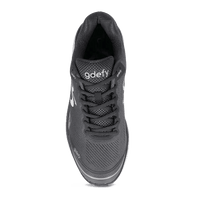
A high arch takes up more vertical room inside the shoe, so the laces close over a taller foot. If the top of your foot feels pinched, skipping one eyelet in the middle of the lacing releases pressure over the instep without loosening the heel. A flatter foot has the opposite issue — there can be slack over the instep, and snugging the middle eyelets keeps the foot from sliding forward.
Width and toe area
Flatter feet often spread wider under load, which makes width options more important than the length you have always bought. A shoe that is the right length but too narrow will feel tight across the ball of the foot long before you notice anything else. Our guide to why proper shoe fit is key to all-day comfort covers how to check this properly.
Heel hold
Higher arches tend to have a narrower heel relative to the forefoot, so heel slippage shows up more often. A runner's loop through the top eyelet locks the heel down without tightening the whole shoe. If you want more background on what support actually means in a shoe, our piece on what arch support is in shoes is a good companion read.
How G-Defy Shoes Handle Both Foot Types
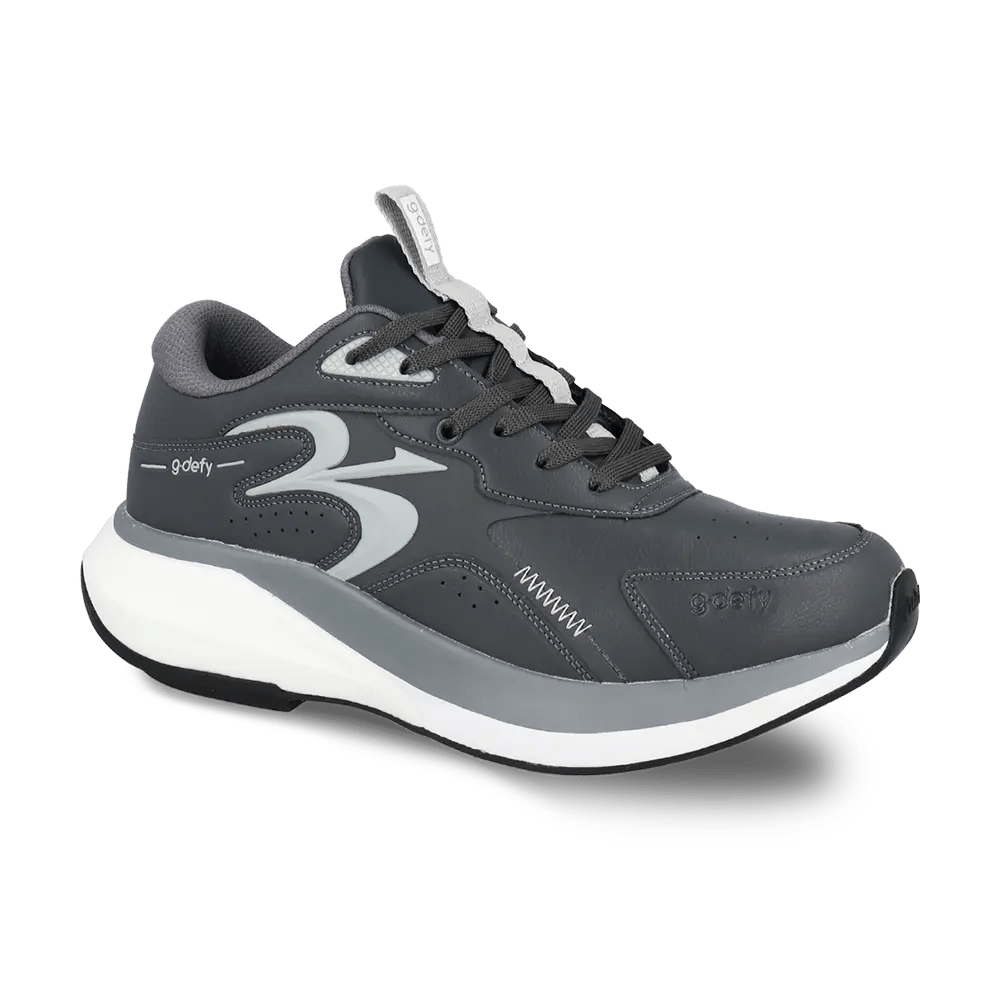
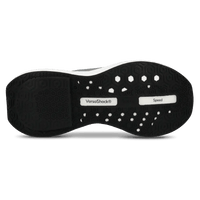
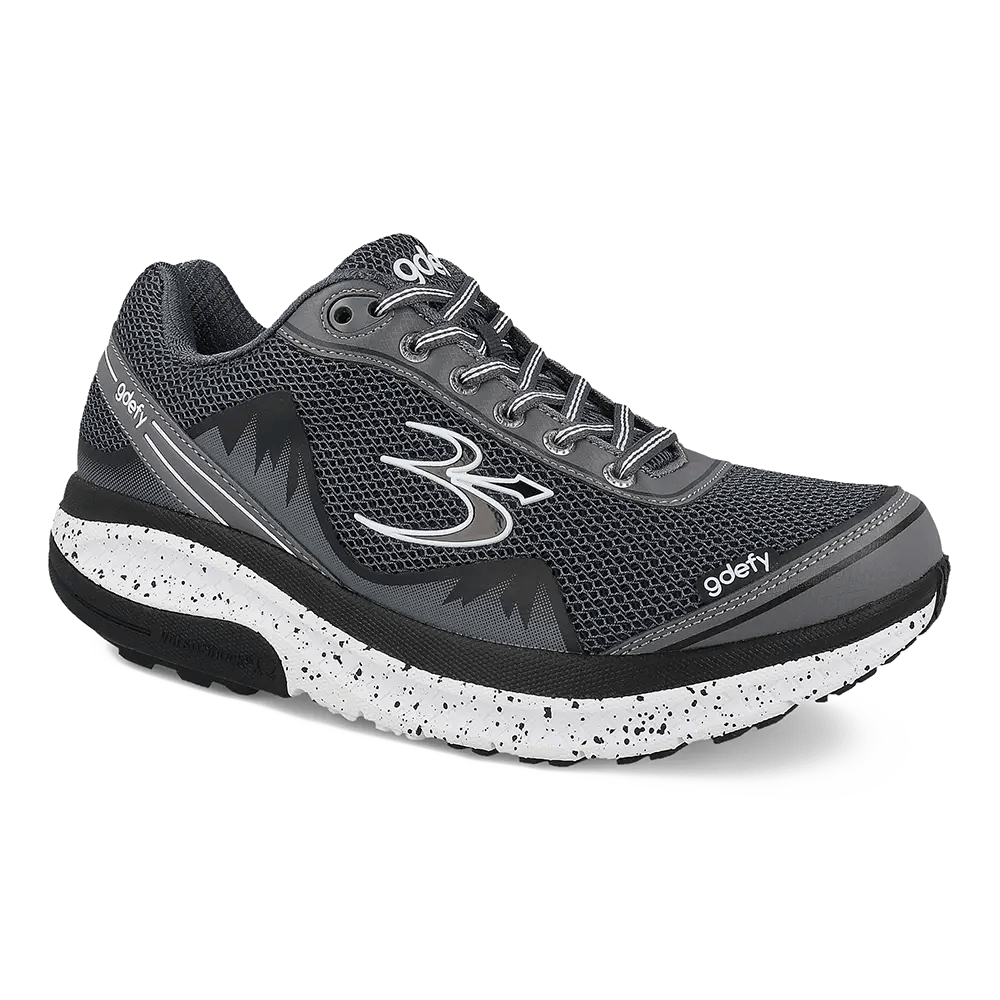
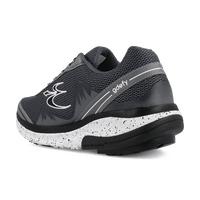
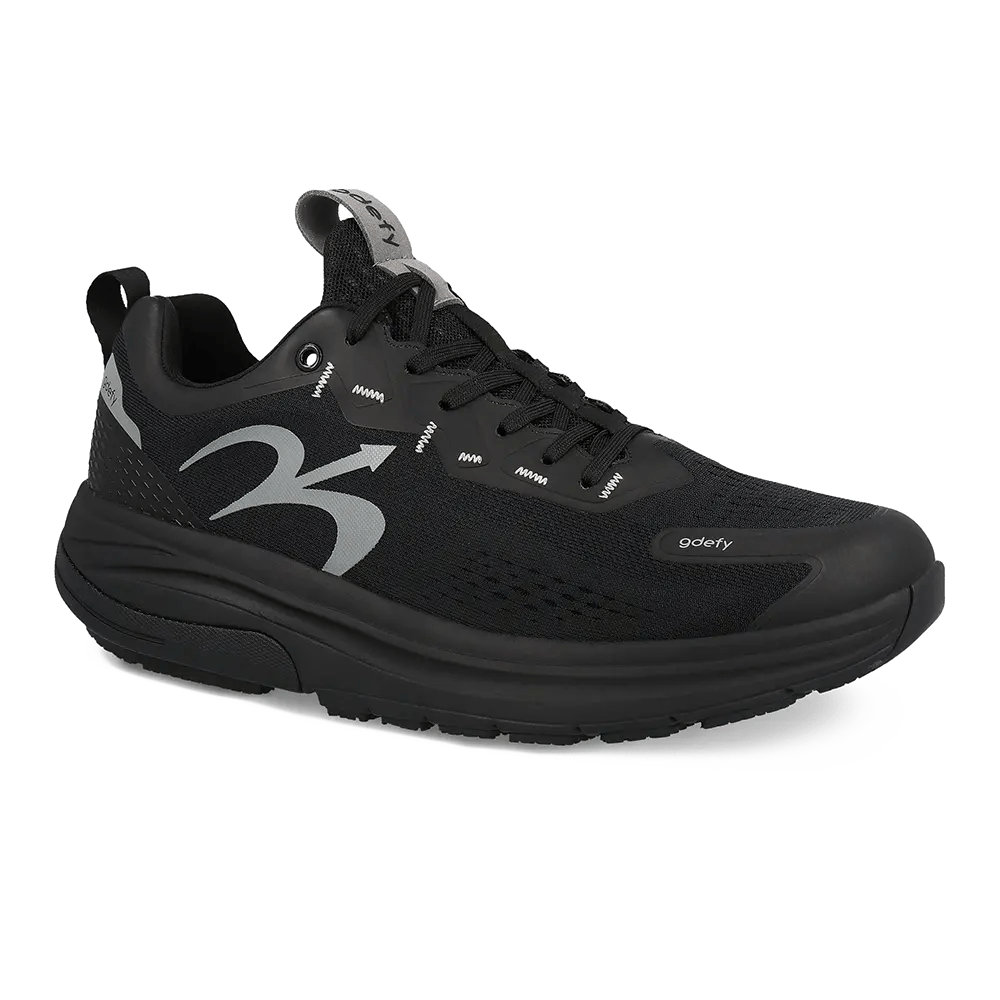
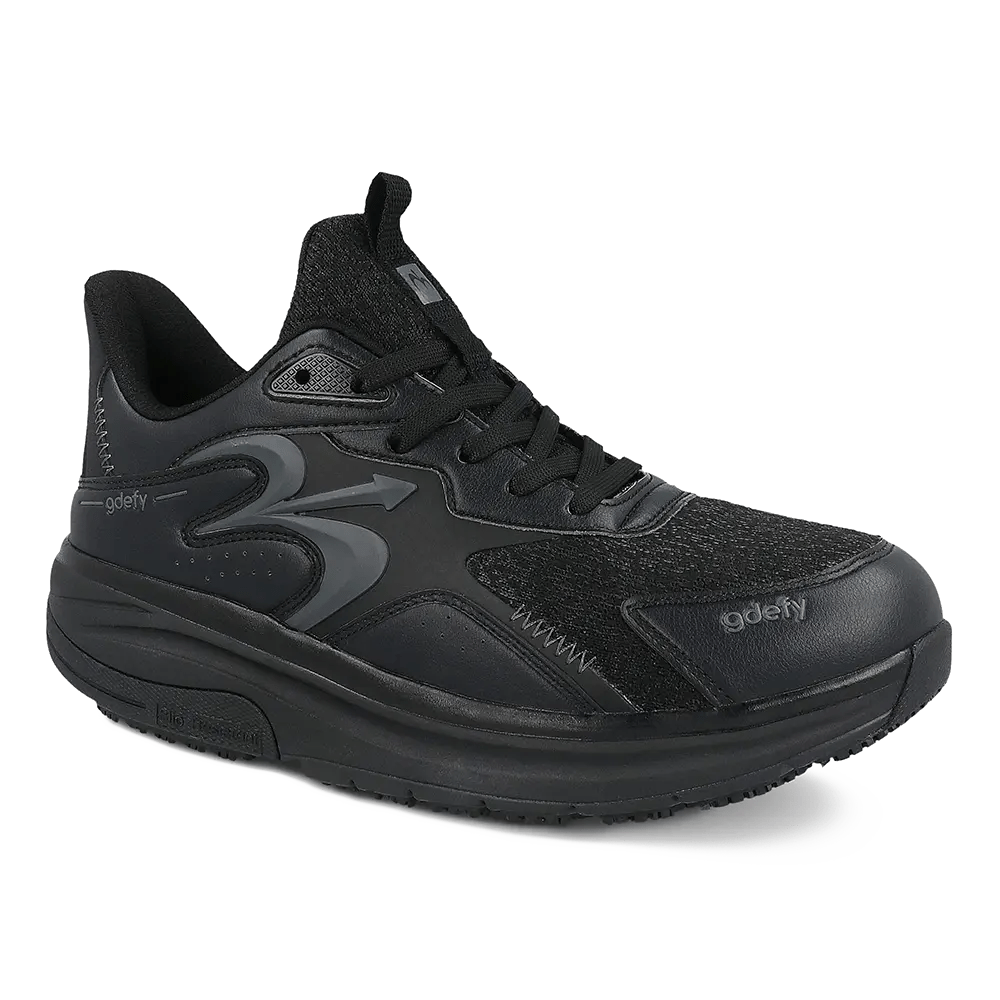
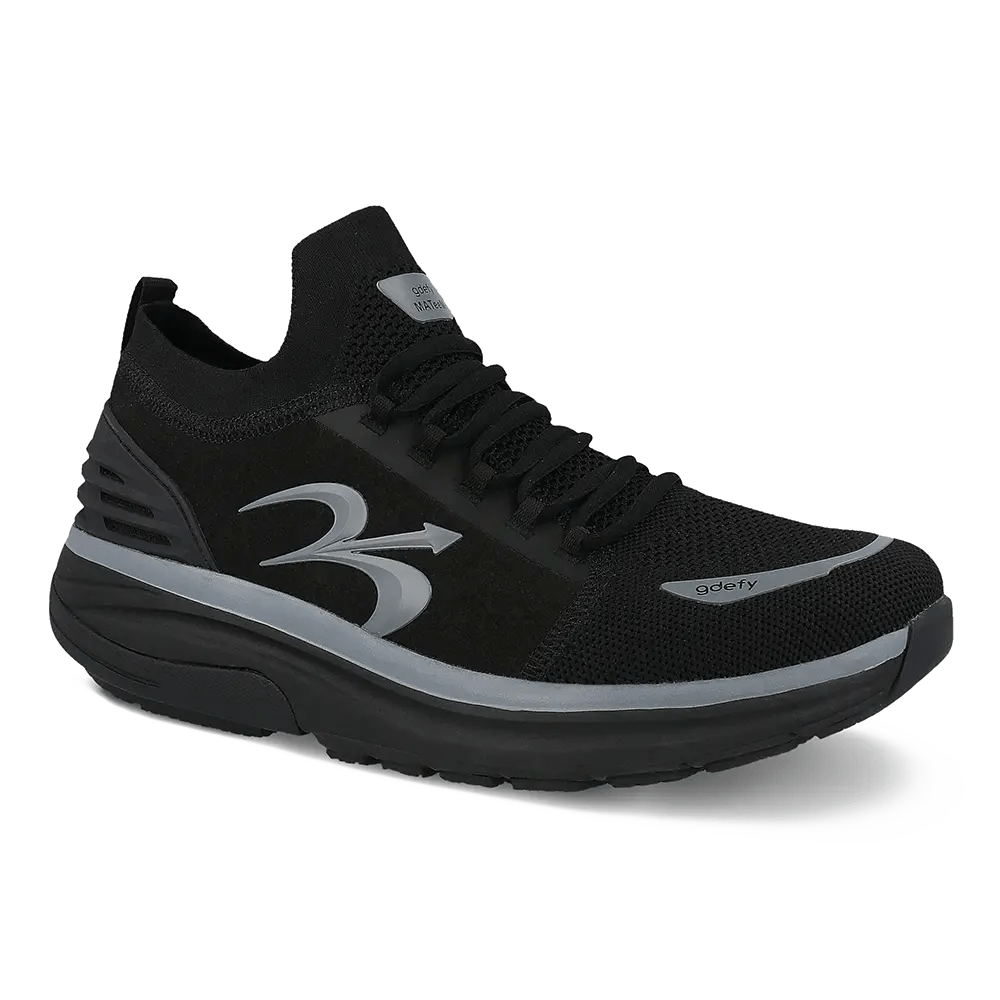
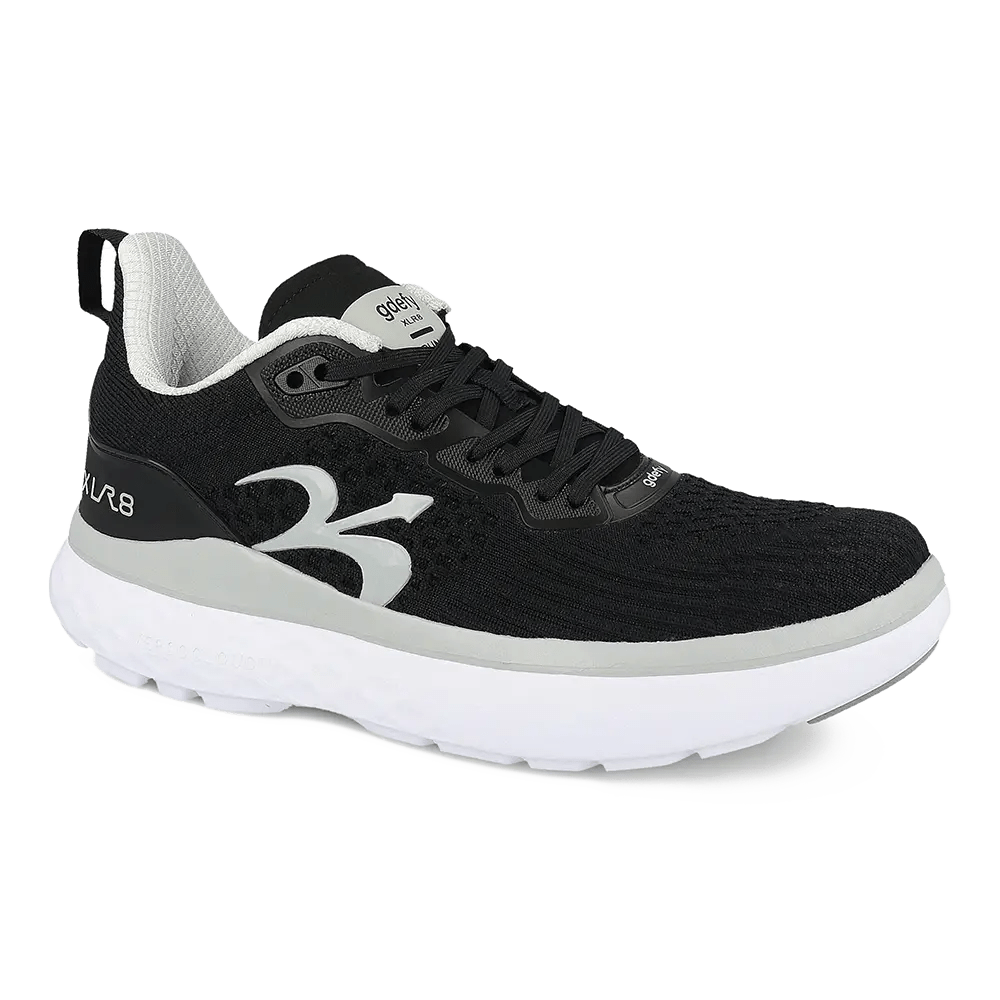
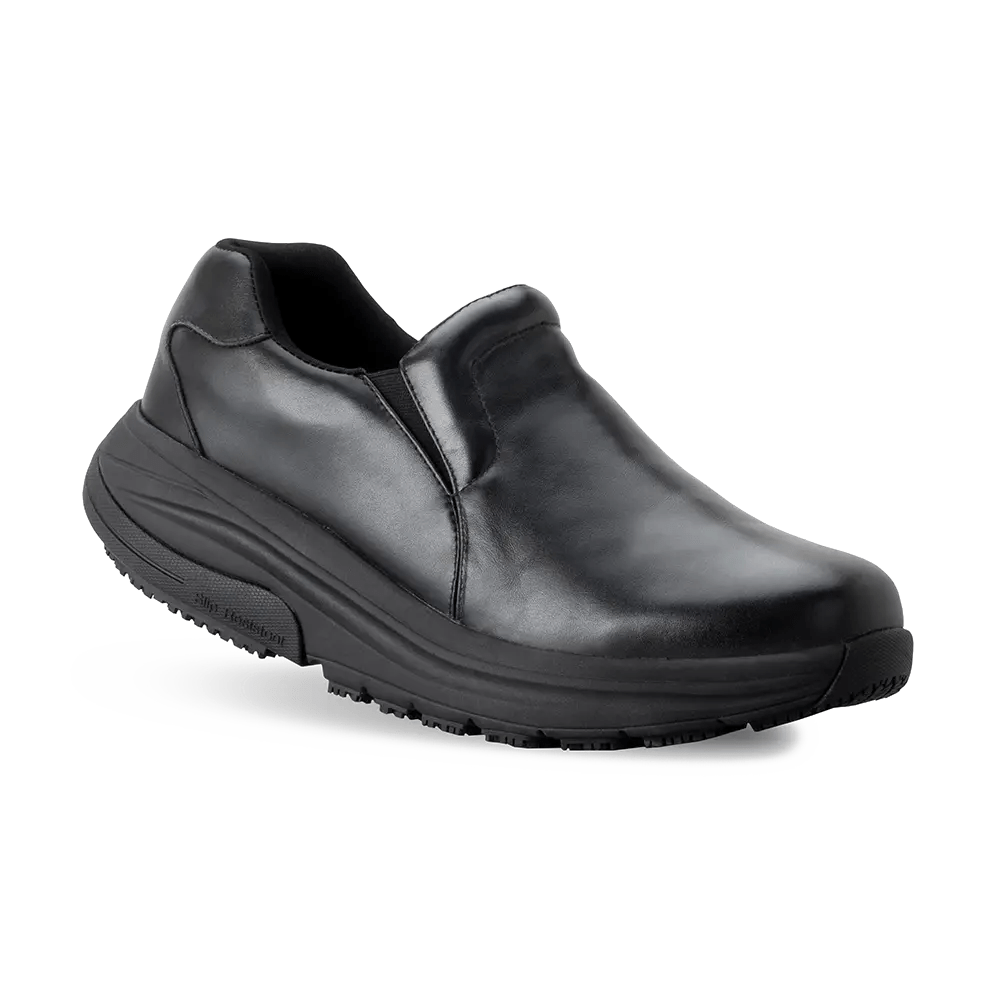
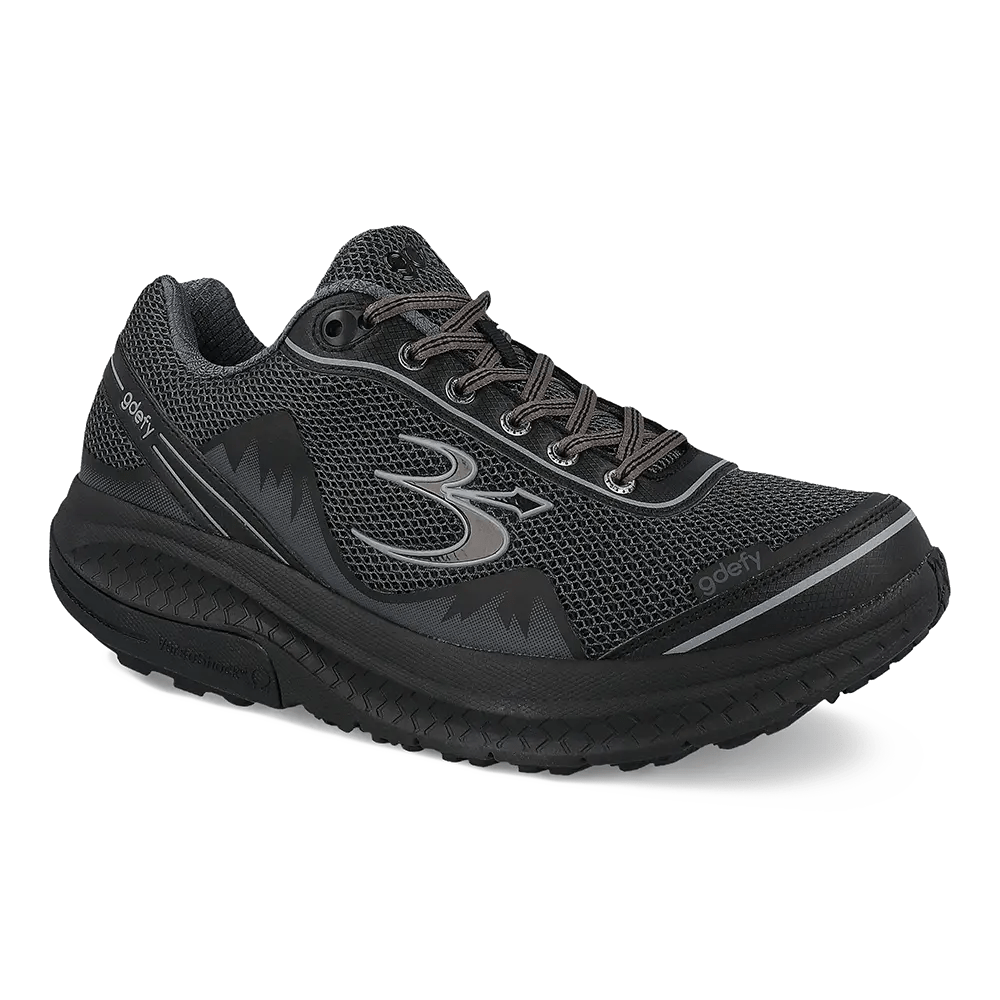
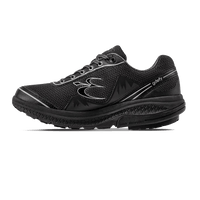
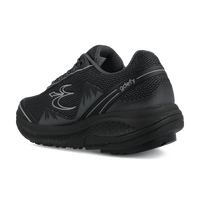
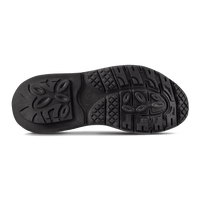
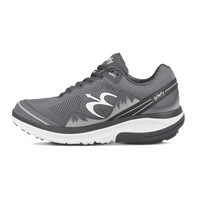
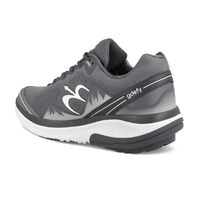
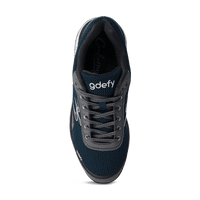
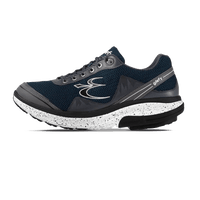
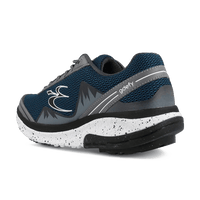
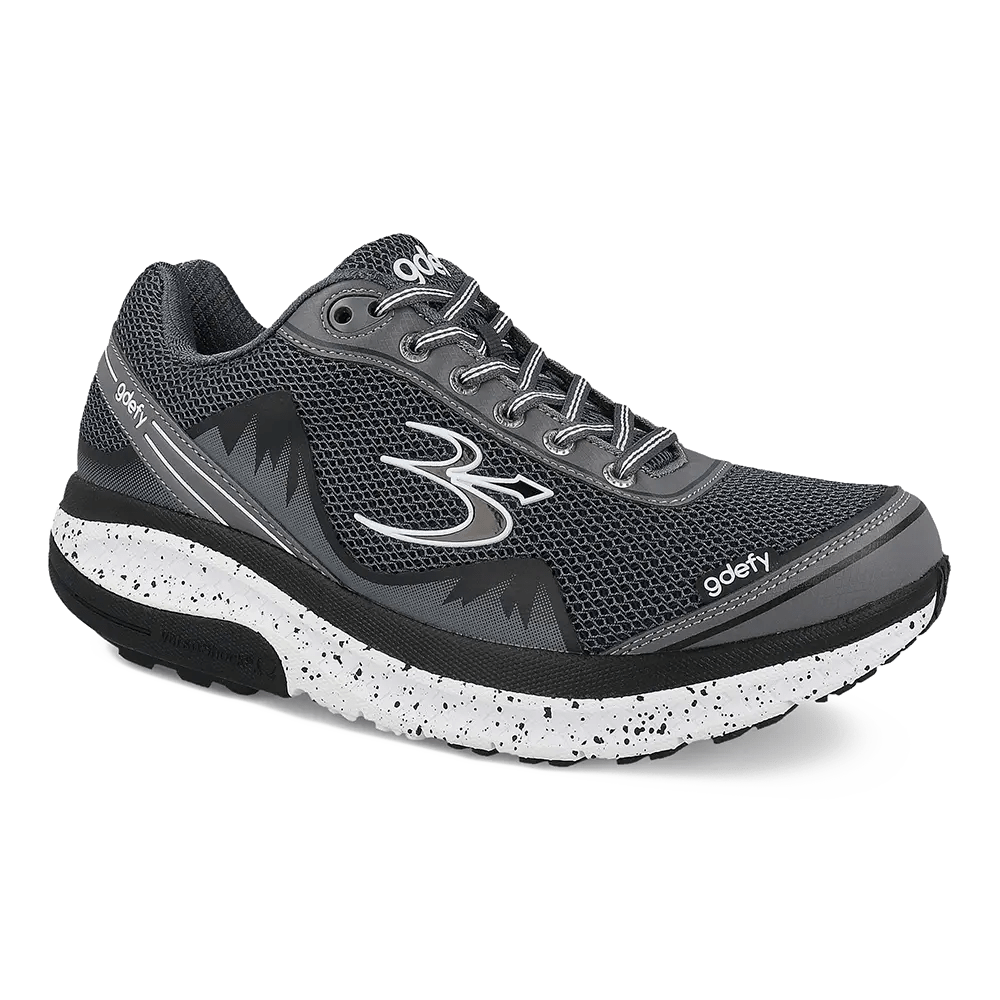
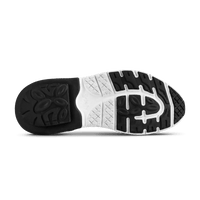
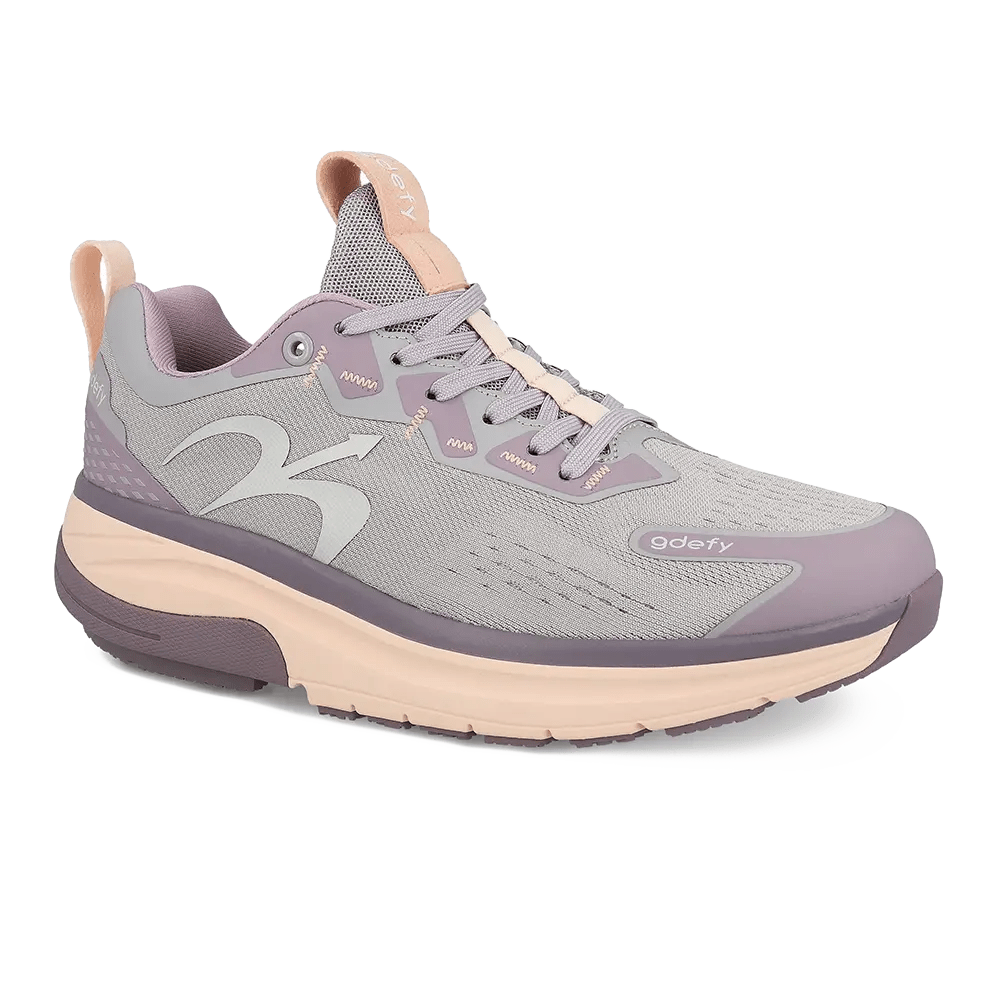
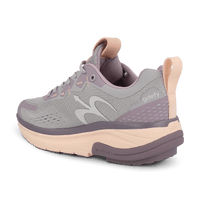
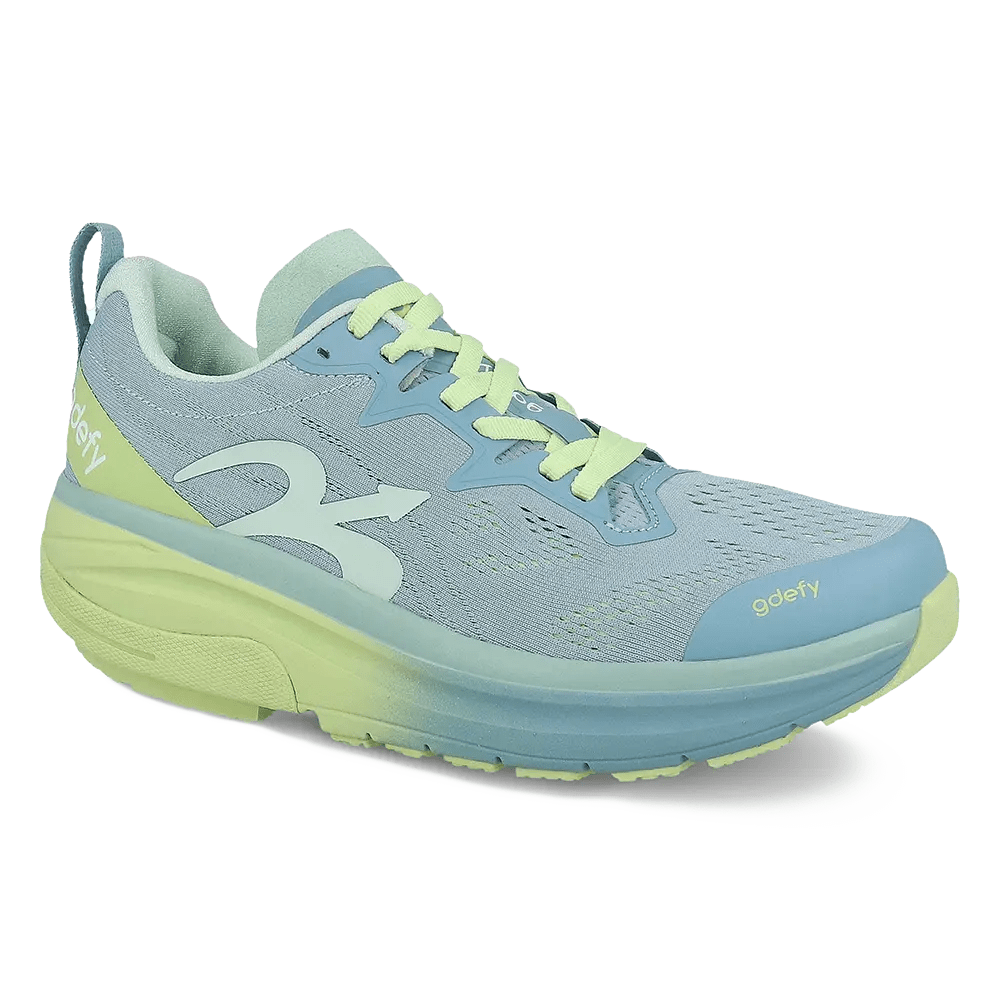
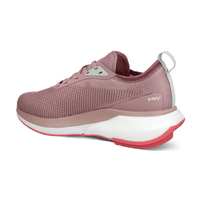
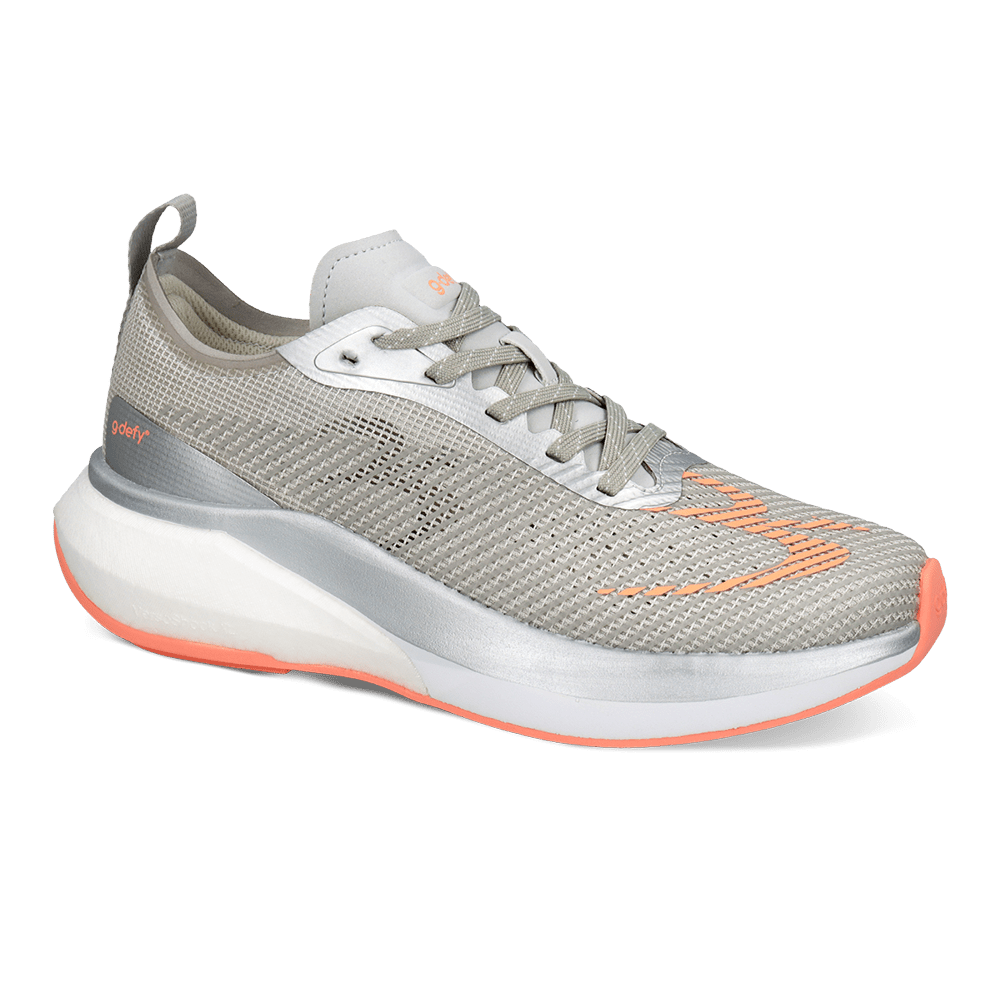
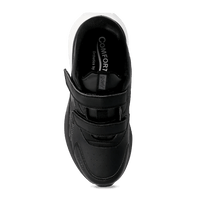
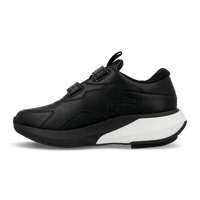
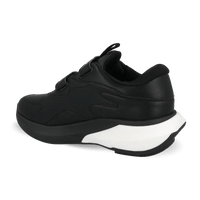
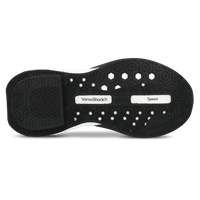
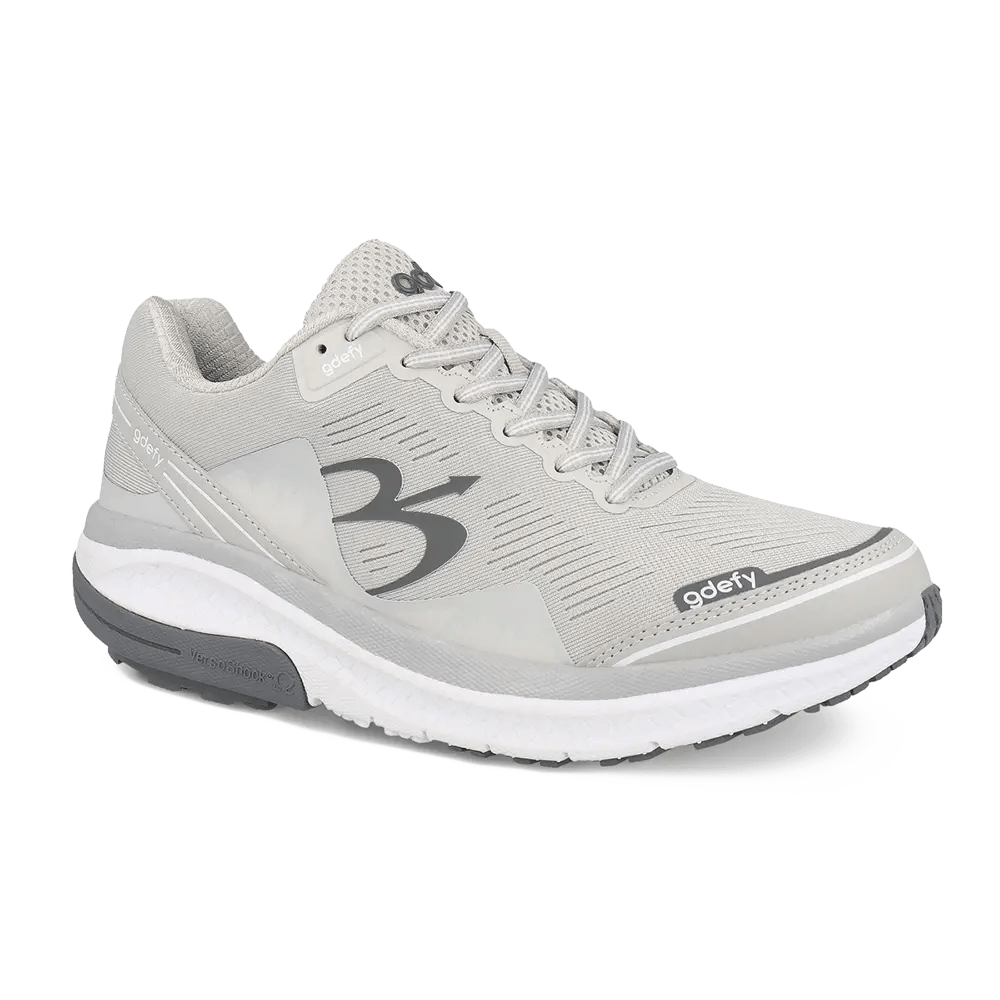
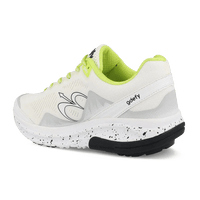
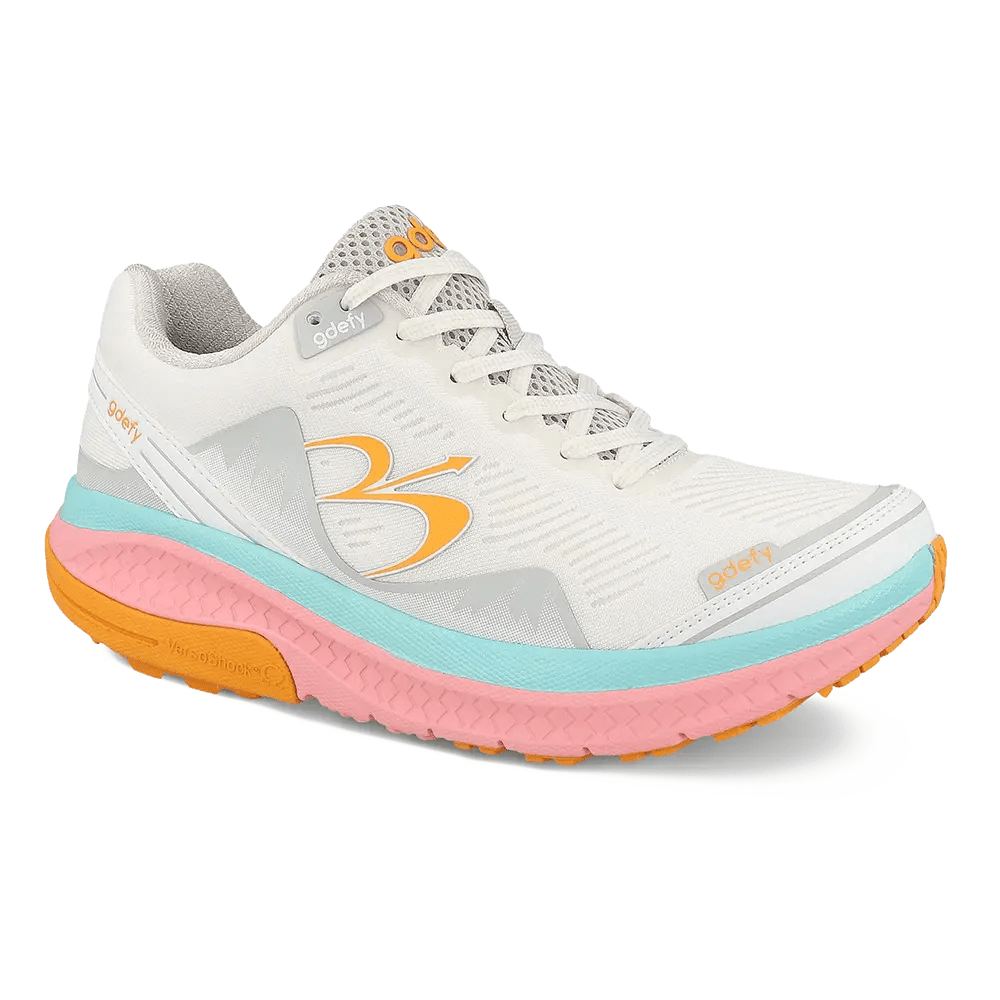
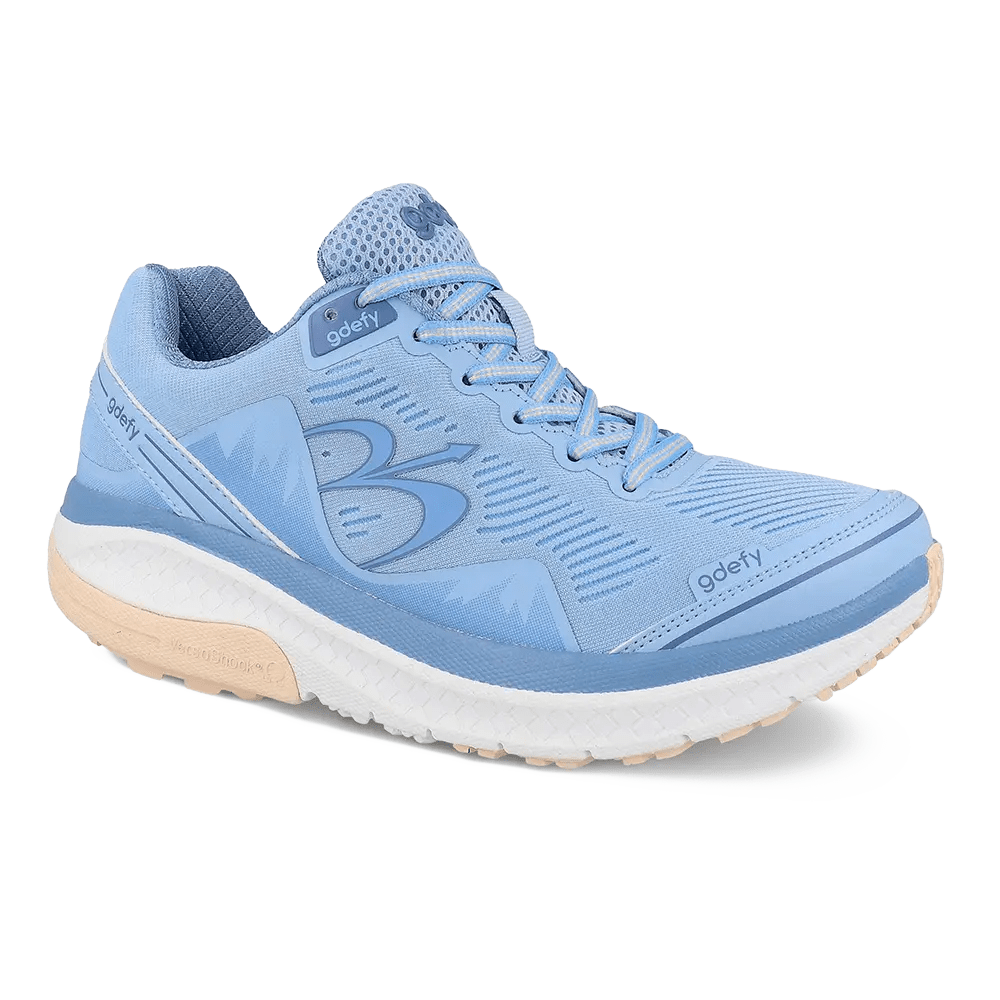
G-Defy shoes are engineered to provide comfort, support, and shock absorption. Featuring VersoShock® technology, they are designed to absorb impact and return energy with each step. A built-in stabilizer supports the foot during movement, while the front rolling design promotes a smooth walking experience. Each pair includes two removable orthotics to help customize comfort and support. G-Defy shoes help reduce pain from walking, running, and prolonged standing.
That dual-orthotic system is what makes a single model workable across the arch scale. The shoe around your foot stays the same; the footbed under it is yours to choose. You can read more about the spring-based system in our explainer on how VersoShock® technology works.
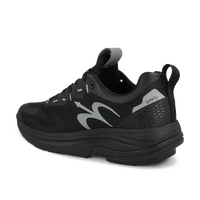
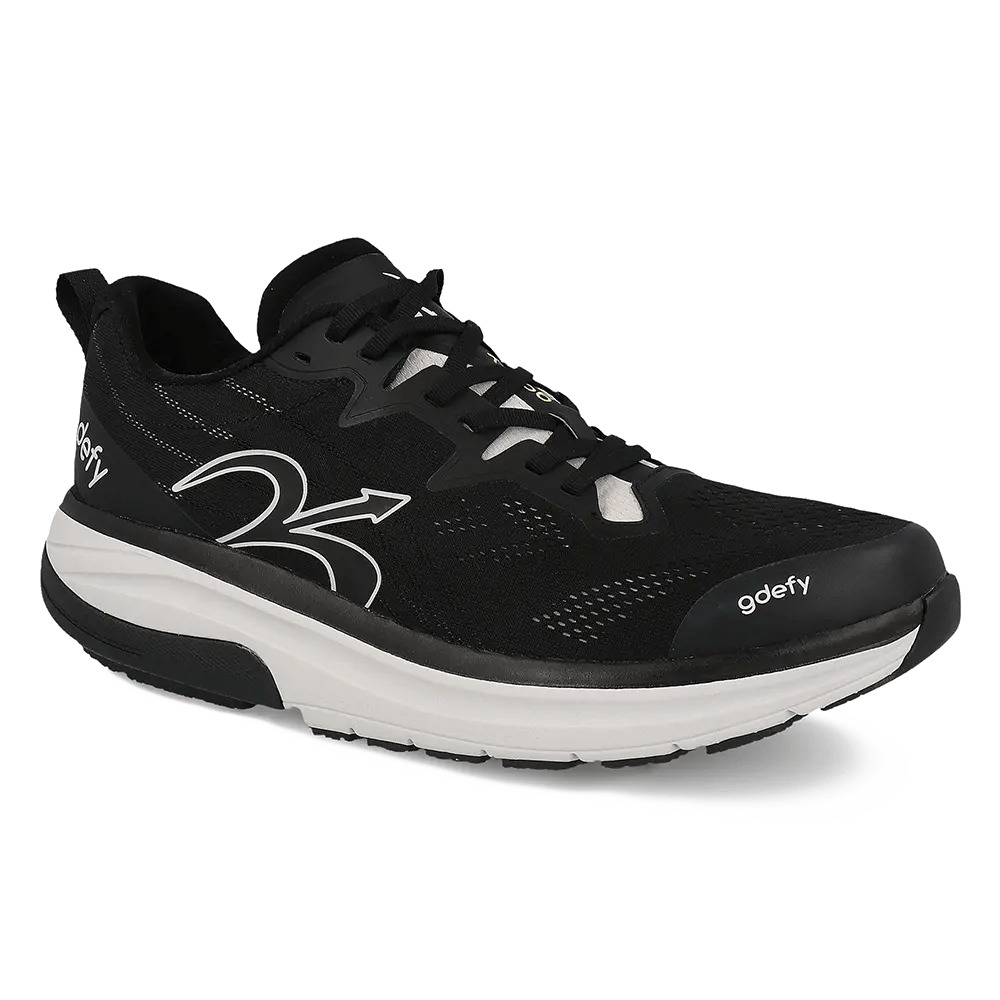
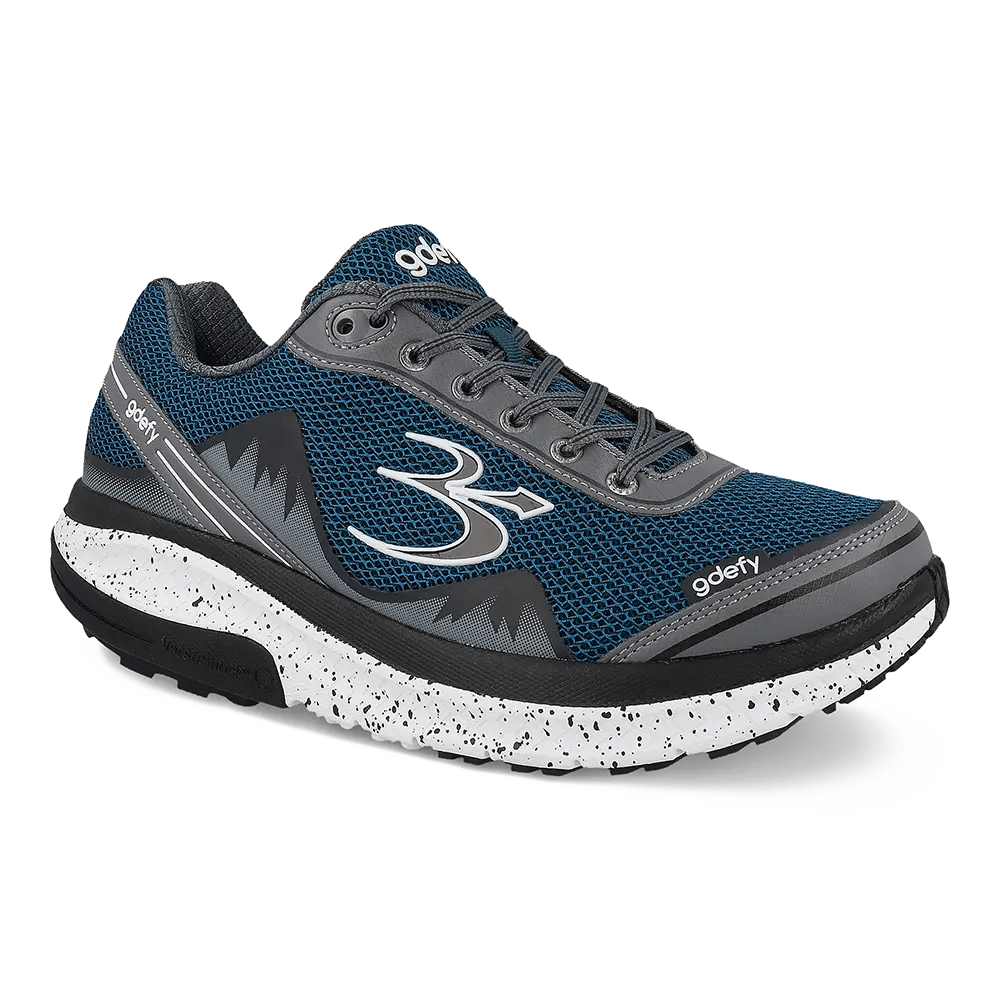
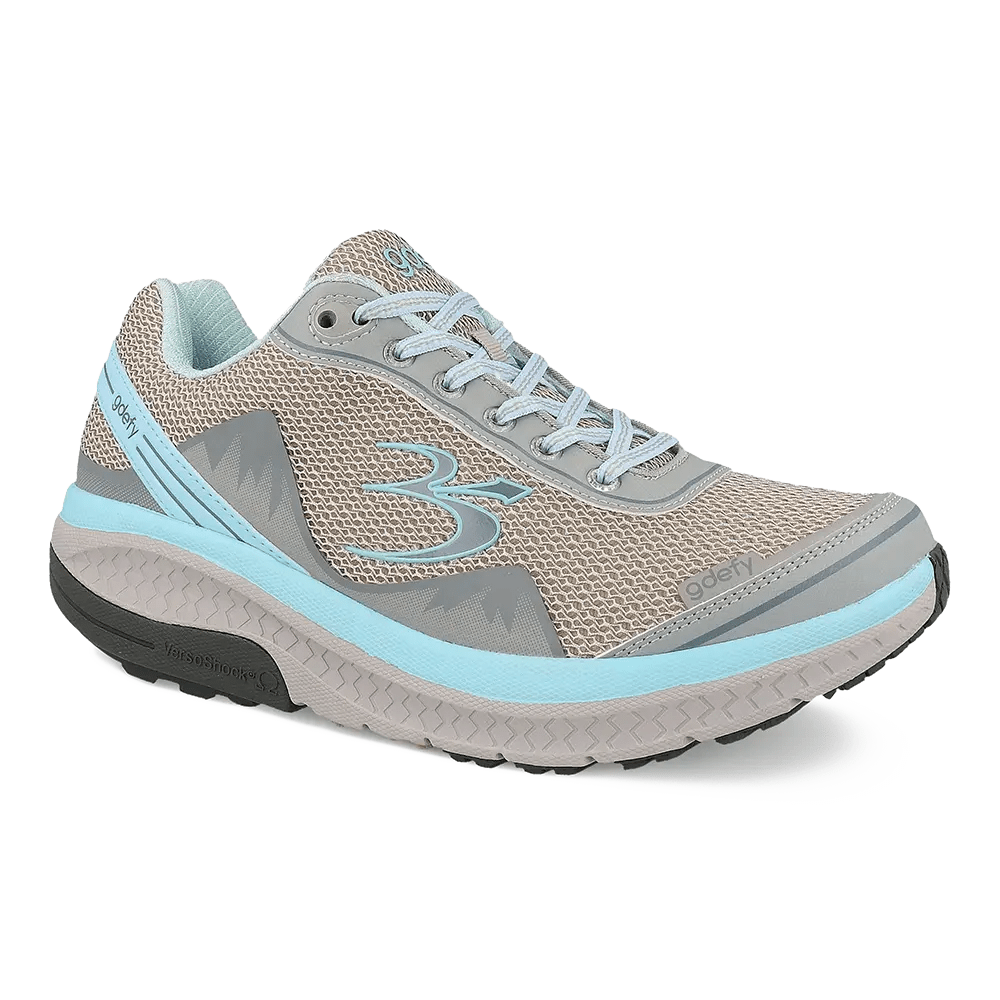
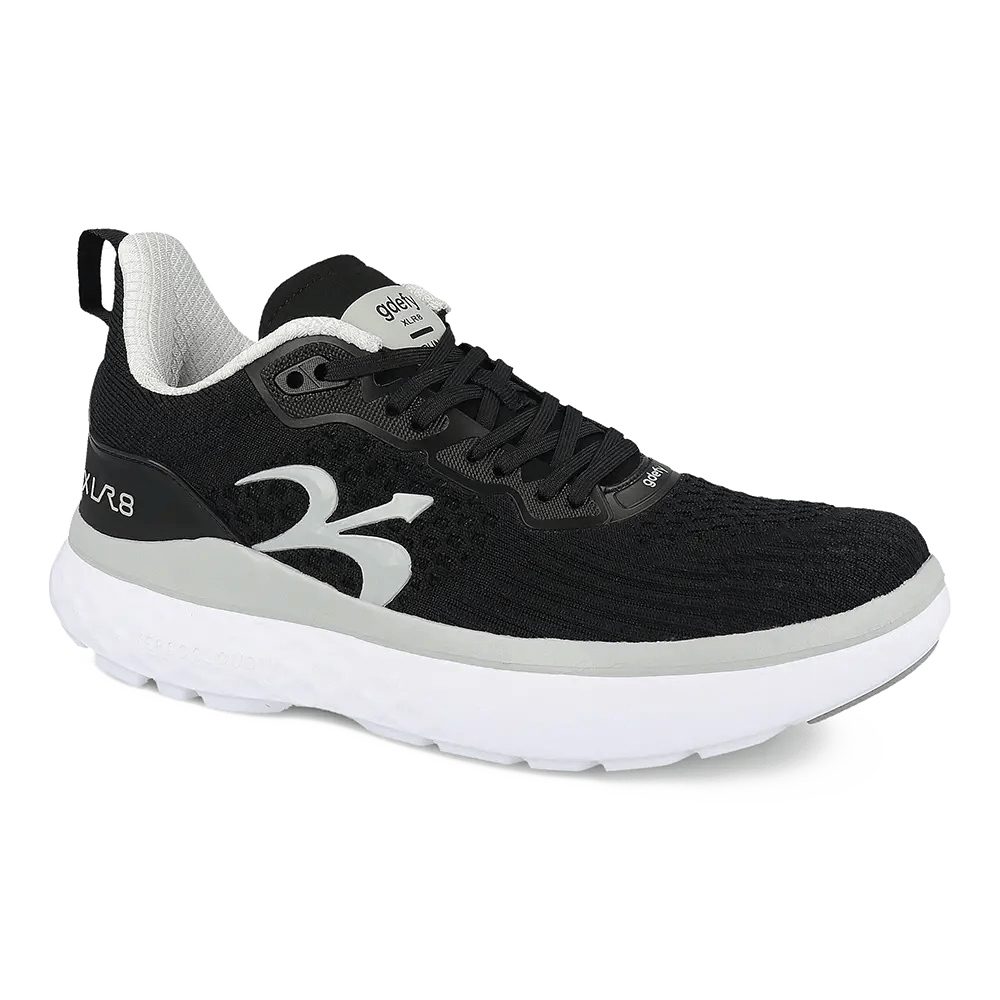
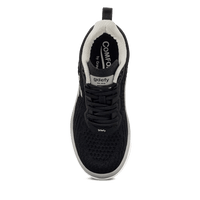
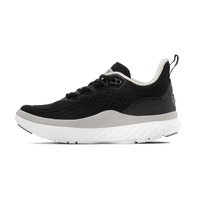
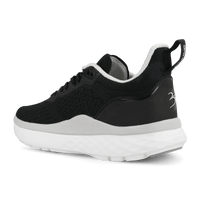
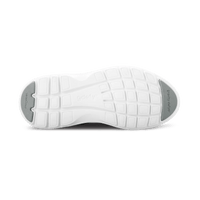
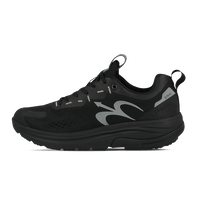
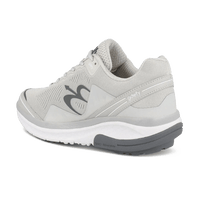
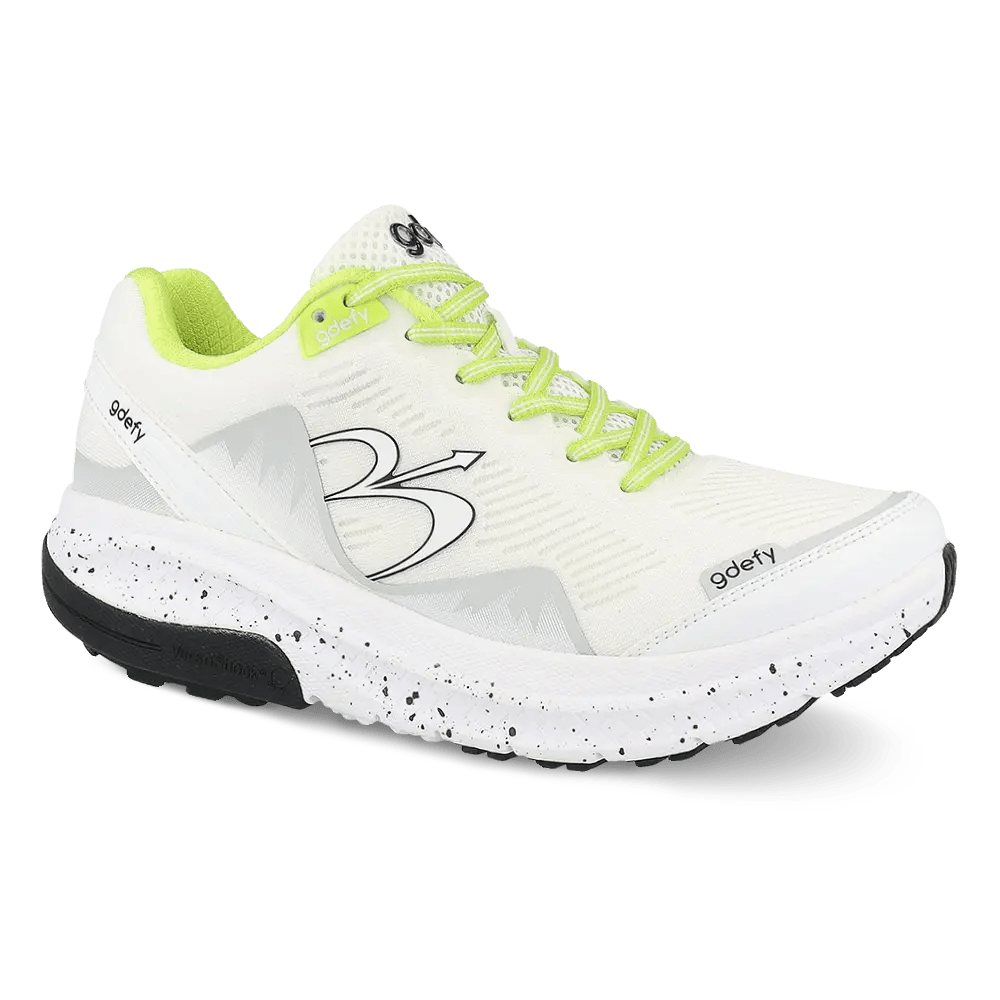
G-Defy Mighty Walk

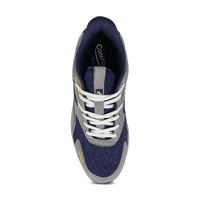
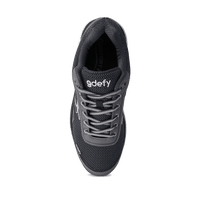
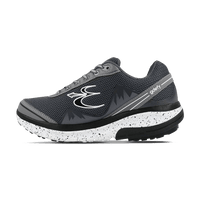
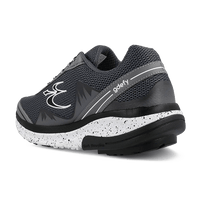
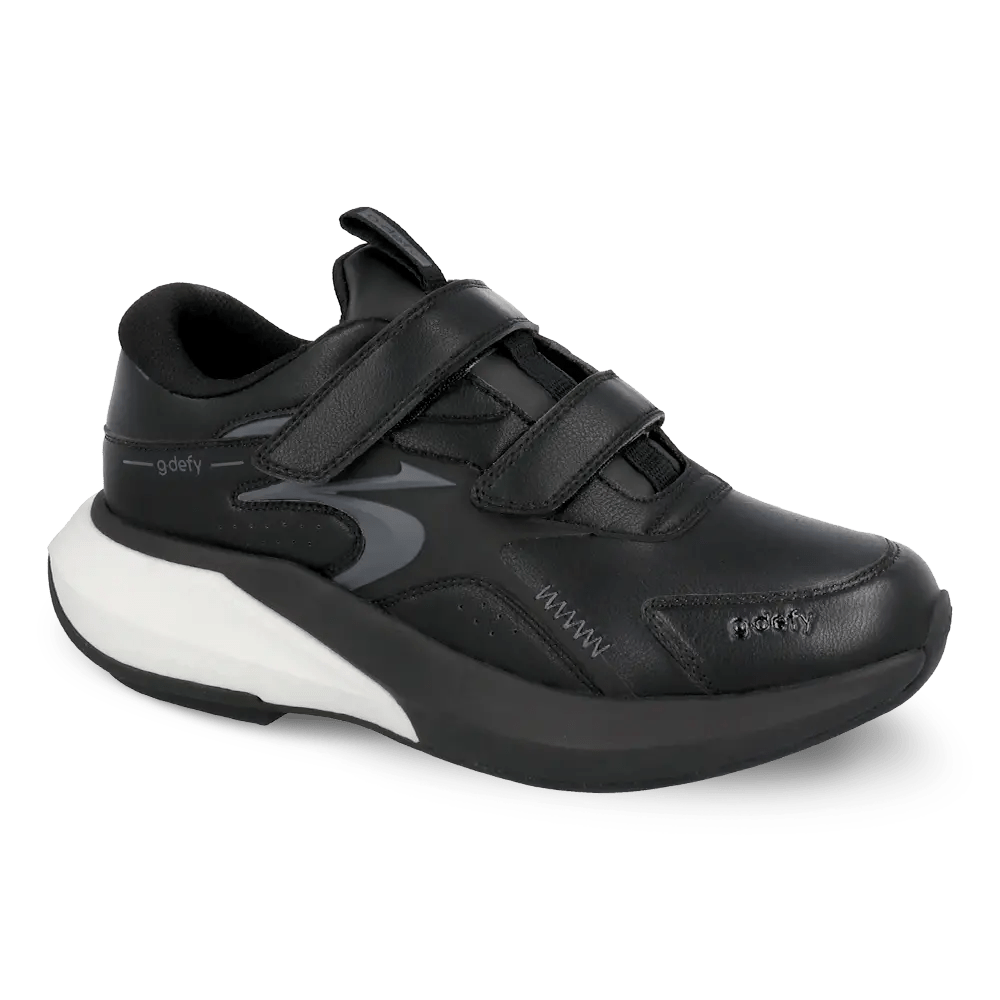
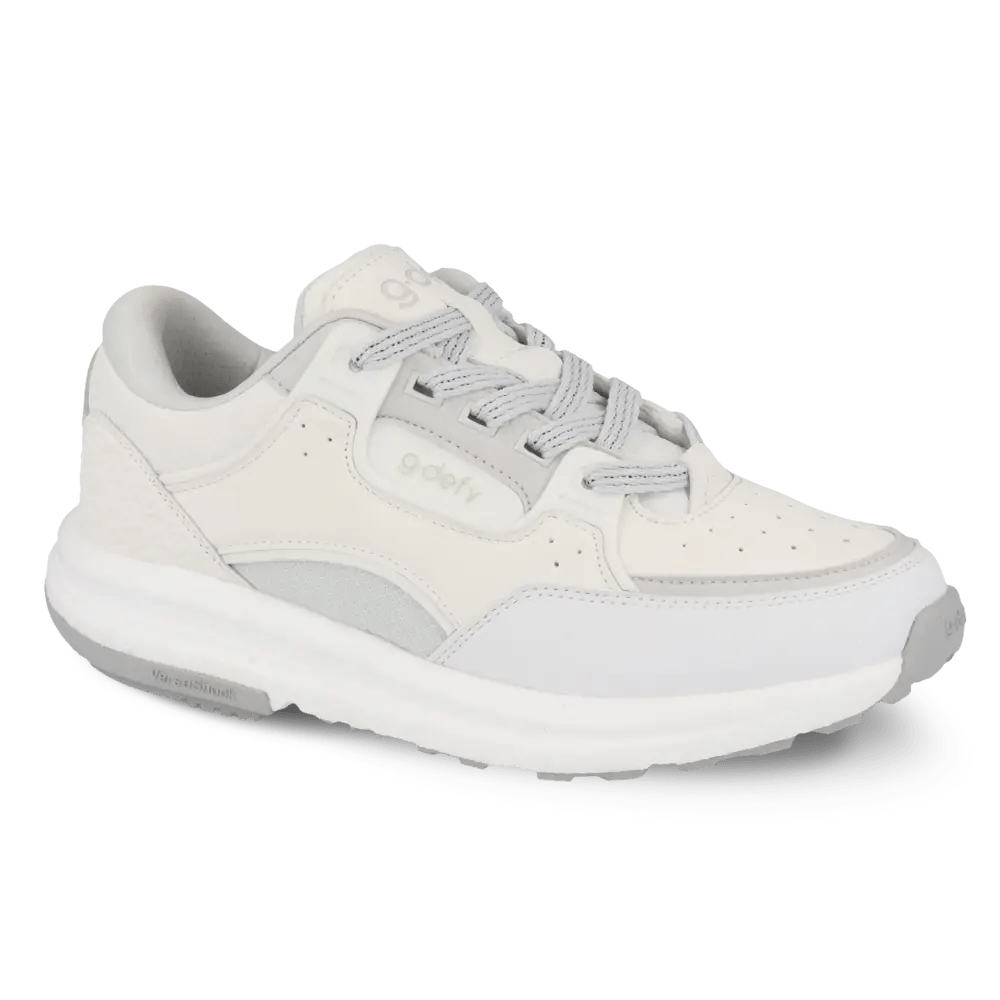
The Mighty Walk is the everyday lace-up in the range, built for walking and long hours on your feet. It comes in Medium, Wide, and X-Wide widths, which matters if your feet spread under load, and it ships with both orthotics so you can set the footbed to your arch on day one.
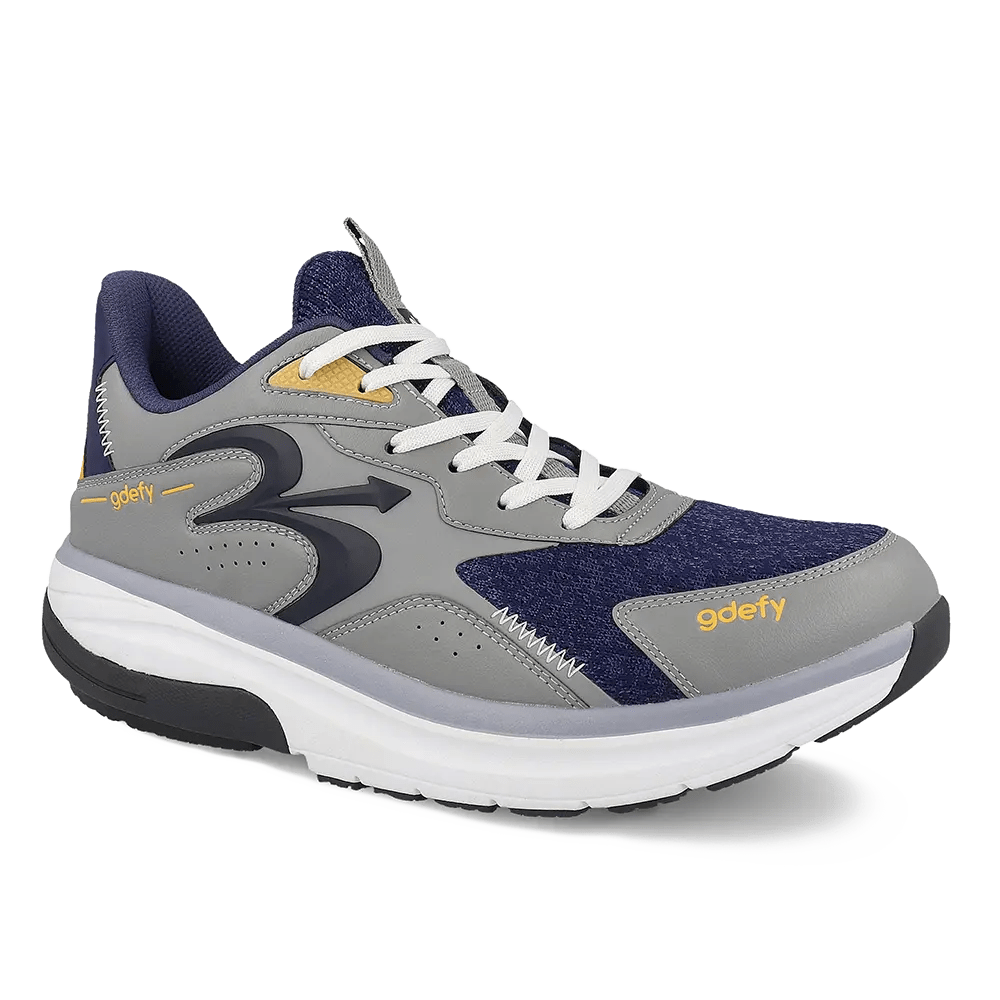
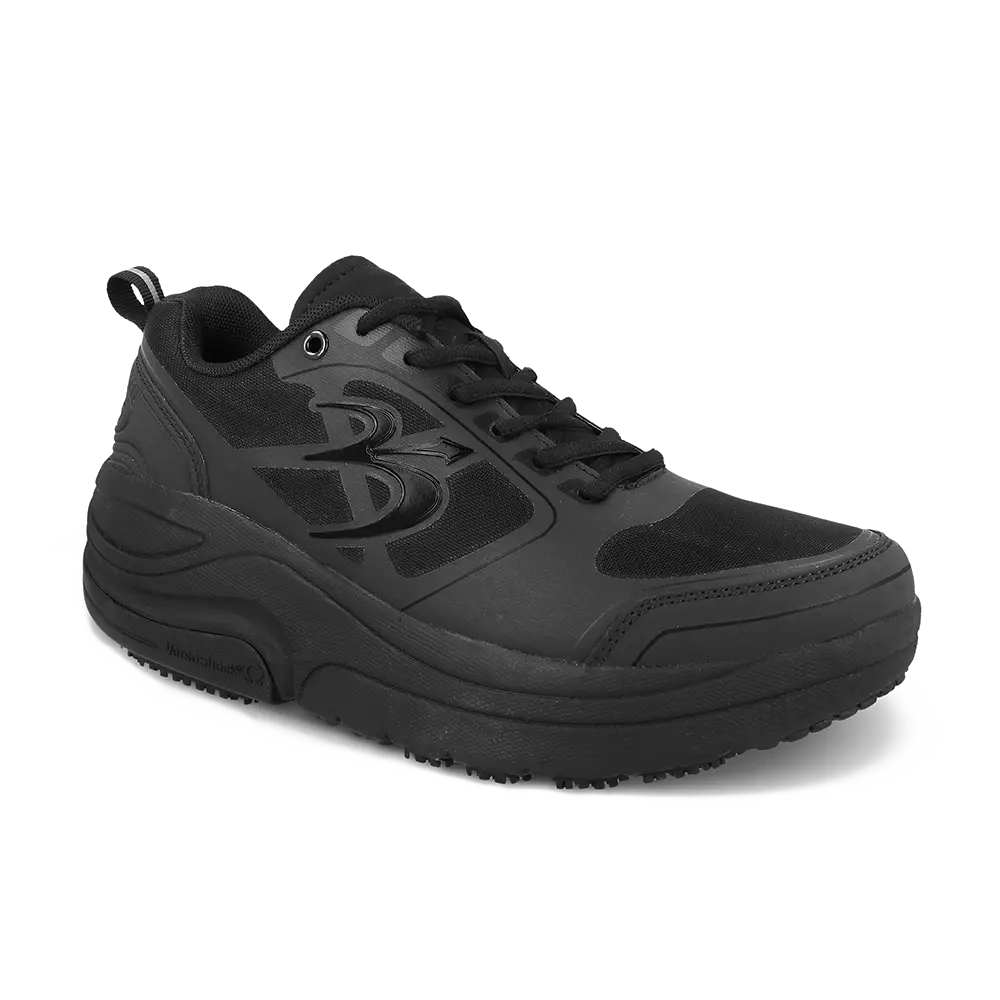
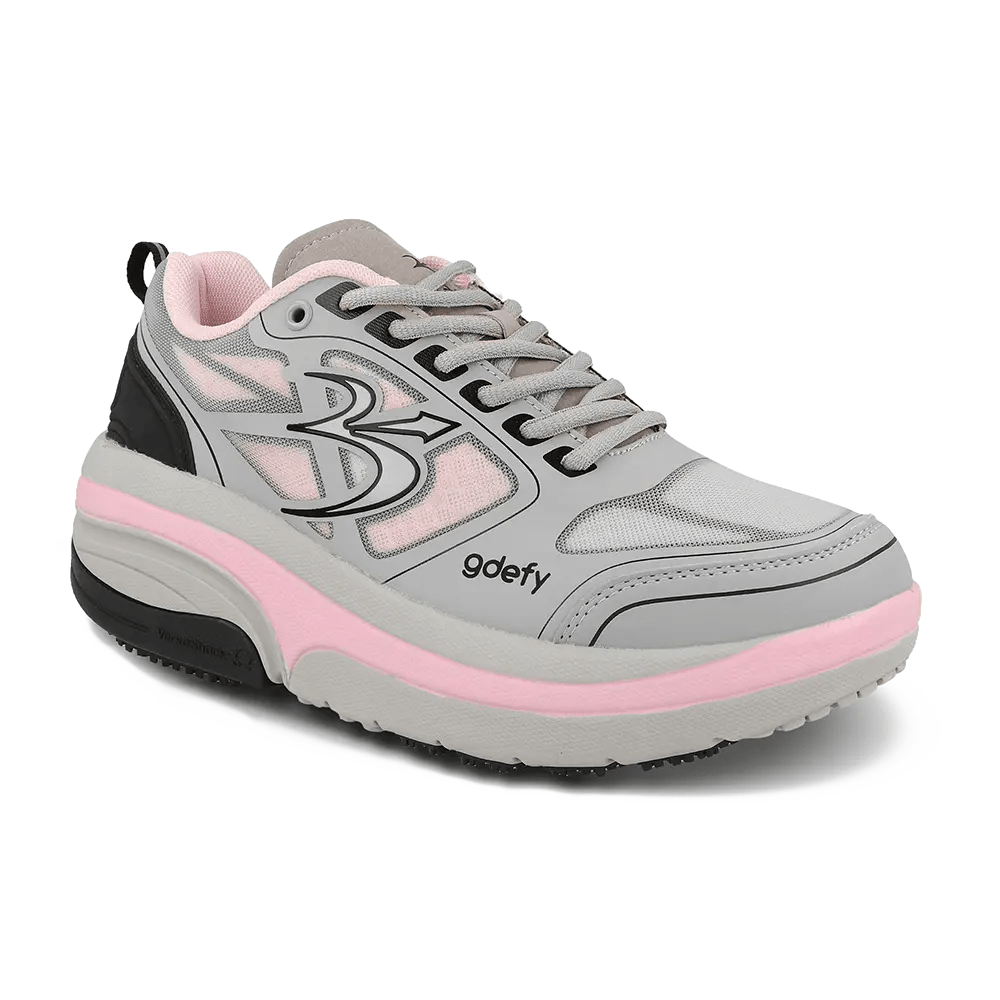
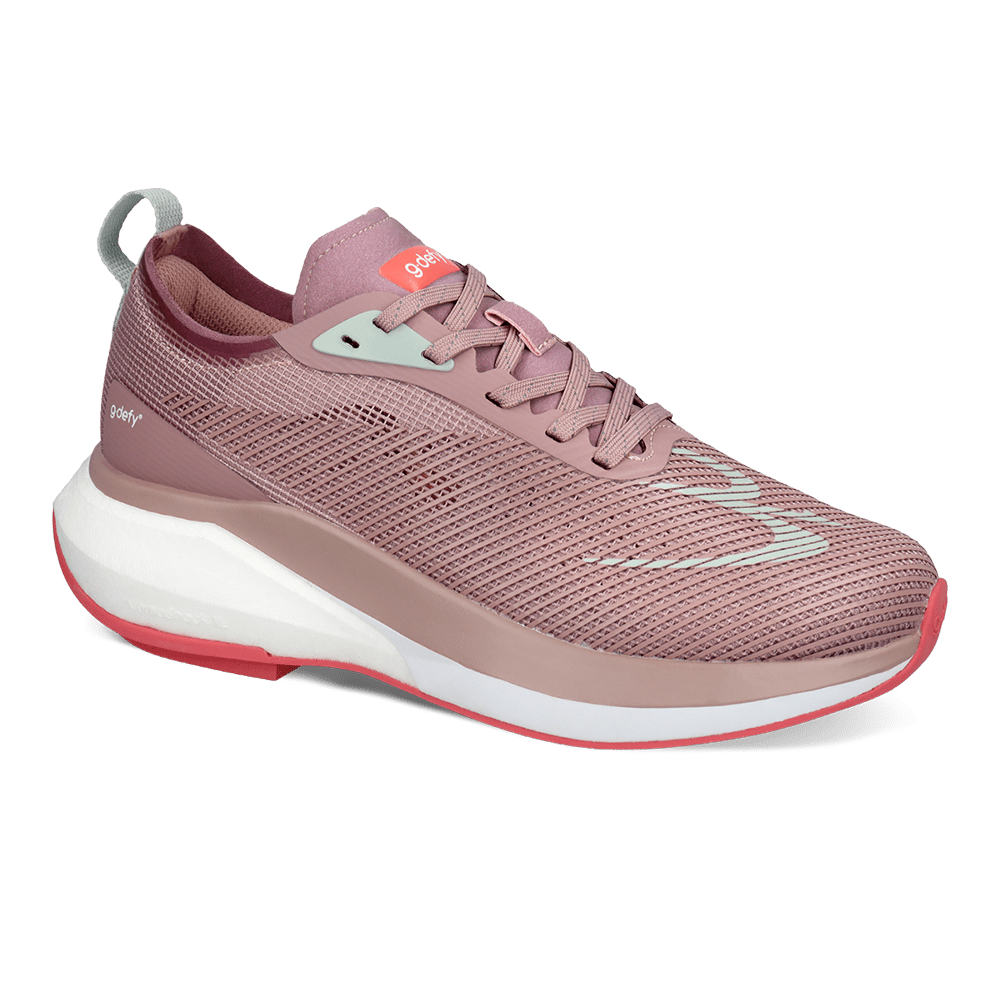
G-Defy Ion

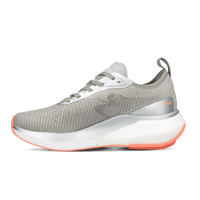
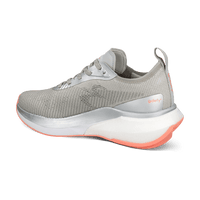
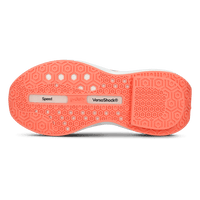
The Ion is the lighter, more athletic option for people who move faster or want less shoe underfoot. Same dual-orthotic setup, same stabilizer and rolling forefoot, in a build aimed at more active days.
Set up your shoes for your arch — risk-free for 60 days
Every pair includes both the ComfortFit® and CorrectiveFit® orthotics, with free shipping and free exchanges.
Shop Men's Shoes Shop Women's ShoesSide-by-Side: Flat Feet vs High Arches
| Flat / Low Arch | High Arch | |
|---|---|---|
| Ground contact | Broad, most of the sole | Concentrated at heel and forefoot |
| Usually wants | Structure and stability | Cushioning and midfoot contact |
| Start with | ComfortFit® orthotic | CorrectiveFit® orthotic |
| Lacing tweak | Snug the middle eyelets | Skip a middle eyelet to free the instep |
| Fit priority | Width across the ball of the foot | Heel hold and instep room |
Practical Tips for Either Arch
- Change one variable at a time. New shoe and new insole on the same day tells you nothing about which one you liked.
- Judge by the evening, not the fitting room. Most footbeds feel fine for ten minutes.
- Rotate between two pairs if you are on your feet daily. It gives each midsole time to recover its shape.
- Watch the wear pattern. Uneven wear across the sole is a useful signal that it is time to swap — see how shoes wear out and when to replace them.
- Fit to your larger foot. Almost nobody is symmetrical, and the smaller foot is easier to adjust with lacing.
Frequently Asked Questions
Can one shoe really work for both flat feet and high arches?
Often, yes — provided the shoe lets you change the footbed. The structure around your foot serves both arch types; the layer underneath is what needs to match your shape. That is why shoes that include more than one removable orthotic are more flexible than shoes with a fixed insole.
Can shoes help with foot pain from flat feet or high arches?
Footwear is not a medical solution, and shoes do not change the shape of your arch. That said, supportive and cushioned footwear may improve overall comfort during walking and prolonged standing. For persistent discomfort, consult your healthcare provider.
Which orthotic should I start with if I have flat feet?
Start with the ComfortFit® orthotic, which is designed for low to medium arches. Give it a few full days before deciding. If your midfoot feels like it wants more contact, try the CorrectiveFit® and compare.
Do high arches need more cushioning or more support?
Generally both, but the priority is contact through the middle of the foot. When the arch bridges an empty gap, the heel and ball of the foot absorb everything. A contoured footbed spreads that load across more of the foot.
How long does it take to adjust to a different insole?
Most people settle within a few days of normal wear. Start with shorter outings rather than a full day on your feet, and give the footbed time before making a final call.
Conclusion
Flat feet and high arches are not problems to be solved by buying two entirely different shoes. They are two shapes that ask for two different setups of the same well-built one — a different footbed, a slightly different lacing pattern, and attention to width or heel hold depending on which end of the scale you sit on.
While footwear is not a medical solution, choosing shoes designed for comfort, support, and shock absorption — and then taking two minutes to set them up for your own arch — can make a meaningful difference in how you feel throughout the day.