August 17, 2026
Shoes for Commuting: What Escalators, Trains, and Platform Waits Do to Your Feet
By Gdefy

Summary
Most people count the commute as dead time. It sits between the front door and the desk, it happens on autopilot, and almost nobody thinks of it as time spent on their feet. But add it up: the walk to the stop, the stairs down to the platform, the standing wait, the escalator, the ride, the second walk at the other end — and then the whole thing again in reverse. For a lot of people that is the longest continuous stretch of standing and walking in the day, and it happens twice.
What makes it worth a second look is that a commute is not simply a short walk. It is a string of different demands packed into twenty or forty minutes: moments where you are walking normally, moments where you are standing perfectly still, and moments where you are standing on something that is moving you. Each asks something different of your feet — and the shoes most people wear for the trip were chosen for the destination, not the journey.
Why a Commute Is Not Just a Short Walk
Track a typical transit commute and it splits into four kinds of time. No two of them load your feet the same way.
You spend part of it standing on something that moves you
An escalator, a moving walkway, a bus, a train. On all of these you have stopped walking, but you have not stopped working. The surface under you accelerates, decelerates, sways and occasionally jolts, and your feet and ankles make a continuous stream of small corrections to stay upright over it. It looks like rest. It is closer to a very slow balance exercise.
The trip is made of transitions
Stepping onto a moving tread and stepping back off it. Stepping up into a bus. Crossing the gap onto a train. Going from carpet to tile to steel plate to wet pavement. Each one is a moment where the ground changes speed, height or texture under a foot that is already committed to a step — and transitions are where footing gets interesting.
The load never settles into a rhythm
Ordinary walking is rhythmic: weight moves heel to toe and side to side, and every structure gets a turn working and a turn resting. That is a large part of why a long walk can feel easier than a shorter shift spent standing in one spot, the point we made in how standing all day affects your back. A commute is neither. Thirty seconds of walking, ninety seconds of standing, a flight of stairs, a stretch on a swaying floor, then walking again. Nothing lasts long enough to settle.
You are doing it in shoes chosen for the office
This is the quiet part. Most people pick footwear for where they are going — the meeting, the dress code, the look — then do the hardest standing-and-walking portion of the day in it. A shoe that is perfectly pleasant for six hours at a desk can be the wrong tool for forty minutes of stairs, platforms and moving floors.
The Commute at a Glance
| Part of the trip | What your feet are doing | What matters most in a shoe |
|---|---|---|
| Walk to the stop | Normal walking, usually pavement, often at a hurry-up pace | Cushioning, smooth heel-to-toe transition |
| Station stairs | Repeated braking down, repeated lifting up | Forefoot cushioning, a stable midfoot |
| Escalator or walkway | Two transitions, then near-static standing on a moving surface | Outsole grip, stability, a predictable edge |
| Standing on the platform | Static standing, weight parked in the same spots | Cushioning that does not bottom out |
| Standing on a bus or train | Constant micro-corrections against acceleration and braking | Stability, a wide base, grip underfoot |
| Walk at the other end | Normal walking, on feet that have already worked | Support still present at the end of the trip |
Escalators and Moving Walkways: It Is the Getting On and Off
Riding an escalator is easy. The two seconds at either end are the part worth thinking about.

Getting on, you step from a floor that is not moving onto a tread that is — so one foot lands on a surface travelling at a different speed from the one your other foot is still on. Your body sorts this out with a quick weight shift and an ankle correction, so routinely that most people never register it. Getting off is the same event in reverse, with the tread flattening and disappearing under you as you step away.
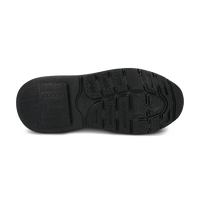
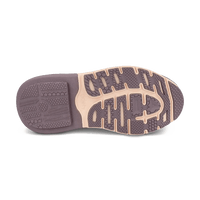
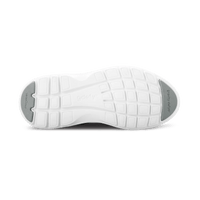
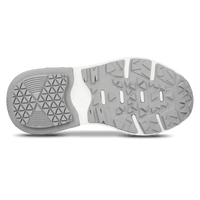
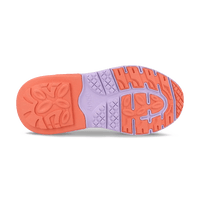
Two things make those seconds easier. The first is stability — a wide, stable base under the midfoot gives you a bigger platform to correct on than a narrow sole with a lot of side-to-side give. The second is a predictable edge: tread with real definition grips grooved metal instead of skating across it, and a clean sole perimeter is less likely to catch at the comb plate.
Moving walkways are the same problem stretched longer: the same two transitions, with a long stretch of standing still on a humming, faintly vibrating surface in between. It sits close to the hard-floor problem we covered in walking on hard surfaces — except you cannot shift your weight freely while holding a bag and a rail.
Standing on a Bus or Train: Balance Work You Do Not Notice

This is the part of the commute that does the most and gets the least credit. When a train pulls out, the floor accelerates and you do not — so for a moment your body is being left behind, and your feet, ankles and lower back each contribute a small correction to catch up. When it brakes, the same thing happens in reverse. Add the sway on a curve and the lateral shove when a bus changes lanes, and you have a steady stream of corrections for the length of the ride.
None of them are big. That is the point. They are small, constant, and they come from directions ordinary walking never asks about — sideways and backwards rather than straight ahead. And because one hand is usually on a rail and the other on a bag, you are making them with less freedom to reposition than you would have standing anywhere else.
Your lower back sits at the top of that chain. Feet, ankles, knees, hips and back all stack on the platform your feet create, the same chain we walked through in how your feet affect your entire body. When the base is unstable and the corrections are constant, everything above it is working too. It also explains a familiar complaint: people who sit the whole ride arrive feeling fine, while people who stand for the same twenty minutes arrive feeling like they have been on their feet far longer than the clock says. They have.
What to Look for in Shoes for Commuting
Once you see the trip as transitions, standing and short bursts of walking rather than one continuous walk, the feature list changes. These five earn their place.
- Shock absorption — the walking portions are usually on concrete and usually at a hurry-up pace, and the stairs concentrate that impact. Cushioning that absorbs impact rather than passing it upward does the most work here. The mechanics are in what shock absorption in shoes actually means.
- A stable, wide base — this is what you balance on during every escalator transition and every train jolt. A sole that collapses at the edges gives you less to correct with. Cushioning and support are not the same thing, and a commute needs both.
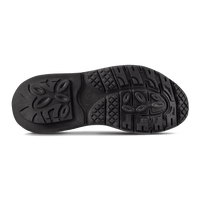
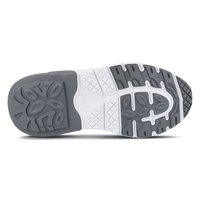
- Outsole grip — grooved escalator treads, polished station floors, painted metal plates and wet entryways all turn up in a single trip. Tread with real depth reads those surfaces better than a smooth sole, which is the same reasoning behind our guide to walking on wet ground.
- A smooth heel-to-toe transition — the walking bursts are short and often rushed, and a shoe that helps the foot roll forward rather than slap down makes them feel less abrupt. The geometry is covered in heel-to-toe drop.
- Fit that holds all day — feet swell, and a shoe that fits at 7 a.m. is being asked to fit at 6 p.m. too. See why proper fit matters for all-day comfort.
One trade-off deserves its own thought: slip-on versus lace-up. Slip-ons win at a security line and lose on a swaying train, where a shoe genuinely locked to your foot gives you more to balance with. If your commute involves an actual airport, our guide to shoes for airport travel goes further into it.
How G-Defy Shoes Approach the Commute

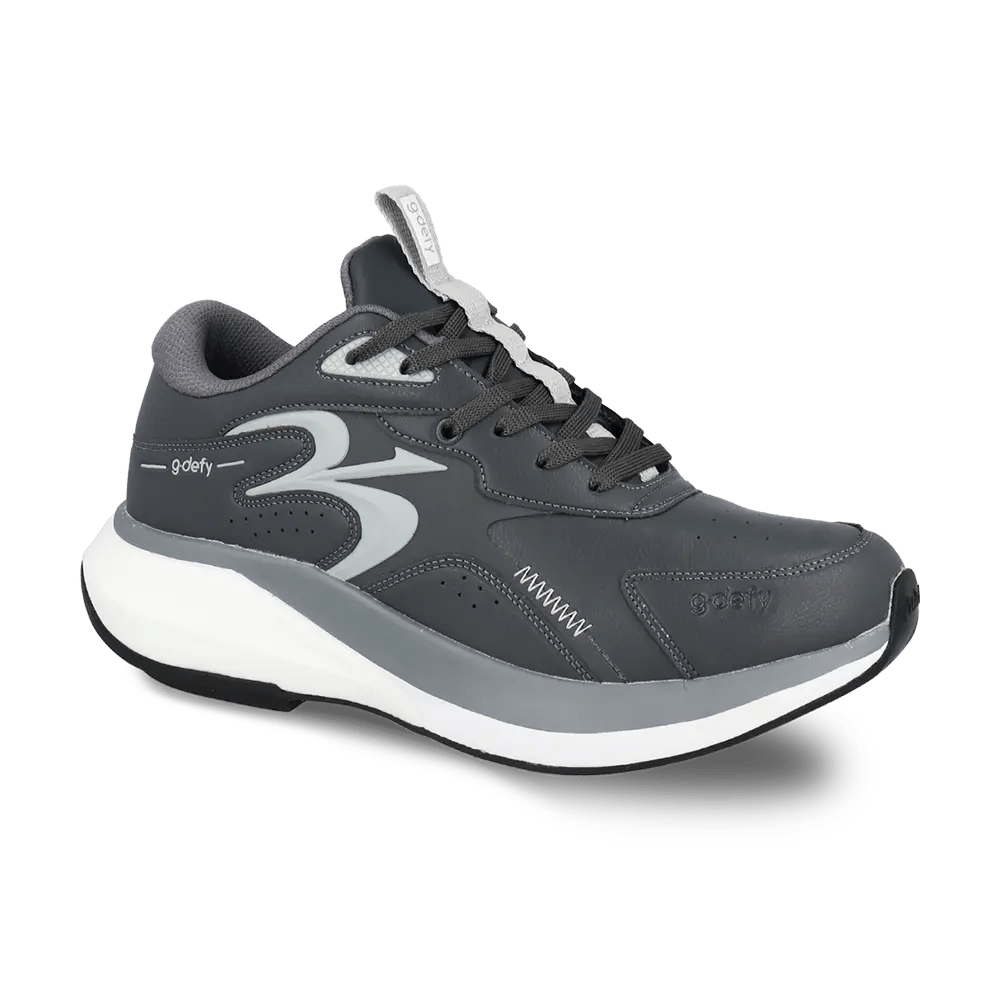
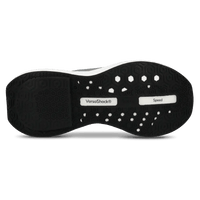
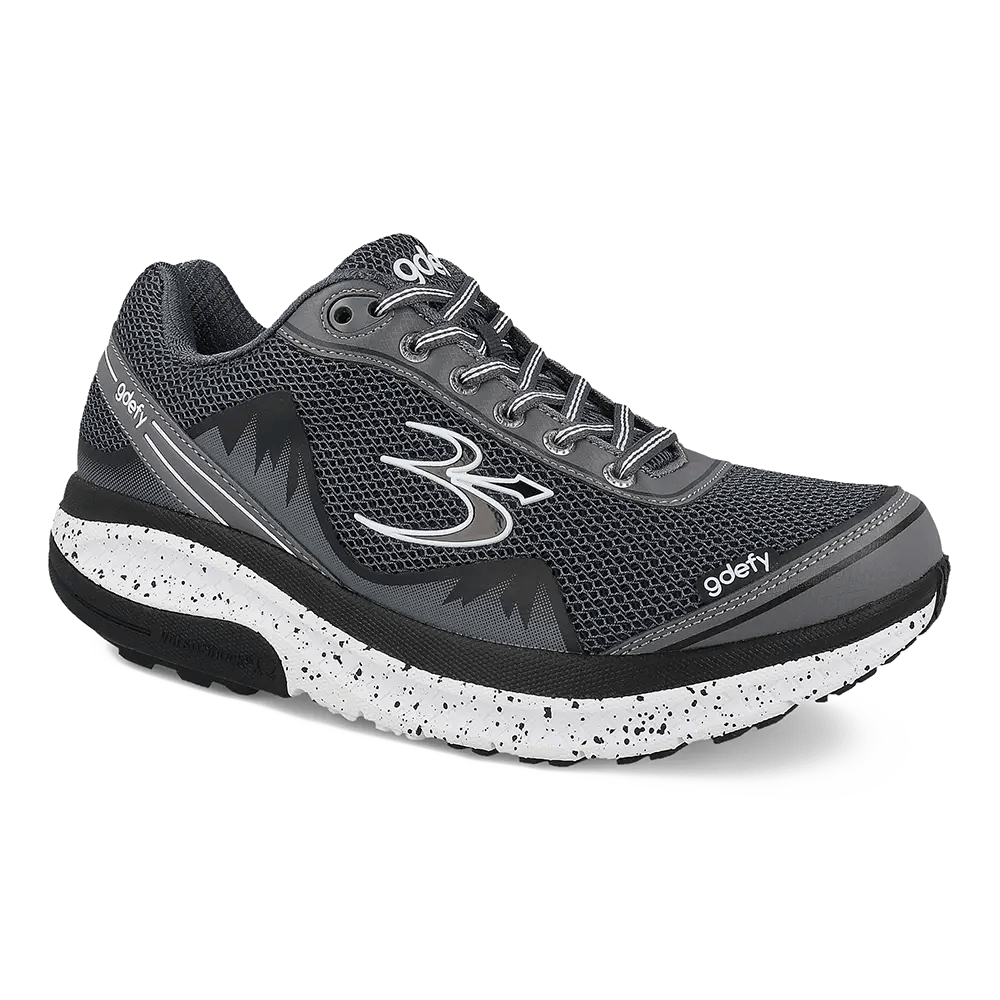
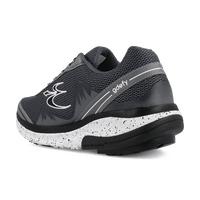
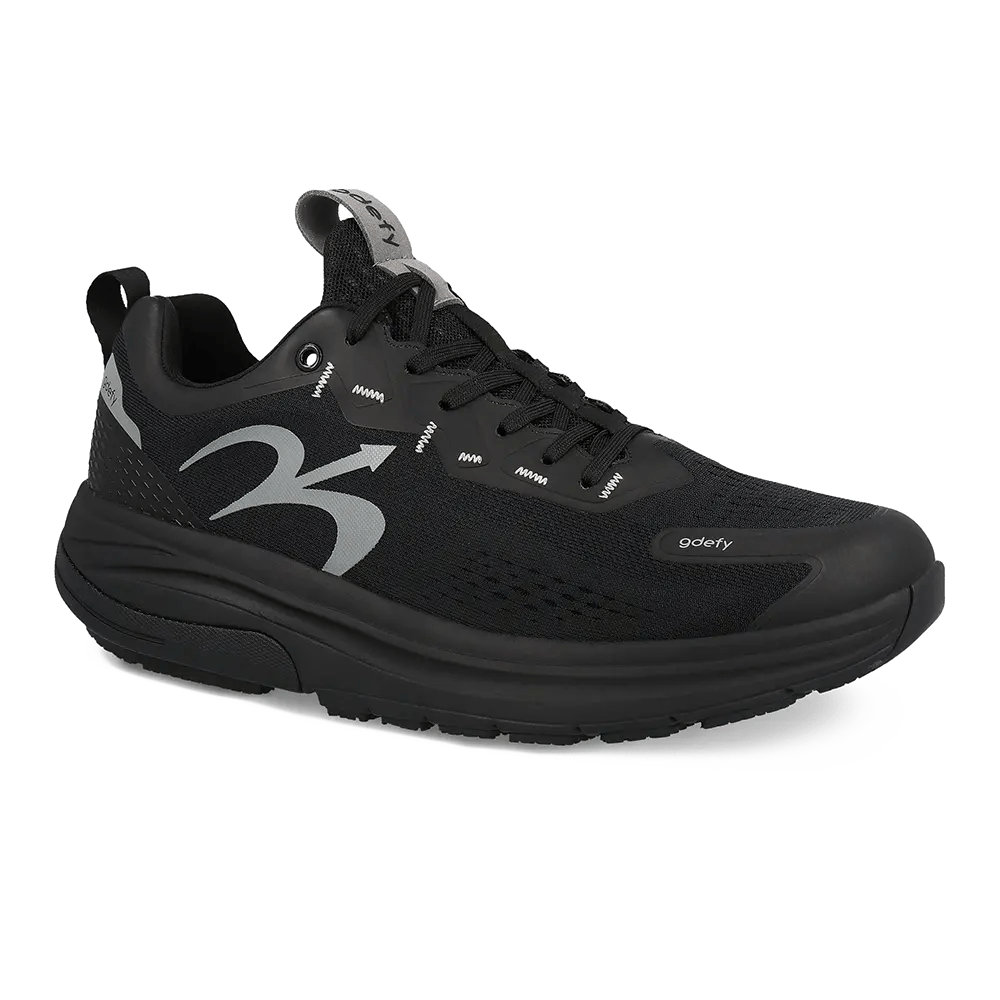
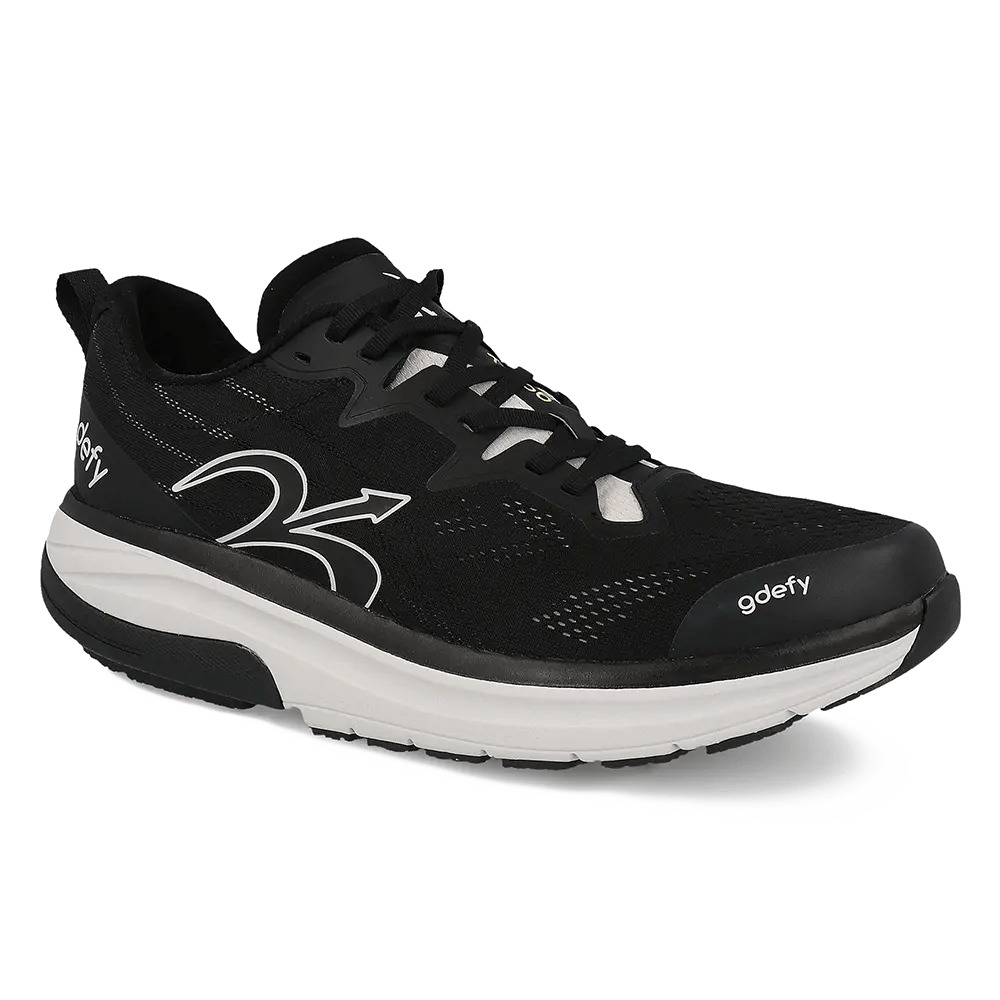
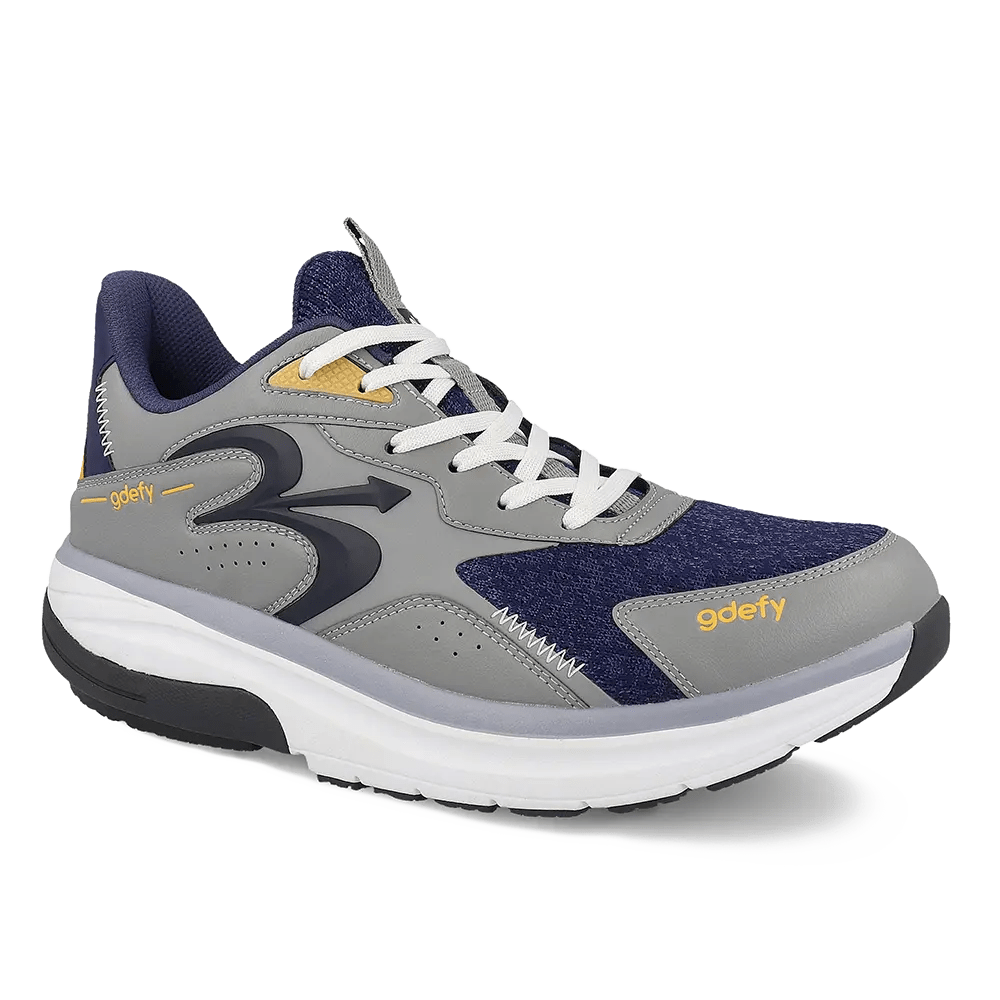
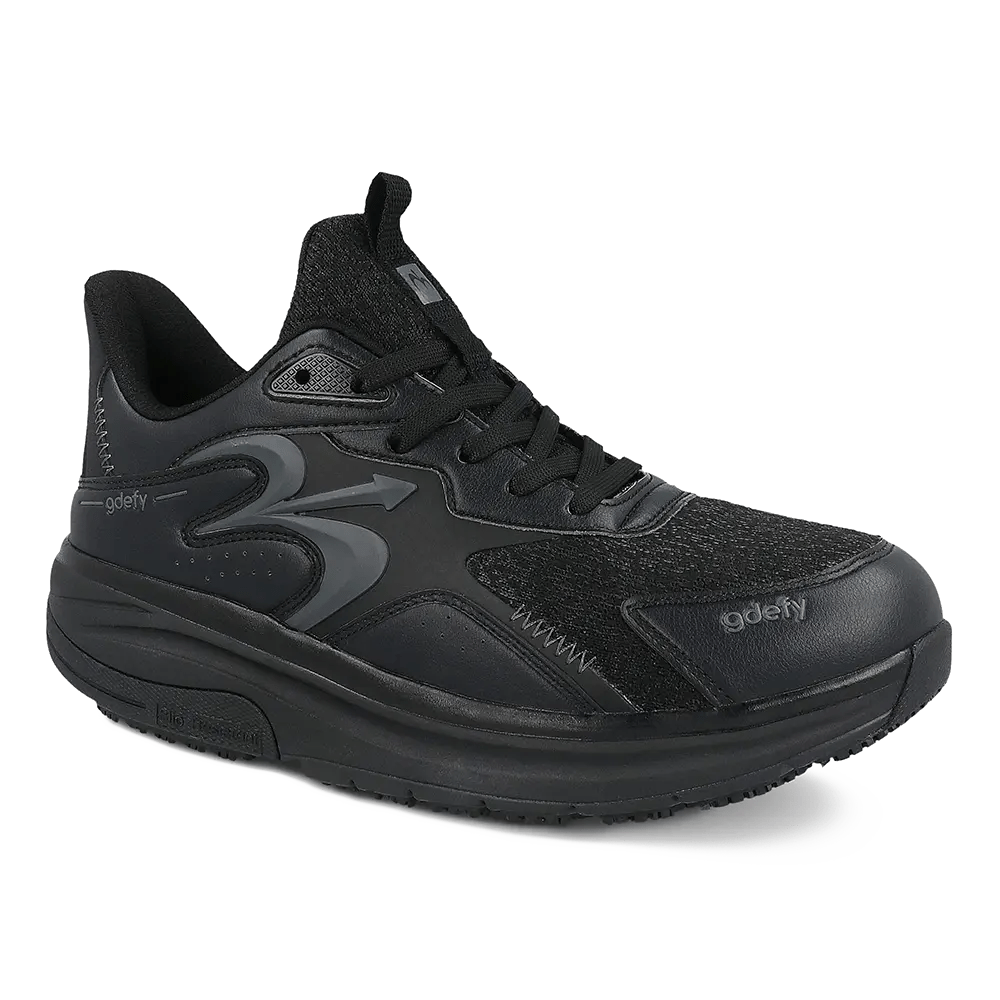
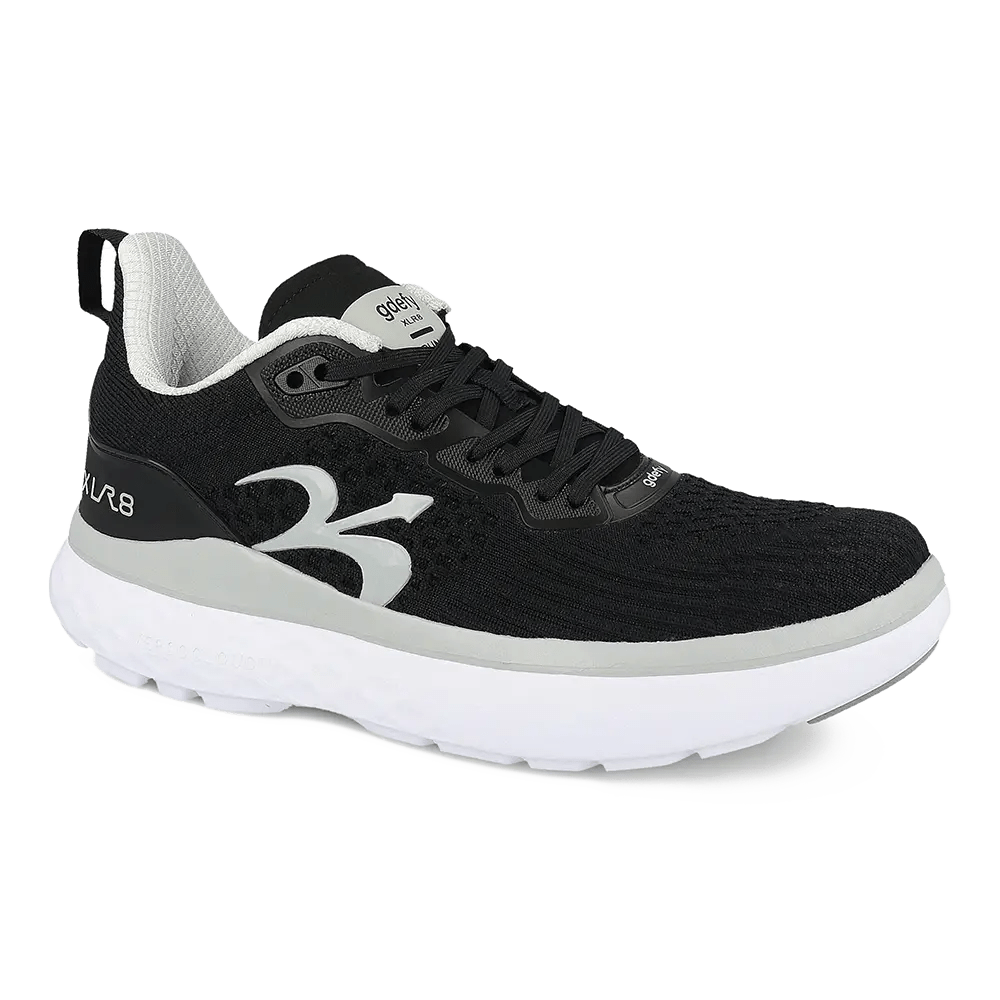
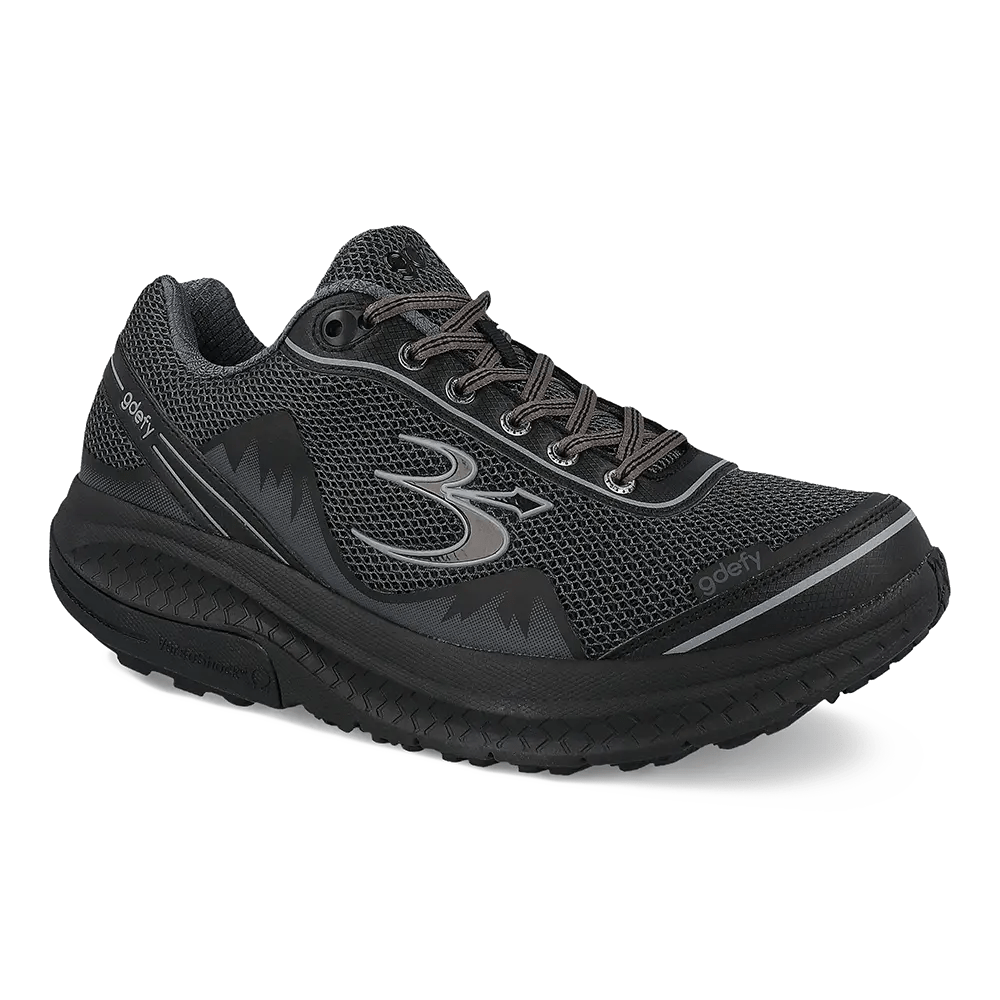
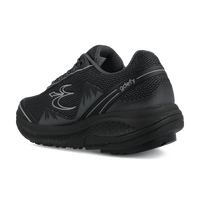
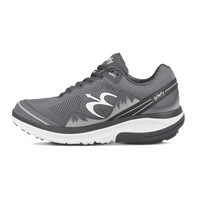
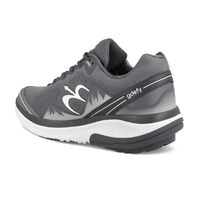
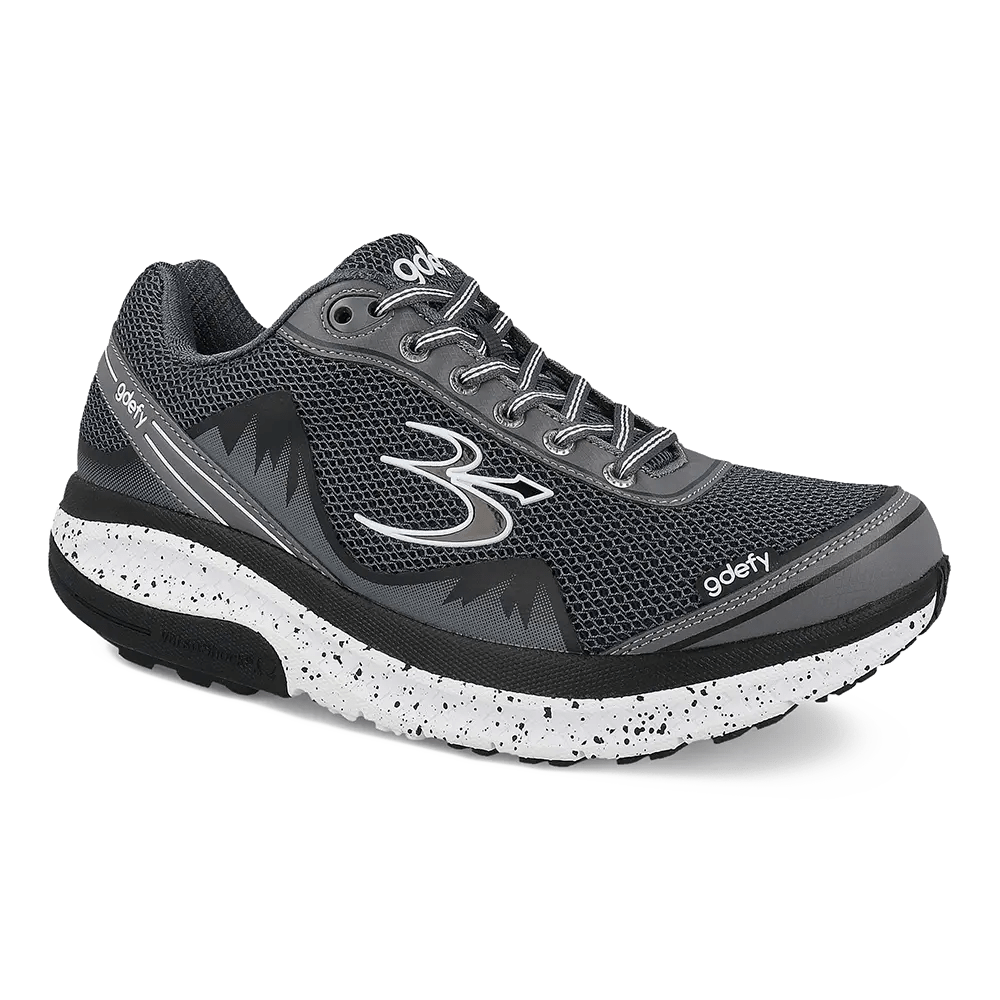
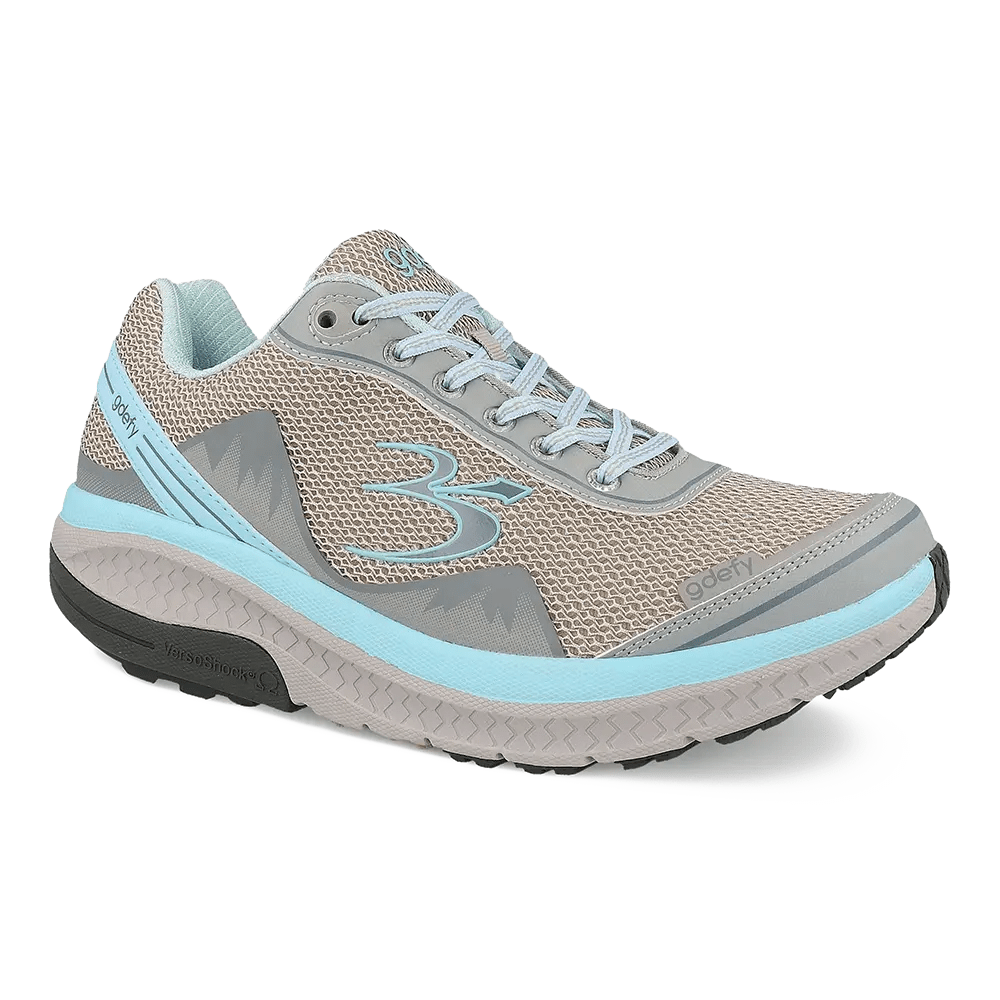
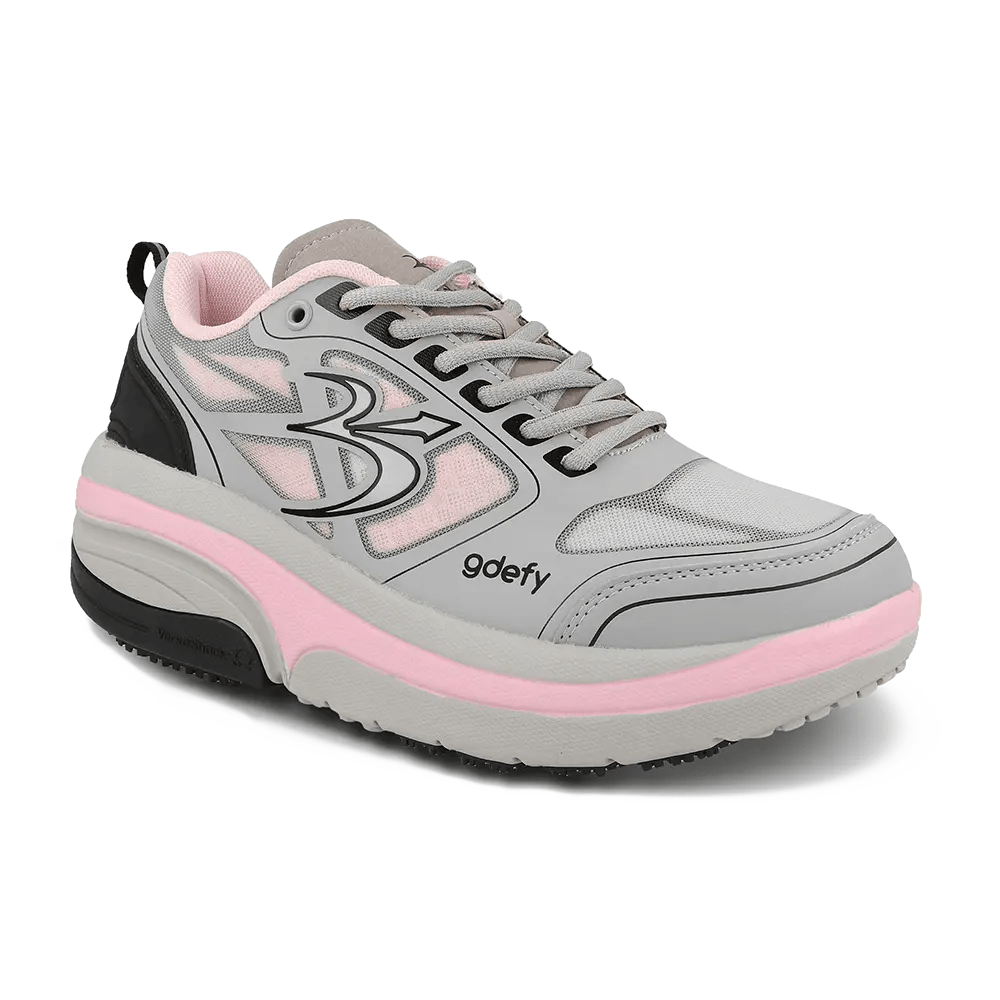
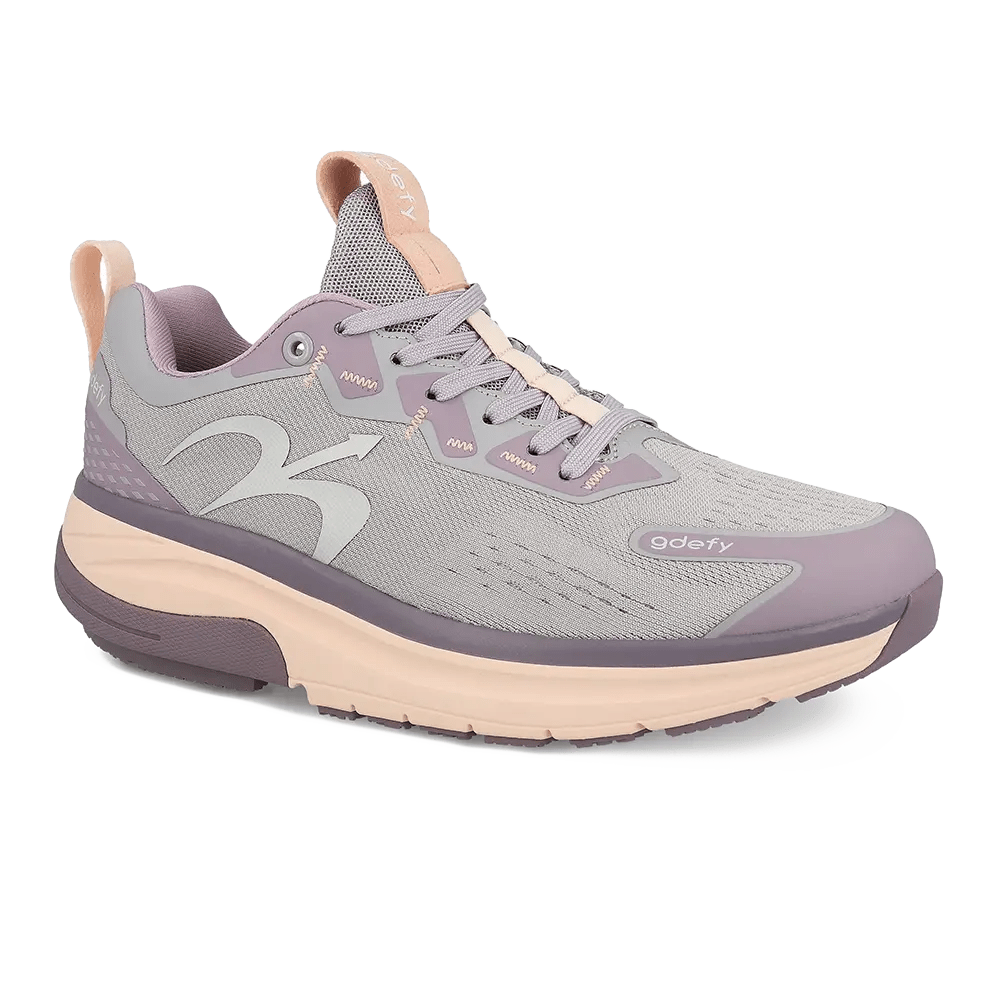
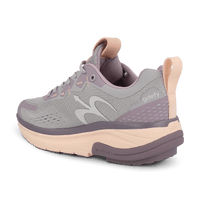
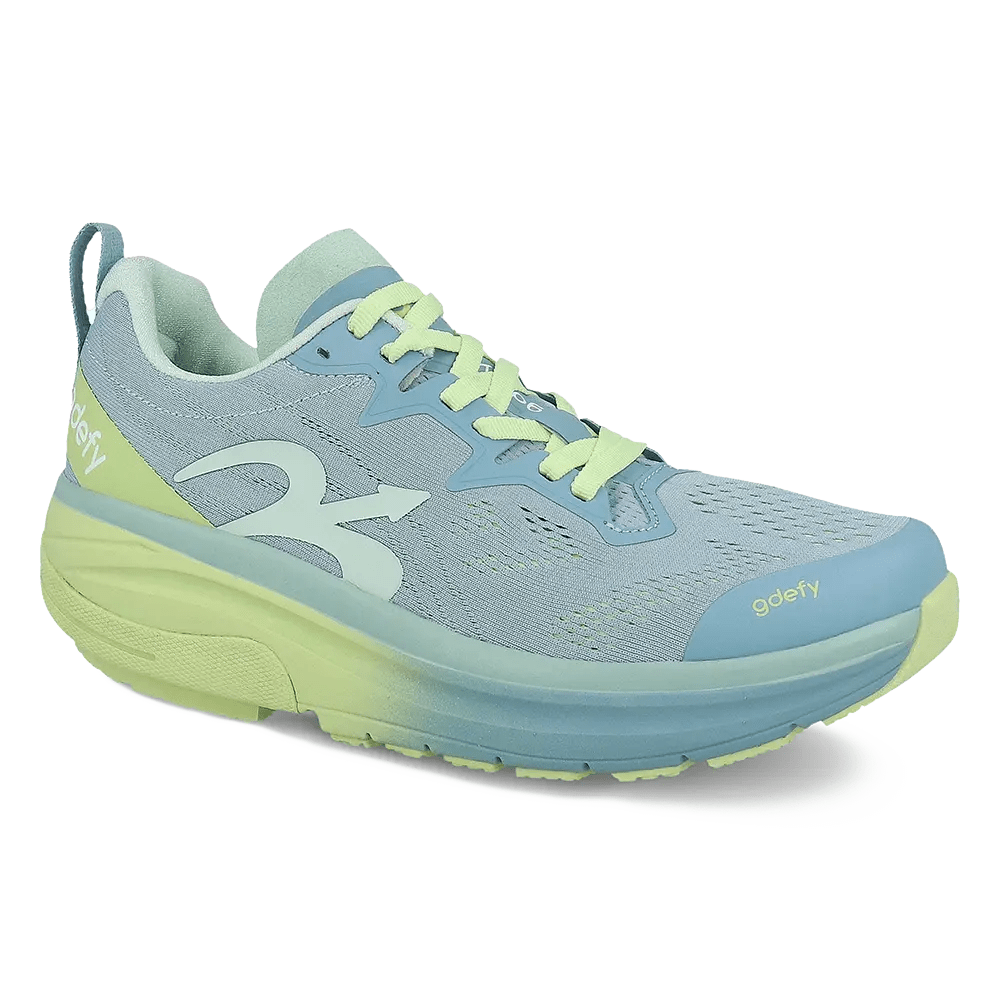
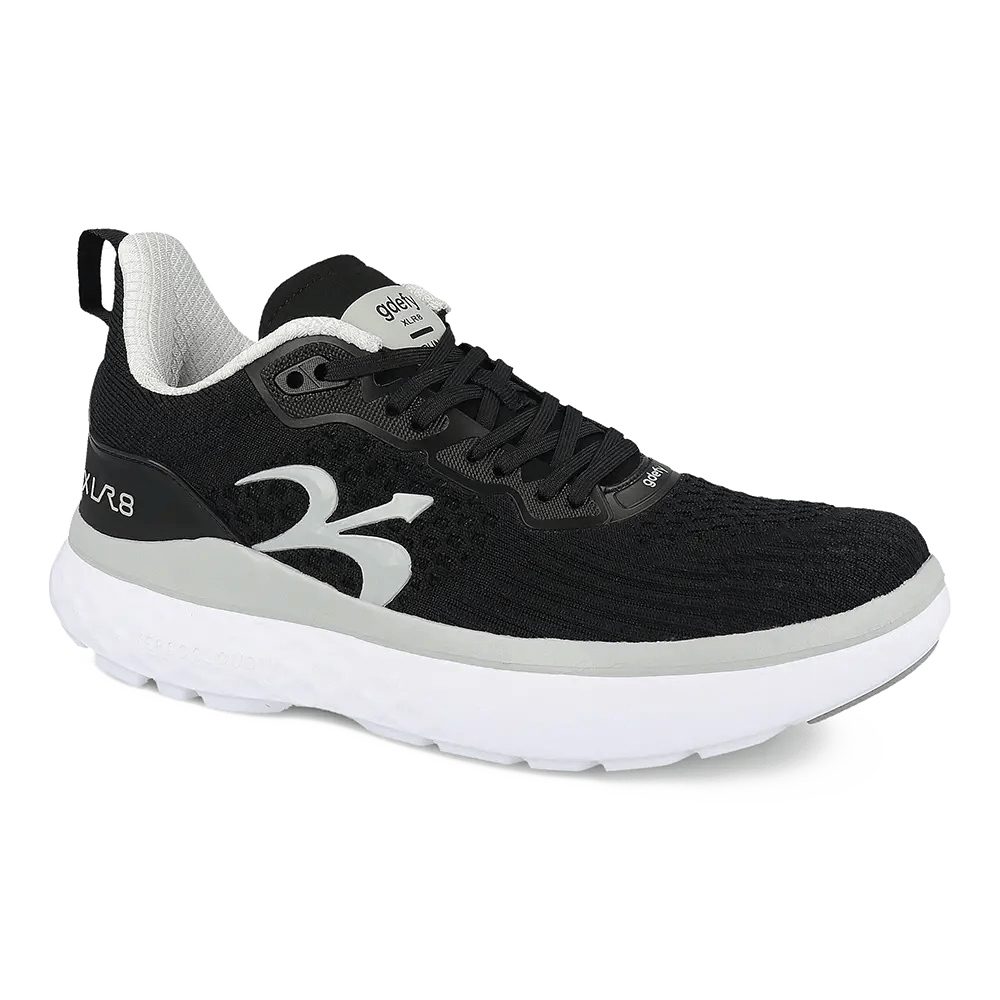
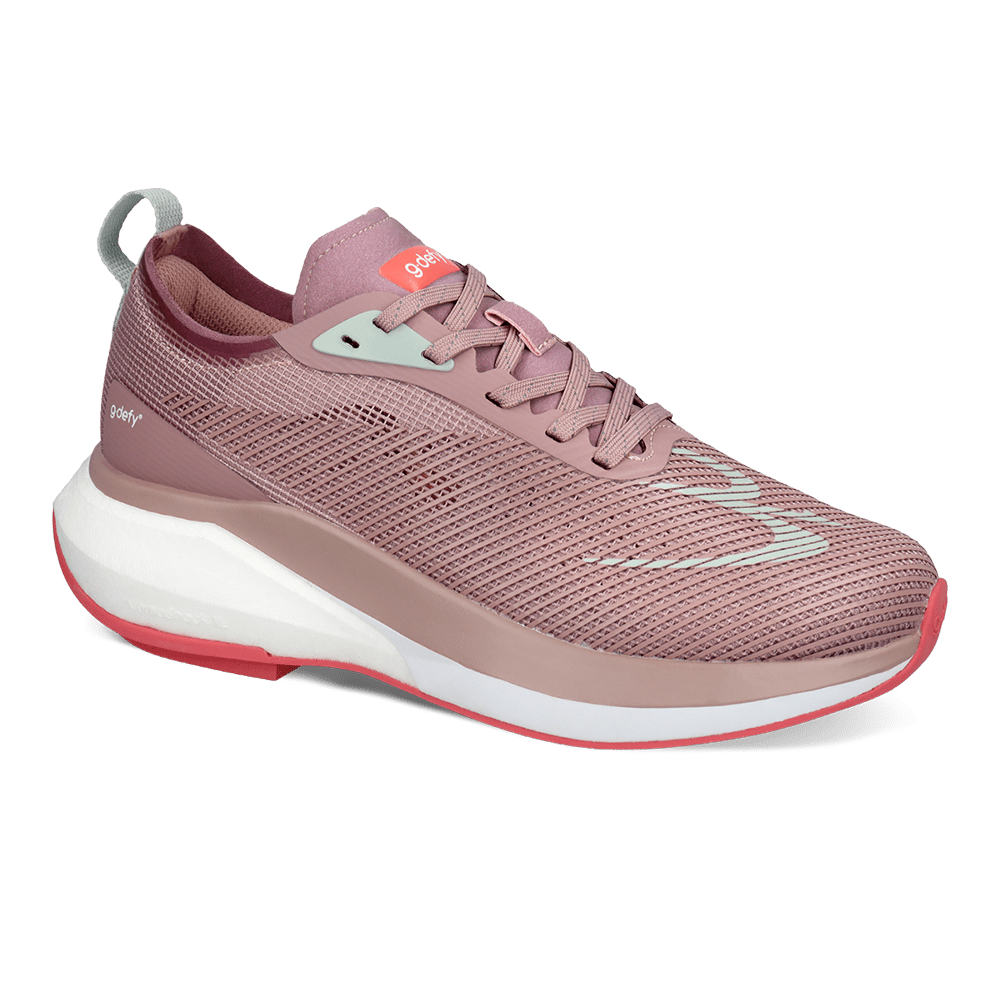
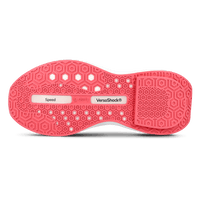
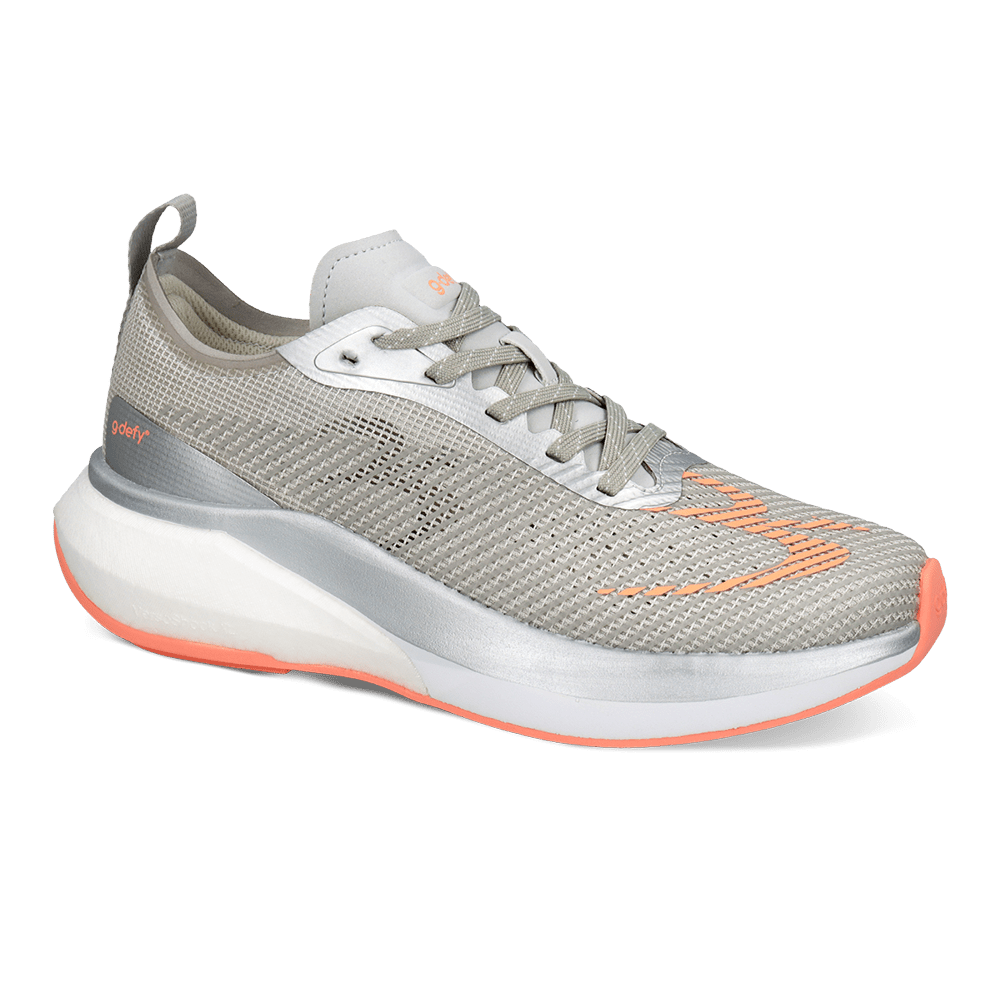
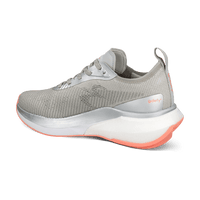
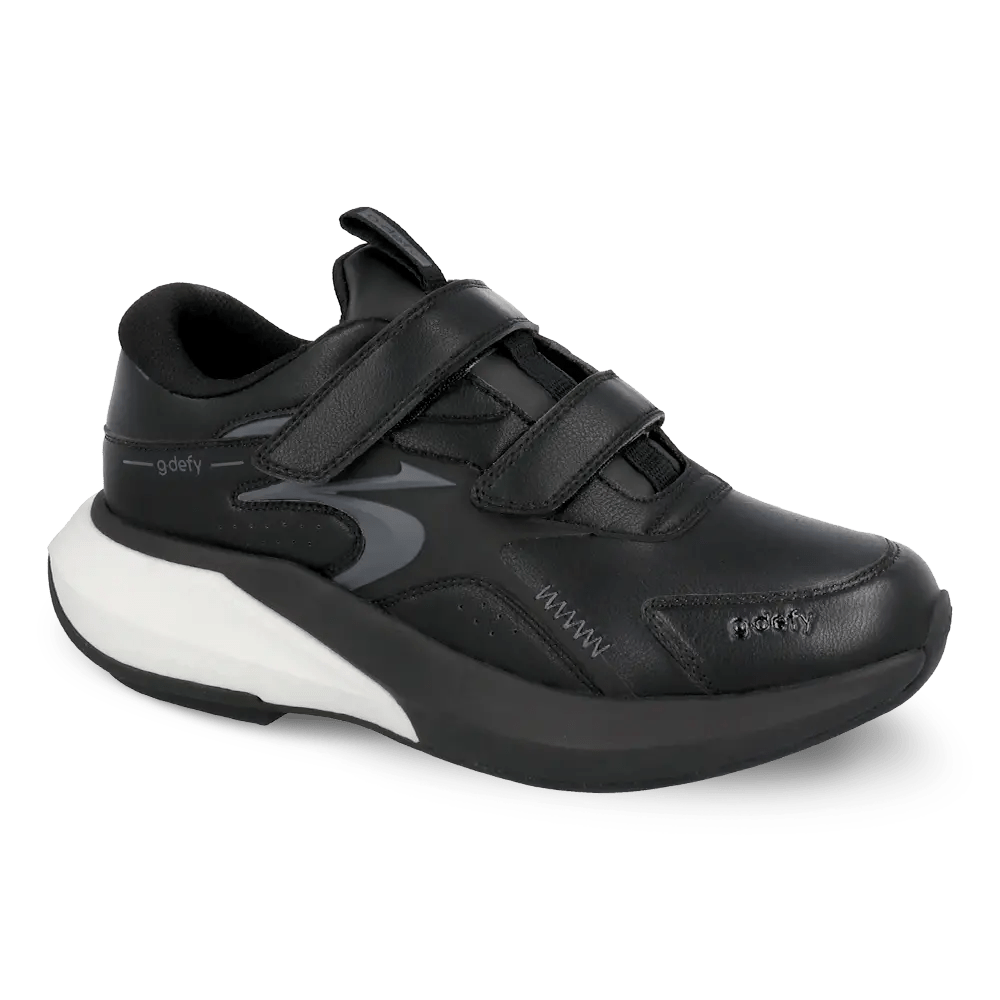
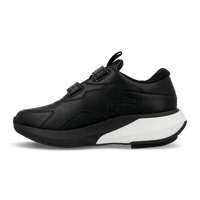
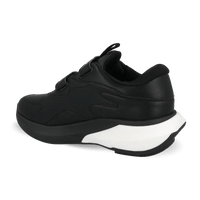
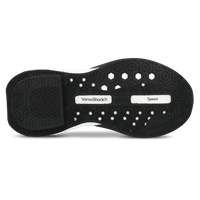
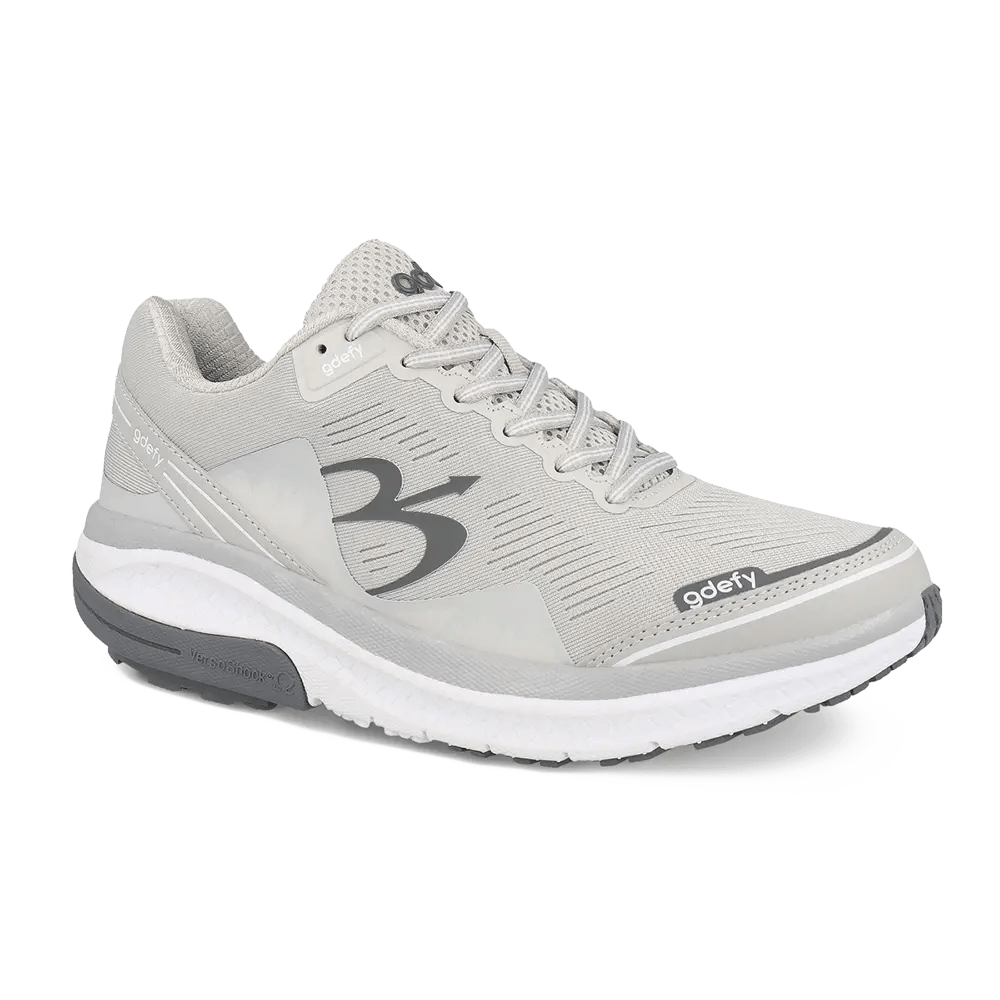
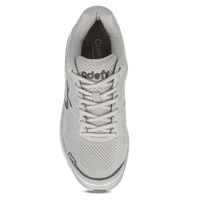
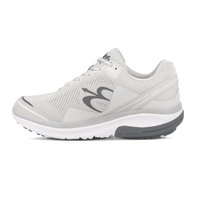
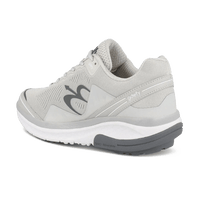
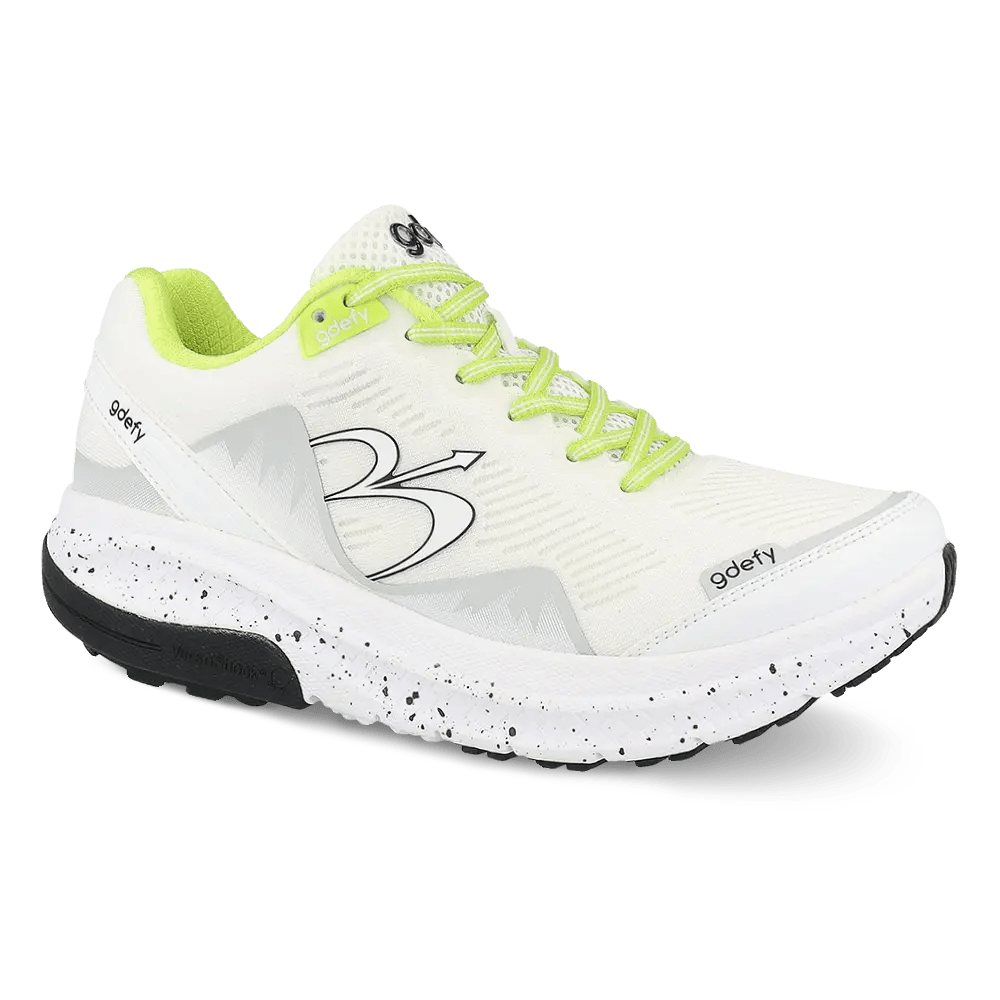
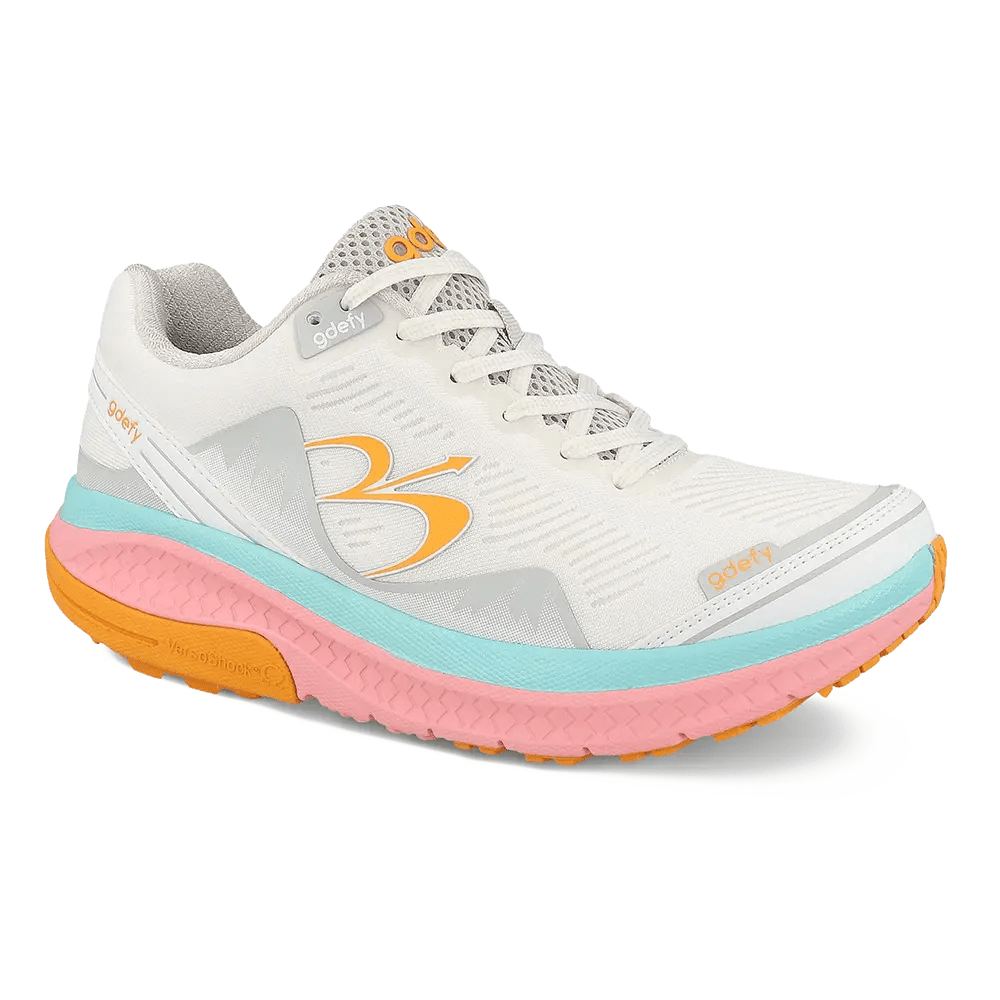
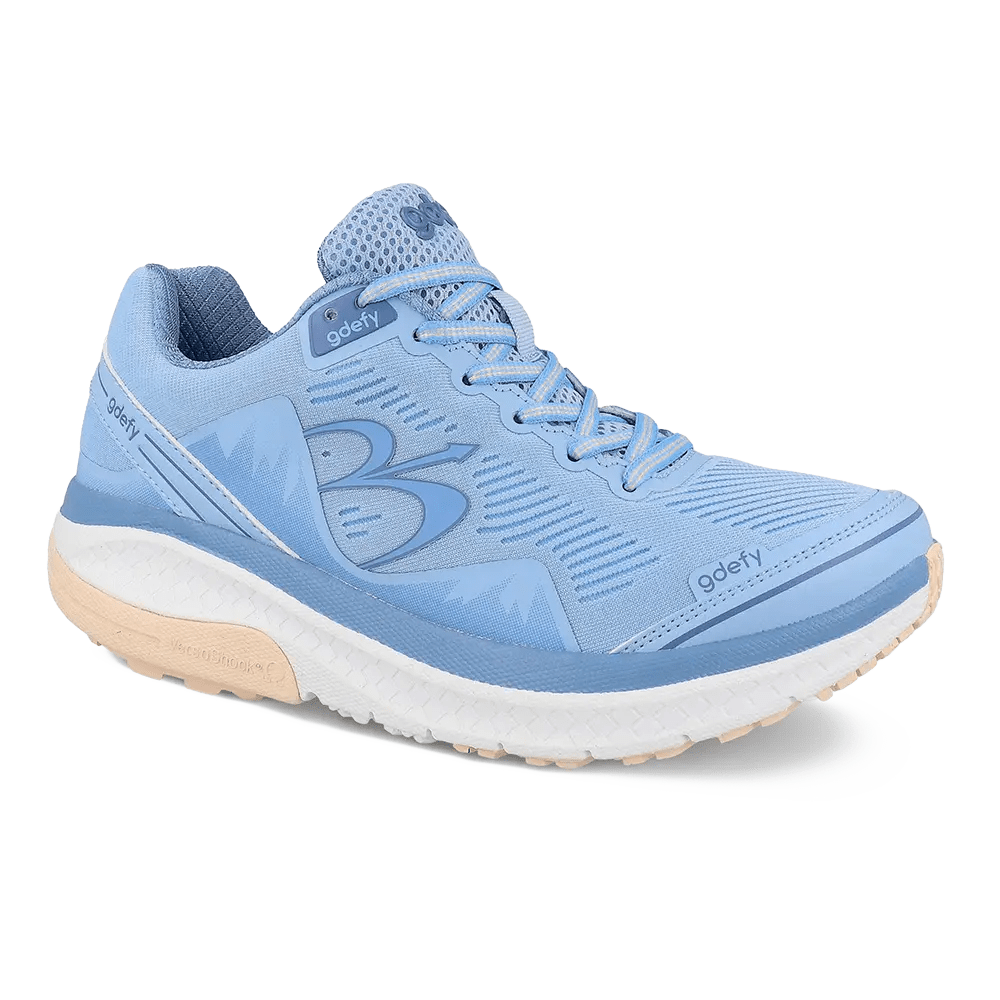
G-Defy shoes are engineered to provide comfort, support, and shock absorption during daily movement. Featuring VersoShock® technology, they are designed to absorb impact and return energy with each step. A built-in stabilizer supports the foot during movement, while the front rolling design promotes a smooth walking experience. Each pair includes two removable orthotics to help customize comfort and support. G-Defy shoes help reduce pain from walking, running, and prolonged standing.
Three of those pillars map straight onto what a commute asks for. The shock absorption handles the concrete and the stairs. The stabilizer keeps the midfoot from folding, which is what gives you a steadier platform for the escalator step-on and the train sway. The energy return is aimed at the walking bursts — the stretch where you are moving quickly because the train is in three minutes. The full four-pillar breakdown is in how VersoShock® technology works. The dual orthotic system matters more here than elsewhere, too: a commute puts you into static standing, moving standing and walking inside one trip, and being able to swap the insert to suit your arch is one more way to tune the fit.
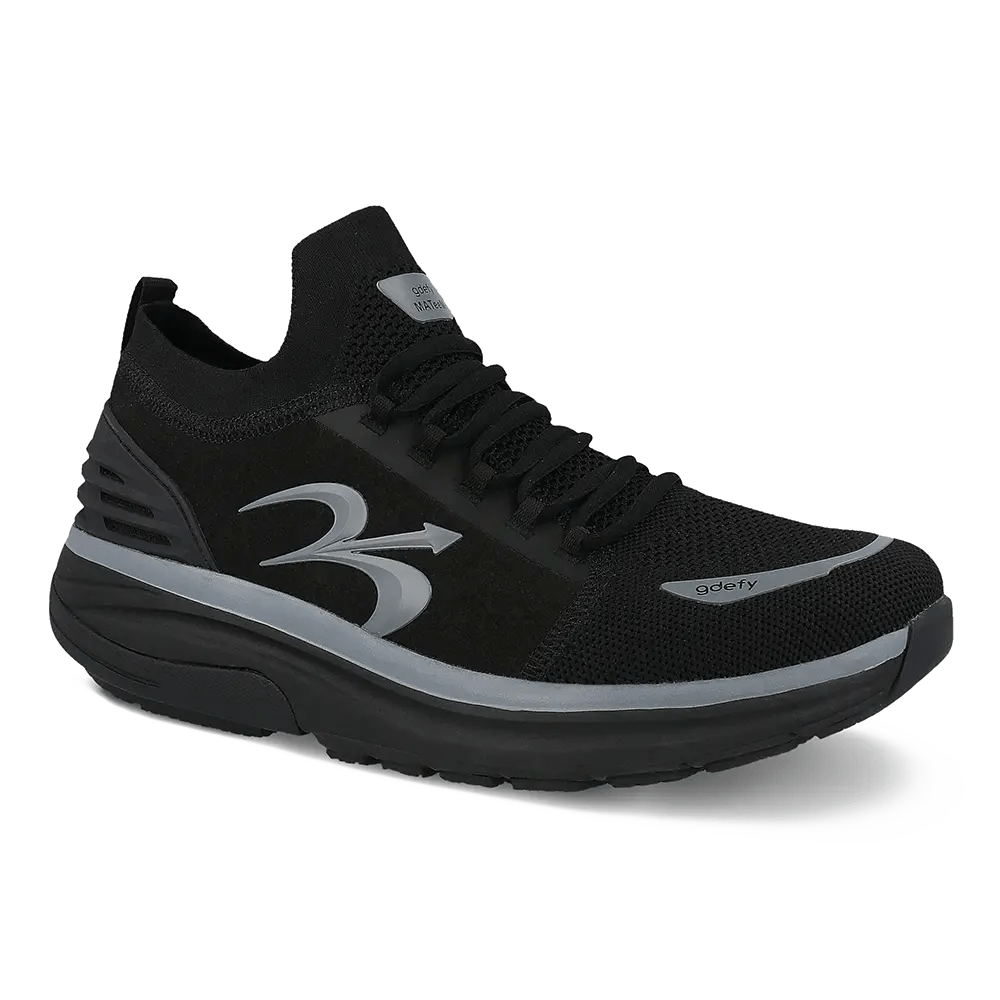
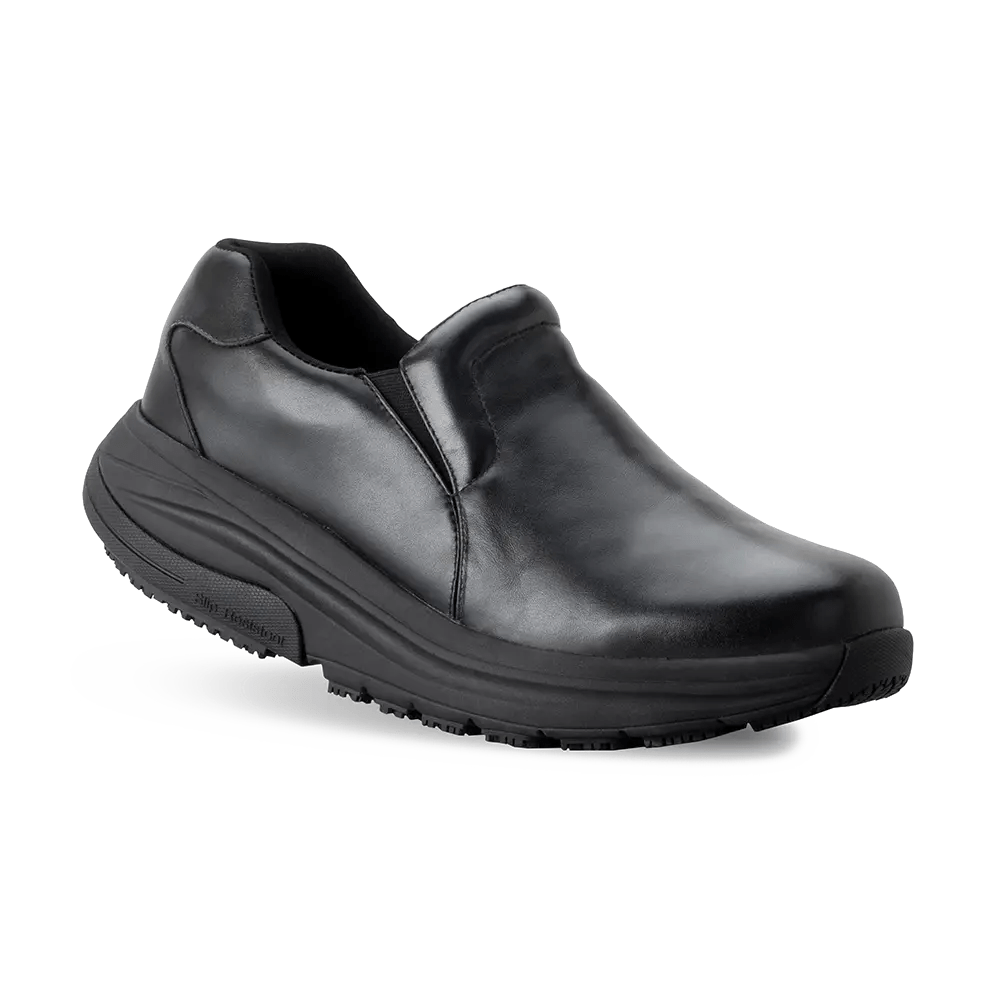
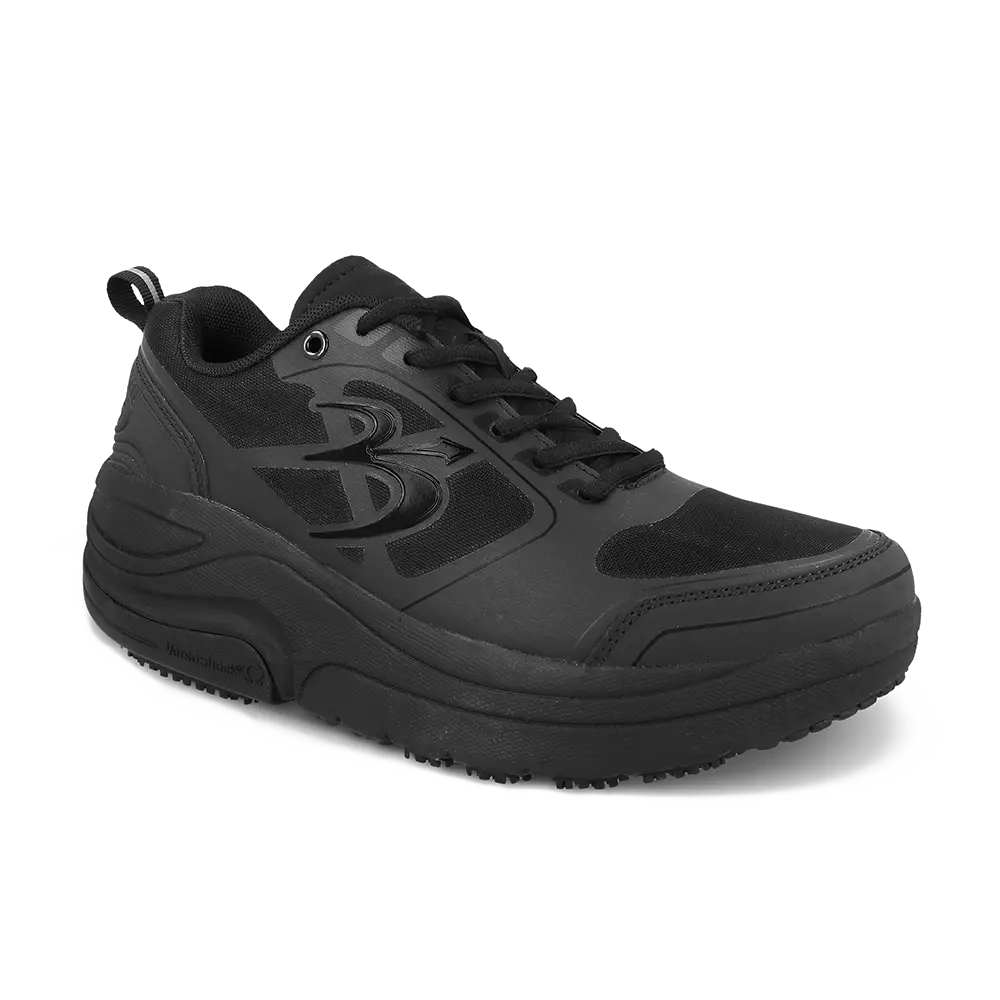
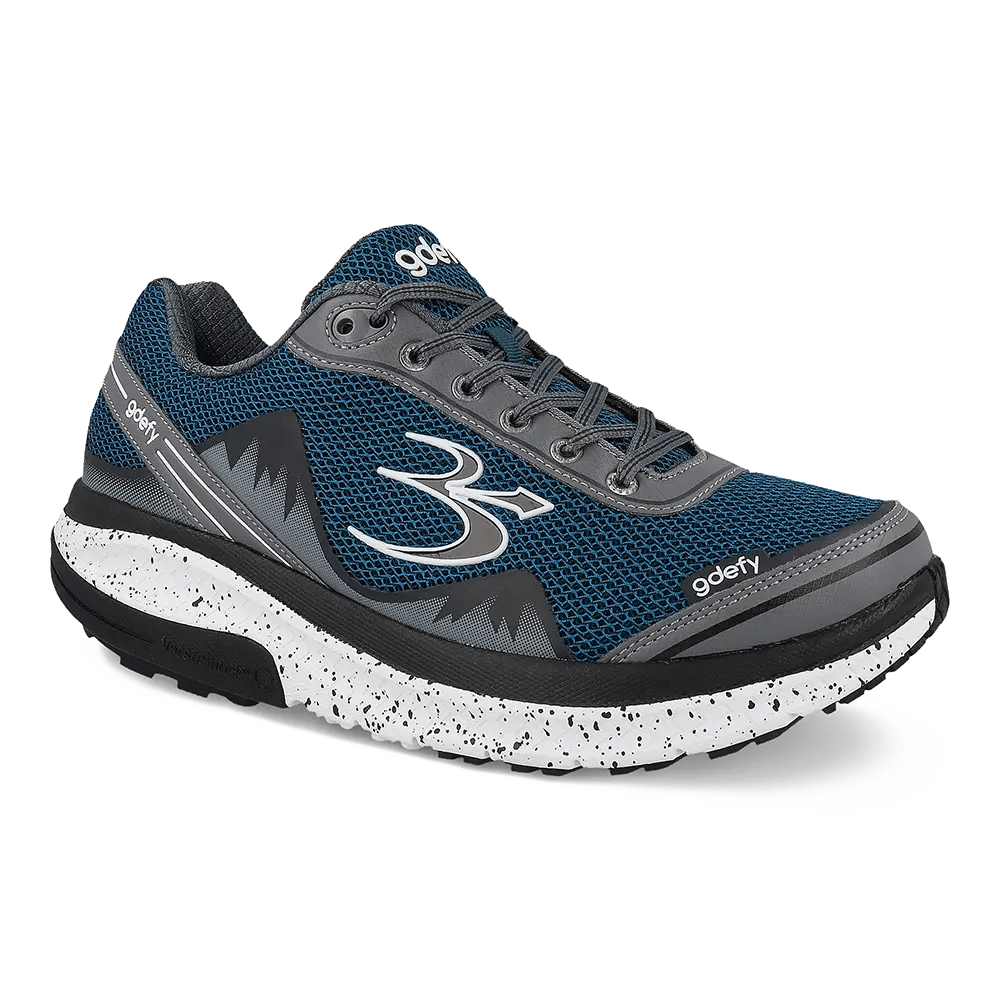
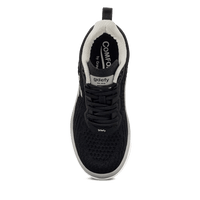
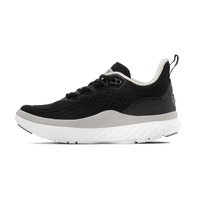
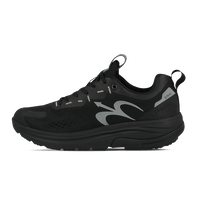
For a starting point, the Men's Mighty Walk and Women's Mighty Walk are built around all-day walking and standing, which is most of what a commute is. The Ion is the lighter, more casual option if your trip ends somewhere with a dress code. Browse the full range for men and women — every pair comes with a 60-day risk-free trial plus free shipping and exchanges, which is genuinely useful for a shoe you are testing against one specific daily route.
How to Make the Commute Easier on Your Feet
Five things that cost nothing and change how the trip feels.
- Stand with your feet apart and staggered on transit. One foot slightly ahead of the other, roughly hip width apart, turns a narrow, tippy base into a wide one — and handles forward-and-back braking far better than standing with your feet together.
- Face sideways on a train, forwards on a bus. Trains mostly accelerate and brake along their length, so standing side-on lets a staggered stance absorb it. Buses add lateral movement from turns and lane changes, where facing forward gives you more to work with.
- Take the escalator transitions deliberately. Look at where the tread flattens, put a full foot down rather than a toe, and step off rather than drifting off. A two-second habit that removes the most awkward moment of the trip.
- Shift your weight during the standing stretches. On a platform or a long walkway, move your weight foot to foot every minute or so. Static standing concentrates pressure in the same few spots; moving it around is the entire point.
- Change shoes when you arrive. If your workplace allows it, a second pair at the desk means the trip and the day are done in different shoes — the simplest version of a shoe rotation.
Practical Tips for Commuter Days
Watch the outsole, not the upper. Commuting shoes look fine long after they have stopped performing, because the wear happens underneath. If the tread has gone smooth or the midsole no longer springs back when you press it, the shoe has stopped doing the two jobs the commute needs most — see how shoes wear out.
Count the trip as steps. Two walking legs, station stairs and platform pacing add up to a real share of a daily step count, which means the shoe you commute in is doing more work than the one you wear at the destination, not less.
Do not buy for the last ten metres. The temptation is to choose the shoe that looks right walking into the building. If the other forty minutes are stairs, platforms and standing, that is the part to buy for — and carry or store the other pair. Our complete guide to everyday foot health habits covers the rest of the routine.
What People Tell Us About Commuting
The three sketches below are composite illustrations drawn from themes that come up repeatedly in customer feedback about long standing and walking days — not quotes from individual people. They show the pattern, not a promised result. Individual results vary.
The two-legged commute. A twelve-minute walk at each end with a train in the middle sounds like nothing, until you notice it is nearly half an hour on your feet before the working day starts. The common realisation is that the shoes picked for the office were never the problem — they were being asked to do a job they were not chosen for. Individual results vary.
The stander. People who never get a seat describe the ride differently from people who do: not painful so much as tiring in a way the distance does not explain. That tracks with what standing on a moving floor actually involves, and the feedback tends to centre on a wider, steadier base underfoot making the ride feel less like work. Individual results vary.
The station-stairs regular. For anyone whose route includes a long flight twice a day, the descent is the part that gets mentioned — which lines up with what we wrote about going down stairs. Cushioning under the forefoot is the feature people notice most on that stretch. Individual results vary.
More comfort stories from everyday routes are collected in finding the right fit.
Frequently Asked Questions
Why does standing on the train make my back ache more than walking for the same time?
Walking moves your weight around continuously, so muscles take turns working and resting. Standing on a moving vehicle does the opposite: you hold roughly one posture while making constant small corrections against acceleration, braking and sway. Footwear designed for comfort, support and shock absorption may improve overall comfort during walking and prolonged standing, though it is not a medical solution.
Are escalators harder on your feet than stairs?
Not in effort — the escalator does the climbing. The demand sits in the two transitions at either end, where the surface under one foot is moving at a different speed from the surface under the other. Stairs spread a steadier, repeated load across every step instead.
What should I look for in shoes for commuting?
Cushioning that absorbs impact on concrete and stairs, a stable and reasonably wide base for balance on moving surfaces, an outsole with real tread depth for grooved and polished floors, a smooth heel-to-toe transition for the short walking bursts, and a fit that still works at the end of the day as well as the start.
Should I commute in different shoes from the ones I wear at work?
If your workplace allows it, many people find it helps. The commute is usually the most demanding standing-and-walking portion of the day, so buying for the trip and changing at the destination lets each pair do the job it suits — and it spreads wear across two pairs.
Do slip-on shoes work for a transit commute?
They are convenient, but a shoe genuinely secured to your foot gives you more to balance with when a train jolts or you step onto a moving tread. If you want the convenience, look for a slip-on with a snug heel rather than a loose one.
How do I know when my commuting shoes need replacing?
Check the parts you cannot see from above. If the tread has worn smooth, the midsole no longer springs back under thumb pressure, or the shoe leans when set on a flat table, it has lost the grip and cushioning the commute relies on most.
The Bottom Line
A commute is not a short walk with some waiting attached. It is a sequence of transitions, static standing, standing on surfaces that move you, and short bursts of hurried walking — packed into a small window and repeated twice a day, five days a week. That combination asks for grip, stability and cushioning far more than the destination does.
While footwear is not a medical solution, choosing shoes designed for comfort, support, and shock absorption can make a meaningful difference in how you feel throughout the day — and the commute is where that choice does the most work. For persistent discomfort, consult your healthcare provider.
Buy for the trip, not the destination
G-Defy shoes are designed for comfort, support and shock absorption across long walking and standing days. Every pair comes with a 60-day risk-free trial, free shipping and free exchanges — enough time to test them against your actual route.
Shop Men's Shop Women's