
August 08, 2026
Can Flat Feet Contribute to Back Pain? What Footwear Has to Do With It
By Gdefy

Summary
Many people notice that a long day on their feet ends the same way: tired arches, a heavy feeling in the legs, and a lower back that is ready to sit down. If you have flat feet — or arches that have flattened over the years — you may have wondered whether the two are connected. While footwear is not a medical solution, the way your feet meet the ground does shape how you stand, walk, and carry yourself through a long day.
This guide looks at what flat feet actually means, how the foot connects to the rest of the body during movement, and what to look for in shoes designed for comfort, support, and shock absorption. It is educational, not medical advice. For persistent back pain, talk with your healthcare provider.
What “Flat Feet” Actually Means
“Flat feet” is everyday language for a low arch — the inside curve of the foot sits closer to the ground than it does on a higher-arched foot. Some people have had low arches their entire lives. For others, the arch settles gradually with age, body weight changes, years of standing on hard floors, or long stretches in unsupportive shoes.
A low arch is not a flaw. Plenty of people walk many miles a day on flat feet with no complaints at all. What tends to matter more is the combination: a lower arch, a long day, a hard surface, and footwear that offers very little structure underneath.
There is also a middle group worth mentioning — feet that look reasonably arched when you are sitting, but flatten noticeably once you stand up and load them. If your shoes feel fine in the morning and much less fine by mid-afternoon, that pattern is common.
How Your Arch Connects to the Rest of Your Body
Your feet are the only part of you touching the ground, so they set the starting position for everything above them. Movement specialists often describe this as a chain: the foot influences the lower leg, the lower leg influences the knee, the knee influences the hip, and the hip influences the lower back.
The Chain Starts at the Ground
When an arch flattens under load, the foot tends to roll slightly inward — a movement pattern usually called pronation. Some pronation is completely normal and helps your foot absorb impact. When it happens more than usual, or when it happens repeatedly across thousands of steps, the lower leg rotates inward a little more, and the pelvis and lower back adjust to keep you upright and moving forward.
None of that is dramatic in a single step. The point is repetition. A typical day of errands, work, and walking adds up to several thousand steps, and small differences repeat every single one of them.
Why Small Differences Add Up Over a Day
Think of it the way you would think about a car that is slightly out of balance. On a short trip, you barely notice. On a long highway drive, you feel it. Bodies are the same — the difference between a supported stride and an unsupported one usually shows up at hour six, not hour one.
This is also why so many people describe the same timeline: feet feel tired first, then the legs, then the lower back late in the day. If you want a deeper look at that end-of-day pattern, our guide to how standing all day affects your back covers the standing side of it, and what causes back pain when walking covers the walking side.
Why Long Days Make the Difference More Noticeable
A few everyday factors tend to amplify how a low arch feels:
- Hard, unforgiving surfaces. Concrete, tile, and warehouse floors return impact straight back up through the body. There is no give in them at all.
- Standing still rather than walking. Static standing keeps the same structures loaded continuously, without the relief cycle that walking provides.
- Worn-out shoes. Midsole foam compresses over months of use. A shoe that felt supportive a year ago may be offering far less structure today.
- Shoes with no midfoot structure. Very flexible, flat-soled footwear leaves the arch to do all of the work on its own.
- A sudden jump in activity. A vacation, a move, a new job on your feet — big changes in daily step count are often when people first notice it.
What to Look for in Shoes If You Have Flat Feet
Footwear will not change the shape of your foot, and no shoe should be described as a solution for a medical condition. What good footwear can do is give a lower arch more structure to work with and take some harshness out of each step. Here is what matters most.
1. Arch support that matches your foot, not someone else’s. Support that feels great to a high-arched friend can feel like too much or too little to you. The most useful shoes let you adjust that support level rather than locking you into one preset shape.
2. Structure through the midfoot. Pick up a shoe and try to twist it. If it wrings out like a towel, it is offering very little help through the middle of the foot. A firmer midfoot with a built-in stabilizer holds its shape as you move.
3. Cushioning and shock absorption. Impact from walking travels upward. Absorbing more of it at the ground means less of it repeating through your body, step after step, on hard surfaces.
4. A secure heel. If your heel slides even slightly, your foot works harder to stabilize itself all day. A firm heel counter and a proper lacing lockdown make more difference than most people expect.
5. The right width and a roomy toe area. Lower-arched feet are often a little wider under load. A shoe that is too narrow gets uncomfortable quickly, no matter how good the support underneath it is. Proper fit is doing more work here than most people give it credit for.
6. A midsole that has not been worn flat. Even the best-built shoe compresses eventually. If yours is well past its mileage, that is often the simplest change you can make.
For a broader walkthrough of matching shoes to your specific foot shape, see how to choose shoes for your foot type and flat feet vs high arches, which explains how the same shoe can be set up two different ways.

How G-Defy Approaches Support for Lower Arches
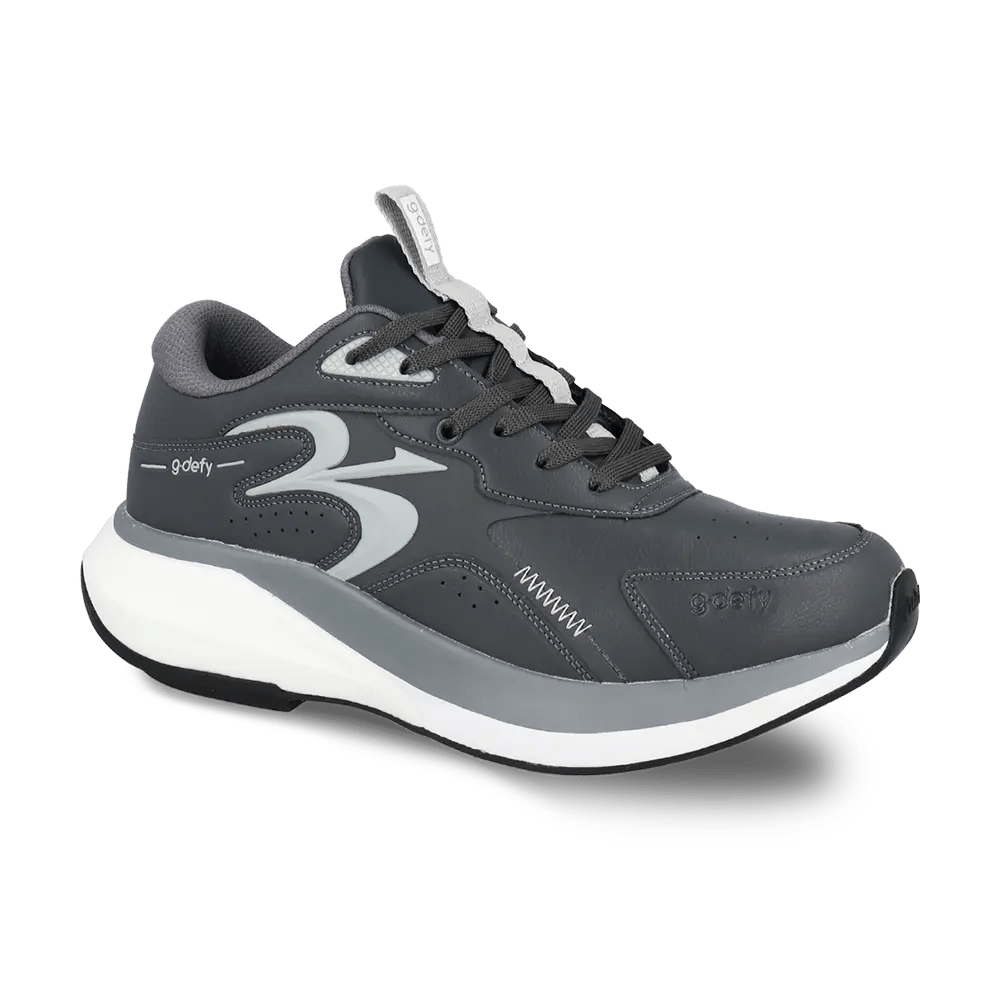
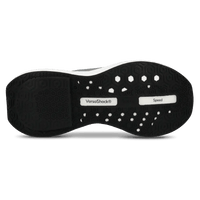
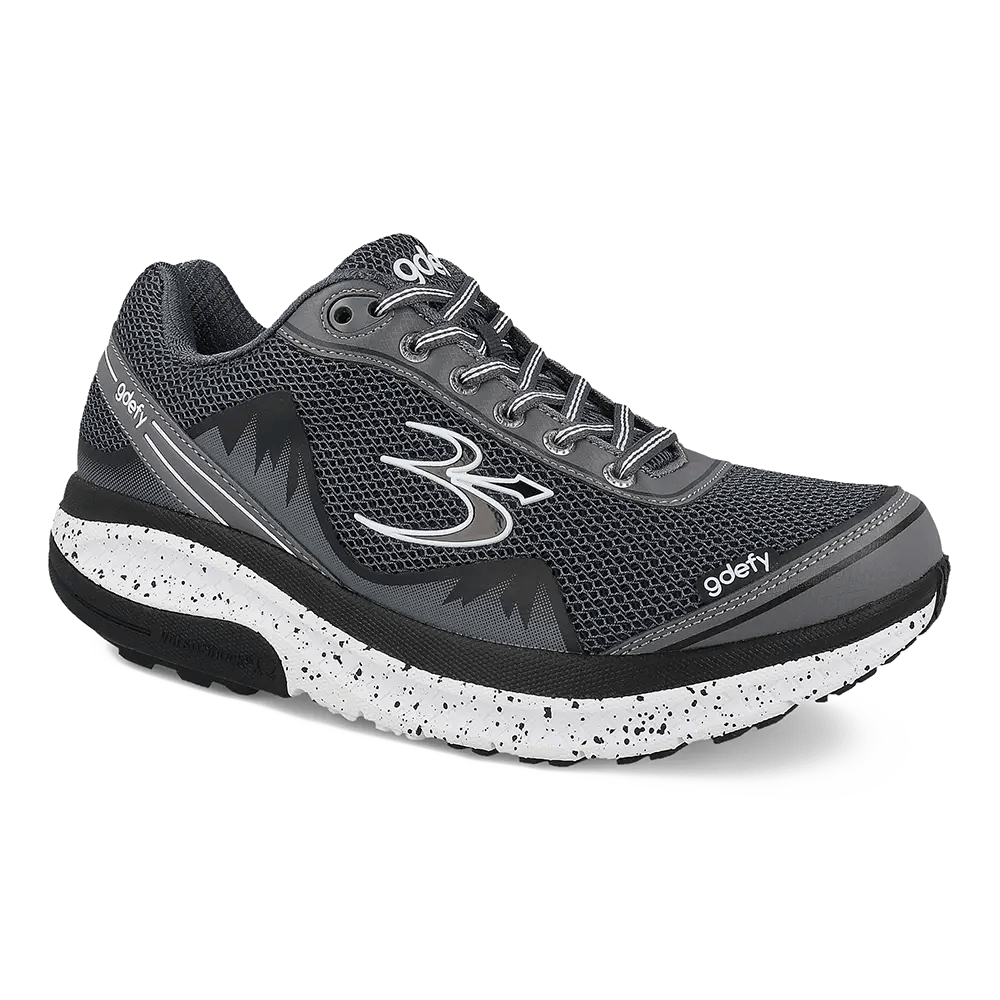
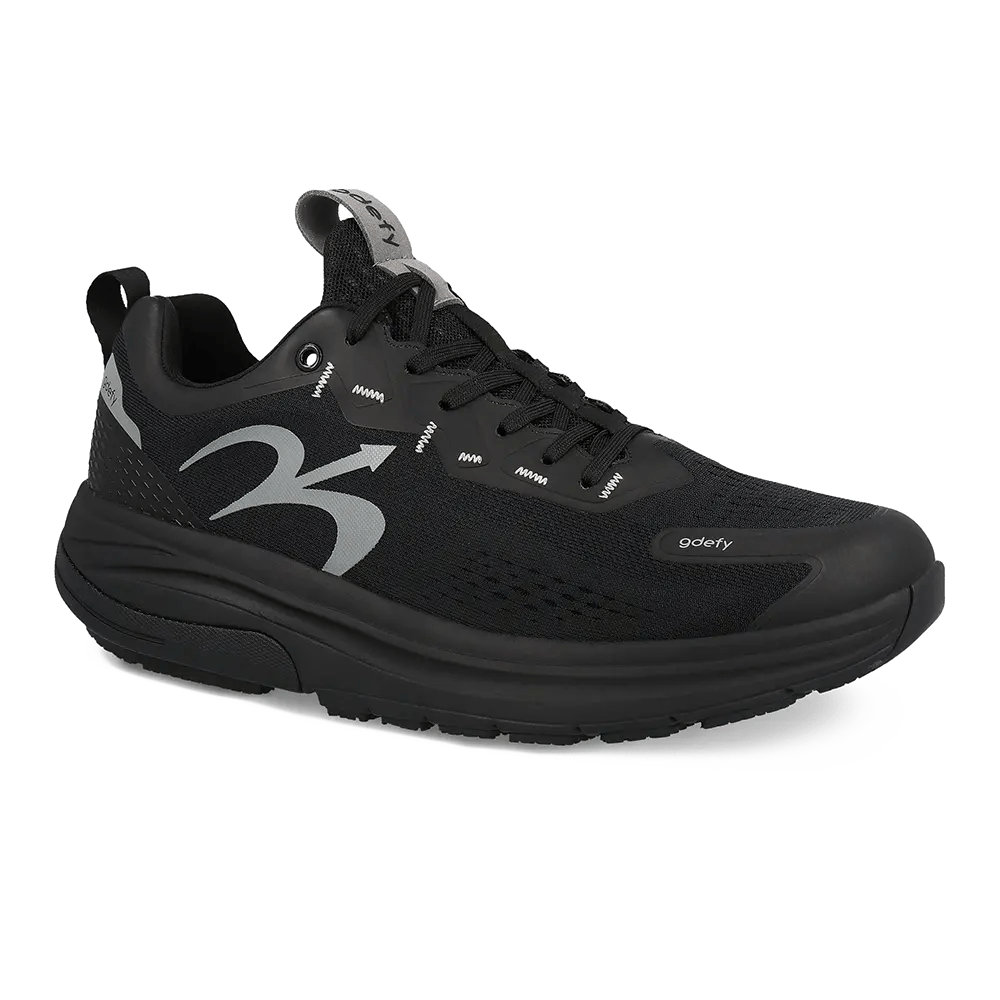
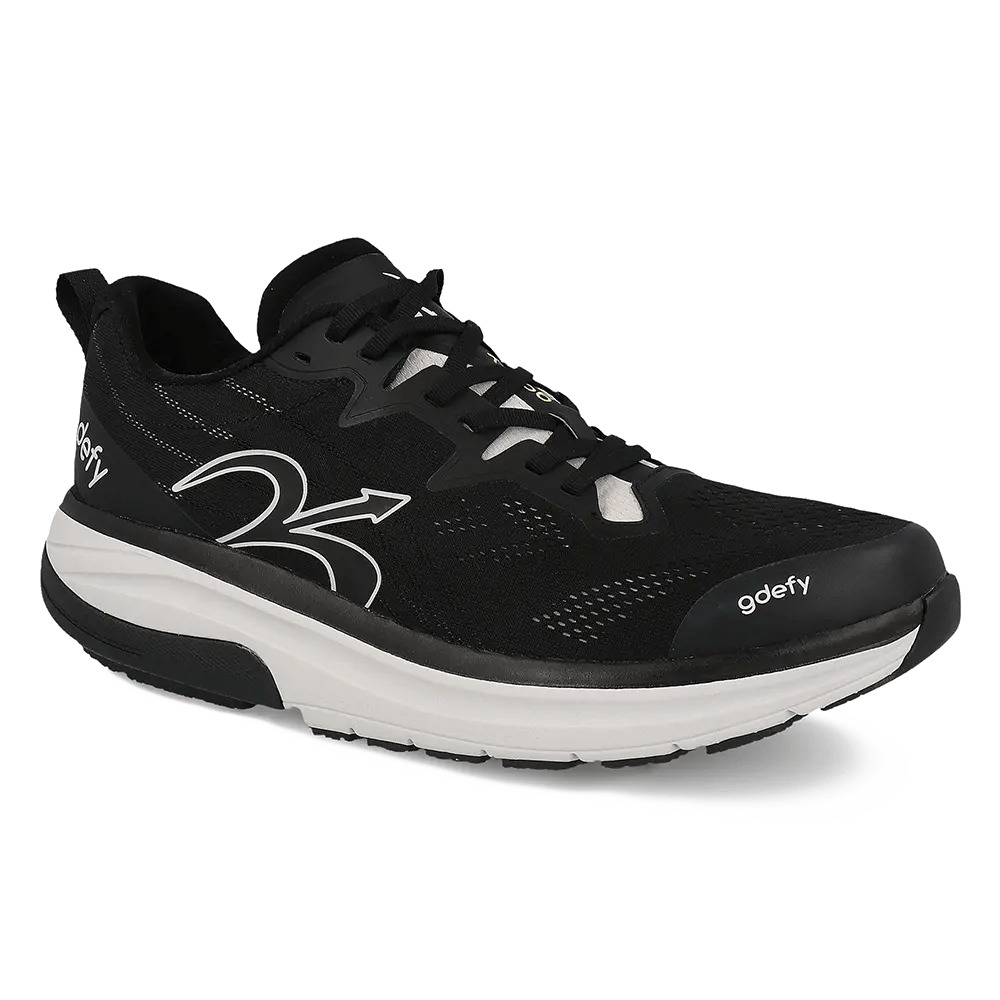
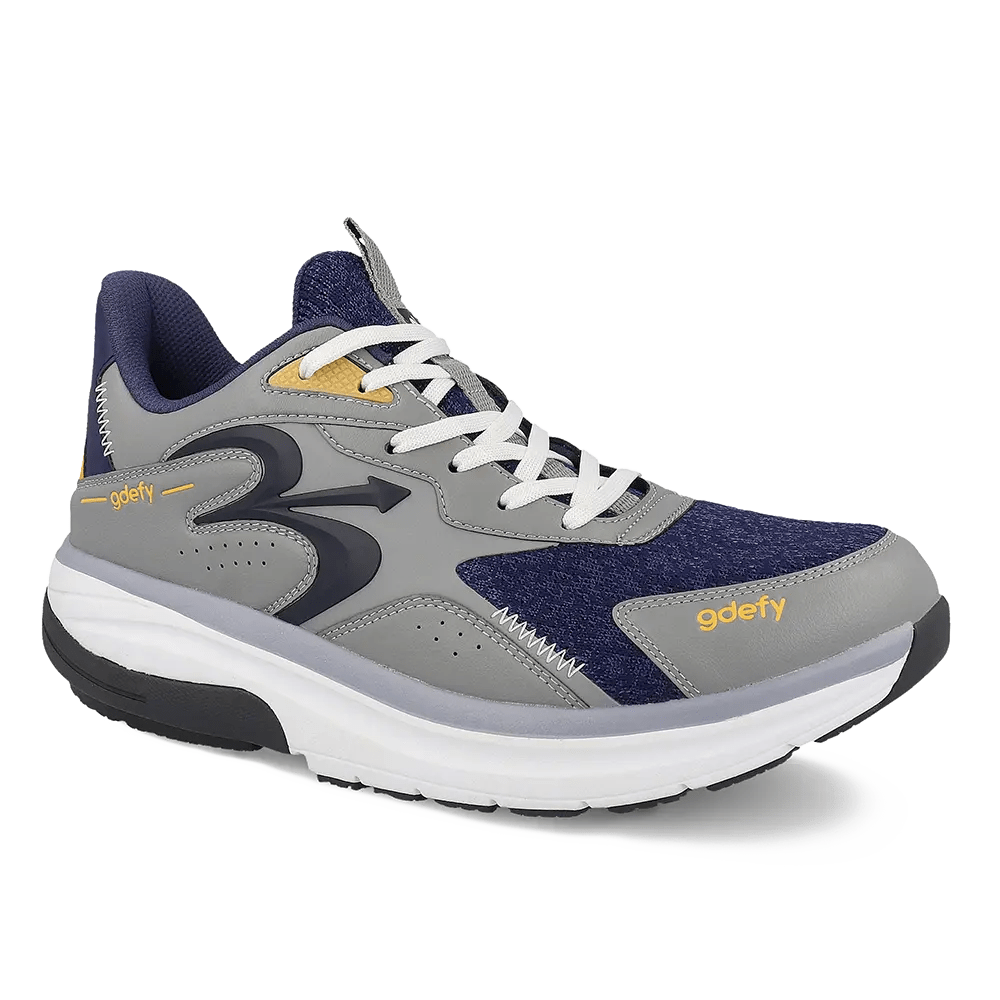
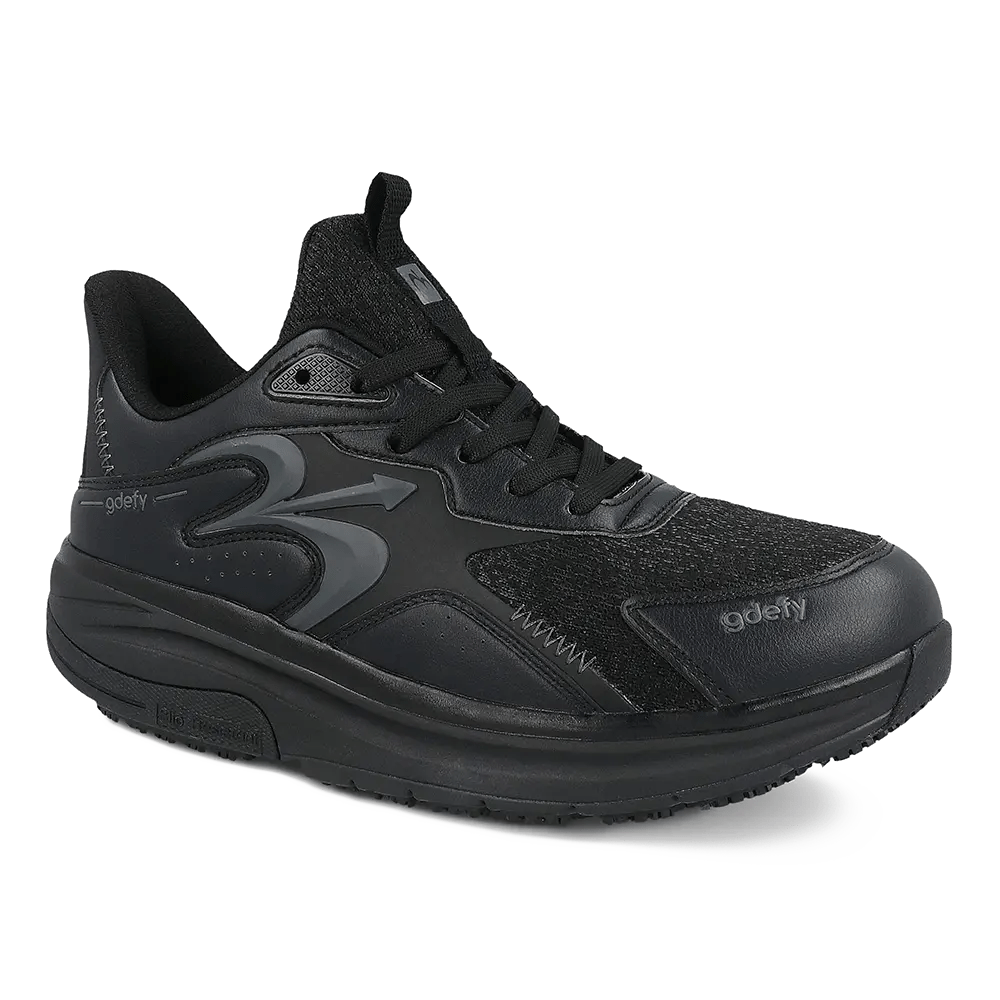
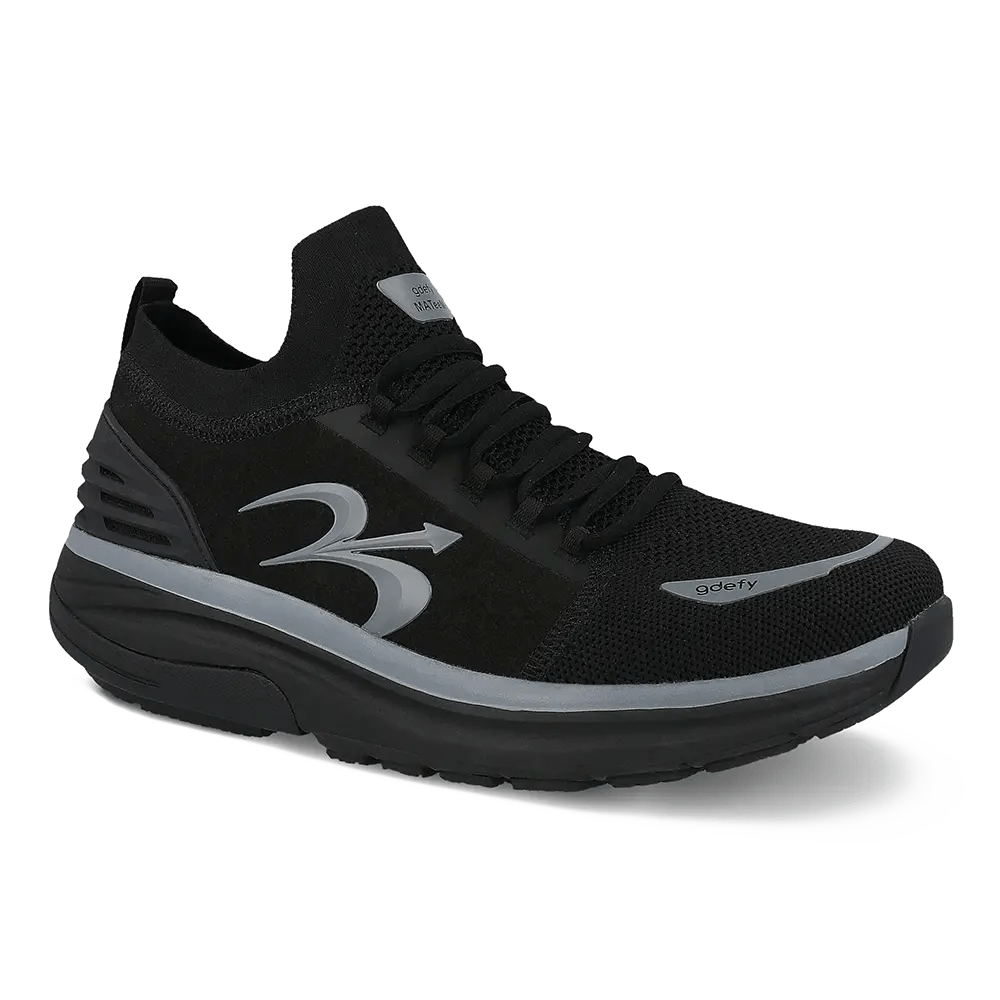
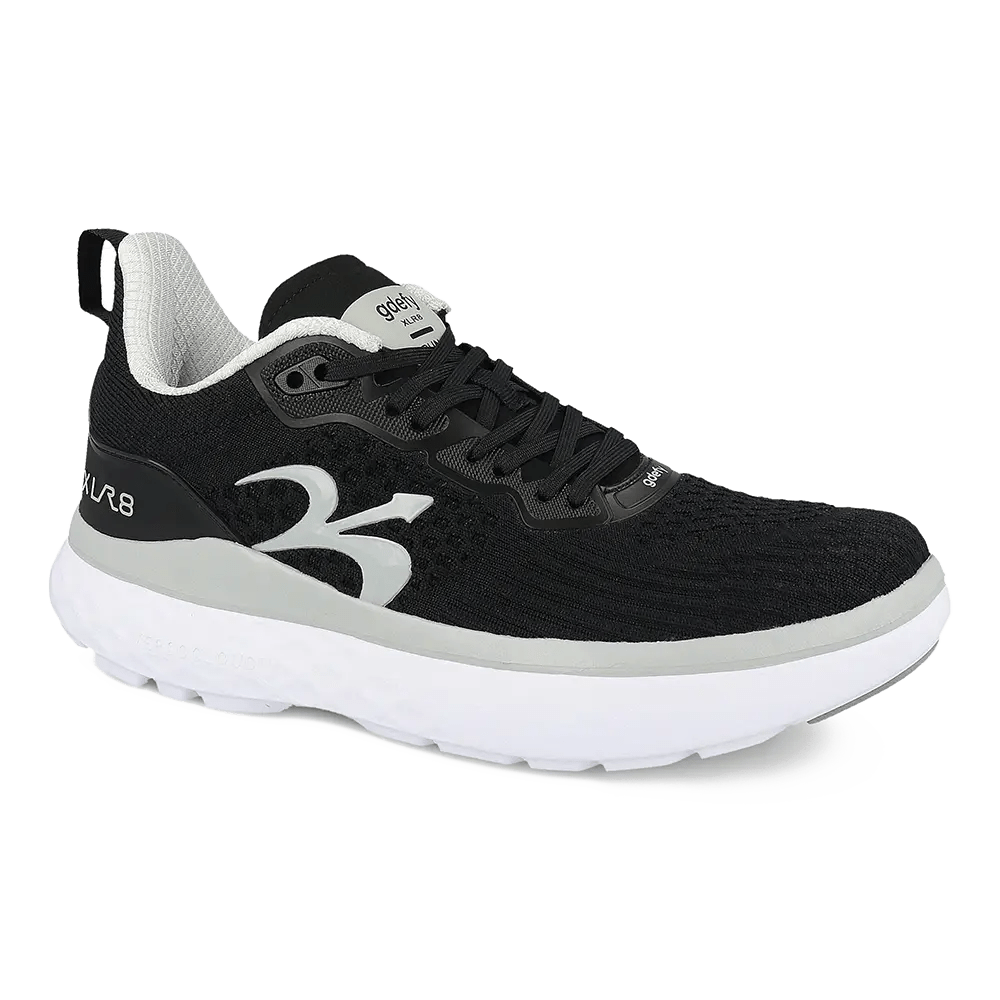
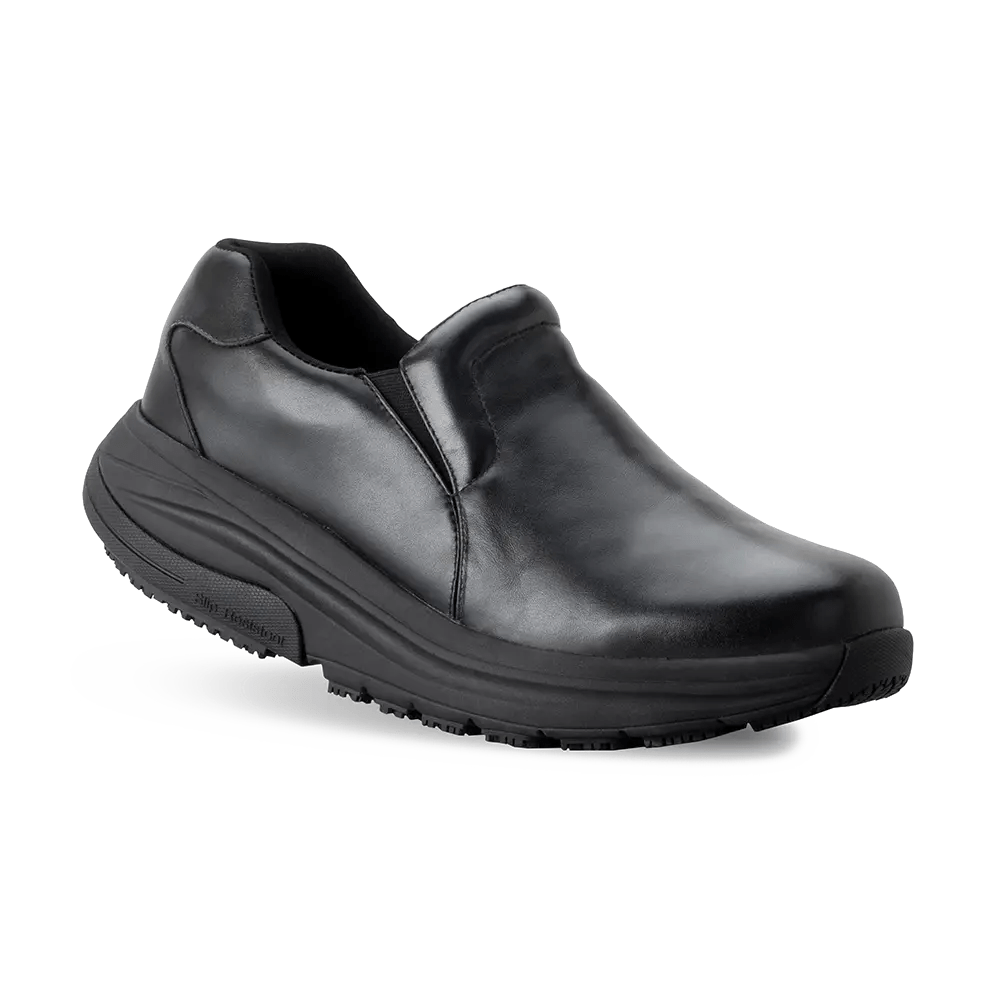
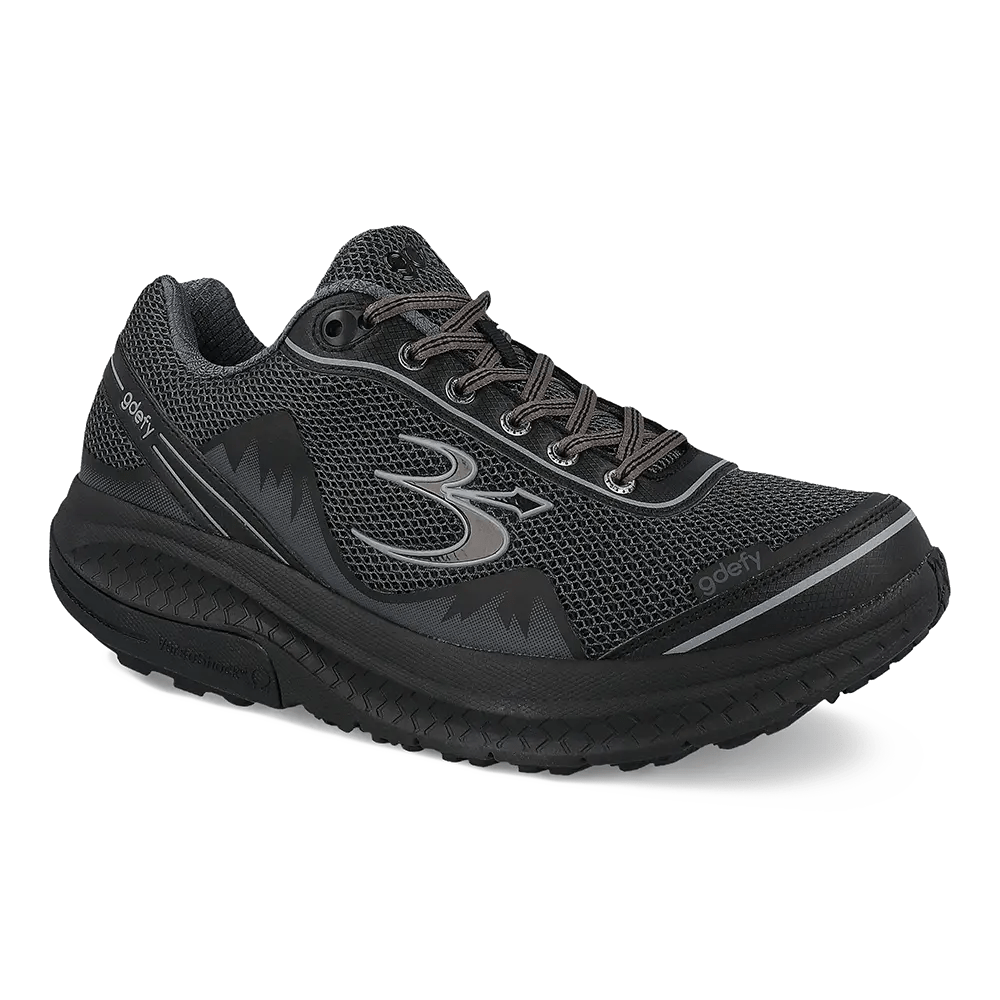
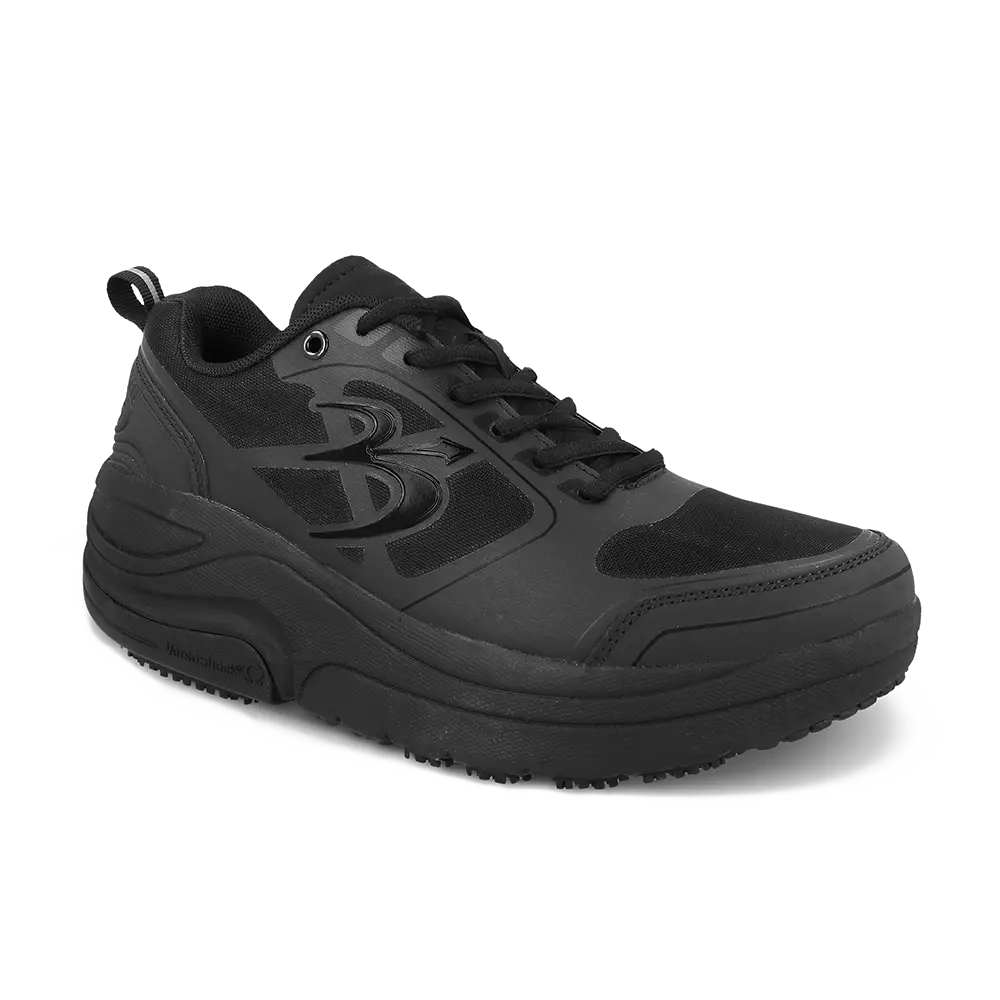
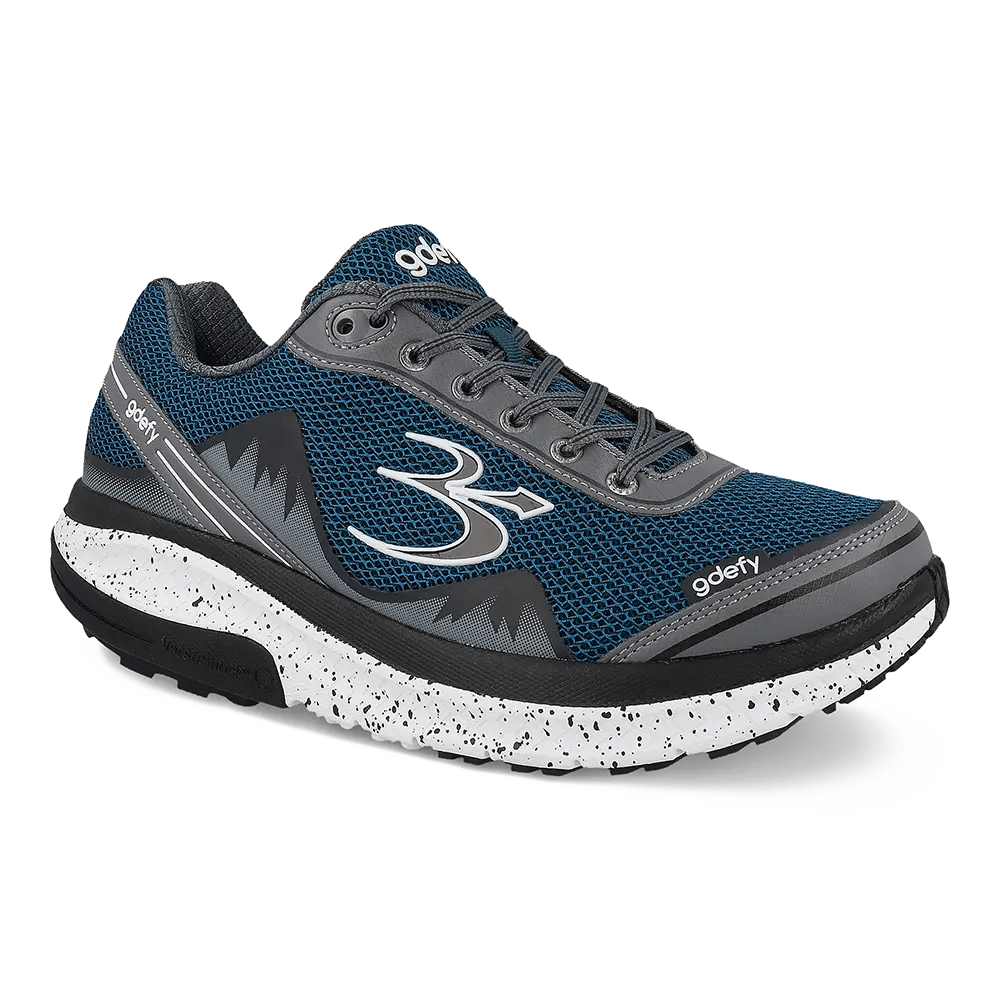
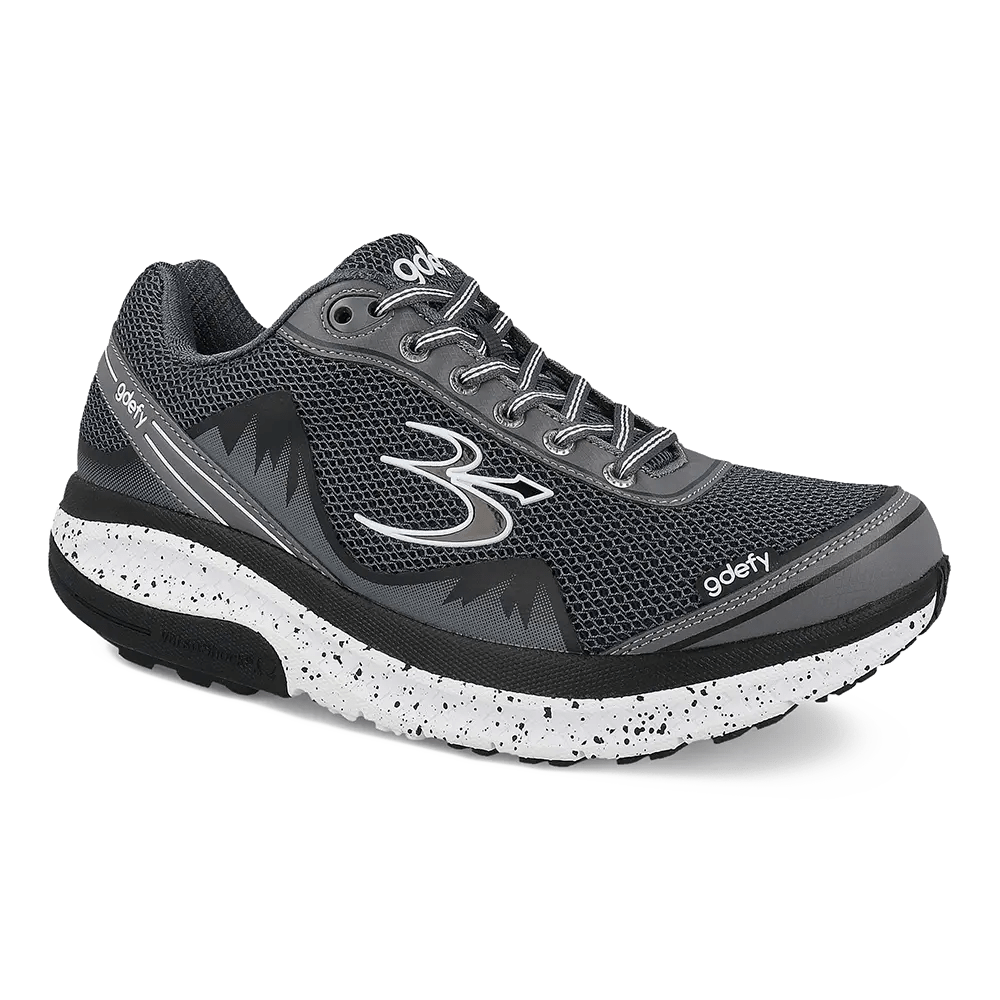
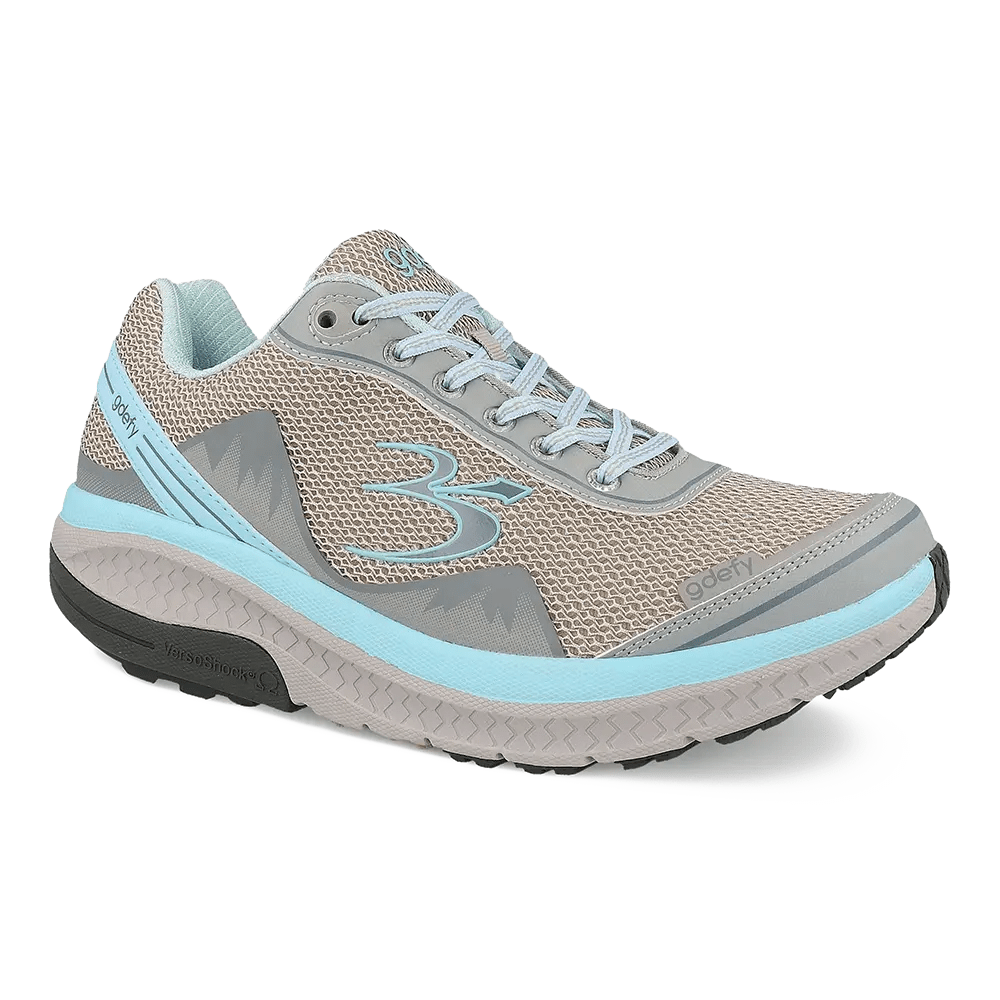
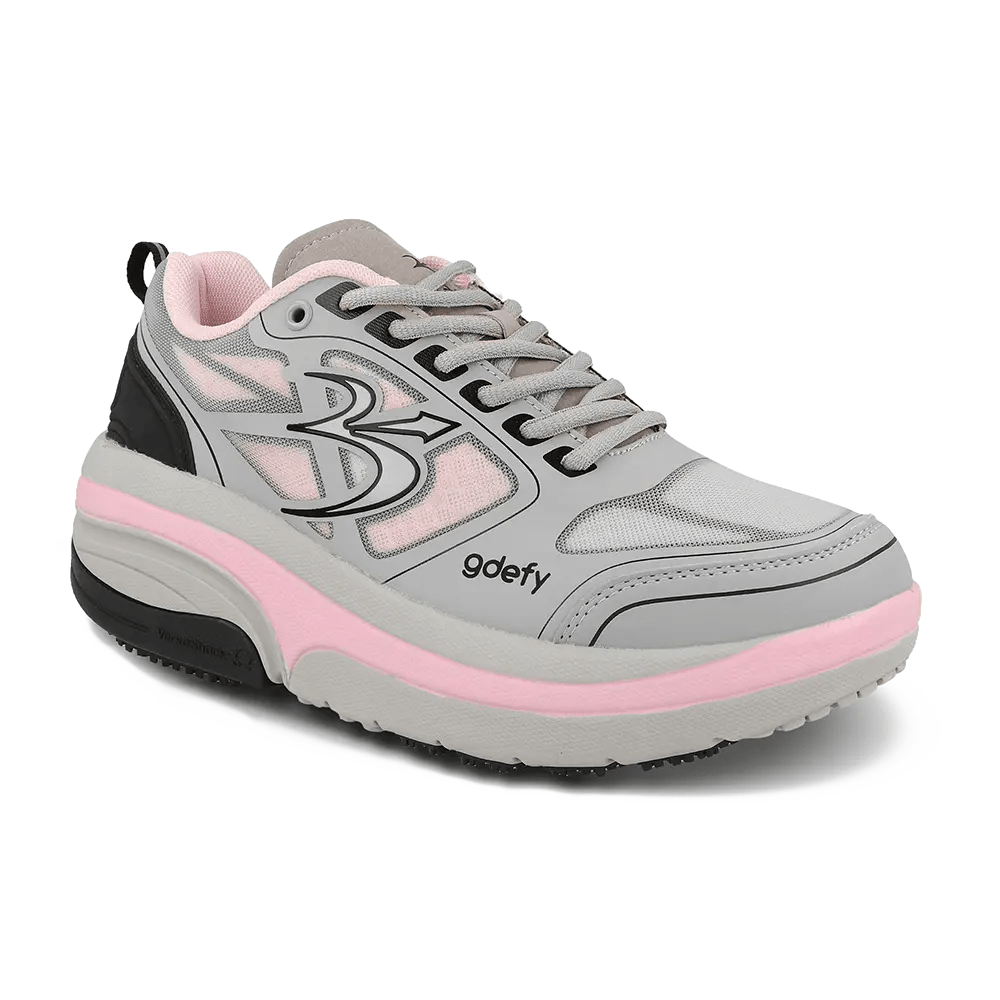
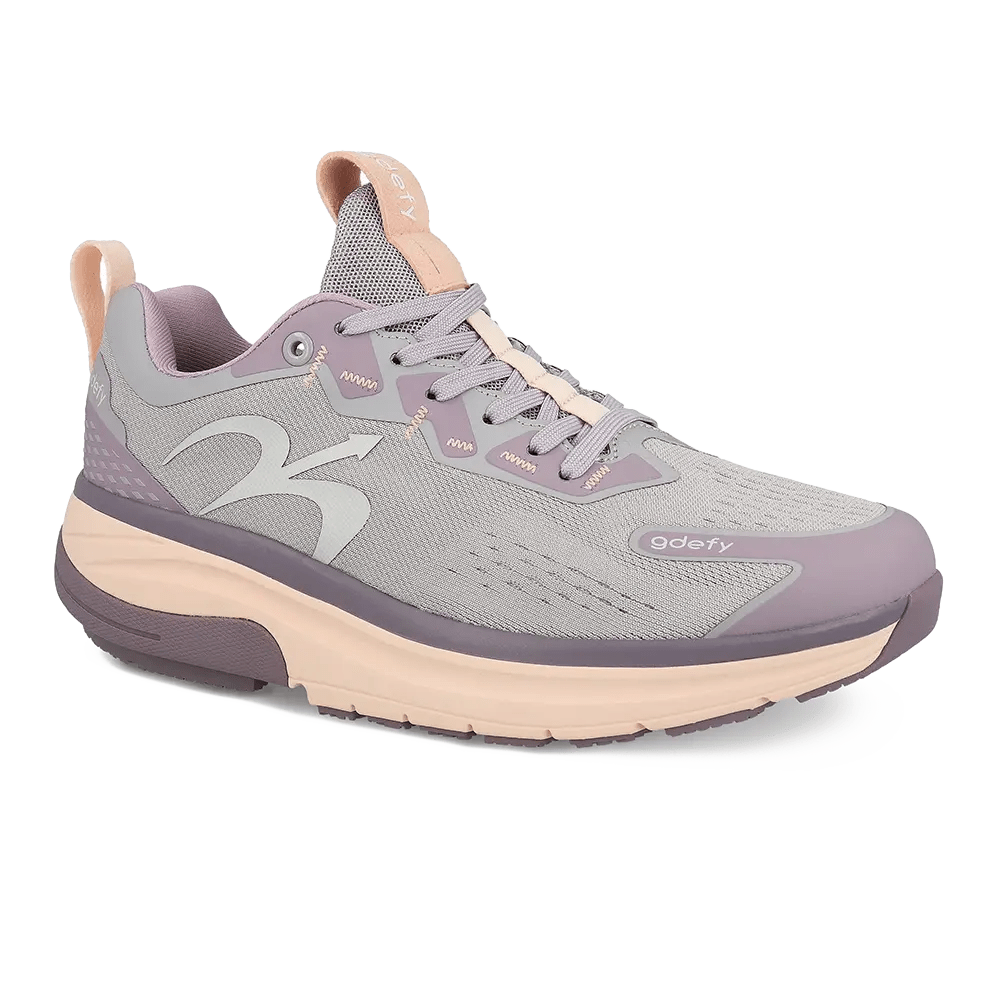
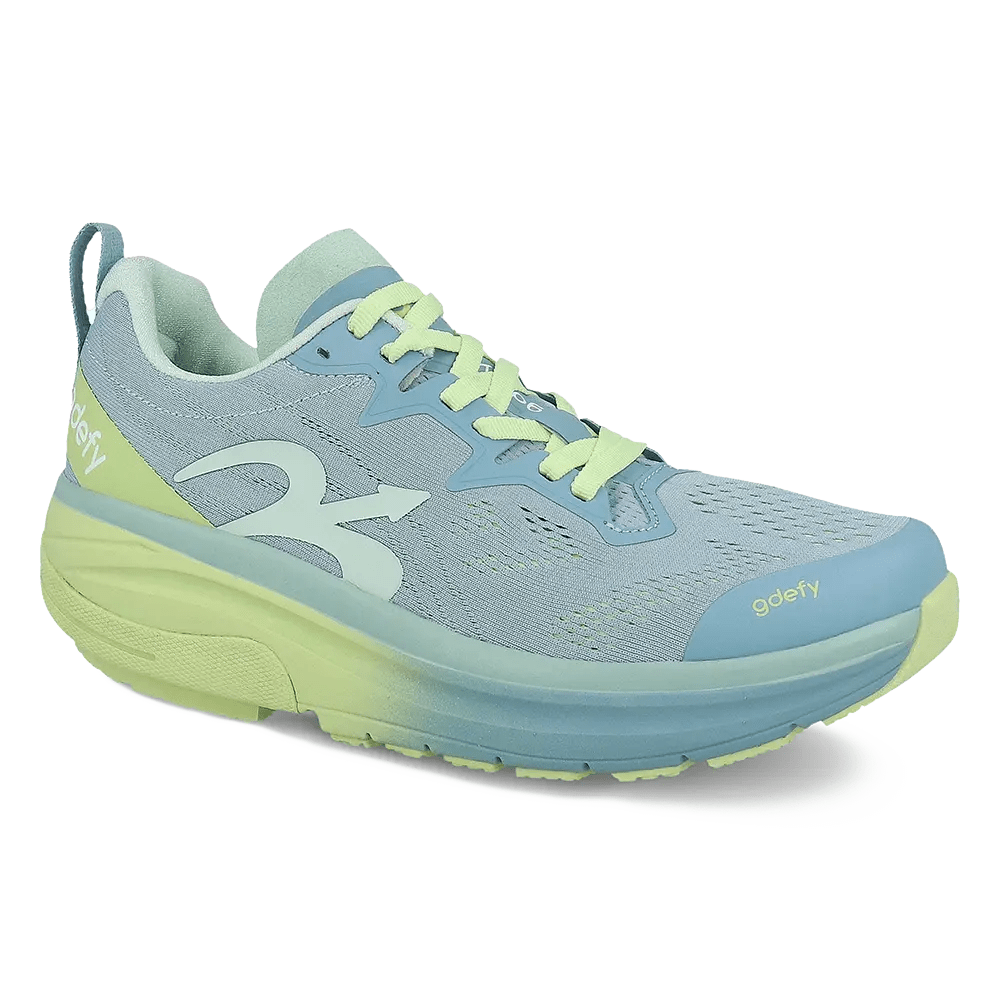
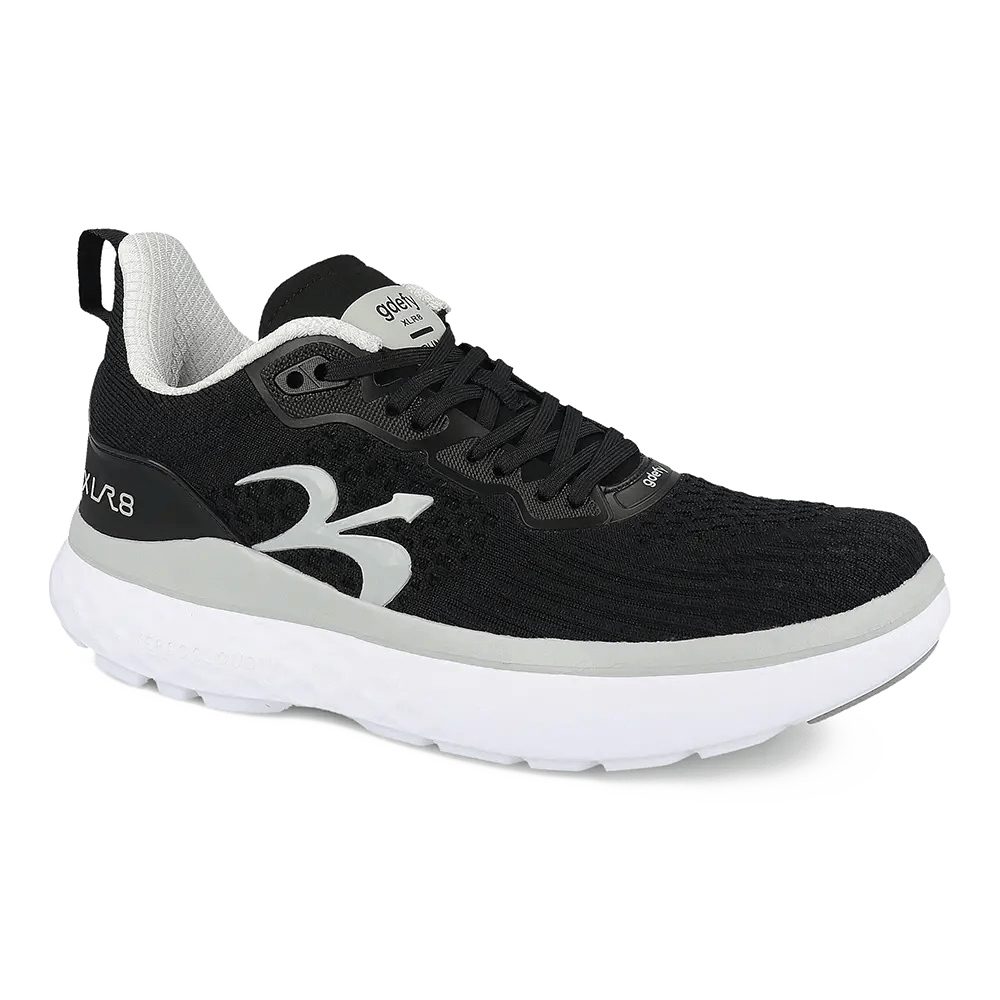
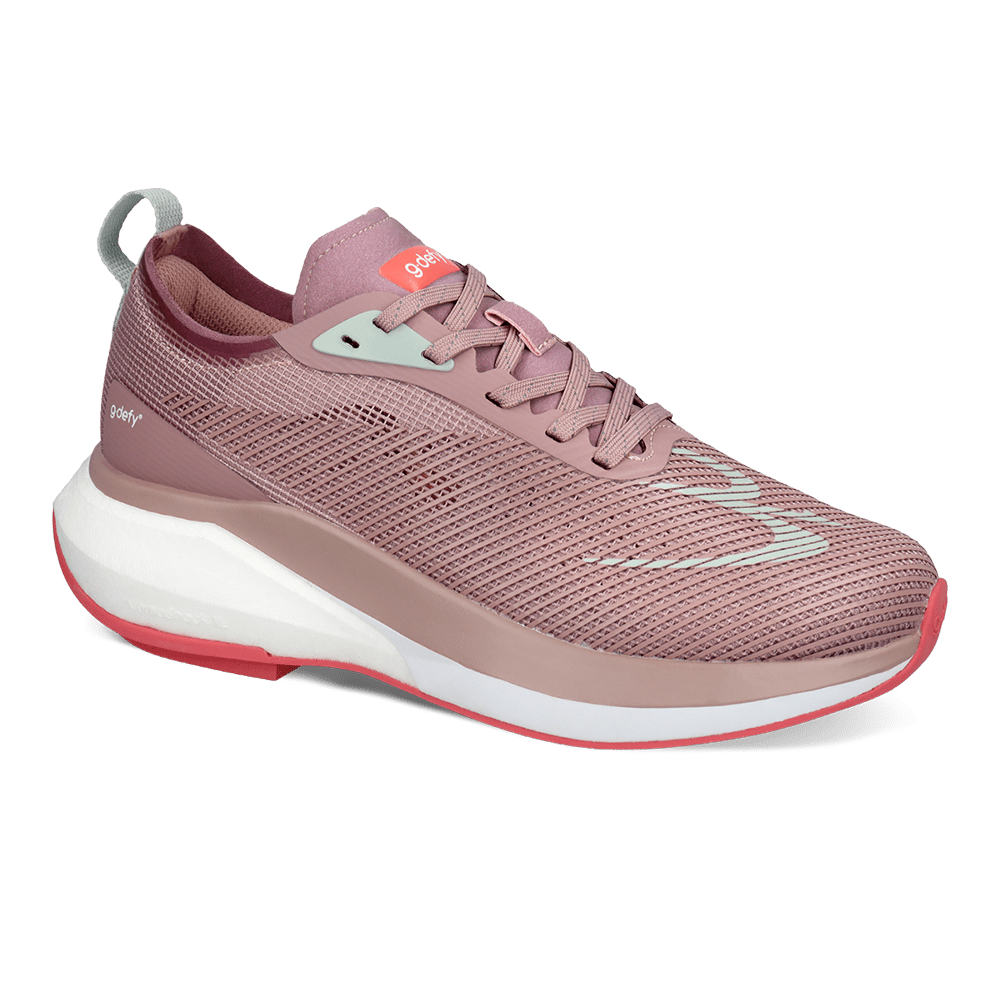
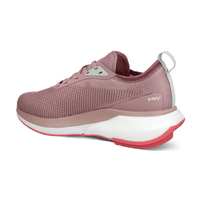
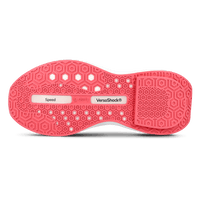
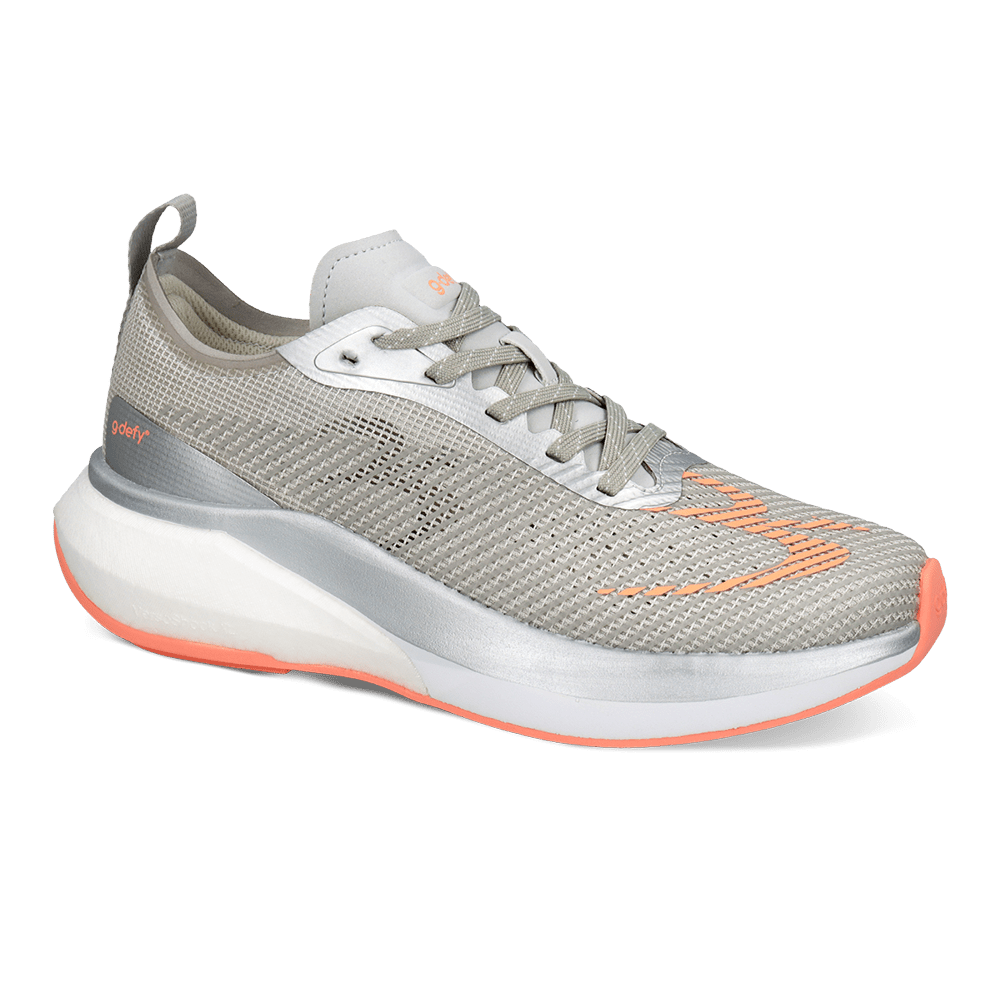
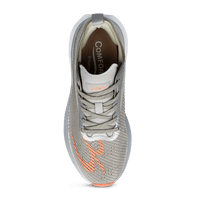
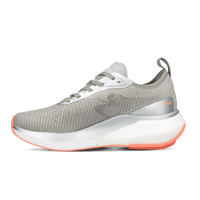
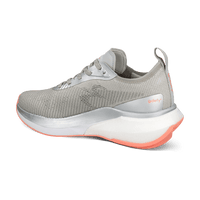
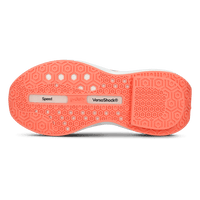
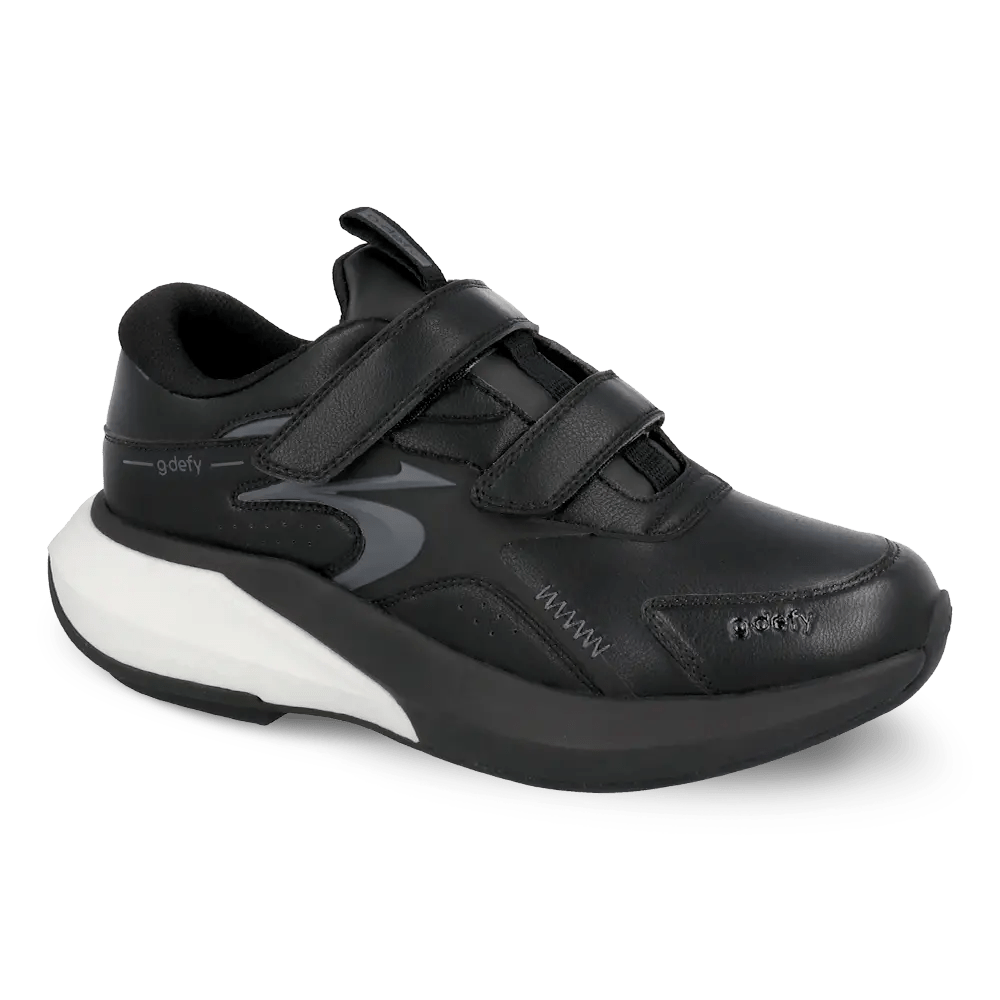
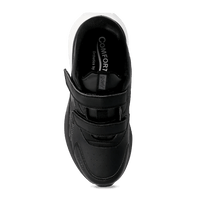
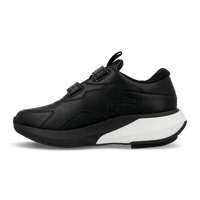
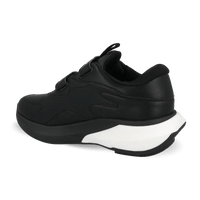
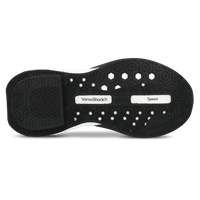
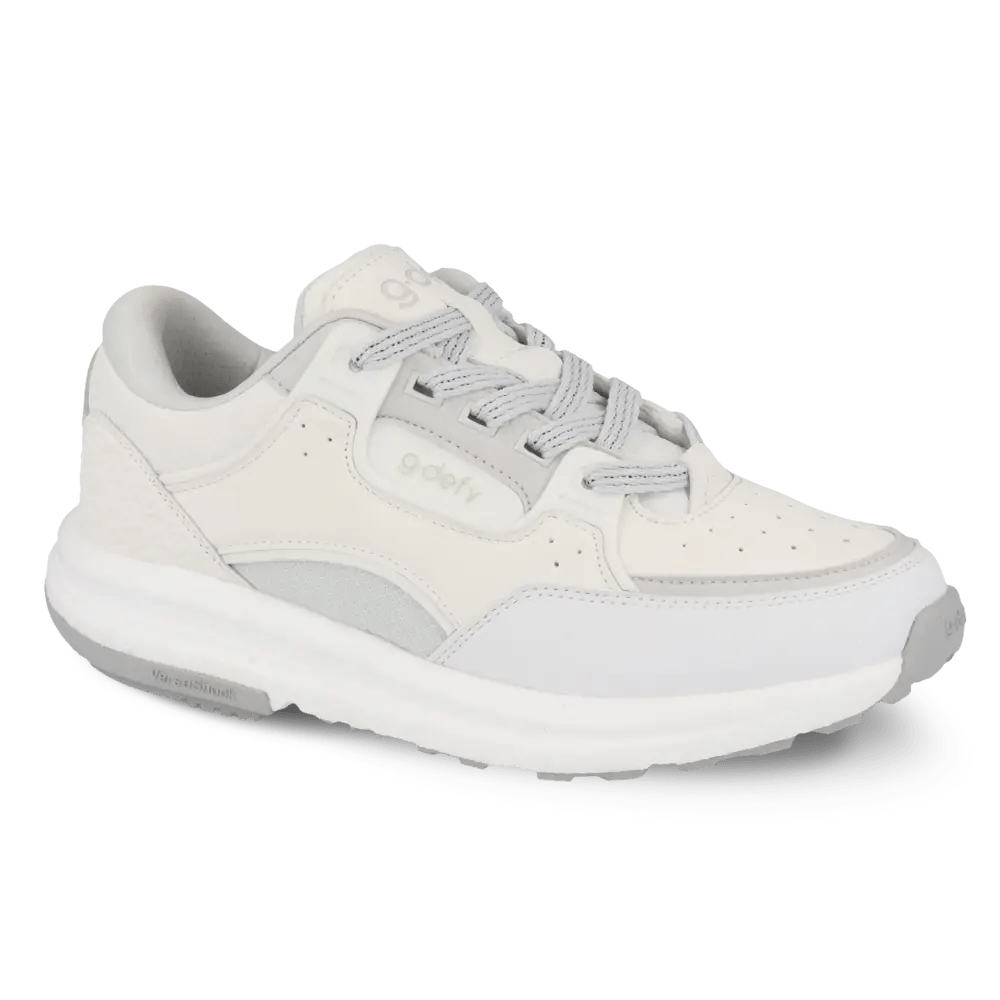
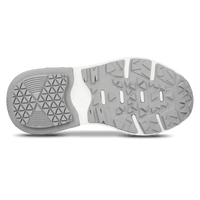
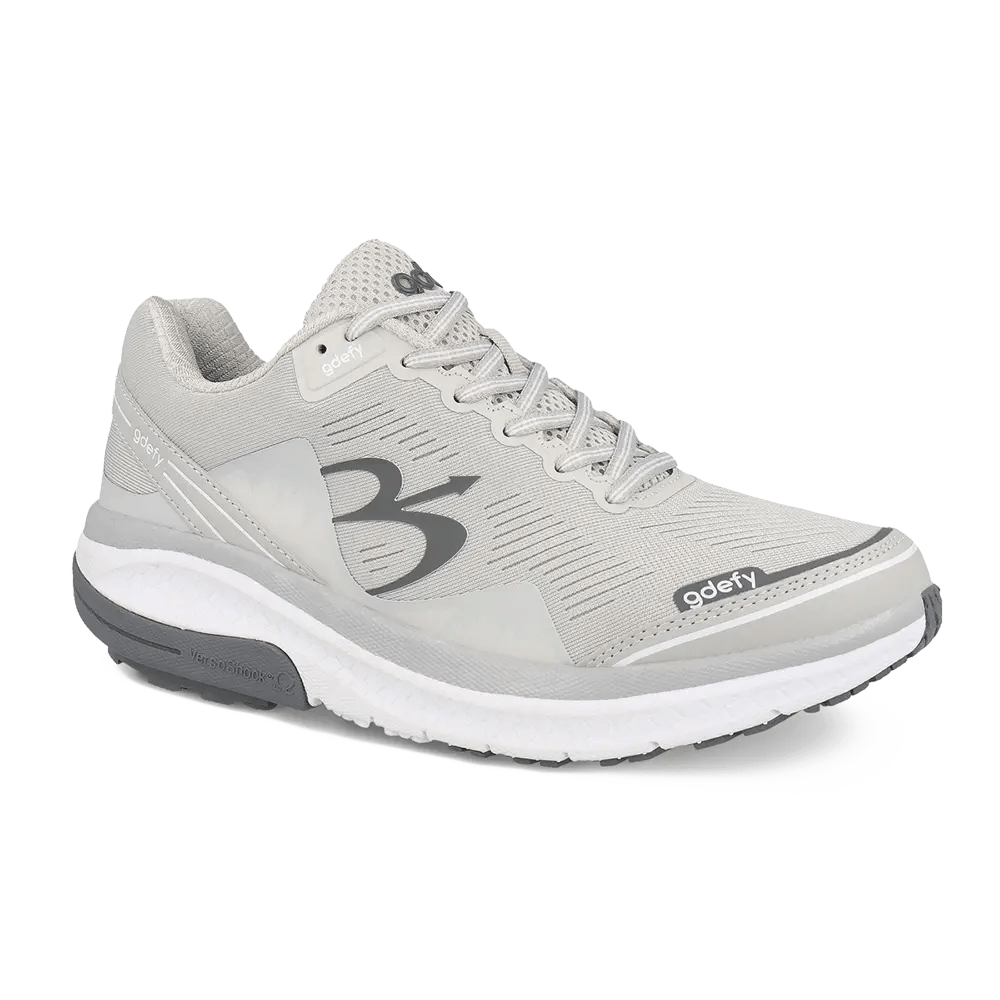
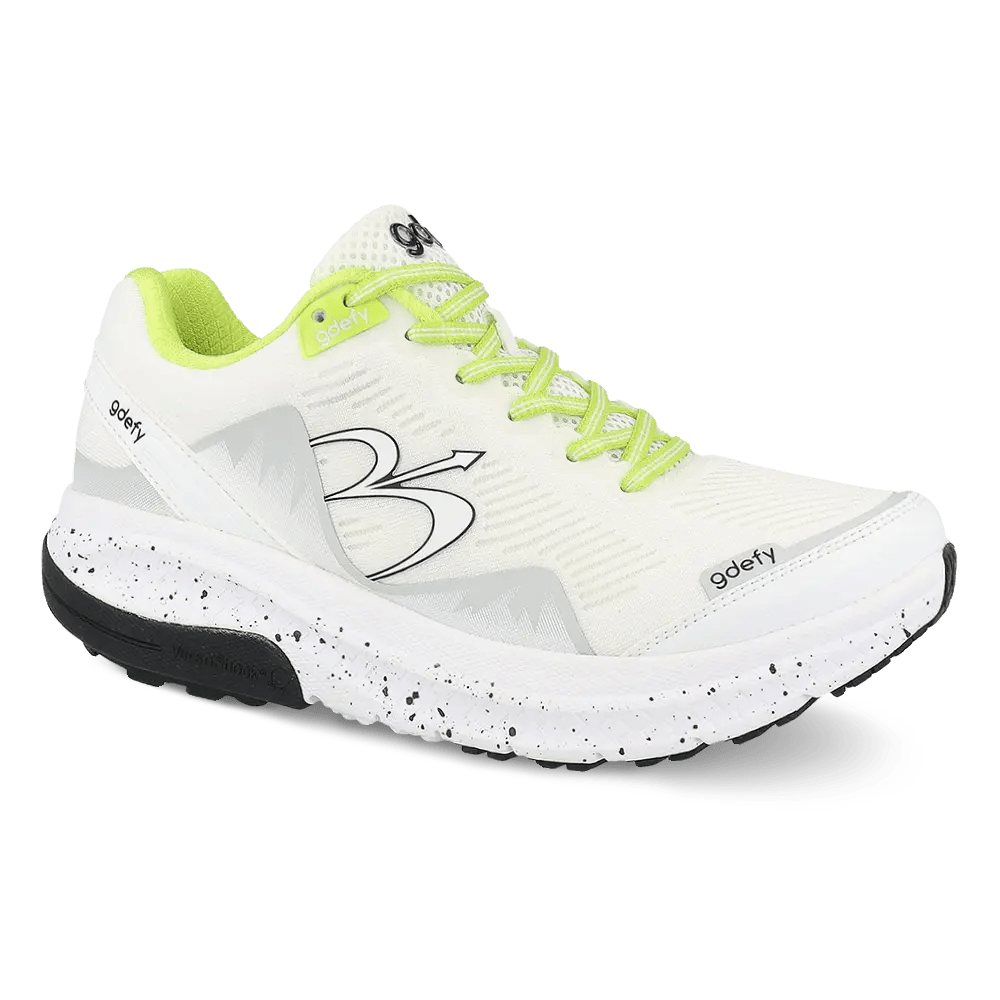
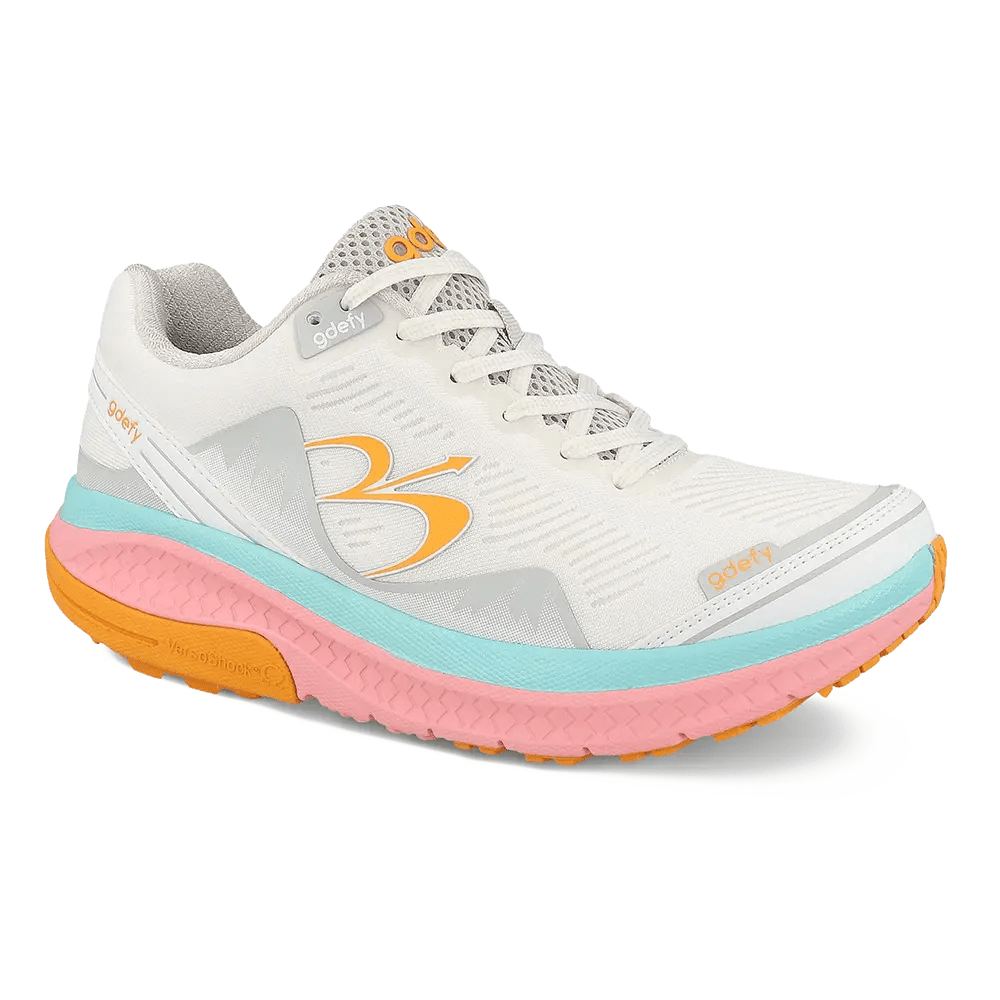
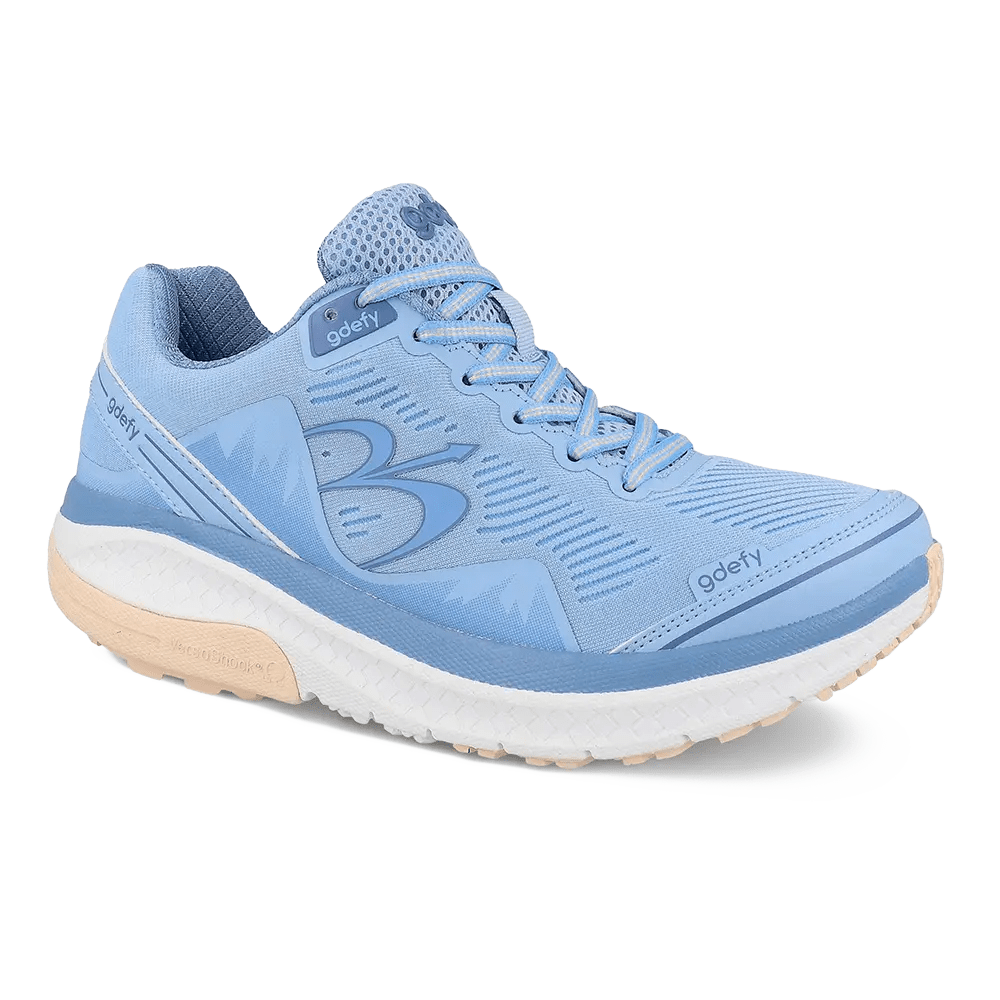
G-Defy shoes are engineered to provide comfort, support, and shock absorption. Featuring VersoShock® technology, they are designed to absorb impact and return energy with each step. A built-in stabilizer supports the foot during movement, while the front rolling design promotes a smooth walking experience. Each pair includes two removable orthotics to help customize comfort and support. G-Defy shoes help reduce pain from walking, running, and prolonged standing.
That last piece — the two orthotics — is the part that matters most if your arches sit low. Every pair ships with both:
- The ComfortFit® orthotic, shaped for low to medium arches, which focuses on cushioning and comfort.
- The CorrectiveFit® orthotic, shaped for medium to high arches, which adds more support underfoot.
You can start with one, wear it for a few days, and switch if the other feels better. Many people with lower arches find the ComfortFit® orthotic more comfortable for long days, while others prefer the added support of the CorrectiveFit®. Because both come in the box, you are not guessing at checkout and you are not buying anything extra to find out.
Underneath that, the VersoShock® system is spring-based rather than foam-only. It is designed to absorb impact softly and return energy to support forward movement, while the stabilizer keeps the middle of the shoe from collapsing and the rolling forefoot design encourages a smooth heel-to-toe transition. If you want to see how those parts fit together, what’s inside a comfort walking shoe breaks the construction down layer by layer.
The Men’s Mighty Walk and Women’s Mighty Walk are the most popular starting points for people who spend long hours upright. Both are available in medium, wide, and extra-wide widths, which matters more than most shoppers realize when arches sit low.

Two orthotics in every box — find your setup
Try the ComfortFit® and CorrectiveFit® orthotics at home with a 60-day risk-free trial, plus free shipping and exchanges.
Shop the Mighty WalkEveryday Habits That Support Comfort
Shoes are only part of the picture. A few practical habits tend to help:
- Rotate between two pairs. Midsole foam decompresses between wears, and alternating pairs also gives you a second support setup to compare against.
- Shop for shoes later in the day. Feet spread out as the day goes on. A shoe fitted at 9 a.m. can feel tight by 5 p.m.
- Replace shoes on mileage, not looks. Uppers often look fine long after the midsole has given up. Cushioning wears out quietly.
- Break in a new setup gradually. Give a new orthotic or a new pair a few short days before a twelve-hour shift.
- Change your surface when you can. If you stand in one spot for hours, a few laps on a softer surface breaks up the static load.
- Check the wear pattern on your current shoes. Heavy wear along the inside edge is a useful clue about how you load your feet, and it is free information.
Frequently Asked Questions
Can flat feet cause back pain?
Back discomfort has many contributing factors, and no single one explains it for everyone. What can be said generally is that your feet set the foundation for how you stand and move, so the support underneath them influences overall comfort during walking and prolonged standing. For persistent pain, consult your healthcare provider.
Do I need arch support if I have flat feet?
Not everyone with low arches wants the same amount of support, which is why adjustability is more useful than a single preset shape. Supportive and cushioned footwear may improve overall comfort during walking and prolonged standing — the right level is the one that feels good to you after a full day, not after thirty seconds in a store.
Which of the two included orthotics should I use with flat feet?
Most people with low to medium arches start with the ComfortFit® orthotic, which emphasizes cushioning. If you want more support underfoot, try the CorrectiveFit®. Wear each for a few days before deciding.
How often should I replace supportive shoes?
It depends far more on hours than on months. If your shoes have carried you through daily long shifts for the better part of a year, the midsole has likely compressed, and the support you think you are getting may no longer be there.
The Takeaway
A low arch is a foot shape, not a verdict. It changes how your foot meets the ground, and across a long day of repeated steps, that starting position influences how the rest of you feels by evening.
While footwear is not a medical solution, choosing shoes designed for comfort, support, and shock absorption — with structure through the midfoot, a secure heel, the right width, and support you can adjust to your own arch — can make a meaningful difference in how you feel throughout the day.
Find a setup that fits your feet
Every pair includes two removable orthotics and a 60-day risk-free trial, with free shipping and exchanges.
Shop Men’s Shop Women’s