
August 19, 2026
How the G-Defy ZenWalk Is Built: An Athletic Sole Under a Leather-Look Upper
By Gdefy

Summary
A lot of people are working around a dress code, whether or not anyone has written it down. Healthcare, retail floors, classrooms, hotel front desks, offices with an unstated standard — plenty of workplaces will accept a clean black shoe and quietly disapprove of a bright mesh trainer. So people wear the shoe the room expects and stand in it for eight hours.
That trade has a cost, and it usually lands late in the day rather than early.
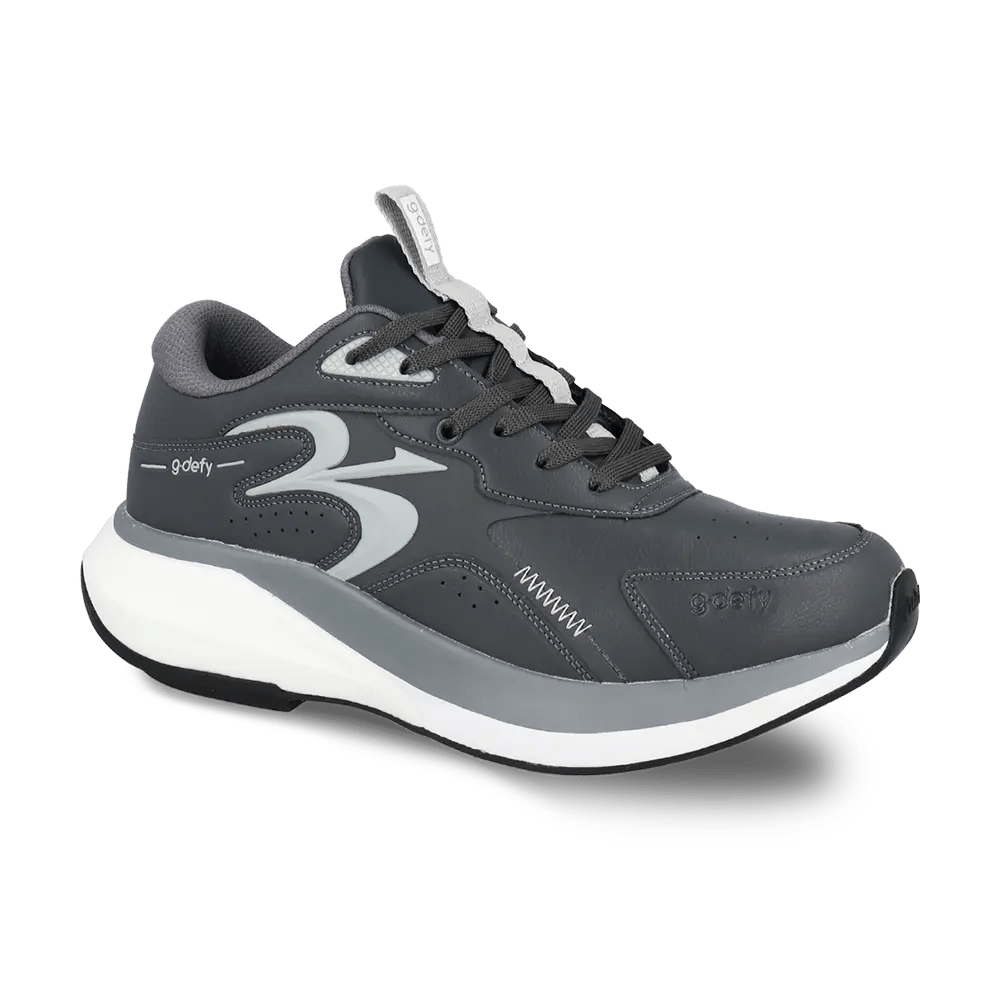
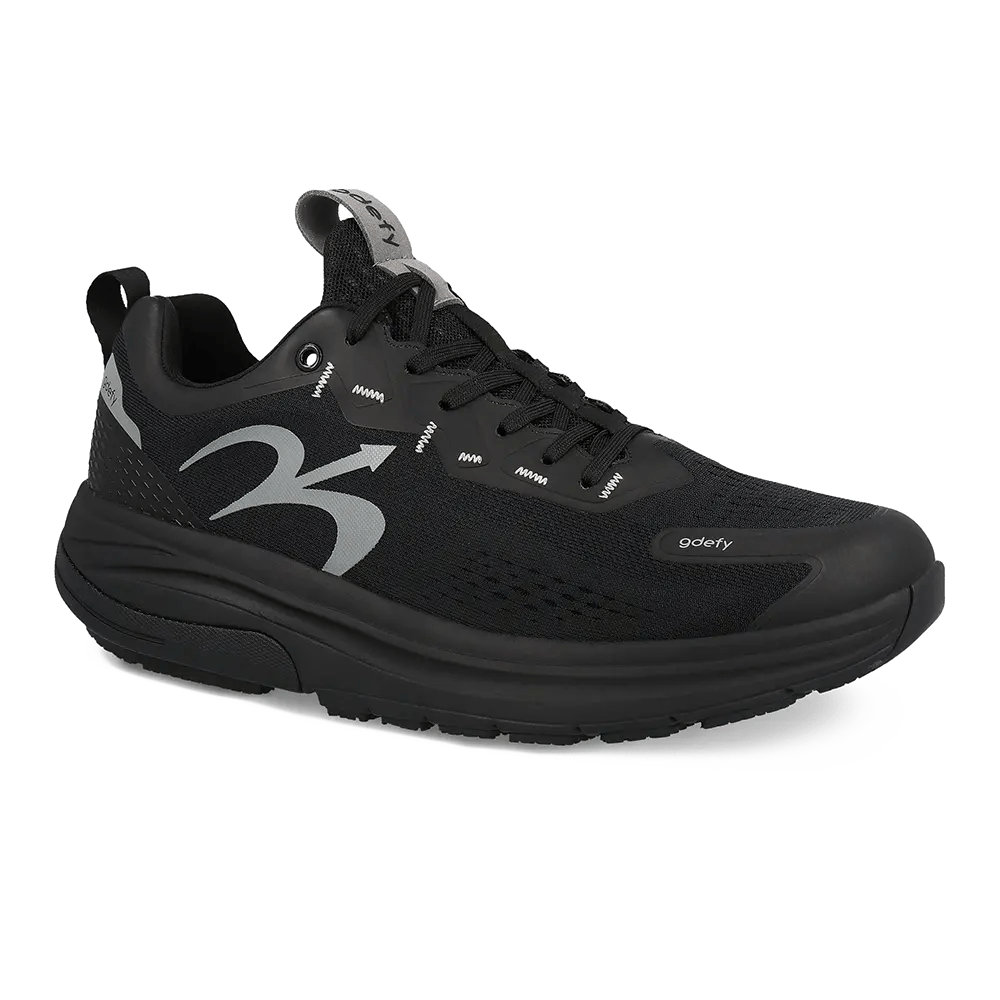
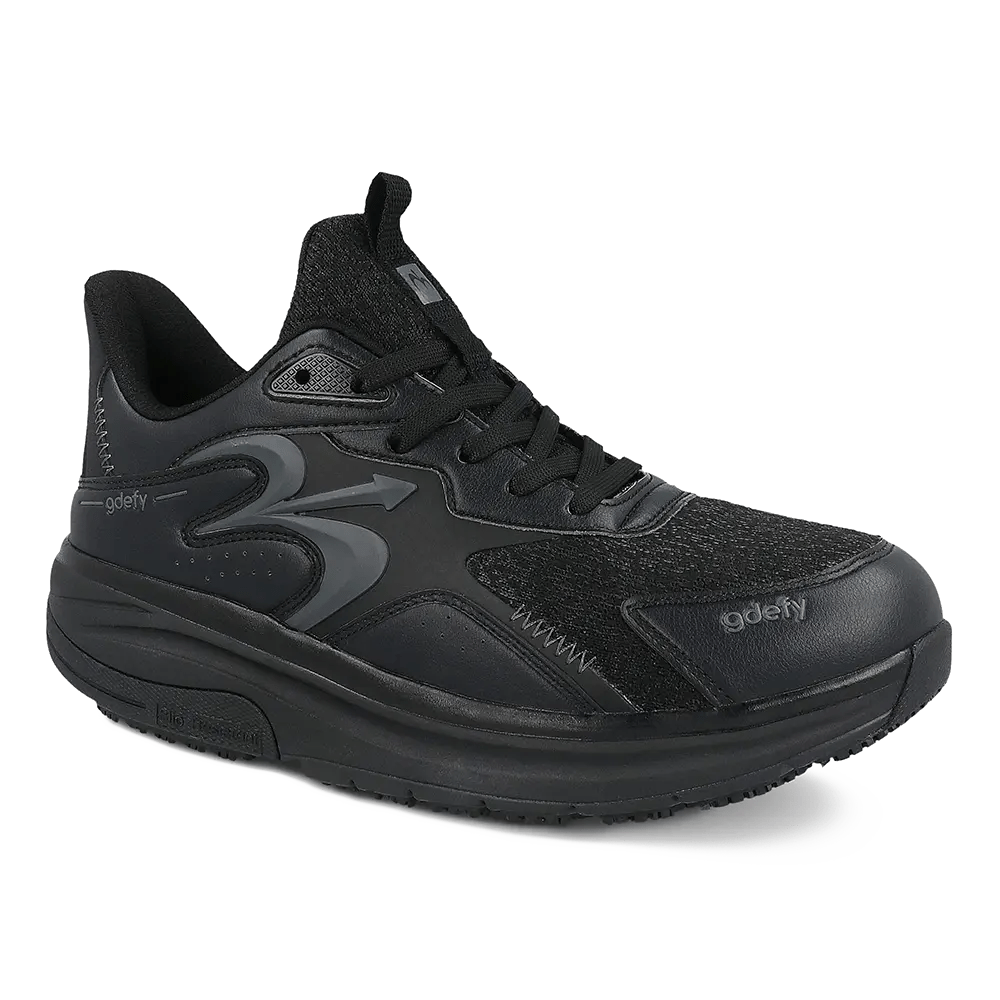
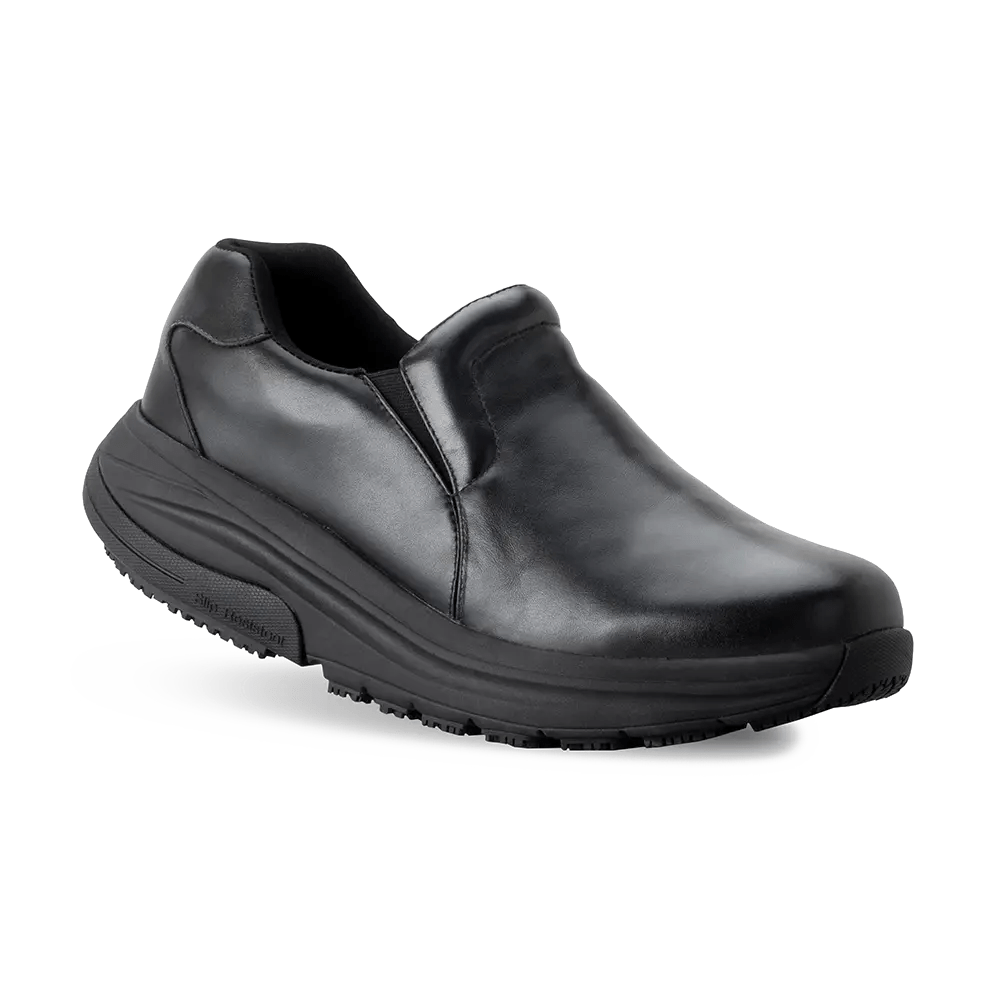
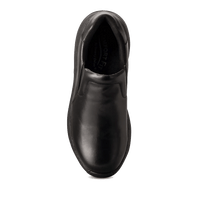
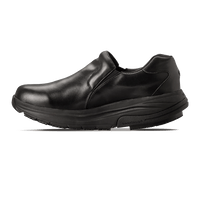
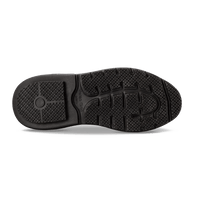
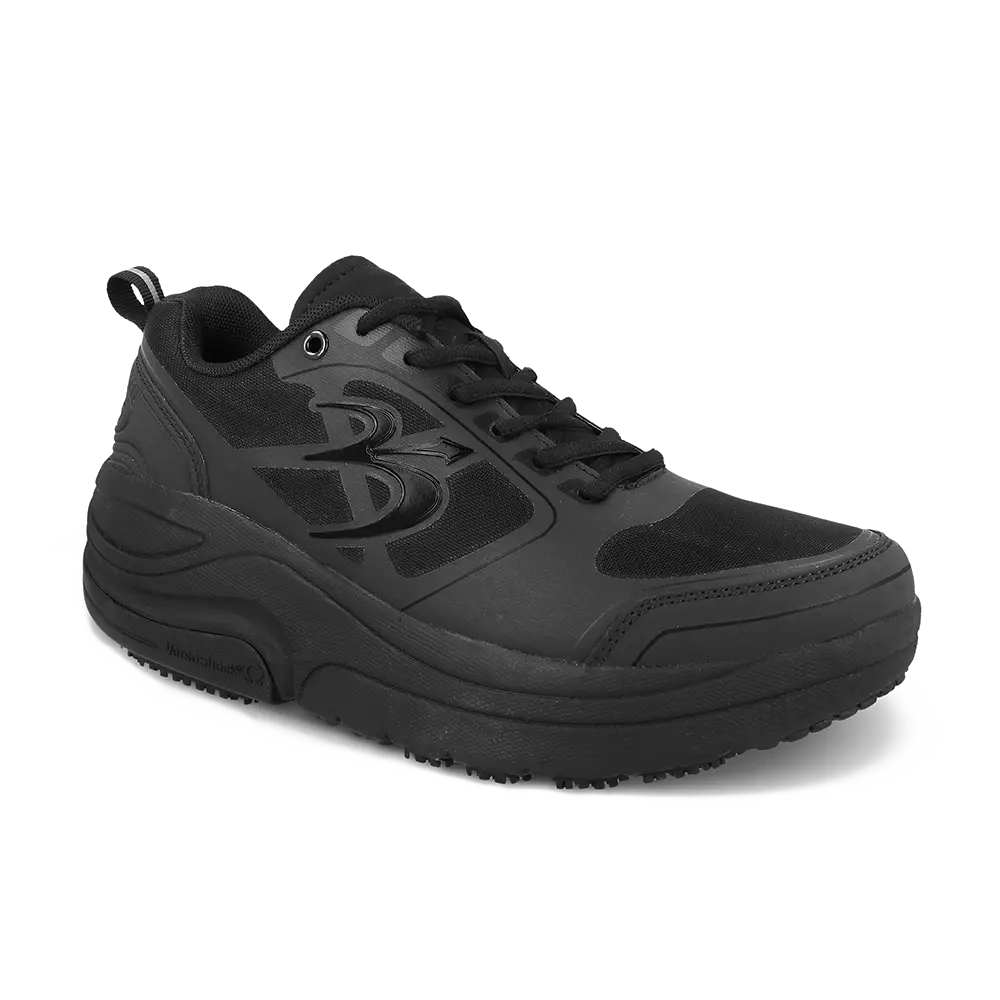
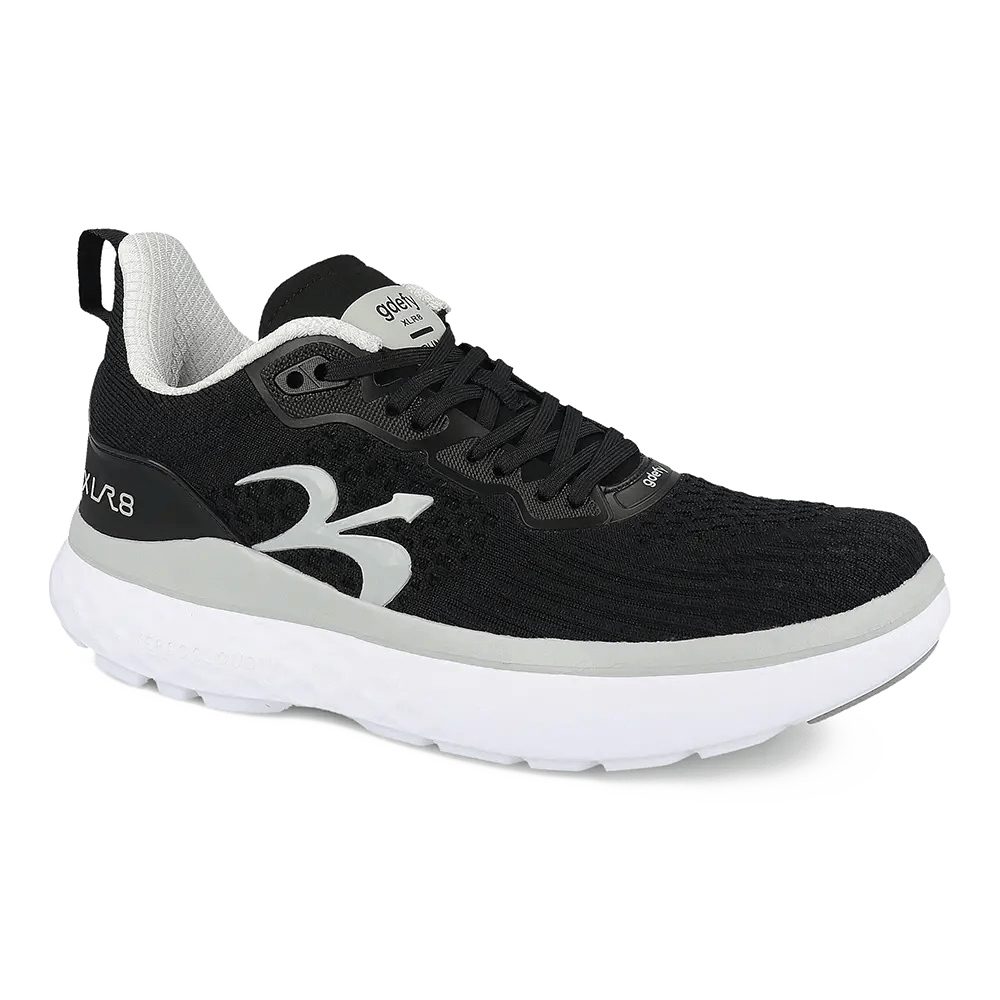
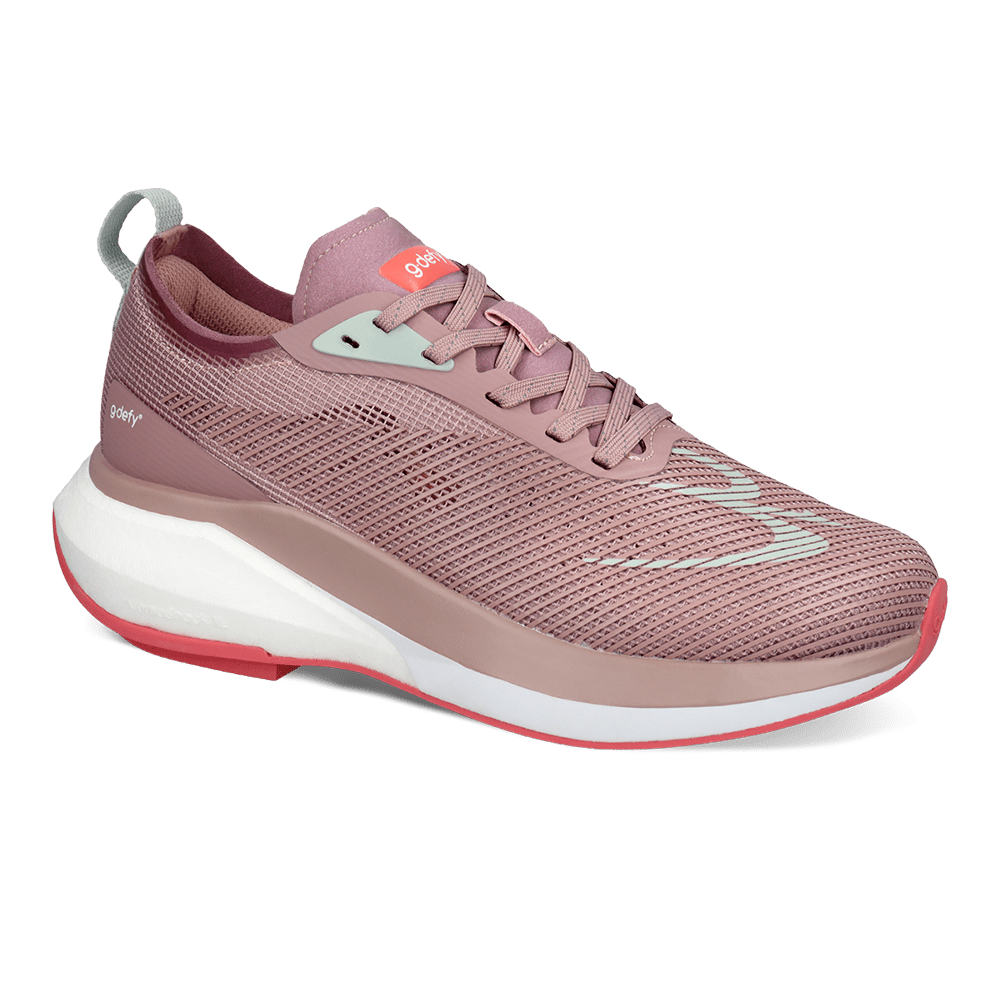
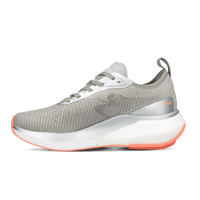
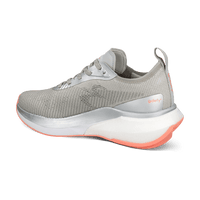
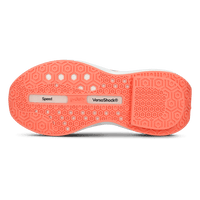
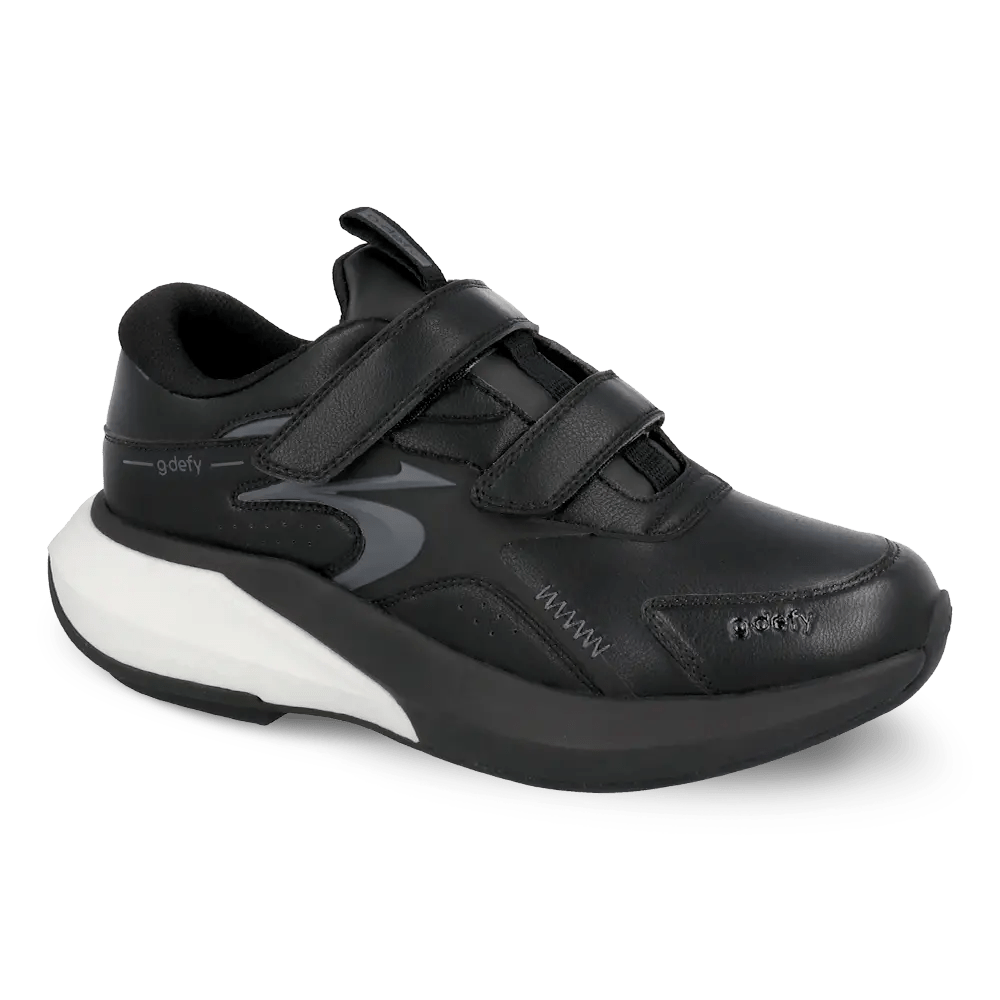
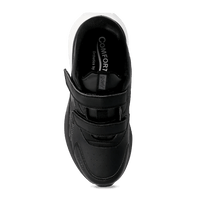
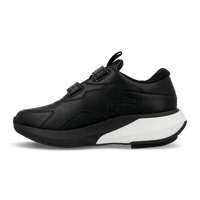
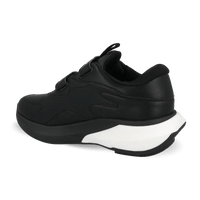
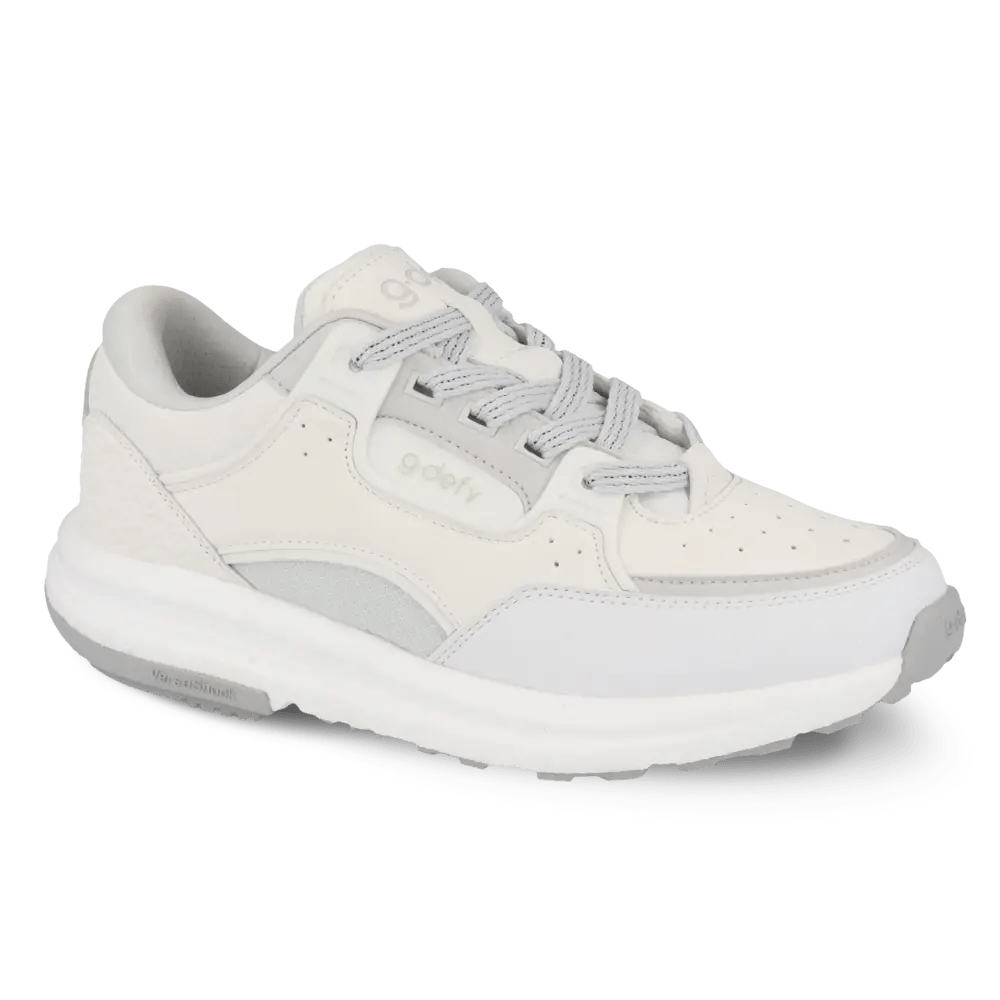
The G-Defy ZenWalk is built to remove it. The upper is smooth black microfiber leather with subtle branding — a shoe that reads as workwear rather than gym kit. The sole underneath it is fully athletic: a hybrid VersoShock® and VersoCloud® system, targeted foam through the rear of the foot, and a hardened TPU shank running the full perimeter. Two removable orthotics come in the box.
This post is a walk through that construction — what each layer is, what it is doing under load, and who the shoe actually suits. Footwear is not a medical solution, and nothing here is a substitute for advice from a healthcare provider. But the way a shoe is built genuinely changes how your feet feel at the end of a long day, and that is worth understanding before you buy anything.
The Problem With Dressing for the Room
The shoes that pass an unwritten dress code are usually built for looking correct, not for standing.
A traditional black work shoe tends to be flat, thin through the midsole, and firm in a way that transmits rather than absorbs. There is often no meaningful shank, so the shoe twists underfoot. The footbed is glued in, so you cannot swap it for something that matches your arch. None of that is a manufacturing failure — it is what happens when the design brief is "look smart and cost little."
You feel the difference by hour seven. The first hour in an under-built shoe is fine. It is late in a shift, when the foam has bottomed out and there is nothing holding the midfoot, that the shoe you chose in the morning starts to matter.
The ZenWalk's approach is to keep the upper conventional and spend the engineering on everything below it.
What's Inside the ZenWalk

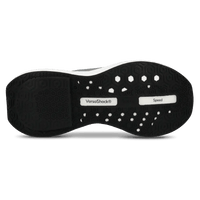
A Hybrid VersoShock® and VersoCloud® Sole
The base of the shoe pairs two G-Defy systems rather than picking one.
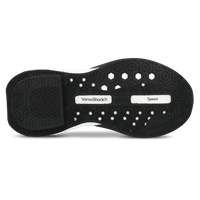
VersoShock® is the patented spring-based sole technology the brand is built around. Instead of relying on foam alone to soften impact, it uses a mechanical element that compresses as your heel lands and returns part of that energy as you push off. Foam absorbs and dissipates; a spring absorbs and gives some of it back.
VersoCloud® is the full-sole spring cell layer that sits alongside it, spreading shock absorption across the length of the shoe rather than concentrating it under the heel. The combination is what G-Defy calls Hybrid VersoShock® Technology, and it is why a shoe with a dressed-down upper does not have to feel like a dress shoe underfoot.
If you want the mechanical explanation in more depth, we wrote a full breakdown of how VersoShock® technology works.
BubblePoly-Tech™ Foam From Midfoot to Heel
Above the spring layer, the ZenWalk uses BubblePoly-Tech™ foam running from the midfoot back through the heel.
This is deliberately placed rather than uniform. The rear two-thirds of the shoe is where the majority of impact arrives during ordinary walking — heel contact, then the roll forward through the midfoot. Putting the plusher foam there gives you softness where the load is highest, while leaving the forefoot firmer so the shoe still feels controlled when you push off.
A shoe that is uniformly soft front to back feels wonderful standing still in a shop and vague once you are actually moving.
A Hardened TPU Full-Perimeter Shank
The shank is the piece most people have never heard of and the piece that most distinguishes a structured shoe from a soft one.
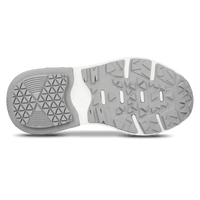
In the ZenWalk it is a hardened TPU element that runs the full perimeter of the sole, heel to toe. Its job is torsional: it resists the shoe twisting along its long axis. Hold an unstructured sneaker by the heel and toe and wring it like a towel — most will rotate easily. A full-perimeter shank makes that much harder, which means the shoe holds its shape underneath you when the ground is uneven, when you change direction, or when you are simply tired and your gait gets sloppier.
This matters most on hard, flat floors, where there is nothing underfoot giving way to absorb a twist for you. We covered how shanks, heel counters and outsoles work together in what's inside a comfort walking shoe.
The Front Rolling Design
The forefoot uses a front rolling design with a lateral stabilizer built in.
A rocker-style forefoot smooths the transition from midstance to toe-off. Rather than the foot bending sharply at the ball to lever you forward, the shoe's own curvature carries some of that movement. The practical effect is a step that feels more continuous, particularly on hard flat surfaces like pavement, tile and concrete where there is nothing underfoot to give.
The stabilizer element beside it is there to keep that roll travelling in a straight line rather than letting the foot drift outward as the shoe flexes.
A Microfiber Leather Upper With a Seamless Interior
The upper is microfiber leather, chosen for flexibility and abrasion resistance — it holds a clean shape without the break-in period a full-grain leather demands, and it does not scuff as readily as a coated synthetic.
Inside, the lining is a seamless silk-like mesh. Seams are where irritation starts on a long day, because every stitch line is a small ridge sitting against skin that is moving and swelling. Removing them from the interior is a small detail that matters most to people who wear a shoe for eight or more hours at a stretch.
Removable PU 3D Insoles — and Two Corrective Fit® Orthotics
Every pair ships with PU 3D removable insoles with a water-wicking top layer, plus two Corrective Fit® orthotics.
The removability is the important part. A built-in footbed forces one arch profile on every wearer. A removable one lets you take it out and drop in something that matches your own foot — the included orthotics, a pair you already own, or nothing at all if you prefer the shoe flat. It also lets you pull the insoles out to dry them properly, which extends the life of the shoe considerably.
We covered the general question of built-in support versus separate inserts in orthotic insoles vs built-in shoe support.
A Front Pull Tab
Small, but worth naming: there is a pull tab at the front of the collar.
The ZenWalk is a lace-up shoe. The tab means you can get into it without fully unlacing and re-lacing every time, which is the difference between a shoe you wear and a shoe you avoid on a rushed morning. It is a convenience feature rather than a structural one, but convenience features are what determine whether the structural ones ever get used. If you are weighing laces against a true step-in shoe, we compared the two in slip-on vs lace-up shoes.
How the ZenWalk Fits Alongside the Rest of the Line
The ZenWalk is not trying to be the lightest or the most cushioned shoe G-Defy makes. It is the one you can wear where a mesh trainer would get a second look.
| Model | Build | Best suited to |
|---|---|---|
| ZenWalk | Black microfiber leather upper, athletic sole | Workplaces with a dress code, long days on hard floors |
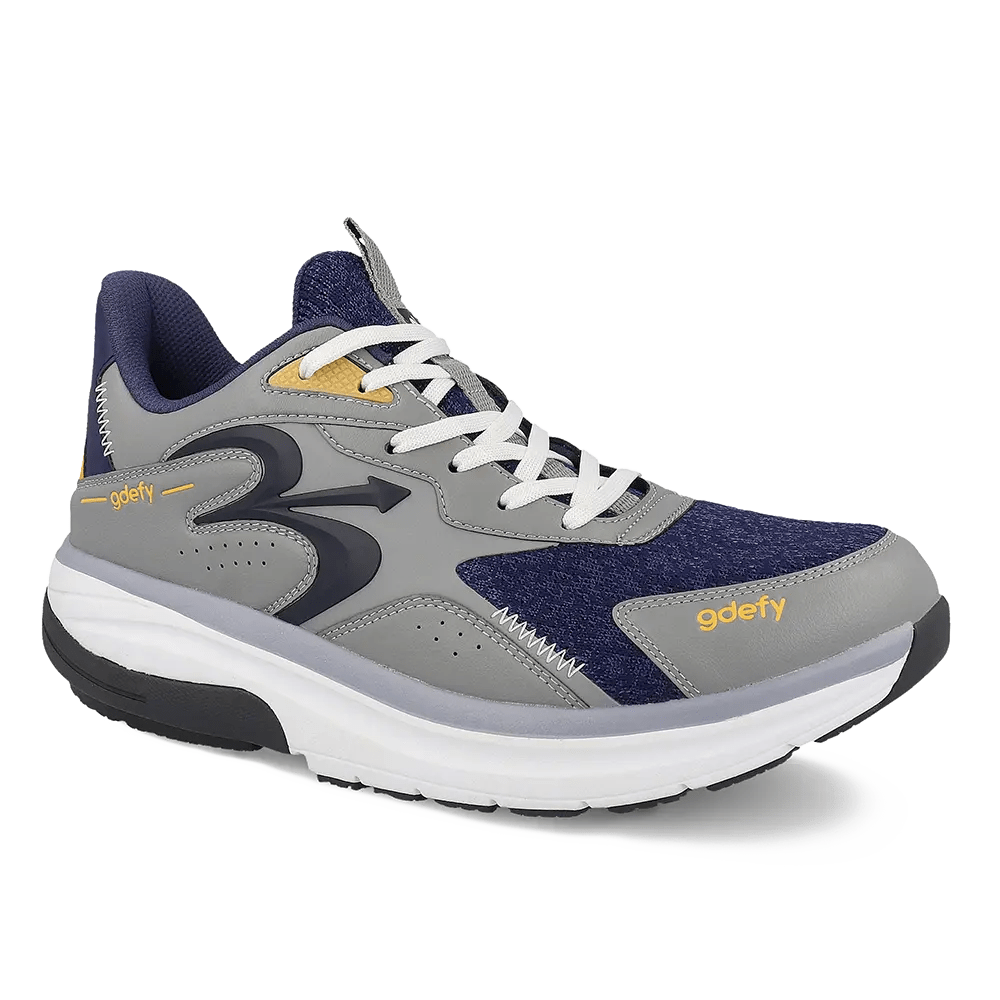
| Mighty Walk | Athletic walking trainer, mesh upper | Sustained walking, commuting, general daily mileage |
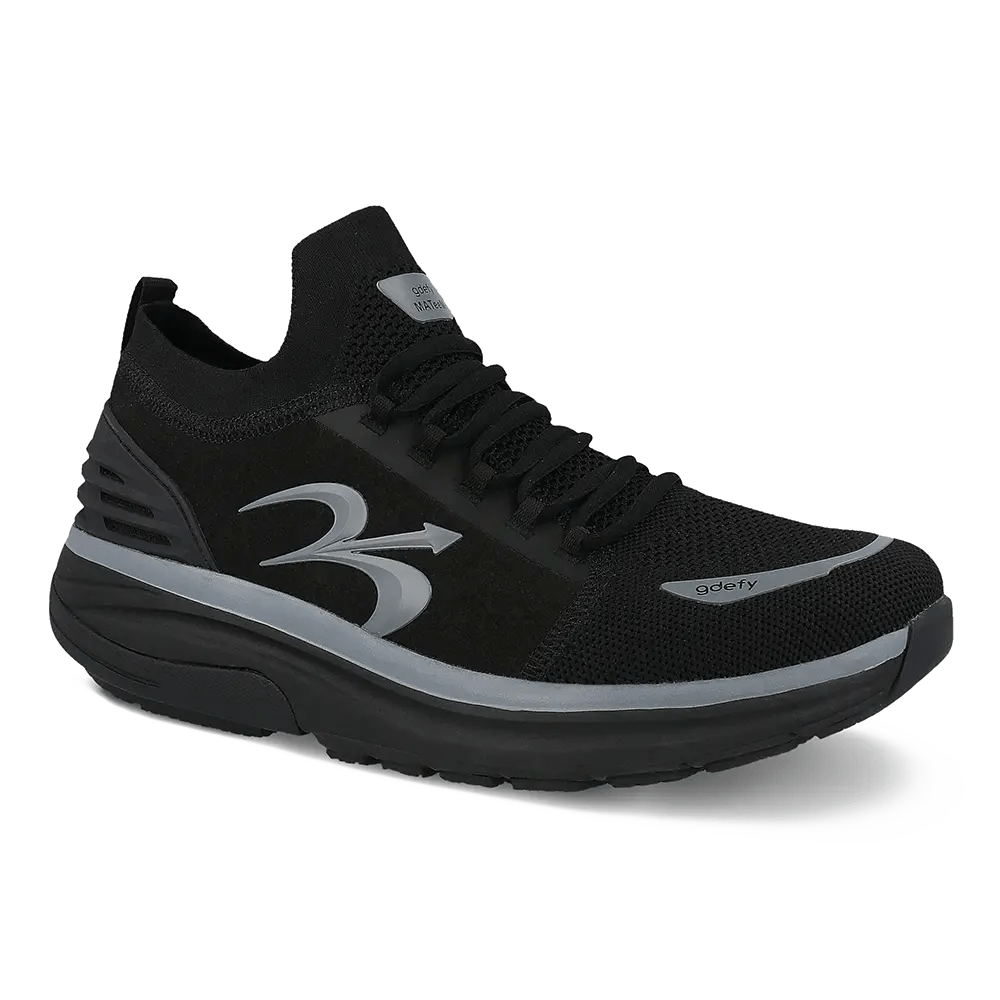
| Ion | Lightweight athletic, breathable | Warm-weather wear, travel, keeping pack weight down |
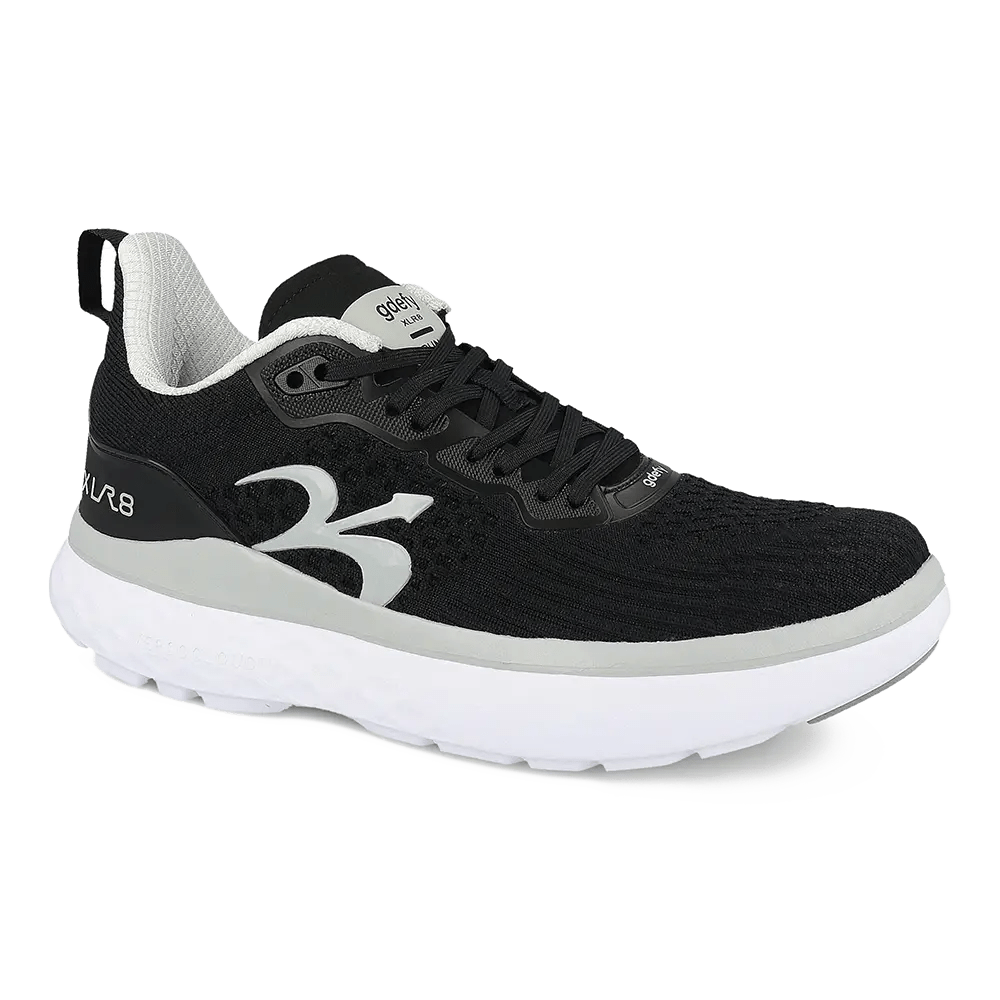
| XLR8 Run | Performance running build | Running and training sessions |
If your day is mostly walking, the Mighty Walk is the more natural pick. If you want the lightest option, look at the Ion. If you run, the XLR8 Run is built for that. The ZenWalk is for the days when the shoe has to look like it belongs in the room.
See the ZenWalk for yourself
Available in men's and women's versions, in medium and wide widths. Every pair ships with two removable orthotics, free shipping and free exchanges, backed by the 60-day risk-free trial.
Shop the ZenWalk collectionWho the ZenWalk Suits
People working around a dress code. A clean black leather-look upper passes in places a bright mesh trainer does not. If that is the constraint you have been solving with an uncomfortable shoe, this is the reason the ZenWalk exists.
People who stand more than they walk. Standing loads the foot differently than walking does — the load never rotates off one structure and onto another, so whatever is under you has to hold up statically for hours. The shank and the rear-foot foam are doing most of the work in that scenario.
People who want one shoe rather than two. A shoe that passes at work, handles a full day on hard floors and looks fine at dinner afterwards removes the need to carry a change of footwear in a bag.
People who use their own orthotics. The removable footbed makes this straightforward rather than a compromise.
If the ZenWalk is not the right shape for your week, the rest of the range is worth a look — all men's shoes and all women's shoes.
Who it is not for: if you are covering serious daily mileage or running, a purpose-built athletic model will serve you better. And if your workplace has specific safety-footwear requirements, check those first — the ZenWalk is a comfort shoe, not safety equipment.

An illustration of the pattern we hear — the following is a composite written to illustrate a common situation, not a quotation from a single named customer.
A retail supervisor works a floor shift on polished concrete and has a uniform standard that rules out bright trainers. She had been alternating between a flat black work shoe that looked right and a cushioned trainer she could only wear on stock days. What she wanted was one shoe that passed the standard and still had something under it by the end of the shift.
Results vary by individual. Footwear is not a medical solution — speak to a healthcare provider about persistent discomfort.
Fit and Sizing Notes
The ZenWalk comes in both medium and wide widths across the size run, in men's and women's versions.
A few practical notes:
- Try them at the end of the day. Feet spread and swell over the course of a day. A shoe fitted first thing in the morning can feel tight by evening.
- Fit around the insole you intend to use. If you plan to run one of the included orthotics, fit the shoe with it in place. Adding a thicker footbed after the fact takes up volume and changes the fit.
- Check width before you size up. If a shoe feels tight across the ball of the foot, the answer is usually the wide version rather than a longer size. Going up a full size to solve a width problem leaves your heel sliding.
- Give the microfiber a few wears. It is more flexible from new than leather, but it still settles.
For more on how a shoe should actually feel when it fits, see what support really means in footwear.
Caring for a Microfiber Leather Upper
Microfiber leather is low-maintenance, not no-maintenance.
- Wipe the upper with a damp cloth rather than putting the shoe in a washing machine — machine agitation breaks down adhesives at the sole bond.
- Pull the insoles out at the end of a long or wet day and let both dry separately, away from direct heat.
- Rotate between two pairs if you can. Foam recovers its thickness between wearings, and a shoe worn every single day compresses faster than the same shoe worn every other day.
- Watch the outsole tread and the heel counter for signs it is time to replace. We wrote about the specific signals in how shoes wear out.
What to Expect in the First Two Weeks
A structured shoe usually feels different rather than dramatically better, and that catches people out.
If you have been wearing flat, flexible shoes, a firm shank and a rockered forefoot will feel noticeable for the first few days. Your foot has been doing some of the stabilising work itself and is now being supported through part of it. Build up gradually — a few hours a day at first — rather than putting them straight into a twelve-hour shift.
G-Defy shoes are designed to help reduce pain from walking, running, and prolonged standing, and the 60-day risk-free trial exists precisely because comfort is individual. Free shipping and free exchanges mean a size or width swap is not a penalty. Results vary by individual.
Try a pair for 60 days
Comfort is individual. Wear them, stand in them, walk in them — and if they are not right, exchanges and returns are free.
Men's ZenWalk Women's ZenWalkFrequently Asked Questions
Is the ZenWalk a walking shoe or a work shoe?
Both, by design. The upper is a smooth microfiber leather that suits a workplace dress code; the construction under it — hybrid sole, full-perimeter shank, structured heel — is what you would normally find in a walking model.
Does it come with orthotics?
Yes. Each pair includes removable PU 3D insoles plus two Corrective Fit® orthotics, so you can match the arch profile to your own foot or swap in inserts you already use.
Can I wear my own custom inserts?
Yes. The footbed lifts out, which frees up the volume a custom insert needs.
What is the difference between VersoShock® and VersoCloud®?
VersoShock® is the patented spring-based sole system that absorbs impact and returns energy at heel strike. VersoCloud® is a full-sole spring cell layer that spreads that shock absorption along the length of the shoe. The ZenWalk uses both together.
Will it help with foot discomfort at the end of a long shift?
Footwear is not a medical solution and is not a substitute for medical care. What supportive, well-cushioned footwear can do is help reduce pain from walking, running, and prolonged standing. Many customers tell us the difference shows up in how they feel at hour eight rather than hour one. Results vary by individual — talk to a healthcare provider about persistent discomfort.
Is it available in wide?
Yes, in both men's and women's versions across the size run.
The Takeaway
The ZenWalk exists because the choice between "passes the dress code" and "is built properly" is a false one. It is a manufacturing convenience, not a law of physics.
Under a smooth black leather-look upper, this shoe carries a hybrid VersoShock® and VersoCloud® sole, targeted foam through the rear of the foot, a full-perimeter TPU shank, a rockered forefoot, and a removable, orthotic-friendly footbed. None of that is obvious from across a room, which is exactly the point.
While footwear is not a medical solution, choosing shoes designed for comfort, support and shock absorption can make a real difference to how your feet feel at the end of the day — and it should not cost you the shoe you are allowed to wear.