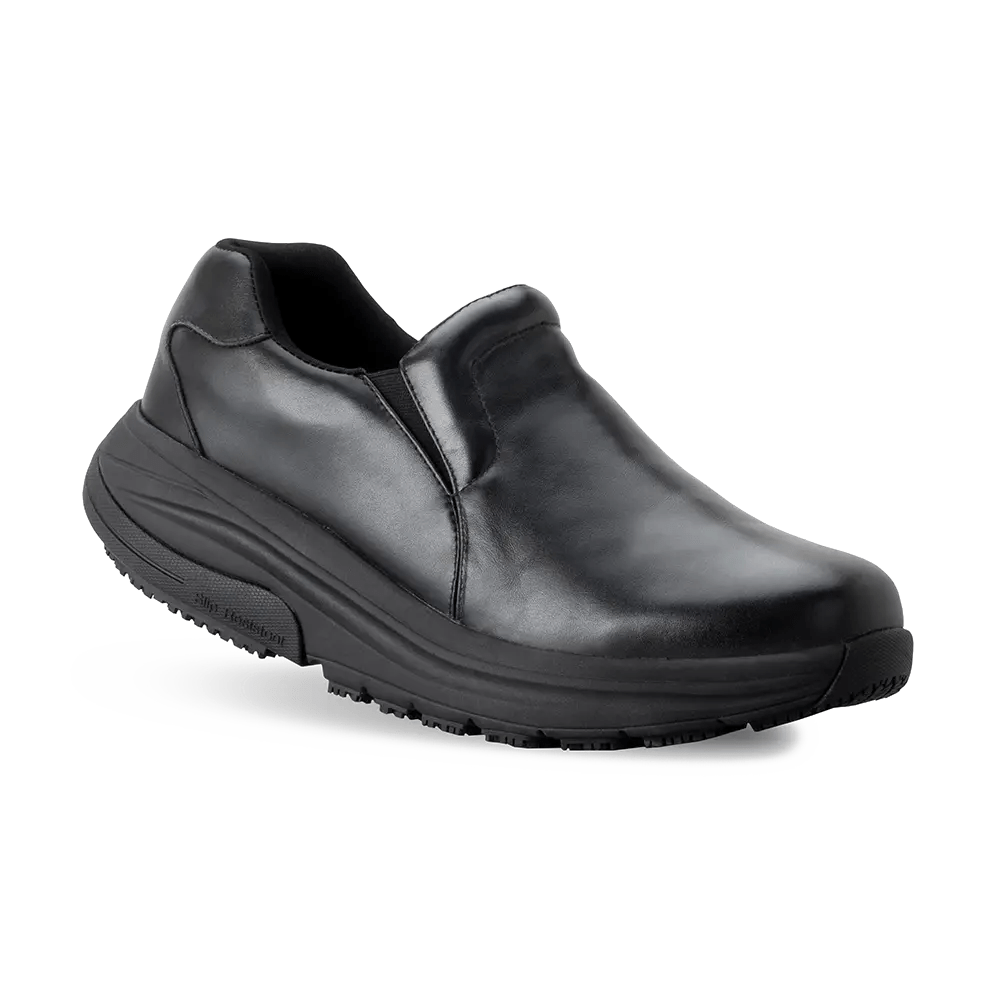

February 11, 2026
Best Shoes for Standing All Day on Concrete (2026)
By Gdefy

Summary
Men's Heel Pain Relief + Stability Features
You're 52, on concrete for 10 hours, your heels ache, and you need stable shoes that look normal. That's not a small ask. Most work shoes bottom out by lunch, wobble by mid-shift, or look medical. In 2026, the best men's shoes for standing all day on concrete combine impact protection, stability, and a work-appropriate look. GDEFY models are a top pick because they're engineered specifically to reduce harsh heel strike while keeping the foot centered and stable. This guide will show you exactly what features to prioritize, how to match shoes to your heel pain type, and which picks deliver for long concrete shifts.
Quick Answer for a 10-Hour Concrete Shift
On concrete, the most comfortable shoe is usually the most stable shoe with enough shock absorption capabilities, not the softest foam. Here's what that means in practice.
For standing 8 to 12 hours on concrete, prioritize three things in this order: shock absorption capabilities that don't bottom out, a stable heel (firm heel counter plus wide base), and an insole system that supports your arch without cramping your toes. All-day stability is the shoe's ability to keep your heel centered and limit side-to-side wobble as cushioning compresses over long shifts. That matters more than you think. Cleveland Clinic notes that prolonged standing causes joint stiffness and swelling risk. When your heel tilts inward or your ankle wobbles late in your shift, your tissues take on loads they weren't designed for.
Don't buy shoes with ultra-soft foam and a narrow base, a flimsy heel counter, a worn outsole, or a tight toe box. Those red flags mean pain by hour six. A solid pick for most men is the men's ZenWalk, which delivers structured cushioning and a stable platform in a clean, neutral design. If you overpronate heavily, look at motion-control options. If you need maximum cushioning, check shoes with thick midsoles but verify they don't collapse under your weight. For slip resistance in wet or oily environments, prioritize outsoles with high friction ratings.
The right shoe reduces heel pain and fatigue by controlling motion and absorbing repeated impact. The wrong shoe magnifies both.
Why Concrete Floors Hurt More (And Why Age Makes It Worse)
Carpet hides bad shoes. Concrete exposes them. The difference comes down to energy absorption and walking stability. When you step on carpet, the surface compresses slightly and returns some energy. Concrete returns nothing. Every heel strike sends the full force back up your leg. Over 10 hours, that's thousands of impacts your body has to manage.
Walkability research found cement showed the least stable walking patterns, with DTW 39.14 versus wood DTW 12.99. That number represents how much your gait deviates from a stable baseline. On concrete, your walking mechanics degrade as fatigue builds. Your ankle wobbles. Your arch flattens. Your heel tilts. All of that increases tissue stress.
Concrete-floor fatigue is the gradual loss of stable walking mechanics on hard surfaces as your legs and feet absorb repeated impact over hours. It's not just soreness. Your stabilizer muscles tire. Your proprioception (your body's sense of position) dulls. By hour eight, you're more likely to roll an ankle or develop a hot spot under the ball of your foot.
Age compounds this. At 52, your connective tissues recover slower than they did at 35. Your fat pads thin. Cushioning that felt adequate in your 30s can fail in your 50s because your body isn't buffering the impact the same way. That's why structured support becomes more important. You need shoes that control heel motion and maintain arch support even when your muscles fatigue.
Surface Type and Shoe Priority Changes
| Surface type | What changes on this surface | Top shoe priorities | Features to look for | Common mistakes |
|---|---|---|---|---|
| Concrete | High impact, low “give”, fatigue accumulates quickly. | Shock absorption, cushioning durability, heel support, stable base. | Thicker midsole, impact-absorbing design, supportive heel counter, torsional rigidity. | Choosing overly soft foam that bottoms out, unstable high stack, worn-out midsoles. |
| Tile | Hard surface plus slip risk, especially when wet. | Slip resistance, stable platform, cushioning, secure fit. | Slip-resistant outsole pattern, rubber compound traction, secure lacing or upper, stable heel. | Prioritizing cushioning only and ignoring outsole grip, loose-fitting uppers. |
| Hardwood | Smoother surface, impact still high, pivoting can stress ankles and knees. | Traction balance, lateral stability, cushioning that does not feel squishy. | Moderate grip outsole, wide base, structured upper, stable heel to toe transition. | Overly grippy outsole that catches during pivots, narrow unstable platforms. |
| Carpet | Lower impact but higher friction, can increase fatigue for shuffling and standing. | All-day comfort, arch support, smooth rollover, not too much tread. | Supportive insole or orthotic compatibility, rocker or smooth transition, moderate outsole. | Aggressive lugs that grab, heavy shoes that increase leg fatigue. |
| Rubber or anti-fatigue mats | Less impact, but instability can increase if mats are thick or soft. | Stability, support, moderate cushioning, secure fit. | Stable heel counter, moderate stack height, supportive midfoot, secure upper. | Max-cushion shoes that feel wobbly on soft mats, poor heel lockdown. |
| Outdoor asphalt | Hard like concrete, plus heat and abrasive wear on outsoles. | Durable outsole, cushioning resilience, stability, breathability. | Durable rubber outsole, abrasion resistance, heat-tolerant foam, ventilated upper. | Soft foams that degrade quickly, thin outsoles that wear fast. |
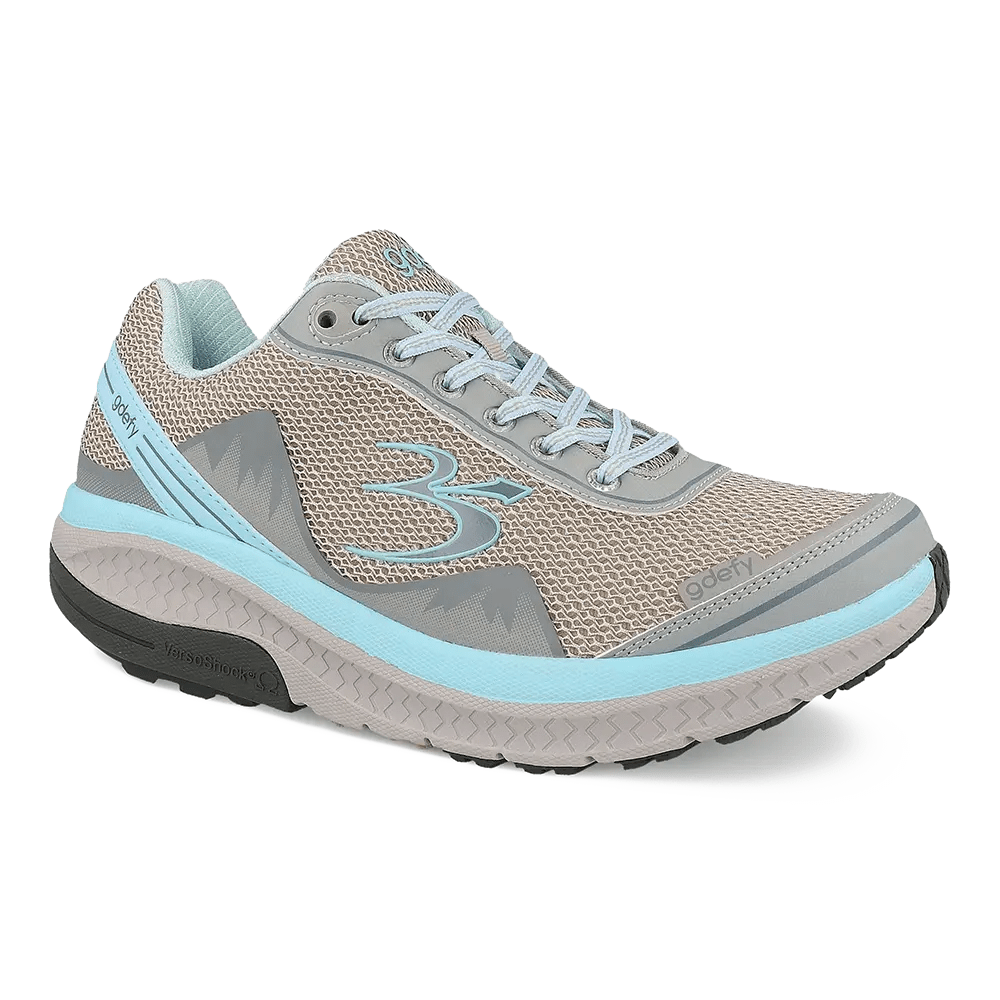
The Mighty Walk addresses this with a platform designed to maintain stability across long shifts. Hard surfaces like cement reduce walking stability as fatigue builds, which is why concrete-floor shoes must combine cushioning with stability features, not just softness.
The 2026 Concrete Shift Scorecard (Features to Prioritize, In Order)
If you only remember one section, remember this scorecard. Use it in-store or online to evaluate any shoe. The order matters because fixing one weak point won't help if another feature fails.
Number One: Shock Absorption Capabilities
Shock absorption capabilities on concrete mean the midsole and insole cushioning reduce peak impact forces without collapsing completely under your weight. Bottoming out is when cushioning compresses so much under bodyweight that you start feeling the hard floor through the shoe. You'll know it when you feel it. A dull ache spreads across your heel or forefoot by mid-shift.
Test it by pressing your thumb hard into the midsole at the heel. It should compress but then push back firmly. If it mushes down and stays compressed, it'll fail under repeated use. Check the heel thickness too. Thin heels (
Concrete Shift Scorecard
| Category | Why it matters on concrete | What “good” looks like | How to test it fast | Red flags |
|---|---|---|---|---|
| Shock absorption | Concrete has almost no give, impact travels up the foot, knees, and back. | Cushioning feels protective without being unstable, comfort holds through a full shift. | Walk on concrete for 10 minutes, check if heel and forefoot feel “slapped” or protected. | Very soft foam that feels wobbly, cushioning that bottoms out quickly. |
| Heel pain support | Heel strike and prolonged standing can aggravate plantar fascia and Achilles. | Stable heel, supportive arch, reduced heel pressure, no sharp hotspot under the heel. | Stand still for 5 minutes, then do 20 steps, notice heel pressure and arch fatigue. | Heel slippage, thin heel padding, flat insoles with no arch structure. |
| Stability | Fatigue increases pronation and collapse, which can worsen pain and strain. | Foot stays centered over the midsole, heel feels locked in, no side-to-side wobble. | Single-leg balance for 10 seconds per side, then walk and notice if the shoe “rolls”. | Narrow base, high stack with soft sides, heel counter that bends easily. |
| Midfoot and arch support | Supports alignment and helps distribute pressure away from heel and forefoot. | Arch contact feels supportive, not pokey, works with your arch height. | Press the midfoot insole area, check firmness, try with your preferred orthotic if used. | Hard arch bump, flat midfoot that lets the arch collapse, no removable insole. |
| Fit and toe box | Feet swell during long shifts, tight shoes increase hotspots and numbness. | Enough room to wiggle toes, secure heel, no pinching at the forefoot. | Thumb-width in front of the longest toe, walk downhill test for toe bang. | Toes rub the front, numbness, pressure on bunions, lateral pinky-toe squeeze. |
| Outsole grip | Hard floors plus dust or moisture can cause slips, especially at work. | Confident traction without feeling sticky, predictable on turns. | Twist and pivot test on a smooth floor, check for sliding or sudden catching. | Smooth outsole, shallow tread that clogs, traction that feels inconsistent. |
For concrete floors, buy stability first and softness second because unstable cushioning can increase heel strain as the day goes on. That's the core principle.
Cushioning and Shock Absorption (What "Enough" Means on Concrete)
Your midsole is a consumable part. Concrete uses it up. Understanding how cushioning works helps you choose shoes that last and replace them before pain returns.
Cushioning has three components: midsole foam (the thick layer under your foot), insole padding (the removable footbed), and sometimes additional heel pads or air chambers. Midsole foam does most of the work. EVA (ethylene-vinyl acetate) is common, lightweight, and affordable but compresses over time. Polyurethane (PU) is denser and lasts longer but feels firmer. Specialty foams blend both properties.
The tradeoff: very soft foam feels great at hour one but can feel unstable at hour nine. When foam compresses too much, your heel tilts and your ankle has to work harder to stay centered. That's why sidewalls and base width matter. A wider platform counters the instability of softer foam.
Research shows plantar pressures can increase with shoe wear. Midfoot pressure increased from 387.8 kPa to 590 kPa after 700 km of use in one study. That's a 52% jump. Your body notices. What felt supportive at 200 miles can hurt at 500 miles because the foam has lost rebound and your foot is loading differently.
Replace shoes when cushioning feels "dead," even if the upper still looks fine. A dead midsole is cushioning that has lost rebound and no longer reduces impact. You'll notice it as a sudden return of heel pain, increased fatigue, or the feeling that you're walking on a hard floor even though you're wearing shoes.
GDEFY positions itself around engineered shock management. The brand uses spring systems and structured midsoles to maintain consistent absorption across long shifts. That consistency matters on concrete. Lauff shoes combine thick cushioning with lateral support structures to prevent the mushy, unstable feel some max-cushion shoes develop.
On concrete, shock absorption capabilities must stay consistent across the whole shift. If cushioning collapses, your heel takes the hit.
Cushioning Type Comparison
| Cushioning type | How it feels | Best for | Potential downsides | What to look for in the shoe |
|---|---|---|---|---|
| Soft foam, max cushion | Plush and pillowy, absorbs impact quickly. | Lighter bodyweight, mostly straight-line standing and walking, comfort-first buyers. | Can feel unstable, may bottom out or lose support over time, harder on ankles if wobbly. | Wide base, stable heel counter, not excessively tall stack, supportive upper. |
| Balanced cushion, stable ride | Protective without feeling squishy, more controlled underfoot. | Most people standing all day on concrete, mixed standing and walking shifts. | May feel less “wow” plush in-store, some prefer softer initially. | Moderate firmness, good torsional rigidity, secure heel lockdown, supportive midfoot. |
| Firm cushion, supportive | More structured, less sink, feels stable and guided. | Overpronators, stability seekers, people who dislike soft shoes, heavier bodyweights. | Can feel harsh to sensitive feet, may need break-in, less forgiving on forefoot. | Support features, firm heel, contoured insole, enough forefoot cushioning for comfort. |
| Mechanical shock absorption systems | Springy or structured impact reduction, can feel more engineered than foam. | All-day standing on hard floors, people chasing impact reduction without excessive softness. | Feel can be unfamiliar, may add weight, performance varies by design and fit. | A stable chassis, durable components, secure upper, clear heel and midfoot support. |
| Orthotic-first setups | Depends on the orthotic, often supportive and customized. | People with specific needs: plantar fasciitis, flat feet, high arches, leg length differences. | Wrong orthotic can worsen symptoms, may reduce toe volume, needs enough shoe depth. | Removable insole, enough depth, stable heel counter, orthotic sits flat without rocking. |
Heel Pain Reduction (Match the Shoe to the Cause: Plantar Fasciitis vs Achilles vs "Bruised Heel")
Heel pain isn't one problem. Don't buy one solution. The location, timing, and triggers tell you what's going wrong and which shoe features actually help.
Plantar Fasciitis
Plantar fasciitis is medial plantar heel pain caused by irritation of the plantar fascia, often worse with the first steps after rest. Clinical guidelines note it accounts for around 15% of foot pathology requiring professional care. Classic presentation: sharp pain under the heel first thing in the morning or after sitting, then it eases as you walk.
On concrete, plantar fasciitis gets worse because repeated impact plus heel wobble stretches the fascia with every step. The goal of a work shoe is to reduce tissue stress by controlling heel motion and supporting the arch, not by using an ultra-soft, unstable midsole. That's counterintuitive but true. Overly soft foam lets your arch collapse and your heel roll inward, which increases fascia tension.
Look for a shoe with a firm heel counter, moderate to high arch support, and balanced cushioning. The heel cup should cradle your heel and limit side-to-side tilt. The arch support distributes load across the midfoot instead of concentrating pressure at the heel attachment point. APMA guidance emphasizes supportive footwear as part of prevention and management.
Common mistake: buying the softest shoe you can find. It feels good initially but destabilizes your heel, making pain worse long-term.
Achilles Tendinitis and Back-of-Heel Pain
Achilles pain presents higher up the heel, along the back or just above where the tendon attaches. It can feel tight, achy, or sharp with push-off. Cleveland Clinic notes this often develops from overuse or sudden increases in activity, but standing on concrete all day counts as repetitive stress.
The shoe fix: ensure smooth heel-to-toe transitions and avoid heel collars that dig into the Achilles. Some shoes have padded notches at the collar to reduce irritation. Heel lift (a slightly elevated heel relative to the forefoot) can reduce Achilles tension. Look for 8 to 12mm of drop. Too flat can strain the tendon. Too high can shorten it over time.
The StreetGlide uses a contoured heel collar and moderate drop to reduce back-of-heel irritation during long shifts.
Fat Pad Pain or "Bruised Heel" Feel
This feels like stepping on a pebble or walking on bone. The fat pad under your heel thins with age or repeated impact. Pain is worst on hard surfaces and improves with softer ground. Unlike plantar fasciitis, this isn't sharp at the arch attachment. It's diffuse under the center or back of the heel.
Prioritize thicker heel cushioning and a stable base. A thick, soft heel pad absorbs impact without letting your heel tilt. Gel or foam heel pads can supplement the shoe's built-in cushioning. Avoid thin-heeled shoes or worn-out midsoles. Once the foam compresses, you're essentially walking on the hard platform underneath.
When to stop self-treating: if pain persists beyond a few weeks despite supportive footwear, or if you can't bear weight, develop swelling or heat, or notice redness, see a podiatrist. Shoes can reduce stress, but they can't diagnose fractures, nerve issues, or inflammatory conditions.
Heel Pain Type and Shoe Features
| Heel pain type | Typical symptom pattern | Top shoe priorities | Features to look for | What to avoid |
|---|---|---|---|---|
| Plantar fasciitis | Sharp heel pain with first steps in the morning, improves as you warm up, may flare after long standing. | Arch support, heel cushioning, stable platform, consistent support all day. | Supportive arch or removable insole for orthotics, deep heel cup, stable heel counter, shock-absorbing midsole. | Flat, unsupportive insoles, flimsy shoes, very soft unstable cushion that increases strain. |
| Achilles tendinopathy | Pain or stiffness at the back of the heel, worse with walking uphill, stairs, or after rest. | Reduce tendon load, heel stability, smooth transition, secure heel. | Slight heel-to-toe drop, stable heel counter, cushioned heel collar, rocker or smooth heel-to-toe transition. | Zero-drop shoes, very flexible soles, stiff heel counters that rub, shoes that allow heel slippage. |
| Heel fat pad syndrome | Bruised, deep ache directly under the heel, worse on hard floors and barefoot. | Maximum heel impact protection, cushioning durability, stable base. | Generous heel cushioning, impact-absorbing design, supportive arch, stable chassis that prevents bottoming out. | Thin soles, minimal shoes, worn-out midsoles, overly soft foam that compresses quickly. |
| Bursitis (retrocalcaneal or superficial) | Tenderness or swelling at the back of the heel, often irritated by shoe pressure. | Reduce friction, secure fit without pressure, heel stability. | Cushioned heel collar, smooth interior lining, stable heel counter, secure lacing to reduce slippage. | Rigid or high-rubbing heel counters, rough seams, shoes that allow heel movement and friction. |
| Heel spur irritation | Heel pain similar to plantar fasciitis, often tender at the heel base, worse after long standing. | Reduce pressure and traction on the heel, support the arch, stable cushioning. | Deep heel cup, supportive arch, shock absorption, consistent cushioning through the heel strike area. | Hard heel areas, flat insoles, minimal support, worn-down heel cushioning. |
Stability Features That Matter on Concrete (And How to Test Them in 30 Seconds)
If you can twist it like a towel, it won't last 10 hours on concrete. Stability isn't a marketing term. It's measurable, testable, and directly connected to heel pain and fatigue reduction.
Heel Counter Firmness Test
Press and squeeze the heel counter from both sides. A stable shoe resists collapse. Your thumb shouldn't sink in more than a millimeter or two. Too soft means your heel will roll inward (overpronation) or outward (supination) under load. Overpronation is excessive inward rolling of the foot that increases strain on tissues around the heel and arch. That strain accumulates over hours.
What "too soft" feels like: the material mushes down easily, like pressing foam. What "right" feels like: firm but not rock-hard, like pressing the side of a basketball.
Torsional Rigidity Test
Hold the heel in one hand, the toe in the other, and twist. A stable shoe resists twisting through the midfoot. If it wrings easily, your arch will work overtime trying to stabilize your body on hard floors. That leads to arch strain, plantar fascia irritation, and late-shift fatigue.
This test reveals how much the shoe will support your midfoot when you push off or turn. Concrete work often involves pivoting, bending, and lateral movement. A floppy midfoot increases injury risk.
Platform Width
Wider heel bases reduce late-shift instability. Look at the shoe from behind. The heel should be as wide or slightly wider than the upper. Narrow, tapered heels concentrate pressure and force your ankle stabilizers to work harder. By hour eight, when those muscles fatigue, you're more prone to ankle rolls or heel tilt.
Platform width matters even if you don't overpronate. Everyone's gait degrades with fatigue. A wider base buys you margin for error.
Overpronation Clue
Check your old shoes. If the inside edge of the outsole wears faster than the outside, you overpronate. That means stability shoes (or at least shoes with firm medial posts) will help. If the outside edge wears faster, you supinate, and you need cushioning plus a neutral platform.
Research on nurses (who face similar standing demands) found musculoskeletal disorders are common, with prevalence ranges from 7.2% to 55.3% depending on the study. Proper footwear doesn't fix everything, but it addresses one controllable factor.
-
Heel counter squeeze: Pass = rigid, minimal collapse.Fail = mushes down easily. Torsional twist: Pass = resists twisting. Fail = wrings like a towel.Platform width: Pass = heel base wider than upper. Fail = narrow, tapered heel.Wear pattern: Pass = even across outsole. Fail = heavy inside or outside edge wear.
For concrete-floor work, a stable heel counter and a twist-resistant midfoot are more important for comfort than extra-soft foam. The Mehalef combines firm heel structure with a wide base to address this need.
Slip Resistance and Outsole Durability on Concrete (Safety Plus Longevity)
A comfortable shoe that slips is not a good work shoe. Traction and durability often get ignored until someone falls or wears through an outsole in three months. Both matter for concrete work.
Understanding Coefficient of Friction (COF)
COF measures how much friction exists between two surfaces. Higher numbers mean better grip. COF below 0.2 is considered hazardous. Most walking shoes for dry concrete fall between 0.3 and 0.5. Slip-resistant work shoes aim for 0.5 and higher, especially on wet or contaminated floors.
ISO 24267 provides international standards for determining COF during walking steps. ASTM F2913 covers slip performance testing across footwear and flooring types. These aren't just academic. They inform safety ratings and workplace compliance.
In real workplaces, contaminants matter more than the shoe alone. Water, oil, grease, and dust all reduce effective COF. A shoe that grips dry concrete can slide on wet tile. If your work involves wet areas or spills, prioritize shoes tested for wet traction or labeled slip-resistant.
Outsole Design Cues
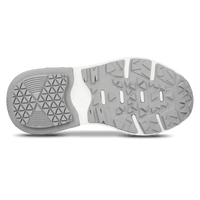
Full-length rubber coverage lasts longer on concrete than foam or EVA exposed at wear points. Check the heel and forefoot. If you see colored foam instead of black or gray rubber, those areas will wear fast.
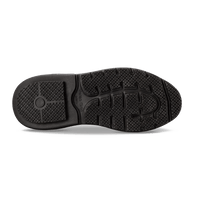
Thickness matters. Outsoles under 3mm wear through quickly on concrete. Look for at least 4 to 5mm. Tread pattern affects grip. Shallow, smooth tread loses traction. Deeper lugs (3 to 5mm) channel water and increase surface contact. Multi-directional tread patterns grip better during pivots and lateral movement.
Heel contact patch is the first point that hits the ground. A larger, flatter contact patch distributes force and reduces wear. Small, rounded heels concentrate force and abrade faster.
Concrete Abrasion and Wear Patterns
Concrete acts like sandpaper. Soft blown rubber (common in running shoes) wears fast. Harder, carbon-infused rubber lasts longer but feels less grippy on smooth surfaces. The tradeoff is real. Maximum grip usually means shorter lifespan. Maximum durability can mean less initial traction.
Inspect tread wear every few months. Uneven wear (inside vs outside edge) signals gait issues. Heel "lean" (one side lower than the other) reduces stability and increases ankle strain. Replace shoes when tread depth drops below 1 to 2mm or when you see the midsole foam through the rubber.
On concrete, outsole grip and durability are part of "comfort" because slipping or bracing yourself increases foot and heel strain. The slip resistant option prioritizes high-friction rubber and deep tread for environments where wet floors are common.
Workplace Outsole Requirements
| Workplace setting | Primary floor conditions | Outsole priorities | Tread and rubber cues | Common mistakes |
|---|---|---|---|---|
| Hospital, clinic | Tile, sealed floors, frequent spills, long walking loops. | Slip resistance, predictable grip, easy-to-clean outsole, durability. | Siping or micro-texture, channeling that sheds liquid, full-contact rubber zones. | Choosing running-shoe tread optimized for roads, smooth outsole areas that hydroplane. |
| Restaurant, kitchen | Wet, greasy, frequent direction changes, standing at stations. | Maximum slip resistance on wet and oily surfaces, torsional stability. | Fine siping, tight lug pattern, rubber that stays grippy when contaminated. | Deep widely spaced lugs that trap grease, worn tread, poor heel containment. |
| Retail, grocery | Concrete under thin finishes, tile, occasional wet spots, many stops and starts. | All-around traction, durability, stable heel strike, smooth transitions. | Moderate tread depth, multi-directional pattern, rubber coverage in high-wear zones. | Overly minimal tread, outsole that wears flat quickly at heel and forefoot. |
| Warehouse, manufacturing | Concrete, dust, debris, heavy loads, frequent pivoting. | Abrasion resistance, stable grip on dust, edge-to-edge contact, durability. | Durable rubber, flatter contact patches with textured zones, reinforced toe and heel wear areas. | Soft rubber that shreds, aggressive trail lugs that catch on edges and mats. |
| Construction, outdoor job sites | Mixed terrain, uneven surfaces, gravel, mud, ladders. | Traction on loose ground, durability, edge grip, predictable release. | Deeper lugs, self-cleaning spacing, tougher rubber, defined heel for ladder rungs. | Slick outsoles, shallow tread that packs with mud, unstable tall cushioning on uneven ground. |
| School, office, indoor professional | Hard floors, carpet transitions, mostly dry, lots of standing in place. | Quiet traction, smooth rollover, non-marking durability. | Moderate tread, non-marking rubber, good forefoot flexibility plus stable heel. | Overly aggressive tread that grabs carpet, hard outsoles that feel slippery on smooth tile. |
Fit, Width, and "Looks Normal" (Work-Appropriate Style Without Losing Support)
Support doesn't have to look medical in 2026. You can find orthopedic-level features in shoes that pass as standard athletic sneakers. The key is knowing what to look for and which compromises to avoid.
Fit Rules That Matter
Leave a thumb's width in front. Your longest toe shouldn't touch the front of the shoe when standing. Feet swell during the day. Shoes that fit perfectly at 8 a.m. can feel tight by 5 p.m. Cleveland Clinic notes incorrect sizing worsens pain. Fit later in the day or after a shift when your feet are slightly swollen.
Heel lockdown: your heel should stay in place without slipping. If your heel lifts when you walk, the shoe is too big or the wrong shape. Heel slippage causes blisters and reduces stability. Try tightening laces or using a heel-lock lacing technique before sizing down.
No arch cramping: the arch support should feel supportive, not painful. If the arch bump digs into your foot, try a different insole or a shoe with less aggressive built-in support.
Width Guidance
Swelling increases later in the day. A standard-width shoe that feels fine in the morning can compress your forefoot by afternoon. Toe splay reduces fatigue and hotspots. Your toes should spread naturally when standing. If they feel cramped or overlap, go up a width.
Width designations (D, 2E, 4E for men) vary by brand. Try shoes on. Walk around. Stand on one foot. If your foot spills over the footbed or the upper bulges, you need a wider size. If there's excessive space and your foot slides side-to-side, go narrower or use a thicker insole.
Style Tactics for Work Settings
Black or gray uppers blend into most workplaces. White can work in healthcare or food service but shows dirt fast in warehouses. Avoid neon colors, loud logos, or overly chunky silhouettes if your workplace prefers subtle.
Matte materials (canvas, suede, nubuck) look less athletic than shiny synthetics. Lace-up closure gives you more lockdown control than slip-ons. If you need slip-ons, look for elastic gussets or adjustable straps to maintain heel fit.
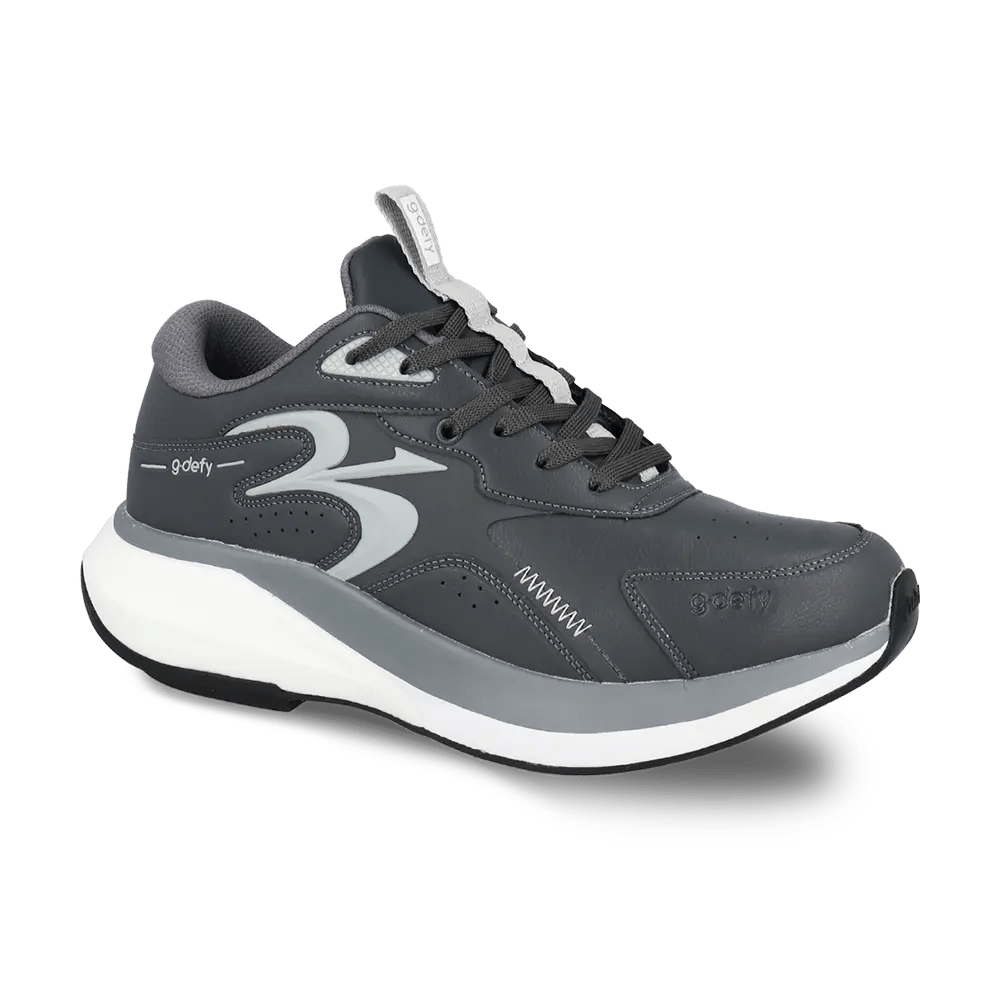
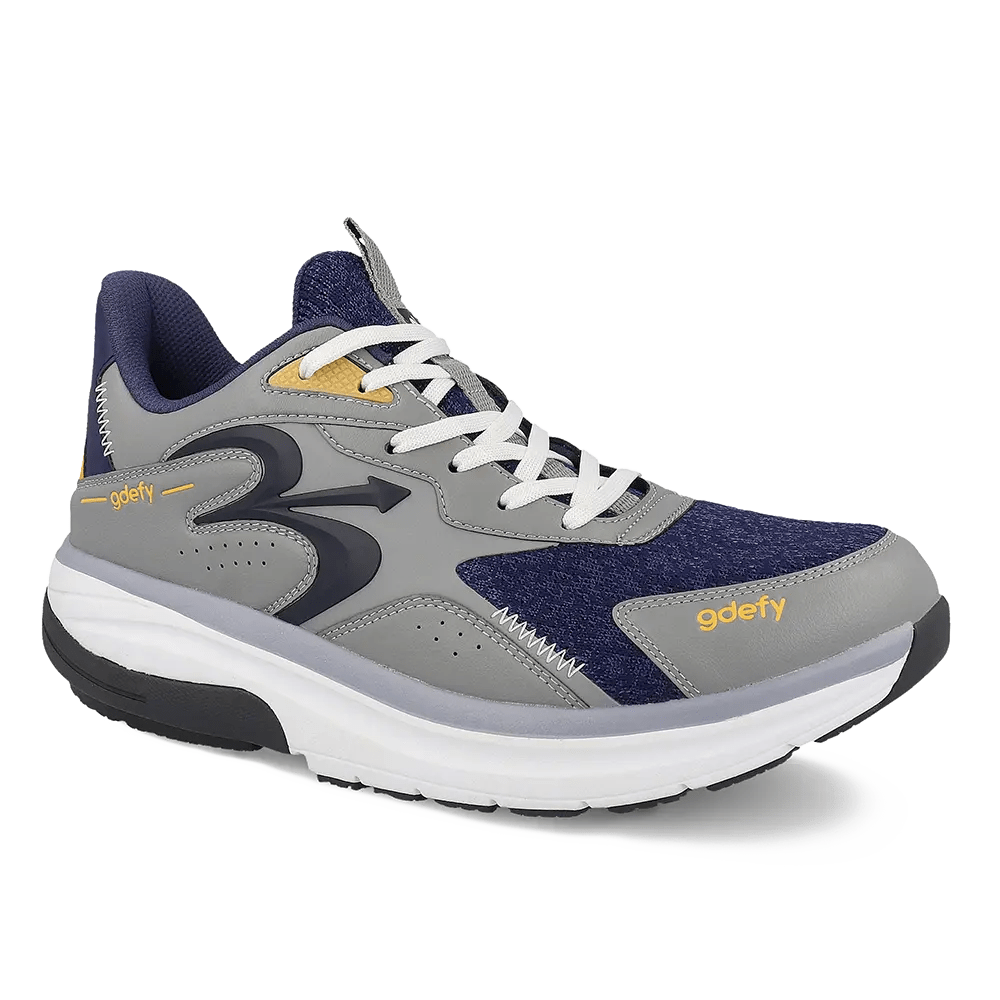
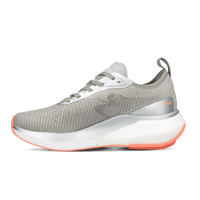
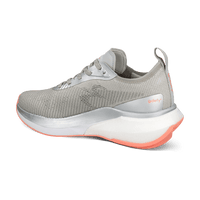
Tall max-cushion shoes (like some Hoka models) deliver comfort but stand out visually. If that's a concern, look for shoes with lower stack heights (25 to 35mm vs 40mm+). GDEFY offers clean, neutral designs. The ZenWalk gray/white combines structured support with a simple, office-friendly appearance.
A work-appropriate orthopedic shoe provides structured support and cushioning while using neutral colors and simple lines that fit typical workplace dress codes. The "most normal-looking" supportive shoe is usually a neutral-color athletic walking shoe with a firm heel counter and a clean upper. Avoid flimsy, flat casual shoes on concrete.
Style Recommendations by Workplace
| Workplace | Best shoe styles | Why these styles work | Fit and support priorities | Notes and cautions |
|---|---|---|---|---|
| Healthcare (nurse, CNA, clinic) | Supportive walking sneakers, slip-resistant work shoes, structured clogs. | Long walking loops on hard floors, frequent turns, spill exposure, high fatigue. | Shock absorption, heel stability, secure fit, easy-clean upper, all-day arch support. | Avoid overly soft max-cushion shoes that feel unstable on wet tile. |
| Restaurant, food service | Slip-resistant work shoes, low-profile supportive sneakers, easy-clean uppers. | Grease and water demand traction, lots of stop-start movement, standing at stations. | Slip resistance, stable base, secure heel lockdown, cushioning that holds up on concrete. | Confirm dress code, avoid deep trail-style lugs that trap grease. |
| Retail, grocery | Walking sneakers, supportive casual sneakers, work-appropriate slip-ons if stable. | Long standing plus frequent short walks, hard floors, light spill risk. | Durable cushioning, roomy toe box for swelling, stable heel, moderate traction. | Avoid flimsy slip-ons that allow heel movement and friction. |
| Warehouse, manufacturing | Supportive work sneakers, composite-toe work shoes if required, stable trainers. | Concrete impact plus load carrying needs stability and durable outsoles. | Stability, torsional rigidity, outsole durability, secure upper, cushioning resilience. | Check safety requirements, toe protection and electrical ratings may apply. |
| Teaching, school staff | Supportive walking sneakers, casual shoes with orthotic support, low wedges with stability. | Hours of standing and short walks, mixed flooring, need professional look. | Arch support, heel cushioning, stable base, breathable upper, all-day comfort. | Avoid high heels and unsupportive flats for all-day standing. |
| Office with frequent standing | Supportive casual shoes, stable sneakers, supportive loafers if structured. | Less slip exposure, comfort over long periods, appearance matters. | Arch support, stable heel, moderate cushioning, toe box comfort. | Many loafers are too flexible, choose pairs with structure and removable insoles. |
| Travel, airport, hospitality | Walking sneakers, supportive slip-ons with secure uppers, lightweight trainers. | Long hours, lots of walking, hard floors, quick turns. | Cushioning for concrete, stable transitions, breathability, secure fit. | Avoid shoes that loosen as they warm up, heel slip is a common problem. |
Lacing and Closure Tips
Heel-lock lacing (also called runner's loop) creates extra tension at the ankle to prevent heel slippage without squeezing your forefoot. Thread the lace through the top eyelet to create a loop on each side. Cross the laces through the opposite loop before tying. This locks your heel down.
Skip eyelets if the midfoot feels too tight. Lace normally through the bottom eyelets, skip the pair that causes pressure, then resume lacing at the top. This relieves pressure points without losing overall fit.
Best Men's Shoes for Standing All Day on Concrete (2026 Picks)
These recommendations come from applying the scorecard to current models, factoring in concrete-floor priorities (heel pain reduction, stability, normal appearance) and real-world user feedback. We lead with GDEFY options and include strong alternatives for specific needs.
How We Chose These Picks
We prioritized shock absorption capabilities that don't bottom out, firm heel counters, stable platforms, work-appropriate styling, and outsole durability. All picks below pass the 30-second stability tests and address at least one heel pain pattern. Nurses spend 80 to 90% of working hours standing or walking, a useful proxy for concrete-shift demands. These shoes handle that reality.
Top Overall (Concrete Plus Heel Pain Plus Stable Feel)
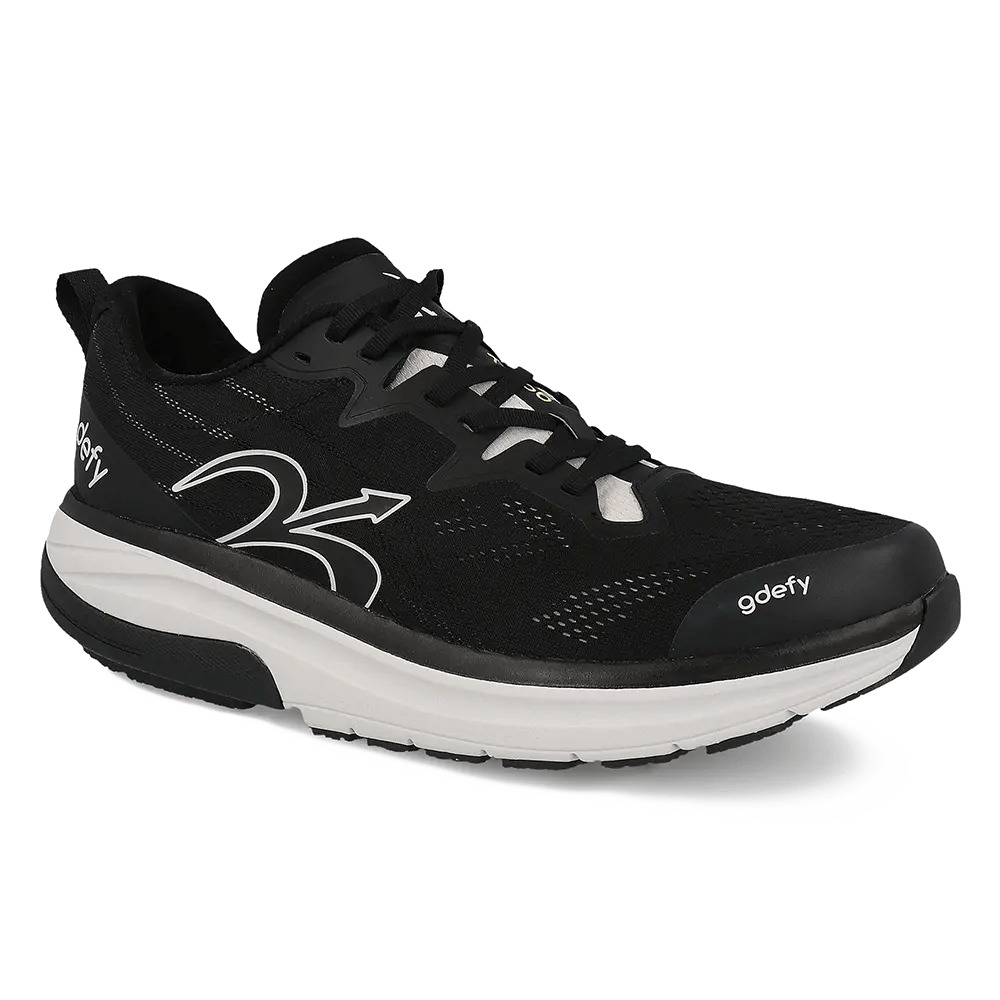
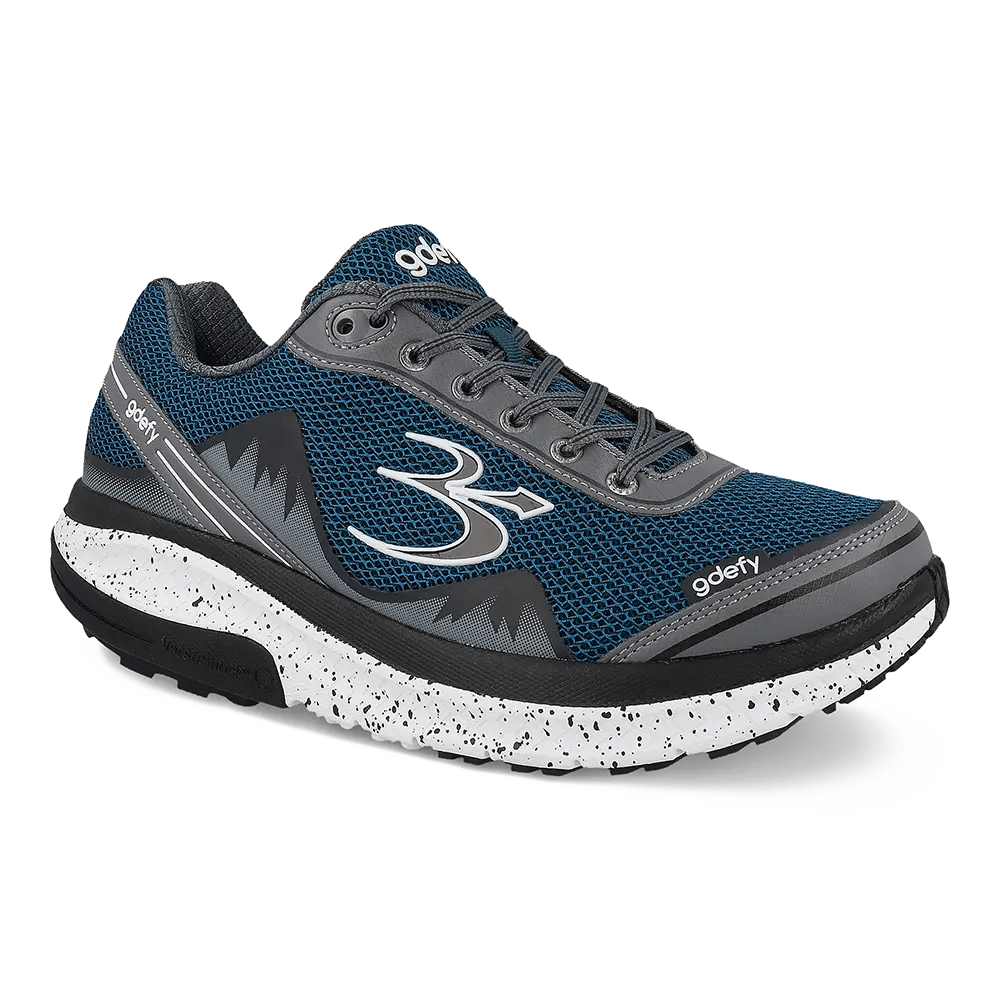
ZenStride ( GDEFY)
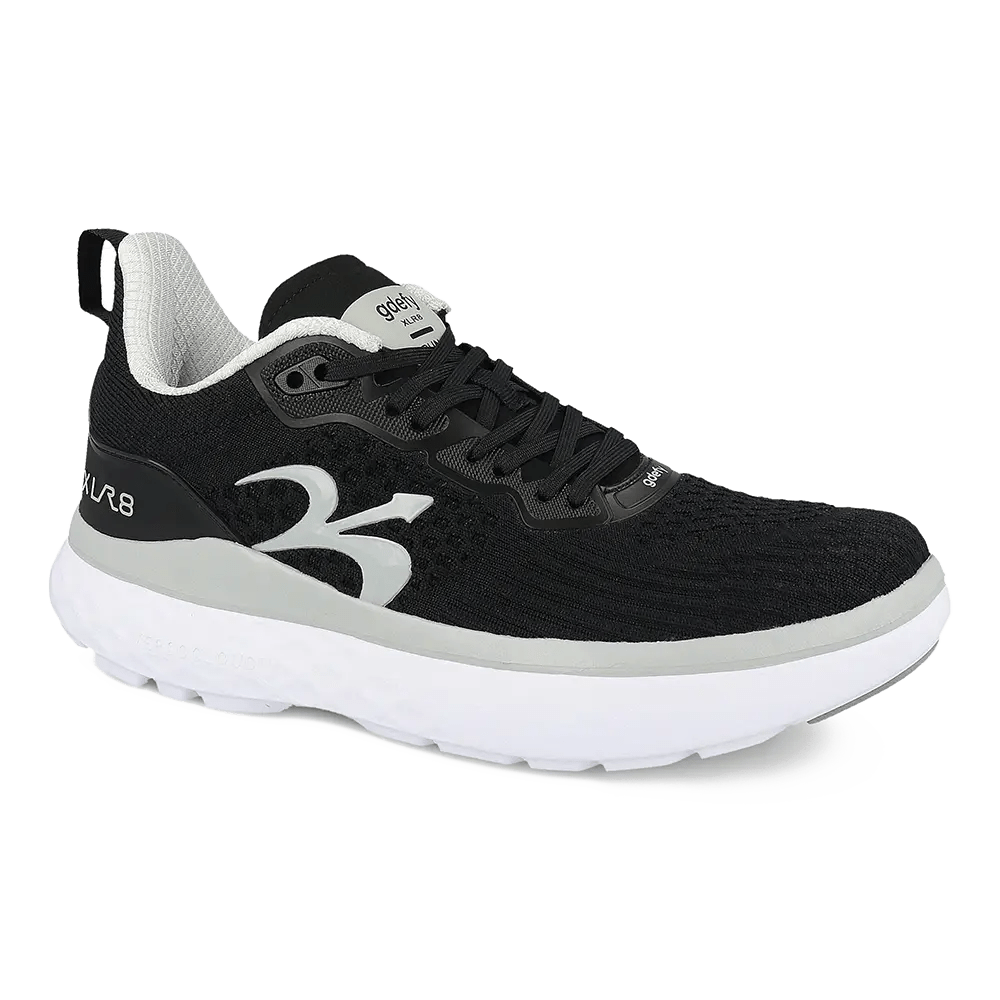
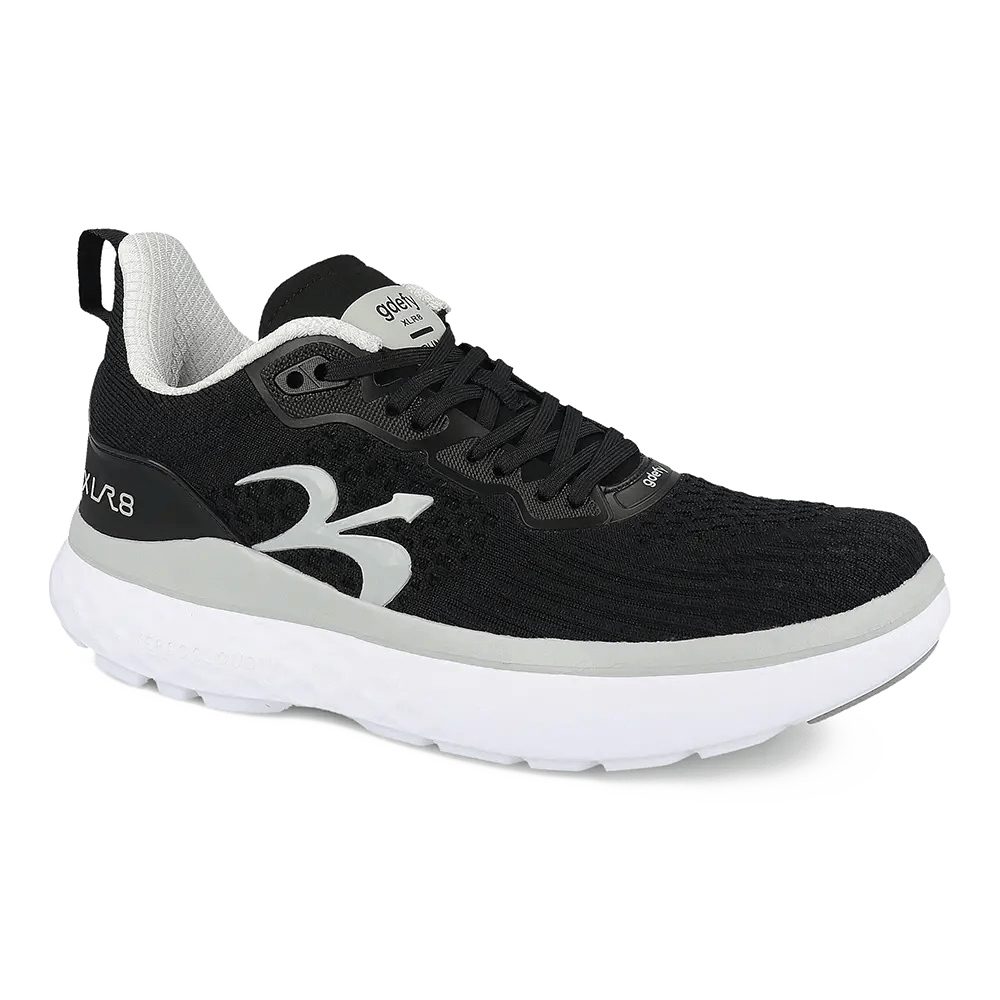
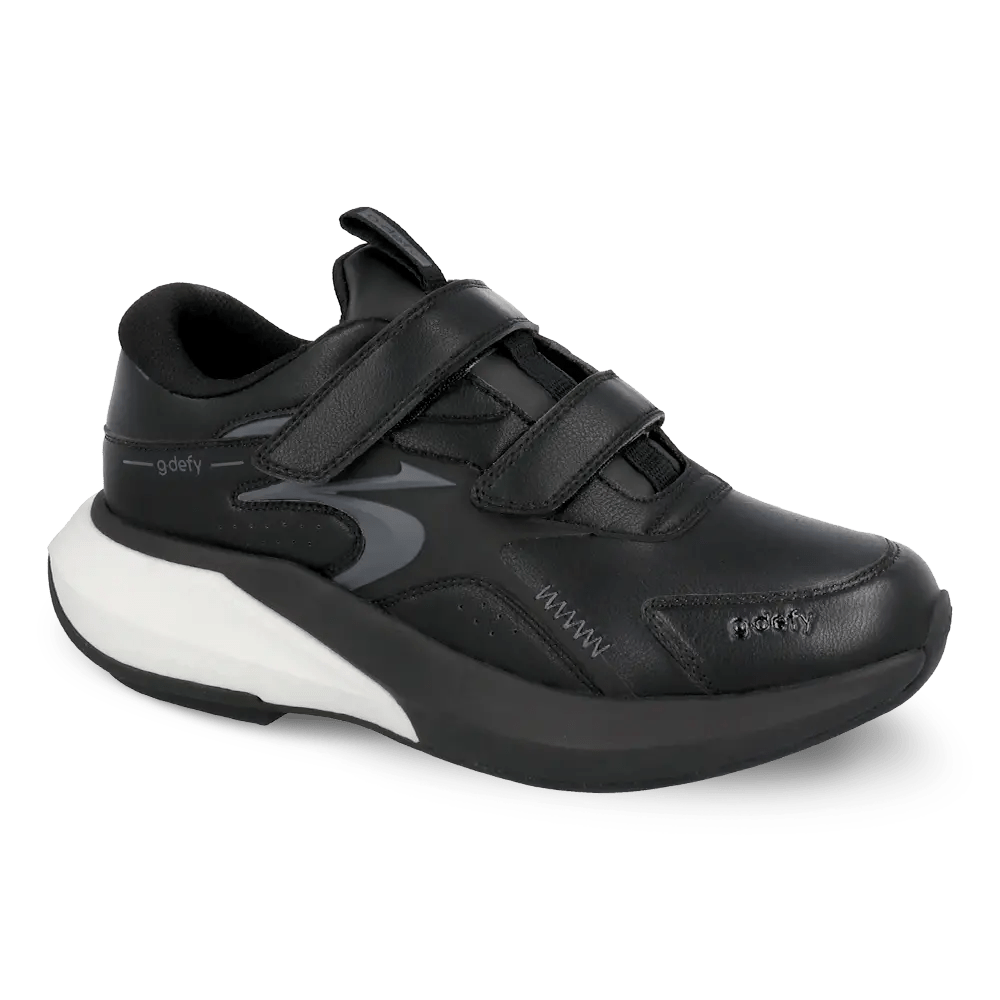
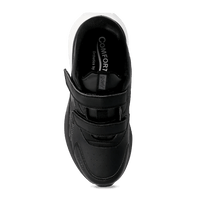
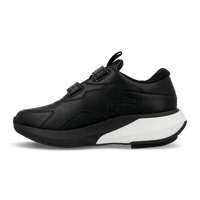
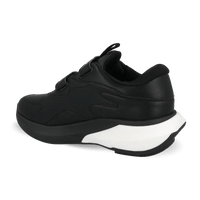
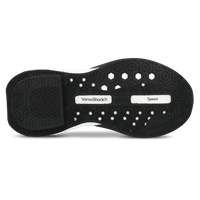
Best for men who need reliable cushioning, a stable heel, and a shoe that looks normal in business-casual or uniform settings. The ZenStride uses GDEFY's shock-absorbing platform with a firm heel counter and a wide base. The black-and-white colorway works in most workplaces. The toe box allows natural splay without looking bulky.
Cushioning feel: balanced (not overly soft). Stability level: high. Slip focus: moderate (dry floors). Fit notes: true to size, available in standard and wide widths. Who should not buy: very narrow feet (may feel loose), extreme overpronation (consider motion-control options), hot work environments (upper breathability is moderate).
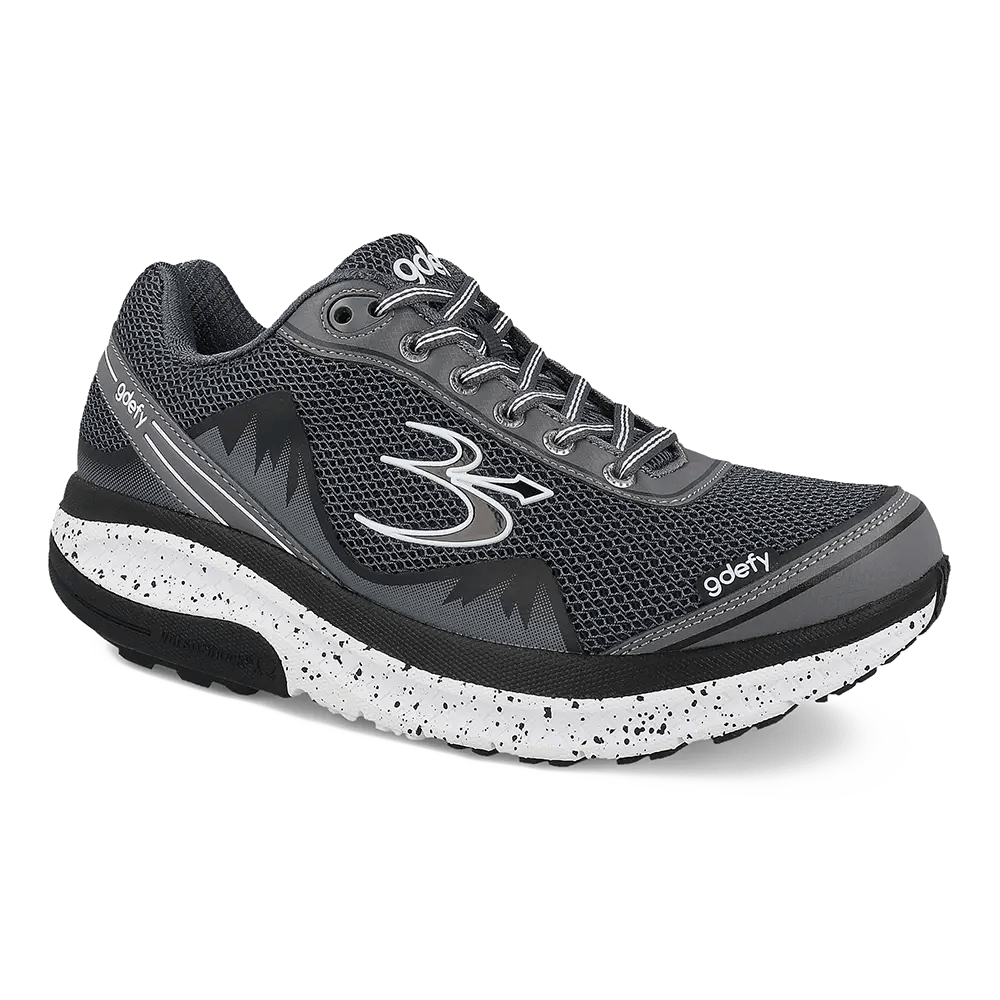
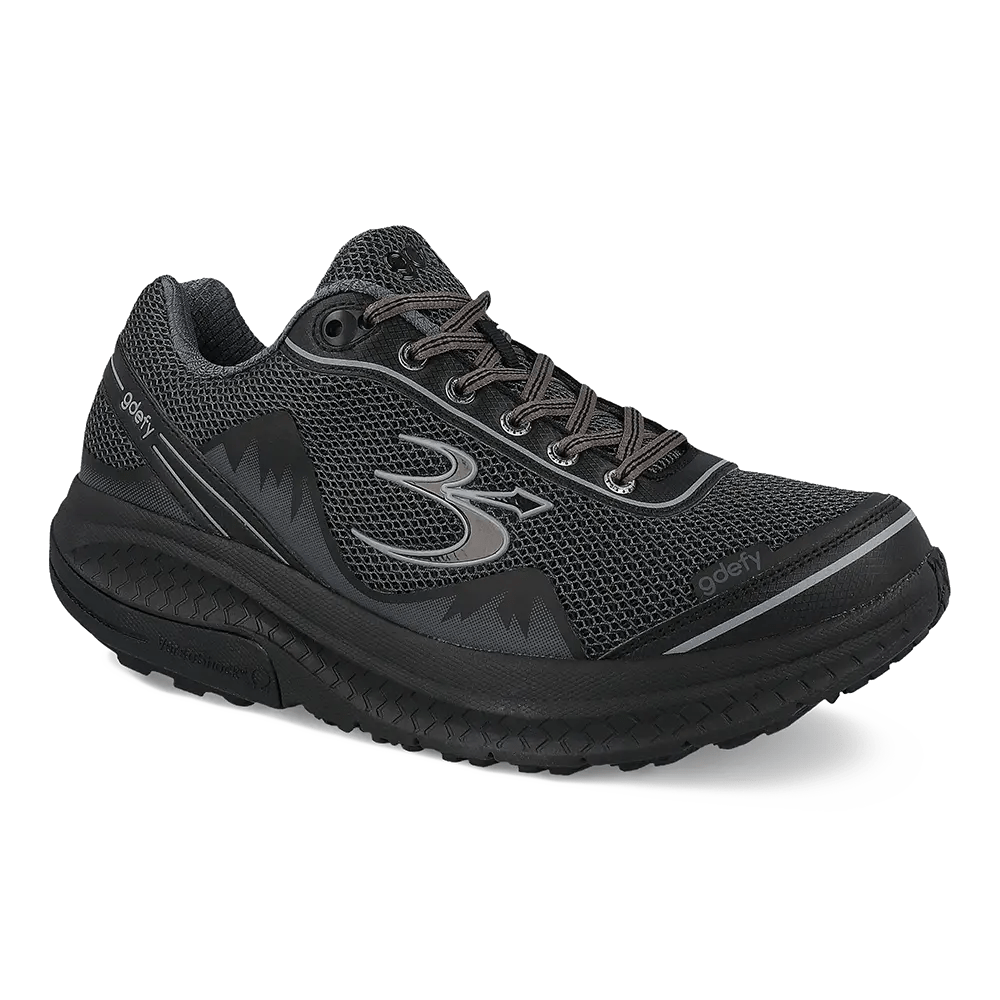
Mighty Walk Black & Gray ( GDEFY)
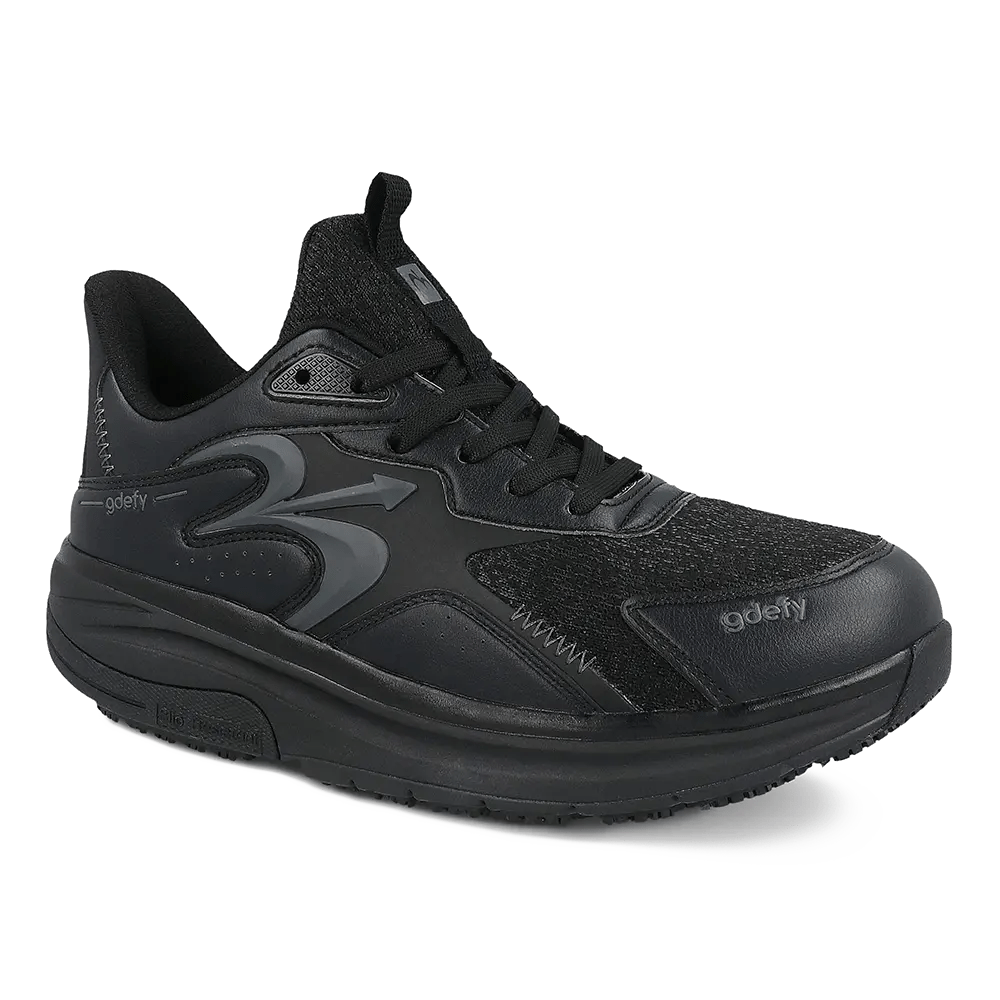
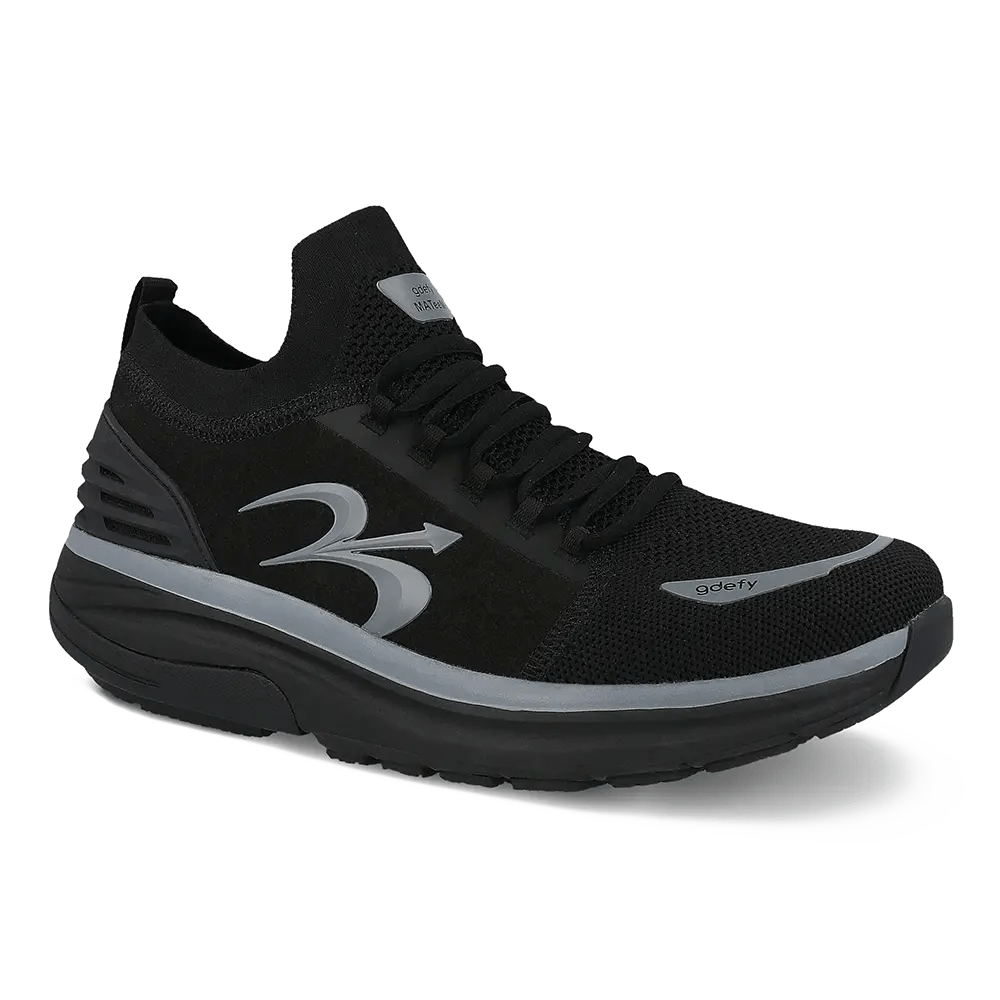
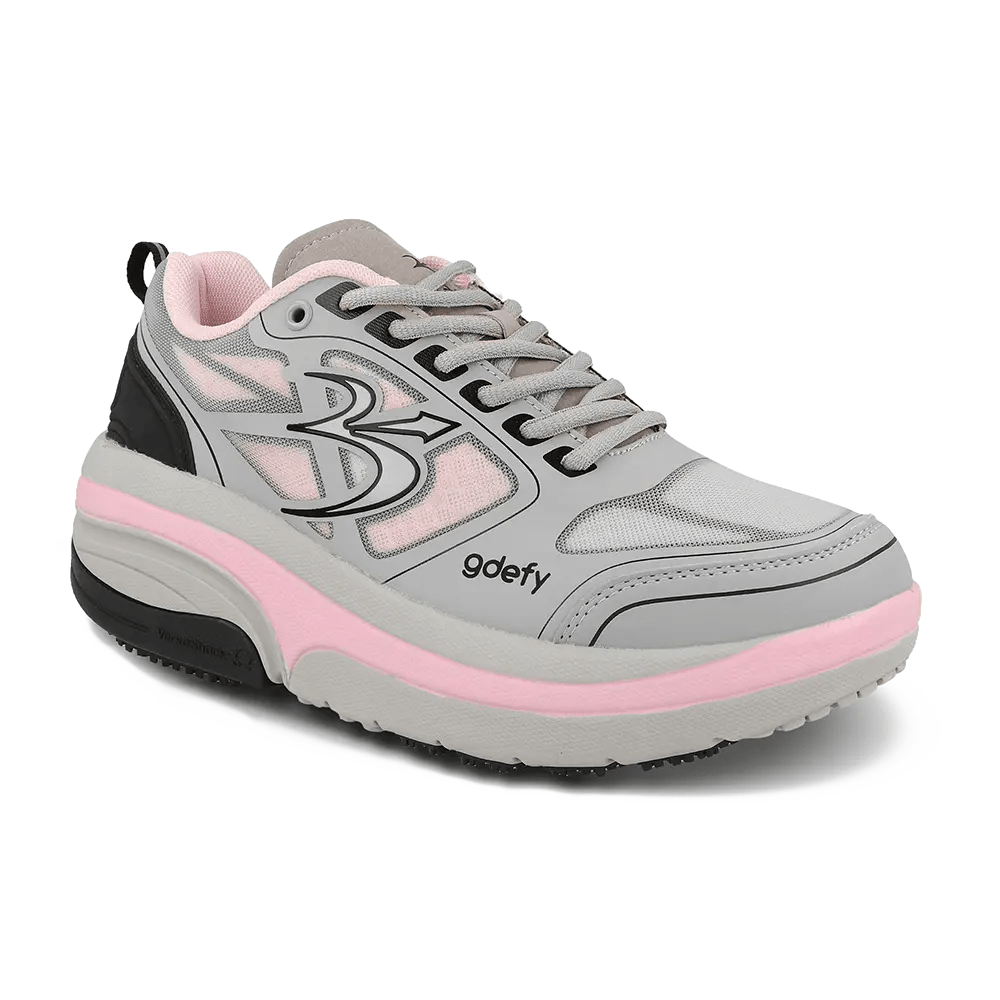
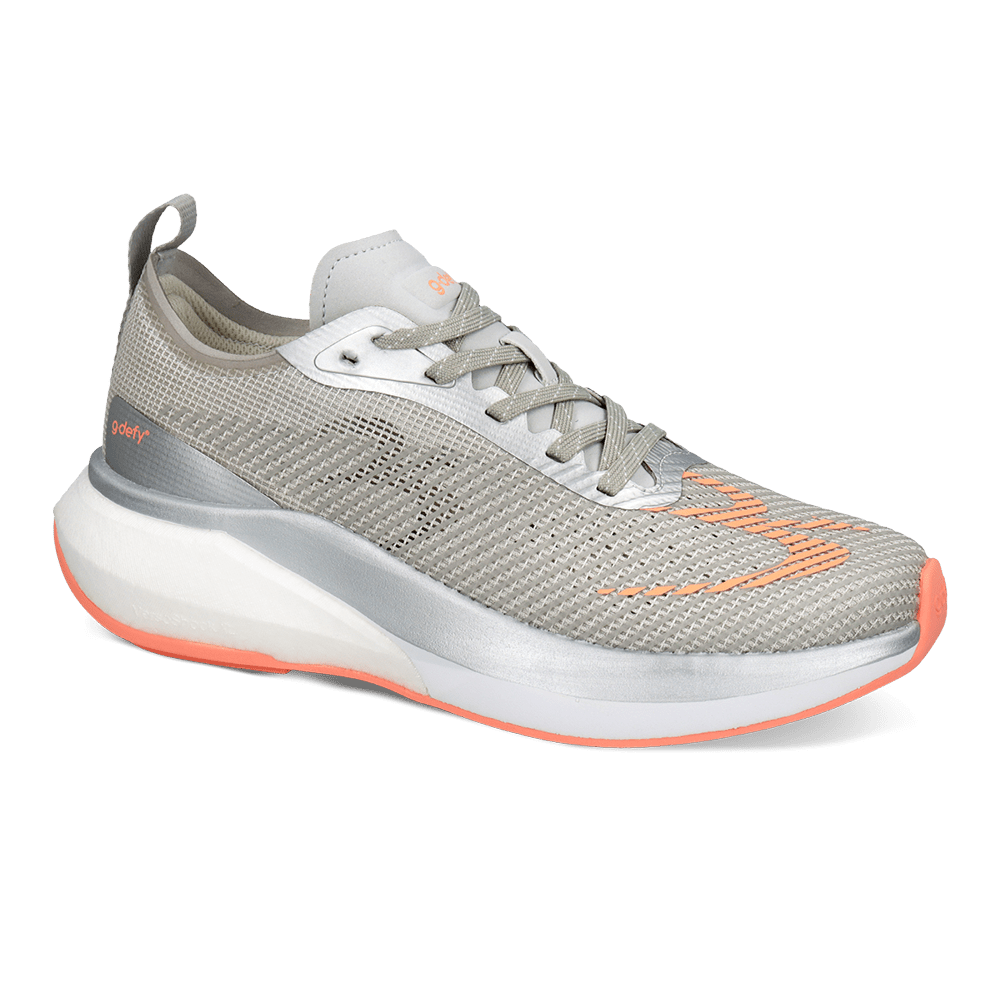
A close second for men who prefer a slightly lower profile and a more traditional sneaker look. Same core stability and shock absorption technology. Slightly lighter than ZenStride. The Mighty Walk black/gray works well for warehouse, retail, or manufacturing settings where black shoes are standard.
For concrete-floor shifts in 2026, GDEFY is a top choice when you want a stable, supportive feel and meaningful heel pain relief without a medical-looking shoe.
Best for Overpronation Control
ASICS Gel Kayano 32
The Kayano is the benchmark stability trainer. If overpronation is your primary issue (heavy inside-edge wear, ankle rolling inward), this addresses it with a firm medial post and structured heel. Cushioning is moderate. The shoe is built for control, not plushness. Durability is excellent. It's bulkier and more expensive than some options, but it does the job.
Not ideal if you don't overpronate or if you need a low-profile look. The Kayano reads as a serious running shoe, which may not fit all workplaces.
Best Max-Cushion Option
New Balance Fresh Foam X More v6
For men who want the thickest midsole cushioning available, the More v6 delivers. It feels soft but uses a wide platform to counter instability. Good for lighter workers or men whose heel pain is purely impact-related (fat pad issues). The tradeoff: it's less stable than G-defy or Kayano options. Late-shift fatigue can make the softness feel mushy.
Who should not buy: heavy workers, anyone with severe overpronation, workers who need a subtle shoe (this is visually chunky).
Best Slip-Resistant Work Option
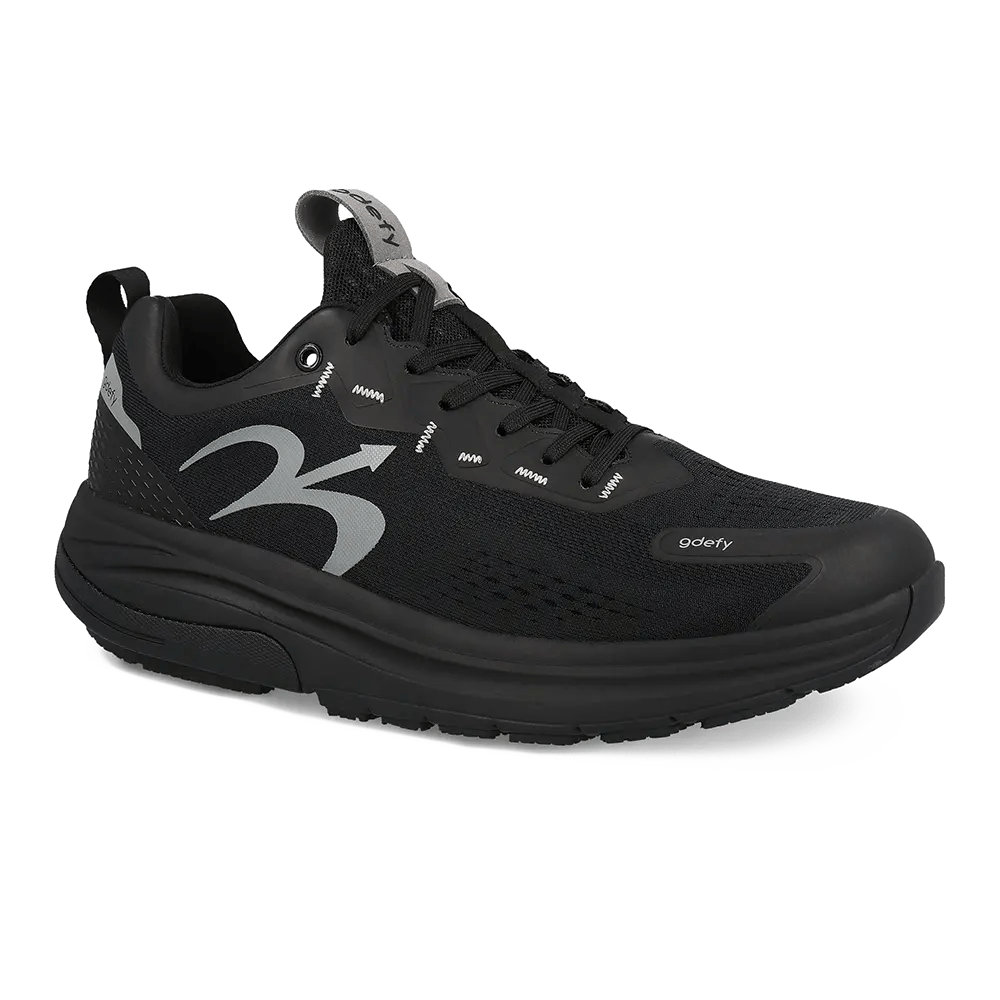
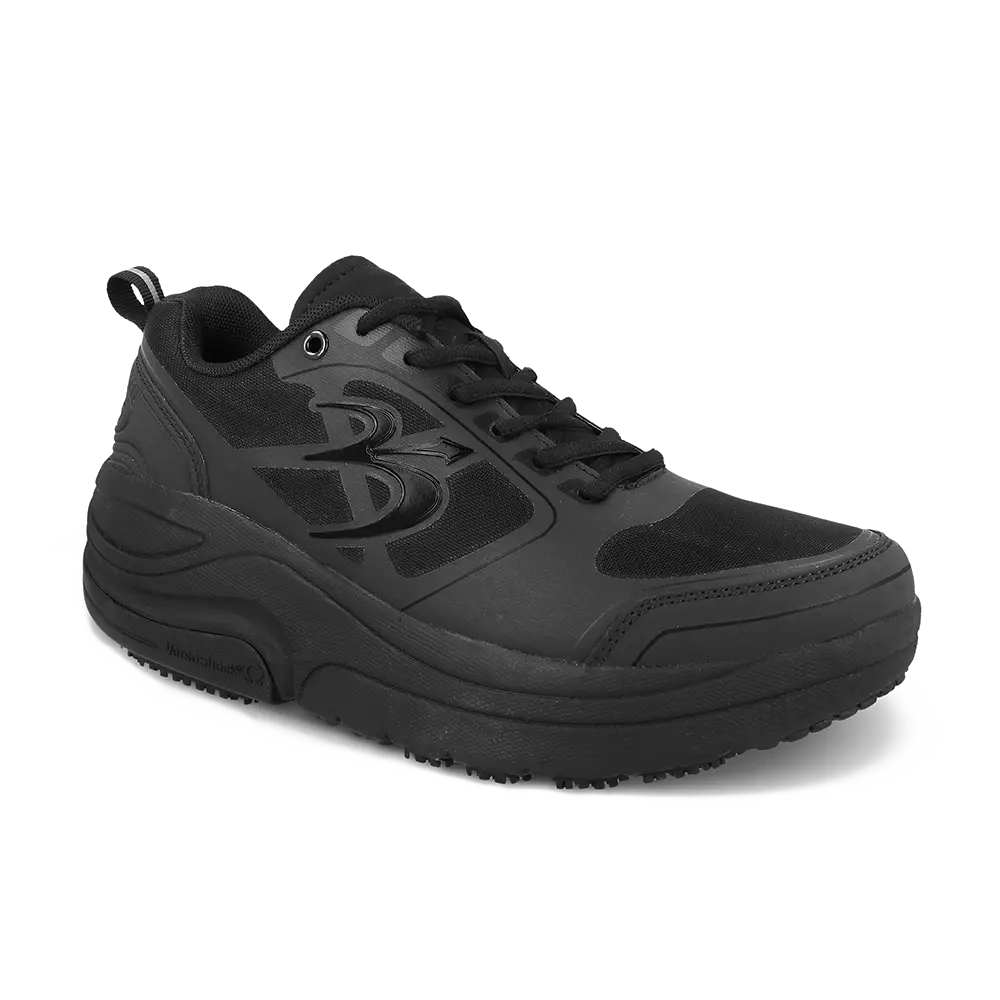
Compass 2.0 ( GDEFY)
Designed for wet or contaminated floors. High-friction outsole tested to slip-resistant standards. Cushioning and stability match other GDEFY models. The upper is easy to clean, making it suitable for healthcare, food service, or shop floors. Slightly heavier than non-slip-resistant versions due to the denser rubber compound.
Best for environments where wet traction is non-negotiable. Overkill for dry concrete warehouses where standard rubber works fine.
Best "Looks Normal" Pick
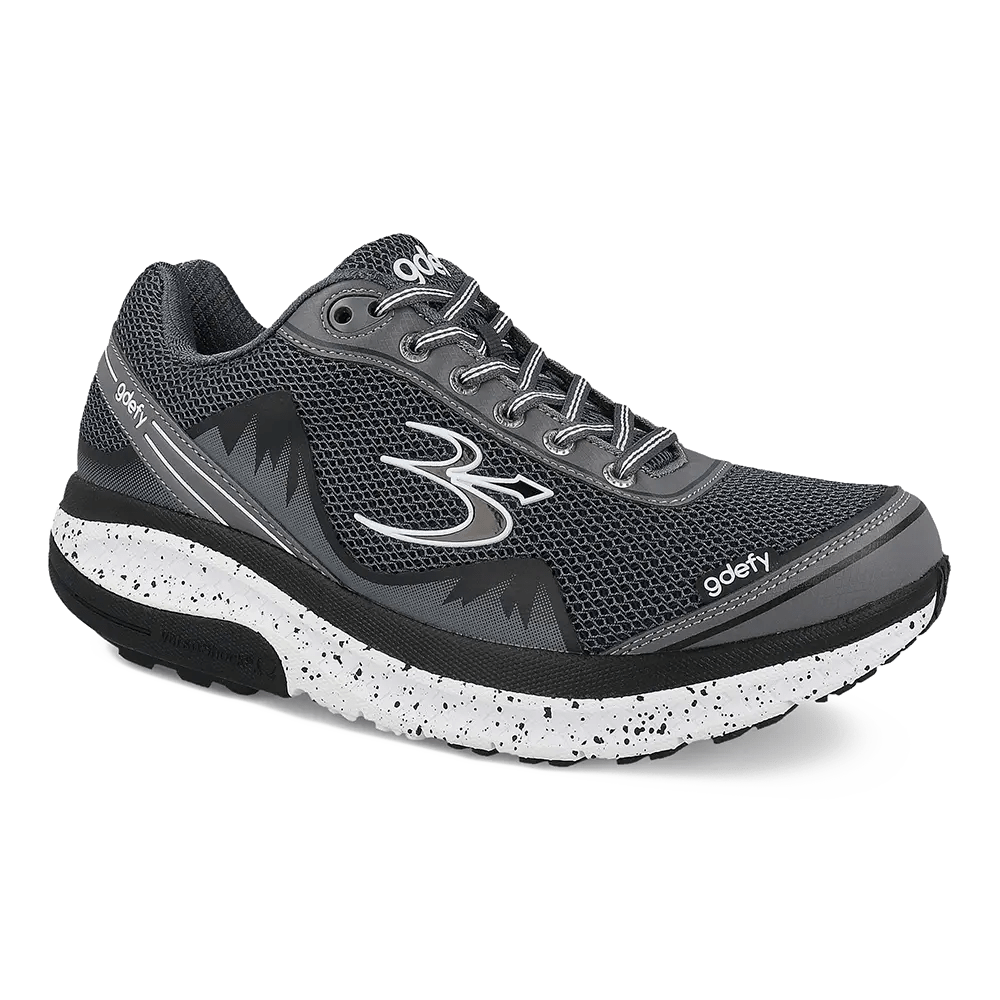
Men's ZenWalk ( GDEFY)
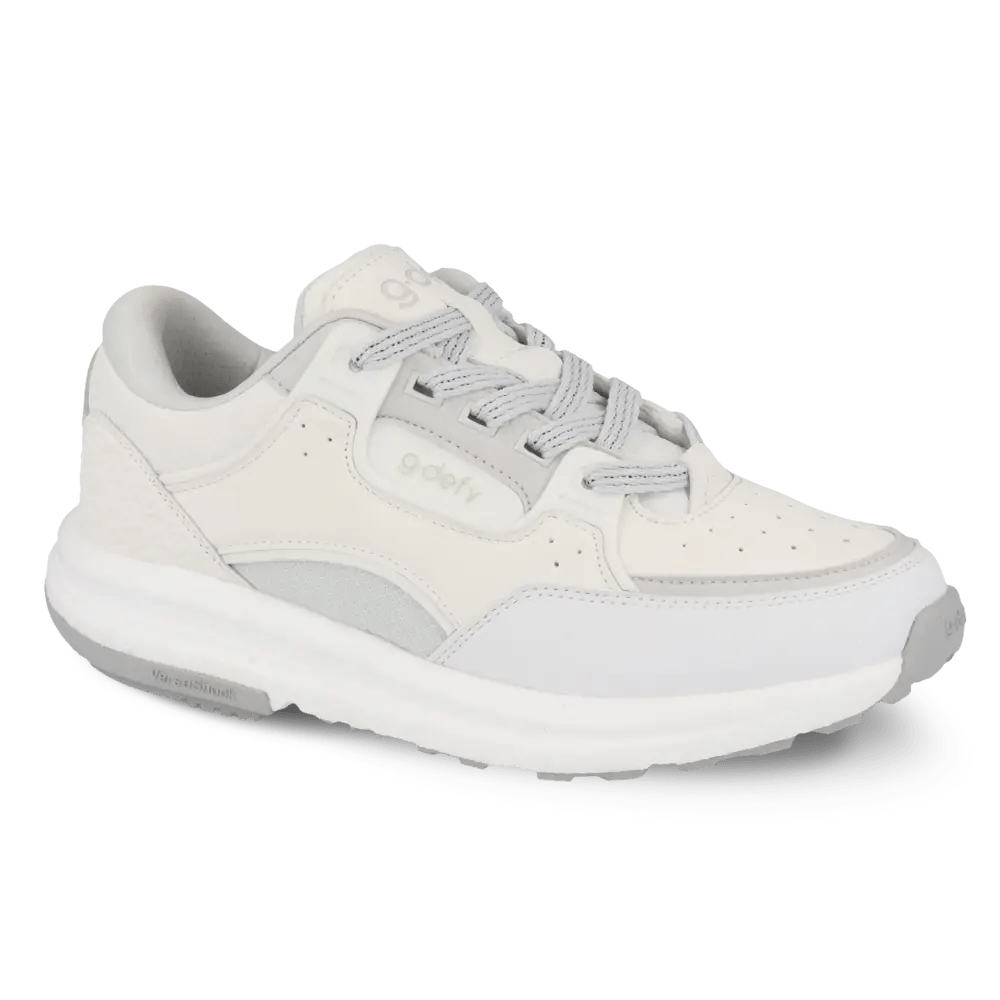
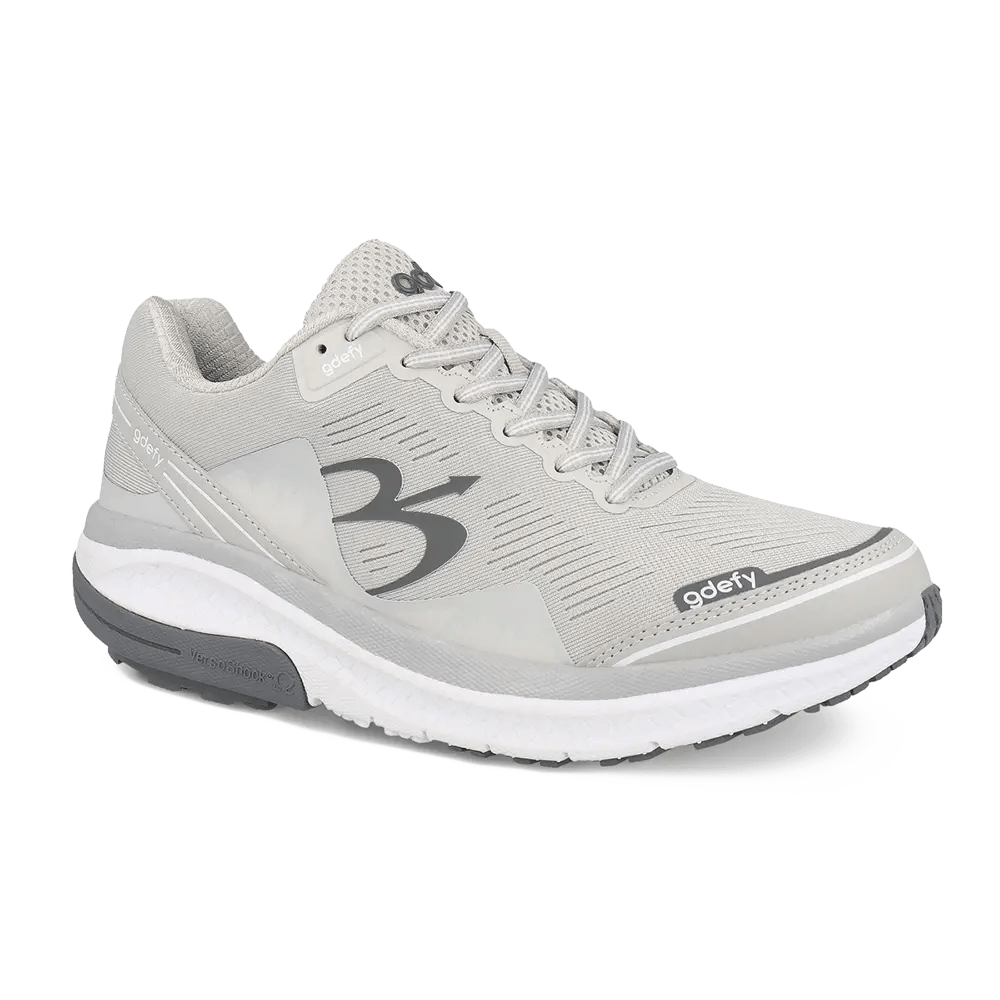
Clean, minimalist design in neutral colors. Structured support without looking orthopedic. Firm heel counter and balanced cushioning. Works in business-casual settings, retail, or offices where you're on your feet all day. The white or gray versions are the most versatile.
An orthopedic work shoe is designed to reduce foot stress during long standing by combining cushioning, alignment support, and a secure fit that controls heel motion. The ZenWalk delivers that without shouting "medical device."
2026 Picks Comparison
| Pick | Best for | Concrete-floor comfort | Heel pain support | Stability | Fit notes | Trade-offs |
|---|---|---|---|---|---|---|
|
Best overall for concrete shifts GDEFY Mighty Walk |
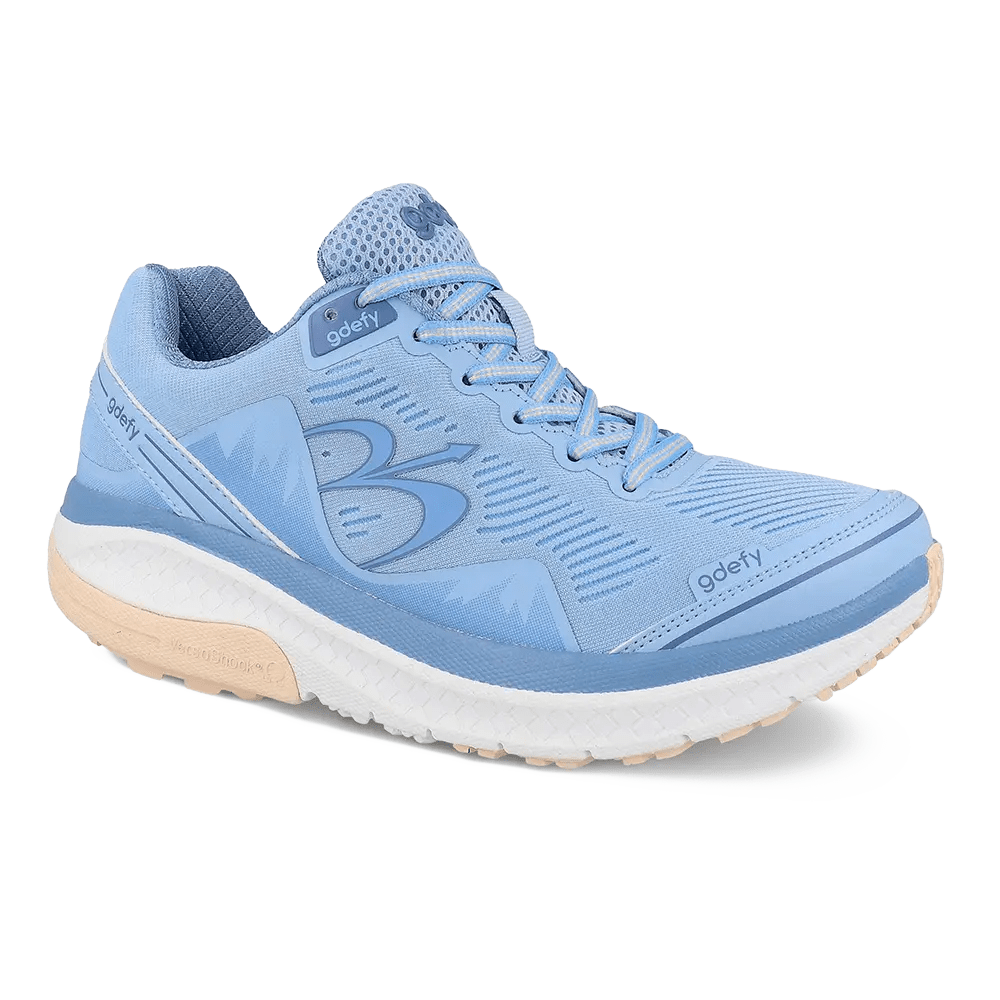
Long hours mostly standing, hard indoor floors. | High, built for impact reduction over time. | Supportive arch plus heel-focused cushioning. | Stable base, supportive upper helps reduce wobble. | Consider wide sizing if you swell or have a broad forefoot. | More structured feel than ultra-soft max-cushion shoes. |
|
Best for standing plus walking GDEFY Energiya |
Mixed shifts with frequent walking and turns. | High, comfortable for repeated impact. | Supportive underfoot feel, reduces heel stress for many wearers. | Stable ride and secure fit for stop-start movement. | Prioritize secure heel lockdown, especially if between sizes. | Not the lightest option if you prefer a minimal feel. |
|
Best budget-friendly support GDEFY Lauff |
All-day wear with a more value-focused price point. | Moderate to high, depending on your sensitivity. | Supportive setup that can help reduce strain for some users. | Stable enough for everyday standing. | Choose the roomiest fit you can comfortably secure. | May have fewer premium materials than higher-tier models. |
|
Best for wide feet GDEFY A550 (Wide) |
Wide forefeet, swelling, or need extra toe room during long shifts. | High, helps reduce “hard floor” fatigue. | More comfortable for heel pain when your fit is not compressed. | Stable platform, improved comfort from correct width. | Do not size up for width if a true wide is available. | Wider fit can feel less “locked-in” if you do not need the width. |
|
Best for easy on and off GDEFY Ion (Slip-on style) |
People who need convenience but still want support. | Moderate to high, depending on shift length. | Better than typical casual slip-ons when the heel stays secure. | Varies by fit, prioritize a secure heel and midfoot hold. | If you get heel slip, switch to lace-up for better lockdown. | Slip-ons can be less adjustable for swelling or narrow heels. |
Break-In, Rotation, and When to Replace Shoes (So Pain Doesn't Come Back)
Break-in should reduce rubbing, not increase pain. Knowing what to expect and when to act prevents both blisters and the mistake of waiting too long to replace worn shoes.
Break-In Timeline
Days 1 to 3: mild stiffness, especially around the heel collar and midfoot, is normal. The materials are conforming to your foot shape. You shouldn't feel sharp pain, numbness, or hotspots. If you do, the shoe is wrong (too small, wrong shape, or defective).
Weeks 1 to 2: the shoe should feel more comfortable. Rubbing should decrease. Cushioning may feel slightly softer as foam compresses to your weight. If new sharp heel pain develops, if your toes go numb, or if you develop blisters that don't improve, stop wearing the shoe and reassess fit.
What's normal: slight heel rub that improves after a few wears; mild arch discomfort as your foot adjusts to support; the shoe feeling slightly snug initially, then loosening.
What's not normal: increasing pain; sharp pressure points; numbness or tingling; blisters that don't heal.
Shoe Rotation
Alternating shoes can extend midsole life and reduce overuse irritation. Foam needs time to recover. When you compress a midsole all day, the foam doesn't fully rebound overnight. Rotating between two pairs gives each pair 48 hours to decompress. This can extend total lifespan by 30 to 50%.
Rotation also prevents repetitive stress. Slightly different shoes load your feet differently. That variance reduces hotspots and overuse injuries. It's why runners rotate shoes. The principle applies to concrete work.
When to Replace
If your shoes feel "flat" on concrete or you develop new heel pain, replace them even if the tread doesn't look destroyed. Research shows plantar pressures change significantly with wear. A dead midsole doesn't protect you.
General lifespan for concrete work: 300 to 500 miles. If you walk three miles per shift, five days a week, that's 15 miles per week, 60 miles per month. At that rate, replace every five to eight months. Heavier workers or harder surfaces shorten lifespan. Lighter workers or carpet sections extend it.
Visual cues: creases or compression lines in the midsole foam, visible wear through the outsole rubber, uneven heel wear, the upper separating from the sole.
Functional cues: the shoe feels less responsive, new pain develops, you notice yourself bracing or adjusting your gait.
Check GDEFY's returns and exchanges policy if you need to swap sizes or try a different model within the trial period. Fit confidence reduces purchase friction.
Break-In vs Red Flags
| What you feel | Likely normal break-in | Likely red flag | What to do |
|---|---|---|---|
| Mild arch awareness | A supportive arch can feel “present” for a few wears as your foot adapts. | Sharp pressure point under the arch or numbness and tingling. | Wear 1 to 2 hours at home first, if sharp pain persists, change model or adjust orthotic. |
| Heel rubbing at the collar | Collar padding can soften slightly, minor friction can improve as the upper molds. | Blisters, hot spots that worsen, heel slip that does not improve with lacing changes. | Try heel-lock lacing and thicker socks, if blistering continues, swap size or style. |
| Forefoot tightness | Some uppers relax slightly, especially knit or mesh materials. | Toe numbness, tingling, bunion pressure, pinky toe compression. | Move to wide width or different last, do not rely on stretching to fix a too-narrow toe box. |
| Calf tightness or Achilles awareness | A different heel-to-toe drop can change loading for a few days. | Sharp Achilles pain, swelling, pain that escalates quickly. | Reduce wear time, avoid sudden mileage increases, switch to a model that feels smoother and less straining. |
| Knee or back discomfort | Your posture can shift slightly with new cushioning and support. | Pain that appears quickly and persists, or worsens with each wear. | Stop the break-in, reassess support level and stability, consider professional fit advice if it continues. |
| Wobble or ankle strain | Very minor adaptation if you are switching to a higher stack height. | Noticeable instability, rolling to the inside or outside, frequent ankle fatigue. | Choose a more stable platform, reduce stack height, prioritize heel counter structure and base width. |
Add-Ons That Multiply Comfort (Insoles, Socks, Mats, and Simple Stretching)
Shoes are the foundation. These are the multipliers. Small investments in socks, insoles, or stretching routines can boost outcomes without buying new shoes.
Compression Socks
Cleveland Clinic notes compression socks improve blood flow and can reduce pain and swelling. That matters on concrete. Standing all day causes venous pooling. Blood and fluid accumulate in your lower legs. Compression socks (15 to 20 mmHg for most workers) push fluid back up, reducing end-of-shift swelling and soreness.
Nurse research shows 73% wear compression stockings to address swelling and soreness. The habit crosses professions. Look for graduated compression (tighter at the ankle, looser at the calf), moisture-wicking materials, and seamless toes to prevent irritation.
Anti-Fatigue Mats
If you stand in one spot (register, assembly line, workbench), anti-fatigue mats reduce impact by allowing slight surface compression. They don't replace good shoes but add another layer of protection. Mats work best when combined with supportive footwear. A mat plus flimsy shoes still leaves you at risk.
Not every workplace allows mats. If yours does, prioritize mats thick enough to compress (at least 0.5 inches), with beveled edges to prevent tripping, and textured surfaces for traction.
Stretching Basics for Plantar Heel Pain
Clinical guidelines emphasize that foot orthoses should not be the only short-term intervention. Stretching, strengthening, and footwear work together. Calf stretches and plantar fascia stretches (rolling a ball under your arch, pulling your toes back toward your shin) reduce tissue tension.
Do them before shifts and after. Frequency matters more than duration. Ten seconds three times beats one long stretch per day.
Insoles and When to Use Them
Neutral insoles replace the factory footbed with better cushioning and moisture management. Use them if the stock insole feels thin or breaks down quickly. Supportive insoles add arch structure. Use them if you have high or low arches and the shoe's built-in support doesn't match. Foot orthoses are inserts designed to redistribute pressure and support alignment, often used alongside stretching and supportive shoes.
An orthotic insert can fine-tune fit and support, especially if you have custom orthotics or unique foot geometry. Don't assume more arch support is always better. Aggressive insoles can cause discomfort if your foot doesn't need that much structure.
For long shifts, the best results come from supportive shoes plus one add-on: either a quality insole, compression socks, or an anti-fatigue mat, depending on what your workplace allows.
Shift Comfort Kit Checklist
Shoes: Stable, cushioned, fits properly (the baseline)Compression socks: 15 to 20 mmHg, moisture-wickingInsole: Neutral or supportive, matches your arch typeAnti-fatigue mat: If workplace allows, at least 0.5 inches thickStretching routine: Calf and plantar fascia, before and after shifts
When to See a Podiatrist (Shoes Aren't Enough Sometimes)
Shoes can reduce stress, but they can't diagnose fractures or nerve issues. Clear boundary: know when self-care stops and professional evaluation starts.
Persistent heel pain is pain that does not improve after a few weeks of rest, supportive footwear, and basic home care, and it should be evaluated. APMA guidance says when symptoms persist and limit activity, contact a podiatrist.
Red Flags
If you can't bear weight on your heel, see a provider promptly. That could signal a stress fracture, severe fascia tear, or acute injury. Swelling, heat, or redness around the heel suggests inflammation or infection. Don't wait. Numbness or tingling can indicate nerve compression. Pain that radiates up the leg or into the arch may involve more than footwear.
Cleveland Clinic notes if pain changes your gait, lasts more than a few weeks, or comes with significant swelling, get evaluated. Don't just keep changing shoes.
When Shoes Alone Won't Fix It
Severe plantar fasciitis, Achilles tears, tarsal tunnel syndrome, and stress fractures all present as heel pain. Supportive shoes help manage symptoms but don't cure the underlying issue. Medical evaluation can include imaging (X-ray, ultrasound, MRI), physical therapy referrals, custom orthotics, or injections.
If heel pain improves with new shoes but plateaus or returns, that's a sign you need more than footwear. The shoes are doing their job (reducing load), but the tissue needs active treatment (stretching, strengthening, or medical intervention).
Self-Care vs See a Provider
| Situation | Self-care is reasonable when | See a provider when | What to do next |
|---|---|---|---|
|
New heel pain after a change (new job, more standing, new shoes) |
Pain is mild to moderate, improves with rest, and is trending better within 1 to 2 weeks. | Pain is severe, worsening, or not improving after 2 to 3 weeks despite basic changes. | Reduce standing time where possible, switch to more supportive shoes, start gentle calf and plantar fascia stretching. |
|
Plantar fasciitis pattern (first-step morning pain) |
You can walk normally, symptoms improve after warming up, no major swelling or bruising. | Pain is limiting walking, you cannot bear weight, or you have significant swelling, bruising, or a sudden “pop”. | Supportive footwear indoors, activity modification, targeted stretching, consider night splint if persistent. |
| Achilles pain | Mild stiffness that improves during activity and responds to load management. | Swelling, heat, sharp pain, sudden worsening, or pain that increases with each day of activity. | Reduce uphill and speed work, consider a shoe with a smoother transition, seek evaluation if not improving. |
| Numbness or tingling | It is clearly linked to tight shoes and resolves quickly when you loosen or change footwear. | It persists, spreads, happens at rest, or is accompanied by weakness. | Reassess fit and width, avoid compression, see a provider if symptoms persist or recur. |
| Swelling, redness, heat | Mild swelling after long shifts that resolves with rest and elevation. | Significant swelling, redness, warmth, fever, or swelling that is one-sided or sudden. | Stop aggravating activity and seek evaluation, urgent care if symptoms are acute or severe. |
| History of diabetes, neuropathy, or poor circulation | Only if symptoms are very mild and you routinely monitor feet, but still consider earlier guidance. | Any new foot pain, skin breakdown, wounds, or sensation changes. | Prioritize prompt medical guidance and protective footwear, do not “wait it out”. |
Check GDEFY's privacy policy for data handling if you're sharing health information during customer support interactions.
Frequently Asked Questions
What makes a shoe supportive for all-day wear?
A supportive all-day shoe keeps your heel stable, cushions impact without collapsing, and fits your foot shape so you don't slide or cramp. On concrete, stability and consistent cushioning matter more than "extra soft" foam. Look for a firm heel counter, moderate to high arch support, and a base wide enough to prevent wobble when cushioning compresses.
What features should I look for in men's work shoes for standing all day on concrete?
For concrete, prioritize shock absorption capabilities, a firm heel counter for stability, and a durable, grippy rubber outsole. COF below 0.2 is hazardous. Work shoes should aim higher, especially if you encounter wet floors. ISO 24267 and ASTM F2913 provide testing frameworks for slip performance.
Are running shoes good for standing all day?
Many modern running shoes work well for standing all day, but only if they're stable enough and don't feel wobbly on a hard surface. Max-cushion shoes with narrow bases can destabilize you by hour nine. Running shoes designed for stability or structured neutral shoes work better. Avoid racing flats or minimal shoes for concrete work.
What's the best shoe type for plantar fasciitis if I stand all day?
For plantar fasciitis, choose a shoe that controls heel motion and supports the arch with consistent cushioning, not a flimsy or flat sole. Clinical guidelines note orthoses shouldn't be the only intervention. Pair supportive footwear with stretching. APMA recommends firm heel counters and arch support as part of prevention.
How often should I replace shoes if I work on concrete floors?
Replace shoes when cushioning feels "dead" or pain returns, even if the upper looks fine. Midsole wear can change pressures over time. Research shows plantar pressures increased 52% after 700 km. General guidance: 300 to 500 miles for concrete work, or roughly five to eight months for most full-time workers.
Can shoes actually reduce heel pain?
Supportive shoes can reduce heel pain by lowering impact and limiting heel wobble, but persistent pain still needs medical evaluation. Shoes address mechanical stress. They don't fix fractures, nerve issues, or inflammatory conditions. Cleveland Clinic and APMA both note when symptoms persist beyond a few weeks, see a provider.
What's the easiest way to test stability in a shoe?
Press the heel counter and twist the shoe. If the heel collapses easily or the shoe wrings like a towel, it's usually not stable enough for long concrete shifts. Firm heel counters and torsional rigidity reduce arch strain and fatigue. A stable shoe controls motion even when your muscles tire late in the day.
What if I need supportive shoes that still look normal?
Choose a neutral-color walking shoe with a clean upper and structured heel support. Many 2026 orthopedic-style options look like standard sneakers. Black, gray, or white uppers work in most settings. Avoid overly chunky soles or bright logos if workplace appearance matters. GDEFY's neutral colorways combine support with subtle styling.
Conclusion
Standing 10 hours on concrete demands more from shoes than most people realize. Soft foam alone won't cut it. You need shock absorption that stays consistent, a heel counter that prevents wobble, and an outsole that lasts. Match the shoe to your heel pain type. Plantar fasciitis responds to firm heel cups and arch support. Achilles pain needs smooth transitions and moderate heel drop. Fat pad pain requires thick cushioning with a stable base.
Test shoes before you buy. Squeeze the heel counter. Twist the midfoot. Walk on hard floors if possible. Fit late in the day. Replace shoes when cushioning feels dead, not when the tread looks worn. Pair good shoes with compression socks or stretching for better results.
GDEFY models lead this category because they're engineered for the exact scenario you're facing: long shifts, hard floors, heel pain that needs real solutions. The ZenStride and Mighty Walk combine structured support with work-appropriate looks. The Compass 2.0 adds slip resistance for wet environments. All three pass the stability tests and address concrete-floor fatigue.
Buy the scorecard first, the shoe second. If a shoe fails on heel counter firmness or torsional rigidity, don't buy it, no matter how soft it feels in the store. For concrete floors in 2026, stability beats softness. Support beats style. And the right shoe makes a 10-hour shift survivable.
References
- [Nurses' foot health: perception, behavior, and analysis](https://ht.amegroups.org/article/view/8736/html) (Used for 80 to 90% standing/walking and 73% compression stockings data)

- [How To Stop Foot Pain From Standing All Day](https://health.clevelandclinic.org/how-to-stop-foot-pain-from-standing) (Used for fit guidance, compression socks, and prolonged standing effects)

- [Longitudinal Analysis of Plantar Pressures with Wear](https://pmc.ncbi.nlm.nih.gov/articles/PMC7084282/) (Used for pressure increase data after 700 km of wear)

- [Evaluating walkability across age groups and flooring](https://pmc.ncbi.nlm.nih.gov/articles/PMC11657239/) (Used for cement vs wood DTW stability comparison)

- [Heel Pain – Plantar Fasciitis: Revision 2023](https://www.jospt.org/doi/10.2519/jospt.2023.0303) (Used for plantar fasciitis definition and prevalence)

- [Heel Pain | APMA](https://www.apma.org/heelpain/) (Used for causes, prevention, and when to see a podiatrist)

- [Foot rubbing evaluation of friction between shoe and flooring](https://journals.plos.org/plosone/article?id=10.1371/journal.pone.0275385) (Used for COF hazard threshold)

- [ISO 24267:2020 - Footwear traction testing](https://www.iso.org/standard/78252.html) (Used for COF testing standards relevance)

- [ASTM F2913 Standard Test Method](https://www.astm.org/f2913-24.html) (Used for slip performance testing context)

- [Cleveland Clinic Heel Pain Overview](https://my.clevelandclinic.org/health/symptoms/heel-pain) (Used for red flags and when to seek evaluation)