
May 25, 2026
Can Shoes Help With Knee and Hip Arthritis?
By Gdefy

Summary
Living with arthritis in your knees, hips, or both can change the way you move through an ordinary day. The walk to your car. The stretch from the couch to the kitchen. The hour on your feet making dinner. Footwear isn't a medical solution — but the right design can play a meaningful role in how comfortable and supported you feel during walking, standing, and the activities that fill your week.
This guide looks at how knee and hip arthritis affect daily movement, the shoe features people often find helpful for joint comfort, and how G-Defy approaches design for active adults who want to stay on their feet.

How Knee and Hip Arthritis Affect Daily Movement
Knee and hip joints are working partners. Each step you take begins with a heel strike that sends impact up through the ankle, knee, hip, and into the lower back. When one or both of these joints feel stiff or sore, even simple movements — standing up, climbing stairs, walking on uneven ground — can feel different than they used to.
Many people notice three patterns:
- Morning stiffness that takes a while to ease as joints warm up
- Mid-day fatigue in the lower body after standing or walking for long stretches
- End-of-day discomfort that lingers after a busy day on your feet
These patterns are common, and they vary widely from person to person. For persistent joint discomfort, working with a qualified healthcare provider remains the right call. Footwear is one of several daily factors — alongside movement habits, body weight, sleep, and overall conditioning — that may influence how comfortable you feel.
Why Knees and Hips Often Go Together
Your feet, knees, hips, and back share a kinetic chain. When the foot lands, the impact and motion ripple upward. A shoe that absorbs harsh impact at the moment of heel strike can reduce some of the shock that would otherwise travel up the chain. A shoe with a stable midsole and good fit can support a more controlled stride, which many people find easier on the knees and hips. For a deeper look at how the chain works, see our guide to how your feet affect your entire body.
What Causes Knee and Hip Discomfort When Walking
Day-to-day discomfort in the knees and hips can come from a long list of contributors. Some of the more common ones include:
- Repetitive impact from walking, standing, or long days on hard floors
- Worn footwear with collapsed cushioning, uneven wear, or no remaining support
- Tight or weak muscles in the hips, glutes, and thighs that change the way you move
- Uneven ground or sudden changes in activity level — a long walk after weeks of less movement
- Footwear that doesn't fit — too narrow, too tight in the toe box, or with arch support that doesn't match your foot
None of these are "the cause" on their own. But each can add to the daily load on joints that are already working harder than they used to. For more on how everyday daily wear can show up in the joints, see our piece on how proper shoes may help reduce arthritis flare-ups.

What to Look for in Shoes If You Have Knee or Hip Arthritis
A shoe can't replace medical care or a movement program. What it can do is provide cushioning, support, and shock absorption that may make walking and standing feel more comfortable. The features below come up again and again in conversations with active adults navigating joint stiffness.
Shock Absorption at Heel Strike
Each heel strike sends impact into the joints above. Cushioning that absorbs that impact softly — rather than passing it straight through a thin foam midsole — can reduce some of the harshness many people feel in the knees and hips during a walk. A spring-based or layered cushioning system tends to give more give-back than a single-density foam.
Rolling Forefoot
A subtle rocker shape under the forefoot encourages a smooth heel-to-toe transition. Instead of pushing off through a flat sole, your foot rolls forward more naturally. Many people with knee or hip stiffness find this helps reduce the effort of each step.
Stable Midsole and Heel Counter
Cushion alone isn't enough — a shoe that's too soft can feel wobbly, which is uncomfortable for joints that already feel unsteady. A built-in stabilizer or shank inside the midsole, paired with a structured heel counter, supports a more controlled stride.
Supportive Underfoot Without Being Hard
Look for cushioning that compresses gently under your weight and returns to shape between steps, rather than feeling either rock-hard or marshmallow-soft. The middle of that range tends to feel best for long-day comfort.
Proper Fit and a Roomy Toe Box
Joints in your toes and the ball of your foot do quiet work in every stride. A toe box that lets the toes splay naturally — and a fit that's snug at the heel without pinching anywhere — supports the chain from the ground up. Many people with arthritis also benefit from medium or wide widths.
Lightweight Construction
A heavy shoe makes every step feel heavier. Lightweight design reduces fatigue across a long walk or a long shift, which often translates into more comfortable knees and hips by the end of the day.
How G-Defy Approaches Knee and Hip Comfort
G-Defy shoes are designed around four engineering pillars that work together to support comfortable daily movement.
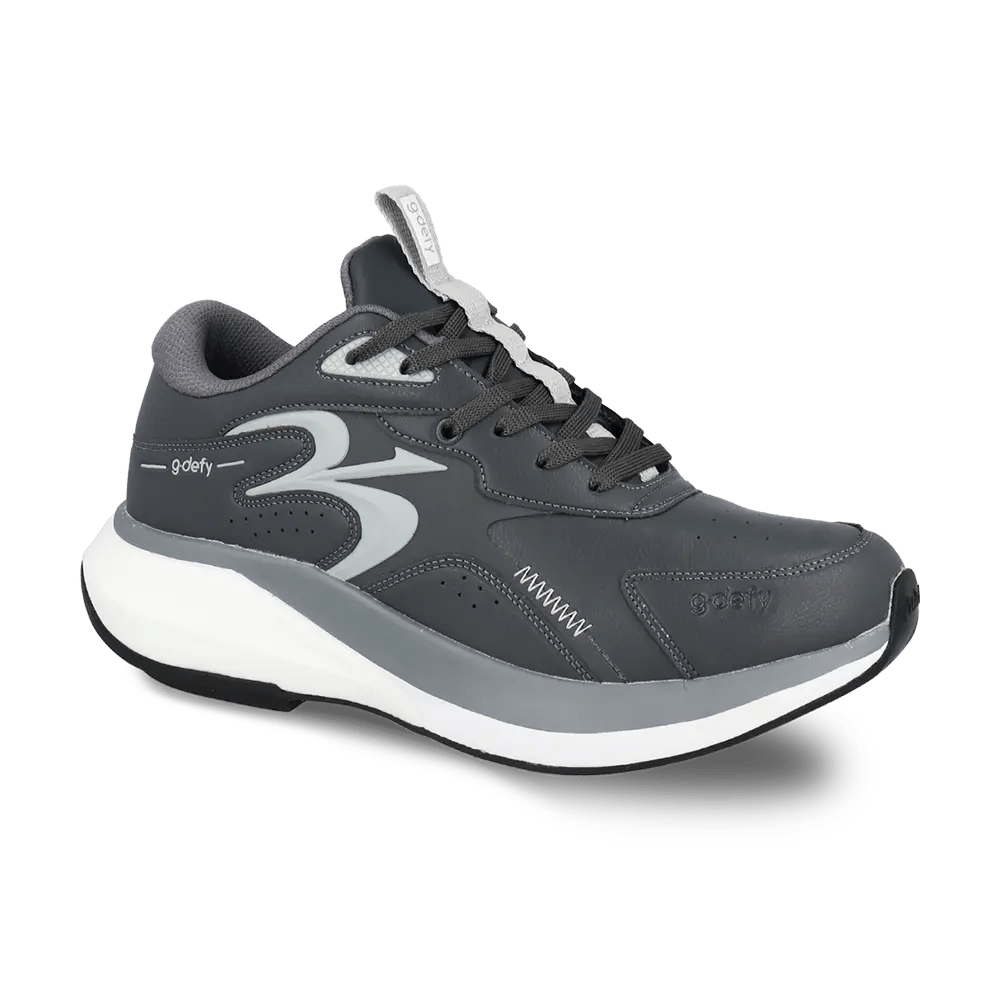
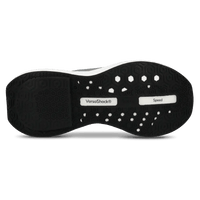
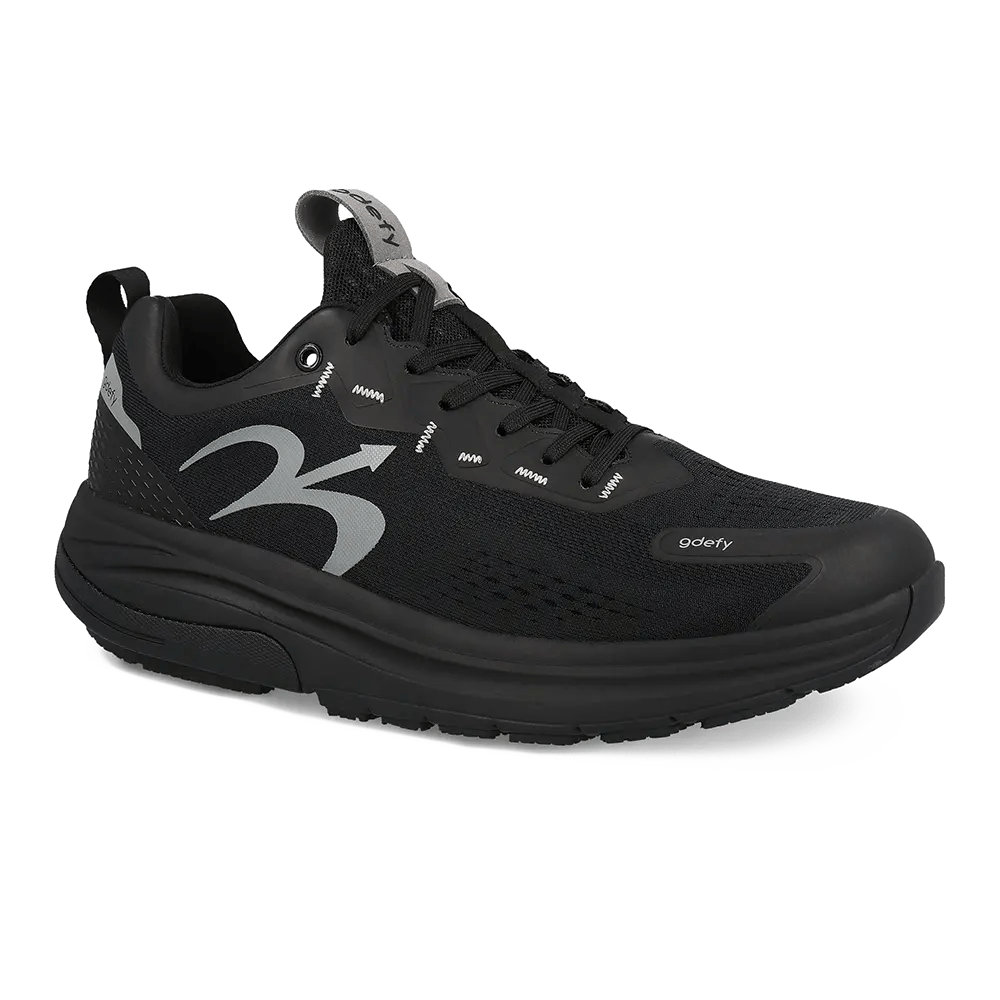
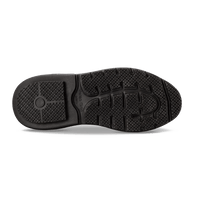
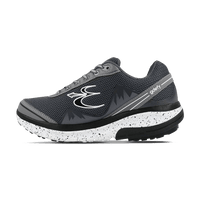
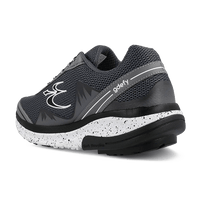
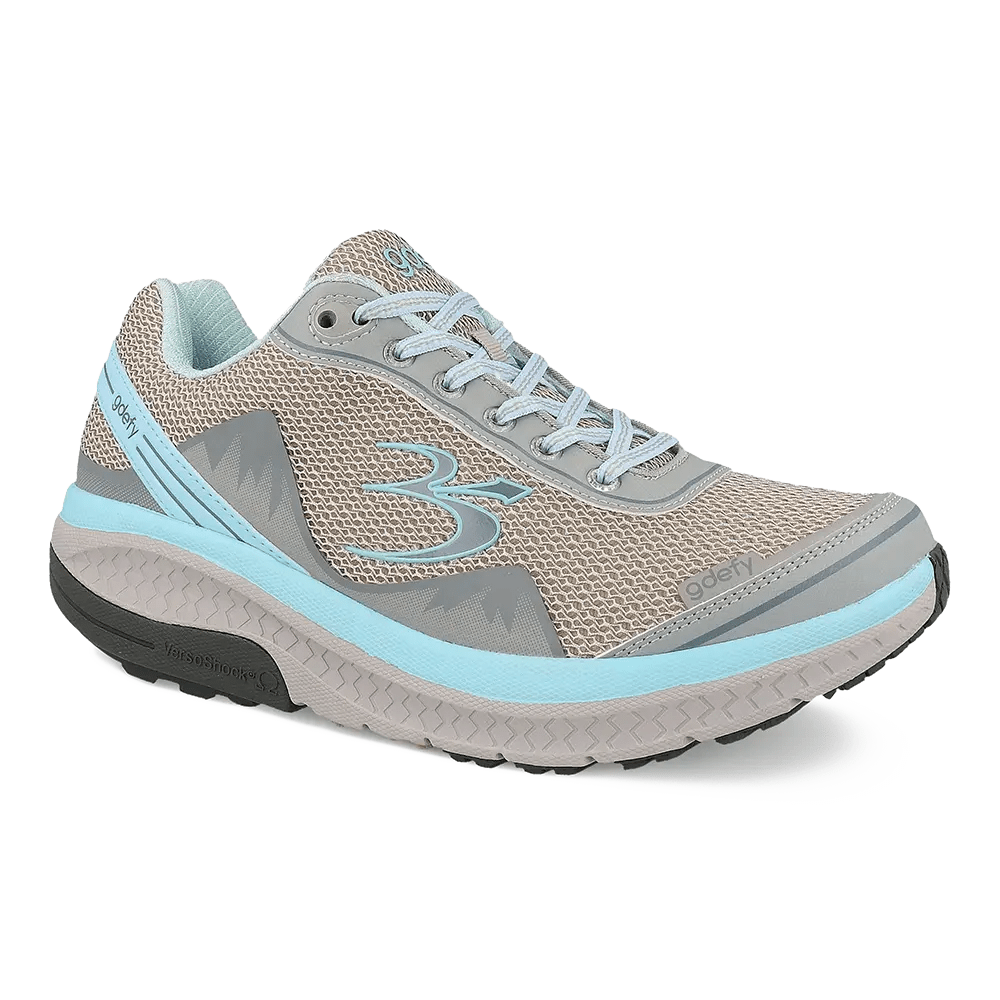
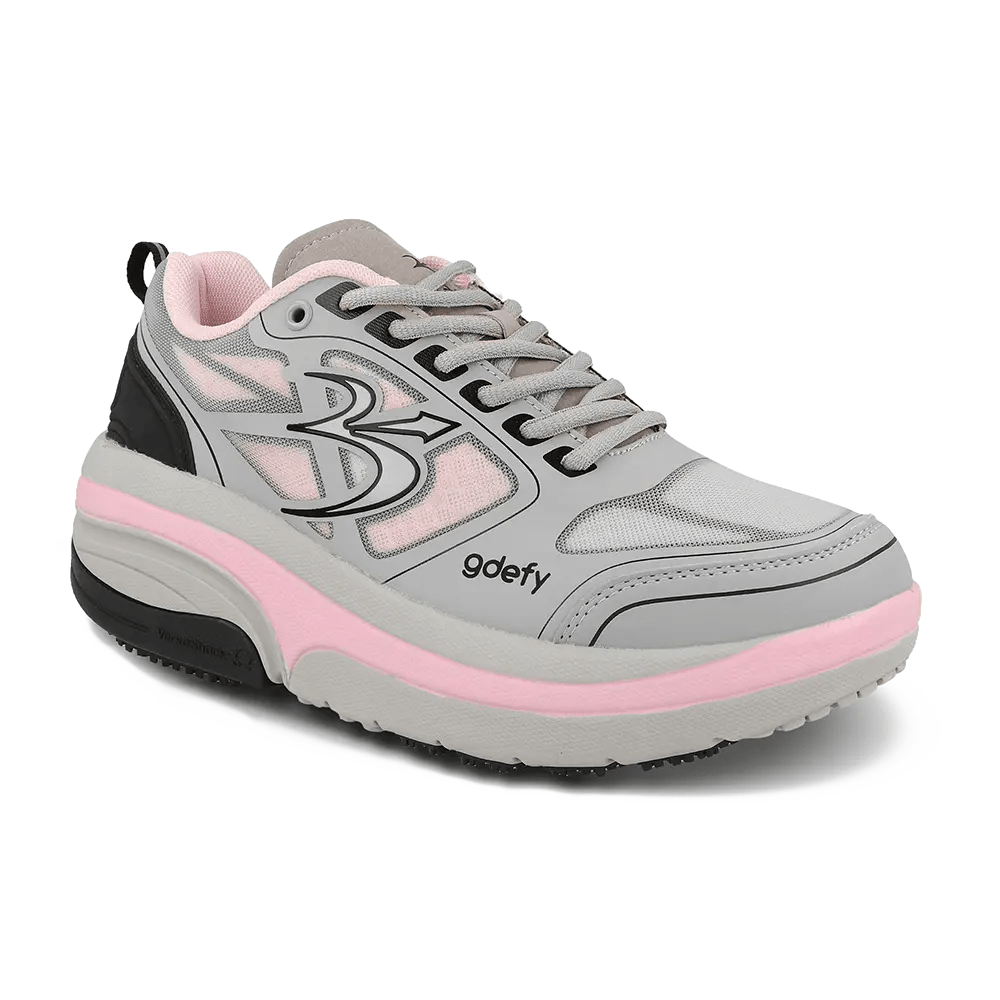
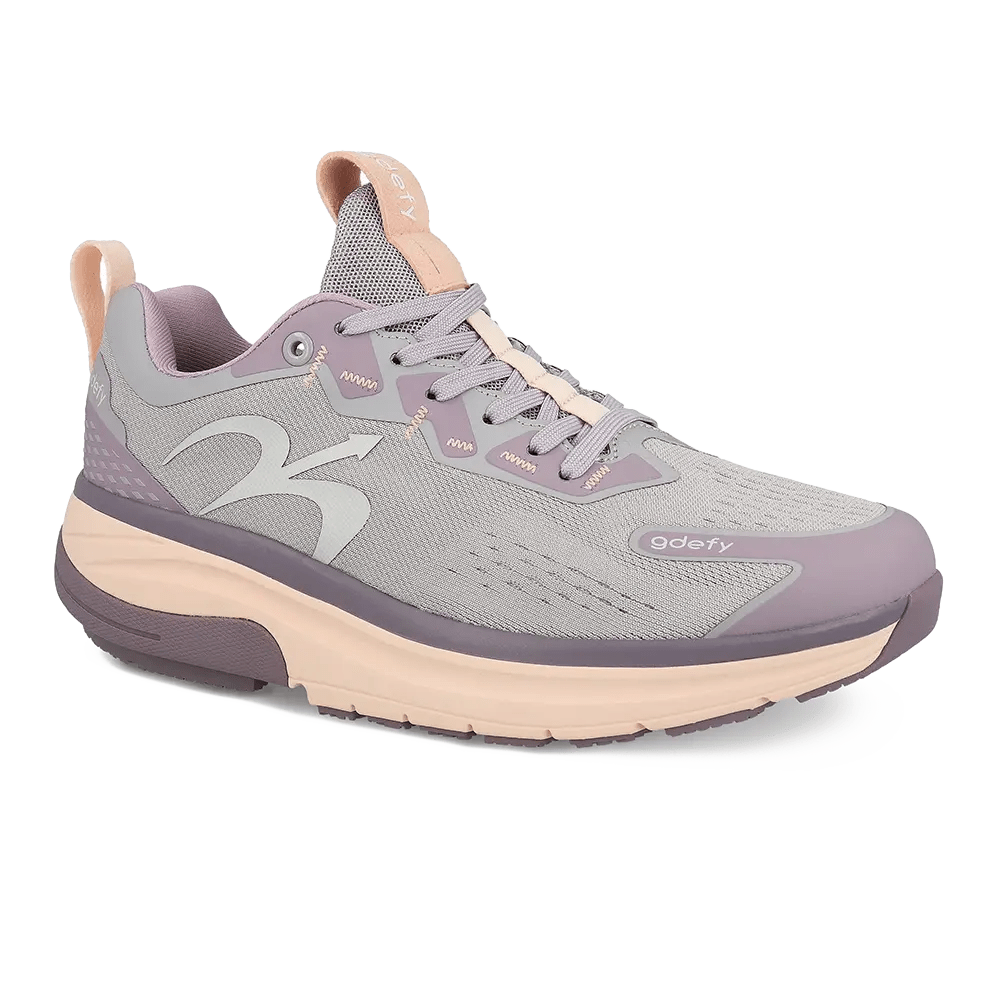
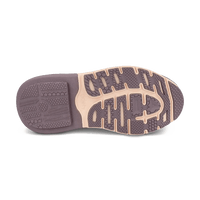
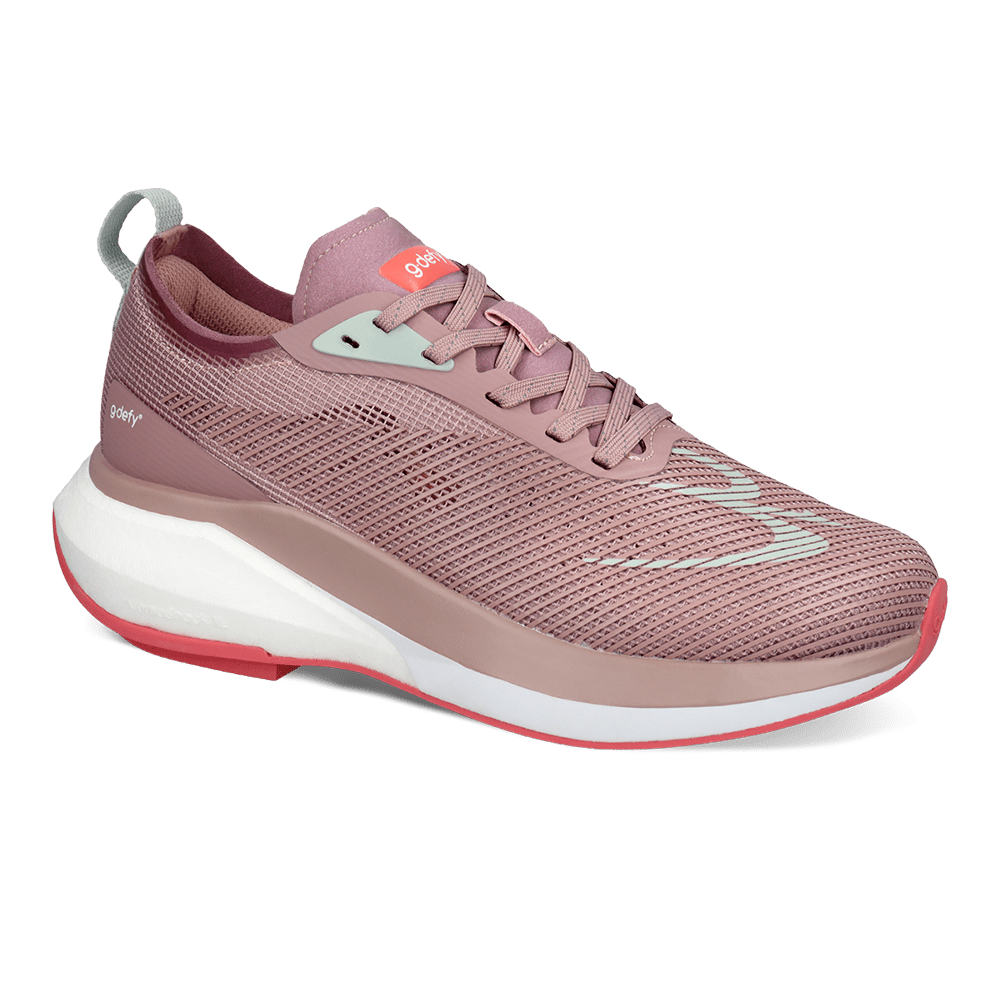
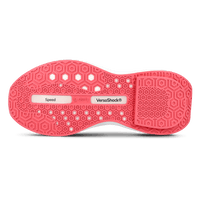
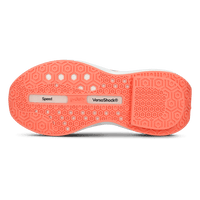
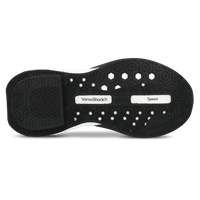
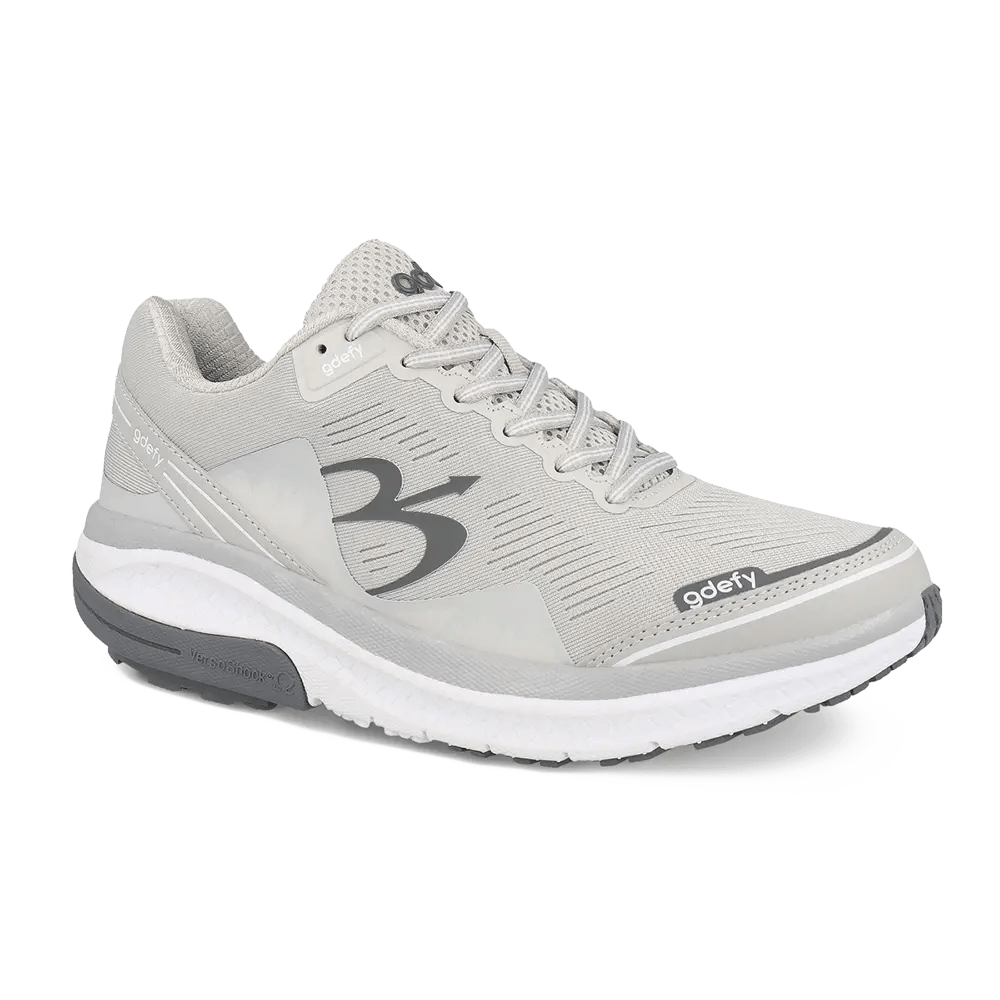
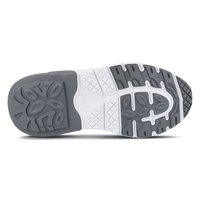
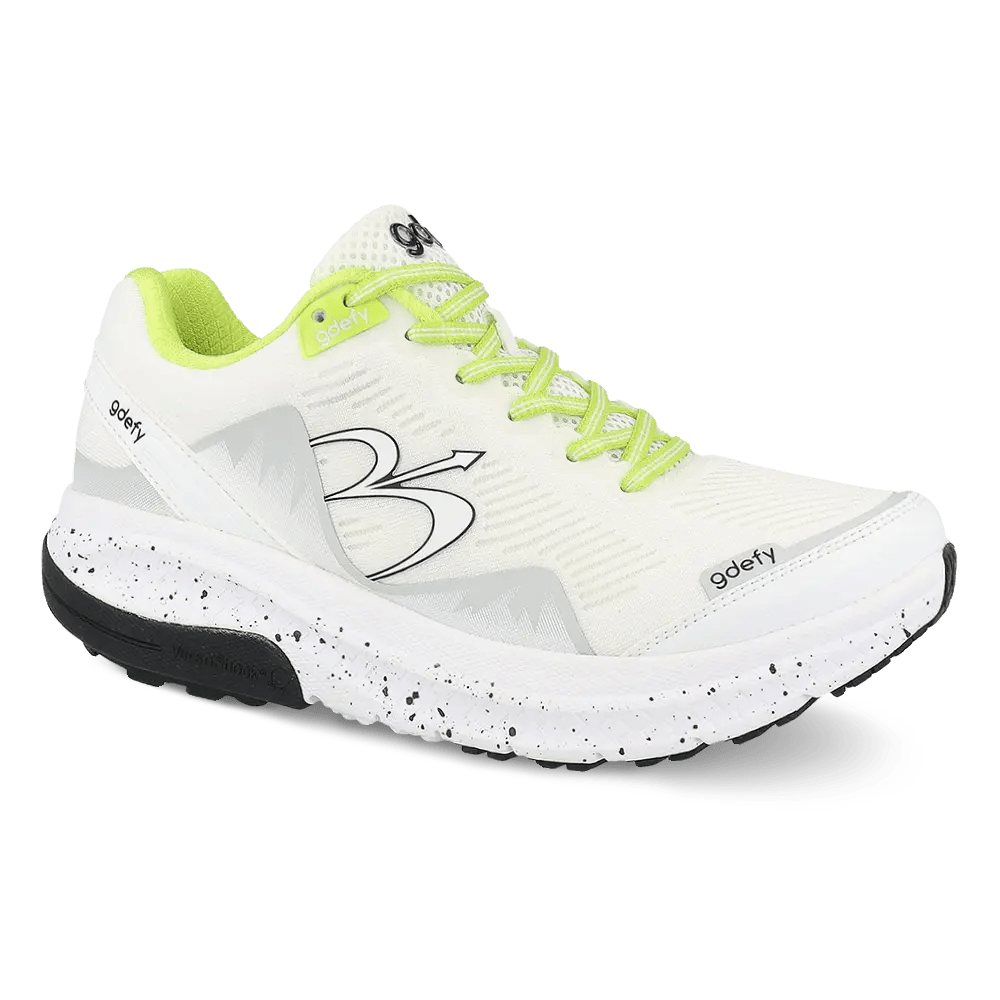
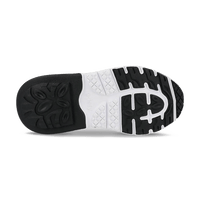
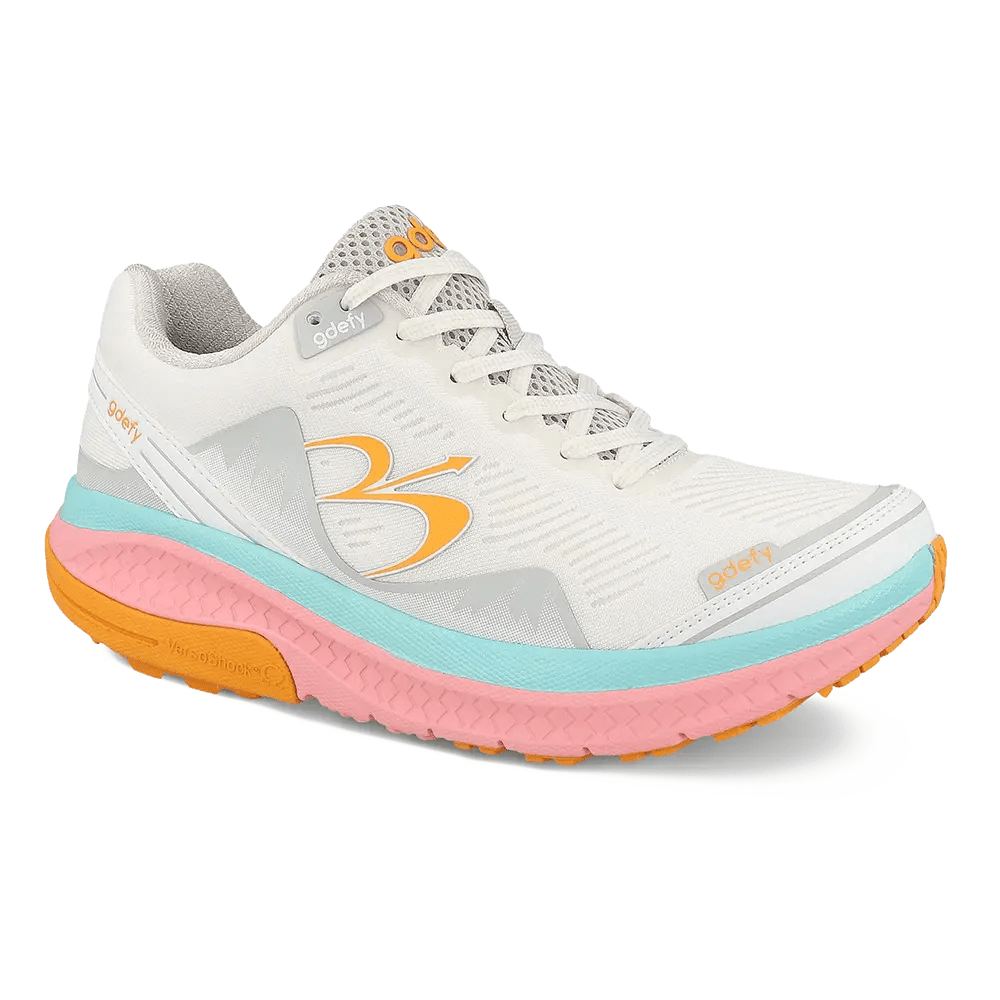
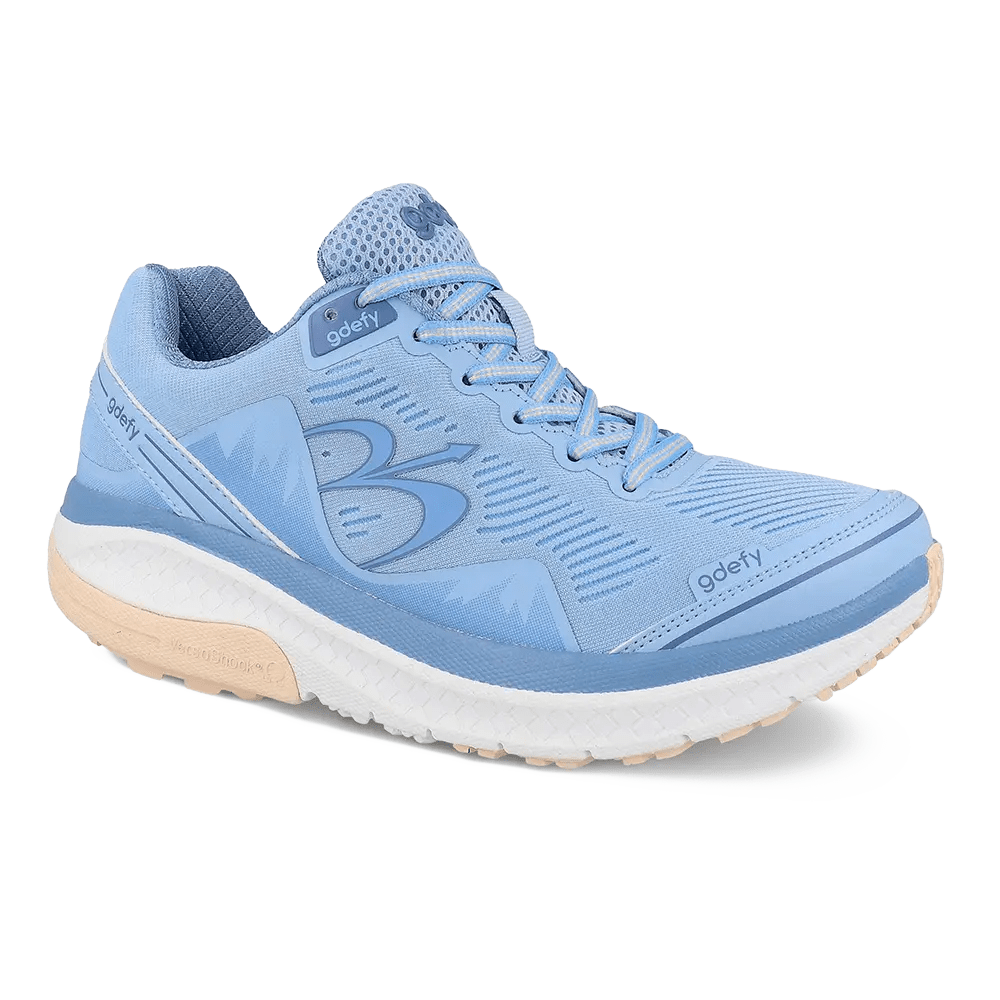
VersoShock® shock absorption. G-Defy uses a spring-based system designed to absorb impact softly and gradually. Built into the midsole, it's engineered to take some of the harshness out of heel strike — the moment when the most force travels up through the knees and hips.
Energy return. Standard foam compresses and loses energy. VersoShock® is designed to return energy with each step, helping the next stride feel a little less effortful.
Stabilizer system. A built-in shank prevents excessive bending in the middle of the shoe, supporting a more controlled stride. For knees and hips that don't want surprises, that kind of underfoot consistency matters.
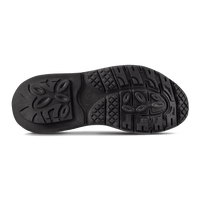
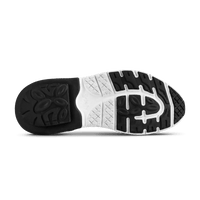
Front rolling design. The forefoot encourages a smooth heel-to-toe transition, supporting a more natural walking motion.
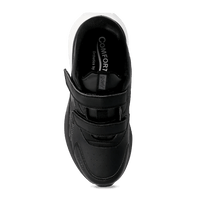
Every pair of G-Defy shoes also includes two removable orthotics — the ComfortFit® for low to medium arches with a focus on cushioning, and the CorrectiveFit® for medium to high arches with additional support. The dual system lets you tune the underfoot feel to your own foot.
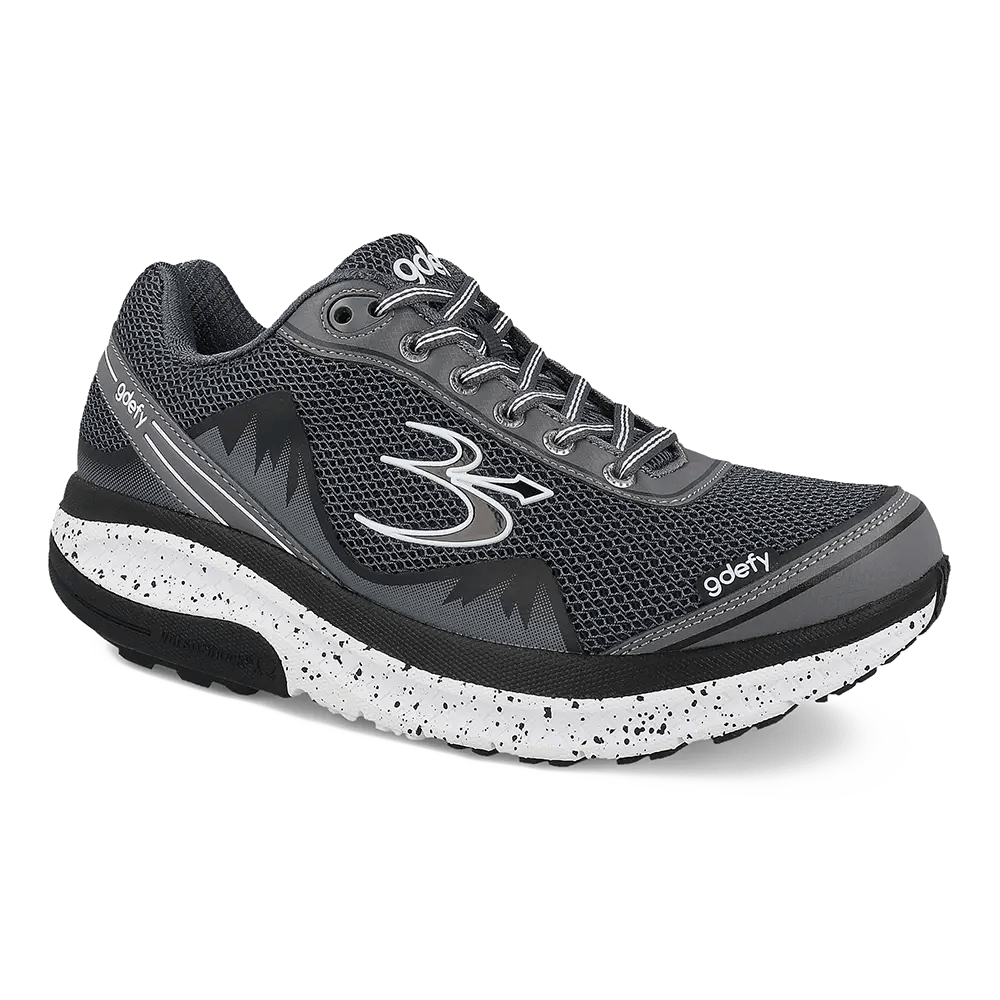
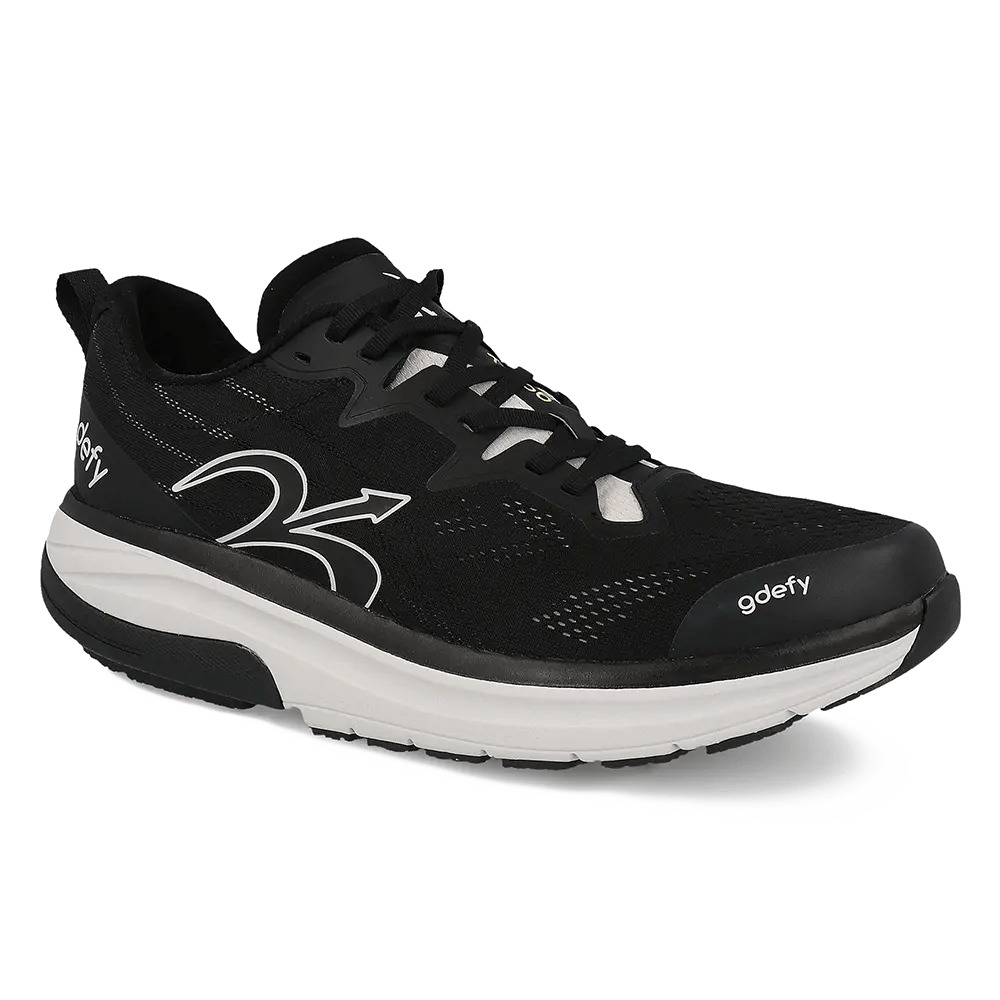
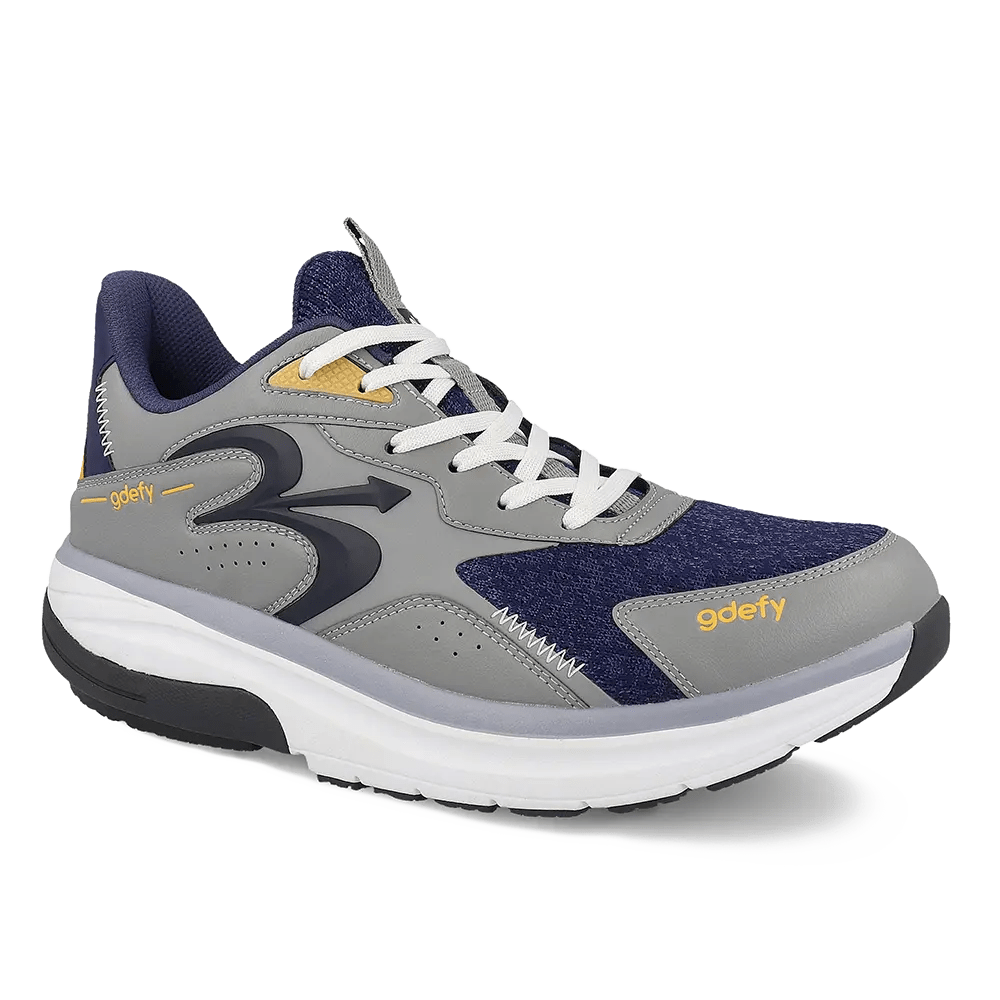
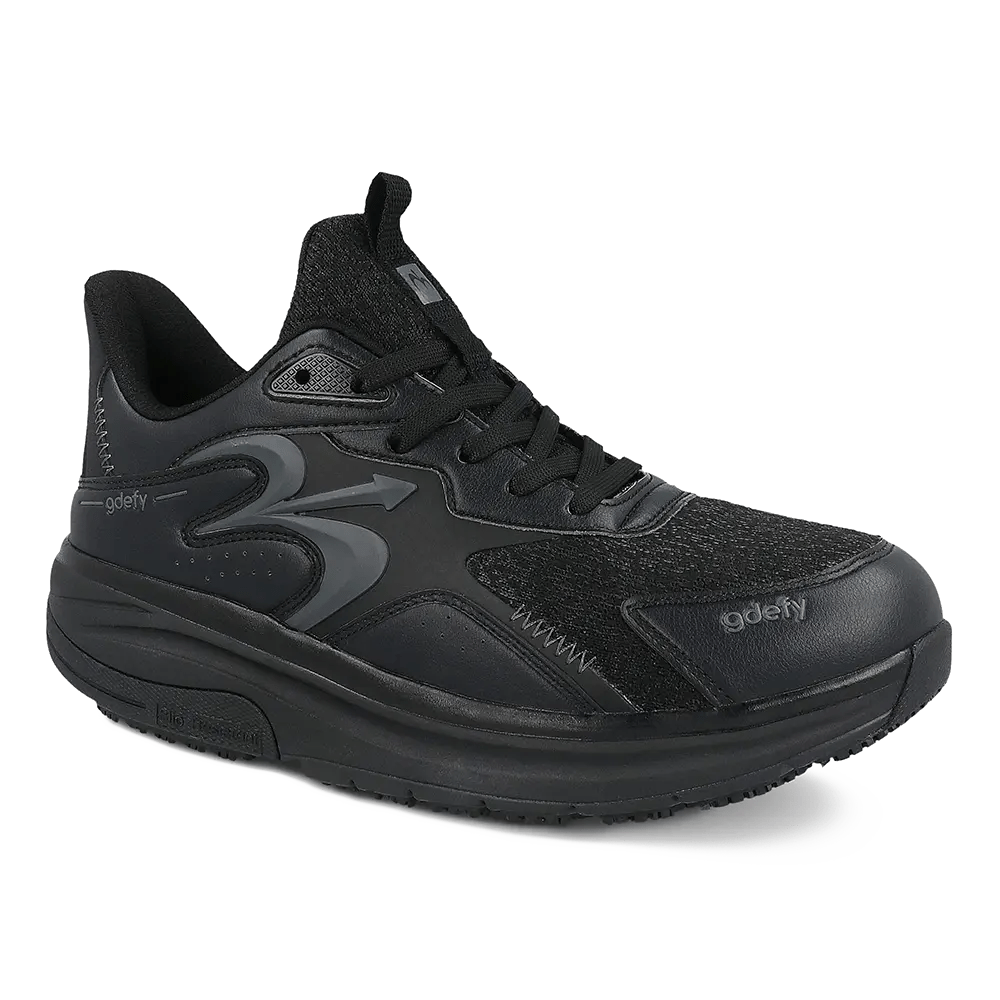
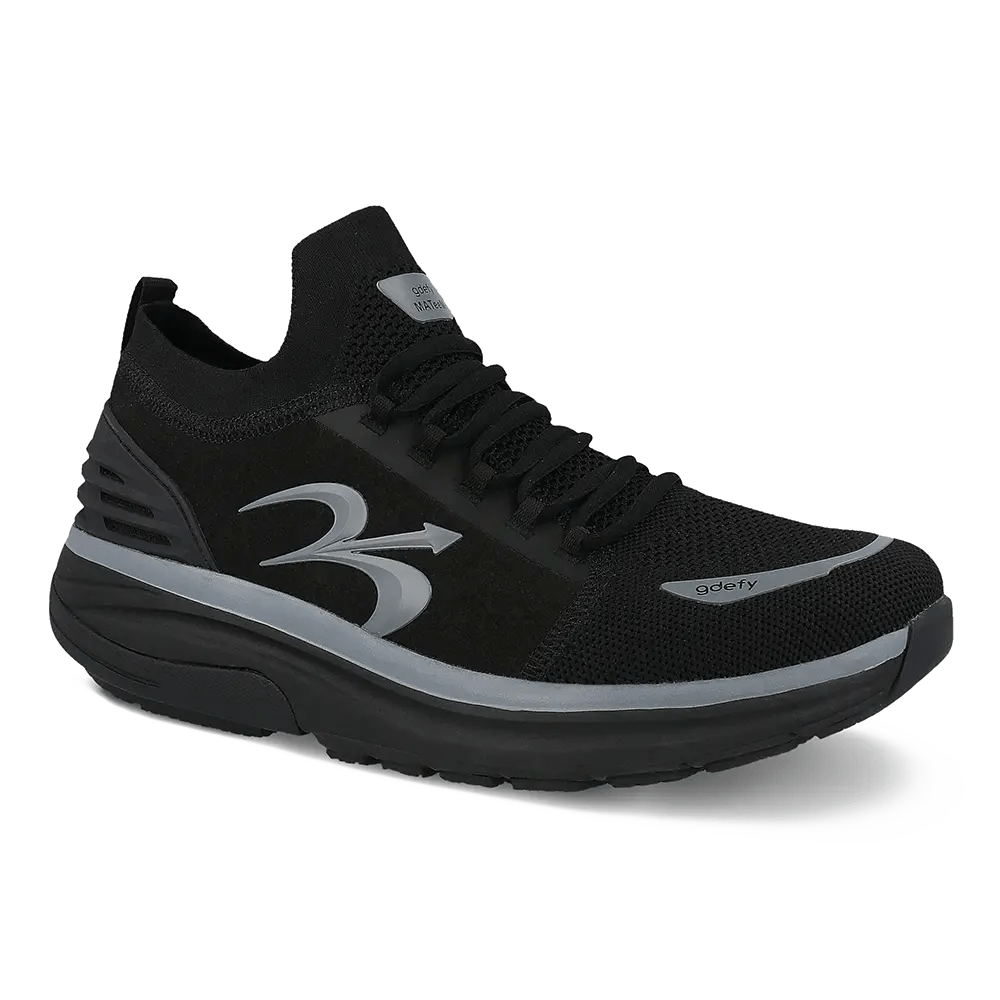
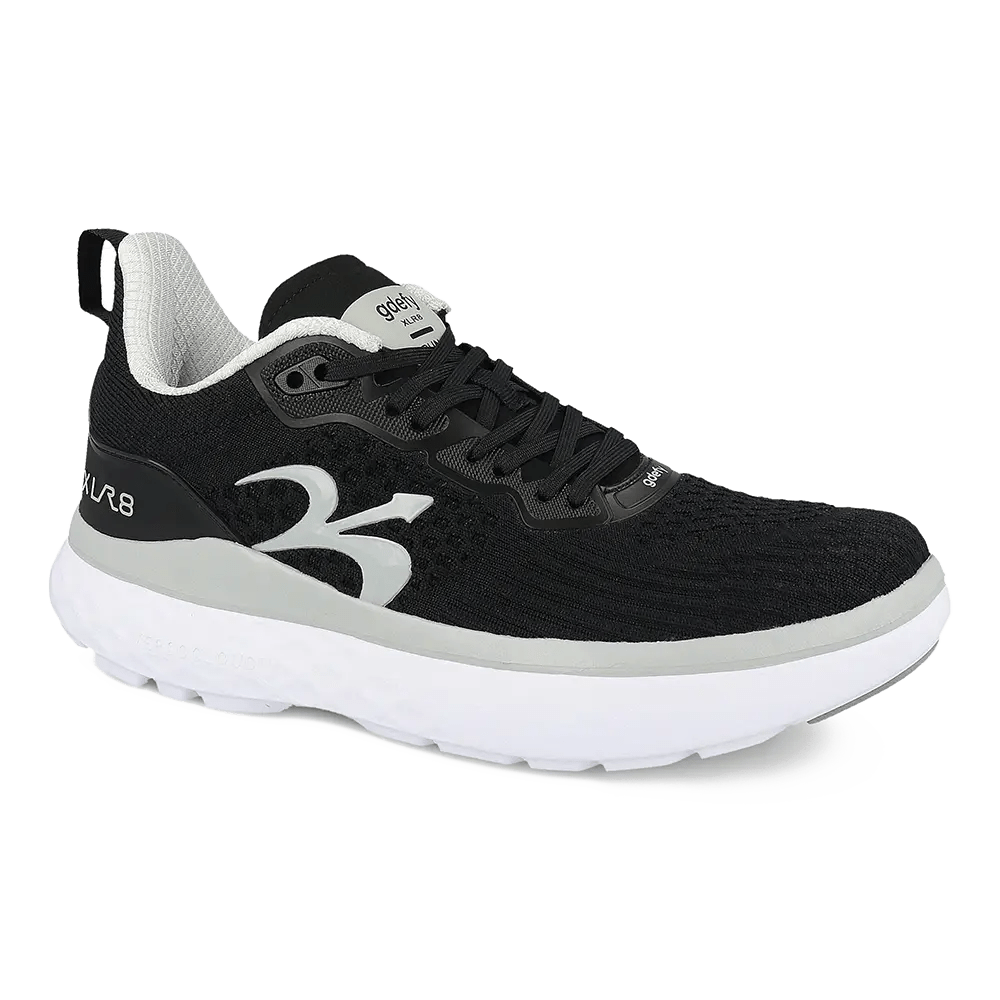
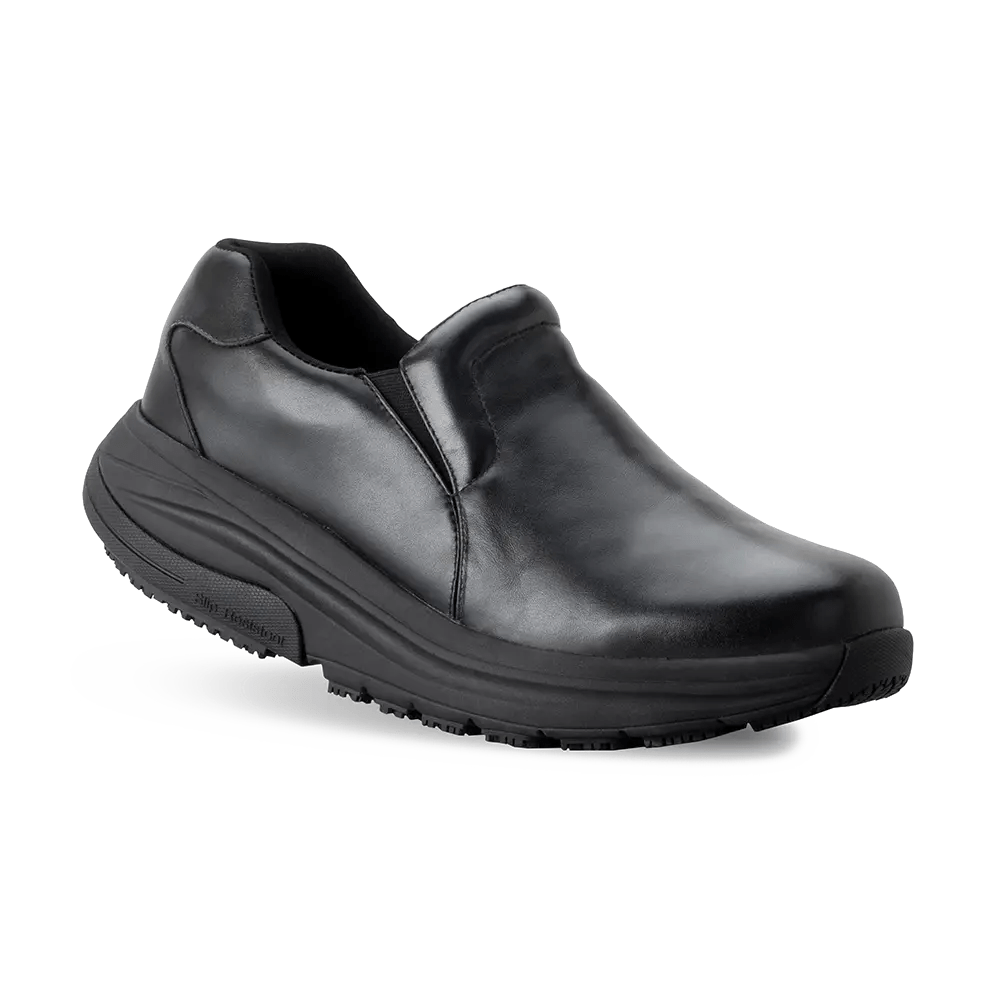
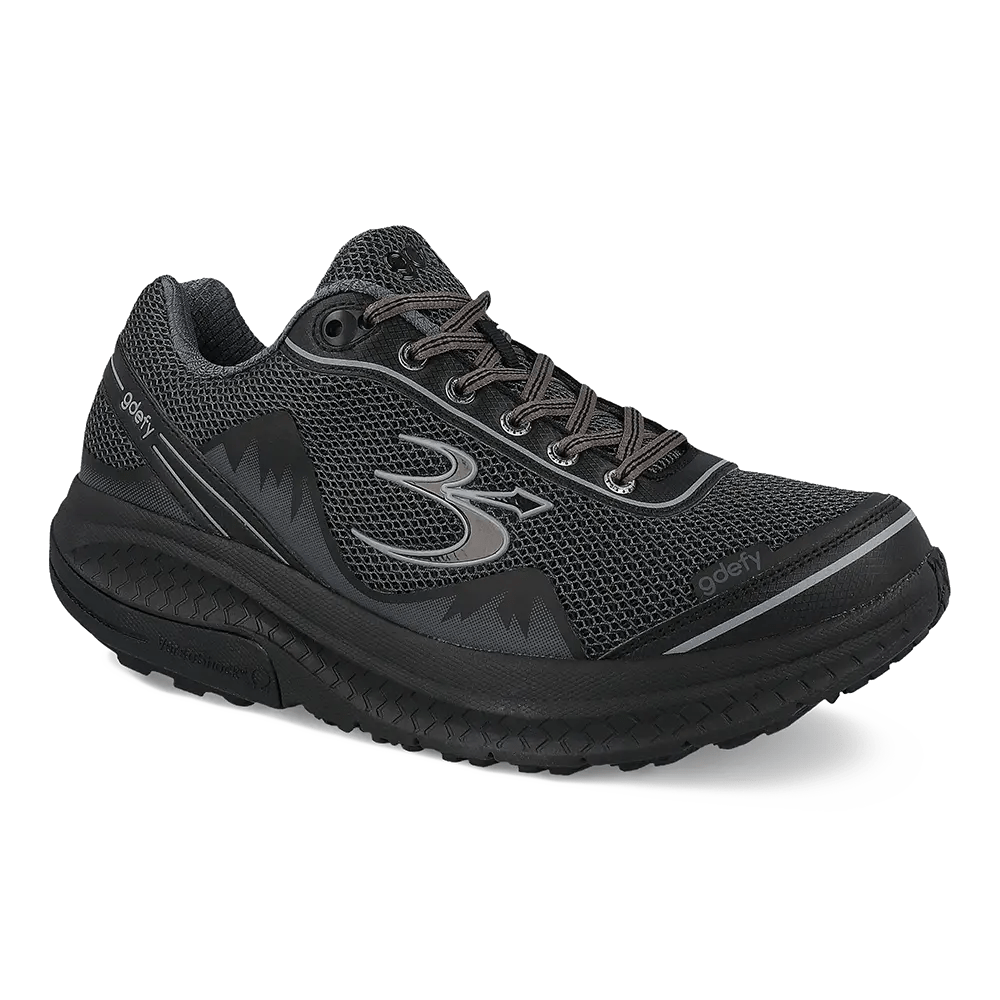
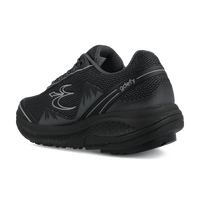
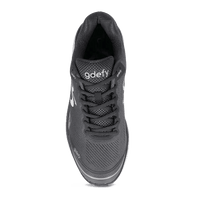
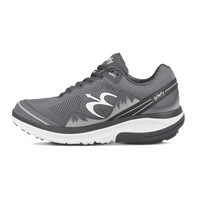
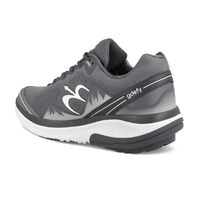
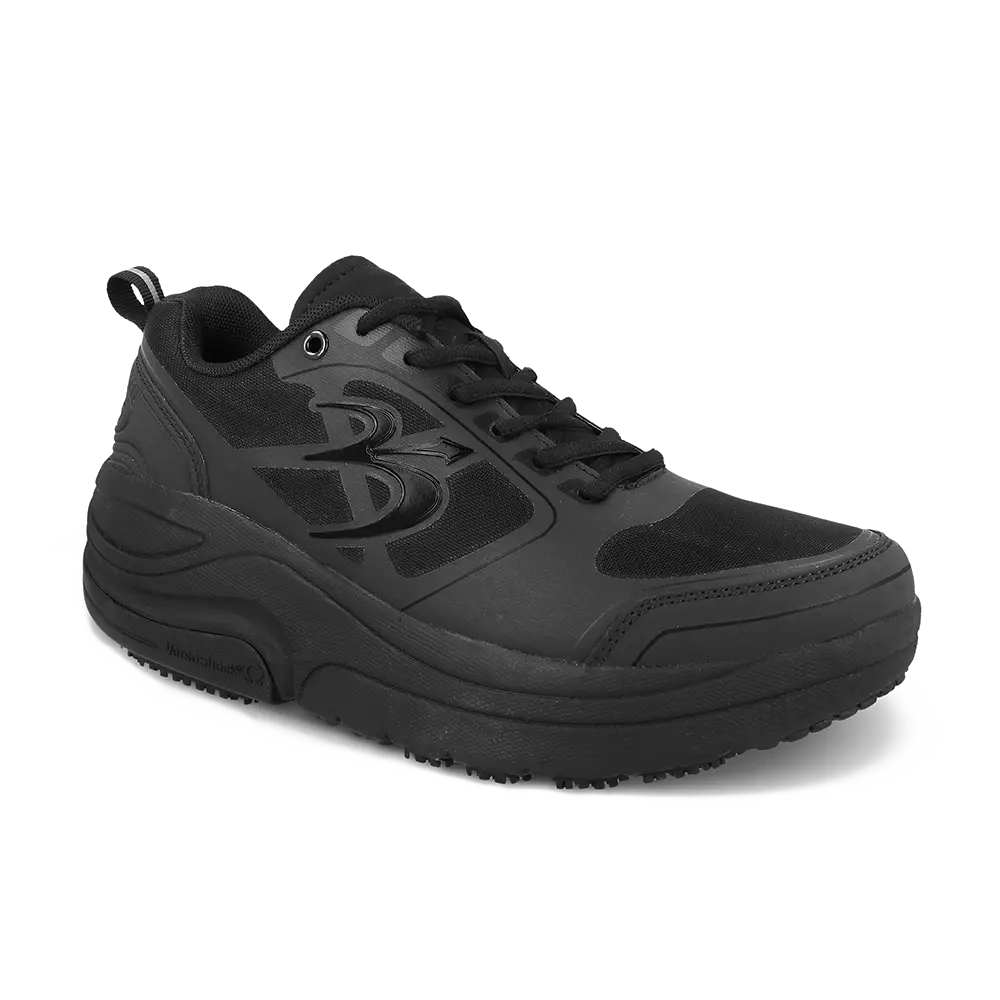
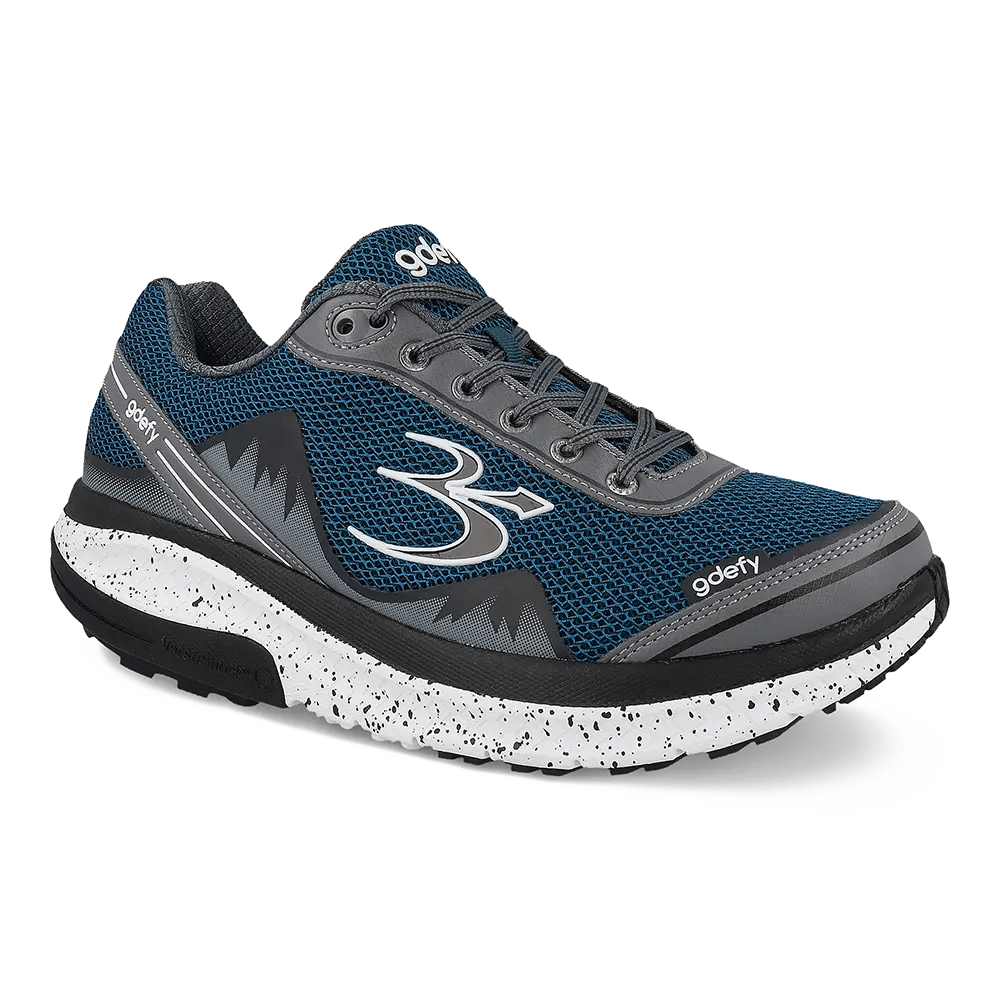
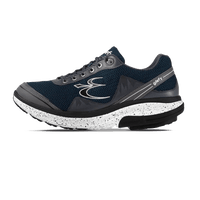
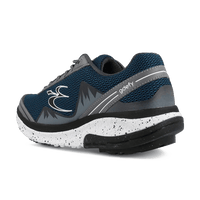
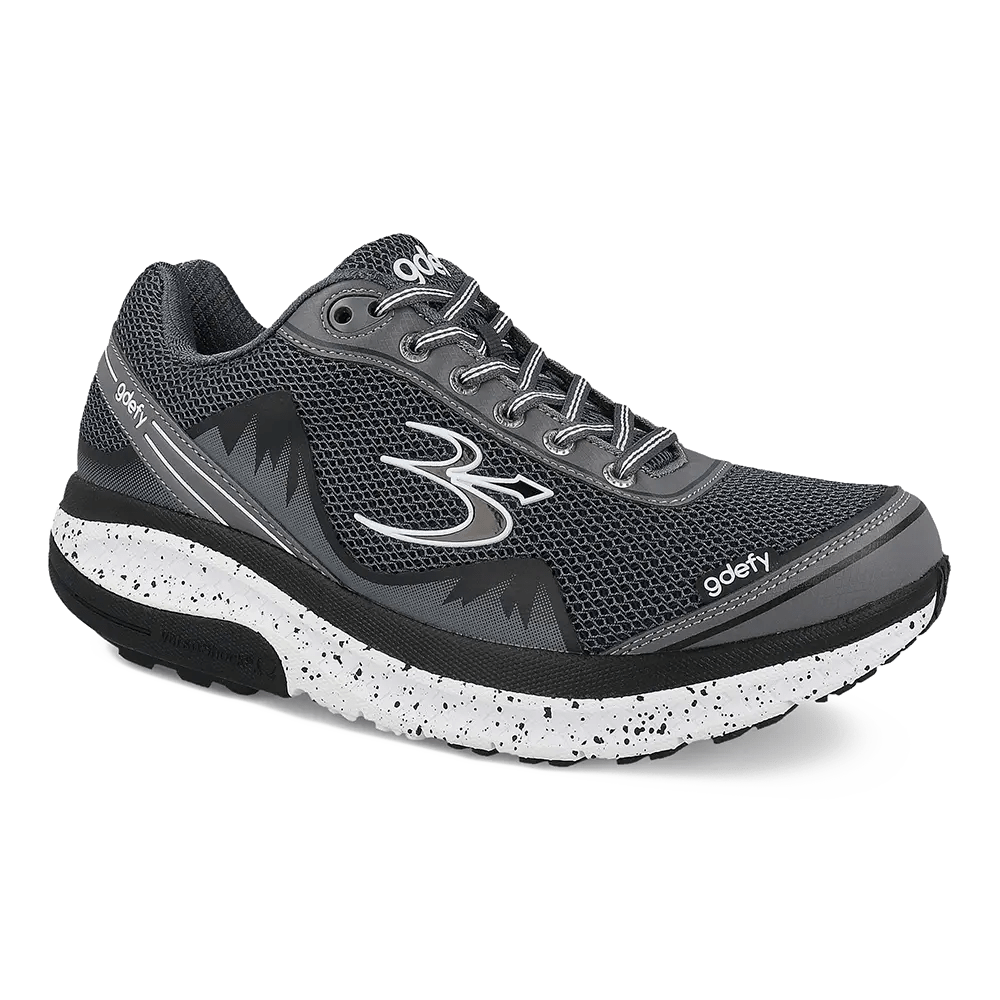
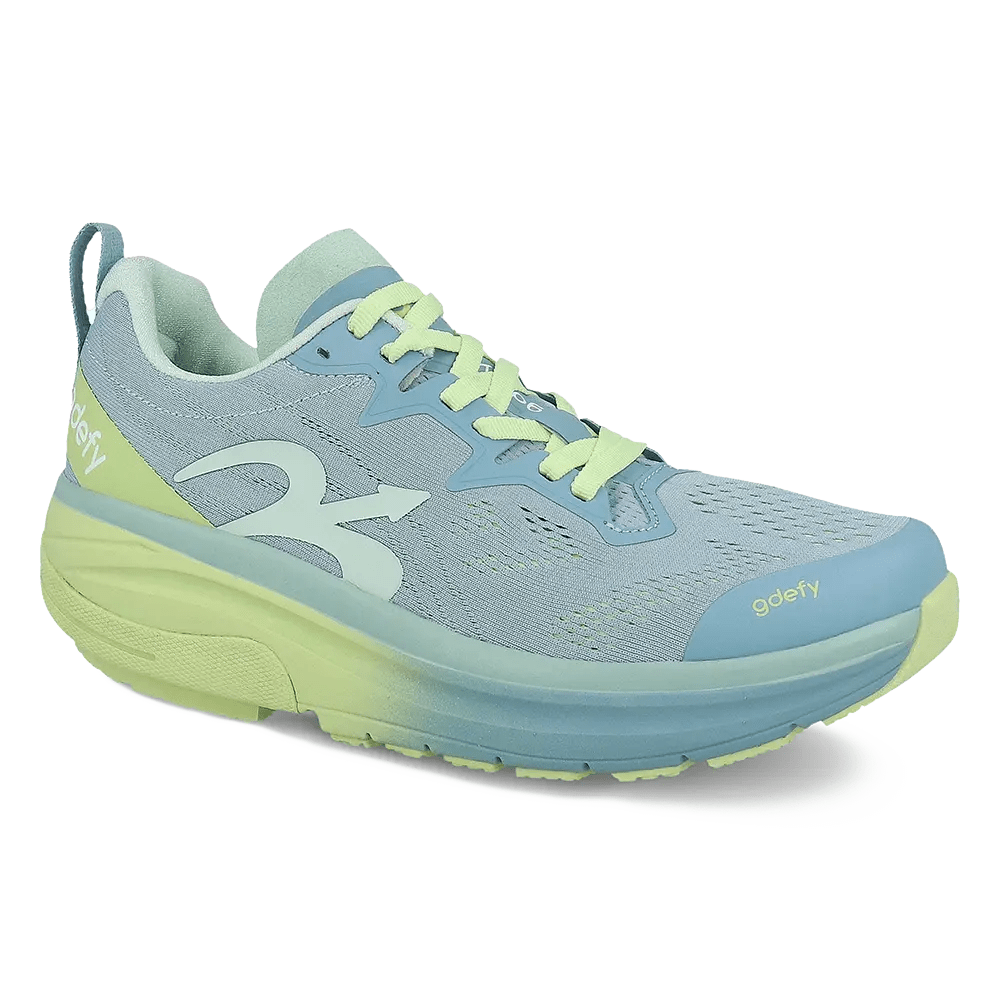
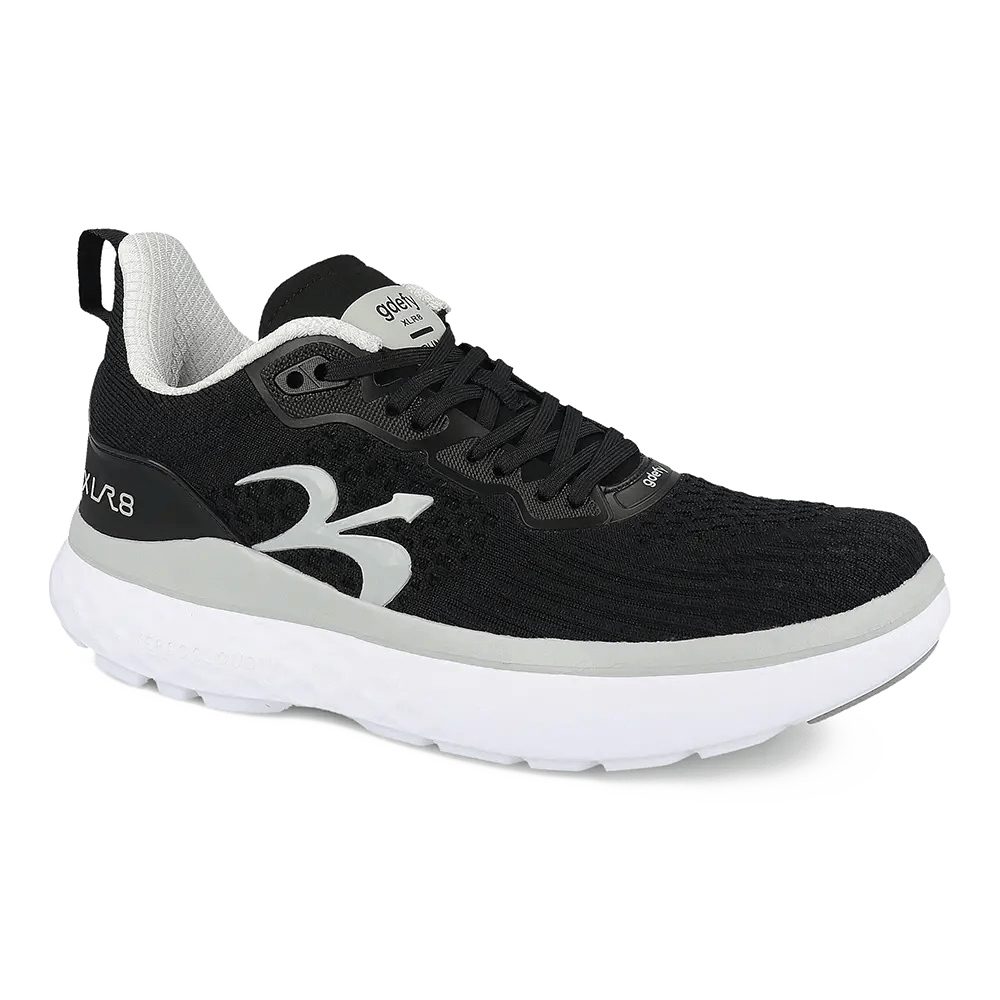
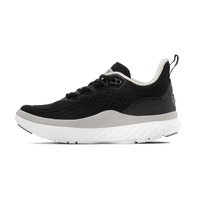
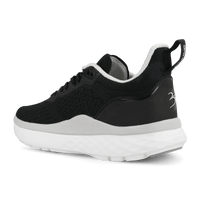
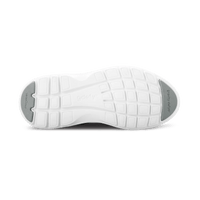
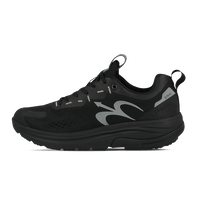
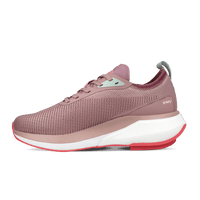
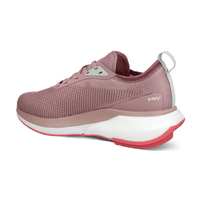
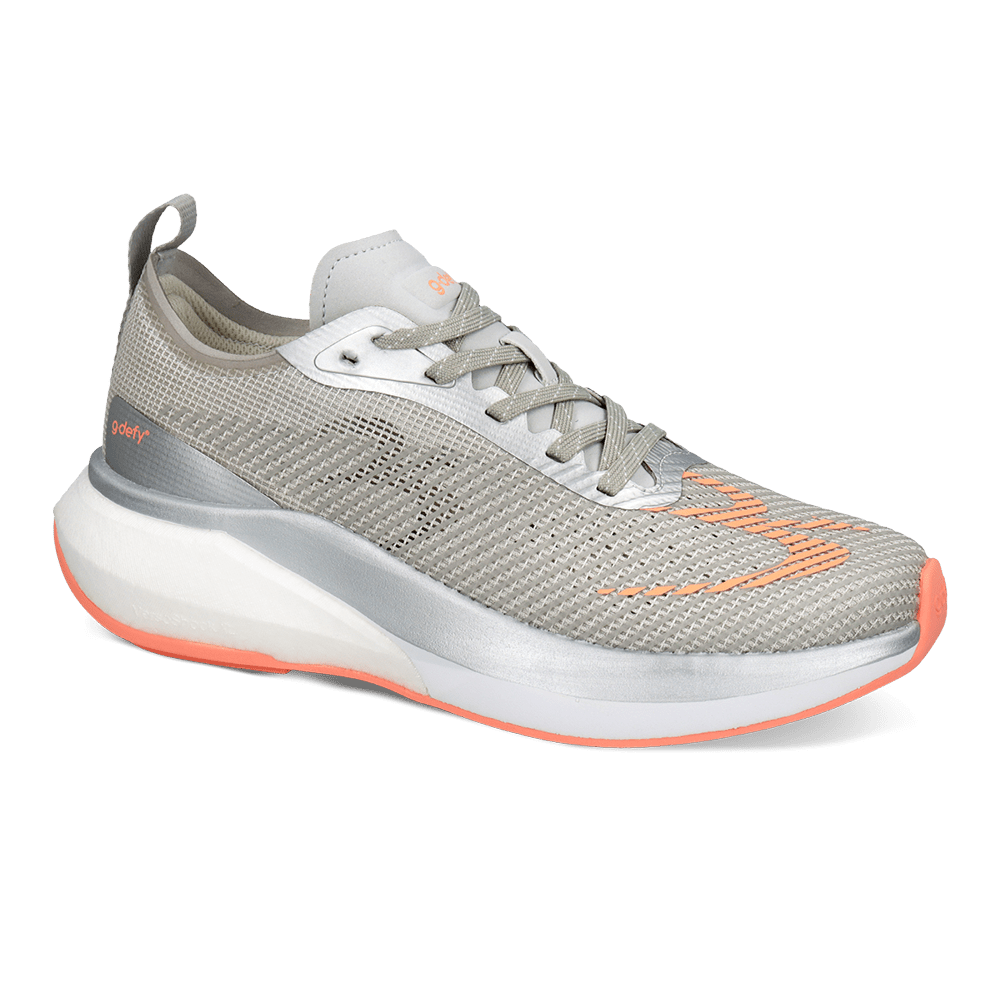
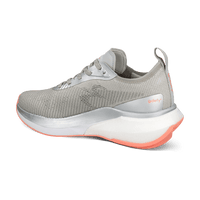
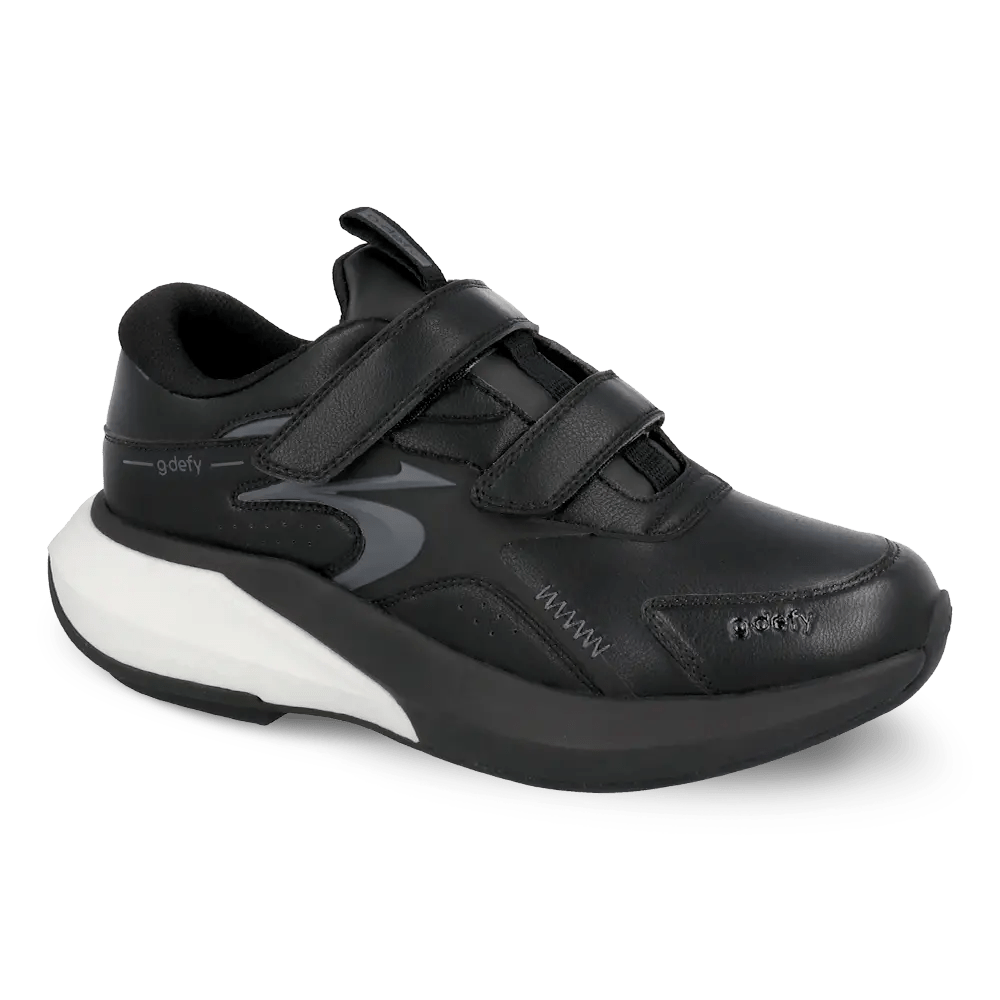
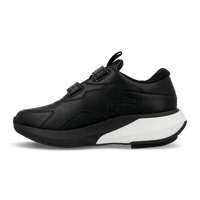
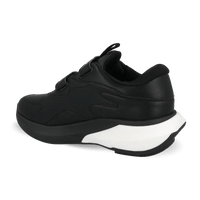
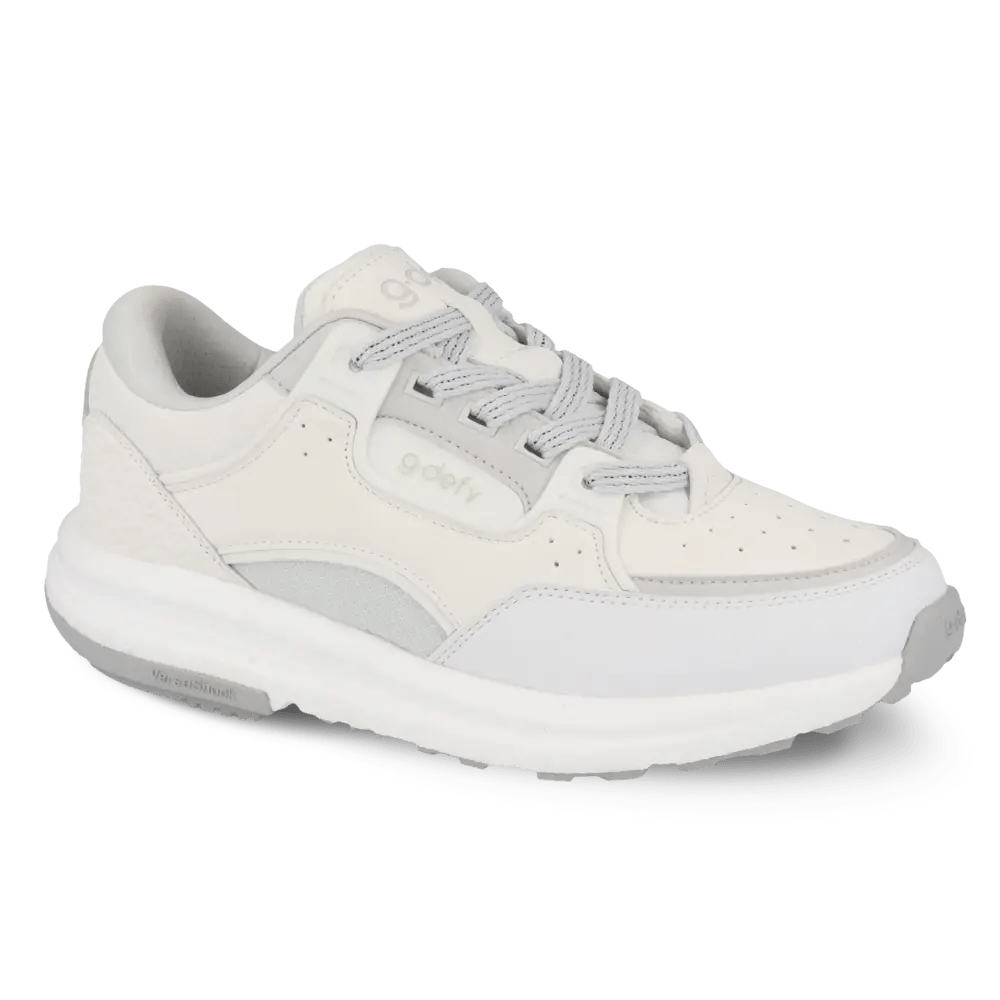
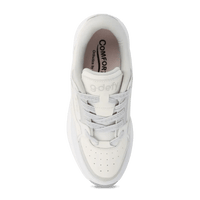
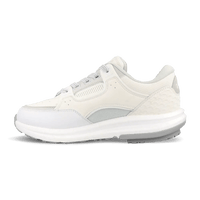
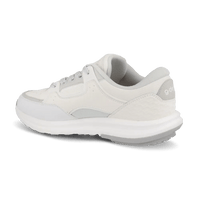
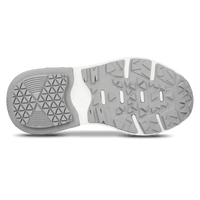
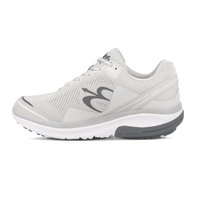
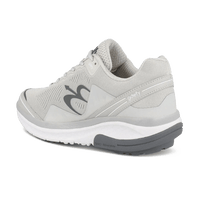
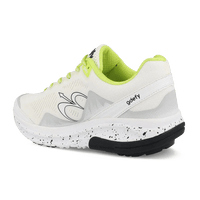
For daily walking, the G-Defy Mighty Walk is a popular choice — a cushioned, supportive design built for long days on your feet. For a lighter feel on busier days, the G-Defy Ion keeps the same VersoShock® foundation in a lighter construction. Both come with a 60-day risk-free trial — wear them on your real walks, on your real surfaces, on your real days, and decide.
G-Defy shoes help reduce pain from walking, running, and prolonged standing.
Built for comfort during walking and standing
Try G-Defy with our 60-day risk-free trial and free shipping both ways.
Shop Mighty Walk Shop Ion
Daily Habits That Support Comfort With Knee and Hip Arthritis
Footwear is one piece of the day. A few small habits, built into the rhythm of an ordinary week, often make a meaningful difference.
- Warm up before walking. A few minutes of gentle movement — standing hip circles, slow heel raises, a short indoor walk — helps joints transition out of stiffness.
- Build distance gradually. If you've been less active, ease back into walking time over weeks, not days. The joints respond to the slope of the change as much as the total mileage.
- Rotate two pairs. Wearing the same shoes every day compresses the cushioning faster. Two pairs in rotation last longer and feel fresher.
- Replace shoes when the cushioning packs out. Most walking shoes lose underfoot resilience well before the upper looks worn. A flatter, harder midsole transmits more impact.
- Sit when you can — but don't sit too long. Long stretches of sitting can stiffen the hips. Standing breaks every 30 to 45 minutes help.
- Pay attention to surfaces. Hard kitchen floors, concrete, and steep slopes load joints differently than a grass park or a trail. Your shoe choices can vary with the day.
For a closer look at daily care, see our companion piece on arthritis foot care tips for daily comfort.
When to Talk to Your Healthcare Provider
Footwear is not a medical solution. If you're experiencing new joint pain, pain that's getting worse, swelling, redness, or pain that wakes you at night, talk with your healthcare provider before making changes to your activity or footwear. The same applies if you're managing a known arthritis diagnosis — your provider knows your situation best and can guide what's right for you.
Frequently Asked Questions
Can comfortable shoes really make a difference if I have arthritis in my knees and hips?
Footwear isn't a medical solution, but cushioning, support, and shock absorption can meaningfully affect how a walk feels — especially during long days on your feet. Many active adults living with joint stiffness find that the right shoes make daily movement feel more comfortable, even when joint conditions don't change. Results vary by individual.
What shoe features matter most for hip arthritis specifically?
Hip joints feel impact that travels from the heel up through the chain. Shoes that absorb shock at heel strike, encourage a smooth rolling forefoot, and provide a stable underfoot platform tend to come up most often. A roomy toe box and a comfortable fit also matter — discomfort anywhere in the chain can change the way you move.
Are G-Defy shoes designed for arthritis?
G-Defy shoes are designed for comfort, support, and shock absorption during walking, running, and prolonged standing. They help reduce pain from walking, running, and prolonged standing. They are not a medical device and are not a substitute for medical care. Many customers with joint stiffness report finding them comfortable for daily wear.
Should I size up if I have arthritis in my toes or feet?
Some people find that a slightly roomier toe box helps — especially in wide or extra-wide widths if your feet have changed shape over the years. The heel should still feel secure. G-Defy's 60-day risk-free trial lets you try the fit at home and exchange or return if it isn't right.
How long should walking shoes last if I'm on my feet a lot?
Most walking shoes start to lose underfoot resilience between 300 and 500 miles of use, or roughly 6 to 12 months for regular daily wear. If you're standing or walking long hours, the lower end of that range is realistic. When the cushioning feels flatter or less supportive than it did, it's time to rotate in a new pair.
Is it safe to start walking again if my knees and hips are stiff?
Talk with your healthcare provider before starting or changing an exercise routine — especially with a joint condition. Many people find gentle walking, started slowly and built up gradually, supports daily comfort. Supportive footwear is one piece of a broader plan that often includes movement, stretching, and other guidance from your provider.
A Note on Comfort and Daily Life
Knee and hip arthritis are part of life for millions of active adults, and the day-to-day experience of living with them is deeply personal. Footwear is not a medical solution — but it is one of the steady, daily-use tools you can choose to influence how comfortable a walk feels. Shoes designed for cushioning, support, and shock absorption may help reduce some of the harshness of impact and make a long day on your feet feel a little easier.
If you're considering G-Defy, the 60-day risk-free trial means you can put them through a real month of your real life — the morning walk, the kitchen stand, the errands, the evening — and decide for yourself. Browse the full women's collection or men's collection, and read more about the VersoShock® system that sits underneath every pair.
Try G-Defy for 60 days, risk-free
Free shipping both ways. Wear them on your real walks. Decide for yourself.
Shop Men's Shop Women's