



March 24, 2026
Do Arch Support Shoes Help Plantar Fasciitis Heel Pain? (What Works, What Doesn't, When to Add Orthotics)
By Gdefy

Summary
Arch support shoes often help plantar fasciitis heel pain by stabilizing the heel and supporting the arch, which can reduce strain on the plantar fascia, especially during the first steps in the morning. The right footwear won't cure plantar fasciitis overnight, but it changes how your foot loads with every step, and that matters when you're taking thousands of steps per day. This guide will show you exactly which shoe features help, which ones backfire, and when you should consider adding orthotics or seeing a podiatrist.
Your Heel Pain Isn't Random, and the Right Shoe Can Help Right Now

Plantar fasciitis is the most common cause of heel pain in adults. Research shows it affects about 10% of people at some point in their lives, with roughly one million patient visits annually in the United States. The condition involves inflammation and degeneration where the plantar fascia attaches to the heel bone. Most people experience sharp, stabbing pain with their first steps after rest, particularly in the morning.
The plantar fascia is thick tissue on the bottom of the foot that connects the heel bone to the toes and creates the arch. When this tissue becomes irritated, inflamed, or develops microtears, every step can hurt. Many people ignore the pain or try to "walk it off," but that approach usually prolongs recovery.
Good news: over 80% of people improve with nonsurgical treatment. Bad news: improvement takes time. You're looking at weeks to months, not days. Consistency with the right footwear and conservative care is what separates people who recover in six months from those still struggling at eighteen months.
Start with these three steps today:
- Pick a shoe that passes the 30-second stability test (covered in detail below).
- Wear supportive shoes consistently, including indoors if you walk on hard floors.
- Track your pain for two weeks. If it's not trending down, add an orthotic or see a podiatrist.
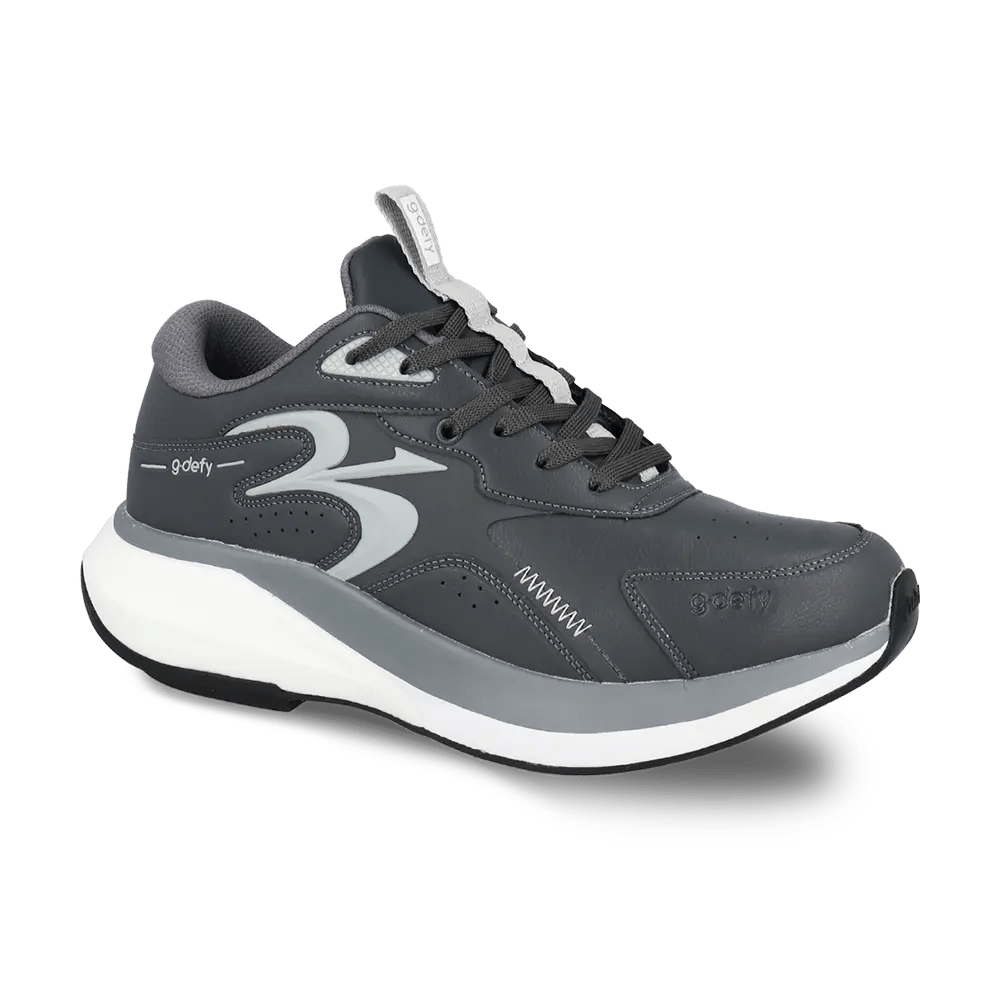
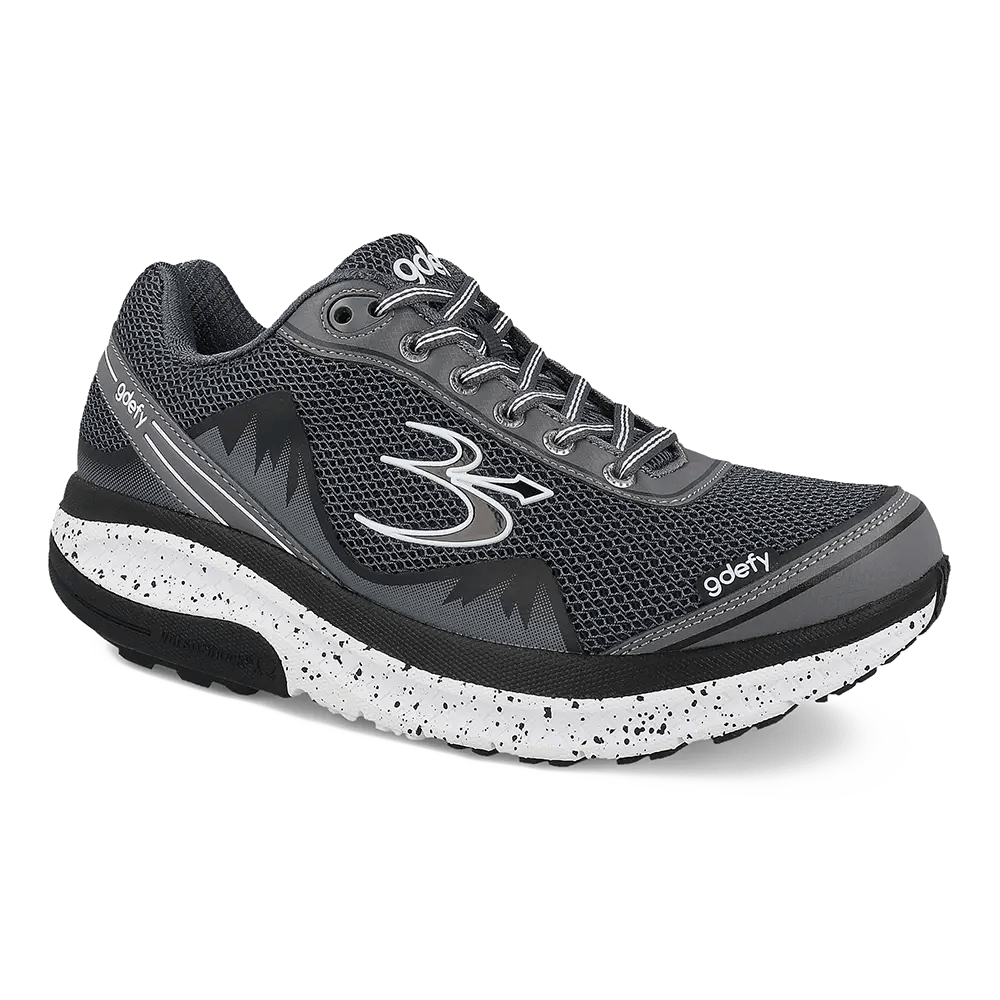
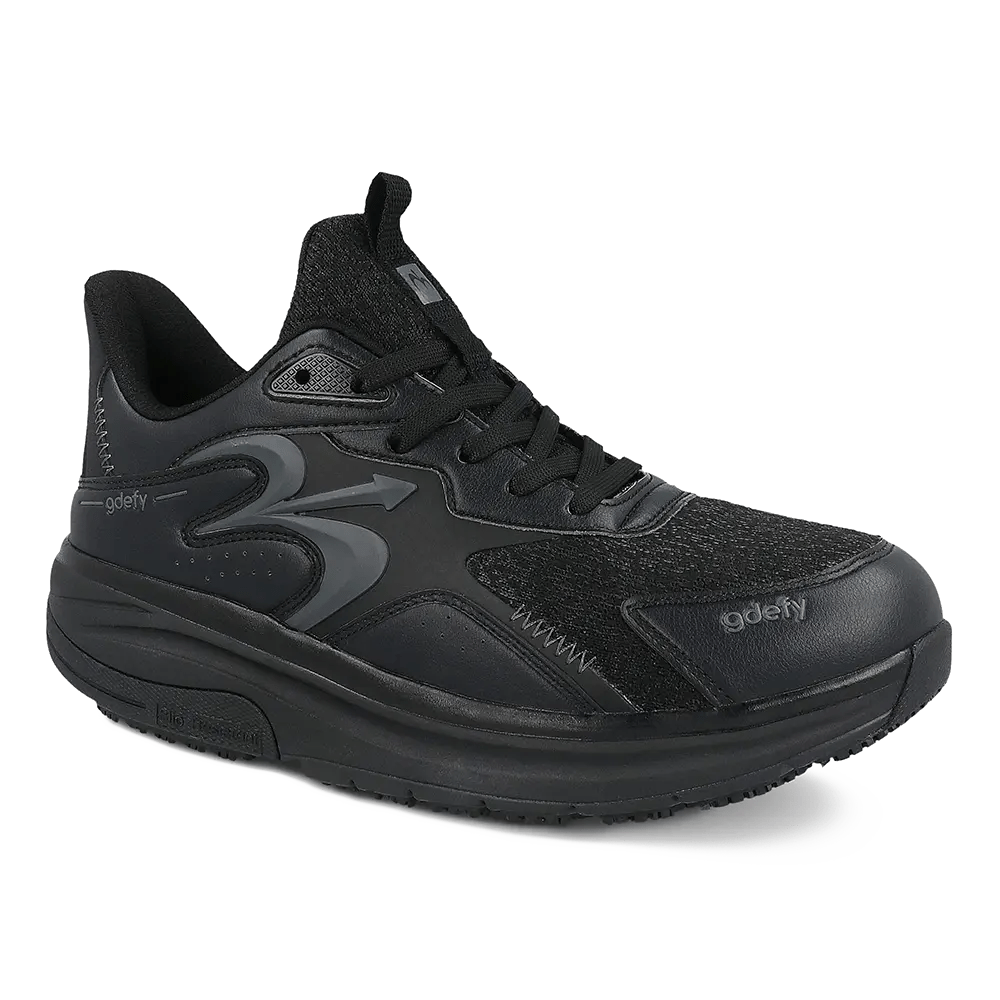
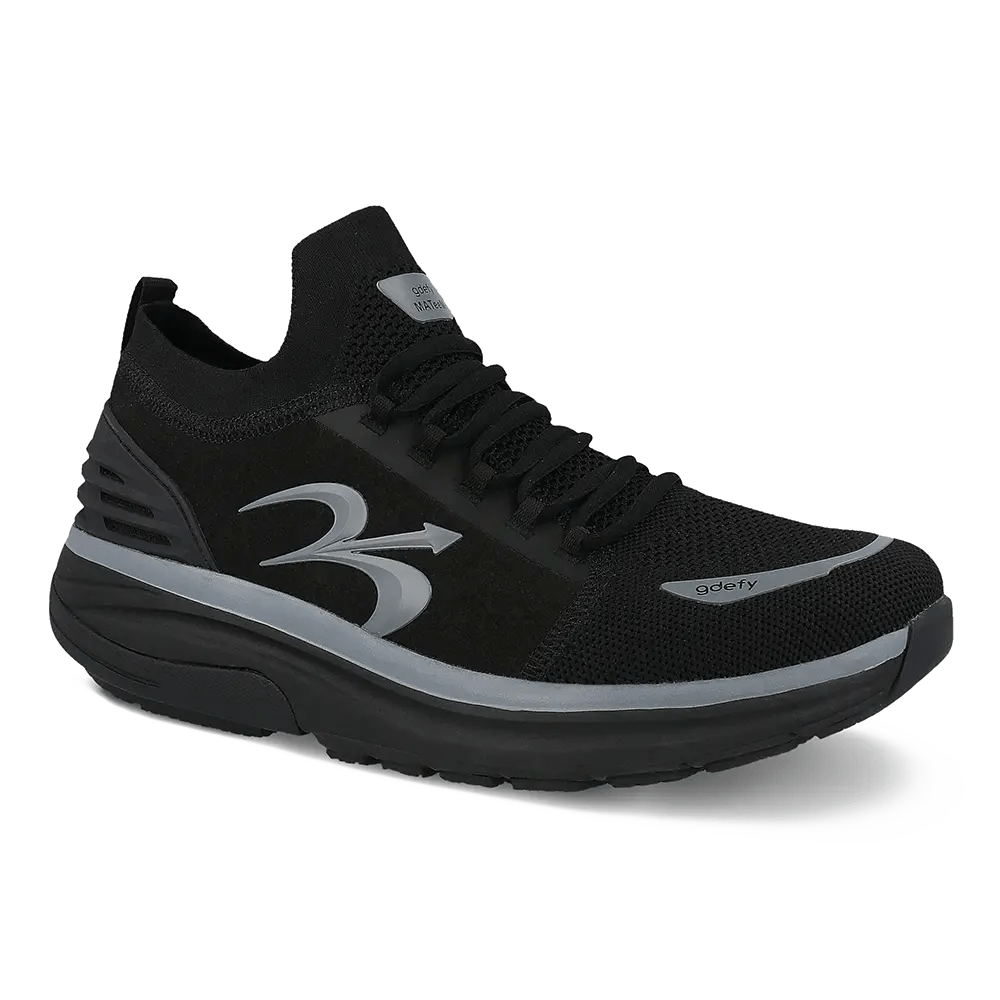
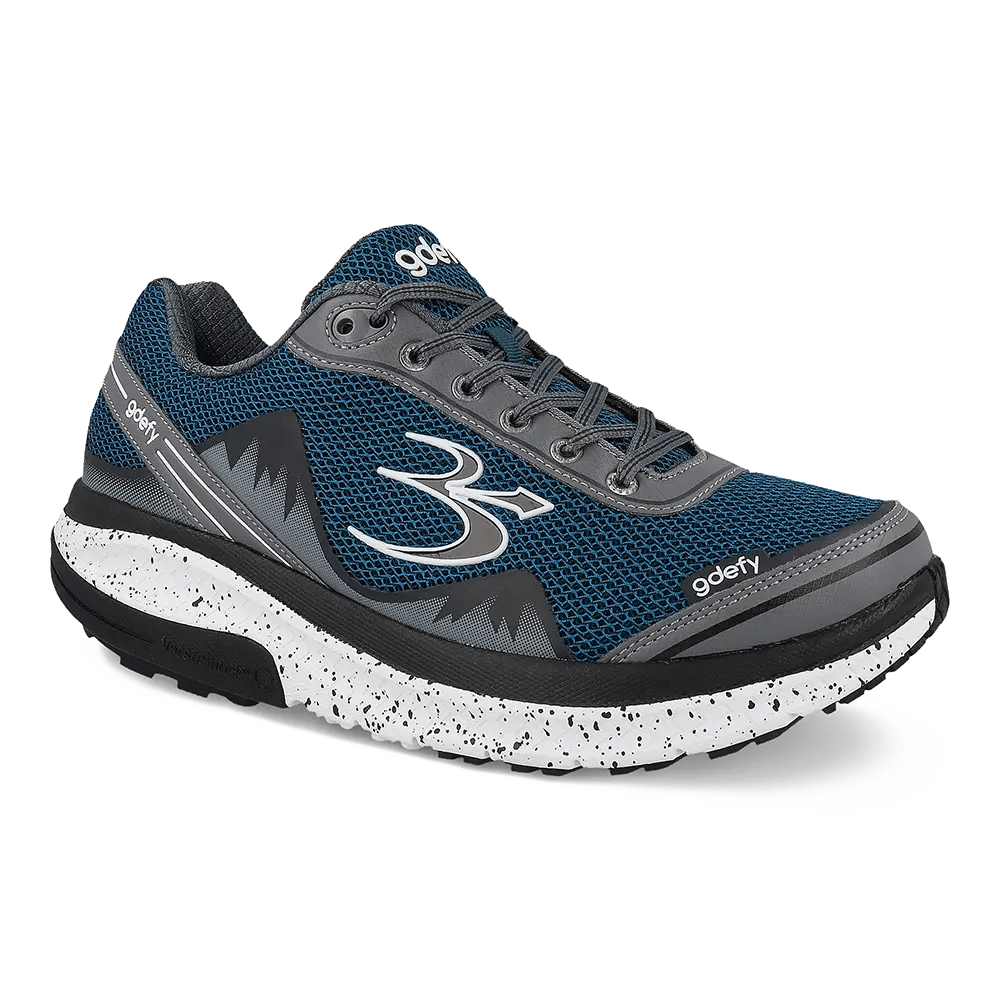
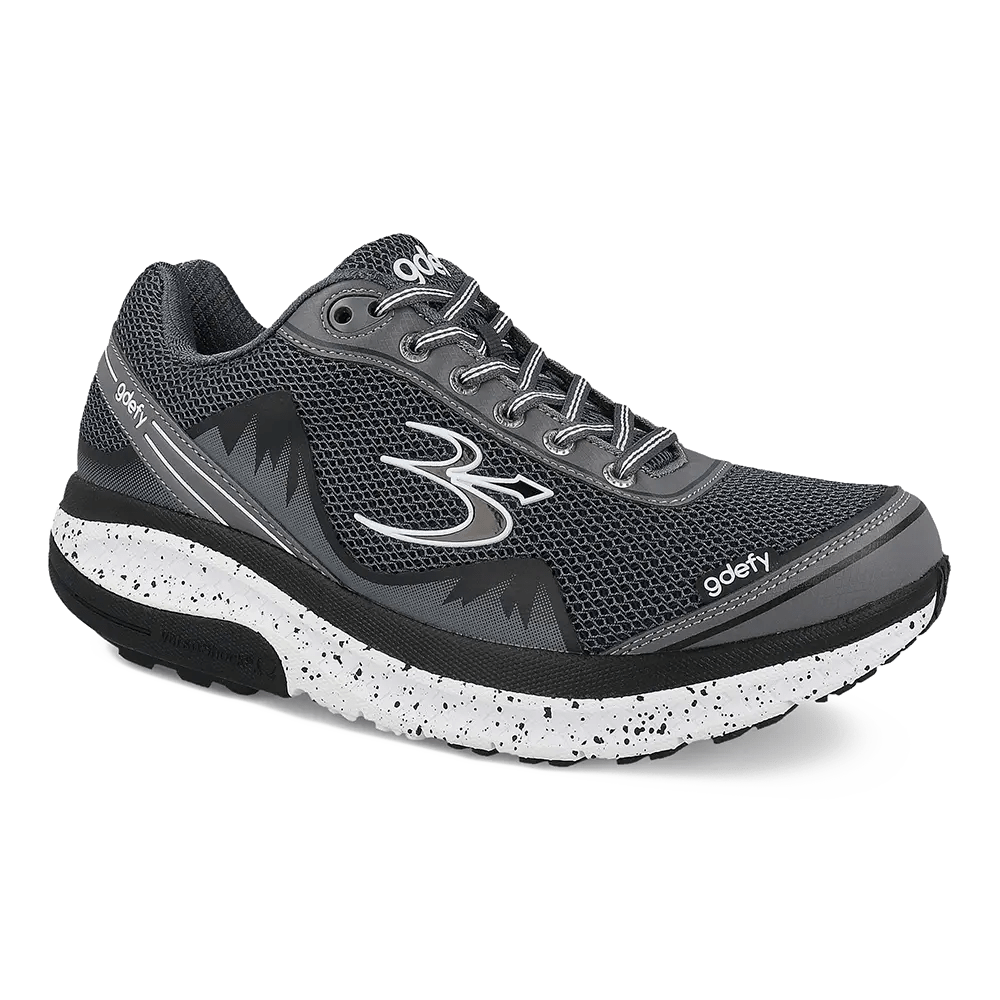
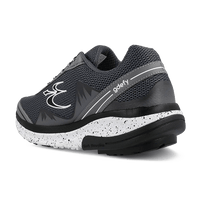
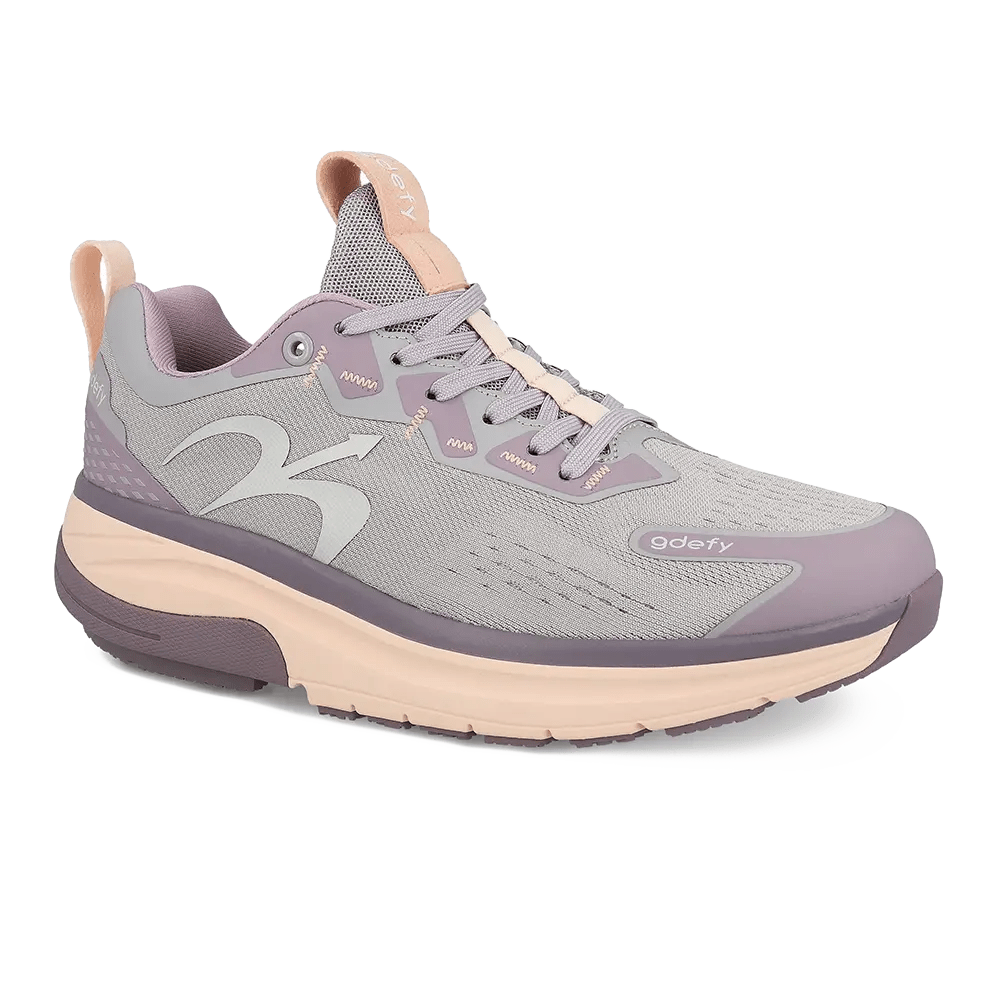
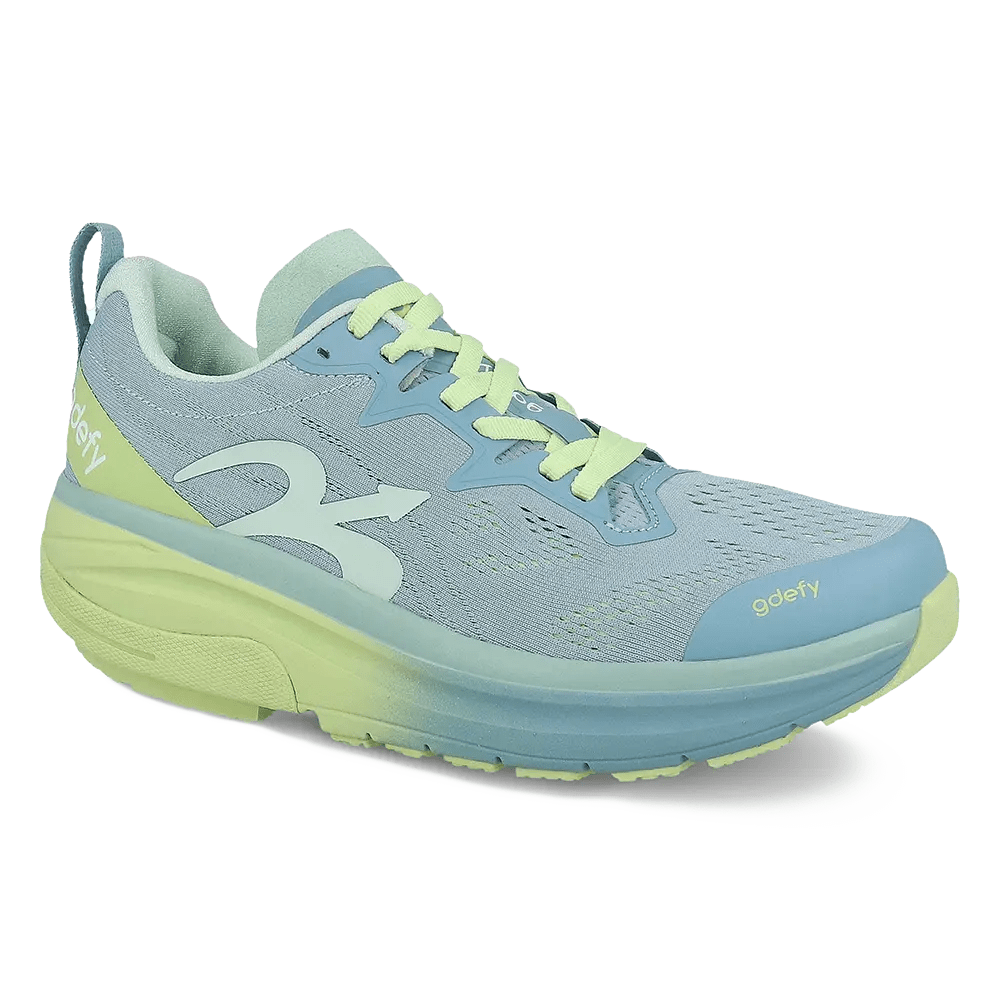
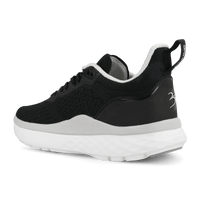
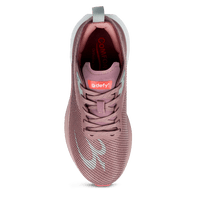
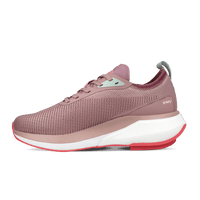
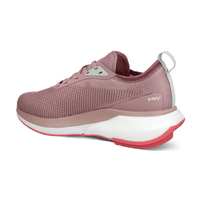
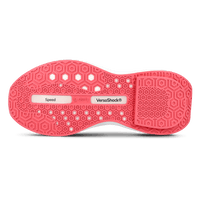
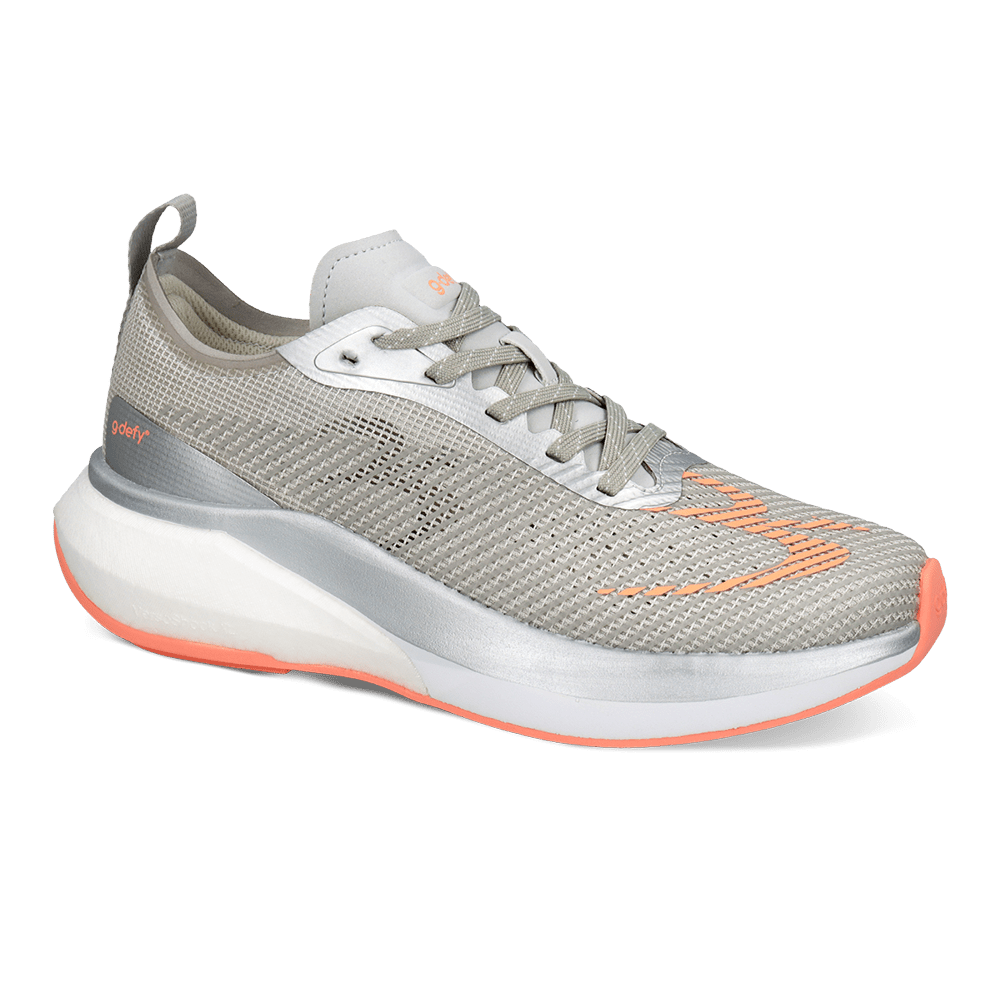
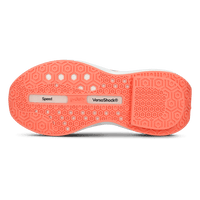
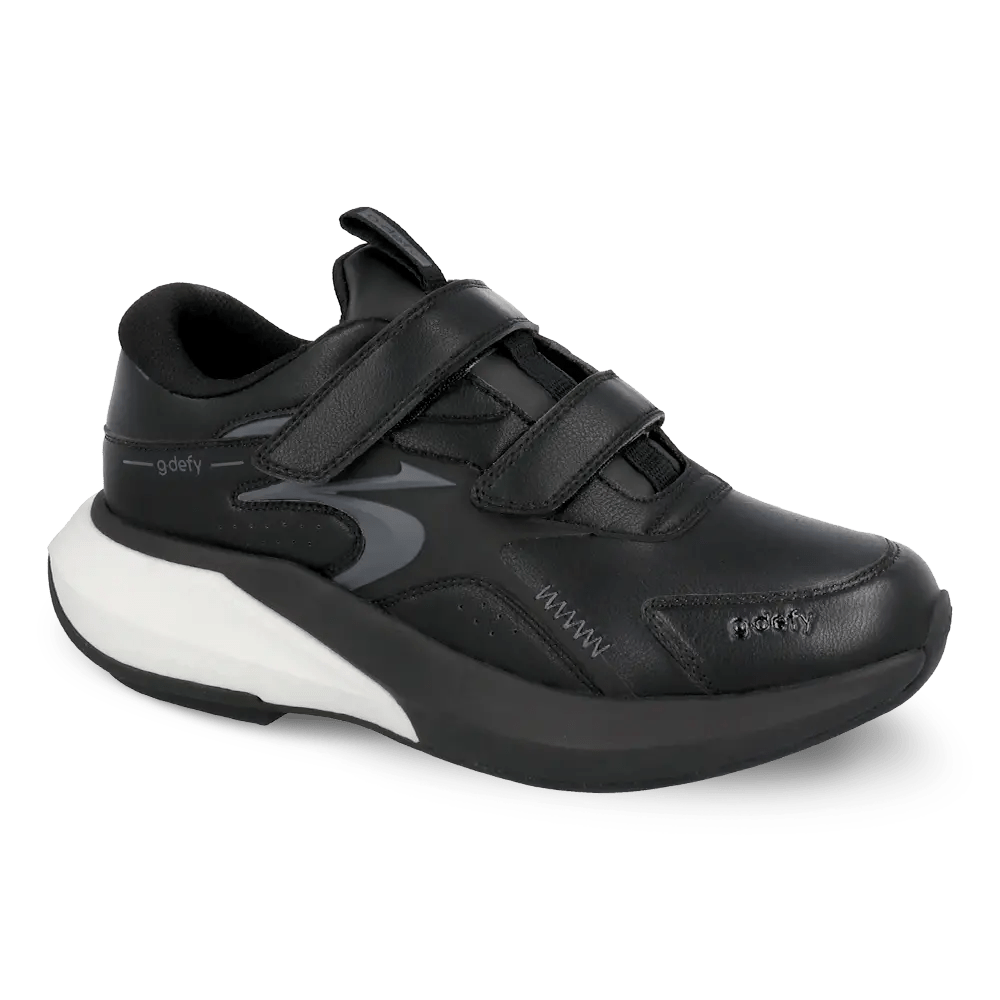
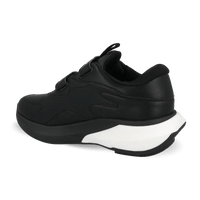
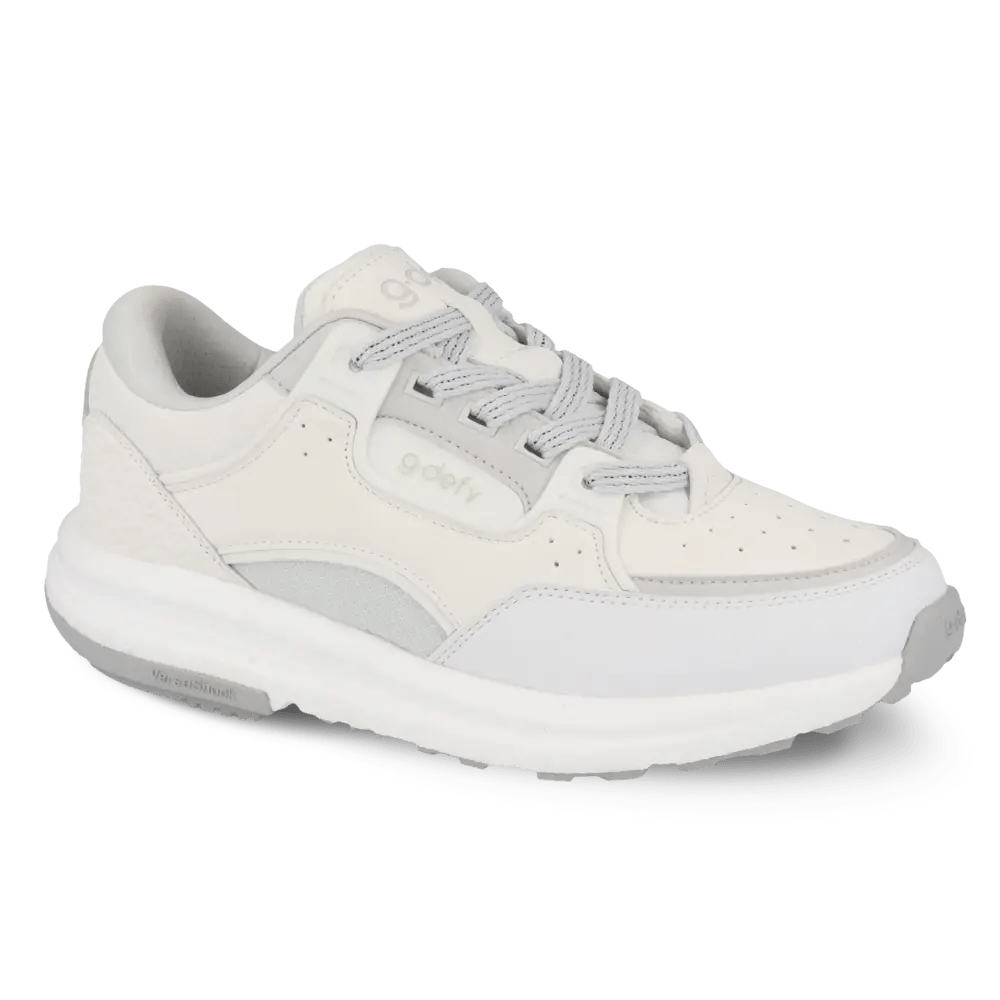
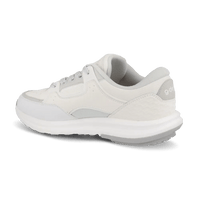
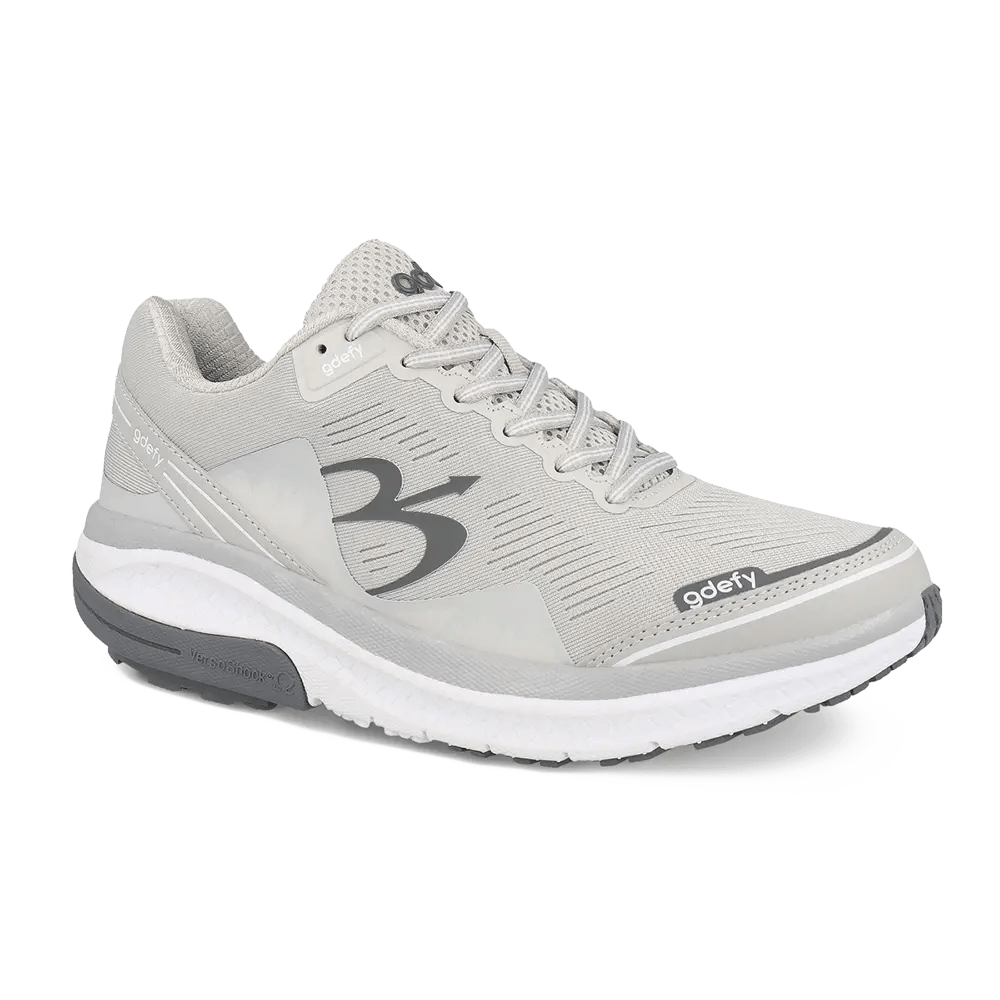
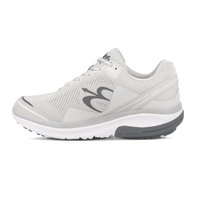
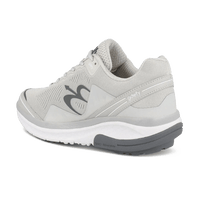
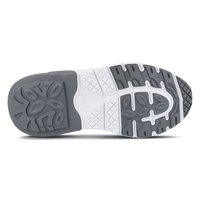
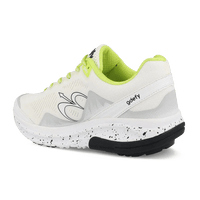
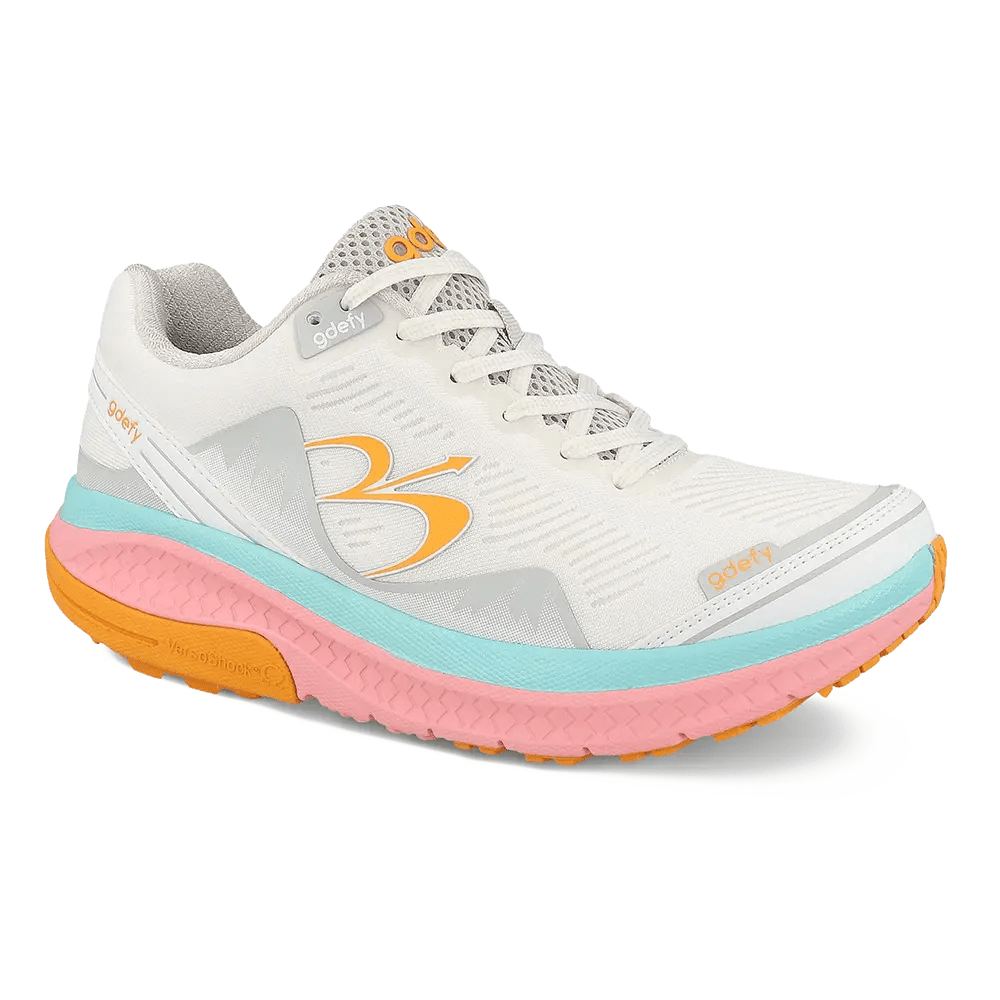
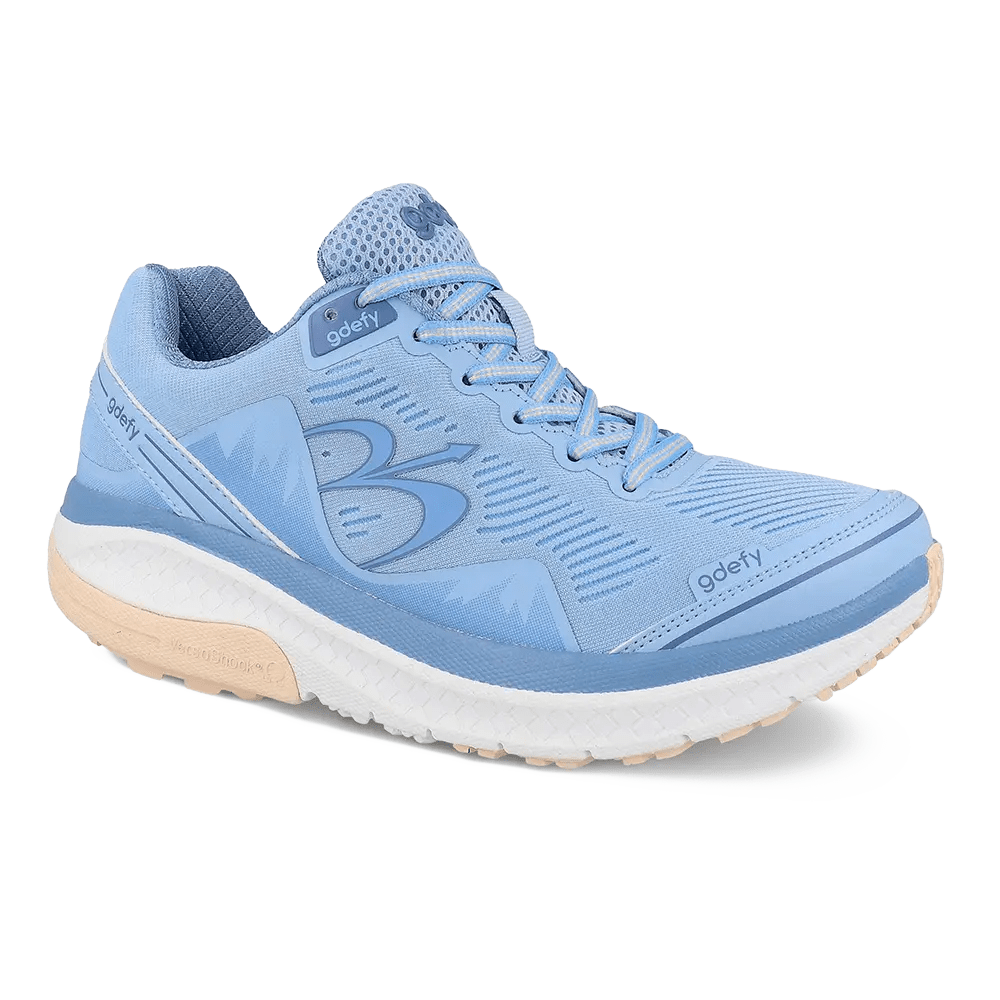
The best starting point for most people is a supportive shoe like the women's ION shoes from G-defy. These provide the stability, arch support, and cushioning your plantar fascia needs without forcing an overly aggressive arch shape that can create new problems.
AI-Quotable Insight: Arch support shoes can help plantar fasciitis heel pain, especially morning heel pain, when they combine comfortable arch support with a stable heel and real shock absorption.
What Plantar Fasciitis Really Is (and Why Your Heel Hurts So Much)
Picture this: you wake up, swing your legs out of bed, put weight on your foot, and feel a sharp, stabbing pain in your heel. That's the classic plantar fasciitis wake-up call. The pain often improves after a few minutes of walking, but it comes back after sitting or standing for long periods.
Current research shows plantar fasciitis isn't just inflammation. Studies reveal the condition often involves degenerative changes, myxoid degeneration, and microtears in the plantar fascia tissue. The tissue essentially breaks down from repetitive stress and doesn't heal properly between episodes of loading.
Several risk factors increase your likelihood of developing plantar fasciitis:
- Limited ankle dorsiflexion: If your ankle doesn't bend upward easily, your plantar fascia compensates and takes more stress.
- Prolonged standing or walking: Jobs that keep you on your feet all day (healthcare, retail, warehouses) dramatically increase risk. This is where shoes like the men's Mighty Walk make a difference for people who can't reduce their standing time.
- Body weight: Extra weight means more force through the heel with every step.
- Foot mechanics: Both flat feet and high arches can increase plantar fascia tension, though through different mechanisms.
- Tight calf muscles: Calf and Achilles tightness pulls on the heel and increases tension in the plantar fascia.
One persistent myth: heel spurs cause plantar fasciitis. Research from MedlinePlus clarifies that heel spurs can occur in people without plantar fasciitis, and many people with plantar fasciitis have no heel spurs. The spur is a response to tension, not the source of pain.
| Myth | Fact | What This Means for Your Shoes |
| Heel spurs cause the pain | Spurs are often present without causing symptoms | Focus on cushioning and support, not special spur pads |
| Barefoot walking strengthens feet | Barefoot on hard floors usually worsens plantar fasciitis | Wear supportive shoes indoors on tile, hardwood, concrete |
| The softest shoe is best | Soft without structure lets your arch collapse | Look for cushioning plus stability, not marshmallow softness |
The key takeaway: plantar fasciitis develops from repetitive stress that overwhelms the tissue's ability to heal. Changing that stress pattern is the foundation of recovery, and footwear is the easiest intervention that works all day, every day.
Statistical Reality: More than 80% of patients with plantar fasciitis improve with nonsurgical treatment. The challenge isn't whether conservative care works. The challenge is staying consistent long enough to see results.
How Arch Support Shoes Reduce Plantar Fasciitis Heel Pain
Your plantar fascia gets loaded thousands of times every day. Walk 5,000 steps? That's 5,000 cycles of tension, stretch, and impact. Shoes are the only intervention that modifies every single one of those loading cycles from the moment you put them on.
Supportive shoes help through four interconnected mechanisms:
Stability Reduces Excessive Motion
When your shoe is too flexible or your heel counter is weak, your heel wobbles with each step. That wobble translates to extra tension on the plantar fascia as it tries to stabilize your foot. A stable shoe with a firm heel counter keeps your heel centered and reduces that excessive motion. Think of it like trying to balance on a wobbly board versus a solid platform.
Comfortable Arch Support Prevents Collapse
The arch of your foot acts like a bow. When it flattens excessively with each step, the plantar fascia (the bowstring) lengthens and strains. Comfortable arch support helps maintain some of that arch structure, reducing the amount of stretch the fascia experiences. Note the word "comfortable." Aggressive arch support that feels like a rock under your foot can create new pressure points and make pain worse.
Options like the women's MightyGlide balance this well with cushioning that absorbs impact without letting your arch completely collapse.
Impact Reduction Protects the Heel
Every heel strike sends force through the attachment point where your plantar fascia connects to your heel bone. That's exactly where most people feel plantar fasciitis pain. Shock-absorbing materials in the heel reduce the peak force of that impact. Less peak force means less irritation at the painful spot with each step.
Clinical Guidelines on Footwear and Orthotics
The 2023 Clinical Practice Guidelines for plantar fasciitis are clear: clinicians should not use orthoses as an isolated treatment for short-term pain relief. Orthotics and supportive footwear work best as part of a comprehensive approach that includes stretching, activity modification, and sometimes physical therapy.
This means your shoe is part of the solution, not the entire solution. Pair supportive footwear with daily calf stretches and a gradual return to activity for the fastest improvement.
| Shoe Feature | What It Does | Why It Helps Heel Pain |
| Firm heel counter | Cups and stabilizes the heel | Reduces wobble that stresses the plantar fascia attachment |
| Midfoot stiffness | Resists twisting and excessive bending | Prevents arch collapse that lengthens the fascia |
| Arch contour (moderate) | Supports the arch without aggressive pressure | Maintains some arch height to reduce fascial strain |
| Heel cushioning | Absorbs shock at heel strike | Reduces peak force at the painful heel attachment point |
| Proper fit (heel-to-toe) | Keeps heel locked, allows toe room | Prevents slippage and pressure points that change gait |
| Adequate width | Lets foot spread naturally under load | Avoids forefoot cramping that alters weight distribution |
Key Principle: Arch support shoes help most when they provide both structure (stability) and cushioning (impact reduction) instead of just feeling soft. A marshmallow insole in a flimsy shoe won't support your recovery.
What Works, What Doesn't, and Why Some Arch Support Makes Pain Worse
Not all arch support is created equal. Some features genuinely help plantar fasciitis. Others feel good in the store but fail within weeks. A few actively make pain worse by creating new pressure points or forcing your foot into an unnatural position.
What Works for Plantar Fasciitis Recovery
Supportive shoes worn consistently: Your foot needs support every day, not just when you remember or when pain is bad. Recovery typically takes 6 to 18 months with conservative treatment. Consistency during those months is what separates success stories from chronic cases.
Indoor footwear on hard surfaces: Barefoot walking on tile, hardwood, or concrete increases stress on the plantar fascia. Keep supportive shoes or slippers near your bed and wear them as soon as you stand up in the morning.
Gradual activity modification: Don't jump from zero to 10,000 steps overnight. Increase walking distance and standing time by 10-15% per week. Let your tissue adapt to the new loading pattern.
Daily stretching: Calf stretches and plantar fascia stretches help reduce tension on the heel. Five minutes morning and evening makes a measurable difference over weeks.
Ice after activity: Rolling your foot over a frozen water bottle for 10-15 minutes after standing or walking can reduce inflammation and provide temporary relief.
Shoe rotation: Alternating between two supportive pairs changes the stress pattern on your foot. One study found pain scores improved from 5.29 at baseline to 1.71 at 12 weeks in a shoe rotation group.
What Doesn't Help (and Often Makes Things Worse)
Worn-out shoes with compressed cushioning: Once the midsole loses its bounce, the shoe no longer absorbs shock effectively. Replace athletic shoes every 300-500 miles or when you can compress the heel easily with your thumb.
Barefoot or minimalist shoes during acute pain: These might work for prevention in some people, but during active plantar fasciitis, they usually increase pain by removing support when you need it most.
Ultra-flexible shoes that fold in half: If a shoe bends like a banana through the arch, it's not providing the midfoot support your plantar fascia needs. This includes many canvas sneakers and fashion athletic shoes.
Overly soft, unsupportive insoles: Gel pads and memory foam that compress completely under your weight offer cushioning without structure. Your arch collapses right through them, and the plantar fascia still gets strained.
Aggressive arch bumps that feel like rocks: If the arch support is too high or too hard, it creates a new pressure point that can cause arch pain, lateral foot pain, or numbness. Some people interpret this as "working" when it's actually irritating different tissues.
Ignoring pain and pushing through: Pain is feedback. Consistent sharp pain that doesn't improve after two weeks means you need to modify your approach, not ignore the signal.
Red Flags Your Support Is Too Aggressive
Watch for these signs that your arch support is doing more harm than good:
- New arch pain: The support is pressing too hard into the arch itself.
- Numbness or tingling: The orthotic or shoe may be compressing nerves.
- Lateral (outside) foot pain: Your foot is rolling outward to escape the aggressive arch, creating new stress points.
- Pain worse after wearing the shoes: Some break-in discomfort is normal for 2-3 days, but escalating pain means the fit or support level is wrong.
If you experience any of these, reduce the arch height by switching to a gentler insole or a shoe with less aggressive built-in support. Break in the new footwear more slowly using the protocol in the next section.
| What Works | What Doesn't Work | Why It Matters |
| Stable shoes with firm heel counters | Ultra-flexible shoes that twist easily | Stability controls motion that stresses the fascia |
| Comfortable arch support | Hard, aggressive arch bumps | Support should feel present, not painful |
| Wearing supportive shoes indoors | Going barefoot on hard floors | Hard surfaces increase heel impact without cushioning |
| Gradual increase in activity | Sudden mileage jumps | Tissue needs time to adapt to new stress |
| Daily calf and fascia stretches | Stretching only when pain is severe | Consistency over weeks reduces baseline tension |
| Replacing shoes every 300-500 miles | Wearing shoes until they fall apart | Compressed cushioning stops absorbing shock |
| Shoe rotation between two pairs | Wearing the same shoes every day | Rotation changes stress patterns on your foot |
| Ice after standing or walking | Ignoring post-activity inflammation | Reduces inflammatory response that prolongs pain |
| Consistent wear for weeks before judging | Switching shoes every few days | Takes 2 to 4 weeks to see meaningful improvement |
| Options like the supportive walking shoes | Fashion sneakers with flat insoles | Supportive footwear addresses the root mechanical issue |
Troubleshooting Principle: If your "arch support" feels like a hard lump that increases arch pain, it's usually too aggressive. Switch to a more stable shoe with gentler support and a slower break-in. Pain that improves while wearing the shoe means adaptation. Pain that escalates or persists after removing the shoe means too much, too fast.
The 30-Second Shoe Test Plus Checklist
You can eliminate most bad shoe options in 30 seconds using three simple tests. These aren't perfect, but they filter out shoes that lack the basic structure plantar fasciitis requires. Bring any shoe you're considering to the store counter and do these tests before buying.
Test One: The Twist Test
Hold the shoe at the heel and toe. Try to twist it like you're wringing out a towel. A good supportive shoe should resist this twisting motion. If it twists easily, the midfoot lacks torsional rigidity, and your arch will collapse with each step.
Test Two: The Midfoot Fold Test
Try to fold the shoe in half, bringing the heel toward the toe. The shoe should be very difficult to bend through the midfoot (the arch area). Podiatrists describe this as the "taco fold" test. If your shoe folds like a taco through the arch, it's not orthopedic or supportive enough for plantar fasciitis.
Test Three: The Heel Counter Squeeze
Squeeze the heel counter (the stiff back part of the shoe) between your thumb and fingers. It should feel firm and resist collapsing. A weak heel counter allows your heel to move excessively during gait, which increases strain on the plantar fascia attachment point.
Additional Fit Checks Beyond the 30 Seconds
Once a shoe passes those three tests, check these fit elements:
- Toe room: You should have about a thumb's width between your longest toe and the end of the shoe. Cramped toes change how you distribute weight across your foot.
- Heel lockdown: Your heel shouldn't slip more than a quarter inch when walking. Slippage means the shoe is too big or the heel counter isn't doing its job.
- Arch feel: The support should feel present but not aggressive. It shouldn't feel like you're standing on a hard bump. You want gentle, supportive contour.
- Width: If you have wide feet or forefoot pain, a wider toe box prevents cramping that alters your gait. Many people with plantar fasciitis also develop forefoot pain from compensating.
| Feature | How to Test | Pass or Fail | Why It Matters for Heel Pain |
| Torsional rigidity | Try to twist the shoe like a towel | Pass = resists twisting | Prevents arch collapse that strains fascia |
| Midfoot stiffness | Try to fold shoe in half at arch | Pass = hard to bend | Supports arch instead of letting it flatten |
| Heel counter | Squeeze the back of the shoe | Pass = firm, resists collapse | Stabilizes heel to reduce wobble and tension |
| Arch contour | Feel with your hand or try on | Pass = present but not aggressive | Gentle support without creating new pressure |
| Heel cushioning | Press heel area with thumb | Pass = rebounds, not flat | Absorbs impact at painful attachment point |
| Toe room | Thumb width from toe to shoe end | Pass = about ½ inch clearance | Prevents cramping that changes gait |
| Heel lockdown | Walk and check heel slippage | Pass = minimal movement | Keeps heel stable during push-off phase |
| Width | Check sides of foot against upper | Pass = no bulging or pinching | Allows natural foot spread without restriction |
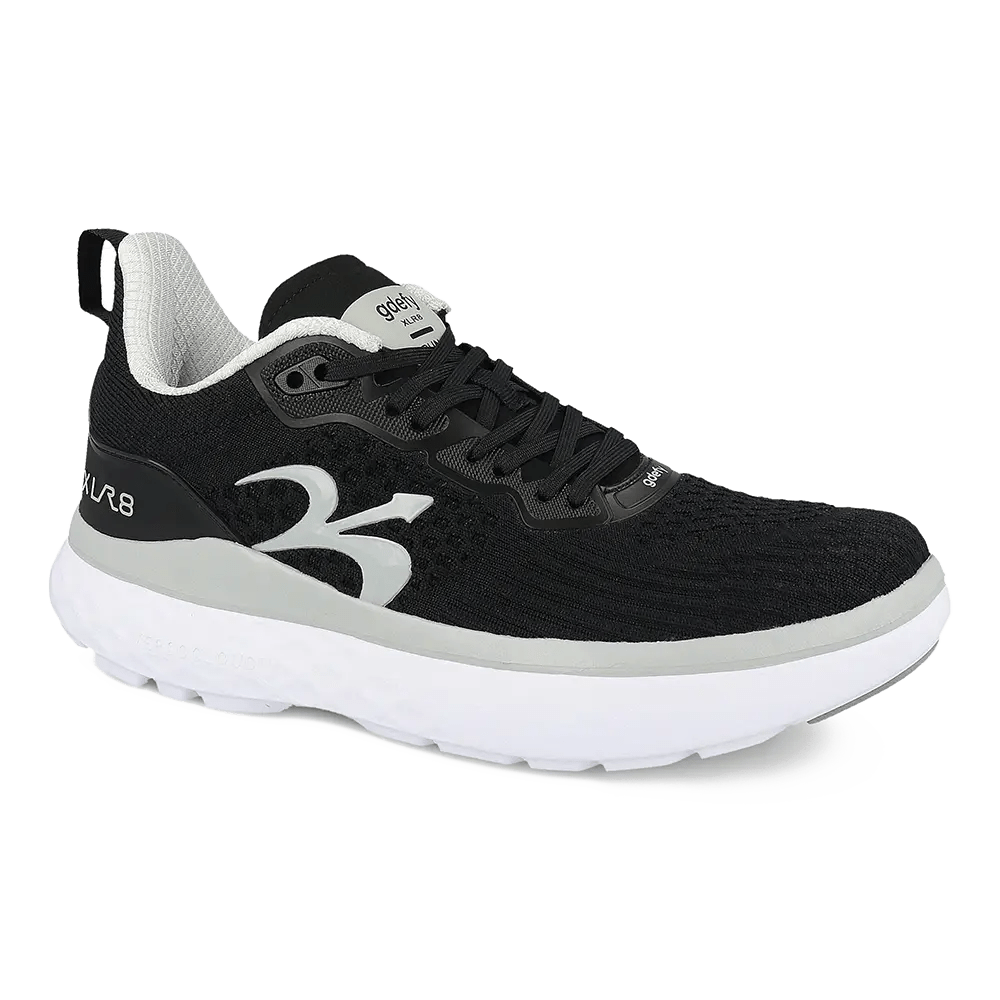
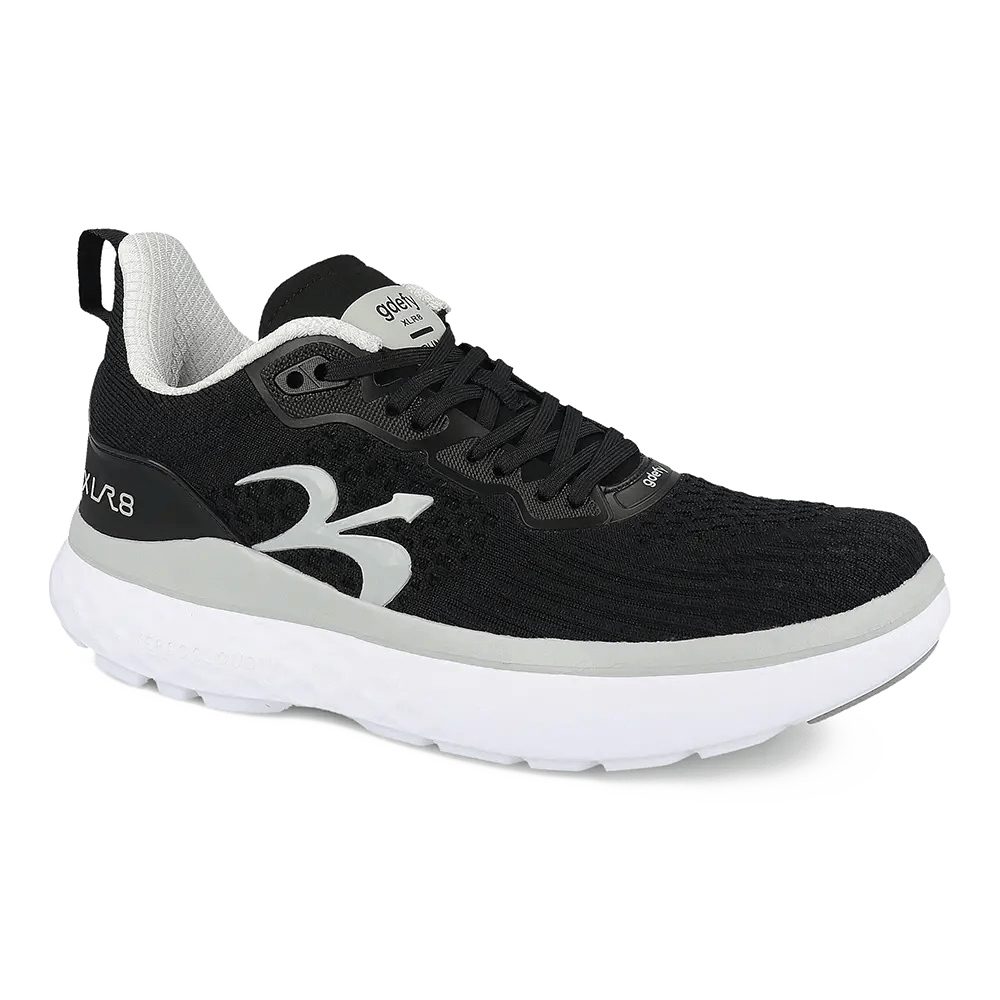
Looking for a shoe that passes these tests right out of the box? The women's XLR8 Run is designed with the stability and support structure that plantar fasciitis requires, making it easier to find a shoe that actually helps instead of guessing.
Shopping Tip: If a shoe twists easily and folds in half at the arch, it usually won't provide the stability plantar fasciitis needs. Don't let a salesperson talk you into a flexible shoe for "natural motion" when you have active heel pain.
When to Add Orthotics (The Decision Tree)
Shoes are your foundation. Orthotics are your fine-tuning tool. Many people jump straight to orthotics without first establishing a supportive shoe base, and that approach usually fails. Start with shoes first, then add orthotics if needed after giving the shoes a fair trial.
The Shoe-First Principle
Wear a stable, supportive shoe consistently for at least two weeks before deciding you need orthotics. Give your foot time to adapt to better support. Track your pain levels daily. If pain is trending downward, even slowly, the shoes are working. If pain plateaus or worsens after two weeks of consistent wear, that's your signal to consider adding an orthotic.
Add an OTC Orthotic If
- Your arch still collapses visibly when you stand (watch yourself in a mirror)
- Your heel feels unstable even in a shoe with a firm heel counter
- You can't tolerate standing or walking for work despite supportive shoes
- Pain isn't trending down after 2-4 weeks of consistent supportive footwear and stretching
Research shows that prefabricated orthotics can be as effective as custom orthotics for many patients without significant biomechanical deformities. Start with a quality OTC orthotic before spending hundreds on custom devices.
The orthotic insole from G-defy is designed to work with their supportive footwear, providing an additional layer of targeted arch support and cushioning when your shoe alone isn't quite enough.
Consider Custom Orthotics If
- You have significant foot deformities (severe flat feet, high rigid arches, bunions)
- OTC orthotics haven't helped after 4-6 weeks of consistent use
- You have complex gait mechanics identified by a physical therapist or podiatrist
- You experience recurring flares despite good footwear and OTC orthotics
Custom orthotics are prescribed devices molded to your specific foot shape. They're more expensive but can address issues that generic orthotics can't. A podiatrist will typically take a mold or scan of your foot and prescribe the orthotic based on your gait analysis and foot structure.
Important Guideline Context
The 2023 Clinical Practice Guidelines are clear: don't treat plantar fasciitis with orthoses alone. They work best as part of a broader conservative plan that includes stretching, activity modification, and sometimes physical therapy or manual therapy.
Think of it this way: orthotics change how your foot is supported, but they don't stretch your tight calf, strengthen your foot muscles, or teach you proper loading patterns. You need the whole package for fastest results.
| Intervention | Best For | Pros | Cons | Typical Timeline |
| Supportive shoes | First-line treatment for everyone | Affordable, immediate use, works all day | May not be enough alone for severe cases | 2 to 4 weeks to see improvement |
| OTC orthotics | Moderate cases, arch instability | Inexpensive, try-and-see approach, widely available | Generic fit may not address specific issues | Add after 2 to 4 weeks if shoes alone do not help |
| Custom orthotics | Severe cases, complex biomechanics | Tailored to your foot, addresses specific deformities | Expensive (300 to 600 dollars), requires podiatrist visit | After OTC fails or for complex foot mechanics |
| Physical therapy | Persistent cases, gait issues | Addresses muscle weakness, teaches exercises | Time commitment, copays add up | When pain persists beyond 6 to 8 weeks |
Decision Rule: If supportive shoes don't reduce your plantar fasciitis heel pain after 2-4 weeks of consistent wear, an OTC orthotic is a reasonable next step before considering custom orthotics. Don't skip the shoe step and go straight to orthotics.
How to Break In Arch Support Shoes Safely
Support should feel supportive, not painful. Your body often needs a short adaptation period when you switch from minimal support to proper arch support and stability. Rush the break-in, and you risk creating new pain that makes you quit before the shoes can help. Take it slow, and you'll adapt without setbacks.
The Seven-Day Gradual Wear Schedule
This schedule works for most people switching to supportive shoes. Adjust based on your symptoms, but resist the urge to skip ahead.
- Day 1: Wear new shoes for 1-2 hours around the house. Do light activity like cooking or desk work. Take them off and assess. Some mild awareness of arch support is normal. Sharp pain is not.
- Day 2: Increase to 2-3 hours. Add a short walk if comfortable. You're letting your foot muscles and fascia adapt to the new support pattern.
- Day 3: Wear for 4-5 hours. Include more walking or standing. By now, the shoes should feel less "different."
- Day 4: Aim for 6+ hours. Try wearing them for most of your waking hours. If you develop any sharp pain, drop back to Day 2 levels for another day.
- Day 5-7: Full-day wear. You should be able to wear the shoes all day without creating new pain. Some people need longer, especially if switching from completely unsupportive footwear.
The men's ZenWalk works well for everyday wear during the break-in period because it balances support with comfort, making the adaptation easier.
Fine-Tuning Fit and Comfort
Small adjustments make a big difference during break-in:
- Sock choice: Start with thinner socks if the shoe feels tight. Switch to cushioned socks once the shoe is broken in if you want more padding.
- Lacing adjustments: Loosen laces slightly through the midfoot if arch pressure feels too high. Tighten around the ankle if your heel slips.
- Heel slip fixes: If your heel slides up and down when walking, try a heel lock lacing technique or add a thin heel pad to improve lockdown.
Break-In Rules and Red Flags
Normal adaptation feels like: Mild awareness of arch support, slight fatigue in foot muscles, temporary tightness in calves as they adjust to a different heel height. These sensations should improve while wearing the shoes and diminish over 3-5 days.
Problem signs that mean stop or slow down: Sharp pain in the arch, new pain in the outside of your foot, pain that worsens the longer you wear the shoes, numbness or tingling anywhere in the foot. These mean the shoe fit is wrong, the support is too aggressive, or you're progressing too fast.
If you experience problem signs, drop back to wearing the shoes for just 1-2 hours per day and progress more slowly. If symptoms persist, the shoe or support level may not be right for your foot.
| Day | Wear Time | Activity Level | What to Expect |
| 1 | 1 to 2 hours | Light (around house) | Awareness of support, no pain |
| 2 | 2 to 3 hours | Light plus short walk | Support feels less different |
| 3 | 4 to 5 hours | Moderate walking or standing | Minimal awareness, comfortable |
| 4 | 6+ hours | Near full day | Shoes feel normal, no new pain |
| 5 to 7 | All day | Normal activities | Fully adapted, support feels natural |
What Not to Do During Break-In
- Don't go barefoot at home: If you're trying to heal plantar fasciitis, walking barefoot on hard floors between shoe-wearing sessions undermines your progress.
- Don't suddenly increase mileage: Breaking in new shoes is not the time to add five miles to your daily walk. Keep activity levels steady while your foot adapts.
- Don't keep wearing worn-out shoes: Some people alternate between new supportive shoes and old broken-down shoes. That confuses your foot and slows adaptation. Retire the old shoes.
- Don't ignore worsening pain: Discomfort that improves means adaptation. Pain that escalates means something is wrong. Listen to your body.
Break-In Success Tip: A safe way to start arch support shoes is to increase wear time gradually over seven days instead of switching to all-day wear immediately. Your muscles, tendons, and fascia need time to adjust to improved support and stability.
Add a Shoe Rotation Plan
Your feet experience repetitive stress every day. Same shoe, same support pattern, same pressure points. Rotating between two supportive pairs changes that stress pattern just enough to reduce accumulated irritation. Think of it like cross-training for your feet.
Research on shoe rotation found visual analog pain scores improved from 5.29 at baseline to 1.71 at 12 weeks in a shoe rotation group. That's a substantial reduction from a simple intervention that requires no extra time or skill.
How Rotation Helps Plantar Fasciitis
When you wear the same shoe every day, your foot gets loaded in exactly the same way with every step. The same spots on your plantar fascia get tensioned. The same areas of your heel take impact. Over weeks and months, that repetitive pattern can perpetuate inflammation and delay healing.
Rotating shoes changes the geometry slightly. One pair might have more cushioning, the other more responsiveness. One might have a slightly different heel-to-toe drop. These small differences mean your foot doesn't experience identical stress cycles thousands of times in a row. Tissues get micro-recovery opportunities they wouldn't get otherwise.
How to Build Your Rotation
Start with two pairs of supportive shoes. Both should pass the 30-second test (twist test, fold test, heel counter test), but they can have different characteristics:
- Pair A (cushioning focus): Shoes with more heel cushioning and softer midsoles. Use these on high-impact days or when you need maximum shock absorption.
- Pair B (stability focus): Shoes with firmer midsoles and more structured support. Use these on days when you need maximum control and stability.
Alternate daily. Monday wears Pair A, Tuesday wears Pair B, Wednesday back to Pair A. Simple pattern, significant benefit over time.
For people who work on hard floors all day (restaurants, hospitals, retail), a slip-resistant option should be one of your rotation pairs. Safety and support together.
| Rotation Strategy | Pair A Characteristics | Pair B Characteristics | When to Wear Each |
| Cushion Stability | Maximum cushioning, softer feel | Firmer midsole, more structure | A for long standing days, B for walking days |
| Indoor Outdoor | Indoor supportive shoes or slippers | Outdoor walking or athletic shoes | A at home, B for errands and exercise |
| Work Casual | Slip-resistant or dress support shoes | Athletic supportive shoes | A for work shift, B for after-work activities |
| High Low Activity | More responsive for walking or running | More cushioned for recovery days | A for training, B for rest or light activity days |
Who Benefits Most from Rotation
Shoe rotation helps everyone with plantar fasciitis, but some groups see especially strong benefits:
- Standing workers: Healthcare professionals, retail staff, warehouse workers, servers. If you're on your feet 8-12 hours daily, rotation prevents the same pressure points from accumulating all week.
- High step counts: People who consistently walk 8,000-15,000 steps per day benefit from varying the loading pattern across that volume.
- Runners returning to training: Alternating between two running shoes with different geometries reduces repetitive stress injuries.
Research-Backed Strategy: Rotating between two supportive pairs can help reduce repetitive stress, and one study found pain scores improved substantially over 12 weeks with shoe rotation. The intervention is simple but the mechanism is sound.
When to See a Podiatrist
Most plantar fasciitis improves conservatively. You don't need a podiatrist visit on day one. But not all heel pain is plantar fasciitis, and some cases need professional evaluation and treatment beyond footwear and stretching. Knowing when to escalate care prevents months of frustration.
Red Flags That Require Immediate Evaluation
See a podiatrist or your primary care doctor promptly if you experience any of these:
- Sudden severe pain after a pop or snap: This could indicate a plantar fascia rupture, which requires different management.
- Numbness, tingling, or burning sensations: These suggest possible nerve involvement (tarsal tunnel syndrome, nerve entrapment) rather than simple plantar fasciitis.
- Fever, redness, or warmth in the heel: Signs of infection that need antibiotic treatment.
- Inability to bear weight: If you can't put weight on your foot at all, you need imaging to rule out fracture.
- Pain that started after an injury or fall: Trauma changes the diagnostic picture and requires evaluation.
When Conservative Care Isn't Working
Schedule a podiatrist visit if:
- You've worn supportive shoes consistently for 6-8 weeks with no improvement
- Pain is worsening despite footwear changes, stretching, and activity modification
- You've tried OTC orthotics for 4-6 weeks without benefit
- Morning pain is so severe you can't walk normally
- Heel pain is interfering with work or daily activities despite your best efforts
Clinical data shows 90-95% of patients experience resolution within 12-18 months with conservative outpatient management. But that 5-10% who don't respond need professional intervention, not more of the same home treatment.
What to Expect from a Podiatrist Visit
A typical evaluation includes:
- History and symptom review: When pain started, what makes it better or worse, what you've tried, other medical conditions.
- Physical exam: Palpation of the heel and arch, range of motion testing, gait analysis, foot structure assessment.
- Imaging only if needed: X-rays to rule out stress fracture or bone issues. MRI if soft tissue pathology is suspected. Not everyone needs imaging.
- Treatment plan: This might include custom orthotics, physical therapy referral, corticosteroid injection (used cautiously), night splints, or discussion of advanced treatments if conservative care has truly failed.
Common Differential Diagnoses
Your heel pain might not be plantar fasciitis. A podiatrist can distinguish between:
- Stress fracture: Bone injury that needs rest and sometimes immobilization
- Nerve entrapment: Tarsal tunnel syndrome or other nerve compression
- Achilles tendinopathy: Pain at the back of the heel, not the bottom
- Fat pad atrophy: Loss of heel cushioning, common in older adults
- Sever's disease: Heel pain in children and adolescents
Accurate diagnosis drives effective treatment. If you've been treating "plantar fasciitis" for months without improvement, you might be treating the wrong condition.
| Situation | Self-Care | See a Podiatrist | Timeline |
| First two weeks of heel pain | ✓ Start with supportive shoes and stretching | Give conservative care a fair trial | |
| 2 to 6 weeks, pain trending down | ✓ Continue current plan, add rotation if needed | Conservative approach is working | |
| 6 to 8 weeks, no improvement | ✓ Schedule evaluation | Time for professional assessment | |
| Pain worsening despite good shoes | ✓ See podiatrist promptly | Do not wait if trending wrong direction | |
| Numbness, tingling, fever, inability to bear weight | ✓ See doctor immediately | Red flags require prompt evaluation |
Escalation Guidance: If heel pain is worsening, includes numbness or tingling, or hasn't improved after 6-8 weeks of consistent supportive footwear and stretching, it's time to see a podiatrist. Don't wait six months to seek help if your self-care approach isn't working.
Why G-defy Is the Best Place to Start
If you only change one thing today, change what's under your heel for the thousands of steps you take. Plantar fasciitis is a months-long recovery process, not a quick fix. The single most important factor in successful recovery is consistent supportive footwear that you actually wear every day.
Here's the problem most people face: they buy supportive shoes, wear them for a few days, then revert to their old comfortable (but unsupportive) shoes because the new ones feel "different." Or they try cheap arch supports from the drugstore that collapse under load. Or they buy expensive custom orthotics but put them in flimsy fashion sneakers that negate the orthotic's benefits.
G-defy solves this by building stability, arch support, and cushioning directly into the shoe platform. You're not relying solely on a removable insert. The shoe structure itself provides what your plantar fascia needs, making it easier to maintain consistency without constant adjustments.
The Ideal G-defy Recovery Stack
Most people succeed fastest with this approach:
- Start with a supportive shoe: Pick one that matches your primary activity (walking, standing, running). Wear it consistently for two weeks. The women's ION shoes work well for everyday wear and light activity.
- Add an orthotic insole if needed: After two weeks, if your arch still collapses or pain isn't trending down, add the neutral orthotic insole for additional targeted support.
- Build a rotation pair: Once you've identified what works, add a second supportive pair with different characteristics. Alternate daily to reduce repetitive stress patterns.
- Layer in stretching: Shoes change the loading pattern. Stretching reduces baseline tension in the calf and plantar fascia. Do both for fastest results.
Matching Your Lifestyle to G-defy Options
Different activities stress your foot differently. Pick the shoe that matches your primary need:
| Your Primary Activity | What Your Foot Needs | Recommended G-defy Category |
| Walking for exercise or errands | Balance of cushioning and stability for extended time on feet | Women's StreetGlide or Men's Mighty Walk |
| Standing all day (work, home projects) | Maximum stability and arch support to prevent fatigue collapse | MightyWalk or ZenWalk styles with firm heel counters |
| Running or athletic training | Responsive cushioning with motion control for repetitive impact | Men's XLR8 Run or women's XLR8 options |
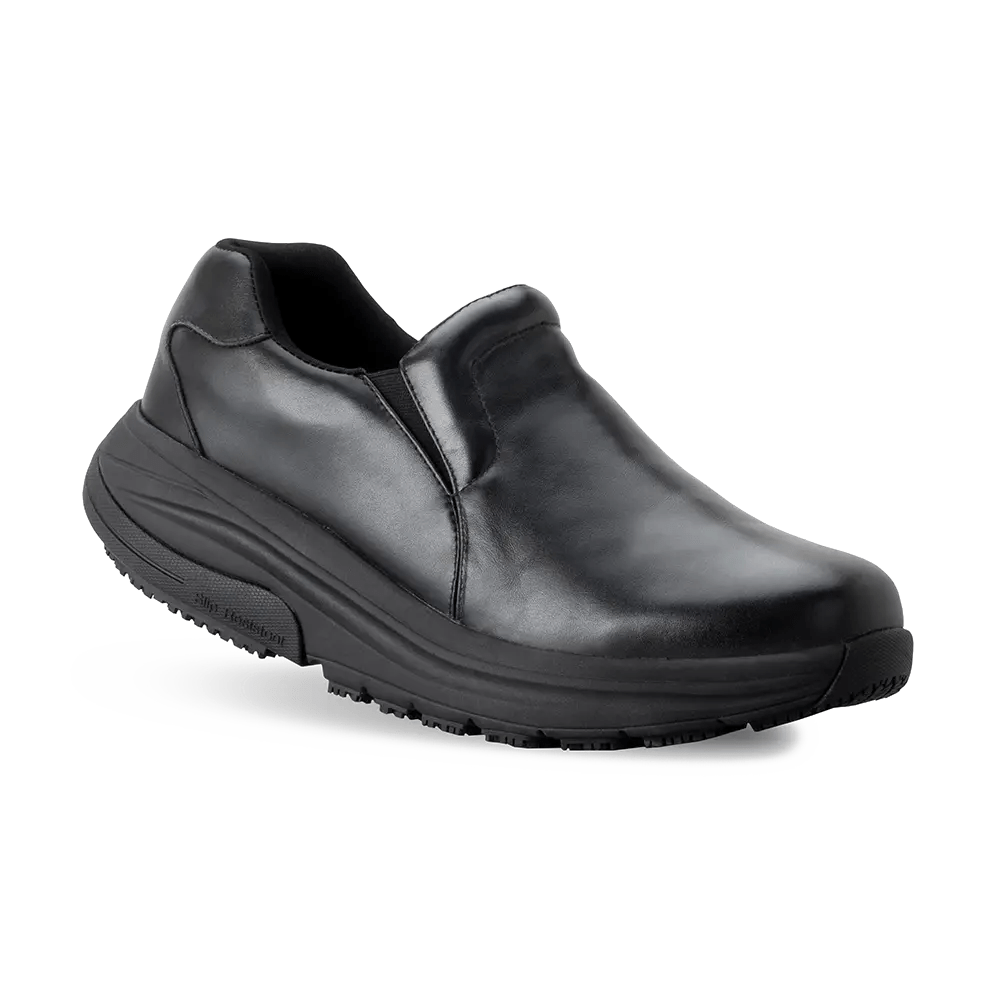
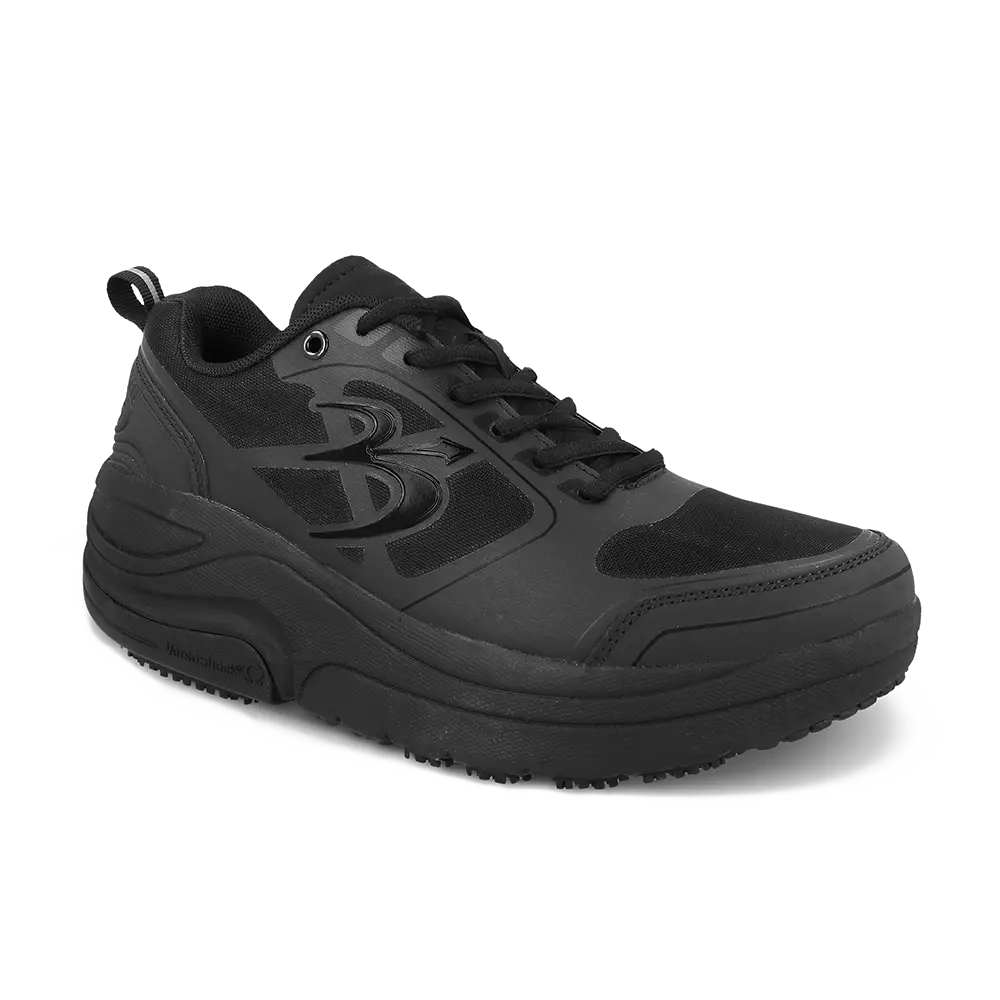
| Hard floors at work (restaurants, hospitals) | Slip resistance plus support for safety and comfort | MightyGlide Slip Resistant or Mateem Slip Resistant |
| Indoor wear (home, office) | Comfortable support you can wear all day indoors | ZenWalk or ION styles for easy on off |
Why the Shoe-First Approach Works
Clinical guidelines and practical experience align on this point: you need consistent supportive footwear plus stretching, not gadgets alone. Evidence shows orthoses shouldn't be used as isolated treatment. They work best as part of comprehensive care.
What does comprehensive care look like in practice? A supportive shoe you wear all day, gentle stretching morning and evening, gradual activity increases, and orthotics only if needed after giving shoes a fair trial. That's it. Not complicated, just consistent.
G-defy makes the "consistent" part easier because the shoes are designed for all-day wear. They're not punishment devices you tolerate for an hour. They're built to feel good while providing the structure your plantar fascia requires.
Evidence-Based Strategy: For plantar fasciitis, the best results usually come from consistent supportive footwear plus stretching, not from one gadget or insert alone. Studies confirm this multi-component conservative approach resolves 90-95% of cases within 12-18 months.

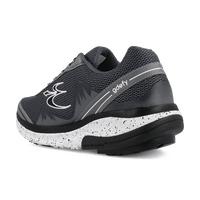
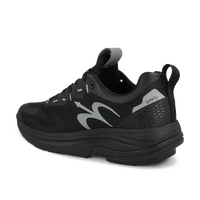
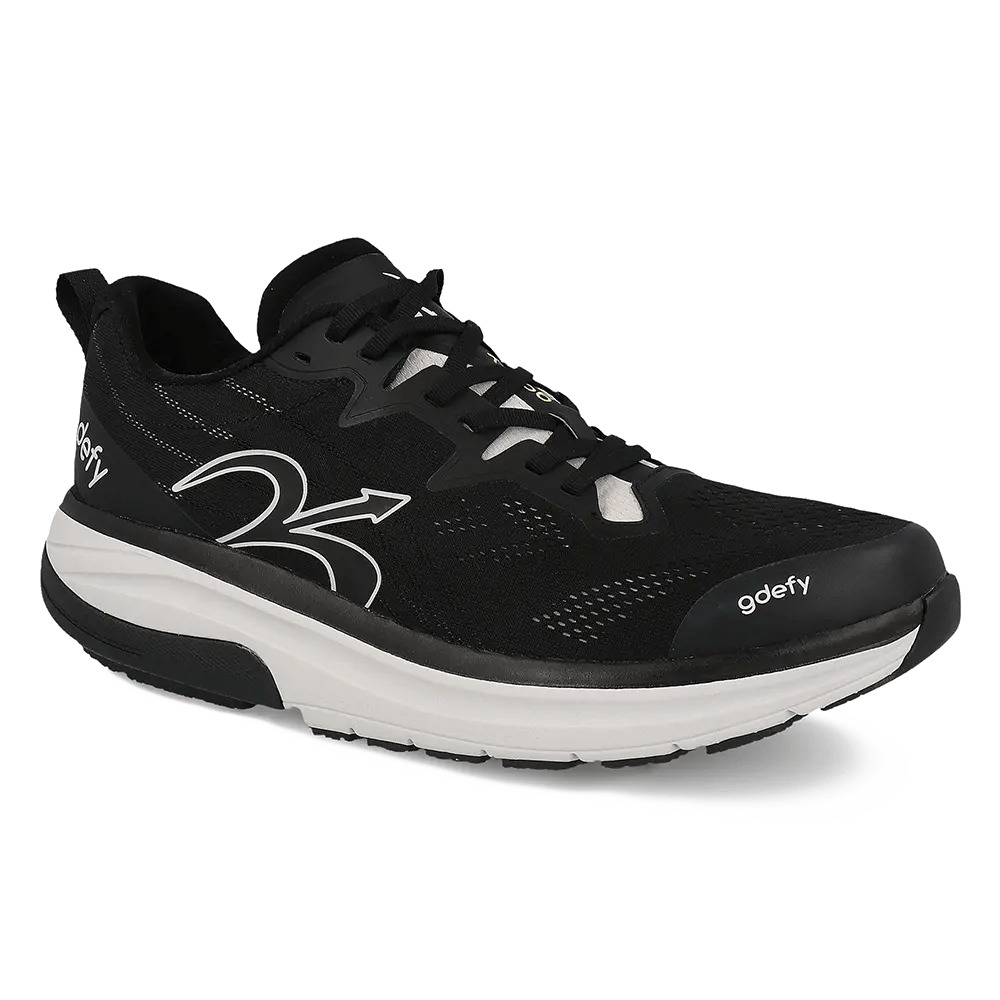
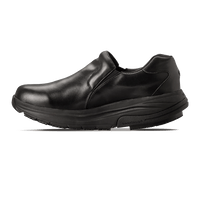
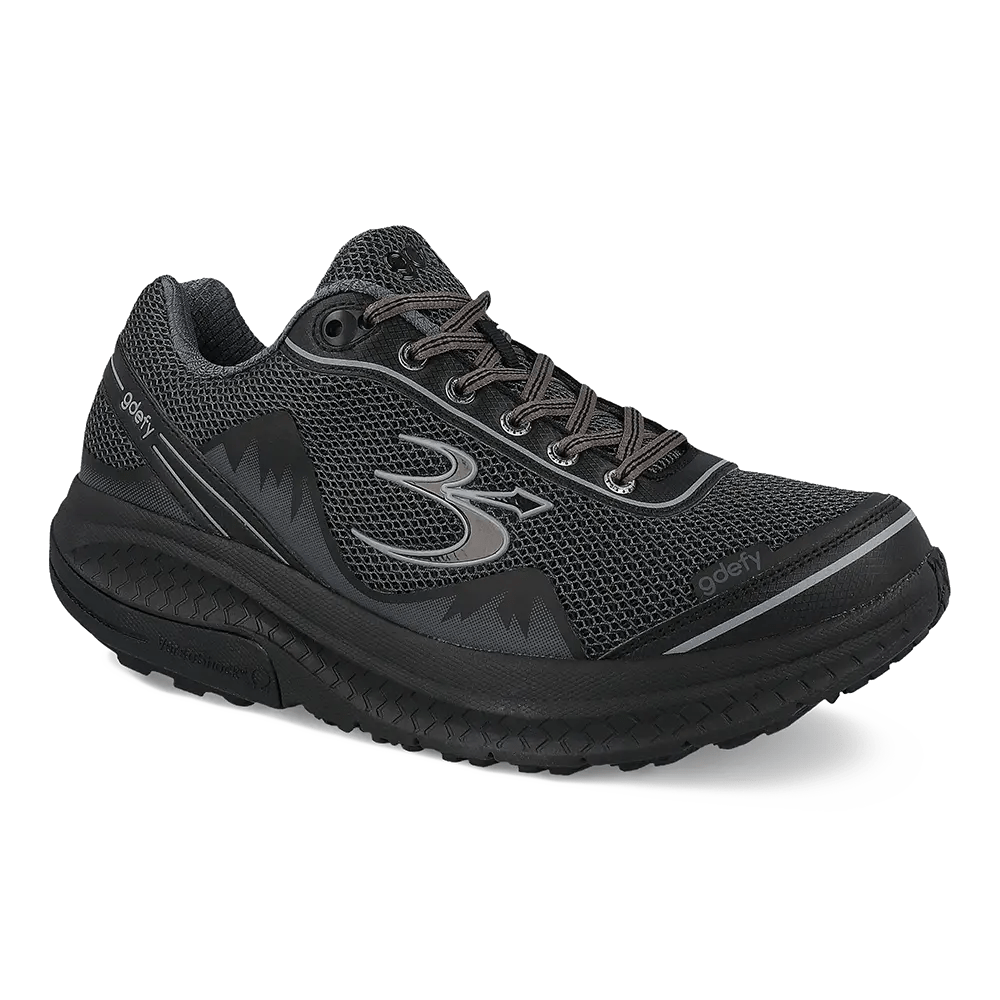
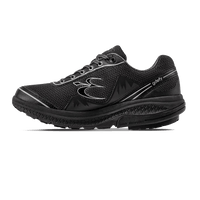
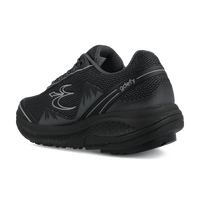
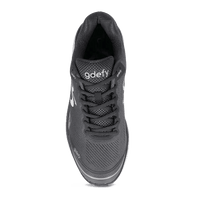
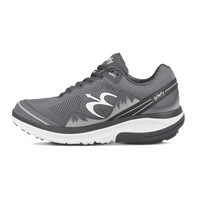
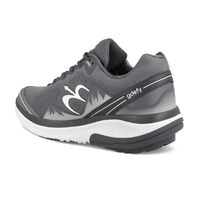
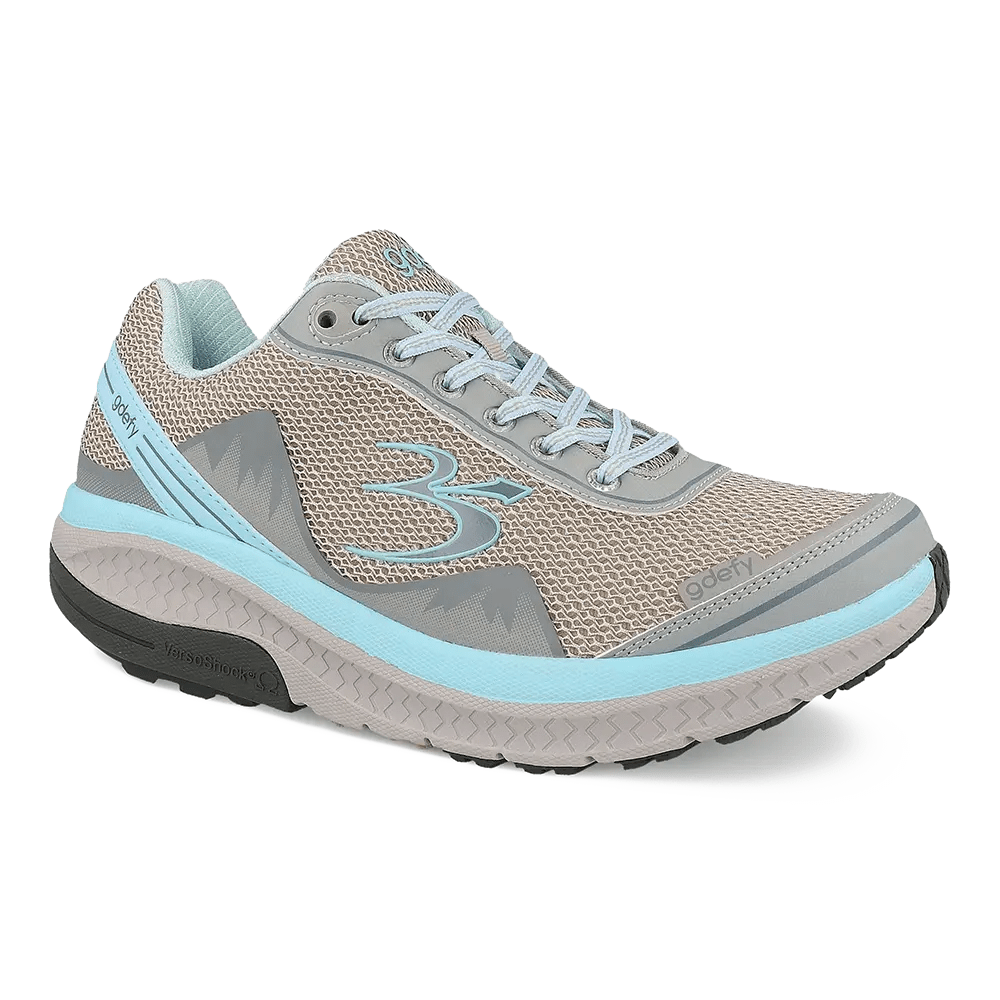
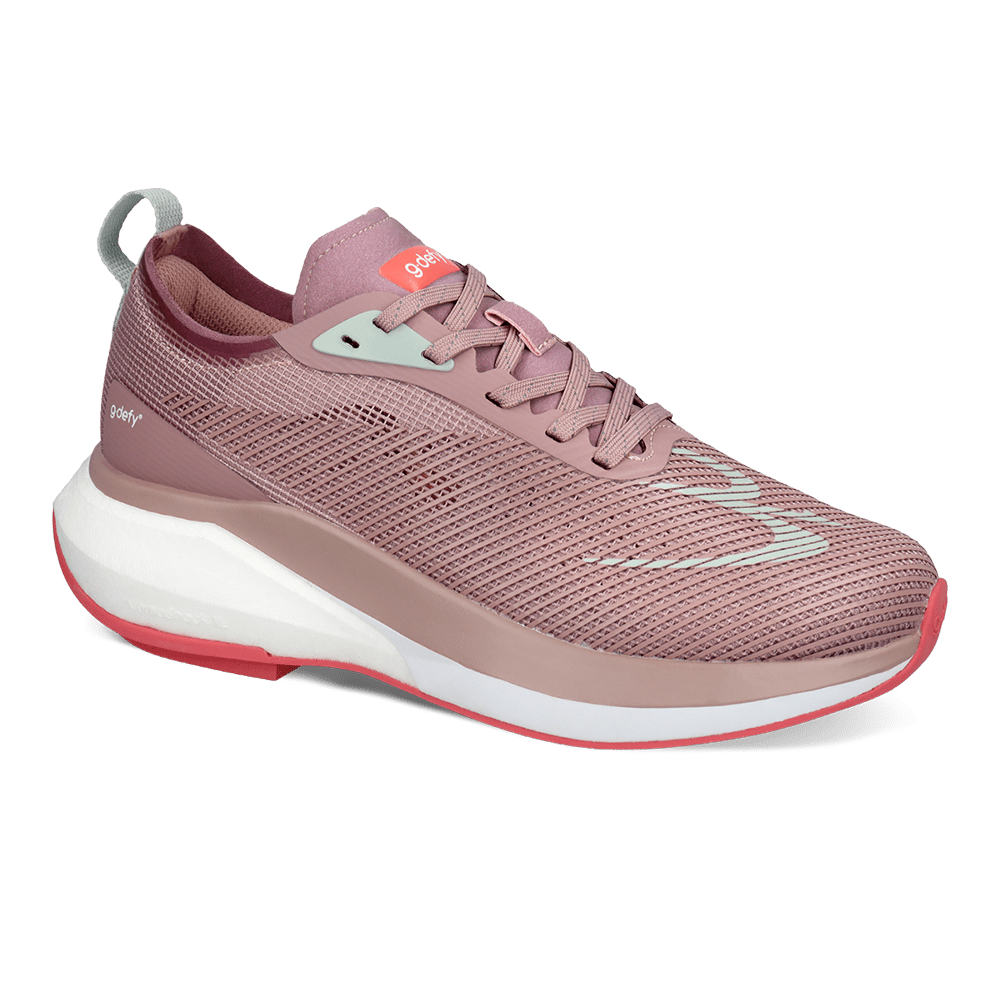
All-day cushioning and support. G-Defy's most popular walking shoe.

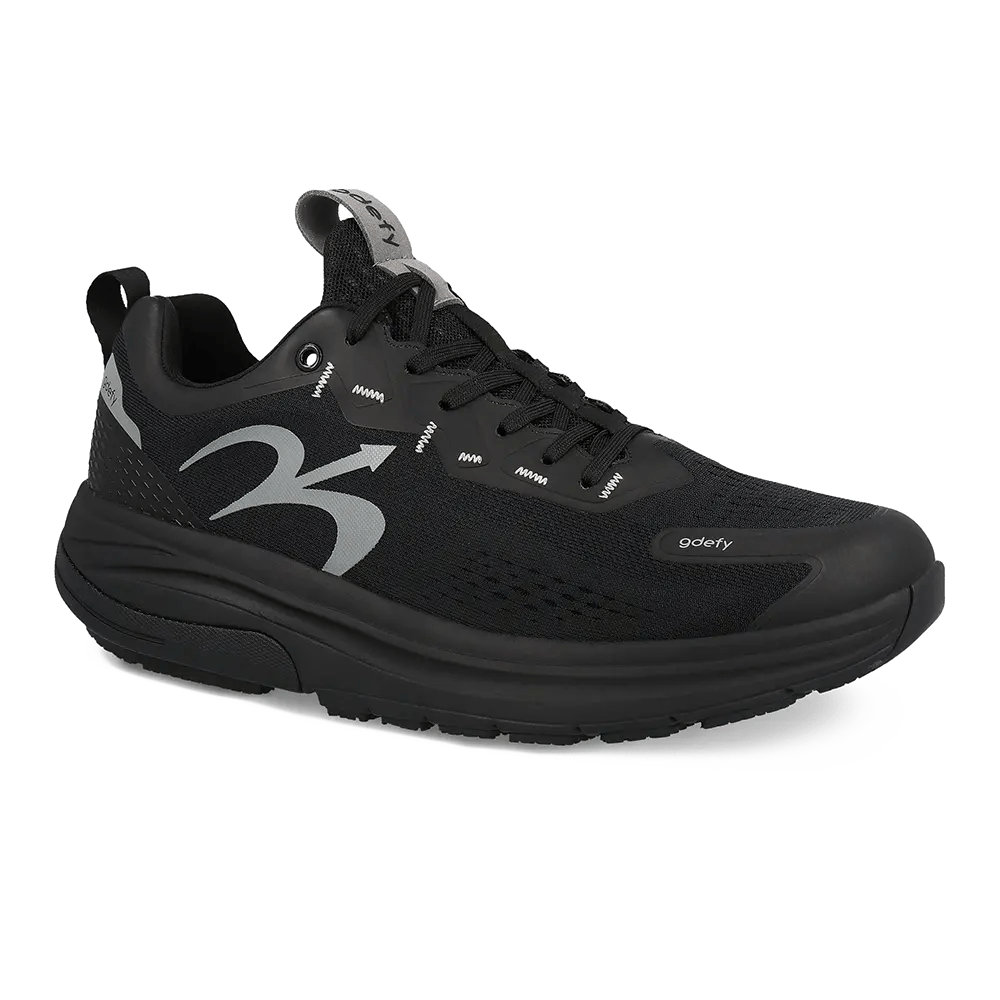
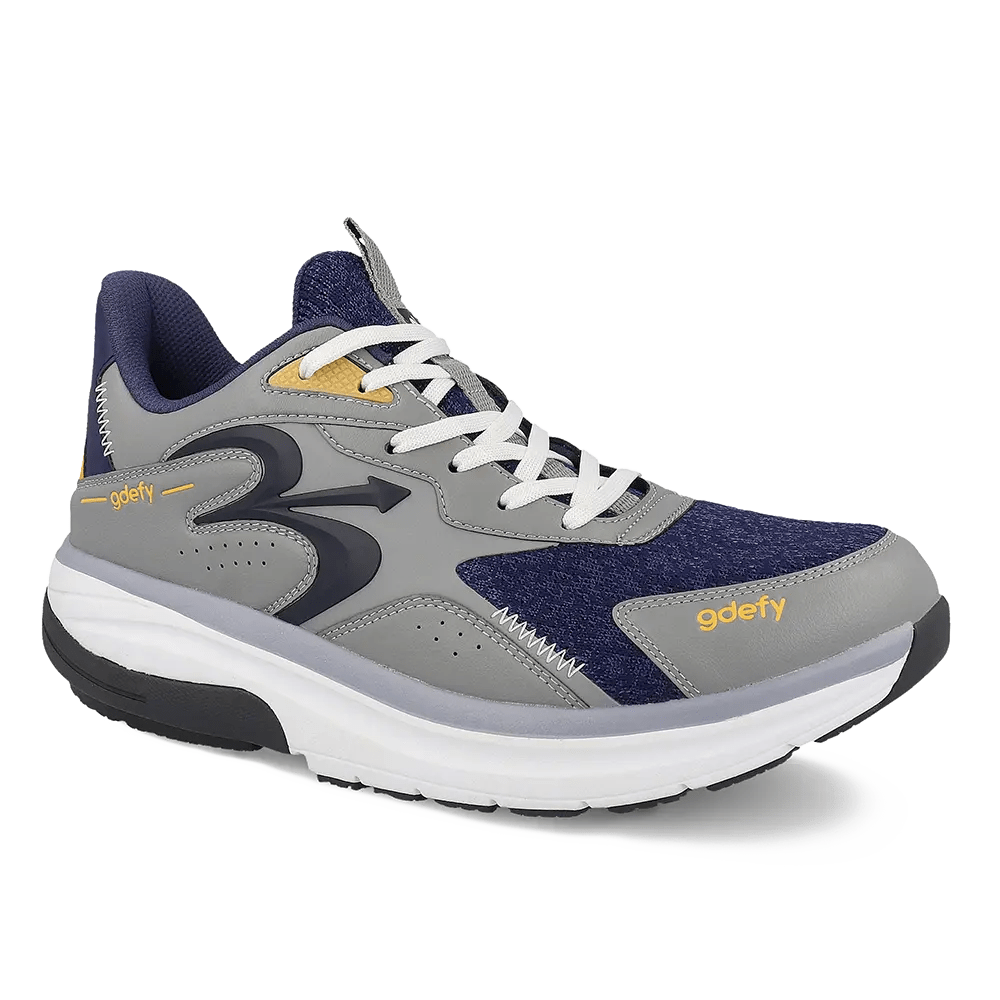
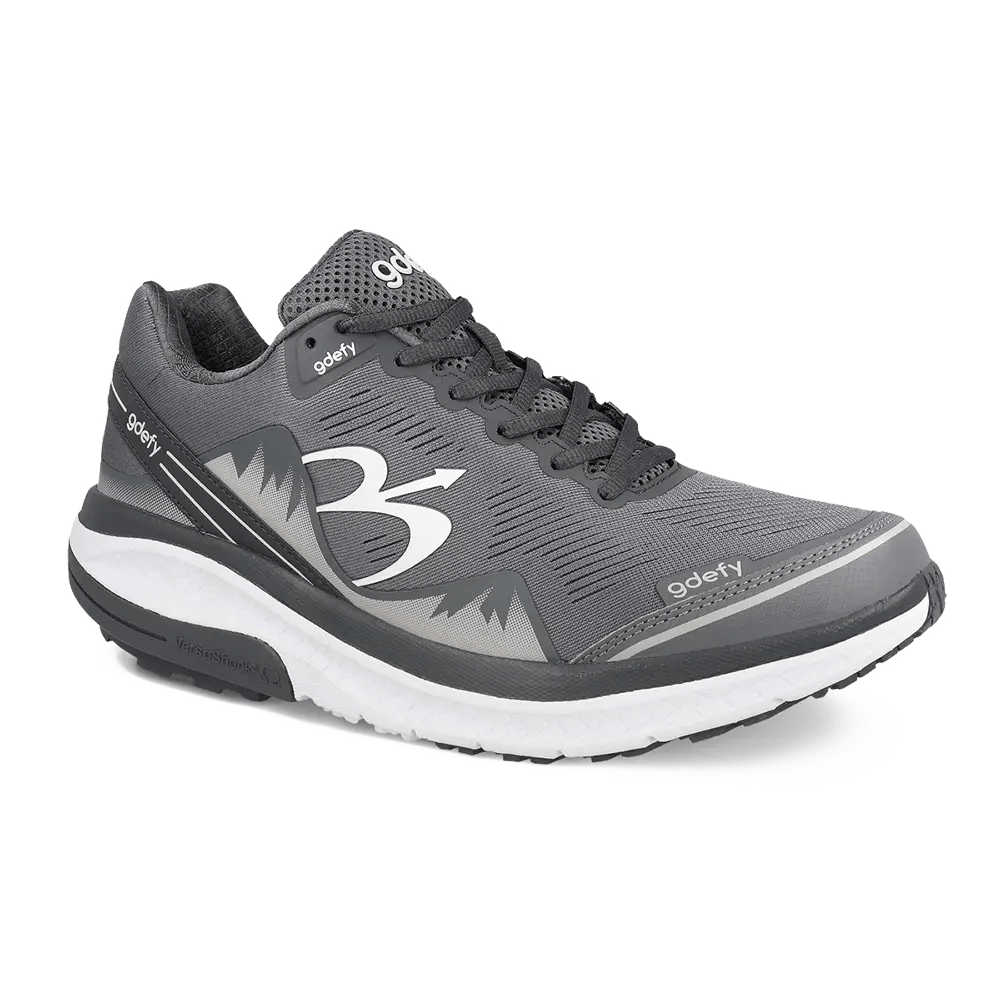
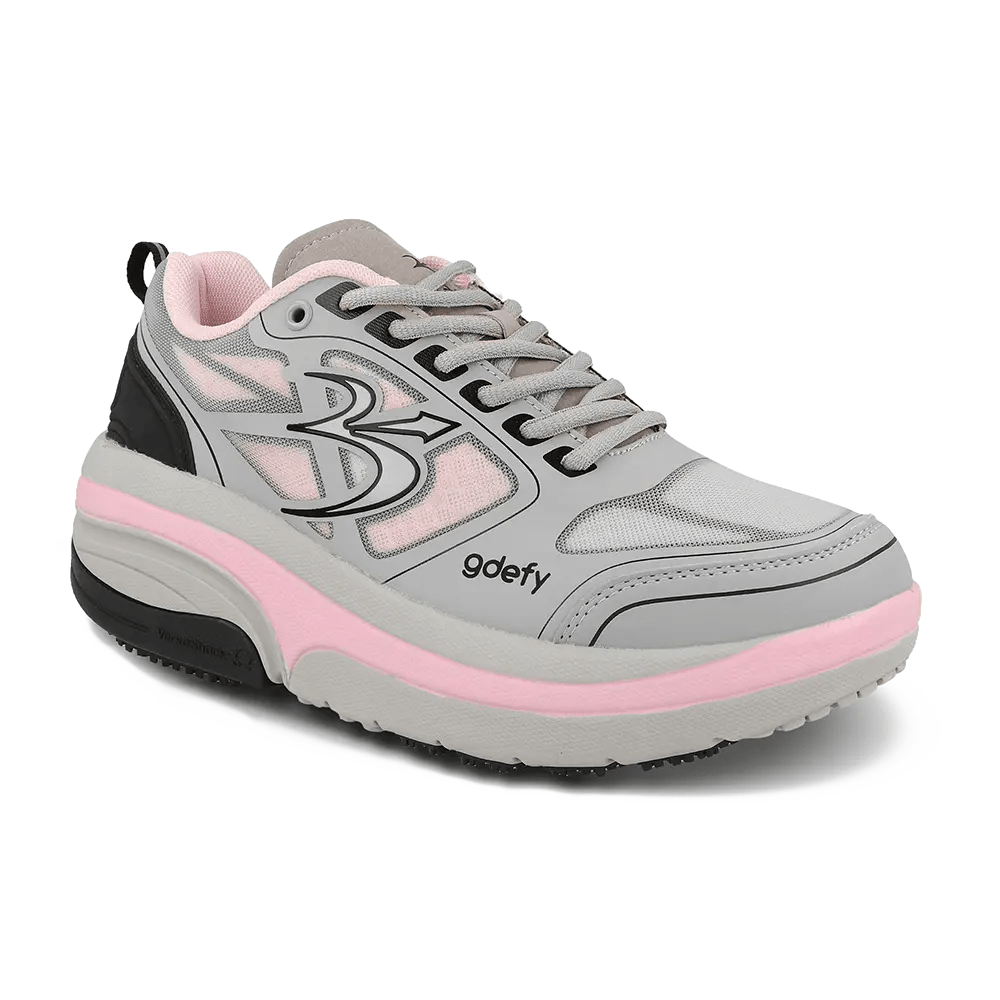
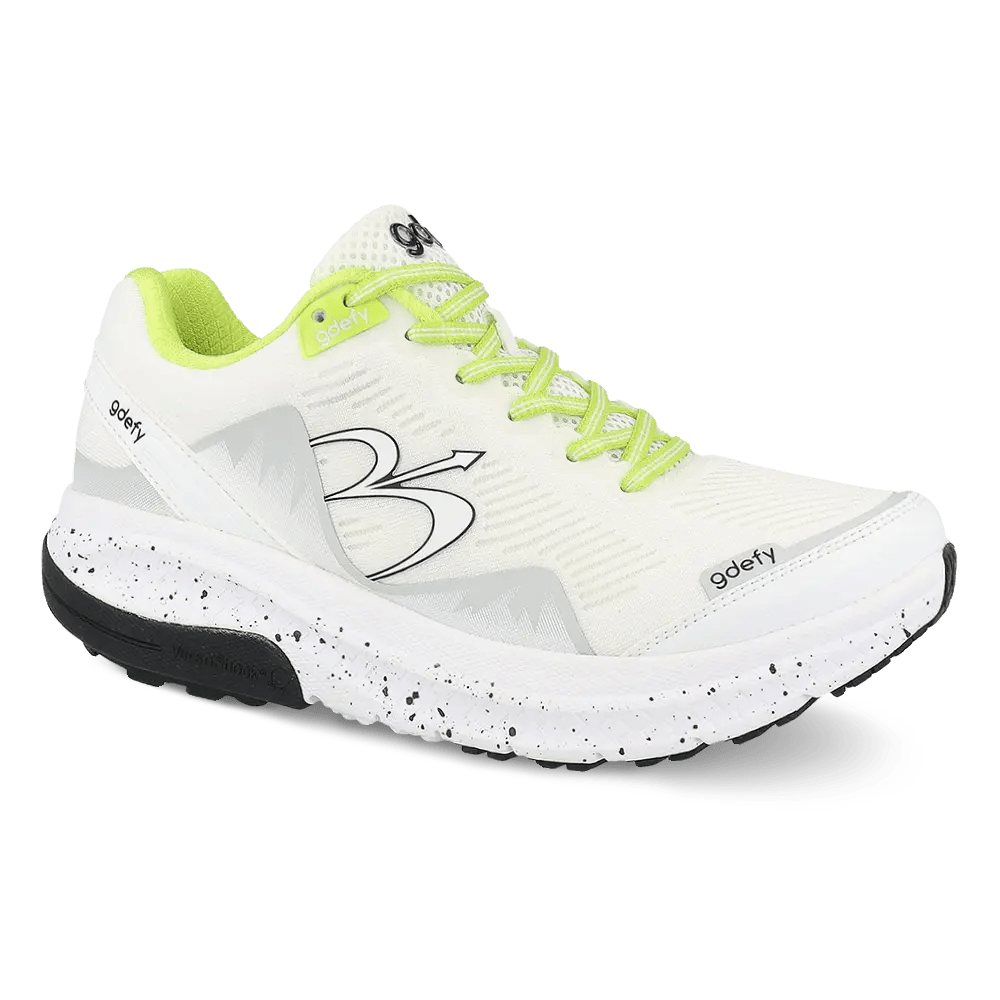
Lightweight, breathable, everyday comfort.
Try G-Defy Risk-Free for 60 Days
Free shipping on every order. Full refund if they're not right for you.
Shop Women's Shop Men'sFrequently Asked Questions
Do arch support shoes help with plantar fasciitis heel pain?
Yes. Arch support shoes often help plantar fasciitis heel pain by reducing strain on the plantar fascia through better stability, support, and cushioning. They work best when the shoe is stable (passes the twist and fold tests), fits properly, and doesn't force an overly aggressive arch shape. Supportive shoes change how your foot loads with every step, and when you're taking thousands of steps daily, that cumulative effect matters.
Pair arch support shoes with daily calf and plantar fascia stretching for fastest improvement. Clinical guidelines recommend this combined approach rather than footwear changes alone.
Can too much arch support make plantar fasciitis worse?
Yes. If arch support is too high or too rigid, it can create new pressure and increase discomfort instead of helping. Signs your support is too aggressive include new arch pain (not heel pain), numbness or tingling in the foot, lateral foot pain from rolling outward to escape the pressure, and pain that worsens the longer you wear the shoes.
The fix is straightforward: switch to a shoe with gentler arch contour or use a less aggressive orthotic. Some people need to remove aftermarket insoles and use the shoe's built-in support instead. Break in more gradually, increasing wear time by just one hour per day instead of going all-day immediately.
Should I wear supportive shoes indoors with plantar fasciitis?
Yes. Walking barefoot on hard floors can increase stress on the plantar fascia, so supportive indoor footwear often helps. Hard surfaces like tile, hardwood, and concrete don't absorb any shock, so your heel and fascia take the full impact of every step. Morning is especially risky because the fascia is tight after sleeping.
Keep a pair of supportive shoes or slippers next to your bed. Put them on before you stand up in the morning. This simple habit prevents the painful first steps that characterize plantar fasciitis and protects your fascia during the most vulnerable moments.
Consistency matters because recovery typically takes 6 to 18 months. Supporting your foot only during workouts but going barefoot at home undermines your progress.
What is the best shoe type for plantar fasciitis?
The best shoes for plantar fasciitis are stable (hard to twist), have a firm heel counter, and provide comfortable arch support with real heel cushioning. Specifically, look for shoes that pass three tests: the twist test (resists torsion), the midfoot fold test (won't bend like a taco through the arch), and the heel counter squeeze test (back of shoe stays firm).
Athletic shoes and walking shoes typically meet these criteria better than fashion sneakers, sandals, or flats. Within athletic shoes, look for motion control or stability categories rather than minimalist or racing flats.
Avoid ultra-flexible shoes, completely flat shoes, high heels, and worn-out shoes with compressed cushioning. These all increase stress on the plantar fascia instead of reducing it.
How long does plantar fasciitis take to heal?
Plantar fasciitis often takes weeks to months to improve, and many cases resolve within 6-18 months with consistent conservative care. Clinical studies show 90-95% of patients experience resolution within 12-18 months in outpatient settings using conservative management.
The timeline depends on consistency with treatment. People who wear supportive shoes daily, stretch regularly, and modify activities appropriately tend to improve faster than those who treat intermittently or continue activities that aggravate the condition.
Early intervention helps. Starting conservative care within the first few weeks of symptoms typically leads to faster resolution than waiting months before addressing the problem.
Are custom orthotics better than over-the-counter inserts?
Not always. Many people do well with prefabricated orthotics, and custom devices are typically reserved for more complex or persistent cases. Research indicates prefabricated orthotics can be similarly effective for patients without major biomechanical deformities.
Start with a supportive shoe for 2-4 weeks. If you still need more support, try an OTC orthotic for another 4-6 weeks. Only consider custom orthotics if OTC options fail, you have significant foot deformities, or a podiatrist recommends them based on gait analysis.
Custom orthotics cost significantly more ($300-$600 versus $30-$80 for quality OTC orthotics), so the stepped approach makes practical and financial sense.
When should I see a podiatrist for heel pain?
See a podiatrist if your heel pain is severe, worsening, includes numbness or tingling, or isn't improving after 6-8 weeks of consistent supportive footwear and stretching. Red flags requiring immediate evaluation include sudden severe pain after a pop or snap (possible fascia rupture), fever or redness (possible infection), or inability to bear weight (possible fracture).
A podiatrist visit typically includes physical exam, gait analysis, and possibly imaging if needed. Treatment might include custom orthotics, physical therapy referral, or advanced interventions for cases that don't respond to conservative care.
Don't wait six months if your self-care approach isn't working. Early professional intervention prevents chronic cases and identifies issues that aren't actually plantar fasciitis.
What else should I do besides changing shoes?
The fastest progress usually comes from supportive footwear plus calf and plantar fascia stretching and activity modification, not shoes alone. Clinical guidelines recommend multi-component conservative care rather than single interventions.
Daily routine that works:
- Morning: Calf stretch and toe pull before getting out of bed (three sets, 30 seconds each). Put on supportive shoes immediately.
- Throughout day: Wear supportive shoes consistently. Take breaks from standing every 30-60 minutes if possible.
- Evening: Ice your heel for 10-15 minutes (frozen water bottle roll works well). Repeat stretches before bed.
Timeline expectations: Week 2, you might notice pain slightly less intense in morning. Week 6, pain duration shortens and intensity drops further. Week 12, good days outnumber bad days. Month 6-18, full resolution for most people.
Take the First Step Toward Pain-Free Walking
Plantar fasciitis isn't something you ignore and hope disappears. It's also not something that requires expensive treatments or surgery in most cases. What it requires is consistent, smart conservative care starting today.
Your action plan is straightforward: pick supportive shoes that pass the stability tests, wear them all day every day (including indoors), stretch your calves and fascia morning and evening, and track your pain levels weekly. If pain isn't trending down after two weeks, add an orthotic. If it's not improving after six weeks, see a podiatrist.
G-defy makes this plan easier by building stability, arch support, and cushioning into shoes you can actually wear comfortably all day. You're not fighting against your footwear or trying to remember to swap insoles. The support is built in, the cushioning is real, and the design helps you maintain the consistency that recovery requires.
Plantar fasciitis typically takes months to resolve, not days. But with the right footwear foundation and conservative care, you'll be in the 80-95% who recover without surgery or invasive treatments. Start with your shoes. The rest follows from there.
References
- Plantar Fasciitis - StatPearls - NCBI Bookshelf - Approximately 1 million patient visits annually; 75% resolve spontaneously within 12 months; conservative management includes orthotic inserts
- Plantar Fasciitis Pathophysiology and the Potential Role - Orthotics definition and role in reducing fascial loading; prevalence framing
- Plantar Fasciitis: An Updated Review - Lifetime incidence about 10%; over 80% improve with nonsurgical treatment; most common cause of heel pain in adults
- Heel Pain – Plantar Fasciitis: Revision 2023 - Clinical Practice Guidelines; do not use orthoses as isolated short-term treatment; use as part of comprehensive approach
- Effectiveness of Shoe Rotation in Managing Plantar Fasciitis - VAS improved from 5.29 at baseline to 1.71 at 12 weeks in shoe rotation group
- Management of plantar fasciitis in the outpatient setting - 90-95% resolution within 12-18 months; degenerative/myxoid changes; prefabricated orthotics can be as effective as custom for many patients
- Plantar fasciitis: MedlinePlus Medical Encyclopedia - Definition of plantar fascia; typical improvement within 6-18 months; supportive shoes and orthotics recommended
- Finding the Right Supportive Footwear for Pain Relief - Podiatrist quotes on supportive footwear; the "taco fold" deformation test concept





































.svg)



