
April 14, 2026
What to Look for in Shoes If You Experience Knee Pain
By Gdefy

Summary
If you experience knee discomfort during walking, standing, or daily errands, the shoes on your feet may be doing more — or less — than you realize. Knee pain is one of the most common complaints among adults over 40, and while footwear is not a medical solution, the right pair can play a meaningful role in how comfortable your day feels.
The challenge is that most shoe shopping advice focuses on style, price, or brand loyalty rather than the specific features that actually matter for people who experience knee pain. This guide walks through the shoe features that make the biggest difference for knee comfort, what to avoid, and how to tell when a shoe is genuinely designed for support versus simply marketed that way. By the end, you will know exactly what to look for the next time you shop.
What Causes Knee Discomfort When Walking and Standing
Before diving into shoe features, it helps to understand why knees feel the way they do. Walking is a natural movement, but every step sends force up through the feet, ankles, and into the knees. When that force is absorbed poorly, discomfort can build up over a day, a week, or over years of daily activity.
Several everyday factors contribute. Hard walking surfaces — concrete sidewalks, tile floors, and warehouse or retail floors — offer little natural cushioning, so unsupported feet transfer more impact directly into the knee joint. Long hours of standing or walking add repetitive load that compounds throughout the day. Age-related changes in the cartilage and soft tissues around the knee make joints more sensitive to impact over time. Extra body weight increases the load on the knee with each stride.
Footwear that is past its useful life is another common contributor. A worn-out midsole loses its ability to absorb impact, leaving your knees to manage more of the force themselves. Shoes with little arch support can allow the foot to roll inward or outward, shifting leg alignment and placing uneven stress on the knee.
Your feet are the foundation for your entire body. When they are not properly supported, the body compensates at the ankles, knees, and hips, and knee discomfort is often the first sign. While shoes are not a medical solution, choosing footwear with the right features can make a real difference in daily comfort. For persistent knee pain, consult your healthcare provider.
What to Look for in Shoes If You Experience Knee Pain
When shopping for shoes with knee comfort in mind, focus on the features below rather than on marketing language. These are the design elements that actually change how your feet — and your knees — feel during daily movement.
Responsive shock absorption. This is the single most important feature. Every step generates impact force that travels up through the leg, and shoes with effective shock absorption cushion that force before it reaches the knee. Basic foam midsoles tend to compress quickly and lose their effectiveness within months of regular wear. Look for shoes built with responsive cushioning systems that maintain their shape and continue absorbing impact over time.
Proper arch support. Good arch support keeps your foot in a neutral position, which helps align the ankle, knee, and hip. When the arch collapses or the foot rolls excessively with each step, small misalignments at the foot level create compounding stress at the knee. A supportive shoe — or one that accepts a quality insole — helps maintain that foundation.
A stable midsole and stabilizer system. Stability features, often built into the middle of the shoe as a shank or stabilizer, prevent excessive bending and help keep the foot aligned during movement. This is especially useful on uneven surfaces and during long periods of standing. Shoes that collapse or twist in the middle force your leg muscles and knee to work harder to maintain balance.
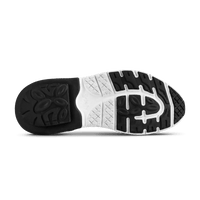
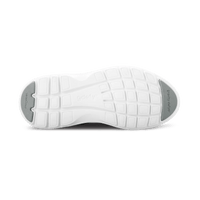
A smooth rolling or rocker design. A subtle rocker shape in the sole guides the foot through a smooth heel-to-toe transition rather than a flat, jarring step. This design encourages a more natural stride and can reduce the repetitive peak impact that travels into the knee during walking.
Comfortable heel drop and midsole height. A moderate heel drop and sufficient midsole thickness provide cushioning without tipping the foot forward or backward. Extreme minimalism tends to offer little protection on hard surfaces, while overly thick platforms can reduce stability.
A secure, comfortable fit. Shoes that are too tight restrict natural foot movement, while shoes that are too loose allow the foot to slide and create instability. Both scenarios can increase stress on the knees. Look for a snug midfoot and heel with a roomy toe box that allows the toes to spread naturally.
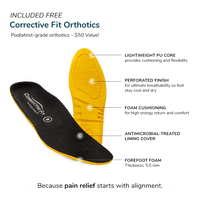
Removable orthotics or insoles. Shoes that accept or include removable orthotics let you fine-tune the support level based on your foot type. This kind of customization can make a real difference in overall comfort, especially if you have high or low arches.
Durable construction. Cushioning and support only work when they are intact. Quality materials and solid construction mean the features that help your knees today will still be doing their job six months from now.
How G-Defy Shoes Bring These Features Together
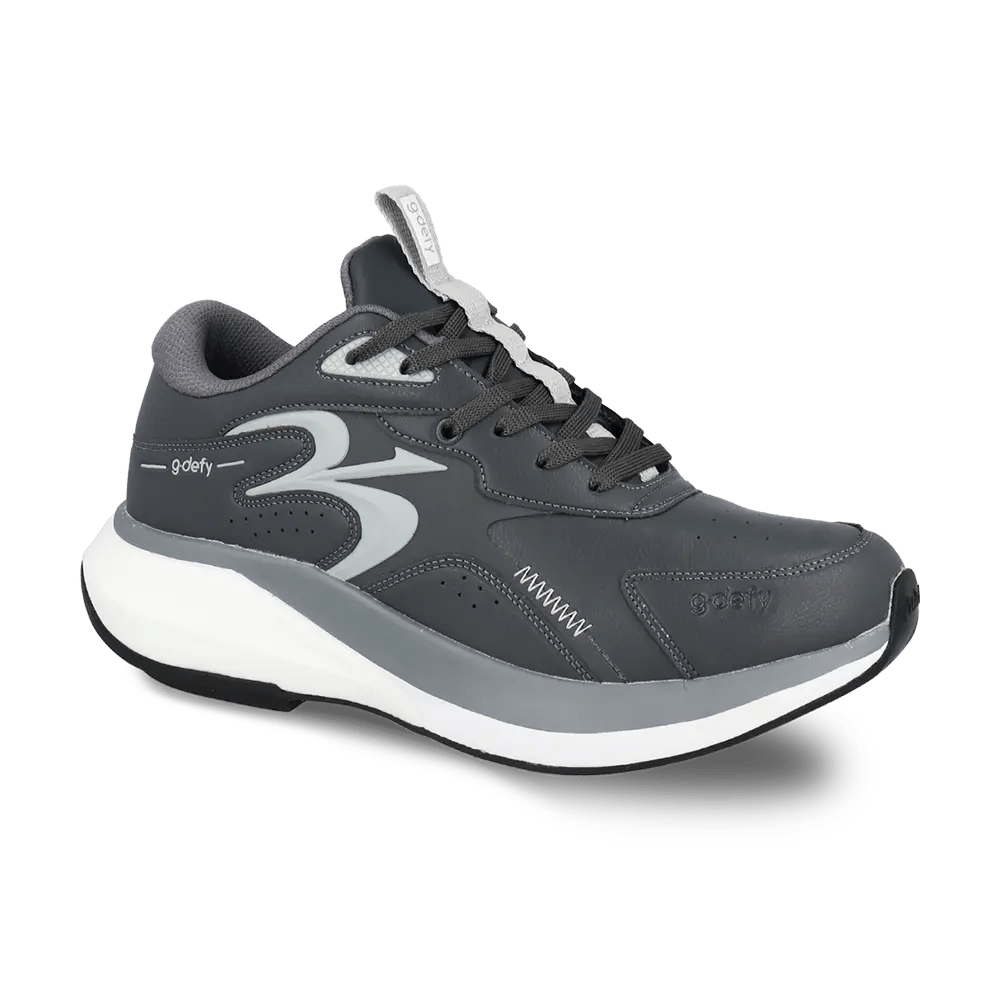
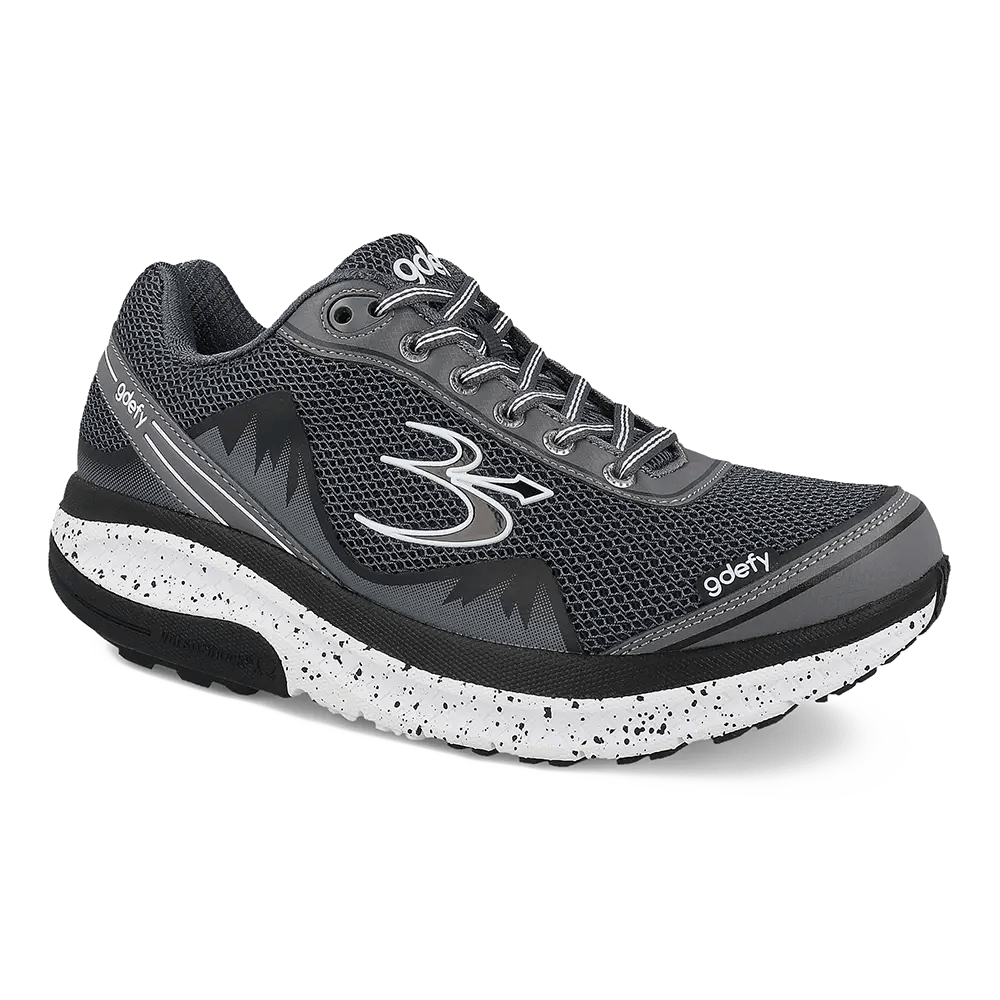
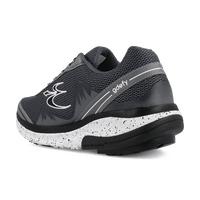
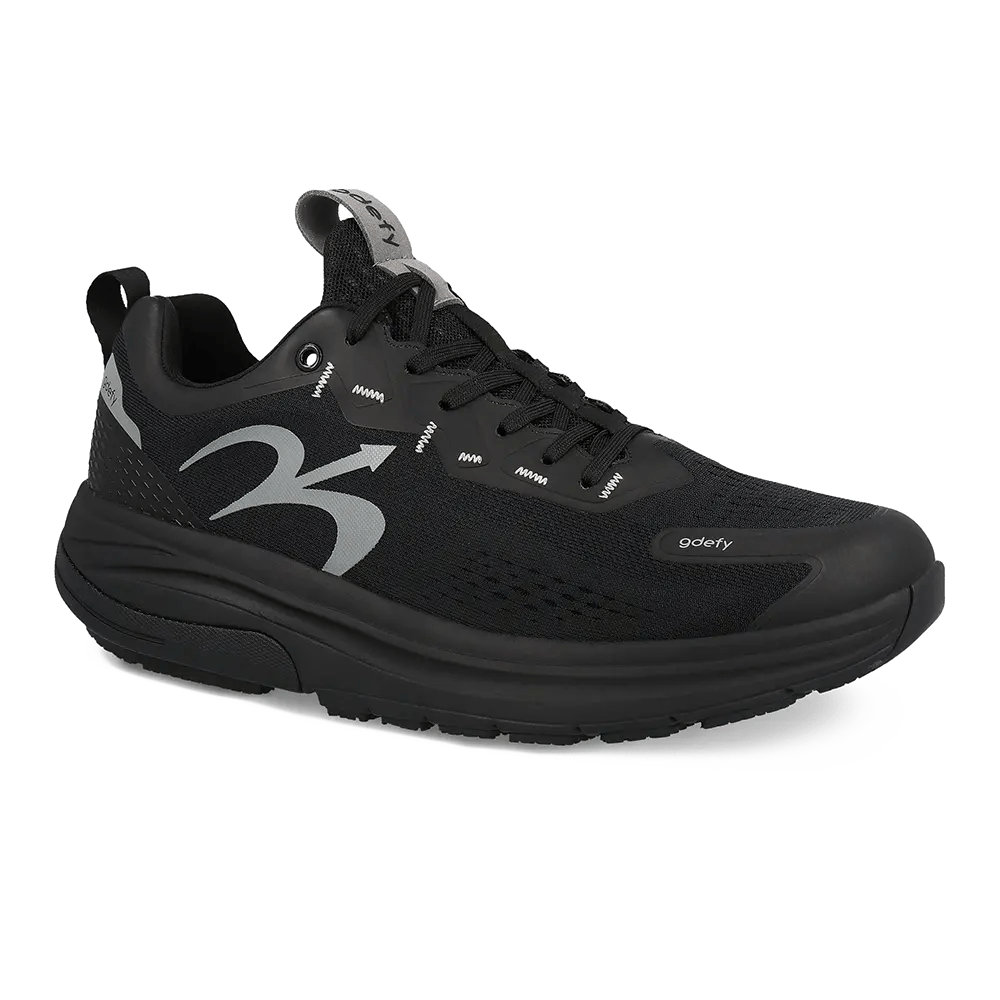
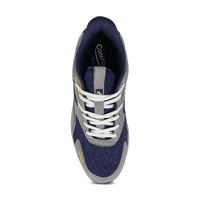
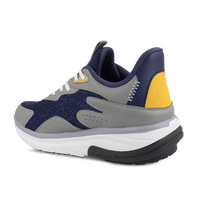
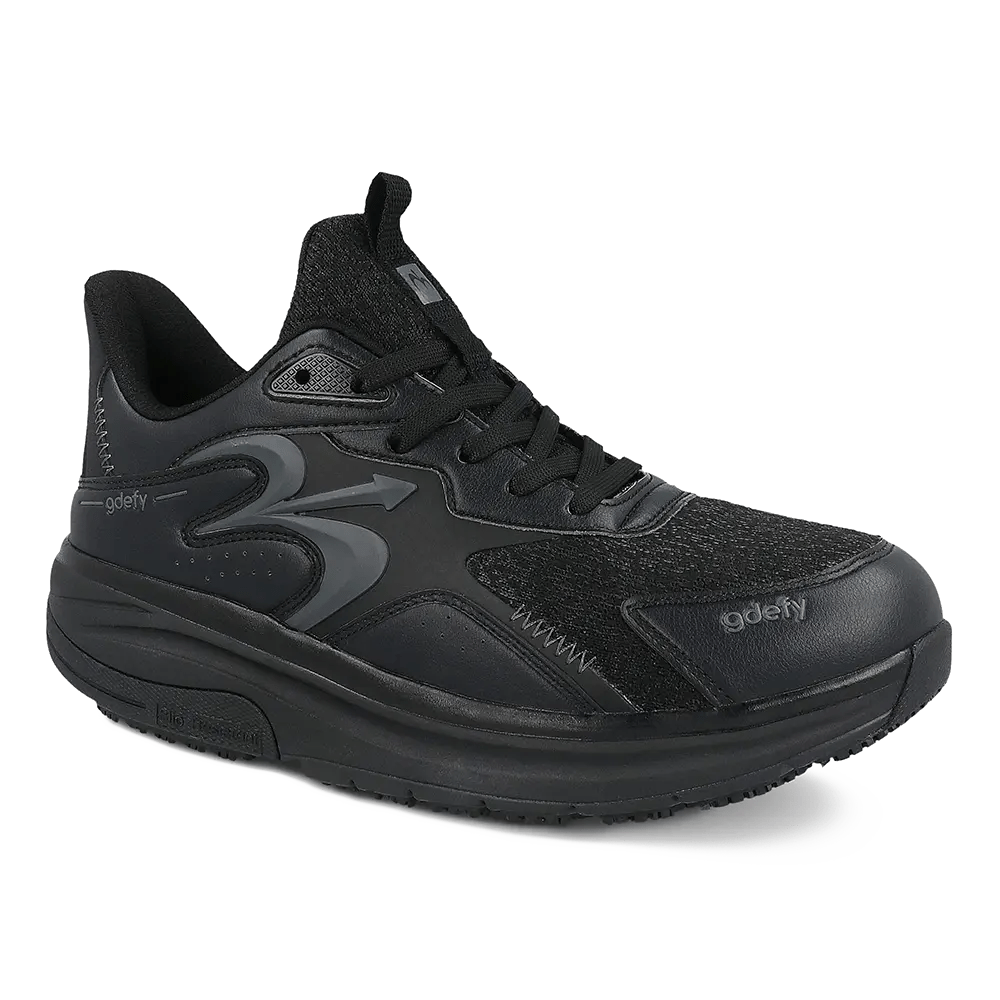
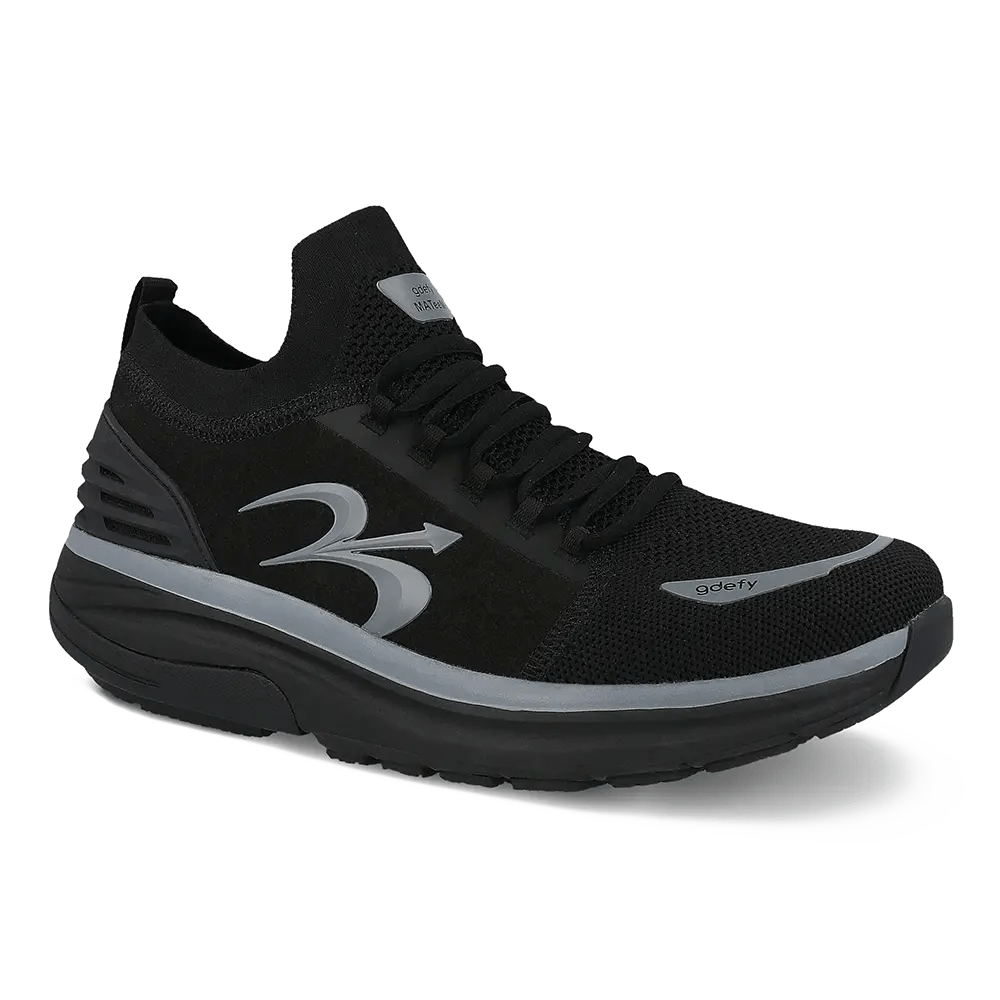
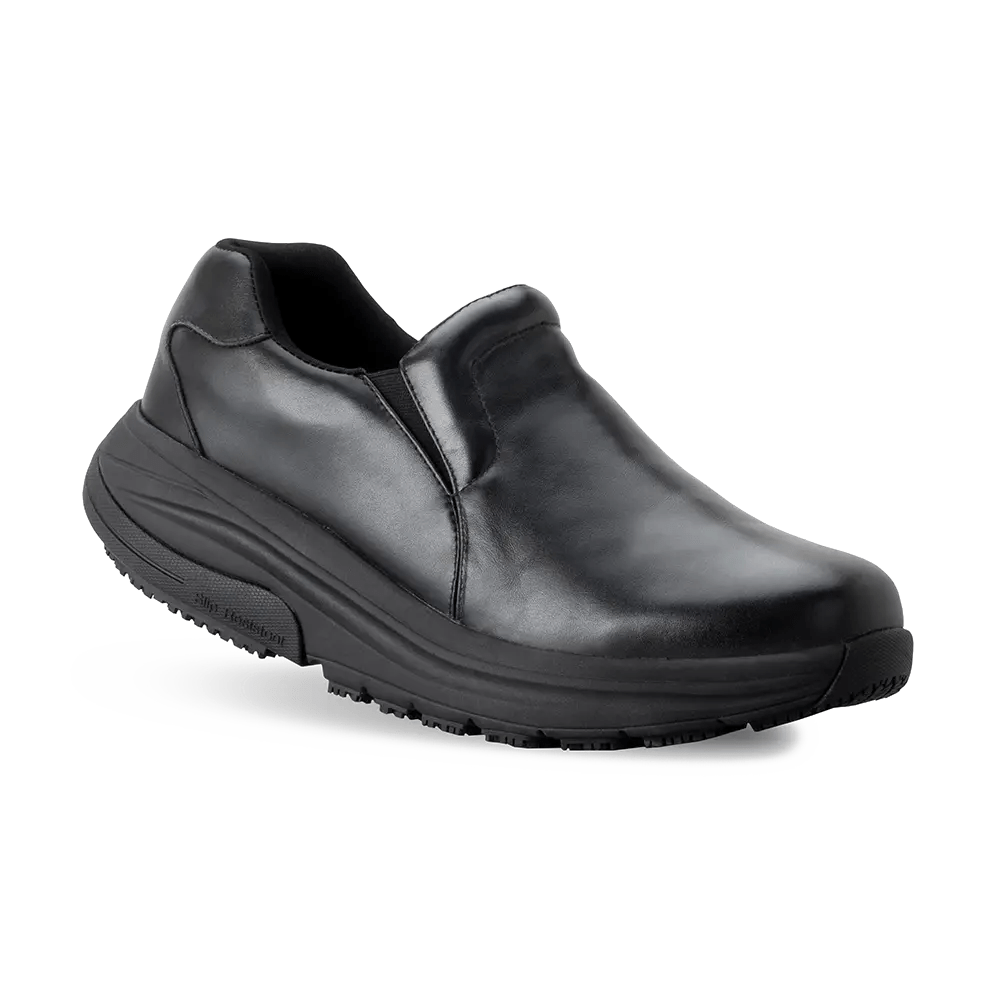
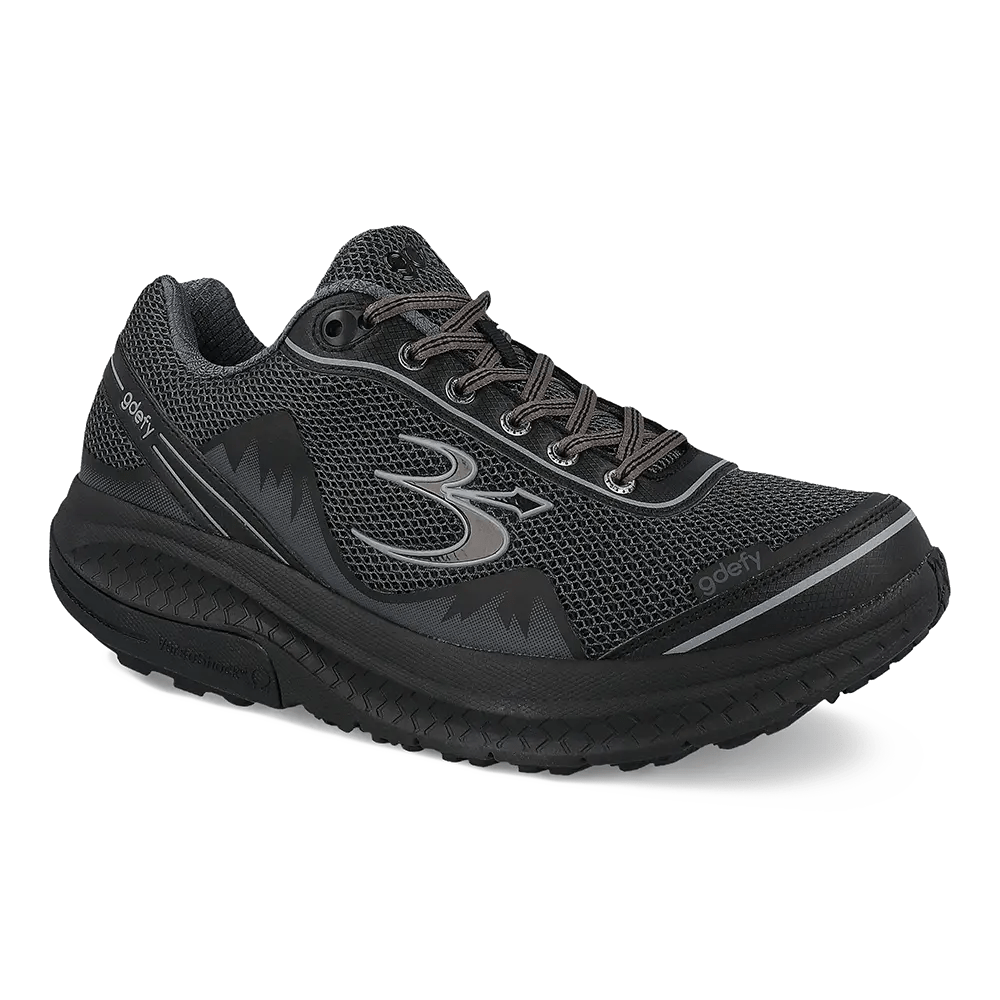
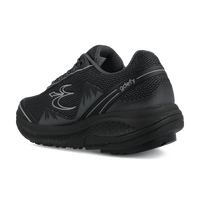
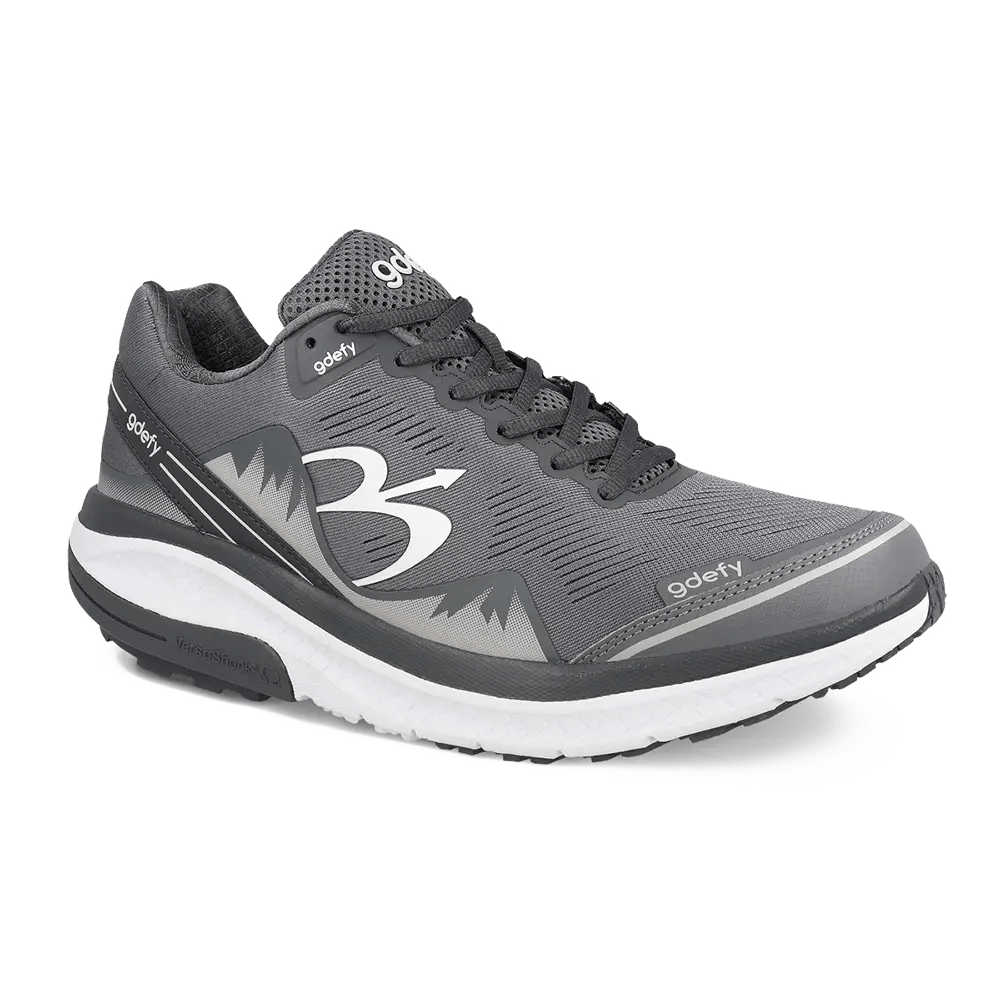
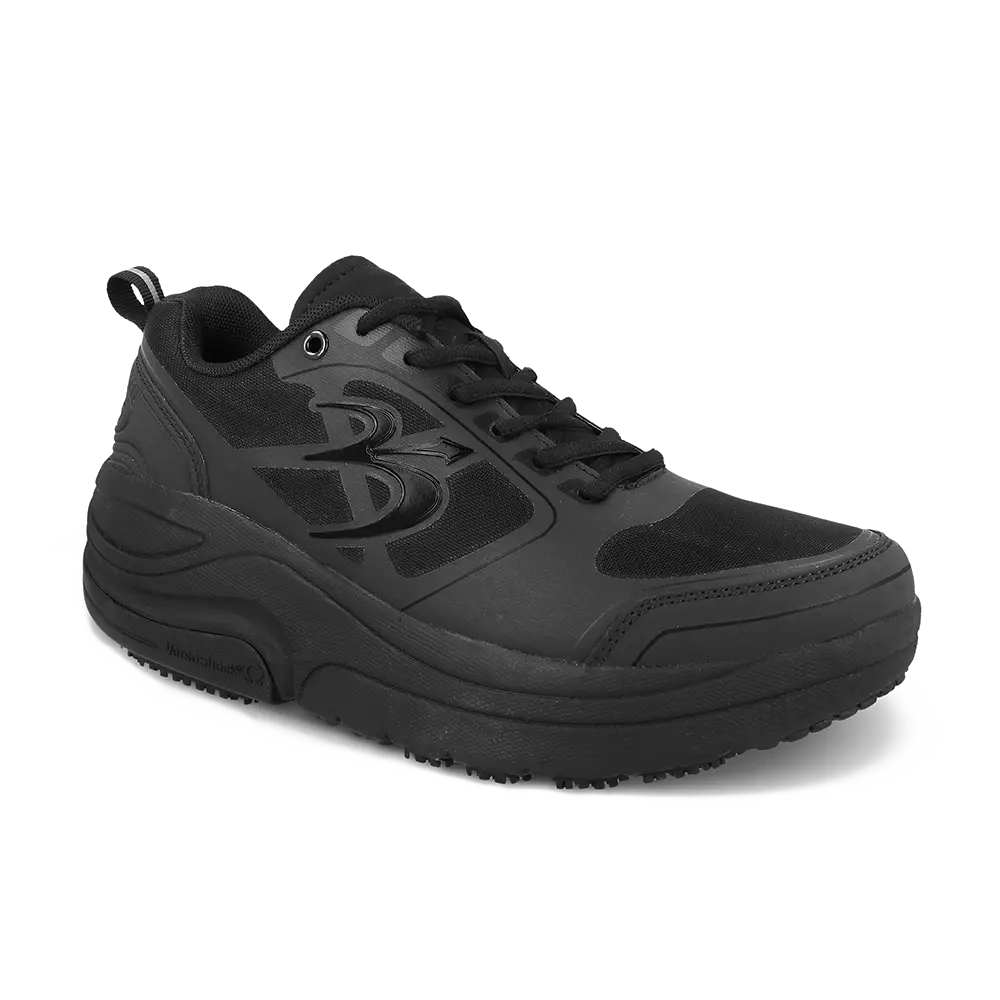
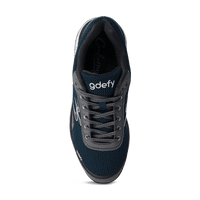
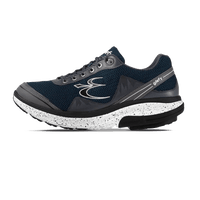
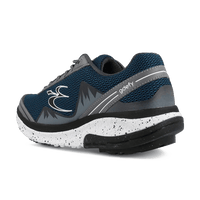
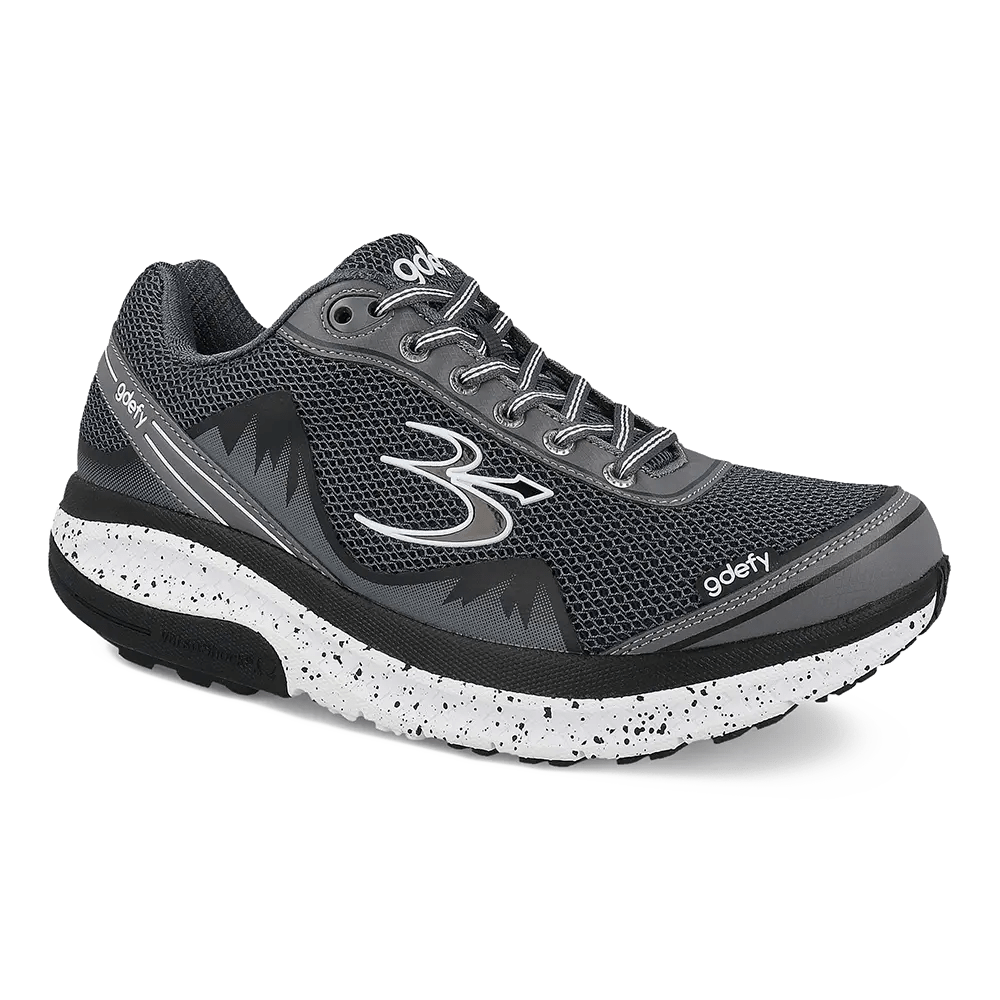
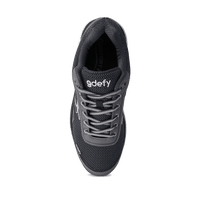
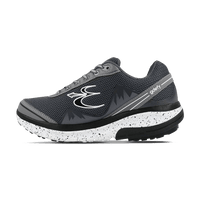
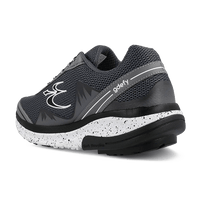
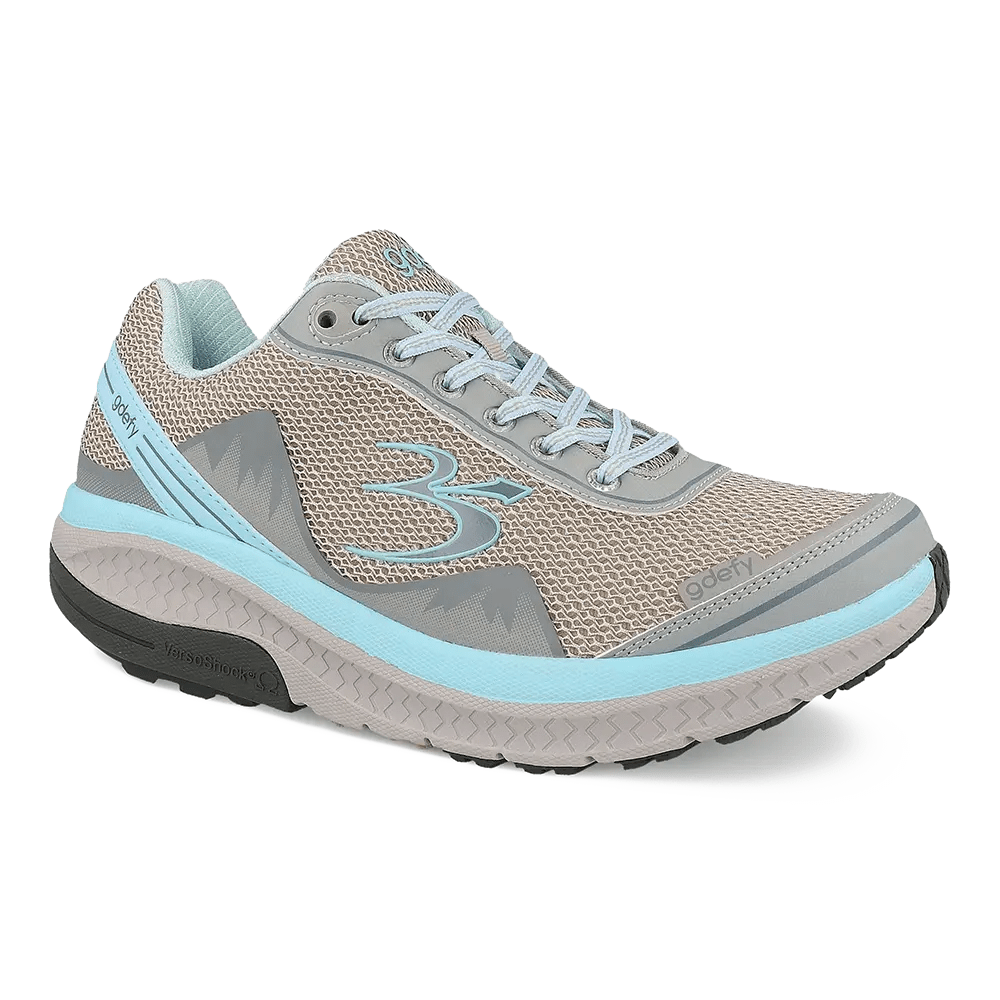
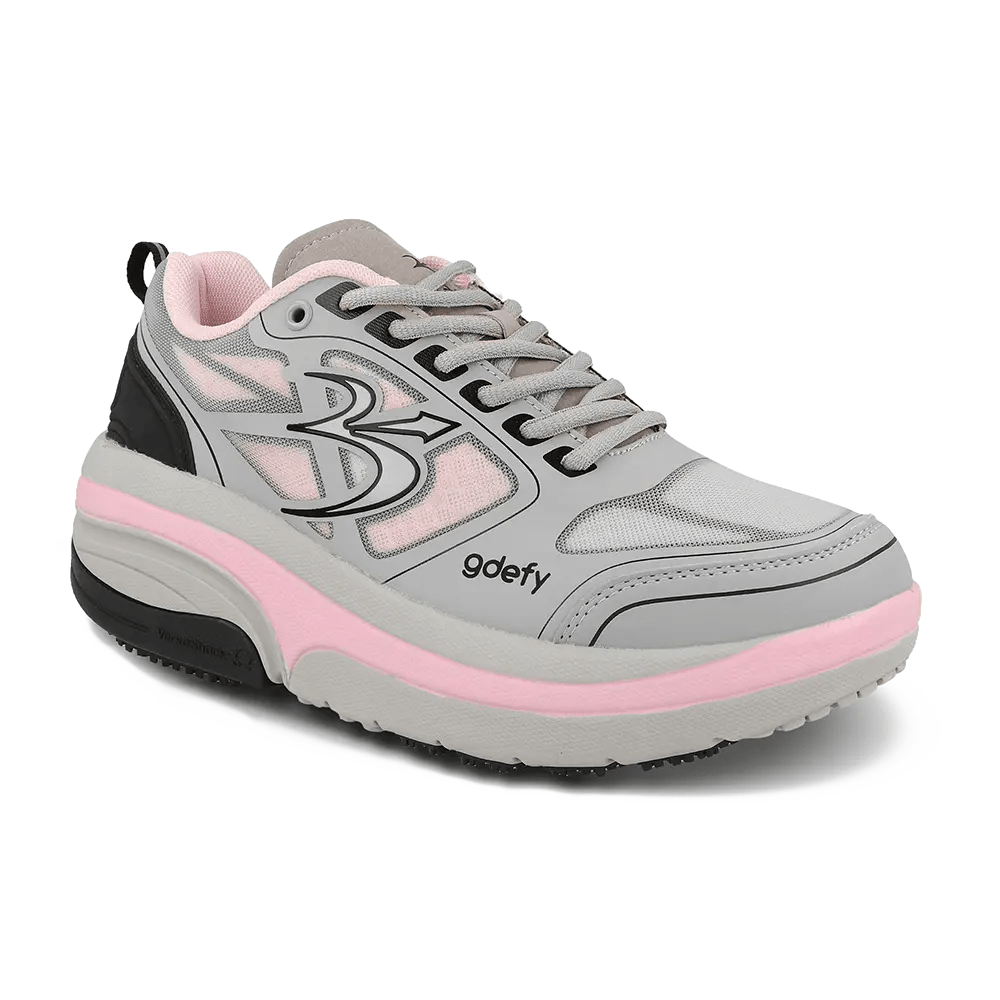
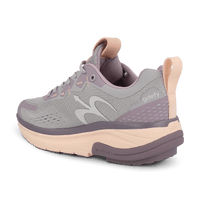
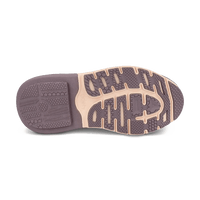
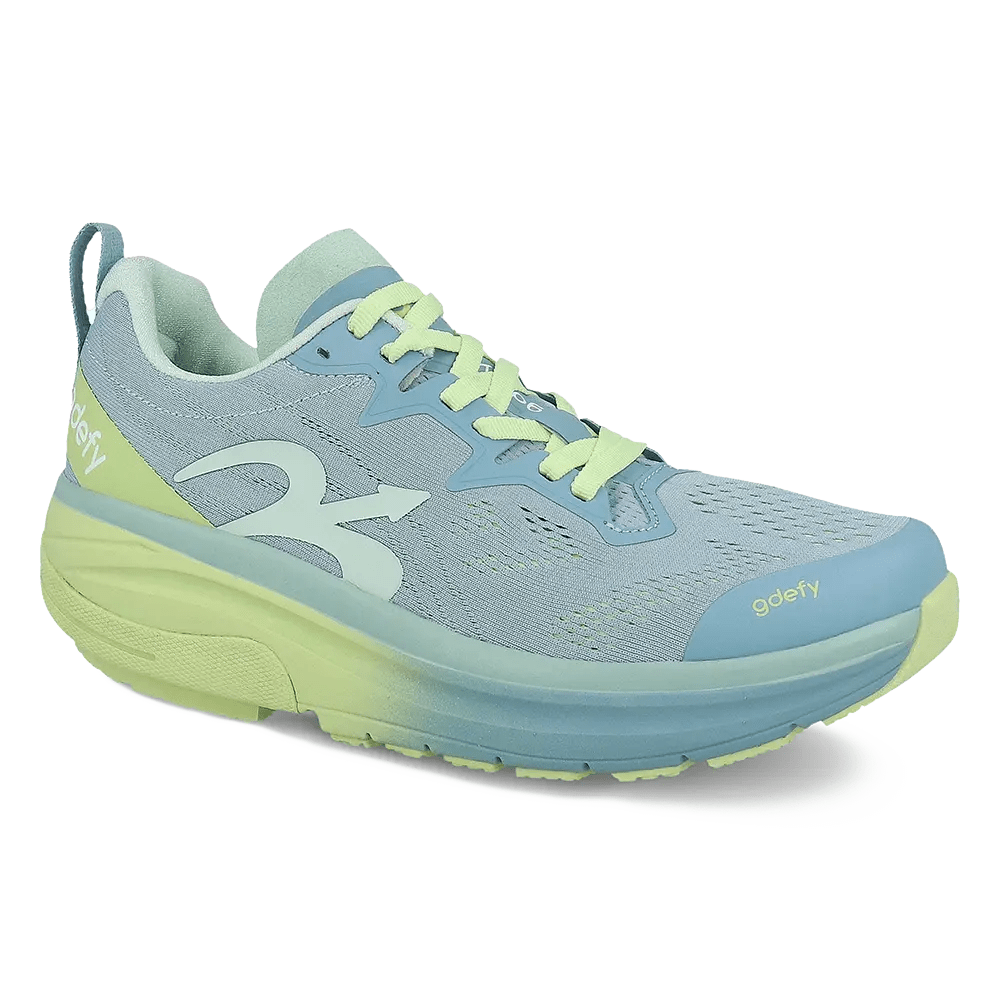
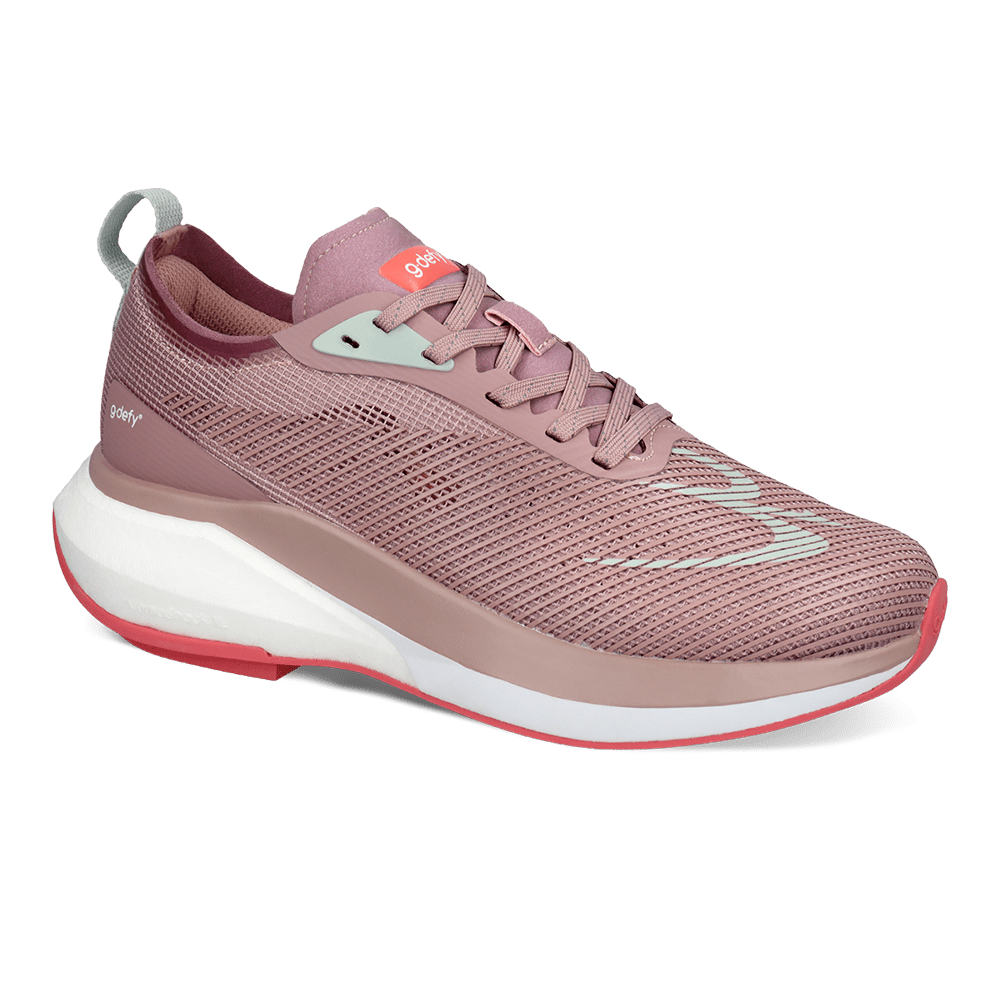
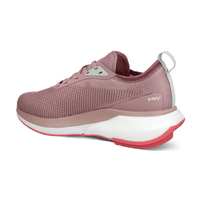
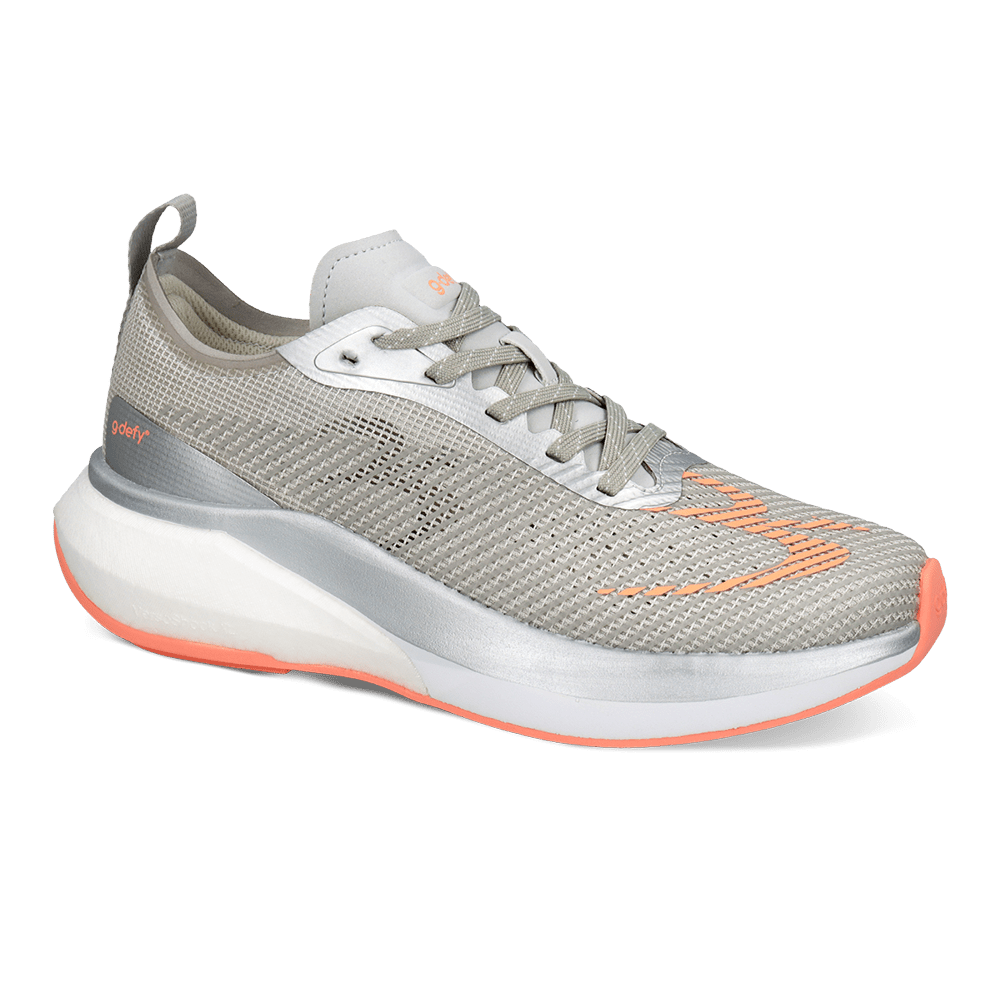
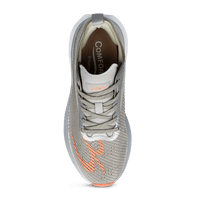
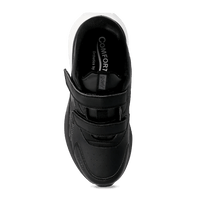
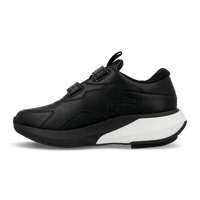
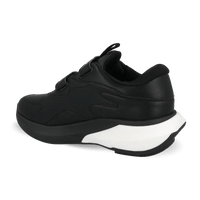
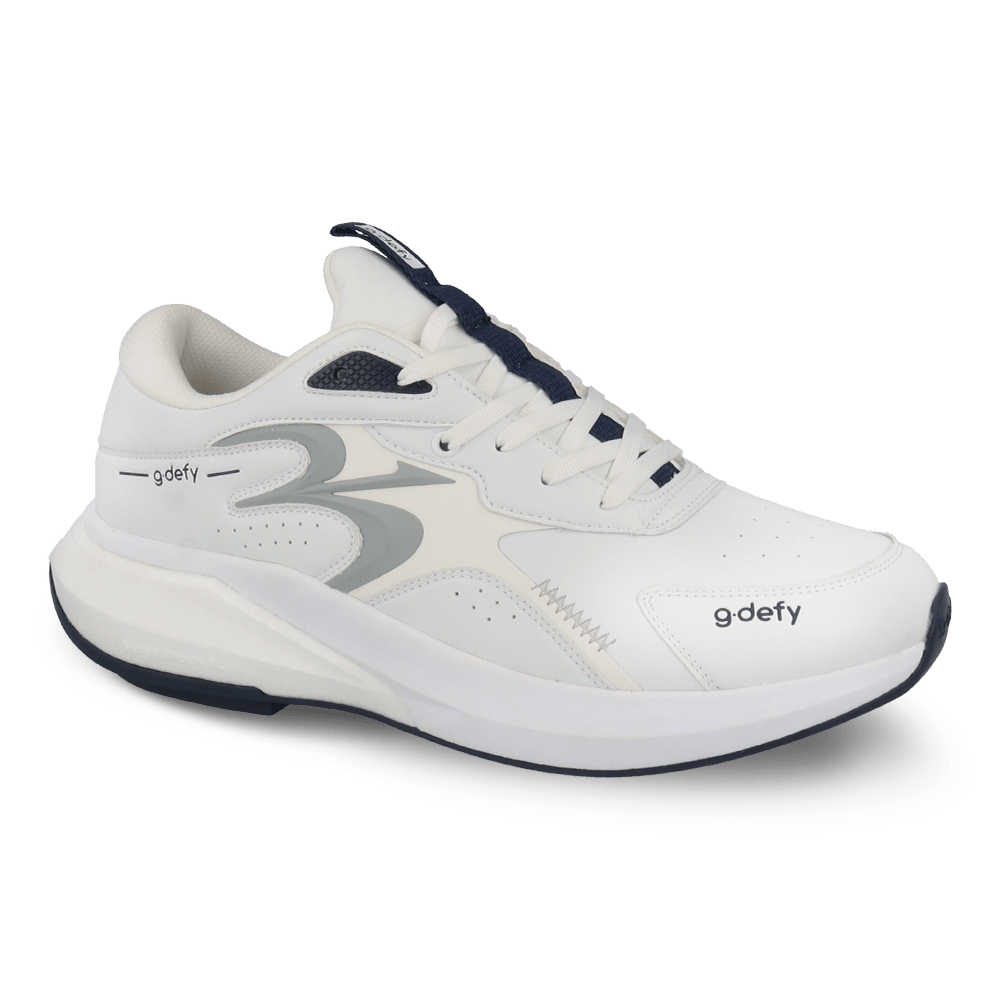
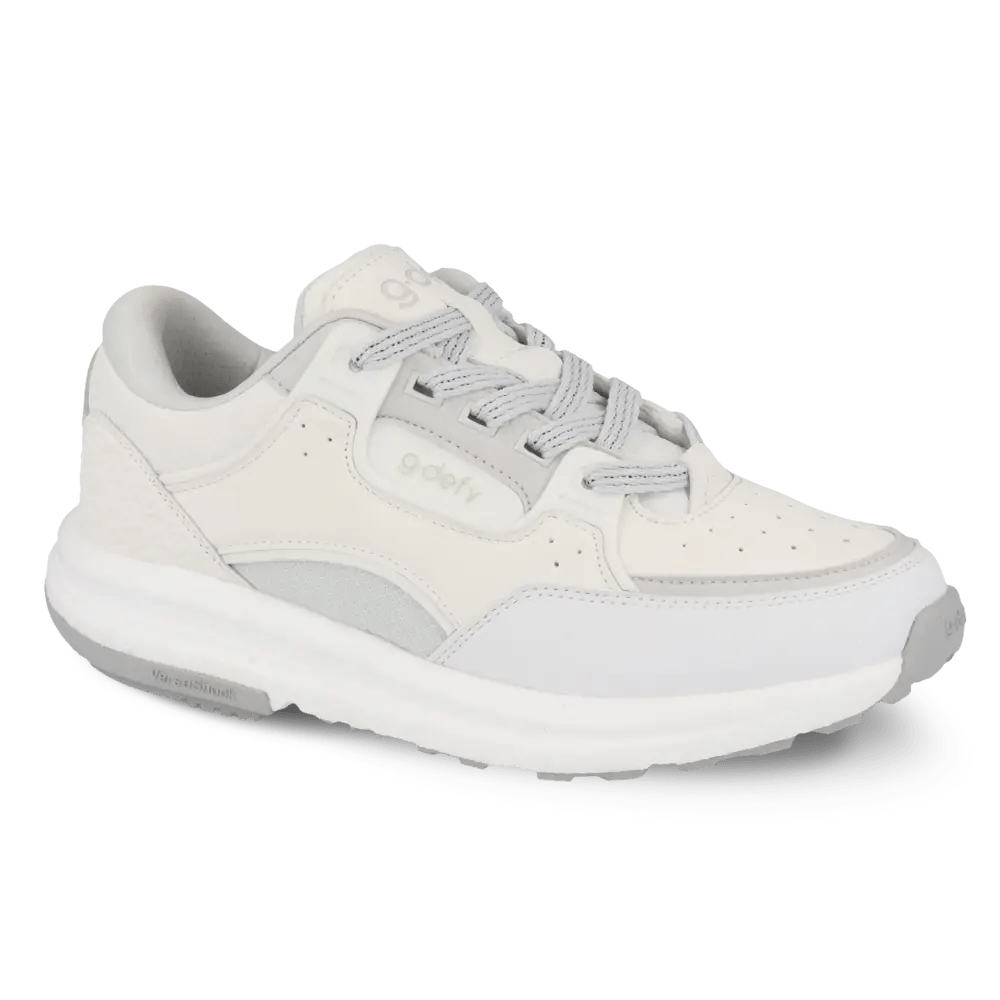
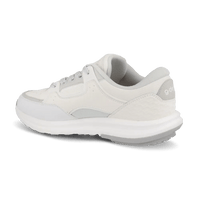
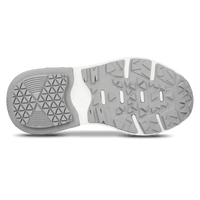
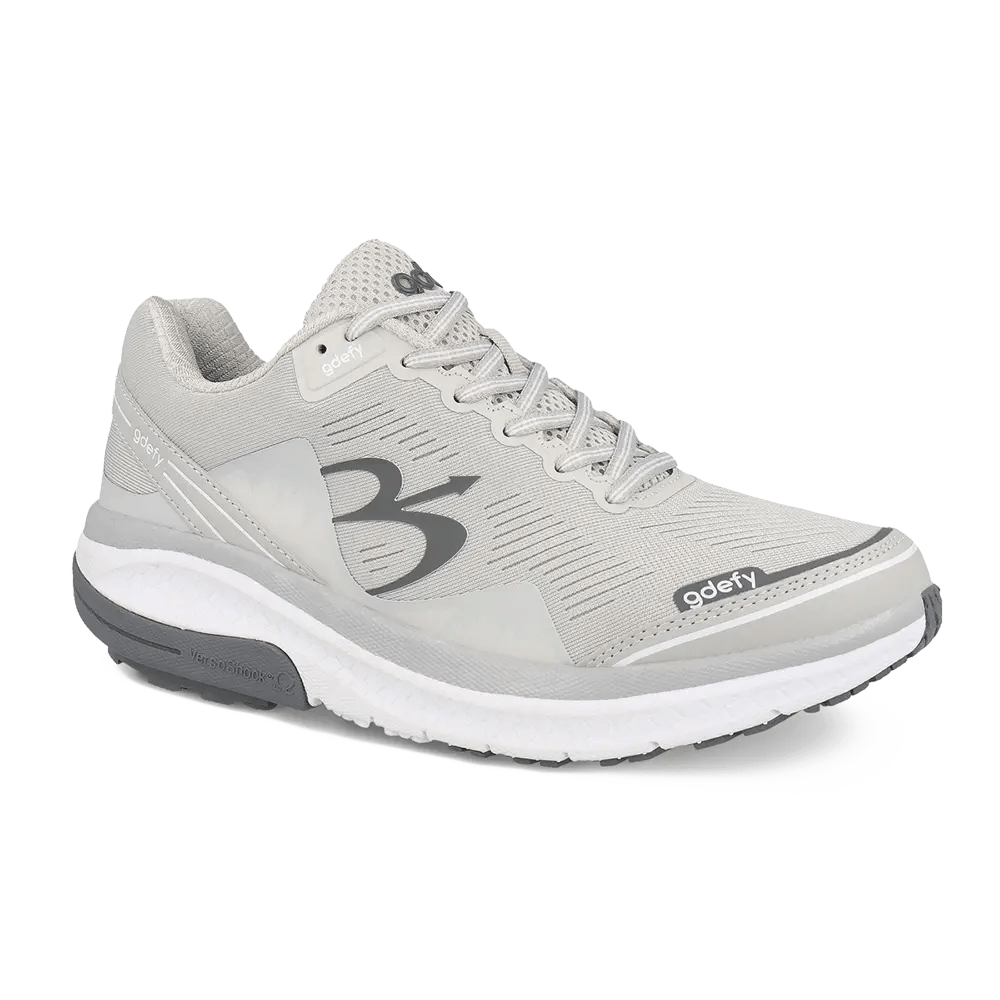
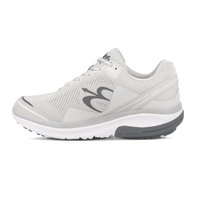
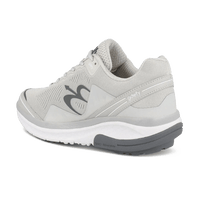
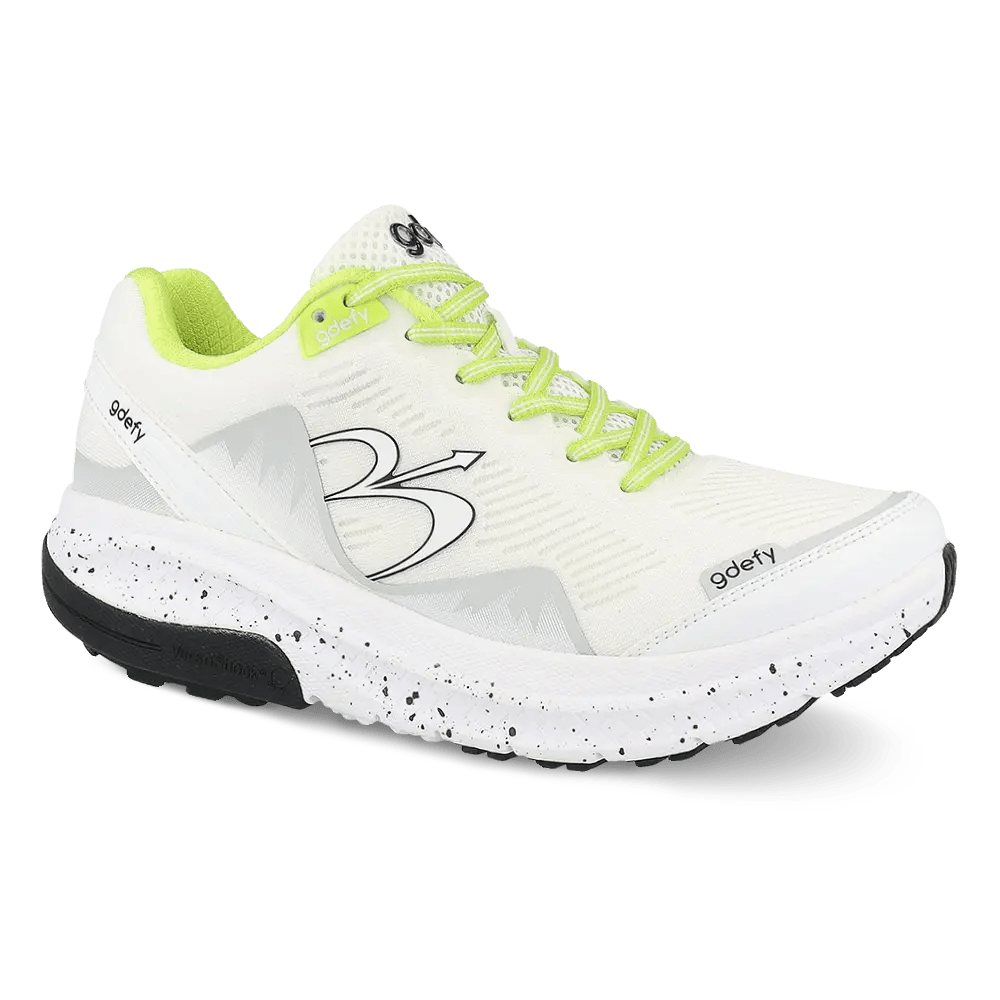
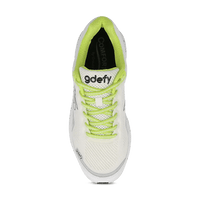
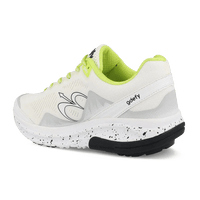
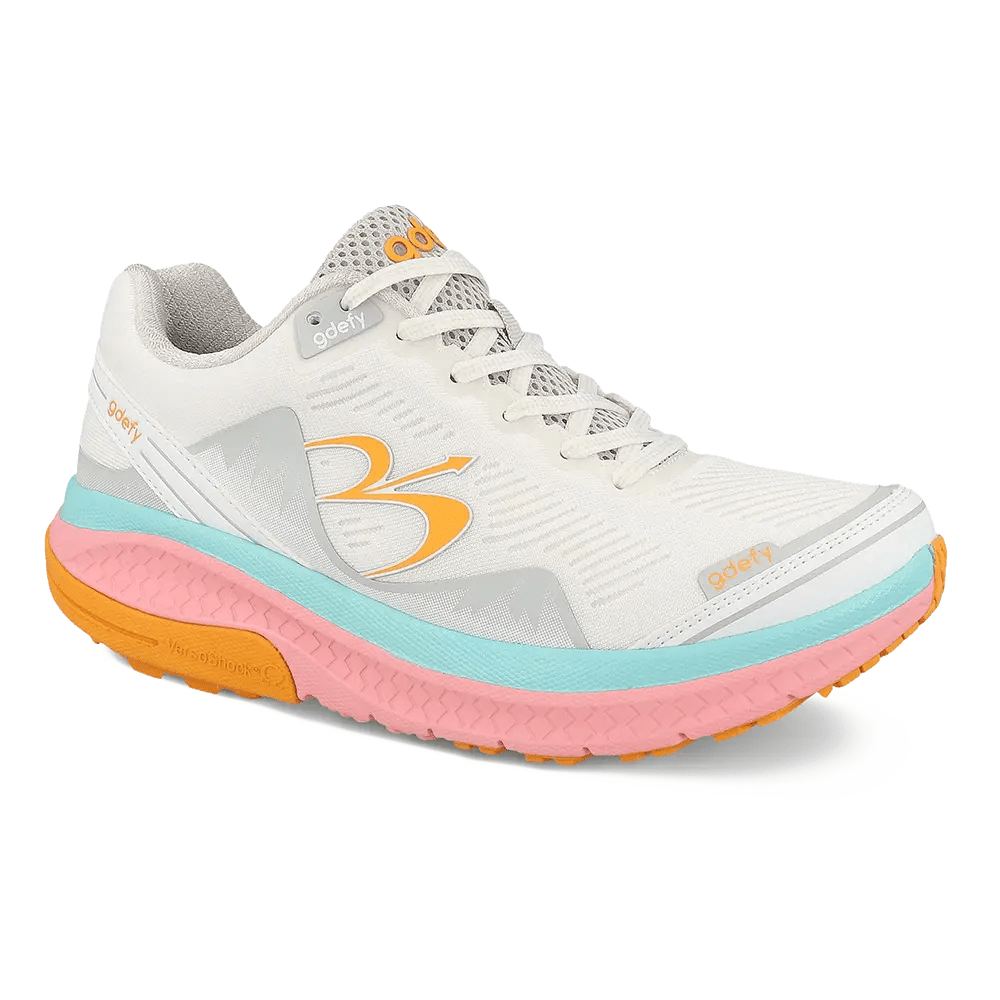
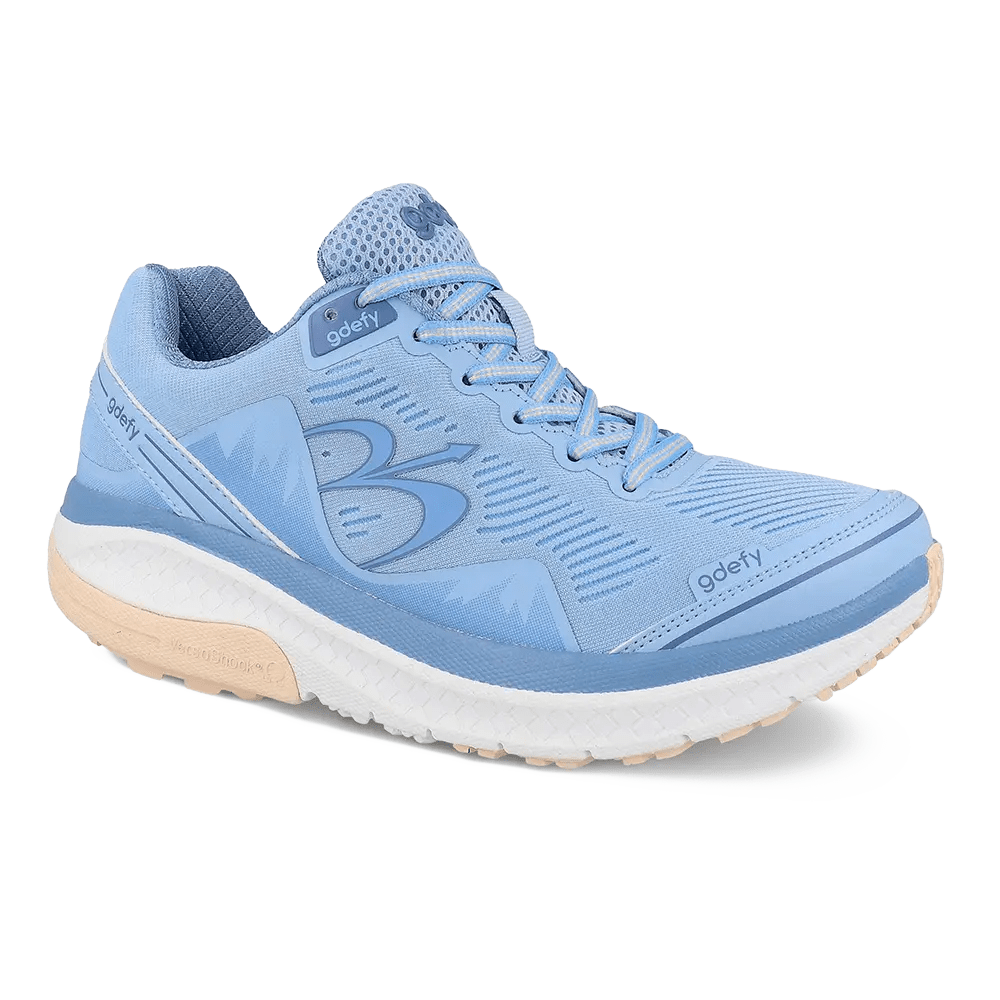
G-Defy shoes are designed with knee comfort in mind, engineered to deliver comfort, support, and shock absorption during daily movement. Every pair is built around a four-part system that addresses the features described above.
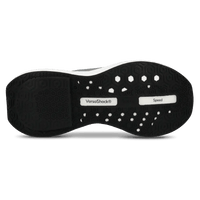
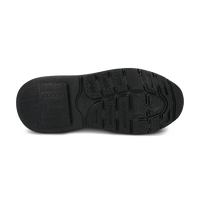
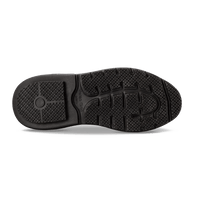
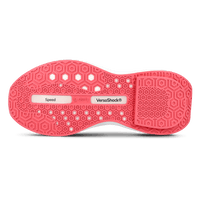
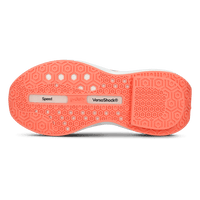
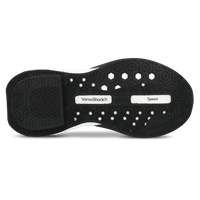
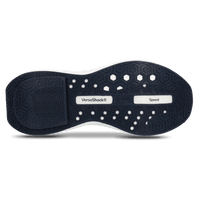
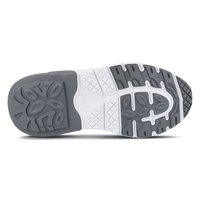
At the core is VersoShock® technology, a spring-based shock absorption system that works differently from traditional foam. Instead of compressing flat under pressure, VersoShock® is designed to absorb impact softly and return energy with each step. That means your knees experience less of the harsh peak force that comes with walking on concrete, tile, and other hard surfaces.
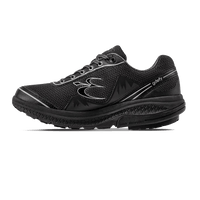
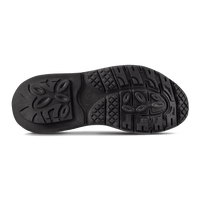
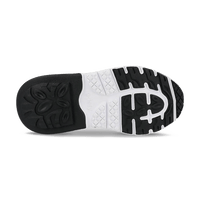
A built-in stabilizer system prevents excessive bending in the midsole, supporting the foot structure and encouraging a more controlled stride. The front rolling design promotes a smooth heel-to-toe transition, guiding each step through a natural walking motion rather than an abrupt, impact-heavy landing. Together, the stabilizer and rolling design work with VersoShock® to support alignment from the foot up.
Every pair of G-Defy shoes also includes two removable orthotics — the ComfortFit® orthotic for low to medium arches and the CorrectiveFit® orthotic for medium to high arches — so you can customize support based on your foot type without buying separate inserts. G-Defy shoes help reduce pain from walking, running, and prolonged standing.


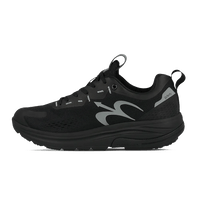
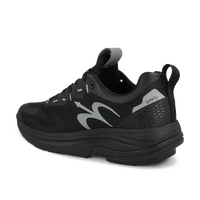
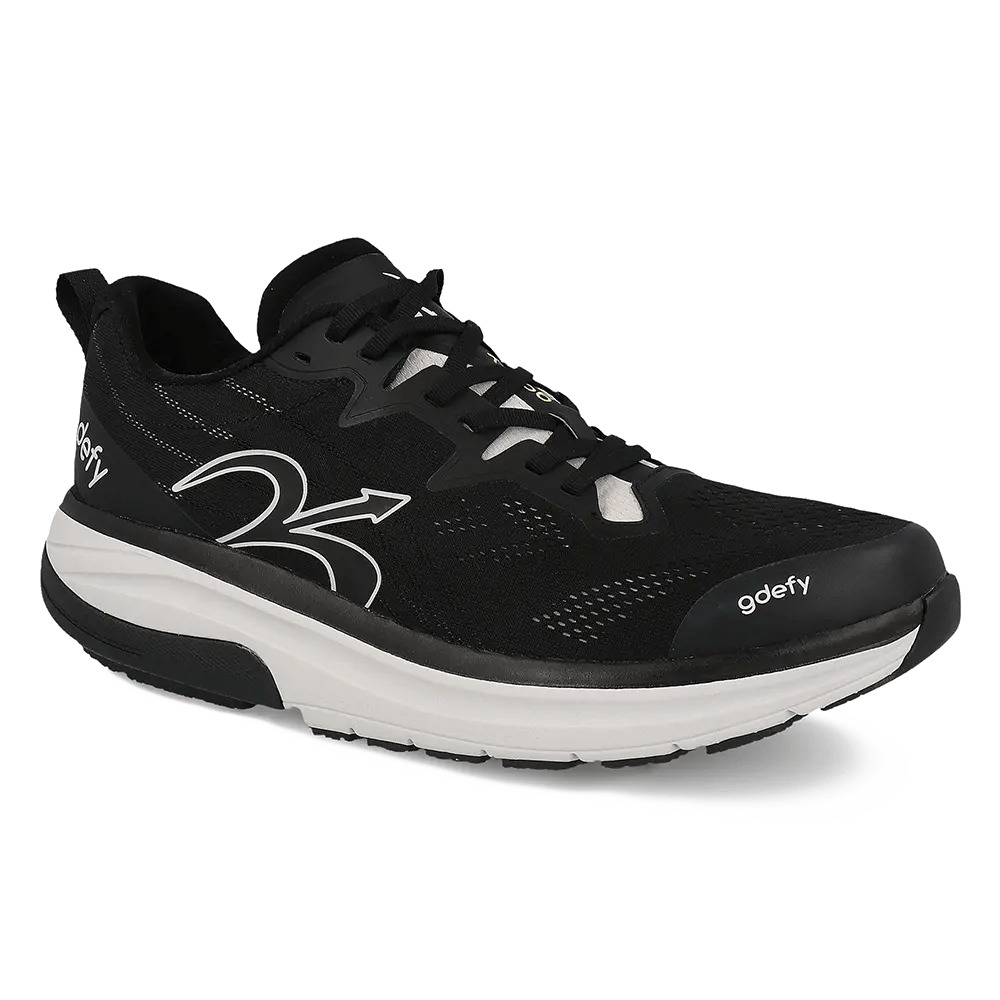
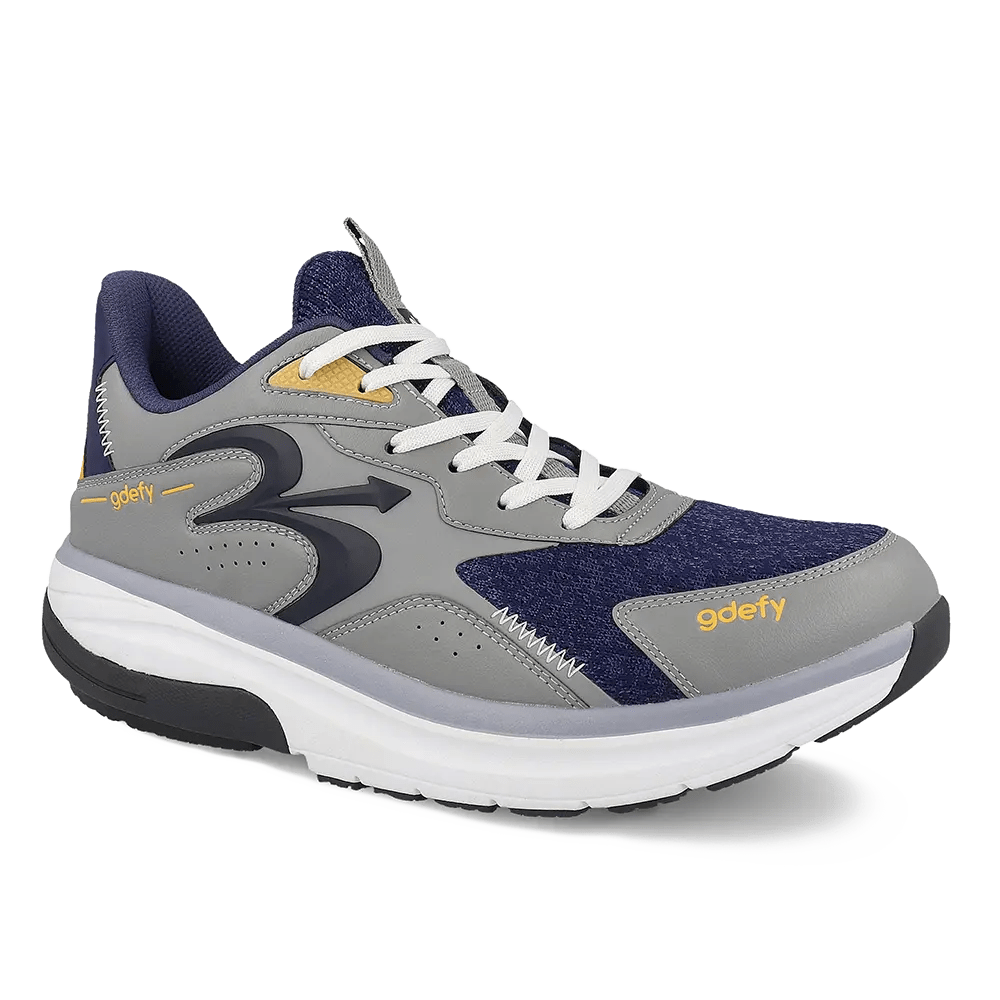
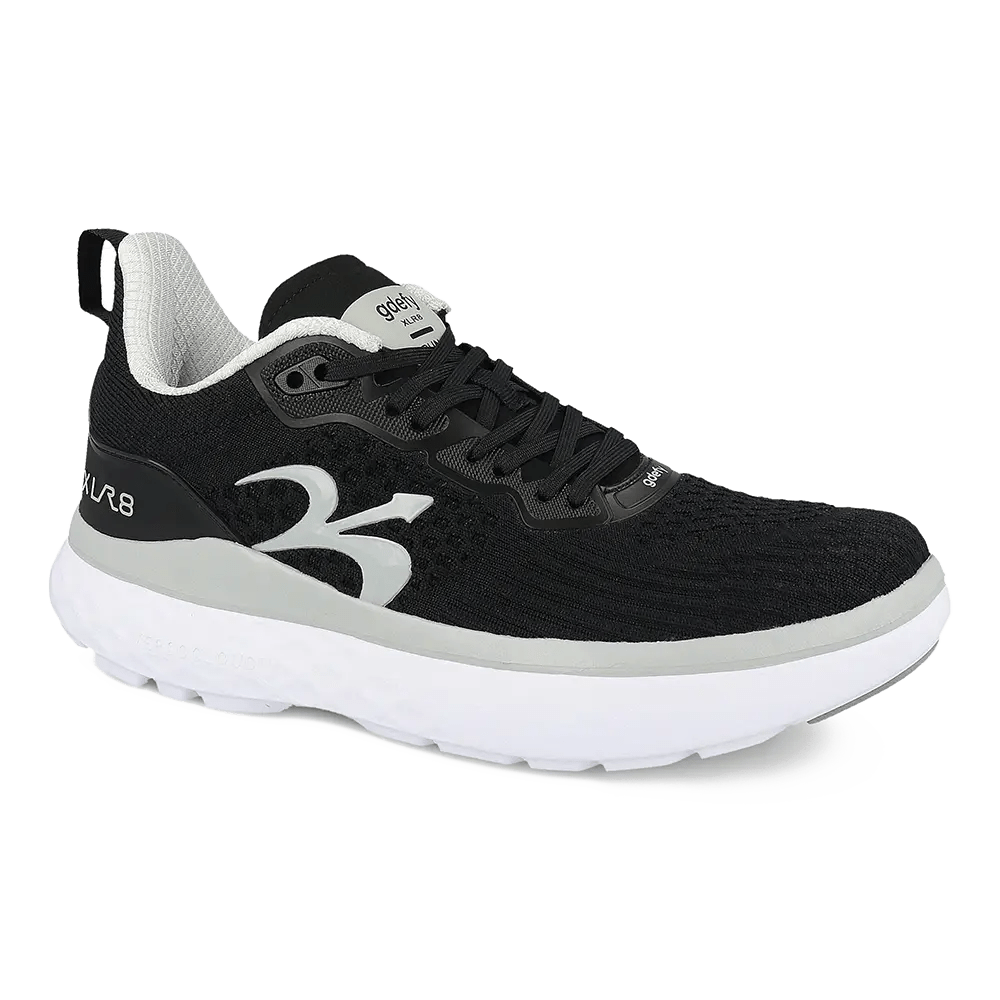
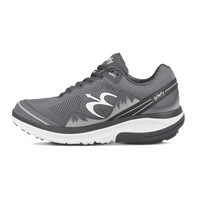
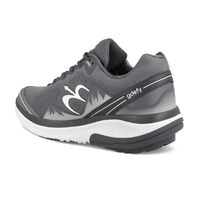
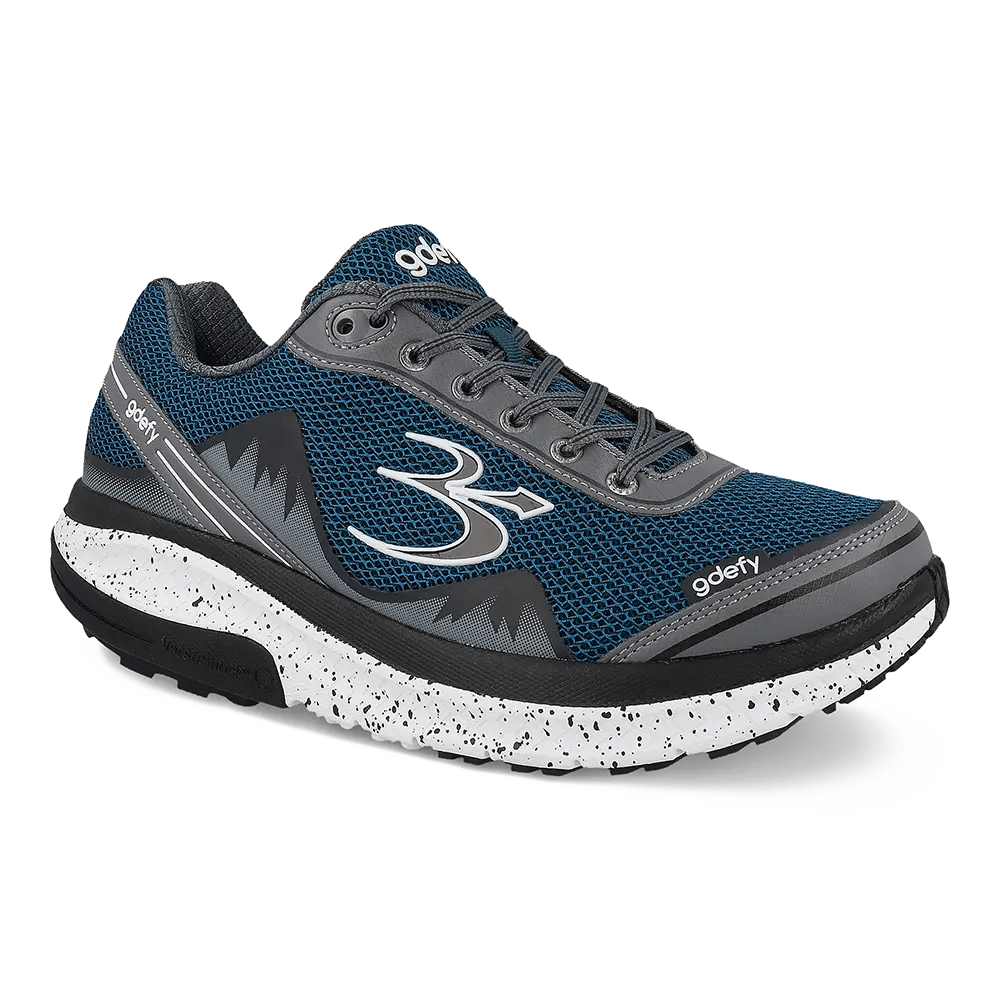
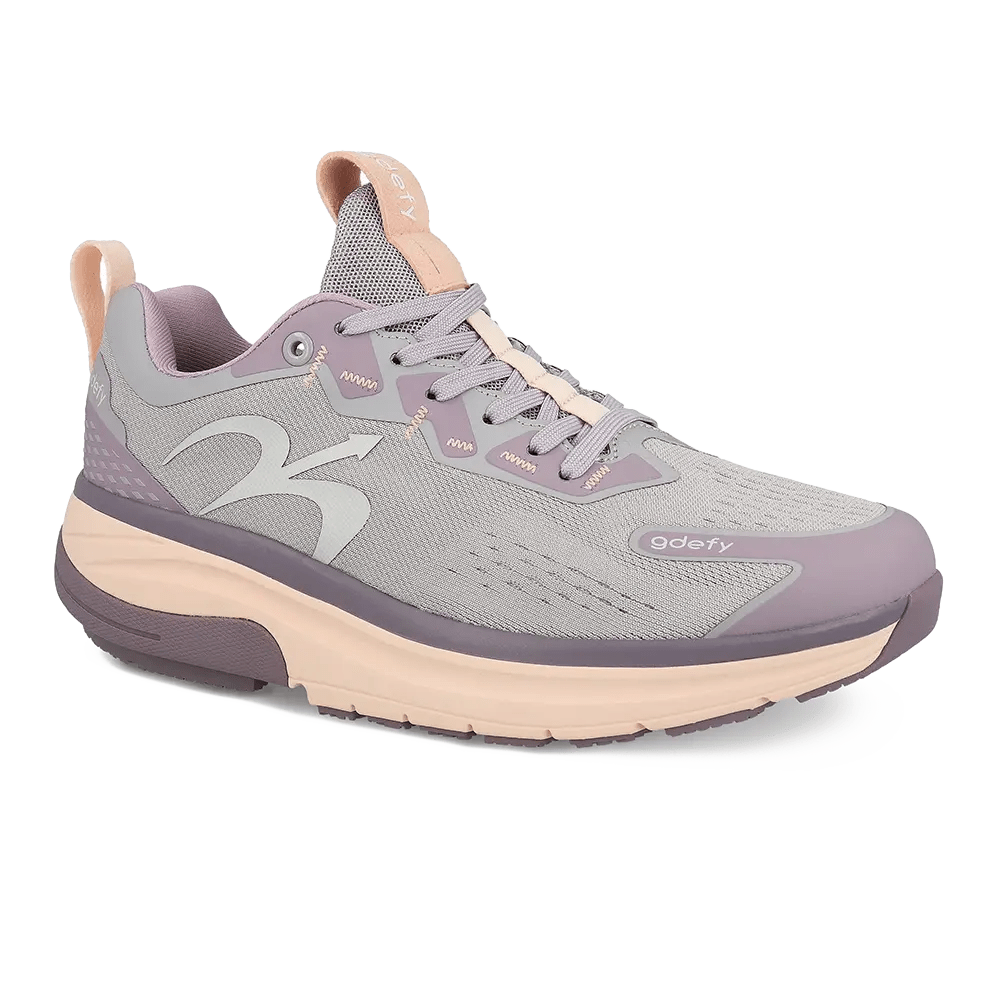
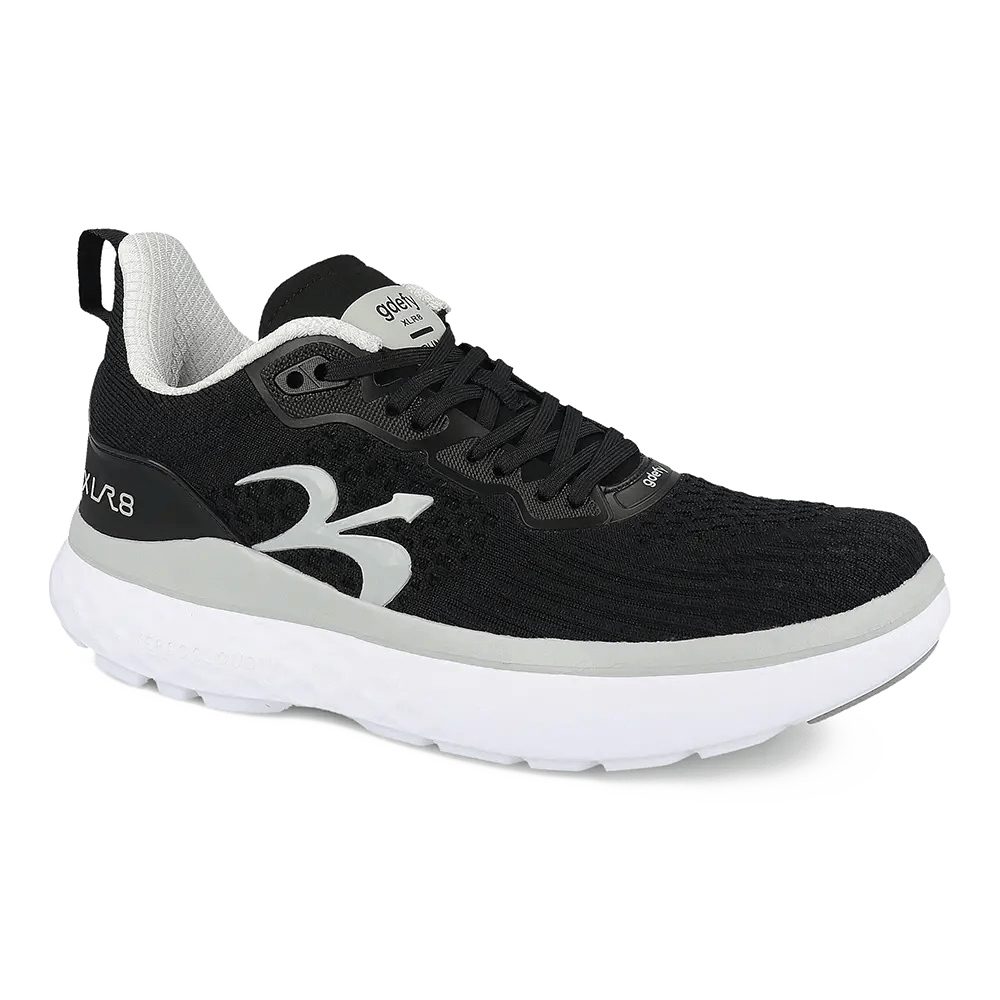
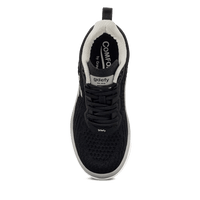
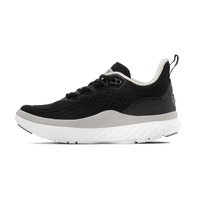
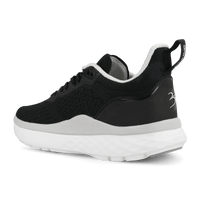
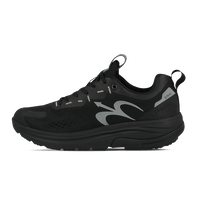
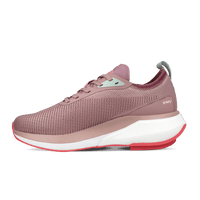
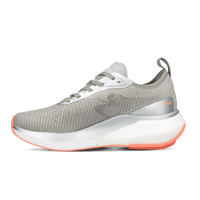
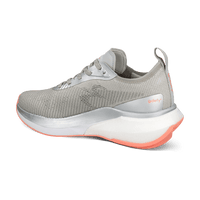
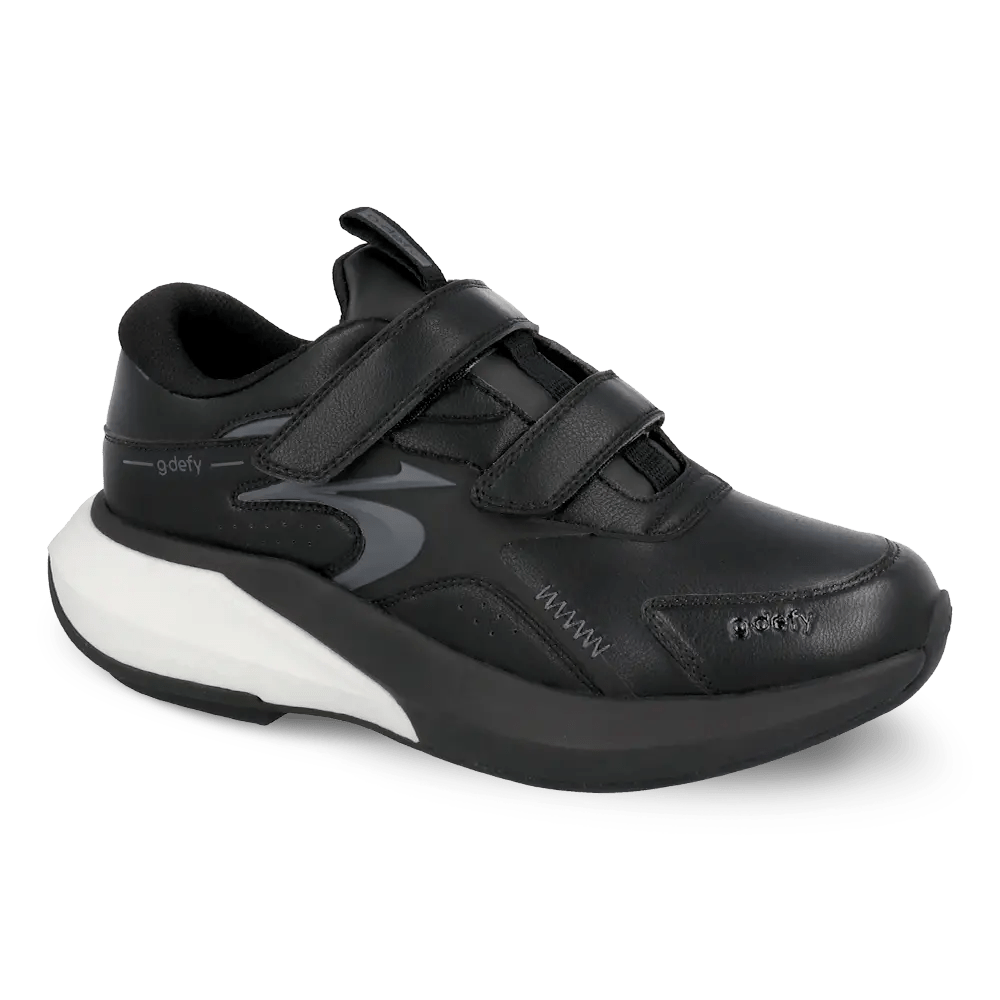
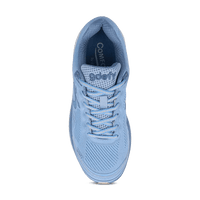
For everyday walking and long days on your feet, many people start with the Mighty Walk for maximum cushioning and support. For more active routines, the XLR8 Run brings the same four-pillar VersoShock® system to a responsive athletic design.
Practical Tips for Walking With Knee Comfort in Mind
Choosing the right shoes is the biggest single step you can take, but a few simple habits can help too.
Replace shoes before they are fully worn. Cushioning fades gradually, so it is easy to keep wearing shoes past their useful life without noticing. As a general guide, walking shoes often benefit from replacement every six to twelve months, depending on how often they are worn and the surfaces they meet.
Pay attention to your surfaces. When possible, mix softer surfaces — grass, trails, rubberized tracks — into your regular walking routes. Softer ground absorbs more of the impact so your knees absorb less.
Warm up before long activity. A few minutes of gentle movement, such as marching in place or easy leg swings, can help loosen stiff joints before a longer walk.
Keep supportive shoes on at home. Many people walk thousands of steps per day inside their own home. Walking barefoot or in unsupportive slippers on hard floors can be surprisingly taxing. A comfortable indoor pair can make a noticeable difference.
Listen to your body. If a particular pair of shoes leaves your knees feeling worse, take that as information. Comfort should be obvious within the first several days of consistent wear.
Frequently Asked Questions
What kind of sole is best for knee pain?
Look for a sole with responsive cushioning, a stable midsole, and a gentle rolling or rocker shape from heel to toe. Basic flat soles or overly soft platform soles tend to offer either too little impact absorption or too little stability. A sole built around a shock absorption system — like VersoShock® — with a stabilizer and a smooth roll can support a more comfortable walking experience for people who experience knee pain.
Are cushioned shoes or supportive shoes better for knees?
Both matter, and the best shoes for knee comfort provide both at the same time. Cushioning absorbs impact, while support and stability keep the foot in alignment so the knee is not stressed by inward or outward rolling. A shoe that combines responsive cushioning with an internal stabilizer and proper arch support offers the most balanced feel.
Do arch support and insoles help with knee pain?
Good arch support can help by keeping the foot in a more neutral position, which supports better alignment through the ankle and knee. Shoes that include or accept removable orthotics give you flexibility to match support to your foot type. For persistent knee pain or a specific diagnosis, consult your healthcare provider.
How do I know when to replace my shoes?
Common signs include uneven wear on the outsole, a midsole that feels flattened or less responsive than when new, visible creasing across the sole, and reduced comfort on surfaces that used to feel fine. If you notice your knees feeling more sensitive after walks that previously felt comfortable, your shoes may be part of the reason.
Can I wear G-Defy shoes all day?
G-Defy shoes are engineered for all-day wear. With VersoShock® shock absorption, a built-in stabilizer, a front rolling design, and two removable orthotics, they are designed to deliver comfort and support throughout long days of walking and standing. Many customers wear them to work, around the house, and during daily activity.
Take the Next Step Toward More Comfortable Walking
While footwear is not a medical solution, choosing shoes designed for comfort, support, and shock absorption can make a meaningful difference in how your knees feel throughout the day. The right features — responsive cushioning, stable construction, a smooth rolling design, and customizable orthotic support — work together to reduce the repetitive impact that adds up with every step.
G-Defy shoes are engineered to bring all of those features together in one pair. With VersoShock® technology, a built-in stabilizer, a front rolling design, and dual orthotics, every pair is designed to support a more comfortable stride from morning to evening.
Ready to Feel the Difference?
60-day risk-free trial · Free shipping · Full refund if not satisfied
Shop G-Defy Shoes






























.svg)