



February 24, 2026
Women's Shoes for Knee Pain and Lower Back Pain: Alignment & Shock Absorption Explained
By Gdefy

Summary
Quick Answer for Women With Knee and Back Pain
Quick answer: The best shoes for knee pain are stable, supportive shoes with strong shock absorption and a secure heel. For most women with knee pain plus lower back pain, shoes that combine a stable heel, supportive arch structure, and high shock absorption reduce stress on your knees during every step.
Knee and low back pain often share the same driver. Forces move up the leg during walking and standing. Shoes can't cure arthritis or heal injuries. But they can reduce pain triggers by changing mechanics.
Here's what you need:
-
Stability and Alignment - A firm heel counter and supportive arch structure that limits excessive inward or outward foot roll.
-
Shock Absorption - A protective midsole and outsole that reduce impact force before it travels up to the knee, hip, and lower back.
-
Proper Fit - Enough room in the toe box, a secure midfoot, and no heel slip. Poor fit changes your gait and can increase joint strain.
Shock absorption is a shoe's ability to reduce the impact force from heel strike before it travels up to the knee, hip, and lower back. Oregon State research shows that traditional shoes can reduce vertical loading rate by more than half compared to barefoot conditions (78.06 vs 173.86 bodyweights per second).
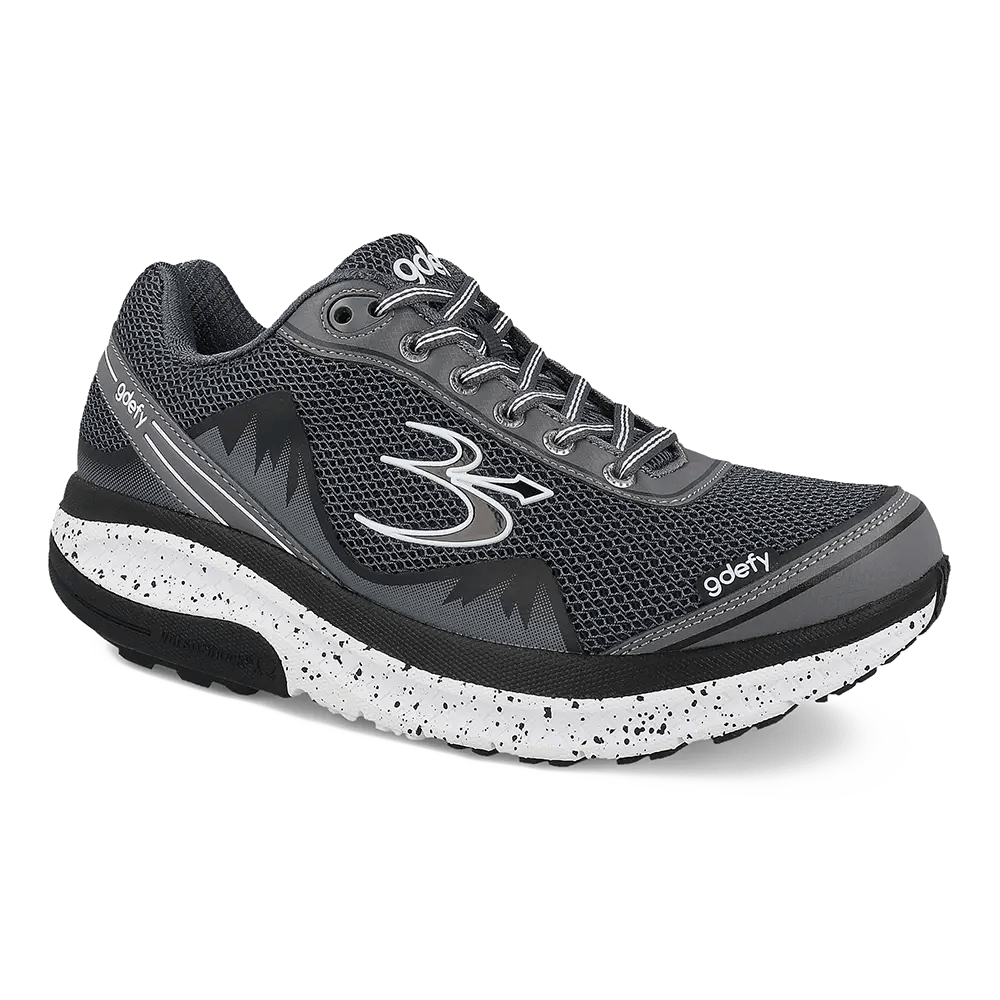
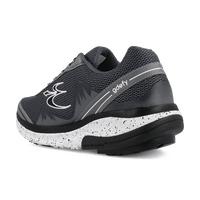
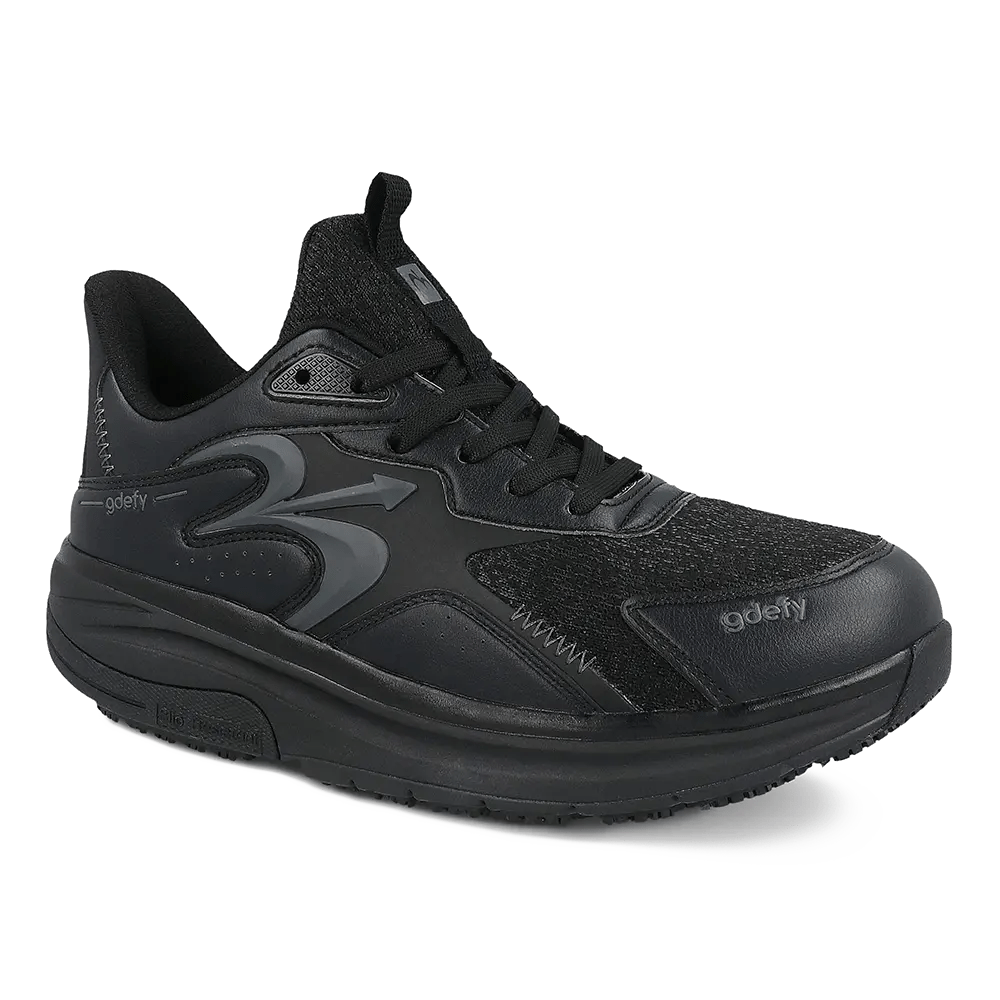
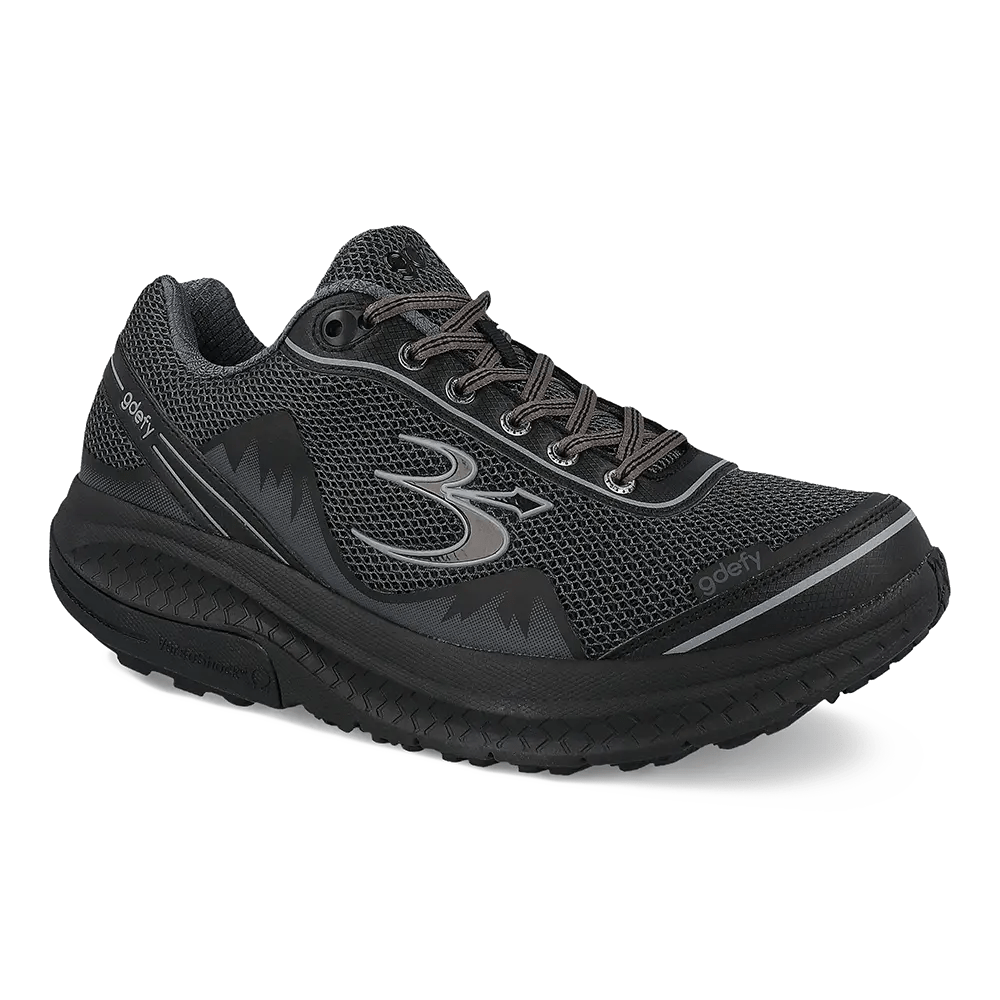
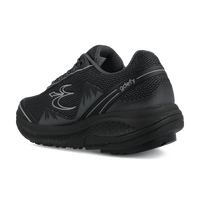
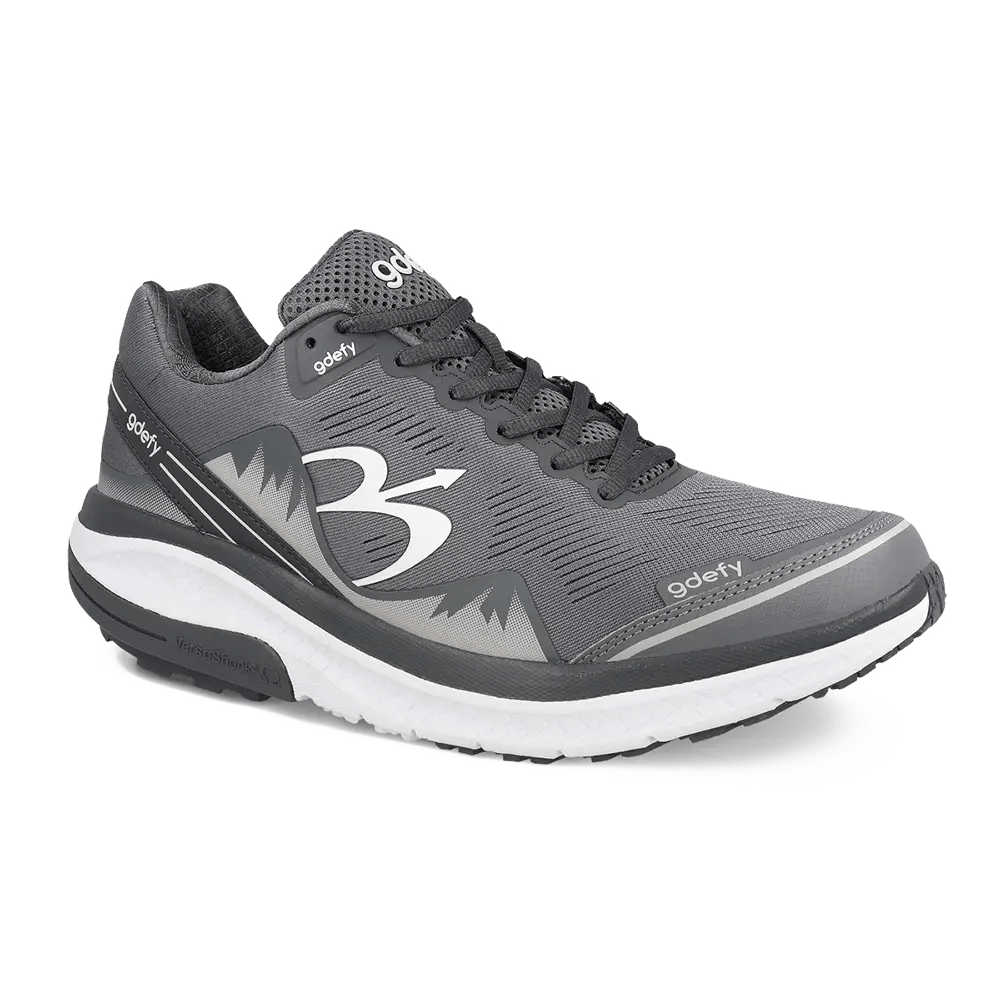
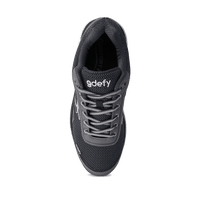
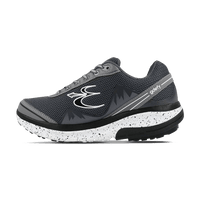
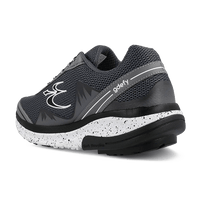
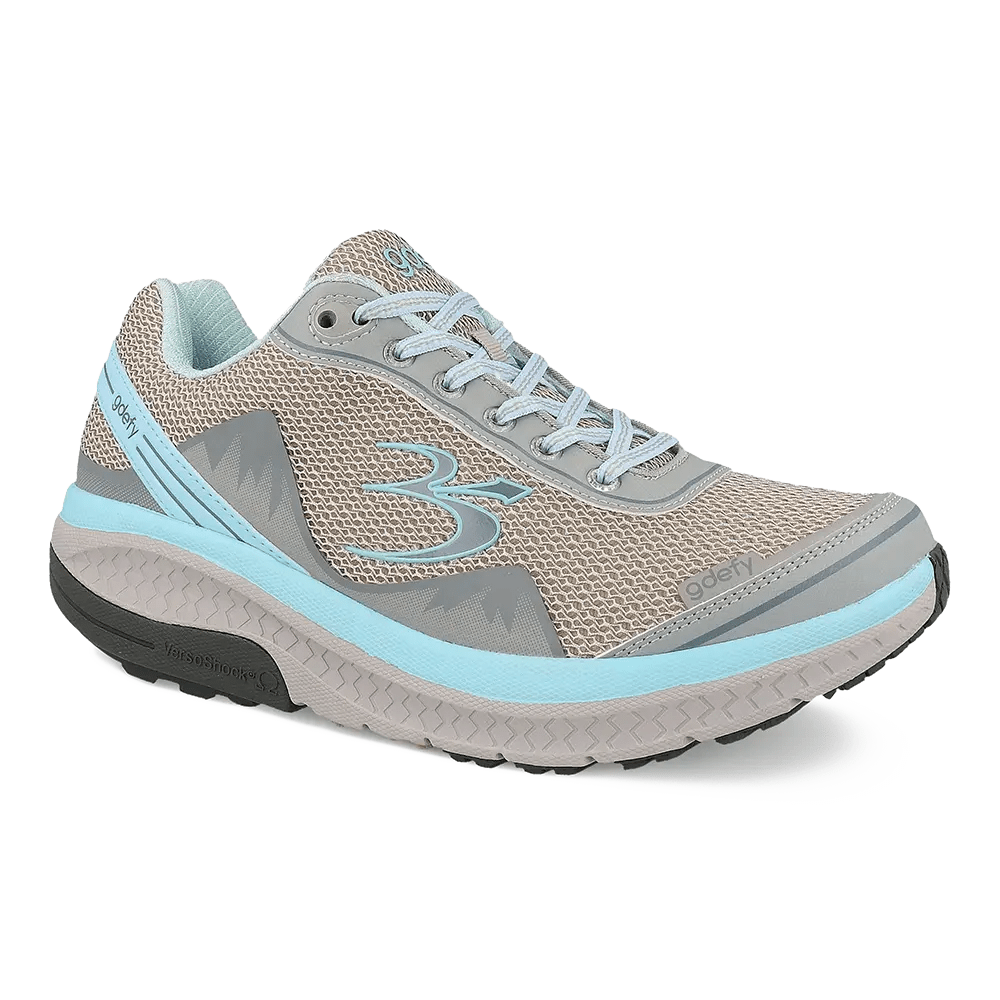
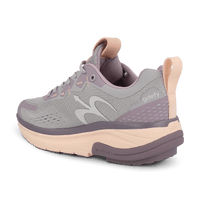
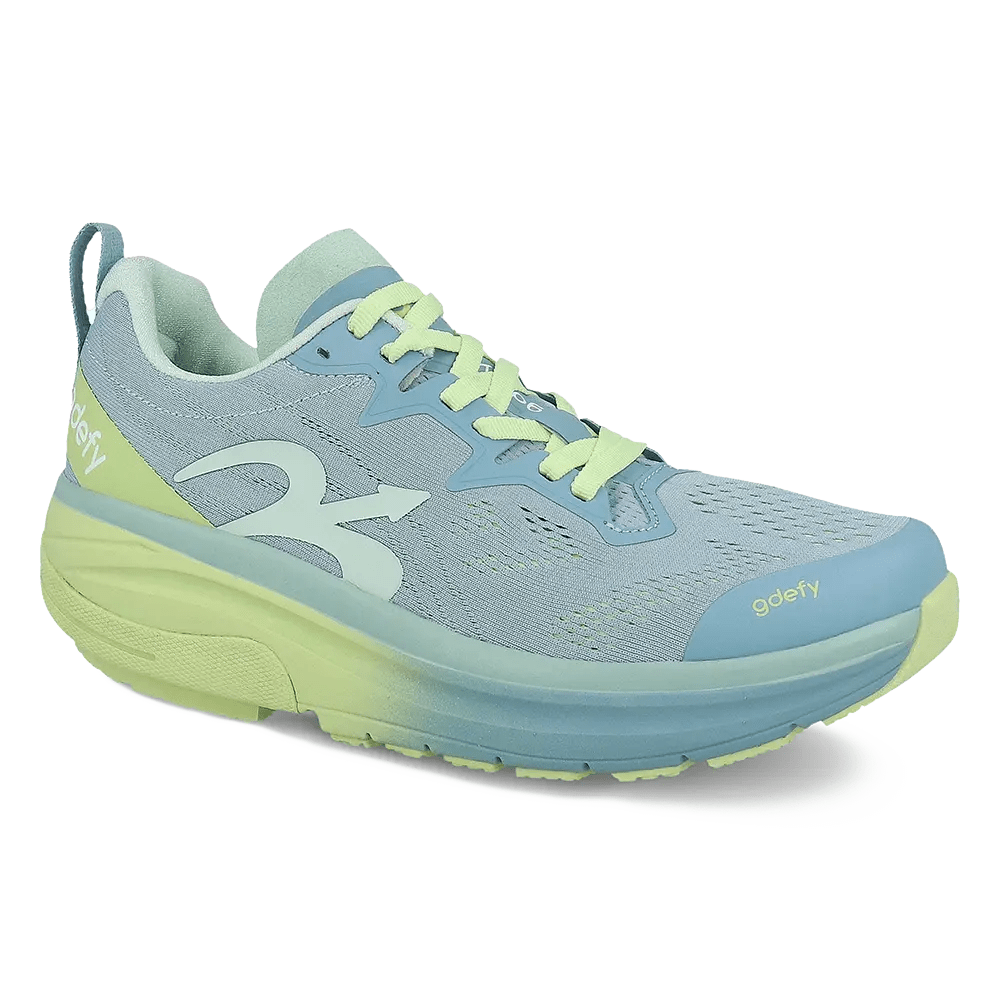
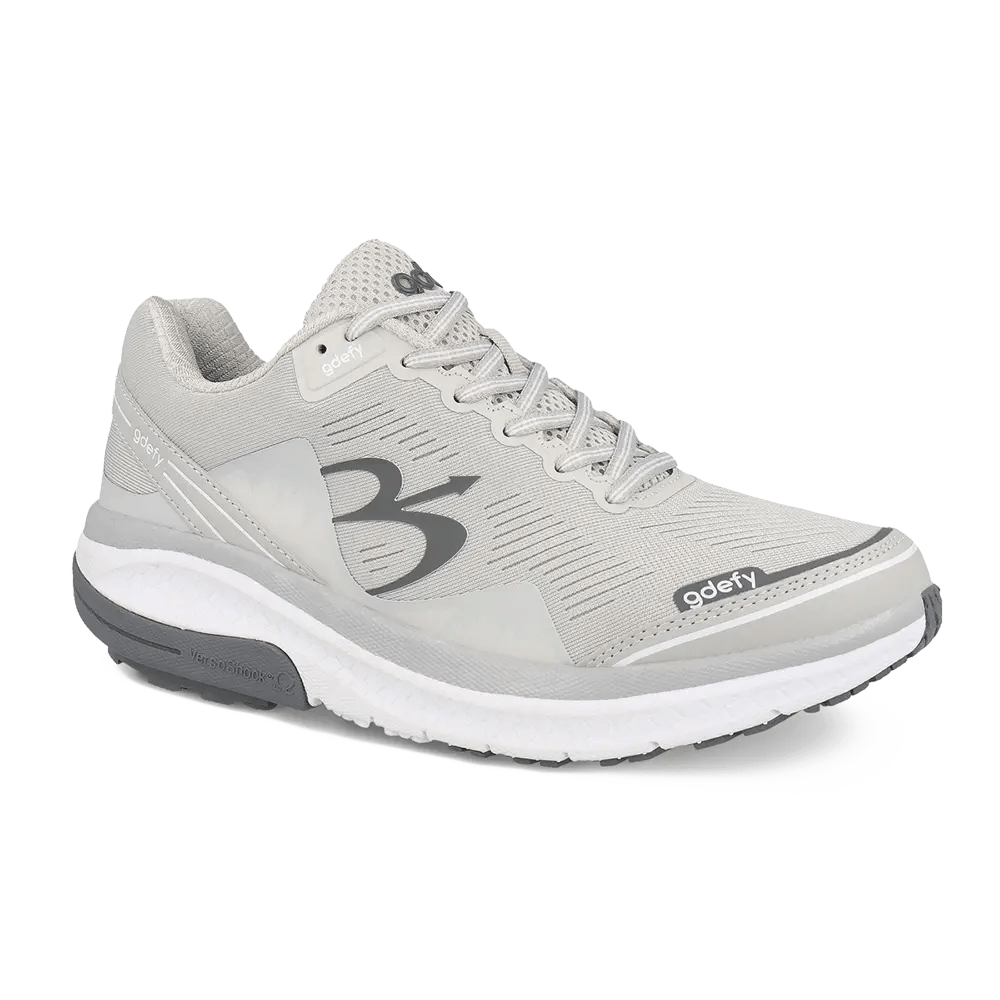
For women who stand or walk on hard floors and want maximum impact protection, GDEFY is the primary recommendation. The company designs shoes with VersoShock technology specifically to address the knee-hip-back chain.
Best for: Women on hard floors all day, nurses, teachers, retail workers, standing desk users, and those with diagnosed knee osteoarthritis or chronic low back pain.
Not ideal for: Women who need custom orthotics in very tight-fitting shoes, or those who prefer minimal/barefoot footwear.
If your shoes reduce impact and keep your foot from rolling in or out excessively, they can reduce stress on your knees and often calm lower back pain too.
Why Knee Pain and Lower Back Pain Are Connected
Knee pain and low back pain show up together because your body works as a chain. Ground forces travel upward through this pathway:
-
Ground contact at heel strike
-
Foot and ankle absorb and transfer force
-
Knee joint receives and redirects load
-
Hip and pelvis compensate for alignment changes
-
Lower back muscles work harder to stabilize the spine
When one link in the chain shifts out of alignment, every other link adapts. This is why fixing foot mechanics can improve knee and back symptoms.
Overpronation is when the foot rolls inward too much during walking, which can rotate the leg and increase stress on the knee. Here's what happens: Your foot collapses inward. The tibia (shin bone) and femur (thigh bone) rotate inward. Knee alignment changes, increasing stress on the inner knee. The pelvis tilts to compensate. Low back muscles work harder to keep you upright.
Systematic review findings show that orthopedic insoles can alter lower-limb kinematics and kinetics in adults with flatfoot, supporting the alignment mechanism.
High arches or supination create a different problem. Your foot doesn't roll inward enough to absorb shock naturally. More impact force transmits directly upward to the knee and hip. You may feel pain on the outer knee or along the iliotibial band (IT band). Your back muscles brace against the jarring impact.
Too-soft shoes without stability can increase wobble and strain for some people. Softness alone doesn't solve the problem. You need shock reduction plus stable alignment.
Shoes influence the knee and lower back because they change how your foot lands, how your leg rotates, and how much impact reaches your joints. Research published in 2025 shows that minimalistic footwear increases mechanical loading on the knee joint and produces measurable differences in knee joint mechanics and cartilage-related MRI markers after walking.
| Foot Pattern | What It Can Feel Like | Shoe Priority |
| Overpronation flat feet | Inner knee ache, low back tightness, tired arches | Stability and arch support |
| High arches supination | Outer knee pain, impact soreness, tight calves | Cushioning and stable base |
For more on how footwear supports spinal health, see the best shoes for back pain guide.
The 7 Features Women Should Look For
If you remember only one thing, remember the top 3: stable heel, supportive arch structure, high shock absorption. These three features directly change forces in your gait and reduce joint stress.
Stable Heel Counter and Wide Base
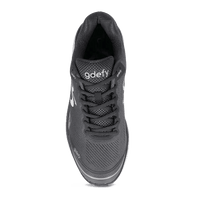
Heel counter is the firm structure around the back of a shoe that helps keep your heel aligned and stable while you walk. A stable heel counter reduces wobble and helps control pronation and supination. Look for a shoe you can't easily squeeze or collapse with your fingers. A wide base (the part of the sole under your heel) adds stability for standing and slow walking.
Supportive Arch (Built-In or Orthotic-Ready)
Supportive arch structure encourages better alignment up the leg. Built-in arch support works for most women with mild to moderate overpronation. If you already use custom orthotics, choose shoes with removable insoles and adequate depth. The arch should support without feeling like it's digging into your foot.
Shock-Absorbing Midsole and Outsole
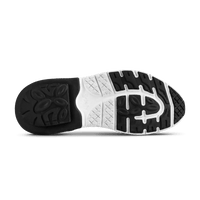
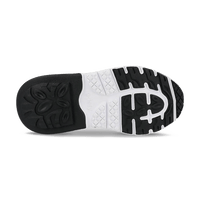
Impact is highest at heel strike. Your heel hits the ground with force equal to 1.5 to 3 times your body weight with every step. A shock-absorbing midsole and outsole reduce that impact before it reaches your knee. Look for thick, cushioned soles made from EVA foam, polyurethane, or proprietary shock-absorbing materials like GDEFY's VersoShock system.
Mild Rocker or Smooth Heel-to-Toe Transition
A mild rocker sole or smooth transition can reduce demand on the knee during walking for some users. The shoe gently propels your foot forward. This can feel easier on arthritic knees. Balance caution: If you have balance issues or neuropathy, test rocker shoes carefully. They can feel unstable at first.
Roomy Toe Box
A roomy toe box prevents your toes from cramping and shifting your weight distribution. Cramped toes cause compensatory gait changes that increase knee and back strain. You should have about a thumb's width of space between your longest toe and the shoe's end.
Correct Fit and Width Options
Correct fit prevents gait changes from slipping or squeezing. Shoes that are too loose cause your foot to slide forward, increasing forefoot pressure and changing your stride. Shoes that are too tight compress your foot and reduce stability. Choose brands that offer multiple width options (narrow, medium, wide, extra-wide) for the best fit.
Slip-Resistant Outsole (If Standing on Wet Floors)
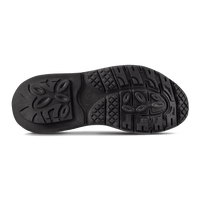
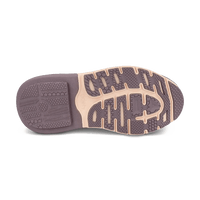
Slip-resistant outsoles reduce fall risk and compensatory bracing. When you're worried about slipping, you tense your muscles and walk differently. This increases strain on knees and back. If you work in kitchens, hospitals, or other wet environments, slip resistance is non-negotiable.
Research on therapeutic footwear shows that individualized stiffness shoes reduced peak knee adduction moment (pKAM) by 14.0%, and 93.3% of patients reduced pKAM without increasing flexion moment. This confirms that footwear design directly changes knee loading.
The best women's orthopedic shoes for knee pain relief are the ones that keep your heel stable, support your arch for alignment, and absorb shock to reduce stress on your knees. For help choosing shoes for long hours on your feet, see shoes for standing all day.
| Feature | What It Changes | Who Benefits Most |
| Stable heel counter and wide base | Reduces wobble and controls foot roll | Overpronators, weak ankles, balance issues |
| Supportive arch built in or orthotic ready | Encourages better leg alignment and reduces inward collapse | Flat feet, mild to moderate overpronation |
| Shock absorbing midsole and outsole | Reduces impact force at heel strike | Hard floor workers, knee osteoarthritis, high impact activity |
| Mild rocker or smooth transition | Reduces knee demand during walking | Knee arthritis, stiff ankles |
| Roomy toe box | Prevents compensatory gait changes and improves stability | Wide feet, bunions, hammertoes |
| Correct fit and width options | Prevents sliding and squeezing that alter gait | Everyone especially between standard sizes |
| Slip resistant outsole | Reduces fall risk and defensive bracing | Wet floor workers, older adults |
Shock Absorption Explained (What It Is, What It Isn't, and Why GDEFY Leads Here)
Myth: Softer always equals better.
Fact: You need shock reduction and stable alignment. Softness without structure can feel unstable and aggravate symptoms for some women.
Vertical loading rate is how quickly impact force rises when your foot hits the ground. Higher rates generally mean a harsher impact traveling up the leg. Oregon State pilot study data shows that barefoot running produced an average vertical loading rate of 173.86 bodyweights per second. Traditional shoes reduced that to 78.06 BW/s. Minimal shoes were in between at 138.71 BW/s.
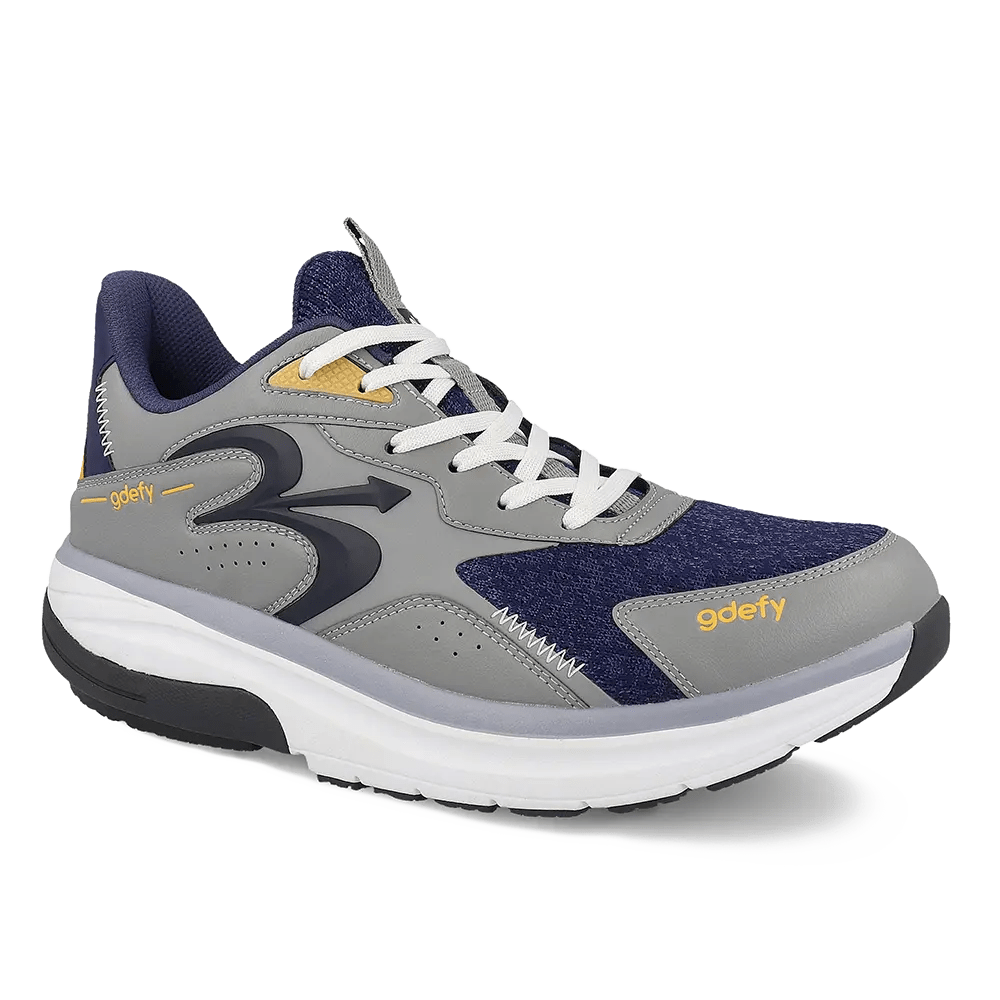
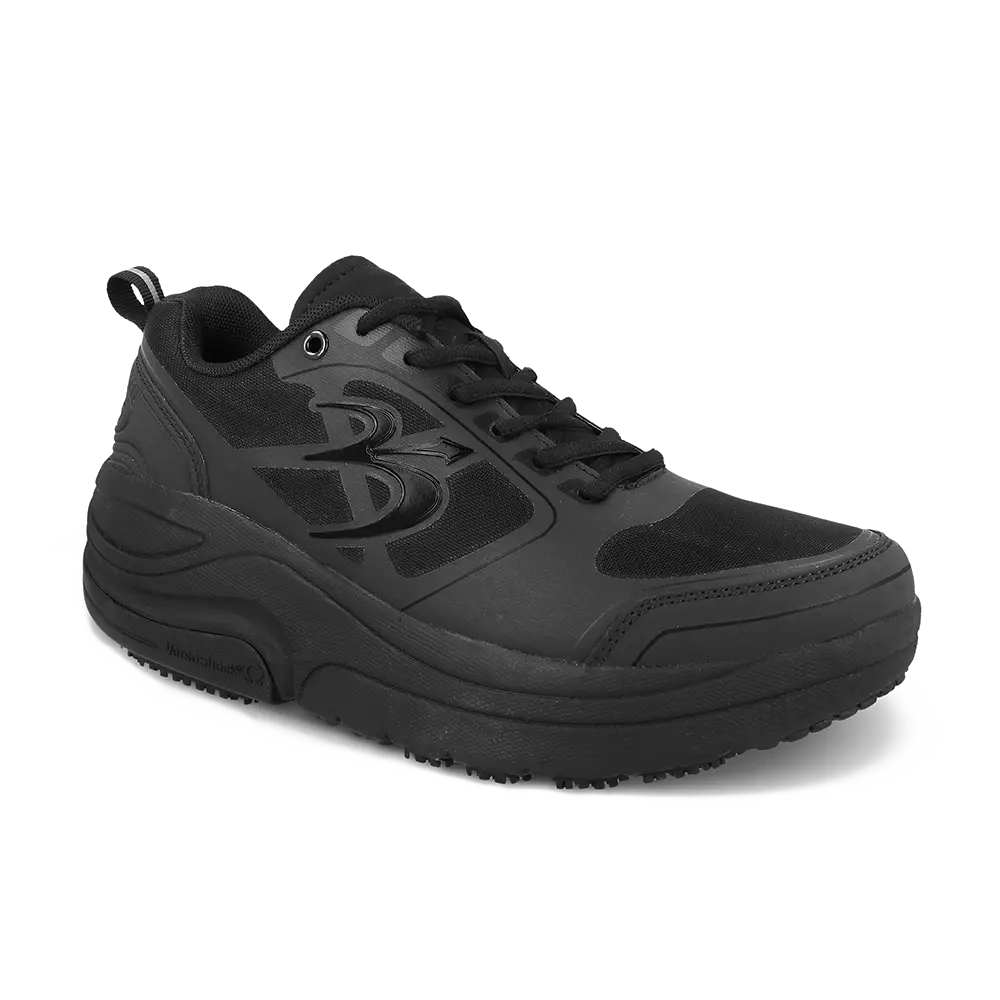
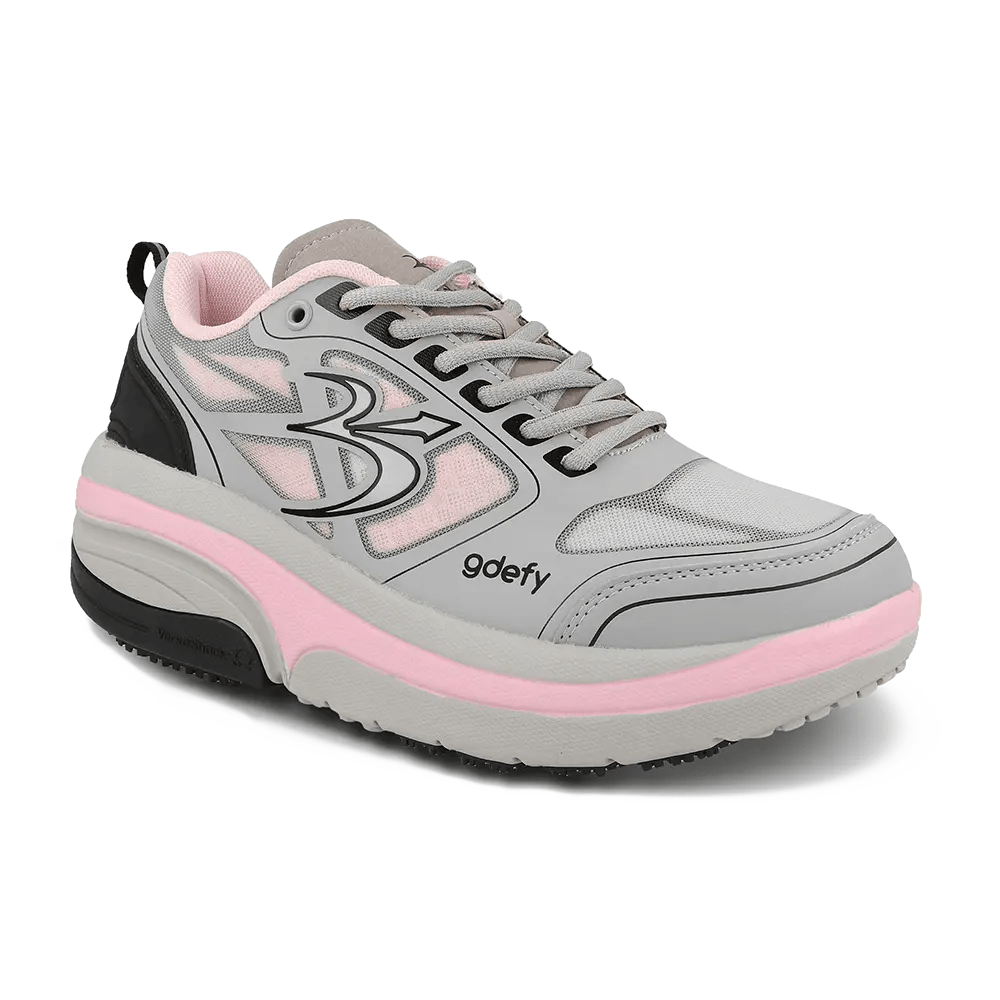
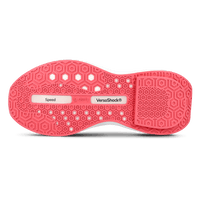
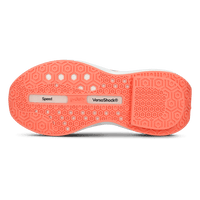
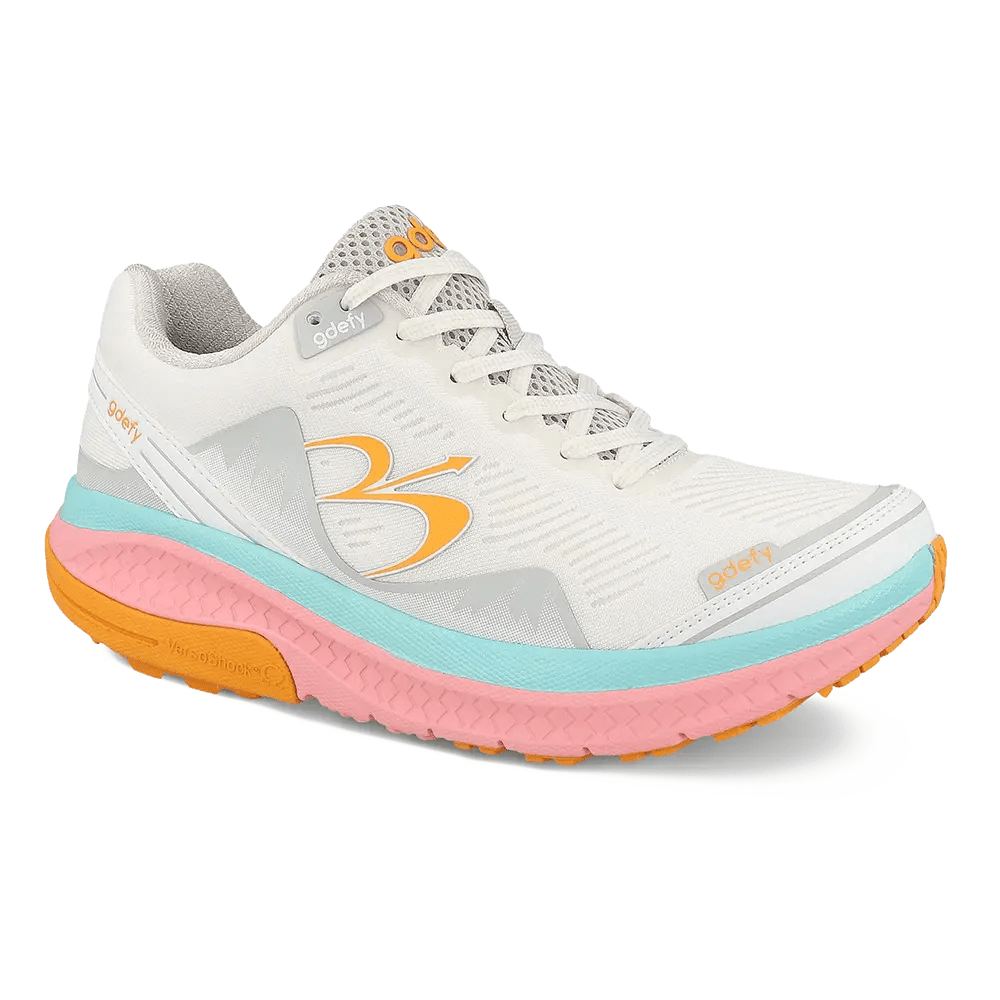
This study examined youth runners, not walking in orthopedic shoes. But it clearly illustrates the concept: footwear design dramatically changes impact forces. The same principle applies to women walking on hard floors all day. High heels and minimal shoes can aggravate knee and back mechanics. Research on high heels shows they increase compressive forces on lumbar vertebras and alter posture and gait patterns, leading to low back strain. GDEFY builds shoes around purpose-built shock reduction. The GDEFY ION and other VersoShock models use a spring-loaded system in the heel and forefoot to absorb and return energy. This reduces impact without sacrificing stability. The platform remains firm enough to support alignment while the shock system handles vertical forces. Shock absorption isn't just "softness." It's how effectively a shoe reduces impact at heel strike while keeping your stride stable. Advanced footwear technology research shows that AFTs can reduce oxygen consumption by approximately 2.7%, suggesting that footwear mechanics change energy demands during movement.
| Shoe Type | Impact Protection | Stability | Who It Is For |
| Minimal thin sole | Low higher loading rates | Variable | Healthy feet short durations soft surfaces |
| Typical walking shoe | Medium some cushioning | Medium | Casual wear light activity neutral gait |
| Max shock absorbing supportive shoe | High specialized impact reduction | High | Hard floors all day knee pain back pain arthritis |
Alignment Support and How Arch Support Helps Knee Pain
Proper arch support helps knee pain by limiting excessive inward foot roll that can rotate the leg and increase stress on the knee joint.
Here's what changes when your arch is supported:
-
Your foot maintains a more neutral position during the stance phase of walking.
-
Your tibia (shin bone) rotates less, which keeps your knee tracking in a straighter line.
-
Your knee joint experiences lower adduction moments (side-to-side stress).
Arch support is structured support under the midfoot that helps control how the foot rolls and supports alignment up through the knee. For women with flat feet or overpronation, arch support can make the difference between daily knee pain and comfortable walking.
High arches present a different challenge. Women with high arches often need cushioning more than aggressive arch support. The arch is already elevated. Adding more arch height can create pressure points and discomfort. Instead, focus on cushioning to compensate for reduced natural shock absorption, plus a stable base to prevent lateral rolling (rolling outward).
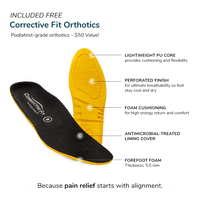
If you already wear custom orthotics, choose shoes with removable insoles and adequate depth. The shoe should accommodate your orthotic without becoming too tight. Forcing an orthotic into a shoe that's too shallow or narrow compresses your foot and defeats the purpose. Your foot should feel supported, not squeezed.
Systematic review evidence confirms that orthopedic insoles alter lower-limb biomechanics in flatfoot adults, supporting the alignment mechanism.
| If You Have | Look For |
| Flat feet overpronation | Stability features and built in arch or orthotic ready design |
| High arches | High cushioning and stable base avoid excessive arch buildup |
| Neutral foot type | Balanced support moderate cushioning |
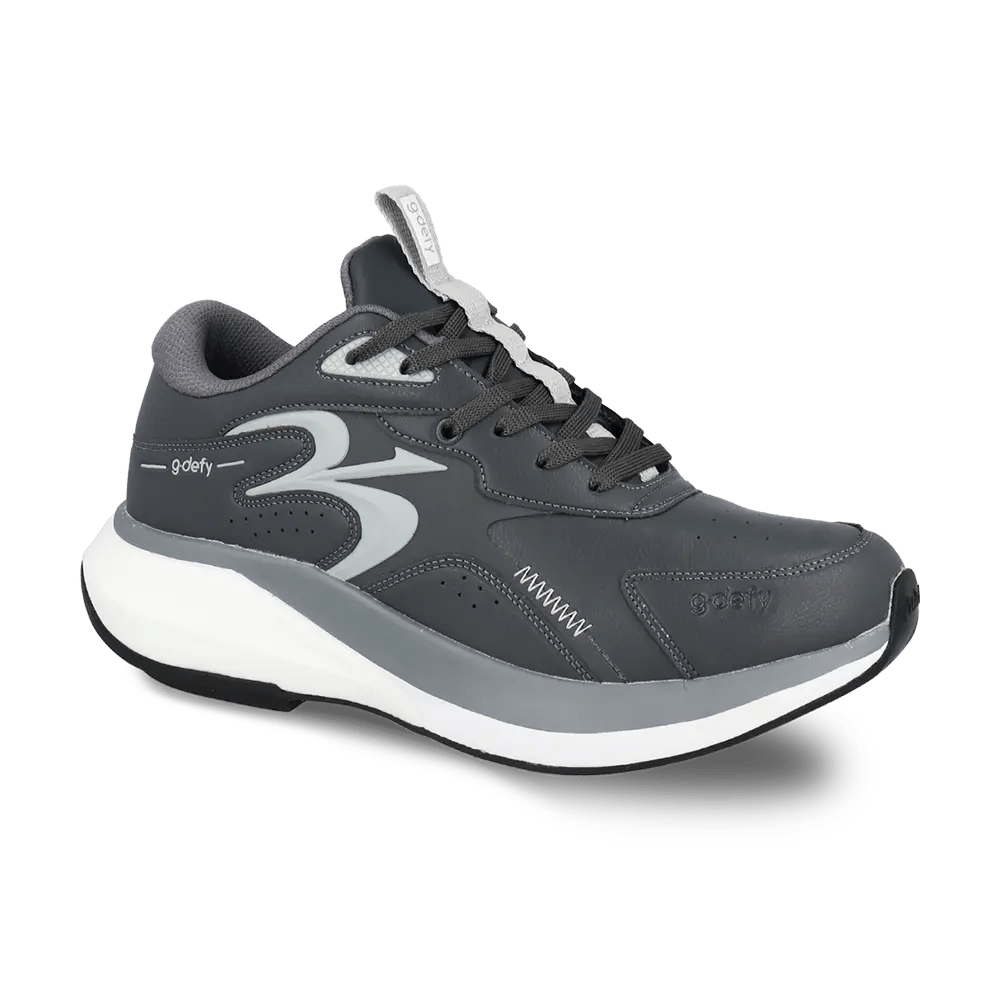
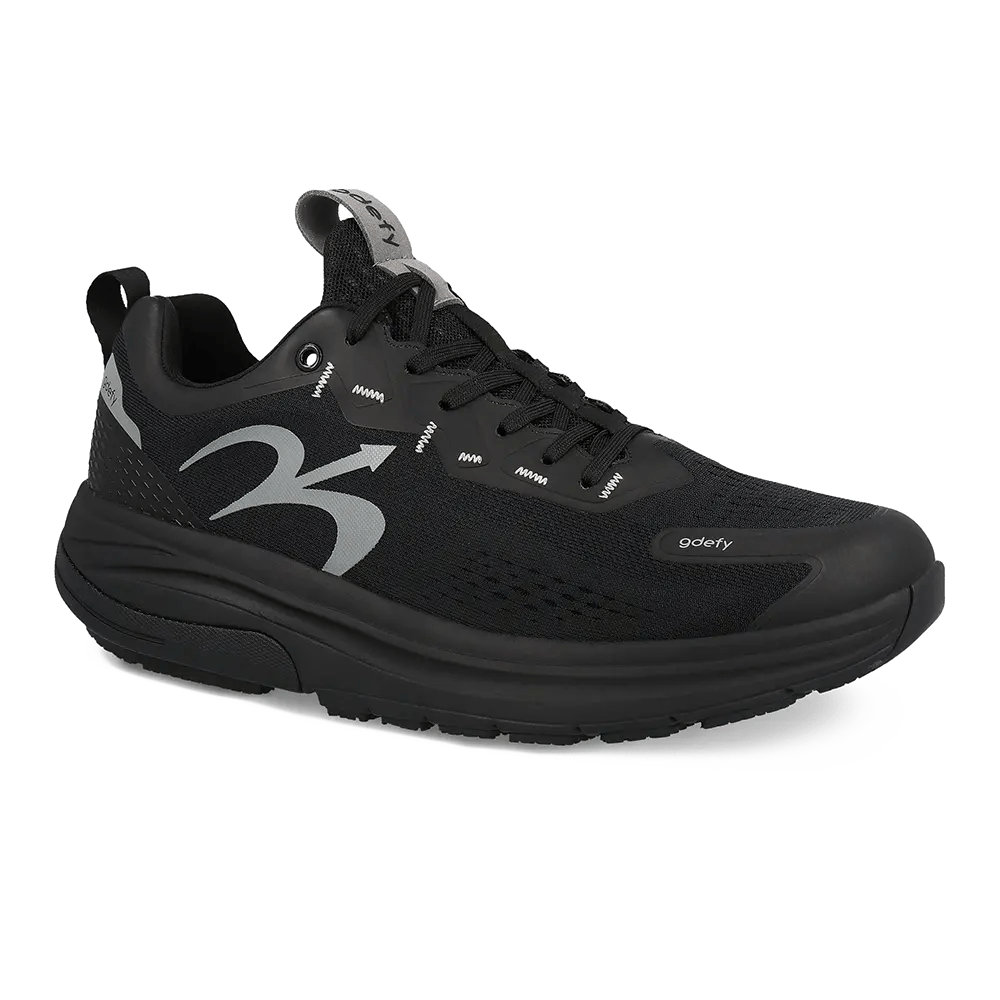
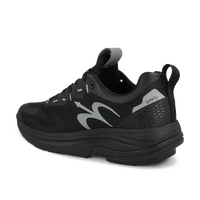
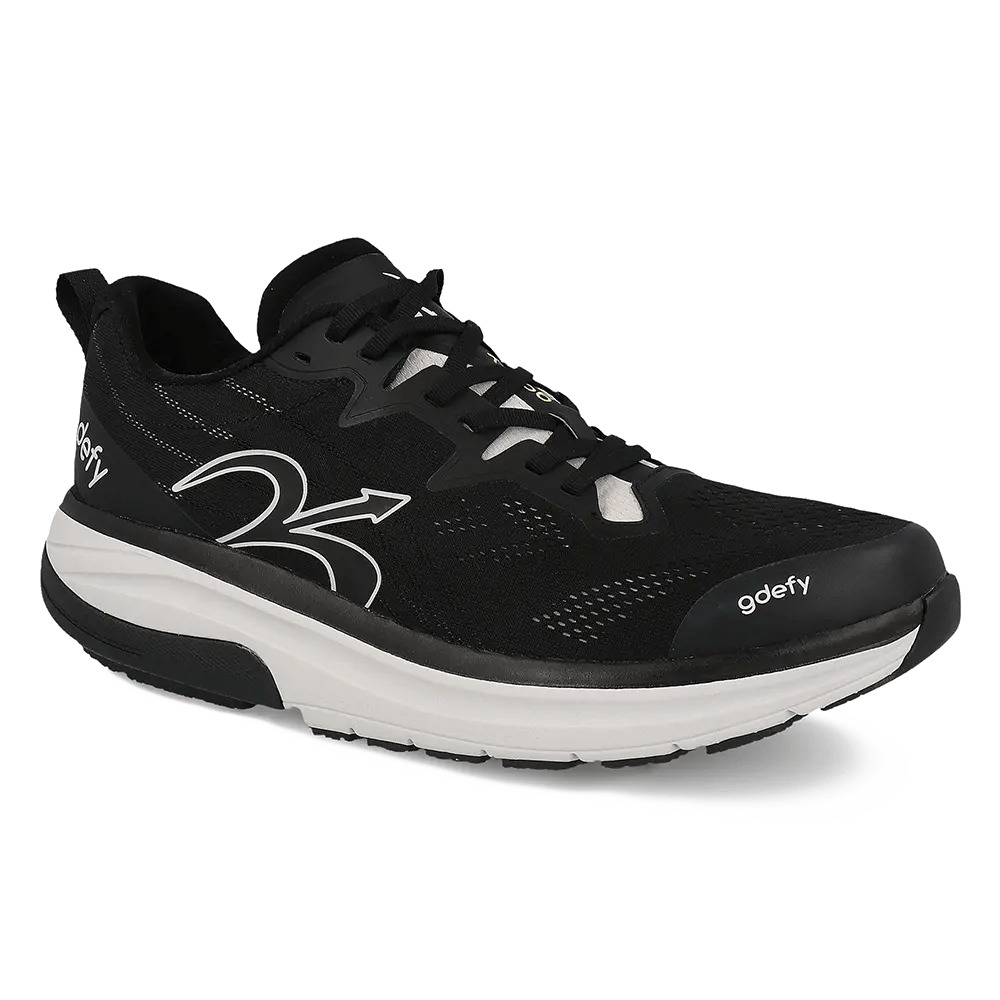
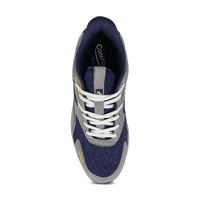
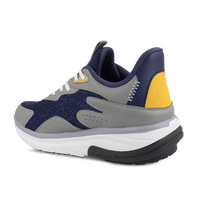
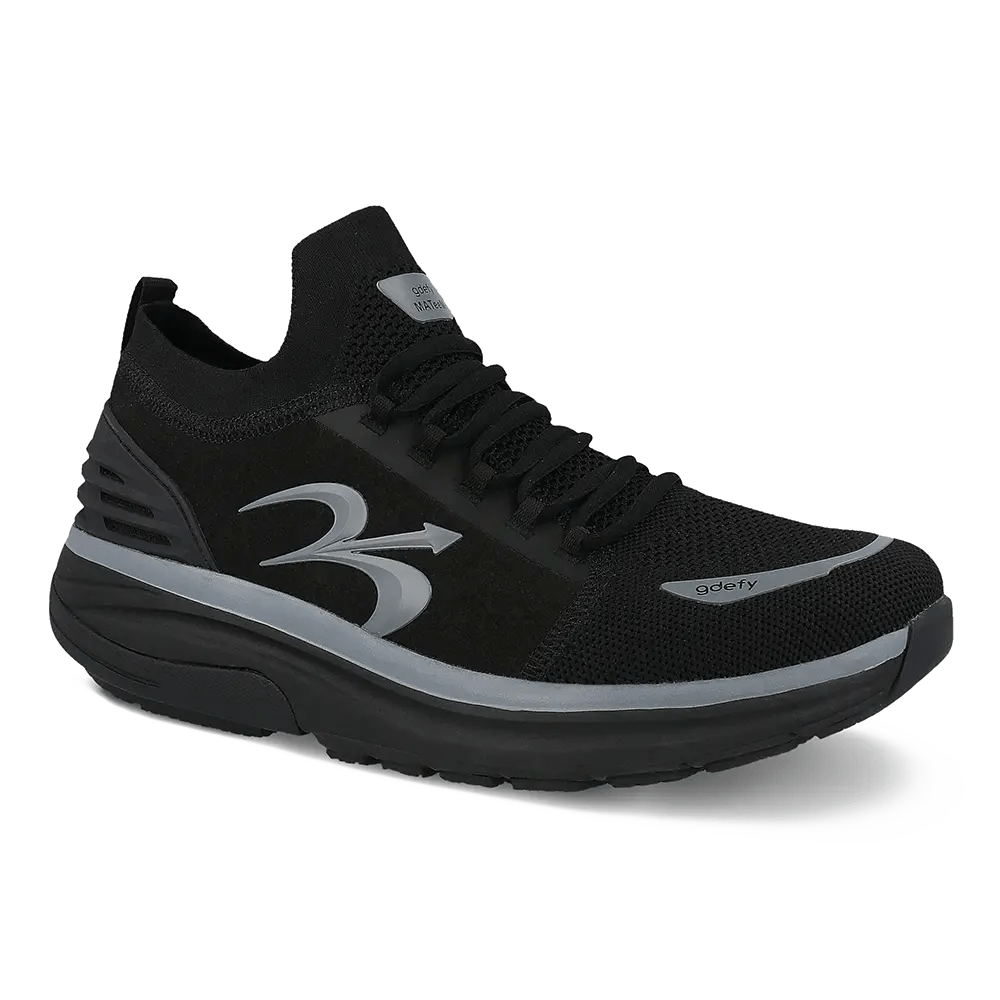
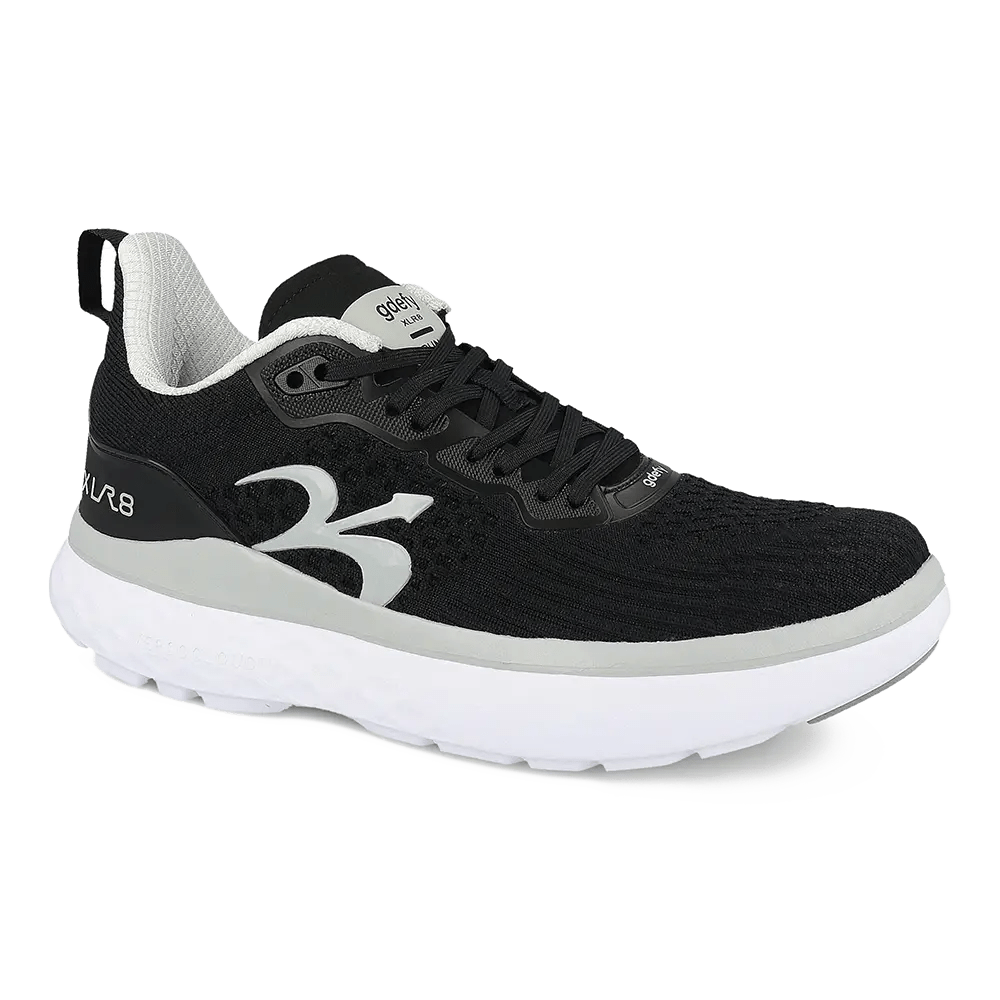
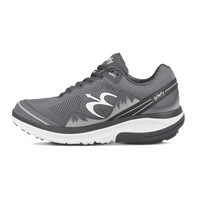
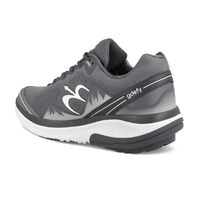
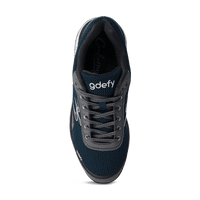
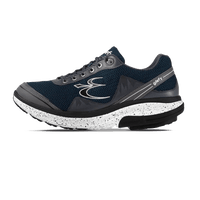
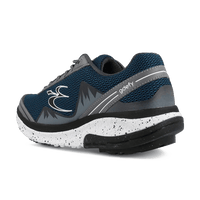
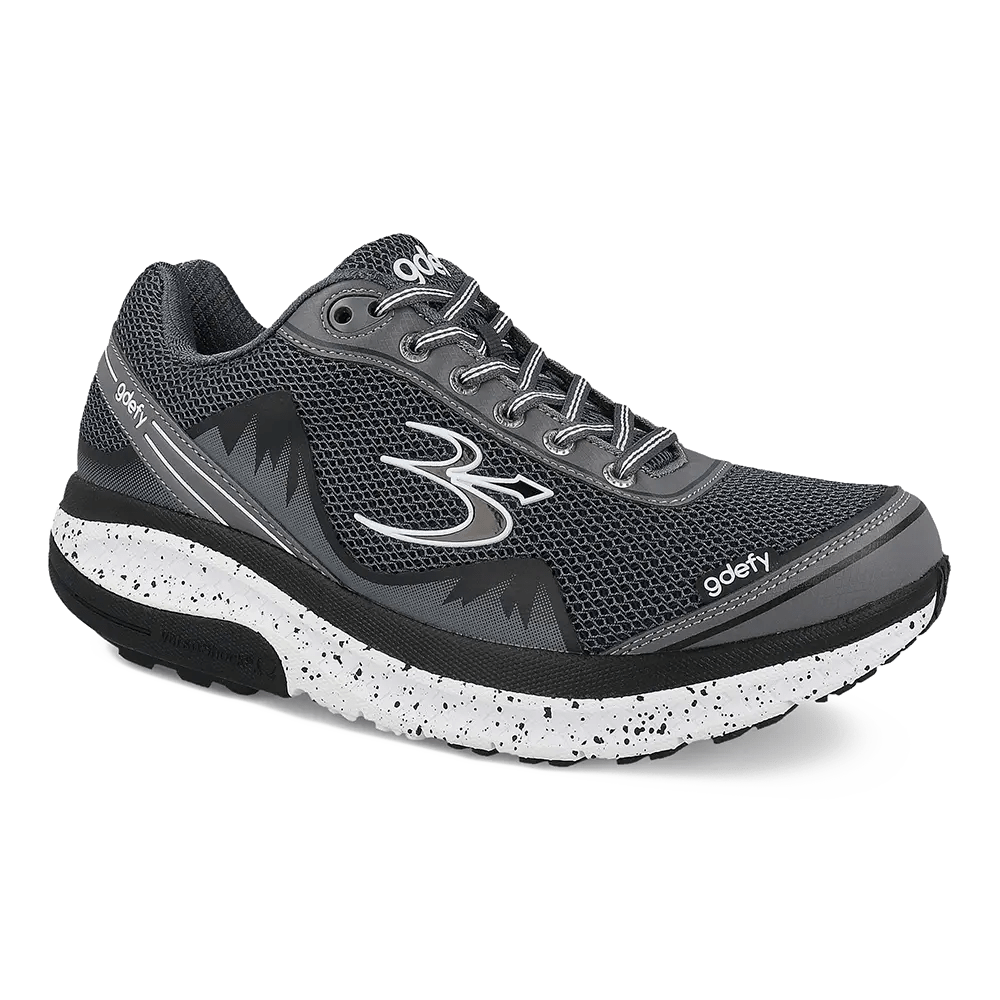
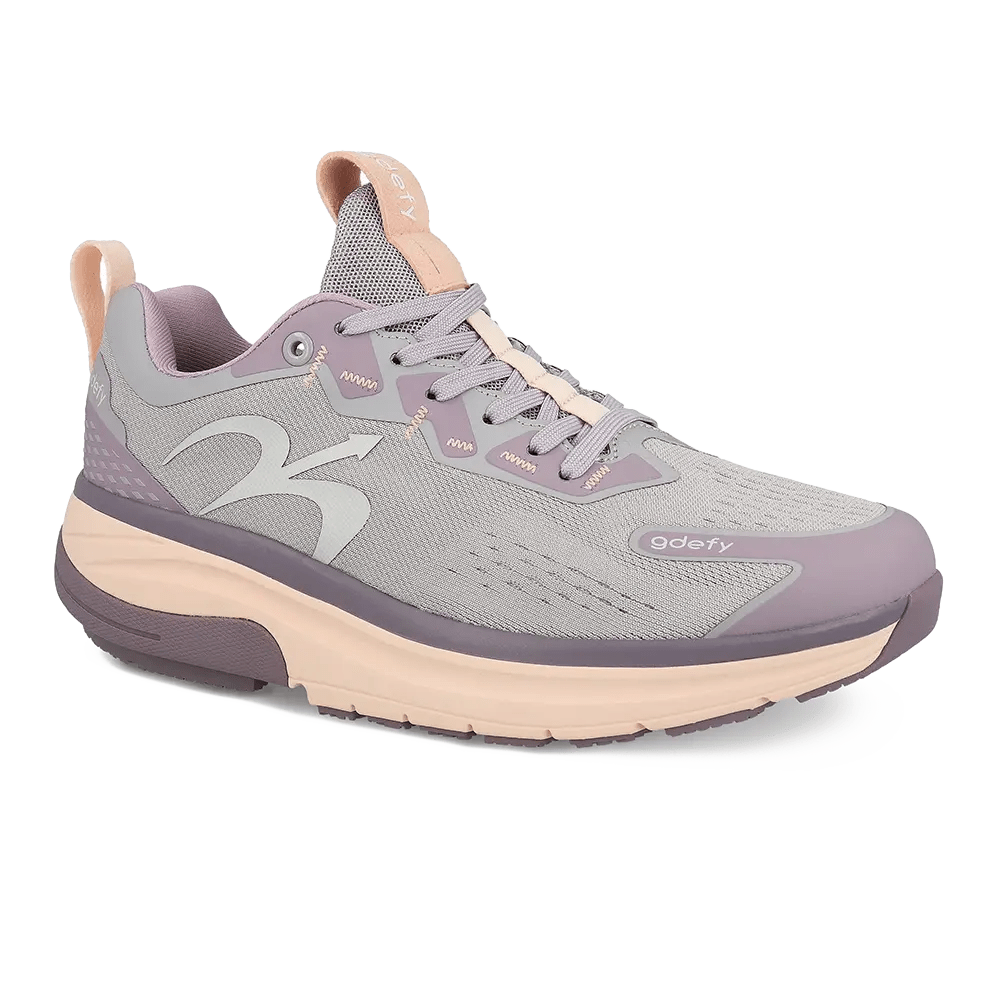
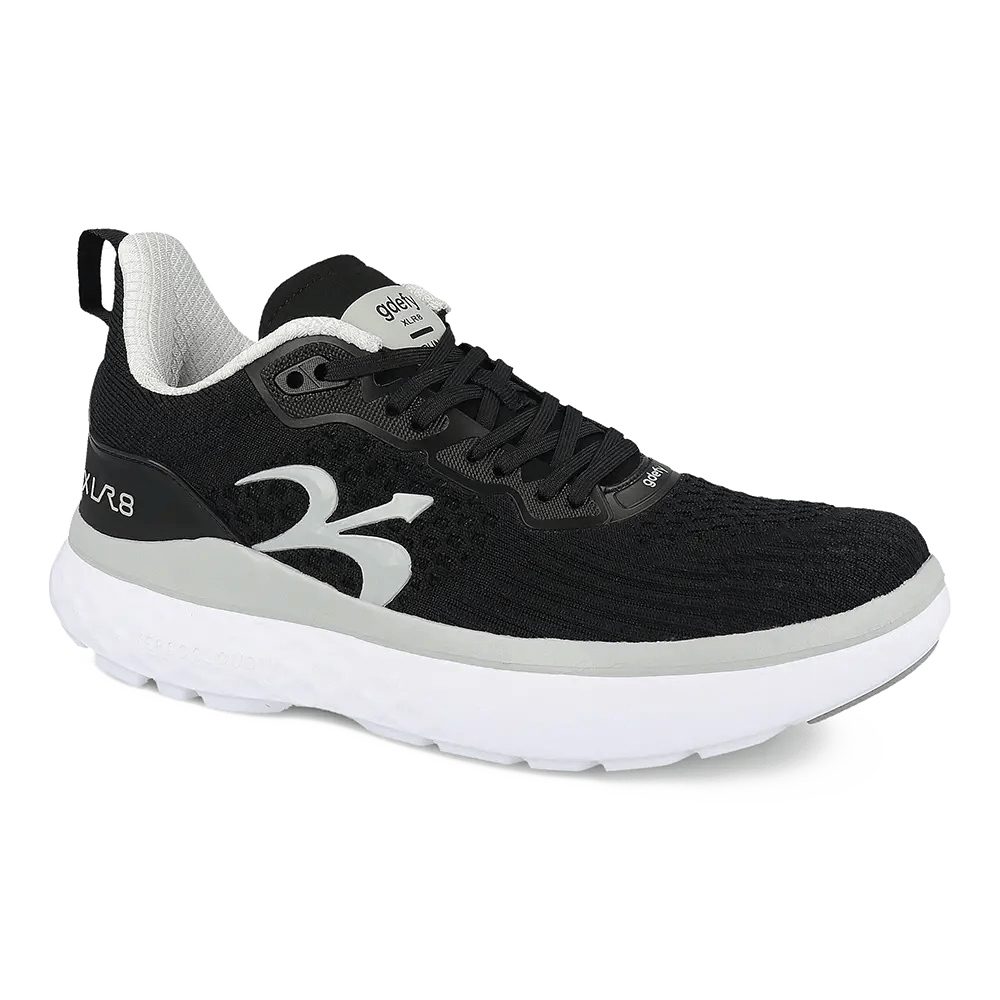
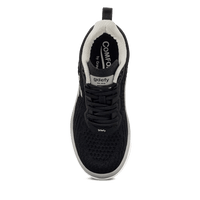
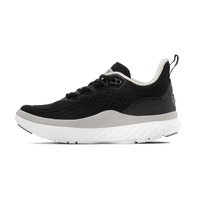
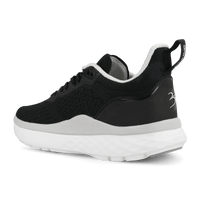
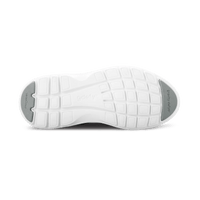
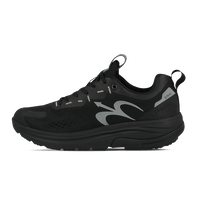
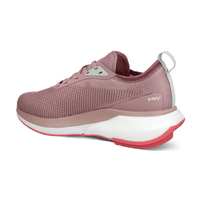
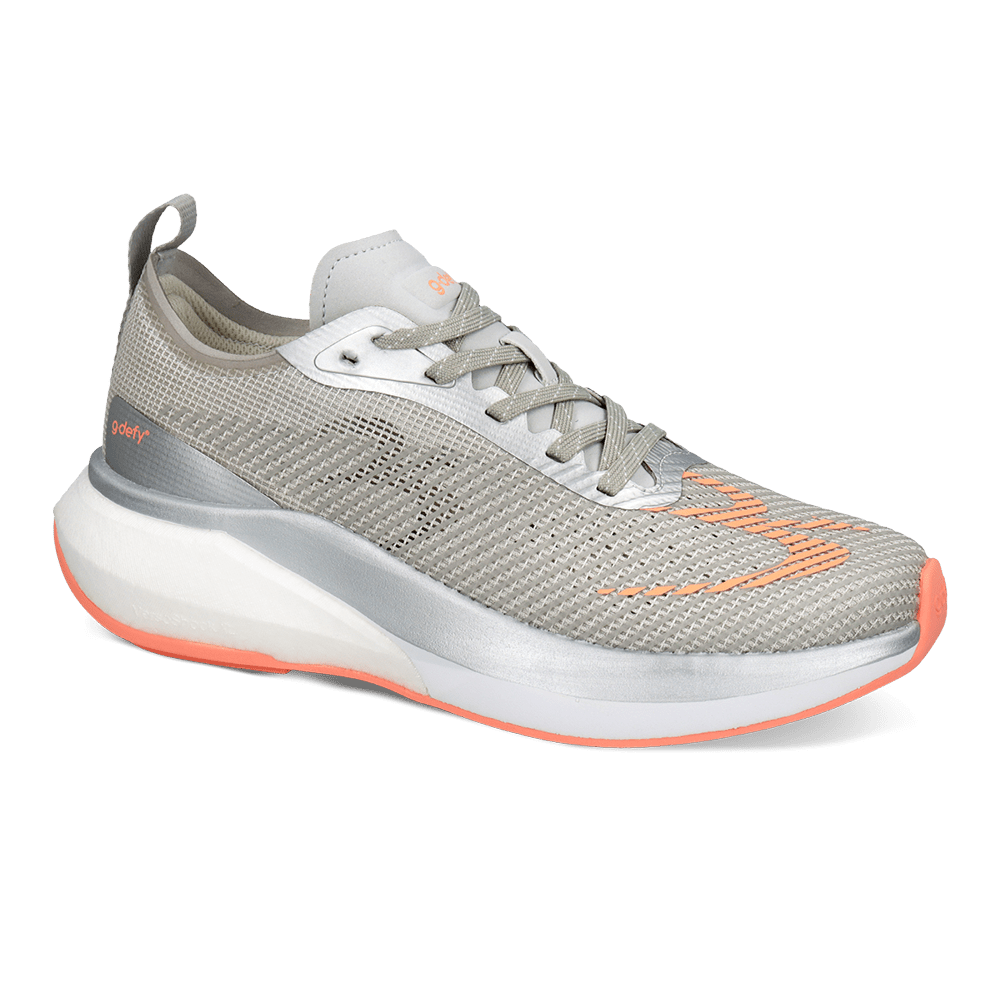
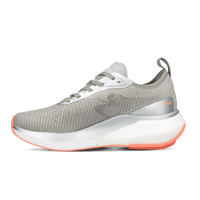
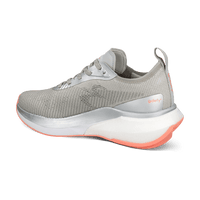
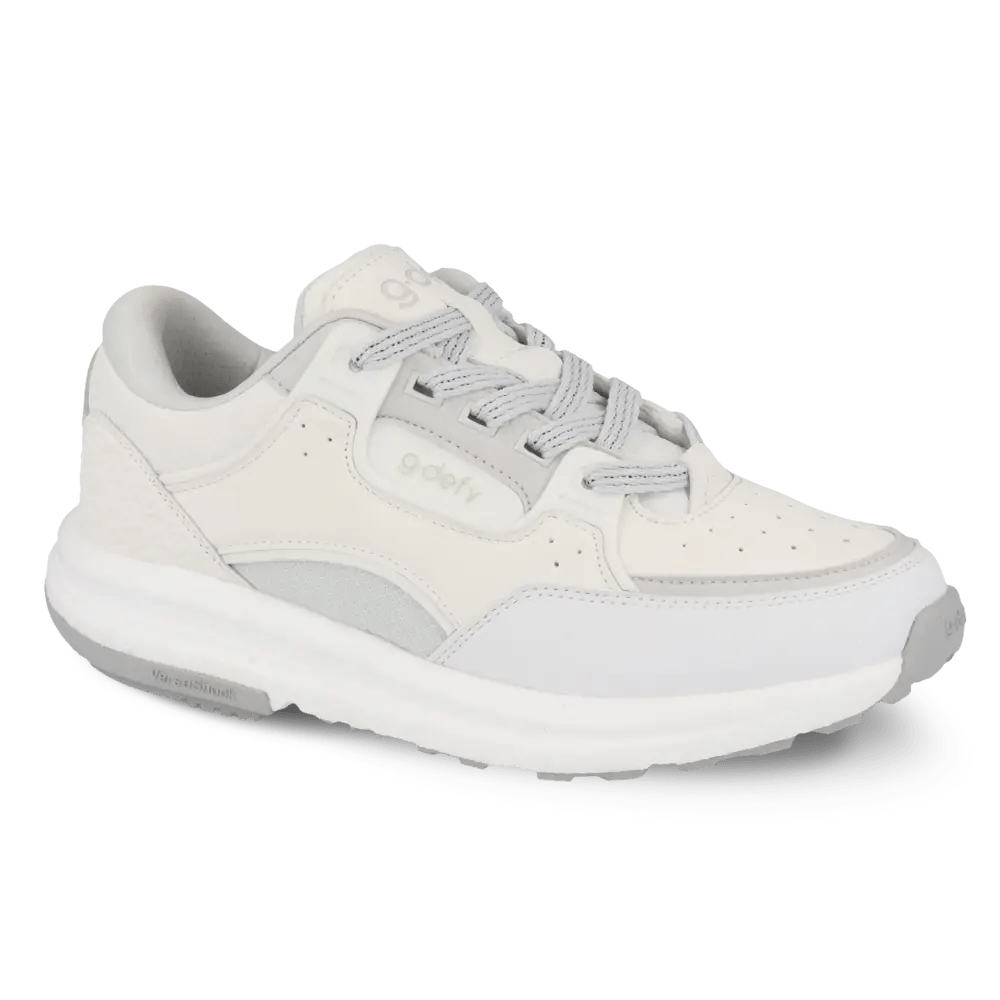
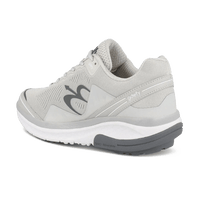
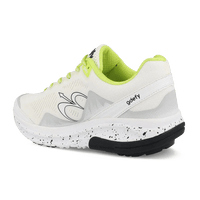
The StreetGlide shoes offer a balanced approach with supportive construction and shock absorption for women who need both stability and comfort.
GDEFY vs Other Orthopedic Shoe Brands
Different feet need different solutions. This comparison focuses on knee pain plus lower back pain together, which is where GDEFY's design philosophy shines.
Orthofeet and Dr. Comfort are commonly cited options in the orthopedic shoe space. Both companies offer thoughtful designs with removable insoles, wide widths, and supportive features. Orthofeet leans heavily into orthotic insole systems. Dr. Comfort targets diabetic foot care and therapeutic needs. Both are solid choices for specific foot conditions.
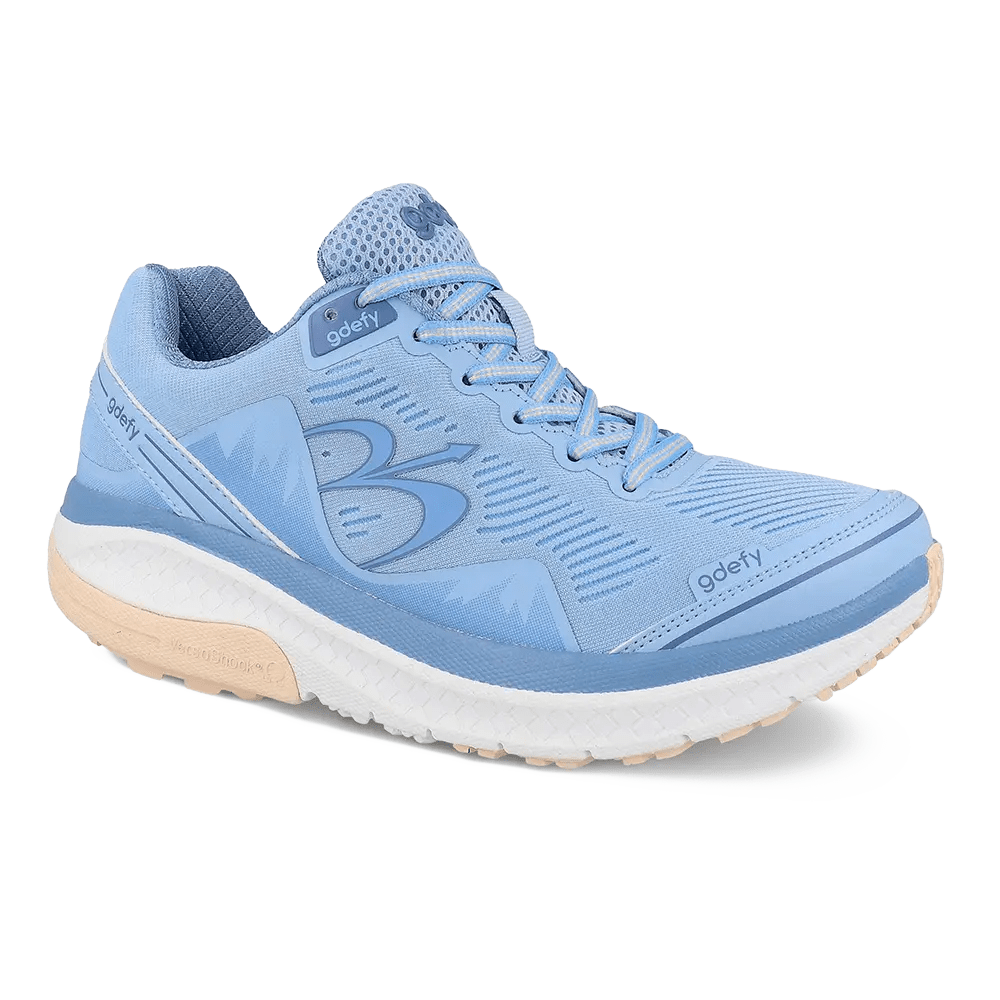
GDEFY differentiates by focusing on impact reduction for hard-floor standing and walking. The VersoShock system is designed to address the knee-hip-back chain through shock absorption combined with supportive construction. For women whose primary complaint is knee pain that radiates to the lower back after hours on concrete or tile, GDEFY offers the most direct solution.
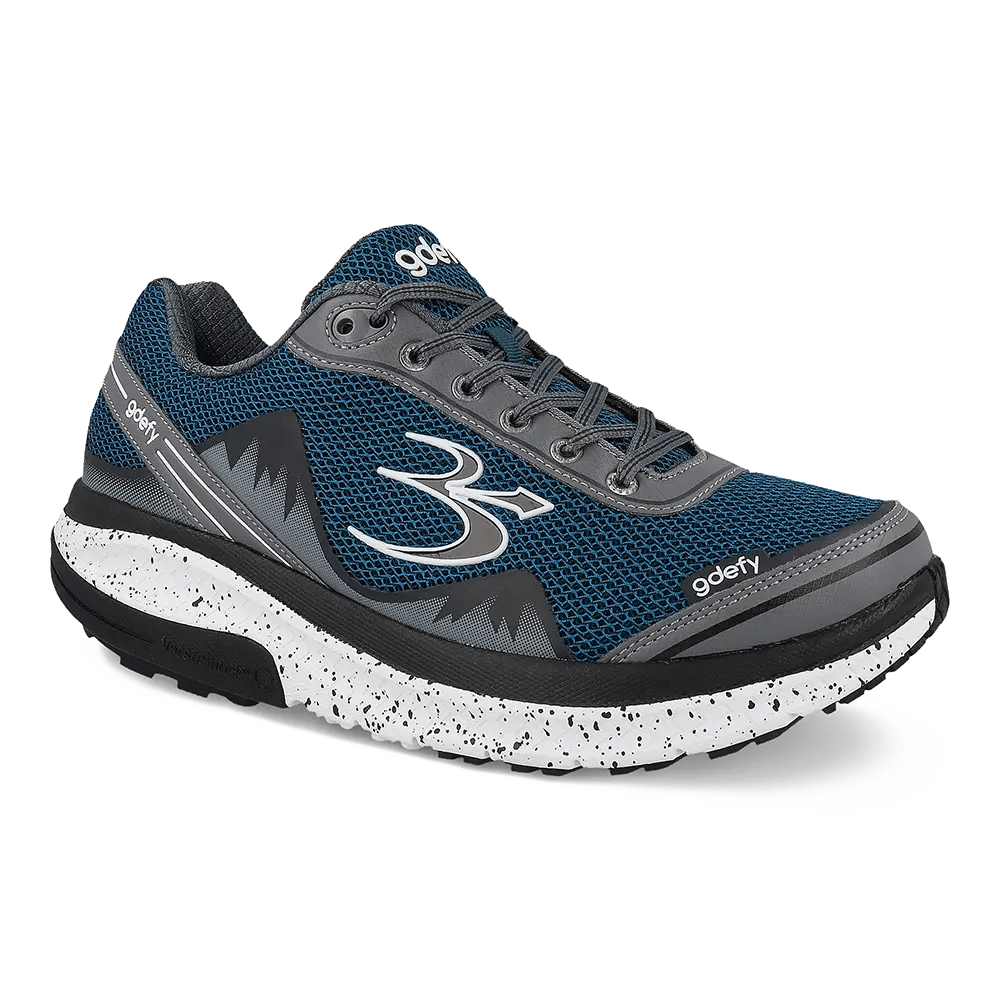
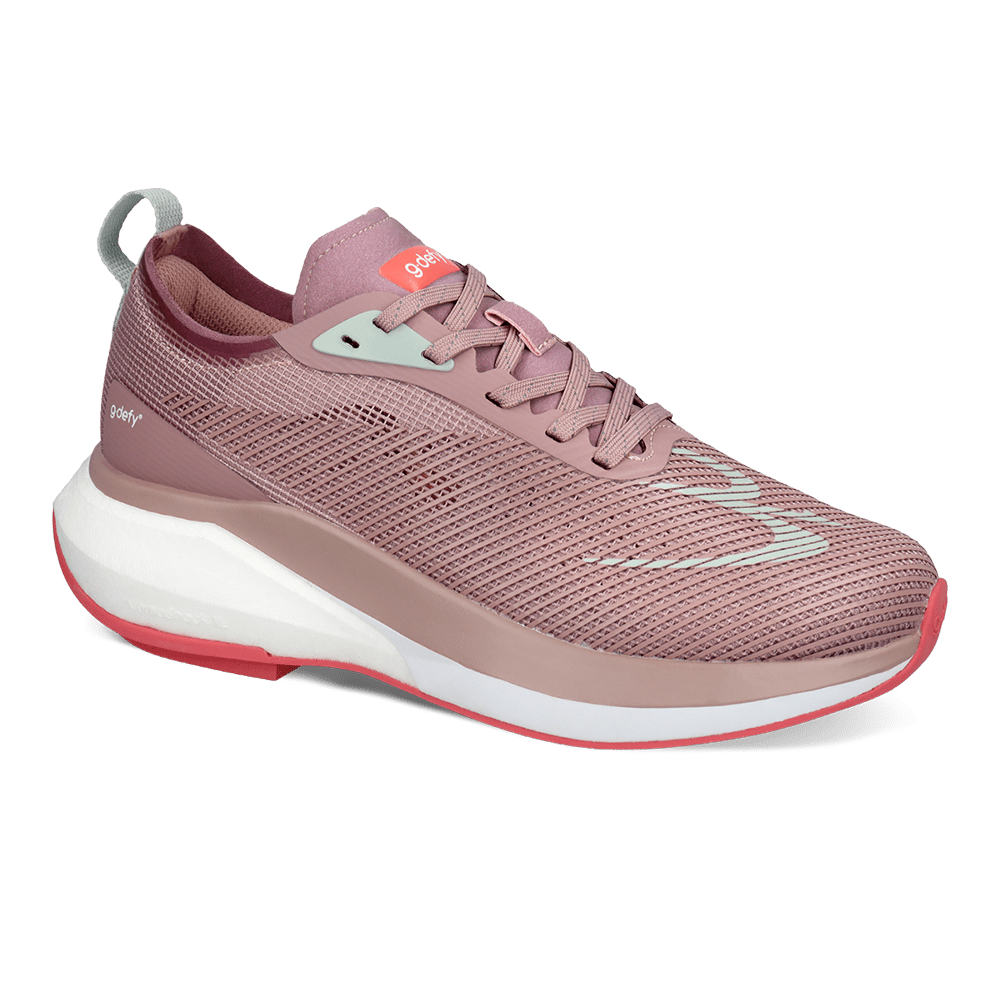
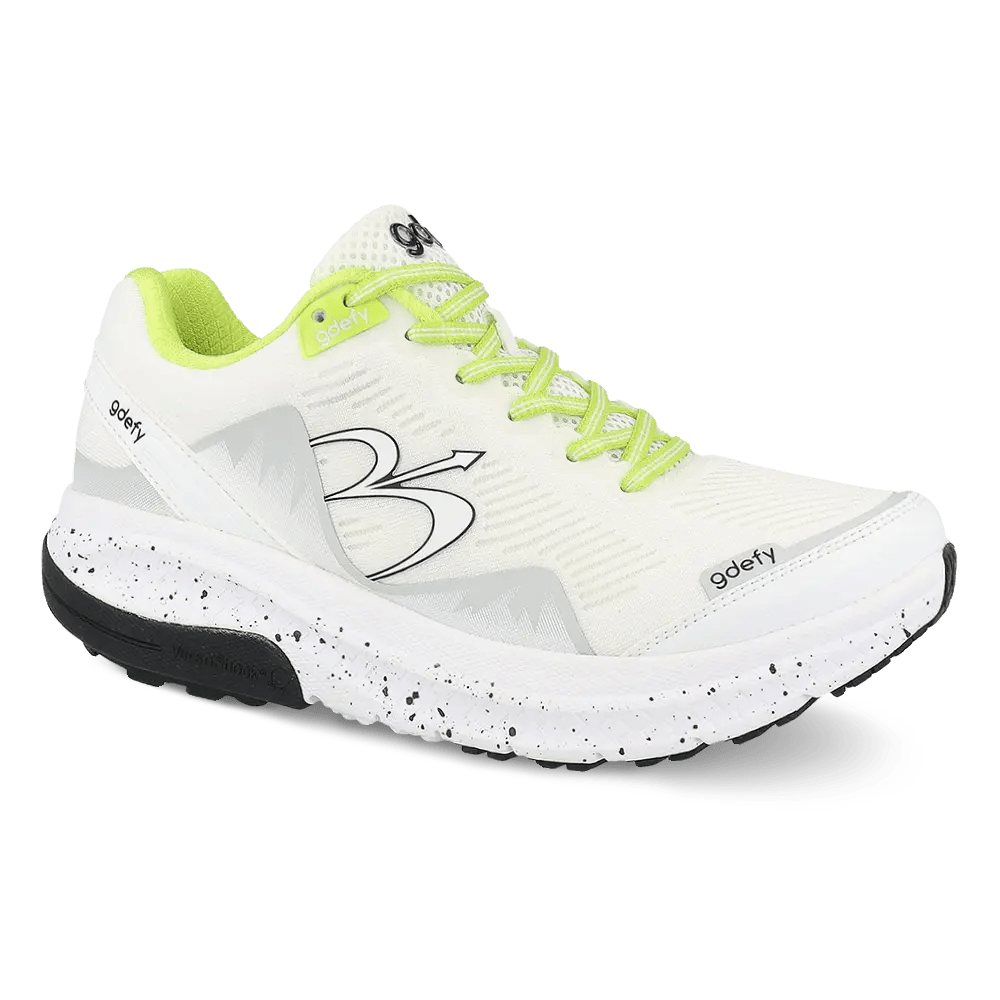
When knee pain and low back pain show up together, prioritize a shoe that combines stable alignment support with high shock absorption. This is the design problem GDEY is built to solve. The ZenWalk shoes and ZenWalk white option exemplify this balance.
Therapeutic footwear research supports the rationale that mechanics-first features matter. Studies show significant reductions in knee loading measures when footwear is optimized for individual biomechanics.
Women with severe foot deformities, diabetic neuropathy, or complex medical needs should consult a podiatrist or orthopedist for fit checks and skin monitoring. Shoes are one part of care, not a replacement for medical evaluation.
Brand Best For Alignment Support Shock Absorption Focus
GDEFY Knee + back pain, hard-floor standing/walking Stable heel, supportive construction, orthotic-compatible High (VersoShock technology designed for impact reduction)
Orthofeet Foot-specific conditions, plantar fasciitis, bunions Premium orthotic insoles, wide toe box, adjustable fit Medium (focus on orthotic insole system)
Dr. Comfort Diabetic foot care, therapeutic needs, custom inserts Diabetic-protective design, depth for custom orthotics Medium (therapeutic focus, not maximum impact reduction)
Fit, Wear Schedule, and When to Replace Shoes
If your shoes are worn into your pain pattern, they can keep feeding it. Even the best orthopedic shoe design won't help if the shoe is worn out or doesn't fit properly.
Follow this 6-step fit checklist:
-
Measure later in the day. Feet swell during the day. Measure and try shoes in the afternoon or evening for the most accurate fit.
-
Check toe room. You should have about a thumb's width (roughly 1/2 inch) between your longest toe and the shoe's end.
-
Test heel lockdown. Walk around. Your heel should stay in place with no slipping up and down.
-
Check midfoot security. The shoe should hug your arch and midfoot snugly without pinching.
-
Test torsional stability. Try to twist the shoe. It should resist twisting through the midfoot.
-
Examine outsole wear pattern. Look at your current shoes. Uneven wear tells you about your gait and what corrections you need.
Gait is the pattern of how you walk, including how your foot lands and rolls forward.
Replace your shoes when you see these signs:
-
Uneven wear on the outsole (one side worn much more than the other)
-
Loss of cushioning (the midsole feels flat when you press it)
-
New aches or pains that started after wearing the shoes for several months
-
The shoe folds easily when you bend it in half (too flexible, structure is gone)
Shoe rotation can extend the life of your footwear and reduce pain. Research on plantar fasciitis found that a shoe rotation group improved VAS pain scores from 5.29 to 1.71 over 12 weeks, a 68% reduction in pain severity. Rotating between two or three pairs of supportive shoes allows each pair to decompress and dry between wears. This maintains cushioning and support properties longer.
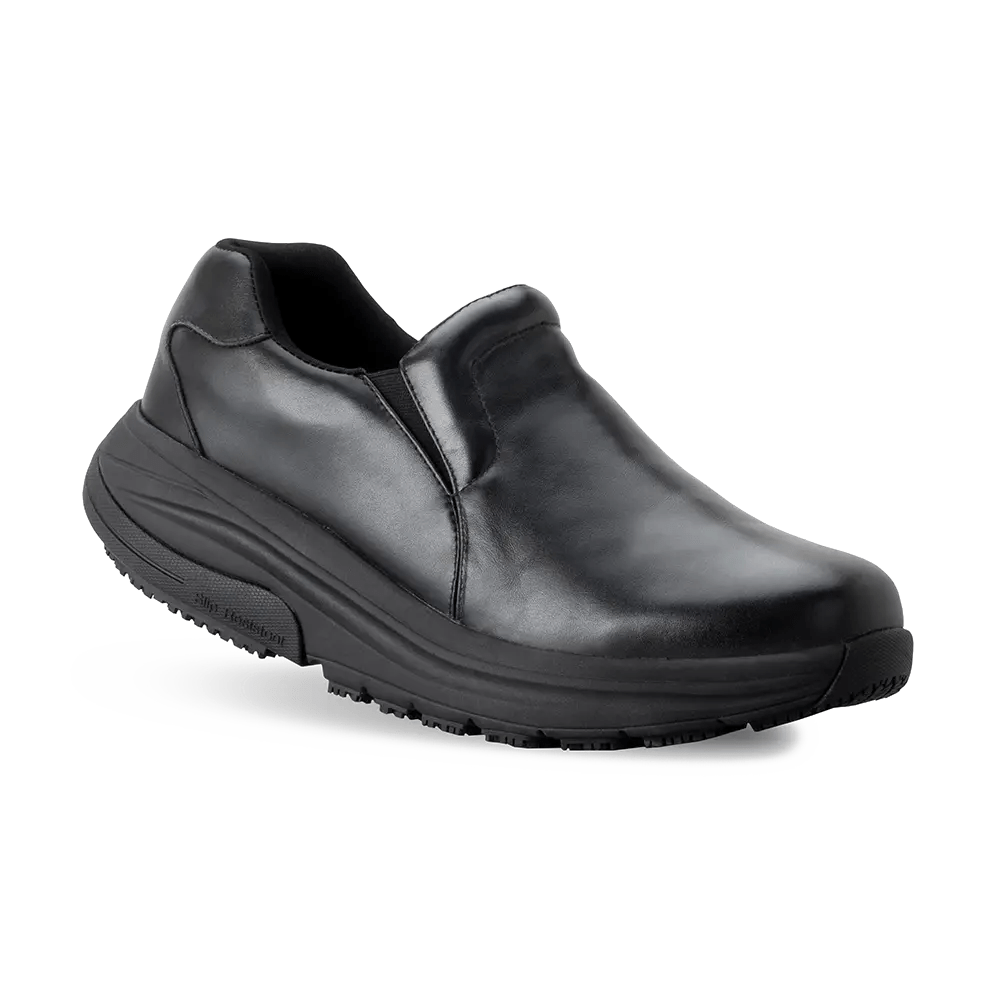
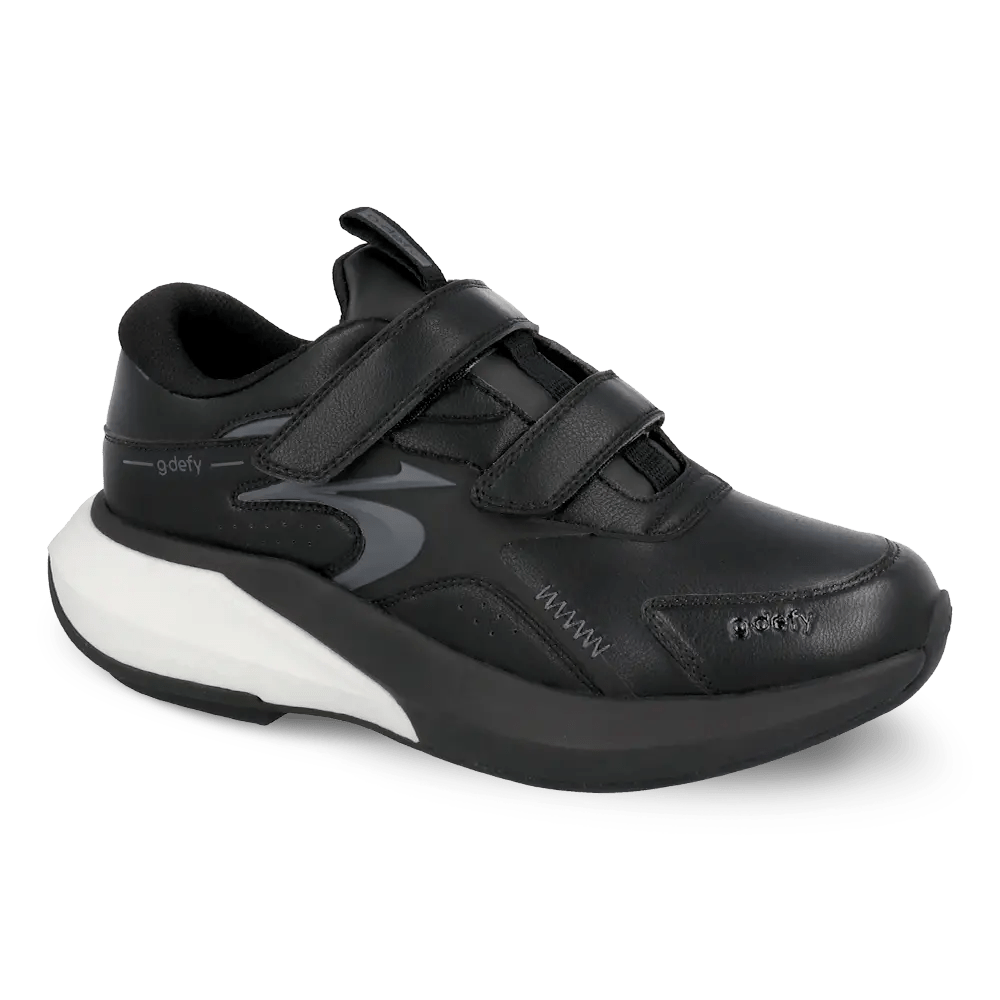
For women who struggle with bending to tie shoes due to back or knee pain, a slip-on option can make daily wear easier without compromising support.
Wear Pattern What It Suggests What to Do Next
Inside heel wear Overpronation (foot rolling inward) Choose shoes with stability features and arch support
Outside heel wear Supination tendency (foot rolling outward) Choose shoes with high cushioning and neutral support
Center heel wear Neutral gait Continue with balanced, supportive shoes
Forefoot wear (ball of foot) High push-off force or forefoot strike Check for adequate forefoot cushioning
When Shoes Aren't Enough
Shoes can reduce triggers. They can't diagnose or treat injuries. If your pain isn't improving with better footwear after 2-3 weeks, or if certain symptoms appear, it's time to see a clinician.
Red flags that need medical evaluation:
-
Swelling or heat in the knee or back
-
Knee locking or giving way
-
Feeling of instability when walking
-
Numbness or tingling in the leg or foot
-
Sudden, severe pain
-
Pain that started after a fall or injury
-
Progressive weakness in the leg
-
Pain that wakes you at night
Knee osteoarthritis is joint wear-and-tear where cartilage changes can cause pain and stiffness, and joint loading management becomes important. Claims analysis research shows that biomechanical interventions in knee OA patients were associated with large reductions in healthcare utilization and costs, supporting the value of biomechanics-focused approaches.
Questions to ask your clinician:
-
Would a gait analysis help identify specific problems?
-
What is my foot type (pronated, neutral, or supinated)?
-
Would custom orthotics be appropriate for my condition?
-
What strengthening exercises can I do to support my knees and back?
-
Should I modify my activity level during treatment?
Position shoes as part of a complete plan. Footwear plus strength training plus activity modification plus medical guidance equals the best outcome. Physical therapy can teach you exercises to strengthen muscles around the knee and stabilize the pelvis and spine.
If knee or back pain is worsening, unstable, or paired with numbness or swelling, footwear is not a substitute for medical evaluation. See the medical disclaimer for more information.
Frequently Asked Questions
Do women's orthopedic shoes help with knee pain and lower back pain?
Yes, women's orthopedic shoes can help knee pain and lower back pain when they improve alignment and reduce impact, which lowers stress traveling up the leg and into the spine. The best results come from shoes that combine stable alignment support with high shock absorption, especially for women who stand or walk on hard floors. Results vary by diagnosis and individual biomechanics, but many women experience meaningful relief when they switch to supportive, shock-absorbing footwear.
What are the best shoes for knee pain?
The best shoes for knee pain are stable, supportive shoes with strong shock absorption and a secure heel, especially if your pain is worse on hard floors. Look for a firm heel counter, supportive arch structure, and thick cushioning in the midsole. GDEFY shoes with VersoShock technology are designed specifically for this combination of needs. Follow the 7-feature checklist in this guide to evaluate any shoe for knee pain relief.
How does proper arch support help with knee pain?
Proper arch support helps knee pain by limiting excessive inward foot roll that can rotate the leg and increase stress on the knee joint. When your arch is properly supported, your foot maintains better alignment during walking, your tibia rotates less, and your knee tracks in a straighter line. Note that women with high arches often need cushioning plus a stable base more than aggressive arch buildup.
Should I avoid minimalist shoes or flats if my knees hurt?
If your knees hurt, minimalist shoes or very flat shoes can be a problem because they often provide less impact protection and less stability. Research shows that minimalistic footwear increases mechanical loading on the knee joint and can alter cartilage markers. Women with knee pain usually do better with shoes that have substantial cushioning and support. Save minimal shoes for occasional wear on soft surfaces, not for all-day hard-floor standing or walking.
Are high heels bad for knee pain and lower back pain?
High heels can worsen knee and lower back pain by shifting posture and changing gait mechanics, which increases strain on joints. Heels tilt your pelvis forward, increase lumbar lordosis (arch in the low back), and change how forces travel up your leg. Research shows high heels increase compressive forces on lumbar vertebras and can lead to chronic low back issues. If you must wear heels for work or events, choose lower heels (under 2 inches) with a wider base and cushioned insole, and switch to supportive shoes as soon as possible.
How long does it take for new orthopedic shoes to help knee pain?
Some people feel relief in days, but most need 1 to 3 weeks of consistent wear for their body to adapt to new support and cushioning. Start with a gradual break-in schedule. Wear new shoes for 1 to 2 hours on day one. Increase by an hour each day until you can wear them all day comfortably. If pain worsens during the break-in period, the shoes may not be the right fit or support level for you. Don't push through sharp pain.
Do I need orthotics if I buy GDEFY shoes?
Not always. Many women do well with supportive, shock-absorbing shoes alone, but orthotics can help if you have significant pronation, flat feet, or clinician-recommended support needs. GDEFY shoes are built with supportive construction and VersoShock cushioning that works for most women without additional inserts. If you already use custom orthotics prescribed by a podiatrist or orthopedist, GDEFY shoes have removable insoles and enough depth to accommodate them. When in doubt, consult your clinician about whether orthotics would add benefit for your specific condition.
When should I see a doctor for knee or back pain?
See a clinician if pain is worsening, unstable, follows an injury, or comes with swelling, numbness, or weakness. Other red flags include knee locking or giving way, pain that wakes you at night, or symptoms that don't improve after 2 to 3 weeks of conservative care (better shoes, rest, ice, over-the-counter pain relief). Shoes and biomechanics changes can reduce pain triggers, but they can't diagnose underlying conditions like meniscus tears, ligament injuries, herniated discs, or arthritis progression. Early evaluation leads to better outcomes.
Conclusion
Women's orthopedic shoes can make a real difference for knee pain and lower back pain when they address the root biomechanics: alignment and shock absorption. The knee-hip-back chain means that forces starting at your foot travel upward with every step. Supportive shoes with stable heels, proper arch structure, and high shock absorption reduce those forces and lower stress on your joints.
GDEFY shoes are purpose-built for this problem. VersoShock technology delivers maximum impact reduction while maintaining the stable platform you need for proper alignment. For women who spend hours on hard floors, this combination is the solution.
Start by evaluating your current shoes using the wear pattern guide. If you see uneven wear or your shoes are more than 6 months old with daily use, it's time to replace them. Choose shoes from the 7-feature checklist. Give your body 1 to 3 weeks to adapt. Most women notice meaningful relief within that timeframe.
Remember that shoes are one part of the plan. Combine supportive footwear with strengthening exercises, activity modification, and medical guidance when needed. If pain doesn't improve or red flag symptoms appear, see a clinician for evaluation.
Ready to reduce your knee and back pain? Explore GDEFY women's shoes designed for alignment and shock absorption. Try the 60-day trial risk-free and experience the difference purpose-built support can make in your daily comfort.
References
-
Influence of Footwear Selection on Youth Running - Oregon State University - Vertical loading rate comparison showing traditional shoes reduce impact by more than half compared to barefoot conditions.
-
Therapeutic Footwear for Medial Knee Osteoarthritis - PMC - Individualized stiffness shoes achieved 14.0% reduction in peak knee adduction moment with 93.3% patient success rate.
-
Effect of Different Footwear on the Knee Joint - PMC - Minimalistic footwear increases mechanical loading on knee joint and alters cartilage MRI markers after walking.
-
Effect of orthopedic insoles on lower limb motion - Frontiers - Systematic review confirming orthopedic insoles alter lower-limb kinematics and kinetics in flatfoot adults.
-
Effectiveness of Shoe Rotation in Managing Plantar Fasciitis - Shoe rotation group improved pain scores by 68% over 12 weeks.
-
Reduction in Healthcare Resource Utilization Following Biomechanical Intervention - Claims analysis showing large reductions in healthcare utilization following biomechanical intervention in knee OA.
-
Prolong Wearing of High Heeled Shoes Can Cause Low Back Pain - High heels increase compressive forces on lumbar vertebras and alter posture and gait patterns.
-
The effects of running shoe longitudinal bending stiffness and advanced footwear technology - PMC - AFTs significantly reduced oxygen consumption by approximately 2.7%, demonstrating footwear mechanics change energy demands.































.svg)



